
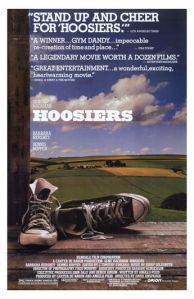
 The last time I saw Hoosiers it was on VHS and I was only a boy and I hardly remember anything. Gene Hackman yelling. Dennis Hopper as a drunk. Jimmy the boy wonder, “The Picket Fence”, and of course Indiana basketball at its finest. But in those opening moments, as he drives into town and walks through the halls of his new home, I realized just how much I miss Gene Hackman. Yes, he’s still with us but the moment he decided to step out of the limelight and retire from his illustrious career as an actor, films got a little less exciting. His passionate often fiery charisma is dearly missed.
Norman Dale is a character who precisely reflects those very inclinations. He’s a man who had a long stint in the Navy following a lifetime ban from collegiate basketball. Supposedly he punched out some kid. The particulars aren’t all that important but what the town of Hickory represents for him is a second chance, a clean slate to leave his mark on.
And through a no-nonsense philosophy coupled with tough love he looks to get his pistons firing on all cylinders, the ultimate goal to lead his team to a winning season. However, his tactics early on receive the ire of most of the local fan base as well as many of his players who willfully walk out on his new regime.
Barbara Hershey is the skeptical love interest who is nevertheless a cut above most of the other locals. She went away for college and returned home in an effort to care for her family. She has the coach pegged early on but he is an individual who meets the pressure of the town’s expectations and combats them the only way he knows how, by coaching hard, fundamentally sound basketball.
Certainly, at first, his boys have their misgivings but once they buy into his system and realize that he will fight for them to the end, they really do become a team–the very word that they chant every time they leave their huddle. It’s meant to define them in every game they play. Hackman’s screaming tirades are just as good as I remember as he berates referees about every call imaginable, all in an effort to intercede on behalf of his players. Meanwhile. Dennis Hopper falls into the role of disgraced father catapulted to redemption with tremendous ease showcasing his typical savvy as a character actor.
Sometimes I consider the 1980s (rather unfairly) an era devoid of quality filmmaking but a film like The Hoosiers in its goodness, as sentimental as it is, feels so utterly sincere in all of its endeavors that it hard not to be won over. The rhythms of the plot are all there to develop one of the lasting feel-good stories of a generation and Hoosiers simultaneously set the groundwork for numerous subsequent and, more often than not, lesser sports films.
There’s one scene in particular that resonated with me. It’s not necessarily crucial but it’s poignant speaking to the character of the man before us. A young man comes to not only his teacher but to his coach questioning why Dale is giving the boy’s drunken, ostracized father a chance as an assistant coach. And essentially the answer has to do with grace. No one else will give the man a second chance. No one. But doesn’t he deserve it? Maybe not at all but Coach Dale is willing to give it to him. You get the sneaking suspicion he feels precisely this way because no one ever offered him any grace when he faltered. Small towns can often be rigid, set strictly in the ways of tradition. There’s no room for errancy or disgrace of any type but then coach comes to town and changes things. Redemption is possible.
As was commonplace at the time, every day is rife with Biblical imagery no more practical than an illusion to David versus Goliath in the State Championship. Because coach Dale and his boys are big fish in a small pond transported to a veritable ocean. But he says it all when with hands together in one final huddle he says proudly, “I love you guys.” At this point, the results really don’t matter though they play a good game. Something to be proud of, reflective of everything they’ve done the entire season, one last final exhibition of what they are — a team — first and last.
I was never a gifted basketball player hailing from the Kurt Rambis school of hustle and hard knocks and that makes me thoroughly appreciate this film. It’s fundamentally sound on and off the court. It also helps that I’ve always been a sucker for nostalgia. Whether they like it or not Indiana basketball will always be defined by Hoosiers.
4/5 Stars
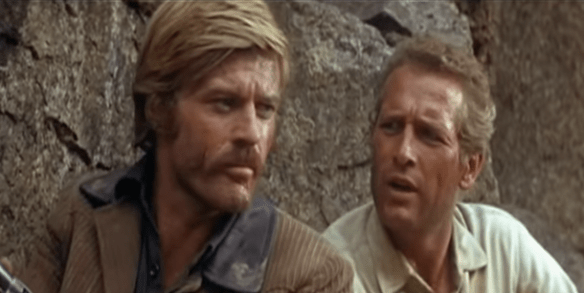
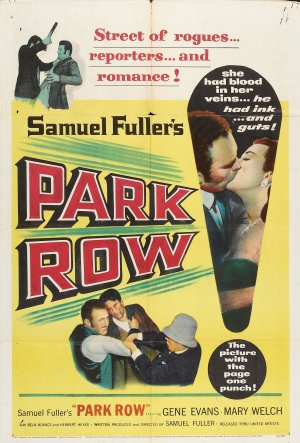 It’s no secret that Sam Fuller cut his teeth in the journalism trade at the ripe young age of 18 (give or take a year) and so Park Row is not just another delicious B picture from one of the best, it’s a passion project memorializing the trade that he revered so dearly.
 Initially, I Remember Mama comes off underwhelmingly. It’s overlong, there’s little conflict, and some of the things the story spends time teasing out seem odd and inconsequential at best. Still, within that framework is a narrative that manages to be rewarding for its utter sincerity in depicting the life of one family–a family that feels foreign in some ways and oh so relatable in many others.
 Upon being thrown headlong into Christopher Nolan’s immersive wartime drama Dunkirk, it becomes obvious that it is hardly a narrative film like any of the director’s previous efforts because it has a singular objective set out.
 Before the exoticism of Casablanca, Algiers, or even Road to Morroco, there was Josef Von Sternberg’s just plain Morocco but it’s hardly a run-of-the-mill romance. Far from it.
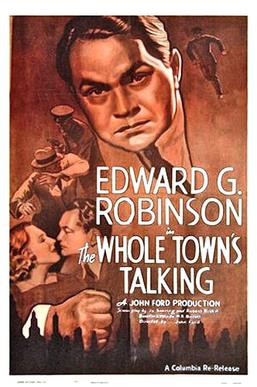 Comic mayhem was always supercharged in the films of the 1930s because the buzz is palpable, the actors are always endowed with certain oddities, and the corkscrew plotlines run rampant with absurdities of their own. Penned by a pair of titans in Jo Swerling and Robert Riskin, The Whole Town’s Talking opens with an inciting incident that’s a true comedic conundrum.
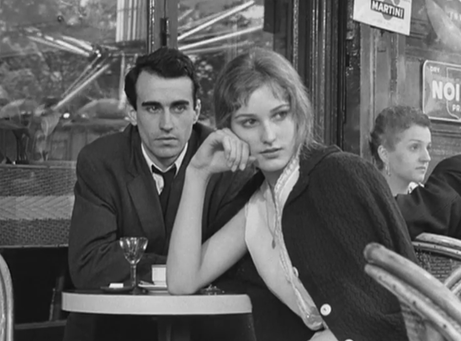 Pickpocket is an intricately staged, truly intimate character study from the inimitable Robert Bresson solidifying itself as one of his greatest works. As was his practice, Bresson took Martin LaSalle, a non-actor to be his leading protagonist.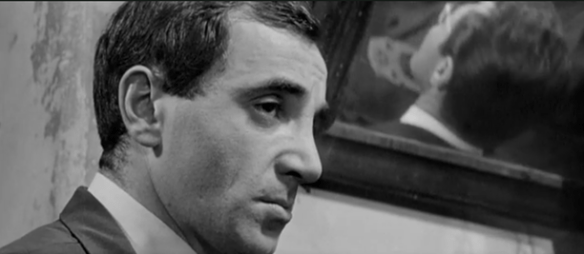

 4 Star Films