As one of the greatest B-films of its day, D.O.A. is framed by a crackerjack gimmick that actually pays heavy dividends. We watch a man making his way down a long corridor as the typically stringent score of Dimitri Tiomkin pounds away behind the credits. In this initial moment, our protagonist Frank Bigelow (Edmond O’Brien) rushes into police headquarters to report a murder: His own.
So begins a film that’s a gripping piece of noir from start to finish. Through the following flashback encapsulating almost the entire storyline, Bigelow recounts his former life. He was an insurance man working the daily grind in beautiful Banning California. When he’s not working he’s trying to dodge the come-ons of his secretary Paula (Pamela Britton).
In fact, he gets away for a little vacation in San Francisco, away from the girl and from his suffocating job and he’s looking to live a little. A lively sales convention that’s taken over his hotel gets his spirits up as does the large population of charming women. In fact, every time a pretty gal walks by his eyes bulge out of their sockets (denoted by comic sound effects). He even makes a few chums.
But this is just the topsoil, the initial slice of life that Bigelow finds himself partaking of. He doesn’t realize what will soon happen and it happens so haphazardly it’s almost hilarious. It’s ludicrous really. Still going on the town, he hits up a jazz club that’s gone absolutely jive crazy as the beatniks of the day might say. It’s a real swinging place. But there’s also something deadly waiting for our hapless protagonist.
In one fateful moment, everything changes. He begins to feel sick. He’s disoriented as his existence takes a nose dive into a world of paranoia — it’s the true markings of noir. The news from the doctors isn’t good either. He’s been infected with a luminous toxin. How or by whom, he doesn’t quite know. It’s all deliciously cruel suggesting that all that is evil, all that is depraved, all that is poisonous, shines ever so brightly in the dark. In fact, that’s where evil thrives.
Still, Bigelow has no idea what he’s gotten himself into and he’s tasked with something that perhaps no one in the history of cinema has ever had to do. Find and apprehend their own murderer. There’s a trail of sultry girls and distracting exposition that all in all makes for a thoroughly bewildering plot. We should expect nothing less. Still, the end goal is finding one George Reynolds or Raymond Rakubian. Bigelow doesn’t quite know which one yet and neither do we.
Needless to say, watching O’Brien scramble across the streets of SF past onlookers and incoming traffic feels quite real and that’s because it was filmed with a certain amount of authenticity. There are scenes that were filmed on backlots to be sure but this isn’t one of them. In such moments, it’s quite easy to get a sense that in some ways this sequence directed by Rudolph Mare could be real. In fact, his background in cinematography can be seen plainly with what he finds interest in shooting. It all works together rather well. D.O.A. has one foot in reality and the faithfully doting Paula gives a little more weight to Bigelow’s state of being. There’s more at stake now, thanks in part to this girl who really does love him. She’s worried about him for most of the story.
Perhaps most extraordinarily, to the elation of film-noir lovers everywhere, D.O.A. does not cop out and it delivers a satisfying conclusion. Aside from a compelling lead performance by the promoted supporting player O’Brien, the hulking Neville Brand comes onto the scene with a psychotic turn as Chester the nervously taunting heavy (always mumbling ‘soft in the belly’). It’s true that many a good film noir needs a quality thug and Brand fits the bill. He personifies the tone of the film — brooding and deadly.
4/5 Stars
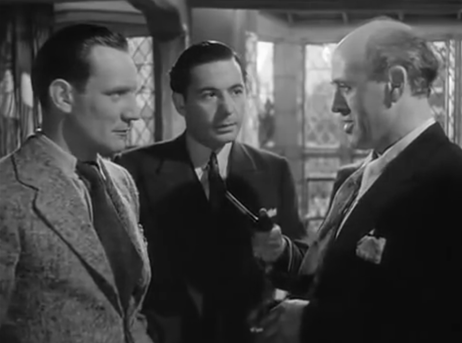 Green for Danger gives murder mysteries a good name because it is drawn up excellently but also with a degree of charm and that should not be taken too lightly or maybe it should. But either way, there’s no doubt that director Sidney Gilliat’s tale based off of a novel by Christianna Brand is quality entertainment.
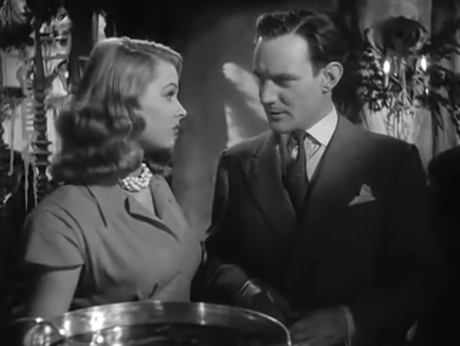 He comes in and steals the film but he does have some enjoyable castmates to work off of. Dr. Barnes (Trevor Howard) the anesthesiologist and the suave surgeon Mr. Eden (Leo Genn) are both in love with the same girl and understandably so. The attractive Nurse Freddi (Sally Gray) is a real prize but only one among a taut nursing staff including the fragile Nurse Sanson and the always lively Nurse Woods (Megs Jenkins). Before the Inspector arrives on the scene they are the true backbone of the storyline and it’s confirmed early on that the murderer comes from within their ranks. The age-old puzzle is left, to decipher who the culprit is and for what nefarious purpose.
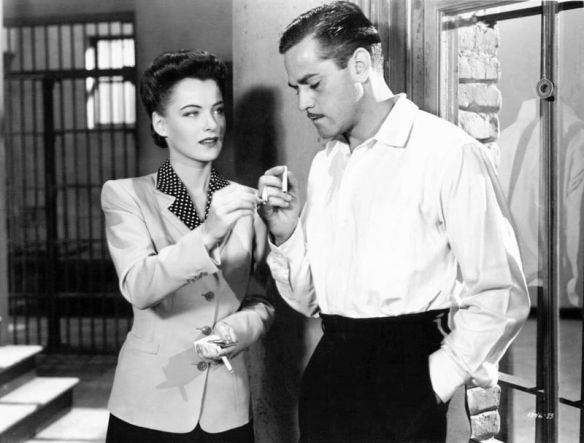 Robert Siodmak might not be the foremost of lauded directors, but it’s indisputable that film noir as a genre, a movement, a style, whatever you want to call it, would be a lot less interesting without him.
 It might sound like meager praise but Wonder Woman is the most engrossing DC offering thus far. It also seems almost unfair to compare across the aisle against main rival Marvel with its terribly lucrative cottage industry or for the very fact that any comparison might suggest how derivative this feature must be.
 The strands of our lives are woven together and neither time nor the world can break them.
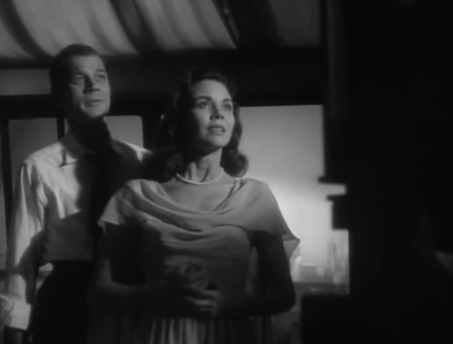 But it’s a chance encounter with a young girl named Jennie (Jennifer Jones) that gives Eben the type of inspiration that every artist dreams of because it’s precisely this spontaneous spark of joyous energy he needs to add something vibrant to his own life. In her constantly evolving role, Jennifer Jones exudes an effervescence, a certain radiance in body and spirit that lights up the screen in embodying this apparition of a girl.
 I find that despite his pedigree Joseph Cotten still comes off as an underrated actor and with each film I see him, I enjoy him immensely. Maybe for those very qualities. He’s not altogether handsome but he has a pleasant face. His voice isn’t the most formidable or debonair but it does have character. The supporting players lend some Irish flair to the cast and it’s striking that everyone from Ethel Barrymore to Lilian Gish glows with a certain hope. There is no obvious antagonistic force in this film. Eben Adams found his inspiration — the muse of a lifetime — and that passion is enough to lay the foundations of a film.
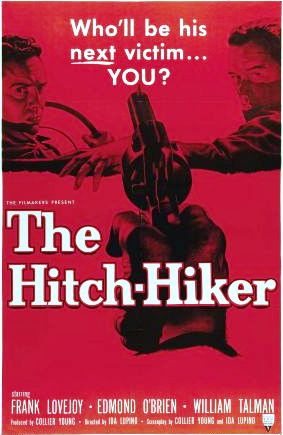 Part of the harrowing allure of the Hitch-Hiker is that it’s actually based on a true incident that occurred only a year before the events shown. It’s not as if someone took artistic license with some murderers and made it into a horror spectacle. Hitchcock’s Psycho especially comes to mind.
 It disappoints me that I was not more taken with the material than I was but despite not being wholly engaged, there are still some fascinating aspects to Panic in the Streets. Though a somewhat simple picture, it seems possible that I might just need to give it a second viewing soon. Let’s begin with the reality.

 Are you a mod or a rocker? ~ reporter