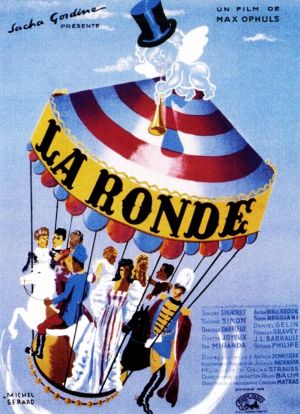
 If you know anything about director Max Ophuls you might realize his preoccupation with the cycling of time and storyline, even in visual terms. He initiates La Ronde with a lengthy opening shot that, of course, involves stairs (one of his trademarks), and the introduction of our narrative by a man who sees the world “in the round.” He brings our story to its proceedings, introducing us to the Vienna of 1900. It’s the age of the waltz and love is in the air — making its rounds. It’s meta in nature and a bit pretentious but do we mind this jaunt? Hardly.
It’s many vignettes of love and romance take us through drawing rooms and bedrooms, past bacchanalian gardens and statues involving a menagerie of figures from prostitutes and soldiers to poets and actresses. By the standards of the 1950s, it’s a highly overt and provocative film — even cheeky. And despite being set in Austria, it undoubtedly brings to mind the Rococo work of the likes of Fragonard or even Watteau’s “Embarkation for Cythera.”
Ophuls seems fascinated with the metaphor of carousels because, in a way, everything turns. Life is constantly of a cyclical nature just as film and the stories it tells always fluctuate from high to low and so on.
When I began my fledgling investigation of world cinema Simone Signoret and Simone Simon were two names that I egregiously intertwined. Now, forced to confront my confusion, I can say definitely that there is a clear distinction in my mind. They stand alone and really this is a film with some of France’s greatest female icons with Danielle Darreiux being another name of note.
However, this is hardly a story about a certain character, but more the themes running through the story and it gives Ophuls the means to exert his artistic mores. His shot lengths indicate just how assured he was in his work — commanding every detail.
When you think he’s going to fall back on a cut and move on, he finds yet another way to keep the shot going. It really is remarkable and it becomes noticeable just how continuous this film is at times. He’s also very much in his element with figures pirouetting on the dance floor. It’s only matched by the elegantly whimsical refrains of the score.
La Ronde actually brought to mind the biblical allusion from Ecclesiastes sung about so iconically by the Byrds. There is a season turn, turn, turn. Except in Ophuls’ case, he seems only interested in the idea of this carousel of romantic encounters. He never actually looks at the inverse of these fluffy tete-a-tetes — what happens when people are alone or their hearts are broken.
It’s very convenient actually, and it allows the film to maintain it’s light, airy quality. For instance, it never looks at the underlining issues that become apparent in a film like A Brief Encounter (1945). Still, I suppose its exquisite elegance and manners are meant to cover up the more base qualities of mankind. In the end, everything goes round and round. Whether or not there is a purpose to it all is for the viewer to decide.
4/5 Stars
 The original title in Italian is Ladri di biclette and I’ve seen it translated different ways namely Bicycle Thieves or The Bicycle Thief. Personally, the latter seems more powerful because it develops the ambiguity of the film right in the title. It’s only until later when all the implications truly sink in.
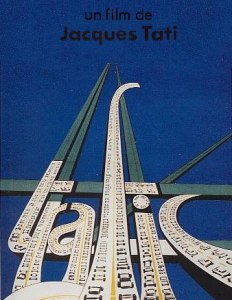 Watching films with French treasure Mr. Hulot (Jacques Tati) is a wonderful experience because, in some respects, it feels like he brings out the child in me. And if history is any indication — I’m not the only one — others feel this sensation too.
 “You can’t just do anything at all and then say ‘forgive me!’ You haven’t changed a bit.” ~ Colette
 Antoine Doinel is a character who thinks only in the cinematic and it is true that he often functions in a bit of a faux-reality. He seems normal but never quite is. He seems charismatic but we are never won over by him completely. Still, we watch the unfoldings of his story rather attentively.
 Why do you watch me? -Magda
 And despite the clandestine nature of his activities he still somehow remains innocent in the eyes of the beholder. Daily he works at the post office behind the glass and in the evening he studies languages. But he’s continually drawn to this lady across the way. He feels like he knows her. He wants any pretense to meet her and so he creates a bit of fate anytime he can.
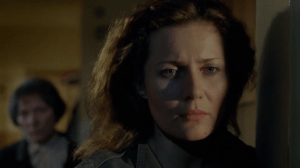 However, often times sex and love become synonymous terms and that is the underlying tension between Tomek and Maria Magdelena’s relationship. Though innocent, he wants true love, a love that transcends a simple physical act and is summed up with affection, intimacy, and an inherent closeness. He is taken with her beauty certainly but even more so he is invariably alone. Meanwhile, she is so enraptured with sex and denigrating such a grand (and admittedly messy) thing as love, to a simple physical act. She can’t understand this wide-eyed boy and his delusions. She’s ready to open him up to the way the world actually turns. And her callousness ultimately crushes Tomek’s tender heart. She broke it not by simply rejecting him, because this is a ludicrous love story, but truly obliterating any of the naive aspirations he had for love.
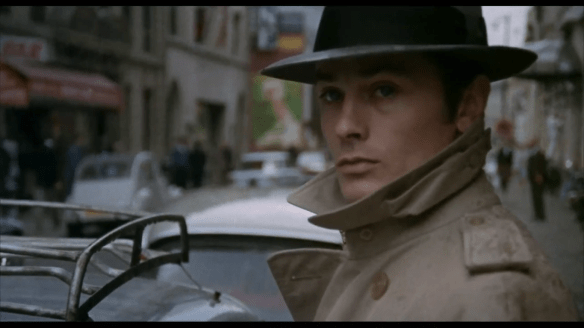 There is no solitude greater than that of the samurai unless it be that of a tiger in the jungle… perhaps…
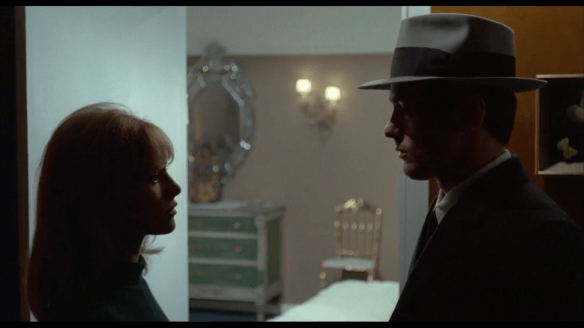 And though he does call on his lovely girlfriend (Nathalie Delon), who is absolutely devoted to him, as well as making eyes at the nightclub pianist who is the main eyewitness to his hit, Jef for all intent and purposes, is alone. It’s a kind of forced solitude, a self-made exile created by his trade. After he goes through with the hit, he must shut himself off more and more. That is his job.
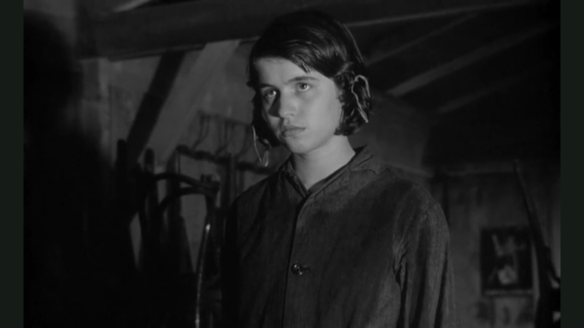 Robert Bresson’s film is an extraordinary, melancholy tale of adolescence and as is his customs he tells his story with an assured, no-frills approach that is nevertheless deeply impactful.
 I’ve heard people like director Jean-Pierre Gorin say that there is little to no distinction between documentary and fiction. At first, it strikes us as a curiously false statement. But after giving it a moment of thought it actually makes sense, because no matter the intention behind it, the medium of film is always subjective. It’s always a created reality that’s inherently false and even in its attempts at realism — that realism is still constructed.
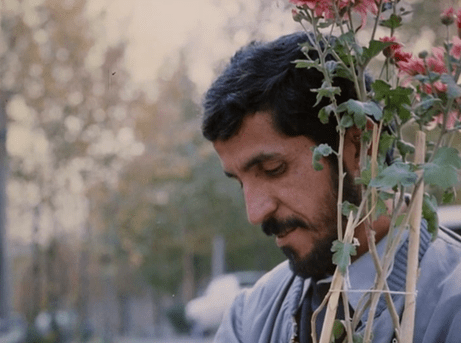 The beauty of Close-Up that not only does it feature the real individuals involved in this whole ordeal: There’s Sabzian playing himself, the Ahankhah family who brought the case to court, and Kiarostami appearing as well. But it blends the actual footage from the trial with reenacted scenes set up by the director as if they are happening for the first time.
 At face value, Model Shop is an ordinary film of little consequence but look a little deeper and it’s actually a fascinating portrait of the L.A. milieu in 1969. Part of that is due to the man behind it all.
