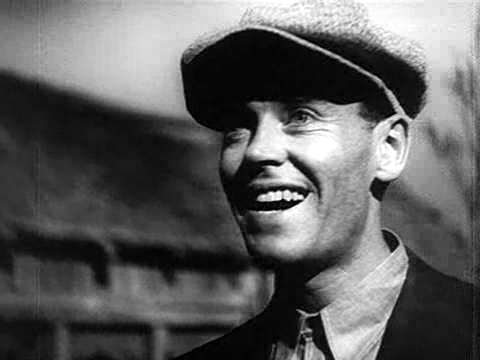
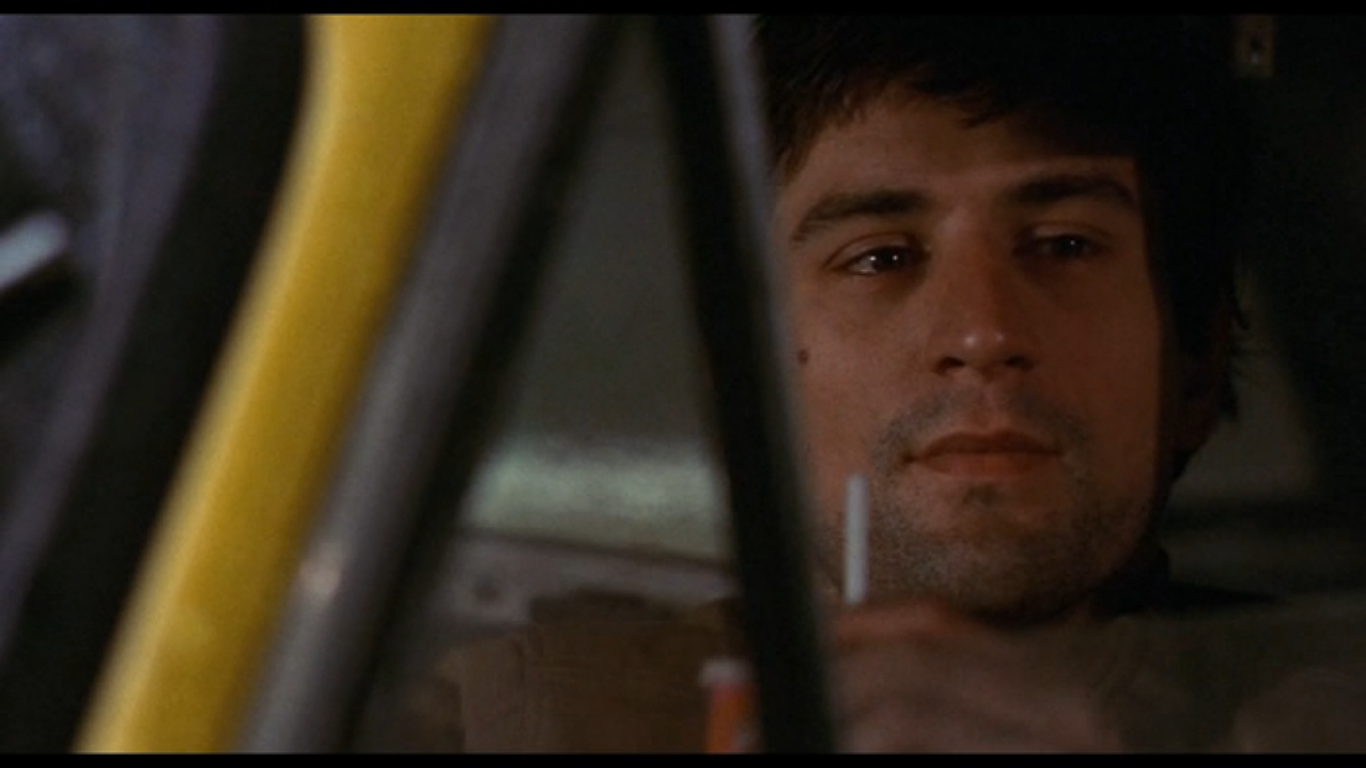
 Well. Whatever it is, you should clean up this city here, because this city here is like an open sewer you know. It’s full of filth and scum. And sometimes I can hardly take it. ~ Robert De Niro as Travis Bickle
Taxi Driver‘s Travis Bickle is an American icon representing anyone and everyone who has ever felt like an outcast, outsider, or misfit. He’s the perfect embodiment of any of the angst or disgust that might surge through our veins at any given time. Except before I ever saw Martin Scorsese’s film, I always assumed him to be a thuggish villain. But his character is more complex than that. He’s far more relatable than I would have initially given him credit for.
The film actually opens feeling like the pilot of the Sitcom Taxi or something. There’s Bernard Hermann’s beautifully cool jazz-infused score and then the illuminating lights of an average New York evening. It feels strangely peaceful in spite of all that is going to go down.
Travis is an ex-Vietnam vet who takes a taxi driving job for the strangest of reasons. He just wants something that will have him working long hours and he isn’t too particular about what part of town he ends up in. From the get-go, he strikes the audience as a quiet almost silent observer of all that takes place around him on the streets every night. He’ll sit around with a couple cabbies as they chew the fat, but he’s essentially isolated — a repressed young man who doesn’t really express himself. His existence feels tragic and lonely, certainly not deadly.
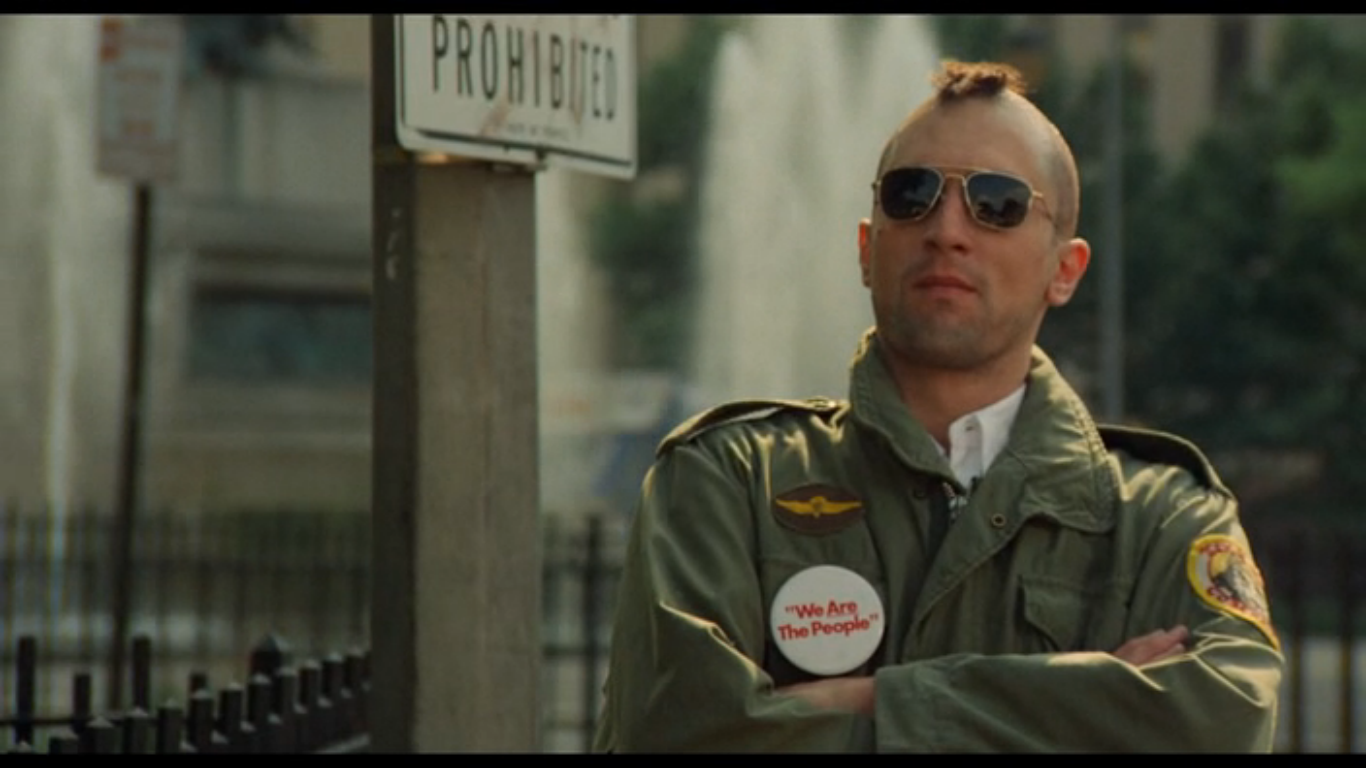 There is a small beacon of hope when a pretty campaign volunteer named Betsy (Cybil Sheppard) catches his eye, and he has an extremely awkward interaction with her but it lands him a date. But Travis just doesn’t quite know how to act, he hasn’t learned what it means to be in a relationship and he has an error in judgment while they are out. However, he doesn’t see it that way. He feels his attempts at kindness were completely rejected.
Then, he also begins to notice a young hooker out on the streets and his next mission is to get her away from there back home. He thinks it’s the right thing to do and he means well but young streetwise Iris (Jodie Foster) doesn’t seem to want his charity. So once again Travis seems unwanted and not needed when he is trying to do something nice.
Travis even acknowledges to his colleague Wizard that he’s getting all twisted up inside and confused. He’s distraught and he has no way to deal with it so his outlet includes a heavy strength regimen and loading up on a ton of guns. Never a good sign, but it his mind’s eye it’s all to clean up the streets of the scum of the earth.
However, first he attends a rally for a presidential candidate that Betsy will be at and he has intent to cause harm, but he backs out at the last minute and goes to Plan B confronting Iris’s pimp Sport (Harvey Keitel) and shooting him. The inner demons of Travis are unleashed as he goes off, but his delusions of grandeur reassure him that this is all for Iris. This is for her good. All this bloodshed.
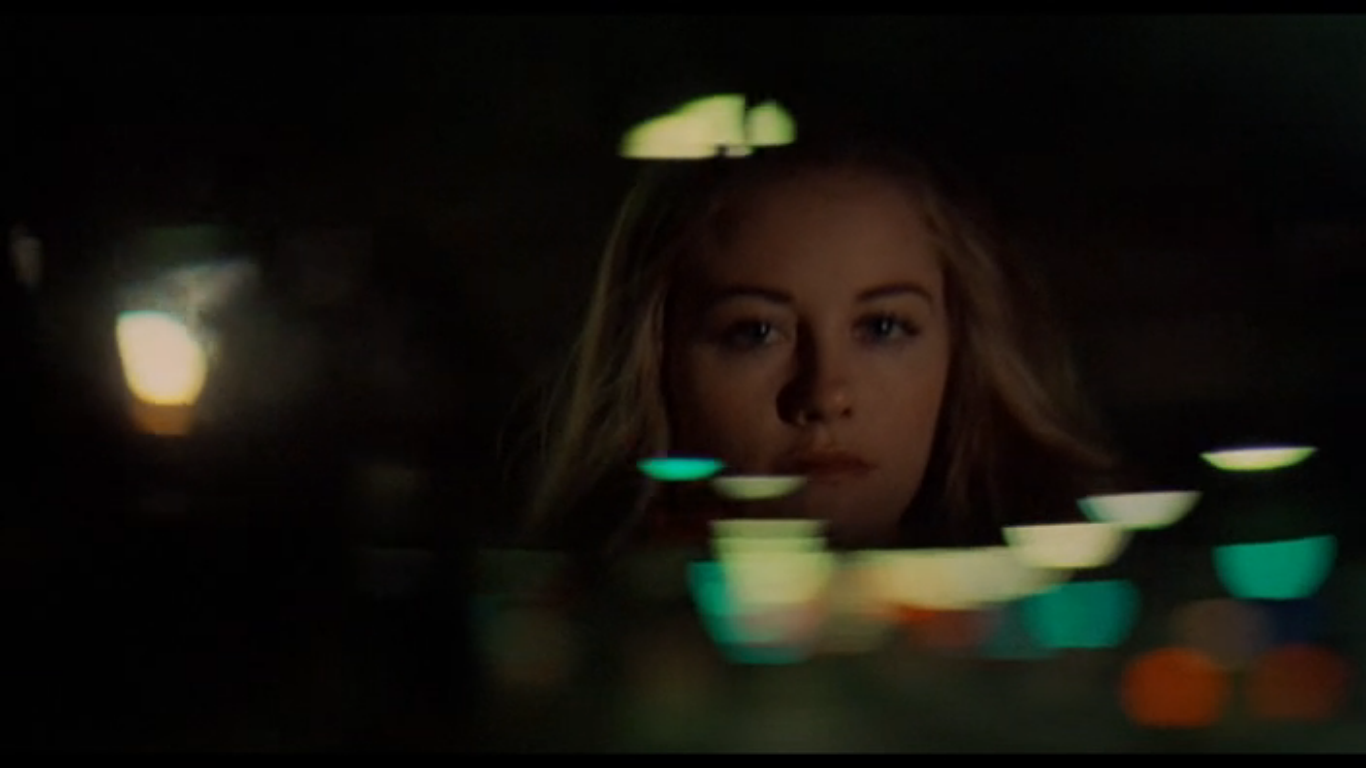 The final moments after his rampage have Travis receiving a letter from Irises parents who are grateful for his actions to save their daughter from corruption. Then, a fully recuperated Travis finds Cybil sitting in the back seat of his taxi cab in all her glory. It’s beyond his wildest dreams, which begs the question is this reality, or is this just a clever construction of his own brain? Another delusion of grandeur. It’s a wonderful open-ended finale.
Paul Schrader’s script is a wonderful character study giving introspection into one troubled man’s psyche. However, there is controversy on two fronts. It’s rumored that John Hinckley Jr. who tried to assassinate Ronald Reagan was influenced by this film and also the finale seems to reflect many people who commit mass shootings. Oftentimes they are people who are deeply troubled and are looking for some type of attention. But with that desire comes often deadly consequences.
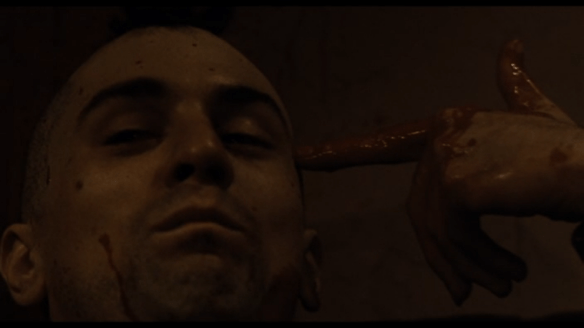 Martin Scorsese’s film has also received pointed criticism for its violence which is hard to downplay. However, Taxi Driver remains interesting because it is not bloated with killing (in fact only one scene is actually bloody). Most of the film has to do with relationships or lack thereof because a lot of what Travis does is watch and listen. It might be Martin Scorsese in a cameo as a jealous husband or a presidential candidate asking Bickle’s opinion from the back seat. Furthermore, like any warm-blooded boy, he knows that Cybil Sheppard is a dream girl. And he has enough compassion to want Iris to have a normal childhood. It’s just that his conscientiousness is misdirected and subverted.
The film resigns itself to following this one man in the wasteland that is New York. It’s starkly beautiful and thought-provoking placing a troubled anti-hero in front a canvas of urban realism. I could never condone his behavior, but then again I could never be completely against him either.
4.5/5 Stars
 In truth, I always thought this film had a well-suited title for its material. It was rather unusual and unique. There was not much more to think about otherwise. But when you actually think about it, whether or not you consider Alexander Pope’s poem from which it originates from, there is great truth that can be gleaned from this phrase “eternal sunshine of the spotless mind.” In fact, it’s truth that points to the heart and soul of Charlie Kaufman’s story.
 He swims in and out of consciousness between the past and then the present that is going on outside his head. The voices inside his head, or more aptly, the voices right outside his head come from two engineers (Elijah Wood and Mark Ruffalo) from a company in charge of erasing his memories. They create a map of them so they can remove the memories later.
 Finally, the narrative folds over on itself again as Joel’s mind returns to the present — a present without any recollection of Clementine. They meet again and there’s a strange sensation in the air. It’s a true deja vu moment that has them befuddled and confused. Will they go through with their relationship even when they find out about their rocky history?
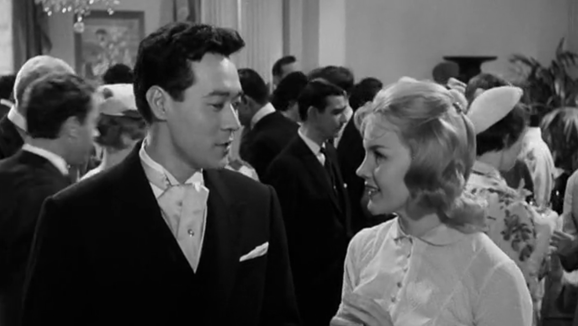 Bridge to the Sun is one of those films that was ahead of its time. Its main players are hardly remembered by modern audiences. Belgium director Etienne Perier was only a little blip on the Hollywood radar. The leading lady Carroll Baker was probably more notorious for her controversial role in Tennessee’s William’s Baby Doll than she was famous. James Shigeta was a pioneering actor, who was famously told, “If you were white, you’d be a hell of a big star.” He aged gracefully, but was slowly relegated from leading roles to bit parts in Hawaii Five-O and Die Hard. In truth, the film, based on the memoirs of one Gwen Terasaki, does suffer from a clunky script at times, and the box office returns were not too favorable. In fact, it was an outrageous flop back in 1961.
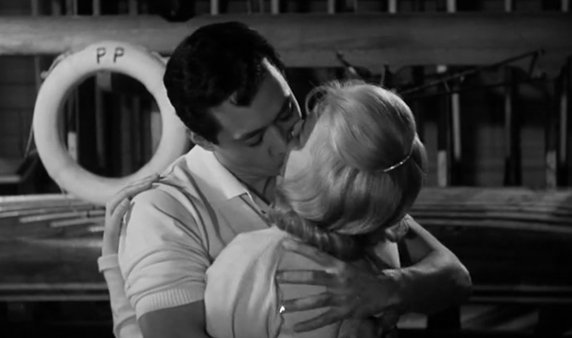 In fact, this film does not shy away from showing that affection, even though it undoubtedly made some viewers squeamish at the time. More than once Gwen and Terry embrace in intimate moments that signify the deep-seated love that holds them together. Because it’s far from easy. Gwen finds it difficult living in a Japanese culture where the woman is meant to be wholly subservient to her husband. She’s fine with the bowing and the taking off of shoes even, but not being allowed to talk is about the limit. With his family, her strong, lovable husband now seems cold and distant. However, they cannot stay mad forever and soon enough their little girl Mako is born, making them a happy little family. But of course, imperial Japan and isolationist America are on the brink of conflict and Terry and his family are tottering on the brink of calamity. He’s seemingly one man trying to hold together the relations of two nations that he has such close ties to. One because of his wife, the other due to his birth. Then, on a fateful day in December 1941 Japan struck the first blow and life would never be the same. Terry is now being detained and Gwen is fearful she might be forever separated from her husband. Disregarding what everyone else says, she takes her young daughter and follows her husband once again to his homeland – knowing full well what might be in store for her and her daughter.
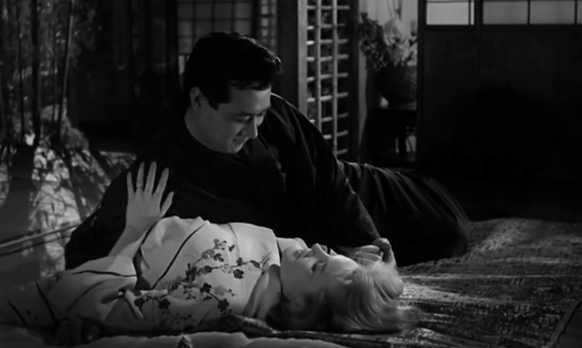 And when they arrive abroad there is the discrimination and the myriad of strange looks. Even as she makes the long journey across the sea all the white folk scoff at her, but Gwen takes it calmly and fearlessly. Once overseas the climate has changed greatly and now Terry is being questioned for his loyalty. The ethnicity of his wife doesn’t help and the firebombs raining down from above don’t exactly calm their nerves. But again and again, Terry and Gwen prove to be a resilient couple. The anomaly that should never have happened—seemingly could never have happened, and yet they did and they remained unequivocally together.



 “Now there are just two of us – young Aubrey Montague and myself – who can close our eyes and remember those few young men with hope in our hearts and wings on our heels.” ~ Lord Lindsay
 Back in the 1920s, a brash young Abrahams (Ben Cross) is about to enter university at Cambridge intent on becoming the greatest runner in the world, and taking on all the naysayers and discrimination head-on. He’s a Jew and faces the antisemitism thrown his way with defiance and a bit of arrogance. He’s a proud young man who loves to run, but more than that he loves to win. His best friend becomes Aubrey, a good-natured chap, who willingly lends a listening ear to all of Harold’s discontent. Soon enough Abraham’s makes a name for himself by breaking a longstanding record of 700 years, at the same time gaining a friend in the sprightly Lord Lindsay. Together the trio hopes to realize their dreams of running for their country in the Paris games of 1924. They are the generation after the Great War and with them rise the hopes and dreams of all those who came before them.
 Simultaneously we are introduced to Eric Liddell (Ian Charleston) a man from a very different walk of life. He’s a Scot through and through, although he grew up in China, the son of devout Christian missionaries. Everything in his life is for the glory of God, and he is a gifted runner, but in his eyes, it’s simply a gift from God (I believe God made me for a purpose, but he also made me fast. And when I run I feel His pleasure). His sister is worried about his preoccupation with this seemingly frivolous pastime, but Eric sees a chance at the Olympics as a bigger platform – a platform to use his God-given talent to glorify his maker while living out his faith. Abrahams is a disciplined competitor and he goes so far as to bring on respected coach Sam Mussabini (Ian Holm) to help his chances. Liddell is a pure thoroughbred with life pulsing through his veins, and of course, they must face off. It’s inevitable.