Amazing Grace (2006)

e09ee-amazinggraceposterBased on the life of Christian activist and British parliament member William Wilberforce, Amazing Grace is a very important and powerful film. Wilberforce is a unique and remarkably extraordinary man, to say the least.

The story opens as a dreadfully sick Wilberforce (Ioan Gruffud) takes a holiday at the home of some close friends. They introduce him to his future wife Barbara Spooner (Romola Garai), however, to begin with, they resist any romantic involvement and remain friends. He relates his story to her about how he became an Evangelical Christian while also a popular member of the British Parliament.

He had considered leaving politics for theological studies, however, he is persuaded by friends, including William Pitt (Benedict Cumberbatch), to continue in parliament. He is asked to tackle the highly unpopular issue of slavery, and after a visit to his aging mentor John Newton (Albert Finney), Wilberforce’ fervor increases. Due to his own regrets about formerly being a slave trader, Newton is hounded by guilt and urges Wilberforce to end the trade.

Soon William Pitt becomes prime minister, and Wilberforce gets ready to bring a bill outlawing slavery to the house. He gets some unexpected support, but his popularity dwindles, and he is strongly opposed by a coalition with a large stake in the trade. His bill is ultimately beaten outright, but William continues the cause for numerous years still to no avail.

Now back in the present, Wilberforce is sickly and dejected, but Barbara encourages him to push on. They get married soon after and the fight continues without much progress. However, finally William devises a clever plan to cripple the slave trade, and he gains some new allies. His colleague and friend Pitt is slowly dying, but he supports Wilberforce. After many years of tireless struggle, a bill is passed in parliament that effectively ends the slave trade in 1807.

Wilberforce is one of those often unsung heroes who truly did something amazing. Pun intended. With the release of Lincoln more recently, there are definite connections that could be made between the films. Like Lincoln, Wilberforce worked for more than political clout, because he knew what was good and right, and so he fought for those principles. That is the sign of a truly great man just like Abraham Lincoln. Much like Wilberforce himself, this film is less heralded than Lincoln, but I would wager that it is no less important as a historical drama.

4/5 Stars

Nothing Sacred (1937)

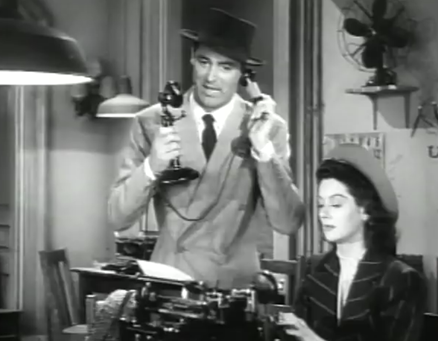
 13094-nothingsacred2Before His Girl Friday (1940) came, there was another screwball comedy about journalism, the perfect scoop, and deception. After getting on the bad side of his boss, newsman Wally Cook (Frederic March) is demoted from the living and forced to write obituaries. It’s quite the awful setup and Cook desperately looks for another story to get him in the good graces of the Morning Star’s editor.

The perfect news flash has just come up in the form of a woman who is soon going to die of radium poisoning, and so Wally Cook goes to meet her. Heading up from New York, he ends in the one horse town in Vermont. He meets a lot of unobliging people whose vocabulary is limited to “Yup” and “Nope.” He finally comes across the crying girl who has just left an appointment with a doctor. He comforts the girl cheering her up by promising a trip to the big city where she will be treated like royalty (And he’ll get his story). So Hazel Flagg soon becomes the sweetheart of New York with public appearances at Madison Square Garden, parades, poems, articles and special honors. It’s all going according to Cook’s plan, the only thing is that Hazel is not actually ill.

That’s a wrench in the plan and soon it becomes evident that Cook will look like a cad. To make matters worse, he’s falling for her and his editor Oliver Stone is all over him. Now he must take part in Hazel’s charade, despite his annoyance. She too is annoyed and ends the game so the two lovebirds can elope. Still, the story of Hazel is given a romanticized ending that the public deserves.

Frederic March is decent as the desperate and long-suffering journalist. Carole Lombard is her typical light-headed, whimsy, high-strung, scatterbrained, sniveling self. It proves to be a volatile combination partnered with Ben Hecht’s script. The news industry loses a lot of its self-respect for the sake of laughs because nothing’s sacred. Some might be interested to know that it was shot in glorious technicolor and it was the only time Lombard would appear in a technicolor film. She would, of course, die in a tragic plane crash in 1942.

This film was quite short so the story moved quickly and there were definitely some screwy moments. I am however partial to His Girl Friday and some of the other more well-known screwballs.

3.5/5 Stars

Review: Sunset Boulevard (1950)

f5016-sunset_blvd_title

“Yes, this is Sunset Boulevard, Los Angeles, California. It’s about five o’clock in the morning. That’s the Homicide Squad – complete with detectives and newspapermen. A murder has been reported from one of those great big houses in the ten thousand block. You’ll read about it in the late editions, I’m sure. You’ll get it over your radio and see it on television because an old-time star is involved – one of the biggest. But before you hear it all distorted and blown out of proportion, before those Hollywood columnists get their hands on it, maybe you’d like to hear the facts, the whole truth.”

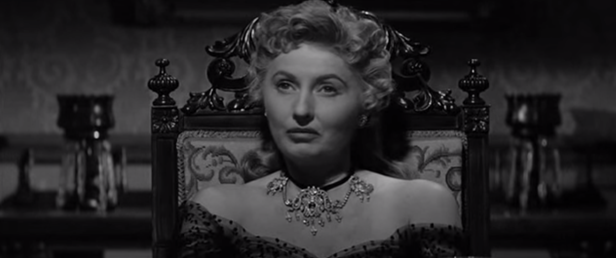
So begins one of the most caustic dramas ever constructed in Hollywood, or about Hollywood, and it was gifted to us by screenwriter-director extraordinaire Billy Wilder. His previous hard-edged film noir Double Indemnity had its own cynical narrator with a memorable voice-over of his own. However, Walter Neff was only on the verge of dying. When we hear the voice of Joe Gillis he is already speaking from the grave. It is a fantastic angle in which to look at this seemingly perfect Hollywood construction, and Gillis never ceases to tell his story until we wind up at the pool as the story comes to a close.

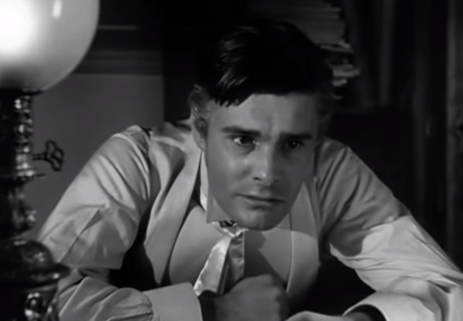
For now, we learn that six months back Joe (William Holden)  is a writer who is having difficulties being published, and some men want to repossess his car. Desperate, he pays a visit to a friend at Paramount named Mandrake to pitch an idea, but the script is of little merit according to a pretty young script reader. That’s a dead end so Joe leaves, but the men are waiting for him and he zooms away. A flat tire leads him to drive away into an empty garage connected to a dilapidated old mansion on Sunset Boulevard. 

There he is mistakenly introduced to drama queen Norma Desmond (Gloria Swanson) who used to be big on the silent screen, back in the day. Now all she has is money, fan letters, and old memories to rehash, while her butler Max (Erich von Stroheim) watches over her. The theatrical actress believes her big comeback is soon at hand, and when she learns Joe is a writer, she takes an interest. He needs the money so he takes a look at the rough script meant to be a vehicle for her. A small commitment turns into a life-consuming undertaking. Desmond constantly hovers and dotes over Joe, going so far as having his things moved into her home and buying him new clothes and trinkets. He reluctantly accepts the first class treatment, not minding the cushy lifestyle. But to Norma, it’s more. 

He is her closest companion. Her love. Joe cannot bear to tell her that she is washed up and that there will never be anything between them. He ditches her intimate New Years party for a more friendly affair where he crosses path with his old bud Artie (Jack Webb) and his girl, the previously critical script girl Betty Schaeffer (Nancy Olson). She takes an interest in a few of his past ideas, but he does not, and after getting shocking news from Max he is pulled back to his lavish prison.

Eventually, Norma is prepared to drop off her script with her former collaborator the great Cecil B. DeMille. However, it becomes all too clear that her story will amount to nothing, but her friend cannot bear to break her heart. She is sent off again with the strong conviction that her day is coming. Makeover’s, diets, and facials follow in preparation. Joe is indifferent to it all and secretly begins working at nights with Betty on a new screenplay. 

Desmond finds the script and jealousy takes over, causing her to call Betty to ruin the romance that is rapidly budding there. Joe hears it all and angrily tells the disbelieving Betty to come see his set-up on Sunset Boulevard. He acts as if he likes the life, and Betty leaves broken-hearted. Soon after, a fed-up Joe packs his bags to head back to Ohio. Thus, begins the systematic breakdown that we had expected for so long. Norma Desmond completely falls apart and does the one thing she knows to hold on. 

Back in the present the crowds and journalists have turned out to see the has-been movie star who is stark raving mad, and one last time Norma does not disappoint. She glides seamlessly down the stairs with a serenely ethereal look on her face before preparing for her closeup. So ends the career of one Norma Desmond and the life of Joe Gillis. We can only hope that Betty got together again with Artie, otherwise this would remain one of the bleakest tales of all time.

However, that is part of the power of this film. It is strangely dark and ominous. Franz Waxman’s score is fit for a Gothic melodrama and Desmond’s mansion is a creaky old foreboding castle that hardly sees the light of day. Max is a solemn figure who we learn brought Norma stardom, married her, got divorced, and then could not live without her. Joe Gillis gets caught in a cycle he cannot get out of, and in the middle of the whole mess is Desmond herself. She is so preoccupied with herself, so obsessed with her own former glory, and yet she is a lonely, insecure aging actress. In many ways, she is Citizen Kane’s female counterpoint. A person with so much money, prestige, and power who slowly drifts away into oblivion without anyone caring except ravenous journalists. Much in the same way, although Norma is so petty and vain in so many ways, I cannot help but feel sympathy for her sorry existence. She is an utterly pitiful person in the end. No one deserves her fate.

In this way, Sunset Boulevard seems to critique Hollywood, a place that makes stars like Norma Desmond and spits them back out just as easily. It is not easily figured out or understood it just does at is pleases. For instance, Billy Wilder became an immigrant writer and director of great repute. Cecil B. Demille was a longtime respected director. Erich von Stroheim had early success with silent films then had to turn to acting. Gloria Swanson was a silent star then struggled in the 1930s. William Holden broke out in the 30s, hit his peak in the 1950s and continued to act into the 70s. Nancy Olson went on to make a few classic Disney movies and Jack Webb, of course, went on to create the TV Show Dragnet. Each Hollywood career starkly different from the others. 

 There is also such an authenticity in this film so much so that sometimes the line between fiction and reality is blurred. First, Wilder cast Gloria Swanson to play former silent star Norma Desmond in the film, so it seems like she is playing herself (Complete with old promotional photos and silent footage). He also had appearances by both von Stroheim and Demille, who had each directed Swanson in her silent days. Some of Desmond’s bridge friends include other real silent stars including Anna Q. Nilsson, H.B. Warner, and the legendary Buster Keaton (His career had also crumbled). Even gossip columnist Hedda Hopper gets into the mix to tell the tragic story of Desmond, and it all works. 

So whether you watch Sunset Boulevard for the Hollywood angle, or as a film-noir, or a love story, or a tragic drama, the beauty of it, is that it functions as all of those things simultaneously. Gloria Swanson is absolutely loopy, William Holden is as cynical as ever with his smoked-out gravelly voice. Von Stroheim is haunting as the faithful Max, and Nancy Olson is the one young friendly face in juxtaposition with Swanson. Billy Wilder’s script with Charles Brackett is inspired a multitude of times, but instead of telling you I will give you a taste: 

“There once was a time in this business when I had the eyes of the whole world! But that wasn’t good enough for them, oh no! They had to have the ears of the whole world too. So they opened their big mouths and out came talk. Talk! TALK!”

That’s Norma Desmond in a nutshell for you. That’s Sunset Blvd.

5/5 Stars

Review: The Pride of the Yankees (1942)

b9d42-prideofthe3Before superheroes headlined any Marvel or DC blockbuster, it was real life heroes that audiences wanted to see. No pastime was quite as popular as baseball and in that era Lou Gehrig was one of the titans along with Babe Ruth and the rest of the Yankees. You see this film is less of a biography (It certainly is not completely accurate), and more of a visual eulogy to a contemporary hero. The prologue explains as much:

“This is the story of a hero of the peaceful paths of everyday life. It is the story of a gentle young man who, in the full flower of his great fame, was a lesson in simplicity and modesty to the youth of America. He faced death with that same valor and fortitude that has been displayed by thousands of young Americans on the far-flung fields of battle. He left behind him a memory of courage and devotion that will ever be an inspiration to all men. This is the story of Lou Gehrig” ~ Damon Runyon

As a modern viewer, I am just happy I can recognize baseball names like Miller Huggins, Joe McCarthy, Bill Dickey, Tony Lazzeri, and of course, Babe Ruth. When audiences went out to see this film starring Gary Cooper and Teresa Wright back in the day, they were practically living it. World War II had already heated up and one of the great American heroes had died the previous year. Lou Gehrig was all those things in the prologue and more making it hard to get it all into a film.
Like any other superhero, he has an origin story beginning with his childhood in Manhattan, living with his poor German immigrant parents. His domineering mother convinces him to go to Columbia for engineering, but he soon ends up in the big leagues because of his tremendous skill with a bat. He is often a shy and even awkward young man, but he loves his parents and he can sure play ball. It’s that last point that gains him a lot of respect after a less than graceful start as “Tanglefoot.”
He soon becomes a lethal one-two punch with Babe Ruth, after initially being dismissed as the rookie and a boob. Journalist Sam Blake (Walter Brennan) has a major influence in Gehrig’s life and never loses faith in the young man’s abilities. He also does Lou a favor by introducing him to an attractive young Chicago socialite named Eleanor Twitchell (Teresa Wright), who finds Gehrig quite ridiculous at first. Soon, however, a budding romance begins with the often reserved Gehrig falling for the vibrant and vivacious young Eleanor. He gets engaged, married, hits two home runs for a little boy, and wins a world series. A lot of his other exploits are laid out for us too and the trophies and accolades start stacking up. All of this happens during the happy times when Gehrig is on top of the world, first with Murder Row and then The Bronx Bombers.
But all fairy tales must come to an end, and Lou Gehrig’s is especially tragic. He plays an, at that time, unheard of 2,000 consecutive games, but he also falls into a rapid decline. Eleanor looks on helplessly as her husband begins to deteriorate in front of her eyes, and the fans know something is not right. Gehrig gets examined and learns he has ALS, but very little is known about it. Much less can be done to treat it.
His final appearance at Yankee Stadium came on Lou Gehrig Day in 1939. That day he gave his “Luckiest Man Speech,” and he walked off the field for good. Gary Cooper delivers the partially revised dialogue with a calm and clear delivery that seems to truly epitomize Gehrig. Although he is playing the man, it is almost as if he is giving a eulogy.
That’s a fitting ending because we do not need to see the suffering or the death. What we remember is the wonderfully full life he led. Perhaps this film had more cultural relevance back in 1942, but I would argue that it is still a stirring, heart-wrenching film. You have a small heart if you cannot find a place in it for this one.
Although he was not too good at baseball, in the other sequences Cooper seems like the perfect man to embody Gehrig. He is distinctly American, strong, quiet and he also has a pleasant charm with a comical streak in him. The look on his face when he realizes his weakness tears the heart. Teresa Wright had many fine performances early on in her career, but I will step out on a limb and say that this is probably the best one. She has so much spirit and at the same time, she is funny with a noticeable tenderness. She is the perfect wife and a wonderful actress to embody Eleanor Gehrig.
In a society that places so much interest in make-believe superheroes, I don’t mind taking some time to acknowledge a real one. We were the lucky ones Lou, thanks. Let anyone and everyone who does the Ice Bucket Challenge know who you are. You deserve to be remembered. Always.
4.5/5 Stars

Annie Hall (1977)

annie hall 4 alvy“I would never want to belong to any club that would have someone like me for a member. That’s the key joke of my adult life, in terms of my relationships with women.”

So begins Annie Hall a film that Woody Allen, also known as Alvy Singer, begins with an opening monologue borrowing a quip from Groucho Marx. It acts as a lead into his life story, romantic and otherwise.

He had a childhood characterized as being morose, depressed, and so on, because as he noted early on “the universe is expanding.” He grew up living under a roller coaster and having fun with the local bumper cars. He grew up to be a comic with the same despondent outlook on life. In one memorable long shot of a sidewalk, we listen to Alvy talking to his friend about people making jokes about him being a Jew and his assertions seem uncalled for.

Alvy Singer and Marshall McLuhan

When Alvy was dating Annie, they went to Ingmar Bergman films and The Sorrow and the Pity was a personal favorite of Alvy. A favorite film with a perfect title and subject for the pessimistic fellow. However, what really vexes him are puffed up know-it-alls who pontificate on and on like they are God’s gift to the universe. It seems necessary at this point to break the fourth wall.

As Alvy recalls his early childhood and first relationship which began at an Adlai Stevenson rally, it is rather funny that he remains unchanged the whole time. Physically Woody Allen is playing Alvy as a young man and an old man without any change.

Then there is the fiasco with the lobsters and the memories of his first meeting with Annie over tennis. That was when he met the girl who came out of the Norman Rockwell painting. Seemingly the antithesis of Alvy himself.

Their relationship is examined with all its quirks from a trivial conversation about art, with underlying subtitles that reflect their real thoughts, to Annie’s stint as a nightclub singer. They have a comical time people watching, and Alvy recalls his second wife and the one who was a Rolling Stone reporter. His relationship with Annie also has its share of arguments, over spiders at 3 in the morning and adult education. Through it all Alvy still views Annie as a cartoon version of the Wicked Queen from “Snow White,” who he secretly loves.

It is during a famous split screen sequence (actually a split room) where the stark differences, not only between the pair, but the genders are pointed out. Things are changing. They take a trip out to sunny California and Alvy cannot help but hate it compared to pleasantly gray New York. They have laugh tracks, wheat germ killers, and trash which is subsequently made into T.V. shows. Annie loves it all.

The inevitable comes and Annie breaks up only to have Alvy soon revisit California to propose marriage. Needless to say, it does not happen. He returns to New York and makes his first play about their last conversation verbatim, with one small revision. Alvy sees Annie one last time when she returns to New York, and they share some laughs while highlights role across the screen.

Allen’s stand-in Alvy sums it all up with one final joke about a guy who has a brother who thinks he a chicken, but he fails to do anything about it because he needs the eggs. That’s how he feels about relationships. “They’re totally irrational, and crazy, and absurd,” but you keep on because you need the eggs. Another philosophical gem from Alvy Singer.

The irony of Annie Hall is that many a person has gone on to pontificate on and on about it, but if we actually pulled an Alvy Singer and dragged Woody Allen from out behind a movie poster, I’m sure he could set us straight. Annie Hall is chock full of humor, a far from typical type of romance, and people trying to find their way in life. Take away discussion about psychoanalysis, modernism, antisemitism, and what you are left with are people just talking. Some of what they say is about such philosophical topics, but sometimes it’s not. It’s about memories, simple observations of life, and the little things that happen along the way.

There are clashing worldviews that come up against each other like New York and California (brought to us by the cinematography of Gordon Willis). There are different sorts of people like Alvy Singer and Annie Hall. Yet we still go through relationships “because we need the eggs” so to speak. We are searching for that type of intimacy and closeness, and very often we keep looking and looking. It is painful, seemingly necessary, and all the same, it can feel pointless. It’s part of being human I suppose.

Annie Hall works for me because of the quirks that give a fresh face to the typical romantic comedy and it will be the measuring stick for other such films that are being released for years to come. I am not usually a major fan of Woody Allen films, but this one is his undisputed masterpiece. It exemplifies his general philosophy and approach to comedy. Not to mention his typical players in Diane Keaton and Tony Roberts.

4.5/5 Stars

Guardians of the Galaxy (2014)

84784-gotg-posterMy first thought about this film without any prior knowledge was, “How can they have a superhero movie with a talking raccoon and a walking tree? That’s so stupid!” Well, they proved me wrong or maybe they proved me right in a sense.

Guardians of the Galaxy is stupid in numerous ways, yes, but it’s the kind of dopiness that is fun, endearing, and often hilarious. It succumbs to some of the normal superhero/blockbuster cliches, but it also finds time to make fun of itself, and it benefits from that. It does not take itself too seriously and it begins with Chris Pratt aka Peter Quill aka Star Lord (not Andy Dwyer for all those Parks and Rec fans). He is an unlikely superhero, even the actor himself, and so it makes his character work all the better for this film.
After a childhood, tragedy Peter is abducted by a group of Ravagers, and thus begins his life in the far reaches of the galaxy retrieving artifacts for his employers by any means possible. He comes across a highly sought after orb, and he himself has a price on his head. That’s how he crosses paths with deadly female assassin Gamora (Zoe Saldana), and bounty hunting partners Rocket (Bradley Cooper) and Groot (Vin Diesel). Gamora was sent by a power hungry villain bent on revenge. Rocket is a highly intelligent raccoon with an attitude, and Groot is a walking tree of few words who teams with him. They all end up in prison, and it is there where they finally begin to gel as unlikely as it sounds.
The crew is joined  by fellow inmate Drax, and they head out to deliver the mysterious orb to their contact. However, it falls into the hands of the enemy, and the gang must now protect Xandar from destruction. We have seen it all before, an epic space battle with ships zooming by, pyrotechnics everywhere and unexpected twists and turns. It is moments like these where it seems Guardians falls into the usual mold of explosions, image overload, and corny drama.
Quickly it finds itself again with Peter being goofy (ie. a dance off) or Rocket giving us one of his many wry comments in an extra epic moment (Well now I’m standing. Happy? We’re all standing now). It is these sorts of moments that make this film. Groot only knows three words, “I am Groot,” and yet Rocket has spent so much time with him that he understands every iteration. That’s how a summer blockbuster about a talking raccoon and a walking tree ends up working. It sidesteps some of the usual tropes, and when it does fall into one it willfully makes light of itself. We can forgive and forget because these “lovable misfits” are a barrel of laughs and they have a heart. It does not hurt that this film has an Awesome Mix for a soundtrack. At times I was not sure if I was watching a space opera or a rock opera — the music was so often the highlight. Then, when “Ain’t No Mountain High Enough” started playing I was sold.
3.5/5 Stars

Review: Ferris Bueller’s Day Off (1986)

de119-ferris1What’s the dream of every high school student? A school day on the town with their friends of course. In other words, the fantasy is Ferris Bueller’s Day Off. It’s utterly ludicrous but that’s part of the charm because it is such a fun romp that we forgive it for any flaws it may have.

Ferris (Matthew Broderick) is a charismatic and clever slacker who constantly breaks the fourth wall while hatching elaborate plots to get out of school and pull one over on his parents. He’s continuously pulling fast ones the whole day long and loving every minute of it. Including fake symptoms, dummies, voice recordings, and sound effects. A school-wide collection for the Save Ferris Campaign is passed around due to his illness.

In case you did not catch on yet this is a caricature of the high school life, far from reality, but that does not make it any less enjoyable. In John Hughes high school world there are stuffy and monotone teachers, a sadistic principal bent on catching Ferris red-handed, and a squeaky-voiced secretary a little behind the times. Most importantly of all, Ferris seems to have the world on a string, and his best friend and girl are right beside him to enjoy it all. Not even his sister or Mr. Rooney can thwart his fun, no matter how hard they may try.

Cameron (Alan Ruck) has a knack for the authoritative voices, sports a Red Wings Hockey jersey, and gets pulled into every one of Bueller’s schemes. He takes a lot of grief. Going so far as letting Ferris take out his father’s precious red Ferrari. As it turns out he has a very loud scream as well. Ferris does however, help him gain a little self-respect. Sloan (Mia Sara) is the cool brunette who readily takes part in the day. She’s future wife material but that’s a topic for a different time. On his part Mr. Rooney spends the afternoon getting berated, pummeled, ticketed, and chased all over the neighborhood. All in the name of catching Ferris Bueller in his lie.

The epic day off in the Windy City includes all of the following:
A trek to the observation deck of the formerly named Sears Tower (The tallest building in the world at the time). A pitstop at a ritzy restaurant for one Abe Froman, followed by a Cubs game at Wrigley Field. Art History lovers will be ogling and drooling during a montage where Cameron famously stares intently at Seurat’s work in pointillism. Then, of course, there is the Von Steuben’s Day Parade with perhaps the most famous lip-sync of all time. How I love “Twist and Shout.”

It’s not all great however, with Cameron running into problems with his dad’s car, and it must all come to an end eventually. Ferris shares one last parting kiss with Sloan and the race is on to get back home before he is found out. That’s when a little more luck comes into play. Not to mention a superhuman leap and some sisterly love.

Don’t think less of me but I am not a big fan of The Breakfast Club or Fast Times at Ridgemont High, two 80s teen classics. However, I cannot help but like a Day Off. Matthew Broderick is tremendously memorable, and the sequences in Chicago make for an equally thrilling ride. This might not be a great film, but it certainly has many returning for a second helping and maybe thirds and fourths. Who wouldn’t with a day like that? It’s like a sightseeing tour for the viewer with a little comedy and good old fashioned friendship sprinkled in. A real treat.

4/5 Stars

Seven Chances (1925)

seven chances 1We’ve seen a derivative of this story many times before, but thanks to Buster Keaton, Seven Chances has a lot of marvelous comedic moments created by his wonderful physical ability.

The story goes something like this: Boy meets girl and he loves her but never makes his move. Now he has the chance at $7 million if he gets married before his 27th birthday. But that’s today so all he has to do is marry his sweetheart Mary. It sounds so easy until he complicates the whole situation with muddled words and misunderstandings.

Now he only has a matter of time to find another bride. His law partner puts down a line of candidates, and he strikes out each time earning a face full of laughs in reply. Even the secretary and coat attendant turn him down his pitiful plea.

He drives off desperate for a bride and his buddies put an ad in the paper sure to grab him a wife. Jimmy waits patiently at the church, but there’s a problem. Hundreds of women show up and soon turn into a mob bent on clobbering him for making fools of them.

Then and there begins one of the grandest, most epic, and extraordinary chase scenes of all time. Forget Bullitt or The French Connection, this is the seminal chase scene. It’s mind boggling to think how many extras they used and all dressed in drag no less. It is difficult not to marvel at Keaton’s physical prowess because that is where he tops Chaplin. He’s fantastic at scampering about, sliding around, and making pitfalls in general, given the right environment. Soon the world becomes his playground with coattails flying and droves of angry women hot on his heels.

He hitches a ride on the spare tire of a car, dangles from a crane, does frantic Australian crawl across a pond, rides a falling tree, and of course, dodges an avalanche of fake-looking boulders. All I can say is Keaton could have been a professional dodgeball player, but we can be thankful he stayed with film. He was pretty decent at comedy too.

Needless to say, Jimmy gets back in the nick of time, or did he? Of course, he did! It seems like he’s the only one who cannot plant a kiss on the bride. At least he has one now, and Mary is far more important than the money. That’s all that really matters.

Chaplin was great because his Tramp had so much expression. The Great Stone Face was great for the exact opposite reason. He lacked it. His nervous fidgeting or obvious dismay in all situations heightens the comedy making the laughs even more hilarious.

His two buddies are a comical pair in their own right with their differing heights and good-natured blunders. They get caught up in Jimmy’s unfortunate predicament and get knocked about a bit as well.

Keaton may have had greater films, but in his golden age during the 1920s, he could hardly do any wrong. Seven Chance has one of the greatest sustained comedy sequences of any of his films and it certainly does showcase his skills. He gave Chaplin a run for his money, literally.

4.5/5 Stars

The Stranger (1946)

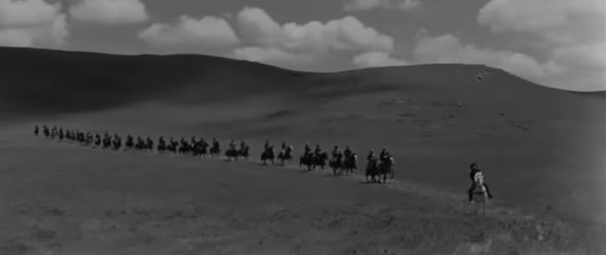
f6c39-the_stranger_filmIn a whirlwind, the film goes from a moody foreign locale to a quaint American town called Harper, but it never ceases to be a gripping film noir. Considered Orson Welles‘ weakest project thus far, The Stranger is still thoroughly enjoyable thanks to the performances of Edward G. Robinson, Loretta Young and Welles himself. Much like Shadow of a Doubt, this film shows that noir thrillers can still take place in middle America, and they can be pulse-pounders all the same. Also, an evil man can easily exist in a mundane environment and still be evil.

The reason we end up in Harper of all towns has to do with an “escaped” Nazi war criminal. He was allowed to escape and investigator Mr. Wilson (Robinson) follows him. It’s an idyllic little town and one of its most respected members is professor Charles Rankin (Welles), who is soon to be wed to pretty Mary Longstreet (Young). Little does she know that he is former Nazi war criminal Franz Kindler, and he is the man the escaped Konrad Meinike is looking for. Mr. Wilson is very interested in his whereabouts too.

Meinike soon disappears but not before deterring Wilson. However, not one to shy away from his duty, Wilson soon ingratiates himself with the local people, especially the newly married Mary and her kindly family. He is eager to learn more about the professor and at first, the gentleman seems above reproach, but something lurks underneath his calm exterior. Soon the beloved family dog Red is killed, an increasingly manic Rankin confesses his predicament to his wife and conveniently leaves out a few facts. Now constantly paranoid, Mary’s life is in far more peril than she realizes, and Wilson takes all the precautions he can. The clanging of the newly refurbished clock becomes a point of major contention, and it also serves as the perfect locale for a final climatic showdown (Put aside the absurdity and just watch it).

The whole town turns out for the show and finally after getting conked on the head and nearly killed during the case, Mr. Wilson finally has time to relax. Welles is not quite as memorable as Harry Lime here but still a sophisticated villain of sorts.  Likewise, Barton Keyes is a bit more memorable but Edward G. Robinson still brings his personality, iconic voice, and memorable mug to the table. Loretta Young has a radiant face and eyes like always. In other words, they do what they do. It works in making The Stranger a worthwhile thriller with the expected melodramatic music and shadowy facades of a film-noir. This is undoubtedly an oversimplification, but  then again, Orson Welles needs no introduction, and he certainly does not need me to vouch for creative genius.

4/5 Stars

Talk of the Town (1942)

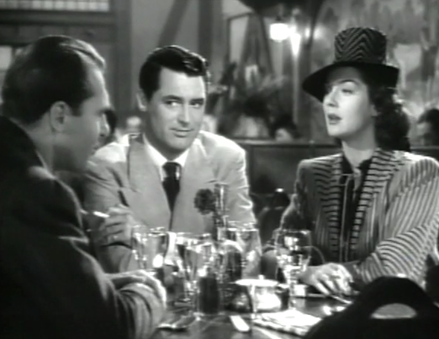
0db8e-the_talk_of_the_townThis comedy-drama begins with a rather stark montage chronicling how the unfortunately named Leopold Gilg (Cary Grant) was accused of arson, murder, and finally imprisoned by one owner of a mill named Holmes. After escaping from prison and an imminent conviction, in a torrential downpour, the hampered Gilg seeks asylum in a nearby house. It just happens to belong to Miss Nora Shelley a local teacher in Lochester and an acquaintance of Gilg. She reluctantly allows the injured fugitive to hold up in her attic, but then her new tenant arrives a day early, the distinguished professor Lightcap (Ronald Colman).

After Gilg finally reveals himself to Lightcap as the gardener Joseph, what forms is an interesting triangle with the two men on the sides and Ms. Shelley in the middle. Both men take a liking to each other despite their difference in opinion on justice. Lightcap is much the academic and he goes by the book. “Joseph” on the other hand has a more practical approach.

It does not matter much until the professor finally learns Joseph’s true identity and now he feels it is his duty to report Gilg no matter his affinity for him. But after Gilg gets away once again, the professor is finally coaxed to look into the case that he has been so reluctant to involve himself in. Both men make concessions out of respect for the other. The professor involves himself, buys some borscht, and cuts his beard, while Gilg turns himself in. It almost drives Ms. Shelley up the wall with grief. You see she loves both of them.

In his final search, Lightcap finds something very interesting indeed. The town mob bursts into the courtroom as Gilg stands trial again, but the professor shows up with a surprise of his own. He ends up as the next Court Justice, a very happy man and Ms. Shelley and Gilg are very happy for him. They don’t have much to complain about either.

George Steven’s film has a bit of a contrived plot much like The More the Merrier. Things certainly feel set up, but that’s okay because the cast is so wonderful it makes the set-piece work. Jean Arthur is in top form when she is exasperated and sneaking about making little white lies as people file in and out of her home. Gilg seemed like a rather odd role for Grant, but he pulled it off with his usual charm and charisma. Someone else might have made Lightcap unbearably stuffy, but Colman’s portrayal is always tolerable and very often charming. This had a lot more drama than I was expecting, but it was not short on the comedy either. My only complaint is that it ran a tad long, but it just meant more screen time for the leads. That’s not so bad. They were The Talk of the Town after all.

4/5 Stars