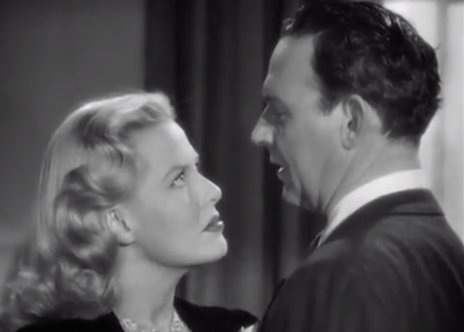
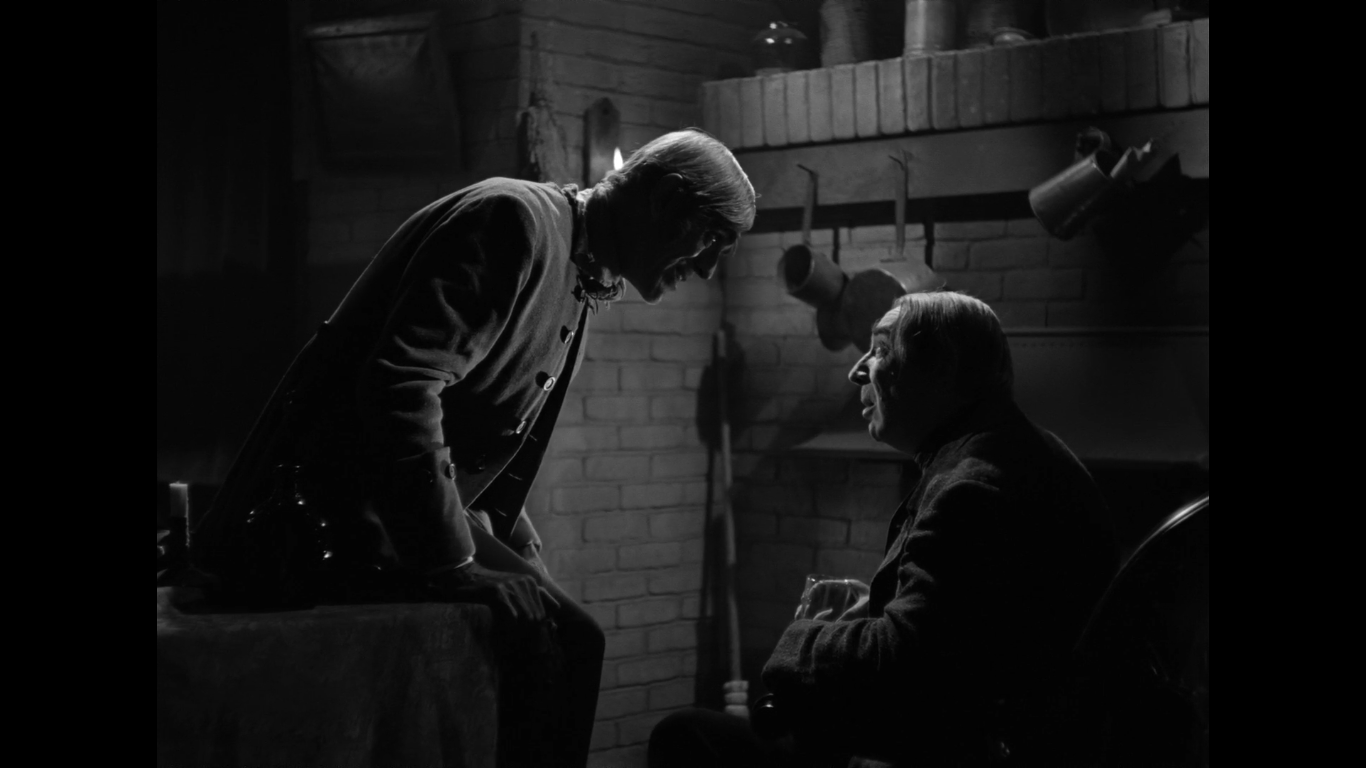
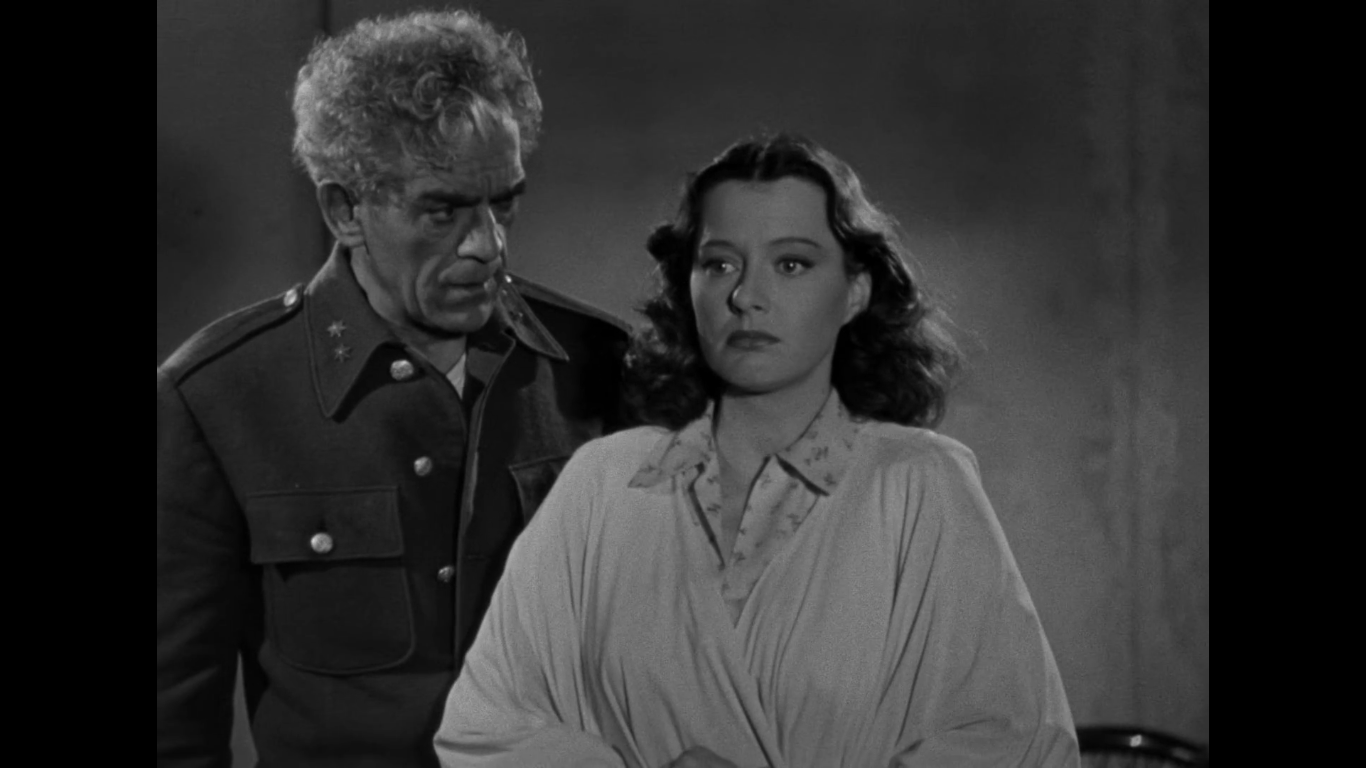
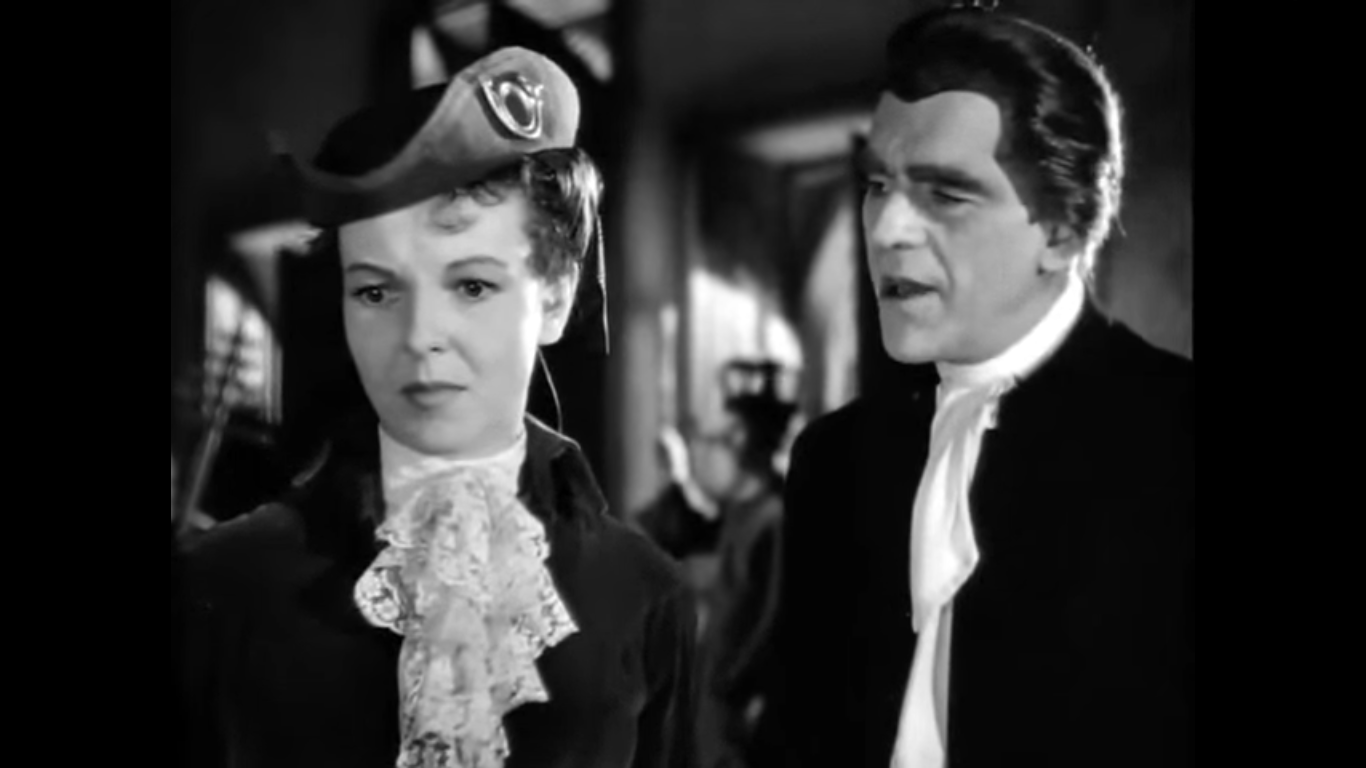
Swing Shift (1984): Underrated Classic with Caveats

Swing_shiftAside from films actually produced during the war years, I’m not sure if I can think of a film that highlights the homefront to the degree of Swing Shift. The soundtrack is also perfectly antiquated (sans Carly Simon) fitting the era and mood to add another definite dimension. It effectively takes us back with the auditory cues of Glenn Miller, Hoagy Carmichael, and the rest.

We read in our history books about Rosie the Riveter and women gaining a newfound freedom as they fell into work formerly held only by men. But here this reality is put into practice in a manner that makes tangible sense.

The events of the war happen to them as they walk along the pier, sit in their living rooms, or do their work. Instantly they become current events.

We understand the certain amount of independence women would have been allowed in this time, where they were given a part to play in the struggle against the Axis powers. War can simultaneously cause deep wells of tragedy and bring us the greatest joys.

Our relationships become entrenched with a profound camaraderie and yet we can hurt the ones we love. We change and they change. Things very rarely remain the same after something so cataclysmic.

There are several intentional and formative relational dynamics in Swing Shift. It is about two working women: Goldie Hawn and Christine Lathi. They are by each other’s side through the thick and thin of friendship. Putting in a solid day’s work and then getting dolled up to go out on the town. They’re inseparable. However, sometimes it’s relationships like these that can suffer the most.

It is about a husband (Ed Harris) and a wife (Hawn): one going off to war and the other staying behind — prepared to walk alone. This isn’t what they were planning, but it’s happened and they move forward through the paces of it the best they can. And yet life gets in the way — where time and space separates them — and makes the waiting and the worry all the more difficult.

It’s about a woman and a man who cannot contain the genuine feelings they foster for one another (In real life Kirk Russell and Goldie Hawn fell in love and never looked back). Because he is present, in the flesh, good-natured and available in a way her husband never was — even when he was around. And yet Lucky (Russell), when he’s not riding his motorbike or playing the trumpet, is a wounded soul in his own right. War only works to exacerbate the clouded emotions of the day and that goes for all these relationships. They are interconnected issues.

But I think this is the best compliment that can be paid to the story. Because sometimes it looks a bit like a TV soap, and the story doesn’t always fall together, and yet there is a broader sense of what this movie is and what the focal points must be. This I believe we can attribute to Jonathan Demme. It’s meant to be more than conventional romance and we get tastes of that.

I say tastes because Swing Shift also has to be one of the most notorious cases of artistic tampering, right up there with The Magnificent Ambersons or Terminal Station. Warner Bros., at the behest of Goldie Hawn, edited the movie and reconstructed the story after Demme had finished principal photography.

Aside from story or continuity questions causing a few head scratches, the issues seem to go deeper still. I am by no means an insider, but from what I can gather, Hawn’s version tried to center the story around her and Russell. There’s an obvious reason for this. They have more than chemistry. They have romance. However, it also attempted to simplify her image and rectify any conflict we might have with her character. In essence, the goal was to make her more likable.

It causes her to maintain some sense of moral dignity and still the movie ends on an unfulfilling, empty note. It’s as if some kind of greater catharsis was possible, and we are robbed of it all with a final tear and a whimper. The resolution is not quite a cop-out as it is an exercise in indecision. The picture dissolves when something more complex, something more evocative, was probably called for and just waiting to be excavated.

Someday I hope the Demme version might go back into circulation, not just so we can see the movie as it was meant to be seen, from the untarnished vantage point of its creator. That’s part of it. But there’s also a sense Demme attempted to develop something more full-bodied and well-contoured.

Hollywood is always obsessed with primary action — the characters at the center of the story — but so often what is most interesting is what remains on the periphery. The supporting characters or the elements of the world that make it come off the screen and feel real.

One is reminded of the moment a smartly dressed soldier boy comes up to one of the swing shift members (Holly Hunter). He’s there to give her the horrible news, and she knows it before the words leave his lips. She falls onto him and he apologizes — he’s never done this before. How horrible and pitiful and lovely it is because it feels so innocent and honest.

Moments like these are a testament to a movie with so much to offer, bubbling up under the surface. It’s a shame it was so badly mangled. We must be thankful for what we have and hold out that someday we might get to see the cut that kept to Demme’s vision. Here’s to hoping. For what, it’s worth, Swing Shift might well be an underrated classic with a couple substantial caveats to include.

3.5/5 Stars

Parenthood (1989): It’s a Mess and That’s Okay

Parenthood_(film)_posterThere’s something apropos about baseball having such a central spot in the storyline of Parenthood because this is a movie wrapped up in the American experience from a very particular era. Yes, the euphoric joys and manifold stressors of parenting are in some form universal, but Ron Howard’s ode to the art of childrearing is also wonderfully indicative of its time.

What is more relatable than wrangling the whole family to go to a ball game together?  Gil (Steve Martin) and Helen (Mary Steenburgen) Buckman corral their family together, gathering all the stuff, and making sure the little ones don’t get run over by oncoming traffic as Randy Newman drawls his theme song. Piling into the family van and loading up to head home is a process unto itself. In one way, it’s a treat and an ordeal all rolled into one. A lot like parenting.

In fact, with its subject matter considered, this is not your prototypical Ron Howard movie, and by that I mean it feels more overtly personal in nature. Certainly, Clint Howard gets his usual cameo, but the story speaks more about experiences — experiences of the worries and the joys that overtake you.

They become a focal point of this story as the adults try to navigate life together with three kids and a large extended family.  To a lesser degree, Little League baseball also becomes an integral part of life with Gil coaching his son Kevin’s team. It’s a different indicator of life as his boy is constantly made fearful of messing up.

He’s hardly the next Ozzie Smith or Ryne Sandberg. And when you’re a kid, the respect of your peers makes or breaks everything. You don’t want to be the one to let your team down. Could this all be part of the issues Kevin has according to his teachers?

However, as the roving ensemble is introduced with a patchwork of interrelated stories stitched together, you begin to appreciate the problems visible everywhere. This is imperative. They are part of what makes us human, and the full-bodied cast is what makes the relational dynamics sing.

Helen Buckman (Dianne Wiest) is a single mother just trying to get close to her kids with a distant son (Joaquin Phoenix) who won’t talk to her and a daughter (Martha Plimpton) who’s gone and got shacked up with a real airhead (Keanu Reeves). It’s like her life is crumbling all around her, and she must learn to hold it together, the best she knows how. This is her life.

Nathan Huffner (Rick Moranis) and his wife Susan (Harley Jane Kozak) are raising their daughter to be some sort of savant and her IQ runs circles around her cousins. She’s also simultaneously missing out on all the joys of being a kid. Her mother becomes overwhelmed by their strict parenting regimen, and it begins to leave a toll on their marriage. It’s so very easy to forget your priorities — how you ever fell in love in the first place.

Then, there’s the rather cantankerous Jason Robards. He’s fond of his youngest child Larry (Tom Hulce), the black sheep of the family because he’s lively and fun. Even dad is surprised when his boy returns home with a young son named Cool and a raging gambling problem; it’s got him in bad with some dangerous thugs.

Can you imagine the family dinners that these people have? There’s so much going on and yet they’re probably not all that far removed from our own family holidays. At least the spirit is there — something we can latch onto — and probably relate to.

However, it’s the party scenes allowing Steve Martin to showcase his comic chops as he takes on his cowboy persona to captivate all the kids and earn their appreciation while upholding his son’s reputation. It’s an emotional high in the bipolar ride you go through as a parent. Like any parents, they dream their little darlings will be valedictorians, and other times they fear that they might just as easily turn into a shooter. Often reality strikes a middle ground.

It’s far from flawless in its narrative, but that’s the point. It gets so bad Martin is going batty lashing out at his wife and everyone else. His son’s emotional anxieties have him worried. He’s stressed by a workplace that feels totally opportunistic and callous. Now, his wife’s supposed to have a baby and the news feels more like a burden than a gift.

If life doesn’t radically change, then perspectives certainly do. Robards and Martin have a surprisingly poignant conversation while sitting in the Little League dugout. Father talks to son about how there is no end zone in life. Your children and the people around you are there for good. And you’ll love them no matter what. It’s one significant moment of sentiment among many others.

In this way, Parenthood confidently modulates between drama and pathos, humor and romance, then circling back again. If little has changed from the beginning to end, then certainly their perspective evolves. It has something to do with embracing this beautiful chaos of life. Enjoying the ride as opposed to fearing every jolt of turbulence.  Sometimes the simplest wisdom can be the most profound if you let it.

Grandma says she’s always appreciated the rollercoaster to going round and round on a merry-go-round. Parenthood is the rollercoaster and that’s a compliment. It feels alive and idiosyncratic in a way one does not usually attribute to Ron Howard’s more recent work. It’s a refreshing take and probably a high point of his directorial career. I am not a parent myself, but I can only imagine how its observations would take on new resonance after becoming one.

3.5/5 Stars

Melvin and Howard (1980): A “Good” Samaritan and A Millionaire

Screenshot 2020-05-16 at 71643 AM

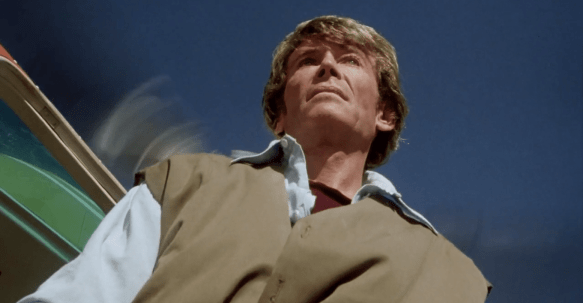
The opening sequence of Melvin and Howard takes on more and more meaning the longer the movie goes on. It’s very simple, really. We open up with some joyrider on his motorbike tearing through the desert, taking on every jump through the arid wasteland with reckless abandon.

As one might suspect, his foolhardy stunt bites him in the butt; he winds up in a spill, leaving him incapacitated in the middle of nowhere. It’s night and pitch dark now. Thankfully, there is a good samaritan who picks him up. As he gets closer and pulls the injured man into his car, we get a better look at him. He’s a scruffy-looking man well-advanced in years.

Here we have the inauspicious introduction of Melvin and Howard. Melvin (Paul Le Mat) is really a nobody, but he does have a sense of decency, picking up this old man without any pretense or sense of knowing who he is. Because Howard (Jason Robards), is Howard Hughes — the eccentric, aviating millionaire.

They talk and share something genuine between two people. Howard’s resistant at first. He doesn’t want to take part in Melvin’s friendly chatter nor does he go much for singing songs. Melvin nevertheless obliges with the tune he mailed into a music label for. They took his lyrics and supplied a tune. The outcome birthed a new Christmas classic, “Souped-Up Santa’s Sleigh.” Howard’s exterior cracks briefly as he relents and proceeds to hum a few bars of “Bye Bye Blackbird” in response.

The scene doesn’t look like much, but it plays extraordinarily well. Then, just like that, they part ways. At the request of Howard, Melvin drops him off out back of a hotel — the old man still hobbling and beat up. But he’s adamant this is where he wants to be, so Melvin relents.

We think this is just the beginning, and it is, yet we never see Hughes (or Robards) again (well, almost). But it’s this moment of initial connection and humanity that not only informs the rest of the story but sets the tone for Jonathan Demme’s free-flowing biography of a little guy.

If you want to think about it in such terms, it’s an off-center Howard Hughes biopic where the central character is a man named Melvin, who reflects a different cross-section of society. It’s the kind of story you wouldn’t think would get the Hollywood treatment and yet here it is, and the director gives it the kind of love and affection necessary to make it feel lived-in and sincere.

Here is a man who lives in a trailer. His wife Lynda (Mary Steenburgen) is a sweet woman and together they have a darling daughter who only sees the best in her folks even if their flaws are forever visible.

These are the flaws that keep the life of the Dummars in a constant state of disruption. Whether it’s money troubles, due to Melvin’s spendthrift philosophy, or Lynda’s working of the seedy nightclub circuit, there’s a great deal of dysfunction in their family life. But at their core is a near-oblivious simplicity and so even as their life is a bumpy ordeal, there’s something endearing them — making us wish the best for them.

He’s visibly repulsed by her work — he doesn’t want her flaunting herself in front of strangers. His home life is humble, but he gladly sits in front of the TV with his daughter feasting on pop tarts and bacon. Lynda never seems to dislike Melvin; she just knows it’s not possible to rely on him. So, over the course of the picture, they get divorced, then remarried, complete with one of those throw-em-together hotel wedding ceremonies for $39.

Screenshot 2020-05-16 at 64801 AM

If it’s not evident already, Melvin & Howard is a film that seems continually preoccupied with the desert backroads and small-towns of America. Where the country music is ubiquitous and people live simple, unadorned lives. Where Melvin’s chances to earn the mantle of milkman of the month get threatened or the car gets repossessed.

But there’s also an itinerant element — to pick up and go in search of new lives and new fortunes — and because the film chooses to stay with Melvin, the story itself takes on this antsy quality. Never being fully satisfied to dwell in one place. However, far from giving off a superficial impression, it winds up coloring a world with all sorts of genuine nooks and crannies.

It’s not a charmed life, but he meets it with continual candor. The reunited family gets by losing themselves in TV game show episodes of Easy Street, which become a kind of communal event for everyone. Lynda fulfills a dream by getting on the show as a contestant and feverishly tap-dancing her way through the Rolling Stones’ “Satisfaction” to the prize of $10,000!

Still, the family splinters again. Melvin picks up and moves to Utah after marrying a Mormon girl. They set up shop in a gas station. The so-called focal point of Melvin’s life feels squeezed into the end of this movie, not that it’s shoehorned into the story by any means, but it shows how his life adds up to something more than the media frenzy that soon overtakes him.

Because he was the man who had the unsubstantiated will of the late Howard Hughes dropped on his gas station desk naming him as 1/16 beneficiaries of Hughes’s fortunes. That added up to approximately $156 million! In the aftermath, he found himself brought into court to testify as his story was heavily disputed. It does sound absolutely ludicrous. 

How this seemingly unextraordinary individual could find himself at the center of something so grand and earth-shattering is a real-life farce. However, what lingers is the import of the first scene. Demme does well to return there if only briefly, to remind us what this frenzy was about.

Lest we feel slighted that this movie wasn’t really about Melvin and Howard at all (or at least mostly Melvin), in some way it says as much about Howard Hughes’ life by leaving out all the trumped-up treatment. It’s the romantic in me, but I would like to believe that even our momentary interactions with one another can be blessed.

It is possible to touch someone else, adding even a little bit of goodness into their lives. It’s this kind of goodwill to strangers that can stay with them for a lifetime, whether or not they include us in their wills or not. Who knows, you might be entertaining angels unawares, or misanthropic millionaires, for that matter.

4/5 Stars

Citizens Band (1977): Radio Waves in Everywhere America

Screenshot 2020-05-16 at 93028 PM

“How can such a small mind have such a big antenna?” – Paul Le Mat is Spider

Citizens Band (also known as Handle With Care) is not about music. Instead, it documents the increasing craze during the 1970s for person-to-person radio communication. Initially utilized for emergency messages, the radio waves soon got gummed up by social calls, with every Tom, Dick, and Harry looking to get a piece of the action.

It’s illustrated in the early sequences when Spider (Paul Le Mat) picks up a message from “Chrome Angel,” (Charles Napier) who gets pinned under his 18 wheeler in a rainstorm. It’s partially due to his own negligence on the road (He got distracted by some saucy call signs). Regardless, Spider is quick to search out help for him only to get disrupted by local nuisances like the self-proclaimed “Hustler,” a bratty kid who likes to brag about his exploits. He has a blatant disregard for FCC regulations.

It turns out our trucker isn’t much of a victim. In fact, we find out his broken arm is the least of his troubles because he’s run into the same problems as Edmond O’Brien in The Bigamist: he’s been holding court with two women. Well, three. Recently he’s been getting friendly with a local lady of the night named “Hot Coffee” who uses the radio waves to drum up business.

Screenshot 2020-05-16 at 93821 PM

The only reason he gets found out is through a bizarre piece of comic happenstance. They meet on a bus. There’s the bodacious “Dallas Angel” (Ann Wedgeworth) and the more pragmatic “Portland Angel,” (Marcia Rodd), and after they get over crying about their misfortunes, they laugh, and conspire to make him pay. One bit of malevolence involves releasing his load of cattle out of his trailer hitch. There’s enough here for a raucous subplot.

Back at his home base, “Spider,” aka Blaine Lovejoy, holds down the fort as an emergency radio relay CB station with his buddy Cochise. Lovejoy lives with his father (Robert Blossoms) and struggles through his contentious relationship with his brother (Bruce McGill), the local P.E. teacher. It runs deeper. Both share a complicated relationship with the local crush Pam (Candy Clark).

Their Pops is a near-cataonic figure who is shocked back to life daily by the whizz of the radio waves and his call sign “Papa Thermodyne.” For a brief instant, he’s returned to his glory days trading words with some of his buddies. It pulls him out of his haze and the sorry existence he’s resigned himself to.

The inclusion of both Le Mat and Clark results in an unofficial American Graffiti reunion, though they hardly shared any scenes in the previous film. Even if it is set in a generation later, Citizens Band somehow maintains a similar affection for radios and automobiles. They often act as the conduits for youthful entertainment, love, and the various dalliances and diversions making life what it is each and every day.

A callow teen named “Warlock” chats up the seductive Electra over the car’s radio. Joe Cocker’s “You Are So Beautiful” briefly plays in another sequence. You also get the sense the radios allow people to live double lives, facilitating something more than what they’re usually allowed to be in the everyday.

Much of the movie’s sense of fun revolves around “Spider” laying down the letter of the law. He resorts to patrolling the neighborhood, honing in on signals before raiding the homes and putting the perpetrators out of comission indefinitely.

If it provides any indication, Citizen Band relies on a fairly lax and casual narrative with the breadth of the ensemble bringing to mind Robert Altman without the same comic barb. On its own, Jonathan Demme’s movie settles into an absurd rhythm somehow befitting backcountry, everywhere America.

“Spider” continues on his righteous crusade to rid the waves of needless vermin. His nemeses include a ragtag laundry list of whiny pipsqueaks, self-righteous bible thumpers, paranoid anti-communists, and old ladies droning on about dreary childhood stories.

Thanks to this untethered interest in all the various quirks of the community, which subsequently become some of the films most enthusiastic vignettes, it’s never quite able to pin down its more emotionally dramatic sequences.

Screenshot 2020-05-16 at 102916 PM

This involves the strained relationship between brothers or even Pam’s conflicted, on-and-off romance with Spider. Certainly, there’s more story here and there could have been greater motivation, to empathize and understand them on a personal level. This is generally absent or at least not fleshed out substantively.

But there is enough in the way of world-building, humor, and genuine characterizations by the lead performers to make it feel worthwhile, if not totally sketched out. And because the cast is protean in nature, it’s pleasant enough to follow their lead through the ebb and flow.

Finally, all the cast assembles for one sole purpose. They drive out to the outskirts of town, during another rainstorm, to perform a search and rescue mission to find a vanished Papa Thermodyne. Somehow it turns out an ending to fit the world we’ve come to experience thus far. Everyone gets their individual shoutout.

Citizens Band (or Handle with Care) is a slight film, but with the pieces it has in place and the extent of its subject matter, this is actually a worthy compliment. There’s a warmth and weirdness permeating its frames that, while engaging, also suggests the lingering specters of living in a small town. It’s both the joys and idiosyncrasies. The dark riffs of conflict, and the unifying humanity — all of us flying under the same colors.

Even at this early juncture in his career, Demme seems particularly well-attuned to this aspect of his ensemble. The best part is that he would continue down this same road with future efforts.

3.5/5 Stars

Freud: The Secret Passion (1962): Directed by John Huston

freud monty clift

Freud: The Secret Passion is made by John Huston’s sense of narrative posturing. In fact, he goes so far as to narrate the opening himself, relating how men like Copernicus and Darwin boldly went against the conventions of their day to help revolutionize people’s conception of the world. Into this category, he adds a third individual and with him a third frontier.

It was Sigmund Freud who effectively caused mankind to venture to “a region almost as black as hell itself: man’s unconscious.” What a bit of methodical showmanship it is and the styling is something that might only be pulled off by a man like Huston or Orson Welles. There’s a gravitas and a charisma wrapped about him that carries a certain commanding ethos. Sadly, it never has the same impact from thenceforward.

Although the subject comes with its own sense of obvious intrigue, it somehow doesn’t seem to play to Huston’s own skills, restricting his talents to a very specific arena even if it was not slated to be a straightforward biopic.

In fact, his collaboration on Freud: The Secret Passion began with a call on the talents of Jean-Paul Satre to pen a screenplay. Even though the eminent philosopher crafted the skeleton of the story, Huston ultimately parted ways with Satre because the mammoth script he provided was unshootable.

To play Freud, he brought back Montgomery Clift from The Misfits, which immediately seems a strange choice. Clift supplies a sensitivity I would have never attributed to Freud. Granted, this is based on the little I know of him from merely studying his influences on the field of psychology. That and his penchant for cigars.

Though Clift hardly seems the image of Freud nor Huston quite the man to bring the story to fruition, if nothing else, it should quash any rumors of Clift being totally sunk by the end of his career. Despite the fallow years that came following Freud, he is still the picture of distinguished vulnerability. Admittedly, the backstage complications might elucidate a different story. However, I’m not Sigmund Freud so I couldn’t tell you. I only have the film to go by.

Although the world around him appears relatively simple, the black & white baroque style accentuates the metaphors of the light and darkness at war in the human psyches. Even the eerie scoring, infused with rumbling drums, denotes similarly dark caverns in the mind.

In the early years of his career, beginning in 1885, Freud starts kicking around ideas as he comes to understand the subconscious and begins to dabble in hypnosis, “a dark art” many of the most prestigious practitioners in Vienna scoff at. Their subset is embodied most obviously by Professor Meynert, who sees such ideas as being beyond the scope of their profession, “Are we theologians or physicians?”

But while Freud wants the support of his colleagues, he’s not needlessly seeking out vainglory. His research and inquisitive mind prove his guiding light. He shares a conversation with a colleague who notes what a splendid thing to descend into hell and light your torch from its fires. Thus, encouraged, Freud goes into the heart of the darkness, prepared to slay the dragons he might find there. It sounds more like witchcraft than human psychology, and I suppose in 1885 it might as well have been.

The majority of the movie is built around his work with a case study named Cecily (Susannah York); she was a patient of his esteemed mentor Joseph Breuer (Larry Parks). He passes her well-being to the care of his pupil because he has his own issues. It gets to be too much as she transfers her affection first to Dr. Breuer and then to Freud himself.

As they go deeper, Freud, using hypnosis, finds out she is infatuated with the memory of her father. Together they wade through her issues from sexual repressions, nightmares, and childhood traumas.

Even Frau Potiphar and Joseph are brought up as symbolic figures in a parable — well, it’s a case study for Freud really — explaining a bit of Cecily’s buried angst through Biblical allusion.

freud the secret passion

However, to crack his theory, he must come to terms with his own history, and it proves a taxing ordeal for his wife (Susan Kohner) who worries she might lose her “Sigi” to his work or, worse yet, one of his patients.

And still, he keeps probing — daring to wade into his own trauma to better understand Cecily. The most telling imagery comes with Clift spelunking by rope into the depths of a cave searching out his deepest memories. Finally, there is a breakthrough. Finally, he can try and free this girl from her baggage.

He brings his latest findings before the counsel of his peers once more and is jeered for his observation on oedipal complexes and the like. What’s striking is how even today though Freud formed the bedrock of modern psychology, many of his ideas are still considered dubious. They aren’t backed conclusively by empirical findings like other scientific methods.

What’s more, he loses his greatest ally. Dr. Breuer simultaneously stands up for Freud’s brilliance and personal integrity but still cannot help but walk out the chamber doors. The greatest fault of Freud, in the end, is the fact it feels like a story of little consequence on its own. We leave the man and it feels as if very little has transpired. Only with this context supplied by Huston do we attribute any greater meaning.

Huston’s final line is meant to be a telling statement. Know thyself. Our single enemy is our own vanity. Certainly, there is truth in these words. The Secret Passion is one of the more emotionally rich films I’ve seen to deal in themes of human psychology, the subconscious, and psychosexual themes, although the landscape feels generally sparse.

I am reminded of one scene where Clift’s psychoanalyst commiserates about the innocent entering a world of sin, foredoomed to this lot in life — on this earth. We might differ slightly in our interpretations here. Our world is flawed just as we are flawed. We do not come into existence as a blank slate as Locke posited. But we are doomed. Each of us has our own private conclave of demons, and we cannot heal ourselves. Once we give up our vanity and put on a cloak of humility, we often realize we need others — we need help outside ourselves.

3/5 Stars

Suddenly, Last Summer (1959): A Venus Flytrap of a Film

Screenshot 2020-04-26 at 7.59.33 PM

For some Suddenly, Last Summer plays like the Holy Grail of Classic Hollywood cult films. It’s a bit like seeing those old Warner Bros. Studio clips of famed actors muffing their lines and then proceeding to blurt out obscenities. It breaks all illusions for those who have a certain perception of what these old movies represent, whether it’s something twee or a sort of refreshing simplicity.

Somewhere between Tennesse Williams and Gore Vidal, we find the origins of something with the carnal instinct of a venus flytrap. Fitting, as the curious plants become one of the film’s earliest portents. One Mrs. Violet Venable (Katharine Hepburn) keeps them well-fed in her arboretum. Really, the space — like an overgrown Eden in her backyard — is in memoriam to her dearly beloved son Sebastian.

He’s never seen in the flesh, but he haunts this picture like a male equivalent to Mrs. Rebecca De Winter. The memory of him is kept alive by those closest to him almost to the point of obsession.

But to understand this we must start earlier. At Lion’s View State Asylum in 1937, a brain surgeon (Montgomery Clift) has made strides in lobotomy to provide relief to schizophrenic patients. It’s a primitive solution and his facilities are subpar at best. As a state institution, they lack the funds to take care of their growing population of patients.

Their savior might just come in the form of the same Mrs. Venable who is looking for some aid for her niece (Elizabeth Taylor), a young woman who has recently been interned at St. Mary’s hospitable. She’s purportedly prone to obscene outbursts and other unseemly behavior.

The way it’s described, she might as well be as mad as a hatter. Meanwhile, the way the lady talks about her departed son to the good doctor you would think the former poet was almost like a god. She sees both men’s art — that of surgeon and poet — as supremely powerful and grandly creative. What’s more, there’s no pretense. She’s absolutely infatuated with the memory of her dead son.

She’s further obsessed with everything she witnessed on her travels with Sebastian the year before: particularly birds devouring baby sea turtles. Nature is not known for its compassion, and we are all trapped in a devouring creation. In this world, the face of God is not a supreme being but a horrible inescapable truth. If anything, God is made in our own image and it’s a terrifying reflection.

Elizabeth Taylor finally makes her entrance, and she’s as alluring as ever. She’s hardly the world’s idea of an unhinged ward patient, done up as she is in her typical Hollywood glamor, with a slight redux free of charge.

As she meets Dr. Cukrowicz (Clift) and becomes accustomed to his calming presence, there’s an uneasy trust being formed. But if anything, it might as well play off the close friendship of Liz and Monty offscreen. He doesn’t do much — at least in a histrionic sense — and she commands most of the scenes, still, it only works if they are together. For all the struggles Clift endured after his career-altering injury, in tandem with the likes of Hepburn and Taylor, he works quite well.

Screenshot 2020-04-26 at 7.45.10 PM

Of course, there is no real pretense to believe this story is really concerned in any regard with mental health. Catherine goes wandering around the facility only to terrorize herself. If she’s not “mad,” it might all be subjective anyway. At any rate, it feels like a high-profile precursor to Shock Corridor.

However, in that film, the shock befits the low-profile punchiness of Sam Fuller more than Mankiewicz and his A-list cast. Here it feels more than a little dimorphic, bearing two forms that don’t fit together. To be sure, Suddenly, Last Summer transcends mediocrity altogether. It’s arguably something far better or something far worse than it seems.

These long, drawn-out scenes loaded to the gills with theatrical dialogue meet their piece de resistance as Taylor goes off — divulging all the secrets she’s been holding onto. However, if any of this gives off the putrid stench of convention, rest assured the finale is as striking as it is genuinely perturbing.

It paints in oblique language, clouded images, and the drone of Taylor’s own voice as we watch her terrorized face recount the horrors she witnessed. Suddenly, Last Summer reaches the summit with clanging drums and music, cobblestone streets, and streams of lecherous feet chasing after their prize. Here again the overgrown gardens, venus fly traps, and flesh-eating birds have renewed significance.

It takes her to the brink — a cinematic equivalent to visual insanity — and the precipice of reality, leaving her all but ready to jump off. Whether it’s totally effective or not, above all, it leaves a polarizing impression. Thus, the most surprising reaction to the picture would be one of total indifference.

What sets it apart from its brethren and even other Tennessee Williams pictures is how it’s able to lay into its themes even more overtly, almost on the encouragement of The Production Codes. Because it’s preaching a message of the twisted roads humanity can take, paths that ultimately lead to destruction. And yet with all those involved, there is this subversive sense of something else — something more, its screenplay’s skin is crawling with all sorts of undercurrents.

In what universe do Elizabeth Taylor, Katharine Hepburn, and Montgomery Clift star in a picture helmed by Joseph L. Mankiewicz culminating in cannibalism and interwoven with any number of delectably salacious taboos? It happens here. And yet more perverse still is how God or hope or meaning, in any form, is absent. From a worldview perspective, there is no such thing as Truth (or is it truth serum?). Take your poison.

Either is fitfully terrifying until it gives way to a meaningless apathy. No wonder the asylums are so full of patients. It might be the safest place to be in a world such as this. Our initial fear is poor Elizabeth Taylor receiving a lobotomy. Rest assured we get something far worse: a senseless, devouring world. It’s poised and ready to eat us all up.

2.5/5 Stars

Sweet Bird of Youth (1962): Paul Newman and Geraldine Page

sweet bird of youth 1

“I like you. You’re a nice monster.” – Chance Wayne

“Well, I was born a monster.” – Alexandra Del Lago

In this interchange between Paul Newman and Geraldine Page, I couldn’t help adding my own connotations. Alexandra Del Lago was born a monster. Chance Wayne is a self-made one. If anything, his environment has turned him into the self-serving creature he’s become. They are both looking to use one another, and they are not alone.

Although Cat on a Hot Tin Roof is the more high-profile entry, the points of connection with The Sweet Bird of Youth are too many to ignore. It’s yet another Tennesse Williams play directed by Richard Brooks for the screen, albeit neutered by the Production Codes of some of its controversy. This is hardly a new phenomenon.

Once more we have a sweaty, hot-blooded showcase for Paul Newman playing opposite a powerful Southern patriarch (in this case, Ed Begley) and other cast holdovers include Madeleine Sherwood.

The premise is simple enough. Chance Wayne (Paul Newman) returns to his hometown of St. Cloud, Florida as a big shot. At least this is the illusion he looks to promote as he sets up in the local hotel.

His companion is a fading movie star plagued by her self-medication and neuroses as she tries to stave off the advances of a has-been career. He has elected himself her PR man — stirring up headlines she doesn’t want — to benefit his own career no less. He fluctuates between opportunism, blackmail, and virile charisma all in the name of getting himself said break.

If Alexandra Del Lago, masquerading incognito as the Princess Kosmopolis, is his Norma Desmond, he is a sleazy sellout looking to wheedle his way into any amount of fame. Chance is looking to use her clout for all its worth because her seal of approval still means something in the industry. Alexandra need only say the word to the Louella Parsons and Walter Winchells of the world, and this nobody could hit the big time.

While Del Lago is on the way out, Williams flips the script with another revelation; Chance is on the way out too — if he ever arrived at all. Because years of striving have found him little success. He believed in the pie in the sky ideas of the local institution: Tom Boss Finley (Ed Begley). Every man can hit the jackpot if he tries hard enough. He didn’t stop to consider Hollywood is a crazy land with walls all around it. All the failures are kept on the outside looking in until they grow old and undesirable.

On Sunday morning the bells ring — it’s Easter, after all — and Alexandra rises from her bedroom suite positively reborn! Chance goes off to the church. The other leg of his personal fantasy involves running off with his sweetheart, the aptly named Heavenly (Shirley Knight). But her daddy, Boss, and the skeevy Tom Finley Jr. (Rip Torn) are bent on keeping her away from Chance. They aren’t opposed to physical violence as Tom Jr. has a group of mobilized hoodlums called the Finley Youth Club at his disposal.

the sweet bird of youth 2

Because if Boss Finley is a pillar of society and a Sunday morning Christian who promotes his virginal daughter and denounces communism and other prurient attacks on the American way, he’s cracked at the seams himself.

His own daughter is skeptical of his deep-seated hypocrisy. Even before his dear departed wife passed away, he kept Ms. Lucy, a lady waiting, well-compensated at the local hotel. It’s the duplicity of this brand of sing-song Southern hospitality with an undercurrent of venom. Although the South by no means has a monopoly on this type of behavior.

If there is anyone to feel sorry for at this point, it might be Del Lago and yet Page ultimately regains her dignity as her frailties fade away long enough for her to see Chance for what he is: Just a name with a body. She’s known many of them before. Men led by a chain for want of fame and stardom only to be kept down.

If Newman is supposed to be an archetype of a callow young man, he has far too much charm and smarts to come off as a Yokum totally duped by Boss Finley’s grandiose talk. Regardless, he and Alexandra each have their own private hell to go to. Where can this story go but down?

In a word, there is a hopeful ending for both of them. It doesn’t aim for the jugular of tragedy. It’s not aiming for the grandest heights of southern gothic melodrama, and so it settles for a minor note. If the sweet bird of youth passes you by, it’s a matter of making your peace with it — finding peace in something else.

I couldn’t help focusing on the hymn playing in the background of the final scenes. These folks have probably sung the words countless times only to have them bounce off the walls of their hearts. Its lines go like this:

Not the labor of my hands
Can fulfill Thy law’s demands;
Could my zeal no respite know,
Could my tears forever flow,
All could never sin erase,
Thou must save, and save by grace.

Rock of Ages cleft for me
Let me hide myself in thee

3/5 Stars

The Young Philadelphians (1959): Paul Newman Takes on Family Skeletons

young phil

What’s most intriguing about The Young Philadelphians is how it manages to be a composite of several standalone genres. It’s a rags-to-riches tale. There’s romance. Stunning courtroom drama. But the sinew holding it together are sudsy soap opera tendencies.

Like most any life, our story begins before our main character, Tony Lawrence (Paul Newman), was ever born. Back in the old days, his mother (Diane Brewster) was to have a church wedding with William Lawrence III, a man who was desirable solely due to his family name. Being attentive to such things, Kate is happy to marry him — leaving behind a lifelong friend Mike Flannagan (Robert Keith) to drown his sorrows.

What unravels in a matter of seconds is the kind of juicy drama offering up Adam “Batman” West himself in a blink-or-you’ll-miss-it debut, though he does have a crucial role in the ensuing tale. There are implied sordid details that need not be parsed through now. Regardless, Kate is left as a widow and looks to raise up her infant son to bear the reputable name of Lawrence. He doesn’t know his protective mother is sitting on a stick of dynamite for the sake of her son.

Tony grows up to be a fine, strapping young man of substance. The instant magnetism of Paul Newman is on full display. Not animal magnetism but the kind of charisma that would keep him a beloved figure long after many of his peers from the Actors Studio had mostly dissolved and given way to younger talent. The intensity comes later.

For now, he’s a Princeton boy working in construction because it pays the bills, though his ambitions are to pursue law — all in due time. What follows at the worksite is a contrived meet-cute but no less delightful do to the instant charm of Paul Newman and Barbara Rush. Not only are they beautiful people, but they have a playful rapport to back it up.

Later, he attends a high society party — his mother hopes he can make some invaluable social contacts — but he consorts with Chester Gwyn (Robert Vaughan), a prodigal rich boy with greased back hair and a penchant for getting plastered. His relatives, who run his trust fund, heartily disapprove of his carrying on even as Tony impresses them.

The other person of interest is the same debutant, Joan Dickinson (Rush), who tells them all her classmates are married to very nice young fellows, cautious prudent young men with button-down families. All and all, they are representative of the idle and affluent segment of society looking to find a nice life for themselves complete with a fine salary, a gorgeous wife, and an equally gorgeous home to boot. For those who haven’t had to work like Tony, it sounds like utter drudgery. It’s a lifestyle that has eaten many people like Chet and Joan alive as it molds them into their assigned conventions.

In their own way, Tony and Joan look to pursue their own happiness which — although it fits within the confines of society — still has a hint of the reckless, impetuousness of youth. They still have enough fervor and passion in their chests to see the world as an idealistic space meant to be conquered. However, their parents have other plans for them…

In mere moments, the entire story careens in another direction with twists and turns worthy of a soap opera. Suddenly, the romance burning between them is snuffed out and sullied by insinuations. Tony learns the rules of the game the hard way. Society, as they know it, is built on the bedrock of backroom deals, saving face, and family reputations.

He resorts to making the connections, climbing the social ladder, and running into some old acquaintances. It’s in these crucial interludes where Newman channels his youthful intensity by ripping off the band-aid of a broken relationship and charging forward with a newfound tenacity. Under the circumstances, he foregoes the law firm of the reputable Mr. Dickinson (John Williams) and makes a name for himself in the service of someone else. He lands a big fish by swiping one of his largest clients (played by the perennially bubbly Billie Burke), who literally wanders into his office.

Even as he’s driven by his own private ambitions, Lawrence never completely sheds his conscience. He rebuffs the advances of his boss’s sex-crazed wife (Alexis Smith), stomping out an affair before it can begin.

With the passage of time, we are led to ponder how these lives could have ended differently if given the chance? Tony is still unmarried. Joan found a rich money bags, who unfortunately died fighting in Korea. The war also took Chet’s arm leaving him a crippled and degenerate drunk.

In fact, Vaughan gives the final act all he has, and he is one of the film’s unsung heroes; he provides some outward manifestation of the myriad of issues conveniently swept under the rug by the city’s foremost families. When he hits the papers with a murder rap pinned on him, it rattles all the skeletons buried in the closets. His patriarch, the esteemed Dr. Shippen Stearns even says, “individuals are less important than the whole.” What matters is coming out of the mess without a scandal.

I do adore Billie Burke particularly because we never saw enough of her in this later period of her career, and she still brings the same genial energy she always had in her golden years. She’s another outlier in the film’s stuffy landscape.

However, it’s also a test of Tony’s true character as he juggles his own reservations and allegiances to people like his mother and Chet. Joan reopens wounds, now a decade old, going to the core of who they are as human beings — their ambitions and the ways that they have been changed due to the hotbed of the surrounding society.

It’s the kind of scene I wanted to playback because it feels like it comes at us out of nowhere. She wants to hire another lawyer to take him out of the grinder — fearing he may have sold out again — and he proceeds to bristle knowing he never meant to sell out. At least not really. Their fight, if we can call it that, is what spurs him on in the courtroom. However, there is something else.

We remember where this story began. His mother is forced to tell him something about his untold life and what happened before he was born. Suddenly, this isn’t just a matter of someone else’s life — that would be enough — but this holds implications for his reputation and that of his mother’s. Everything hangs in the balance.

So when he gets to the courtroom the stakes are heady. But he comes at the case with a level of acumen and genuine discernment (although the judge does seem to be giving him far more favor than the prosecutor receives). This observation is mostly immaterial. He puts the key witness, George Archibald (Richard Deacon), up on the stand and does everything he’s been training his whole life to do.

Somehow he’s never spoken a truer word when he says, “I’m not as good as I hoped I could be, but I’m not as bad as I thought I was.” Let them sink in for a moment. As we look on, we see a man who has found his happy medium as he’s slowly learned to be contented with the life put before him without any regrets. He can walk out of that courtroom, his best girl in hand, confident that his reputation is intact, but most importantly his moral conscience is as well. And we are right there with him.

3.5/5 Stars

One-Eyed Jacks (1961): Good and Evil is in the Cards

one eyed jacks Brando Malden

One-Eyed Jacks acts as a bit of an anomaly. It was originally meant to be helmed by Stanley Kubrick. Instead, Marlon Brando himself oversaw direction — his one and only time in the director’s chair. The results are as vibrant and totally Brando as they are messy, devolving into something more than indicative of its creative nucleus.

To its credit, the movie, set in the 1880s, earns its world more than Viva Zapata because there is an understanding of cultural differences inherent in the landscape. It does not try to insensitively blur ethnic lines with whites playing Mexicans.

Even Brando’s sense of Zapata, although plaintive, potentially falls prey to this blind spot. But One-Eyed Jacks is as much about the meldings of the cultures as anything. Yes, there are still obvious hierarchies and spheres of existence.  Chinese, for instance (represented by Philip Ahn), are tertiary characters, and the Latino cast is certainly secondary to the Caucasian leads, but this is indicative of the structures in place. There is some attempt at character definition that goes beyond menial stereotypes.

The scenes that strike me, in particular, are between Katy Jurado and Pina Pillicener. Instead of copping out, making these two women converse in English for the benefit of an English-speaking audience, there’s enough confidence in the emotion engendered (even if your Spanish is not up to par to catch every word). It feels wholly honest compared to typical Hollywood convention.

But, in order to explain this world, we must start 5 years earlier with a couple of outlaws. Before the days of Butch Cassidy and the Sundance Kid, Rio (Marlon Brando) and Dad (Karl Malden) are a pair of womanizing bandits robbing banks all over Mexico, living a merry life of crime constantly on the run from the authorities.

It does eventually catch up to them as they are left stranded out in the desert with Federales hot on their heels. The fateful choice to send Dad off to find horses while Rio stays behind winds up altering their steps for good. Rio gets captured and shackled up in a local prison with his compadre Chico (Larry Duran). Dad rides off to start a fresh life for himself without any kind of penance being paid. Their divergent roads spell out what the future must hold.

Even when it lumbers along or willfully bides its time — for instance, watching a couple thugs waiting it out on a porch by the sea — the color scheme as captured by Charles Lang is gorgeous. It’s one of the film’s persistent attributes though it has a handful of others.

My mind drift’s to a shot far later in the story when Brando rides his horse past a gnarled tree right out of Sleepy Hollow. Unbeknownst to him, one of his faithful companions lies shot to death only meters away, and he is riding toward doom — for crimes, crimes he didn’t even commit.

Brando often surrounds himself with interesting folks. Some are tried and true — allies he’s been able to rely on for a long time — like Karl Malden (reunited again after A Streetcar Name Desire and On the Waterfront). And yet even the likes of Katy Jurado and a promising international newcomer like Pina Pellicer bring their own sense of sober candor to the picture. She’s a striking contrast to her leading man even if they share a core sadness.

one eyed jacks

The Ben Johnsons and Sam Gilmans round out the assemblage of talent with the gruff essence of imposing masculinity. Slim Pickens, on the side of law and order, is his own version, equally snide and opportunistic — creating the kind of evocative characterizations that westerns thrive on.

It’s this kind of duality — represented foremost by Brando and Malden, then accentuated through their posses — causing one to mull over the meaning of One-Eyed Jacks. The phraseology is not something that gets used too often today. But its origins are from the profile image on a playing card. In this context, it comes to symbolize people who show off their “good side” while conveniently hiding all their faults through duplicity.

Rio is a pathological liar even in the context of people he likes. He knows no other way to go about it, holding onto his anger and letting it direct him toward revenge. But in one sense, he’s straightforward because he’s always taut with tension and the kind of angst Brando built a dynasty out of. There’s always sensitivity on the other side.

Dad is a jovial character. He’s made a life for himself and he has “reformed,” now on the side of the law. But the stroke of fortune that allowed him to get away from the federales 5 years ago and make a new life for himself, has never really left him. He’s a wheedling even deceptive fellow with a merciless, self-serving edge. He’s a man to be feared because he has popular opinion and legitimacy on his side. It’s a far more terrifying prospect.

Here’s yet another western playing with the conventions of heroics and villainy with this newfound muddied and greying sense of morality as Peckinpah would continually work through in the ensuing years. Because the final act is about a man sentenced to be hanged and the root of justice behind it remains totally immaterial. Brando is cast as a local villain even as he remains part victim to the audience. Malden and his crew are symbols of justice — swift and sure — with at least a couple of caveats.

Up until the final shots, One-Eyed Jacks remains a fairly engaging morality play rooted in a host of fine performances and its provocative imagery. Given the circumstances — how an inexperienced Brando captured exorbitant amounts of footage and remained indecisive in his directorial decisions — it feels like a bit of a marvel we got something as passable as this. Its imperfections only make its virtues all the more fortuitous.

3.5/5 Stars

The Young Lions (1958): Humanity in Epic Scale

the young lions 7 (1)

The opening of Edward Dmytryk’s The Young Lions, based on Irvin Shaw’s titular novel, could be plucked out of an earlier picture like The Mortal Storm. It’s New Year’s Eve 1938 in Bavaria, Germany. Young lovers ski and frolic in the snow as locals make merry indoors.

Marlon Brando is a sympathetic German or closer still a principled man named Christian, currently sharing the company of a beautiful American — one Margaret Freemantle (Barbara Rush). For her, the evening is quashed with the word of Hitler. However misguided it might be, he has a genuine optimism about what Hitler can and will do for his country. Christian is not a monster. Likewise, he believes if lives have to be sacrificed for the sake of peace, he will gladly go to war.

Although these two people will never share the screen again, this is the beginning of everything. Because of course, we know what happened next in the history books. War did come. First in Europe, making its way to France, then Britain, and finally, the U.S. got involved. Christian gets his start policing the streets of France, upending their derogatory view of the enemy, even as he struggles with the perils of radical ideology.

It occurs to me, part of Brando’s success comes with how his social consciousness paired with his acting prowess. Because when he still seemed thoroughly engaged with his career, he sought out parts of such diversity, bringing humanity to all sorts of disparate people. They didn’t always hit the mark (I think of Viva Zapata and Tea House of The August Moon), and yet during this same period, he played an informant, a southern ace who falls for a Japanese girl, and here a sympathetic German during WWII.

There’s a calculated empathy to the adaptation, casting a German and a Jewish man as two of our most prominent protagonists. It’s difficult to begrudge The Young Lions its inclinations because they seem genuine and earnest, especially in the capable hands of Brando and Montgomery Clift. Yes, we must take a moment to mention Clift now.

The older actor is sometimes clumped with Brando, but even in the context of this movie, it’s fascinating to begin comparing them. Brando burst onto the scene and ultimately let himself go — becoming disinterested and disaffected by his screen career. Clift, likewise, was an incandescent talent transplanted from the stage, but he was totally engaged in his craft.

His own setbacks were initially out of his control: a car accident that left him dependent on drink and pain killers. He considered Brando a squandered talent for all of his abilities, but if anything, it shows how devoted Clift was to his art, doubling his efforts even after his injury.

the young lions 2

While they’re not exactly “young” lions, Dean Martin and Clift are a pair of compelling ones as they are drafted to be sent out overseas. You would never think of putting them together. Their personalities seem so adverse to one another, and yet there is a component of loyalty found in their performances bleeding out into real life. They were there for each other, forged by fire as they were.

Dean Martin was two years removed from his split with Jerry Lewis, and The Young Lions was his first big chance to redefine his image as an actor. He gives it a valiant go in a performance that maintains shades of his persona. In this case, Michael is a stage entertainer hesitant about going off to war and looking to dodge culpability any way he possibly can. He jousts with his girlfriend Margaret (Rush), who simultaneously doesn’t want him to die even as she disapproves of his dereliction of duty. When the time comes, he proves his mettle and his steadfastness.

Maximillian Schell was a revelation to me quite a number of years ago when I first saw Judgement at Nuremberg. Because in a picture with such contentious stakes and with so many prominent acting powerhouses, for me, he is the film’s standout with the most spectacular stand. In The Young Lions, he plays Brando’s superior espousing the typical rhetoric: The German army is invincible because it obeys orders and it harbors no sentimentality, moralists, or individualists.

In one sense, he constantly castigates Christian for his lapses in judgment, for this softness he has, but for all his perniciousness, Captain Hardenberg still comes off as a human being.  He has a flirtatious wife (May Britt) waiting back home and a life ultimately crippled by injury. If Martin holds his own up against Clift, then Schell — learning his lines phonetically no less — certainly proves himself a compelling presence opposite Brando.

They get reassigned to Rommel’s Afrika Corps in North Africa working behind enemy lines. It’s in these moments, in particular, as they bomb and mow down their unsuspecting enemy, we get a gutting portrait of how merciless the world can be, but that lets people off the hook too easily.

Human beings — myself included — can be petty, mean-spirited, and cruel to one another, and The Young Lions is not only about this global scale of war between nations. It’s about the conflicts and schisms formed in what’s supposed to be a united front — a shared cultural identity. Whether it’s a German with a heart and soul or a Jewish man who is ridiculed and discriminated against in his own country for something that is out of his control.

the young lions 7

The onslaught of Allied forces sweeping across North Africa — the Brits with their bagpipes and Patton with his tanks — is a force to be reckoned with even as the homefront is ripe with the division. Even as Noah (Clift) finds himself a lovely small-town girl (Hope Lange) to wed, the systematic bigotry of his barracks-mates and his superior officer is crippling. He faces it with a lion-hearted resolve as Michael does his best to back him up.

The tide of the war finds Brando and Schell fleeing on a motorcycle to escape the steadily advancing enemy forces. Christian eventually loses his commander and must face the man’s wife with a renewed disillusionment. Even a return to Paris and greetings from old friends (Parley Baer and Liliane Montevecchi), show him the world has changed dramatically. He has as well.

On the Allied front, Michael finally asks to be sent to Normandy, and there reunites with Ackerman to liberate a concentration camp. It is the same camp that has opened Christian’s eyes about what the Germans have been perpetrating for the past 5 years under the guise of Nazism. While not a totally graphic scene, it’s no less of a gut punch as each character is forced to meditate on what is before them.

There’s this driving sense of fate as The Young Lions mounts to highlight one of the monumental absurdities of war. Here we have spent an entire film — through all its peaks and valleys, heartbreaks and reveries — and we finally bring together our three primary leads.

They are on opposites sides of the conflict though they are all men of a certain stock and decency. And yet because of war and how factions are aligned, they are meant to kill one another. They will never have a chance to sit down at a table together and know how similar they really were. This is the great tragedy The Young Lions underlines.

Not only does it exhume the hidden evils of the human heart, but it also annihilates all sense of common humanity, forcing us to only see a demonized enemy opposed to men and women who are not unlike ourselves.

In a better world or even in a world before the war, these three men could have been friends or compatriots. Alas, it was never to be and what’s crueler still, they will never know what they have missed out on. They already have so many traumas; it’s difficult to discern if these thoughts will plague them. But that is not the purpose. The film is constructed in such a way, it’s meant to commend us to cast off war altogether and this is far more telling.

The impression I am left with has magnitude. It’s a minor miracle how the grandiose scale of a cinemascope epic, backed by performances from such renowned talents, somehow still manages an immediacy and intimacy. The Young Lions might be lengthy, but it never loses its protagonists in a mass of humanity. Instead, it highlights the humanity of a few to illuminate a whole society.

4/5 Stars

“The young lions lack and suffer hunger; but those who seek the LORD shall not lack any good thing.”