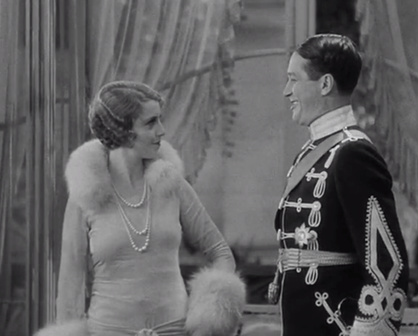
Maytime (1937): Starring Jeanette MacDonald and Nelson Eddy

maytime 1.png

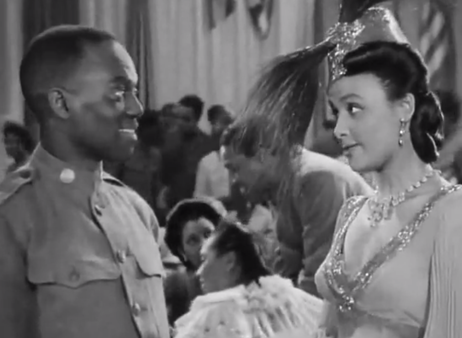
The arrival of a local May Fair celebration brings back a flurry of bittersweet memories for elderly Miss Morrison (a made-up Jeanette MacDonald). She fondly recalls some past romantic dreams that we have yet to discover, which color how she sees the young lovers before her, caught in a quarrel.

There is the young woman who has aspirations for a career in the big city and the faithful boyfriend she looks to leave behind. The spat between them looks to be the end of it, but in her tranquil way, Miss Morrison finally opens up about her earlier years, setting up the flashback composing much of the picture.

Once she was living the dream as a pupil to a well-respected member of the French cultural elite Nicolai Nazaroff (John Barrymore) who was, in one sense, an exacting individual but also a highly knowledgeable mentor for her. His shrewdness quickly trains her up in the ways of the art world and soon enough an opera is being written specifically for her. Marcia is on her way to stirring success.

In truth, she’s heavily indebted to her voice teacher, grateful for everything he has done for her, and so when he proposes marriage, she excepts not out of romantic love but due to a certain amount of gratitude and platonic affection.

In another life, it’s easy to imagine that Maytime might have been a precursor to Gone with The Wind (1939). Actually, the production was meant to be shot in color initially though this was later overhauled in deference to black and white.

Still, the costuming and lavish sets carried over, and we do still have the contemporary star power of Jeanette MacDonald and Nelson Eddy, who did so much for the modern popularity of opera, channeling it through the medium of film. To put it another way,  what Astaire and Rogers did for dance, these two did for operettas.

Previously, I never gave much respect to MacDonald, but somehow the winsomely attractive appeal she exudes is more evident now, even as she wows with her vocal talents. However, part of this newfound geniality is also due to Eddy who makes a stirring impression from the get-go in a rousing role that bowls you over not only in song but with the outright fervor he takes to every moment on screen. It’s infectiously disarming.

I indubitably do our stars a major disservice because I’m no musical protege or deep opera aficionado. Regardless, they certainly have a pair of pipes. My word! Together there is something deeply affecting coursing through them (purportedly both onscreen and off). But now’s the time to mention Paul Allison (Eddy) who doesn’t show up until well into the picture.

The first time she sets eyes on him, following a restless jaunt to clear her mind, his passionate charisma sweeps her up along with everyone else in the local tavern she finds herself frequenting. Of course, she has her career ahead of her with rehearsals and the like, and he’s only a lowly singer, but he also happens to be a very persistent gentleman.

He inquires about her coming to lunch with him — a connection made between two Americans in a foreign land — and she reluctantly agrees, partially to assuage him. But that’s not the end of it. He finagles any way he can to possibly be close to her, and it earns him another outing.

Together they share in a May Day carnival conjuring up images of not only the Naughty Nineties but the Rococo confections of Fragonard. There’s certainly something lovely in the air, full of gaiety and amusement, underscoring the time spent between the two singers. They top off a glorious day with a lovely rendition of that beloved standard “Santa Lucia.”

It becomes increasingly obvious that Barrymore has a bit of a thankless part. He’s part tyrant, part taskmaster, and yet strangely affectionate and thoughtful at times. It’s at the crossroads of such a life as his where you find such individuals who prove complex characters indeed.

He is the lover scorned by the most benevolent woman who ever lived so it seems and still somehow, we cannot bring it within ourselves to hate him. Because he hardly did anything wrong and yet he is getting the short end of the stick. His reactions are understandable if not completely prudent.

It’s a heartbreaking albeit touching sentiment that the film obliges with as we return back to the present. It almost makes you forget the somehow implicit moral of the story: It seems to be saying that, for a woman, the love of a man surpasses any aspirations of career advancement. There’s a dichotomy.

One is good and the other inevitably leads to tragedy. But why get caught up in that? Maytime has some lovely moments of genuine repute. MacDonald and Eddy were a big deal during the 1930s for reasons made obvious herein. Song and romance were rarely this passionately elegant, and they make it continually rapturous, even as it ultimately turns tragic. One could wager that it, in some ways, mirrored life.

3.5/5 Stars
What I Learned About Peter Bogdanovich

Recently TCM released their podcast The Plot Thickens featuring interviews with Peter Bogdanovich. He’s always been an intriguing figure of the movies, and part of this is how he’s been able to cultivate his image while also acting as a living bridge to Classic Hollywood.

He was part of the New Hollywood Cinema of the 1970s, but certainly associated and befriended some of the giants of the past from Orson Welles and Howard Hawks to Alfred Hitchcock and Cary Grant.

What’s unprecedented is his knowledge and his openness to share in interviews, regaling audiences with his stories. He really is a raconteur blending the talents of an actor, director, and film critic.

Recently I watched two of his earliest projects: The Wild Angels (1966) and Targets (1968) with Roger Corman, along with his documentary Directed by John Ford.

I also pored over some of his other interviews including spots on The Dick Cavett Show and contemporary retrospectives. There is some general overlap, but he always seems ready with a new recollection to keep the old masters alive for the present generations.

Here’s Some of What I Learned:

the last picture show 2

Cybil Sheppard in The Last Picture Show

-His father was a painter who grew up with silent pictures and gave young Peter an appreciation for the greats: Keaton, Chaplin, and Lloyd

-Bogdanovich started out at the Actor’s Studio working under Stella Adler at the age of 16! He lied about his age to allowed to study there

-When he was barely 20, he put on his own stage version of Clifford Odets’s The Big Knife starring Carroll O’Connor

-He started keeping film reviews on index cards around the age of 12 starting in 1952 all the way until 1970. One of his first reviews was on Howard Hawks’ Monkey Business (1952).

-The Monographs he wrote for the MoMA on Orson Welles (1961), Howard Hawks (1962), and Alfred Hitchcock (1963) led to in-depth interviews with each director and a reappraisal of their careers.

-At a screening of Bay of Angels (1963) in Los Angeles, he met Roger Corman who knew Peter’s writing and enlisted him to work on The Wild Angels (1966). The success led to his directorial debut Targets (1968).

-He met a young Frank Marshall at a birthday party for John Ford’s daughter. It would instigate a lifelong collaboration alongside his first wife Polly Platt.

-His competitive spirit meant he felt like he was a failure for not making his first film at the age of 25 like his hero and friend Orson Welles (who made Citizen Kane). Coincidentally, The Last Picture Show was hailed by some as the most important film by a young director since Kane.

-Most importantly, he wears bandanas, not ascots.

Recollections Rehashed:

whats up doc 1

Barbra Streisand in What’s Up, Doc?

-Frank Capra told him film always has a habit of slowing time down so you have to speed it up to make it feel natural. If you want to make it feel really fast, you have to speed it up even more

-Cary Grant told him Jimmy Stewart was doing the same stuttering, mumbling persona years before Marlon Brando ever got around to it

-He stole from Howard Hawks’ Bringing up Baby for What’s Up, Doc? because Hawks told him all the great directors stole from other people

-Hawks’ favorite directors were the ones you know who the devil made the movie because they have a personal style unique to the creator

-Jimmy Stewart famously told him if you’re lucky and God helps you, what actors have the opportunity to do is give audiences little bits and pieces of time that they can cherish forever.

Shall We Dance (1937): Fred, Ginger, and The Gershwins

shall we dance 1937.png

The name Gershwin is synonymous with “The American Songbook” and part of the draw of Shall We Dance is how it included two of them: both the brothers, George and Ira Gershwin. Ira would tragically pass away that same year. However, together they provided the compositions and lyrics for the film which, in some sense, feels like an atypical Astaire and Rogers vehicle.

While Mark Sandrich is in the director’s chair once more following The Gay Divorcee (1934), Top Hat (1935), and Follow The Fleet (1936), there are some unprecedented deviations from the normal foolproof formula. Namely, Astaire plays Peter P. Peters, an American who trades in his taps for a Russian ballet company. He’s certainly will always be a hoofer in most people’s eyes, and it does feel oddly out of character.

What hasn’t changed is his instant infatuation with Rogers, a famous tap dancer in her own right, named Linda Keane. But he must contrive some sort of gimmick and thusly takes up the persona of the touchy Russian dancer “Petrov” to antagonize her on the road toward love. Meanwhile, he tries his very best to evade the flirtations of his former dance partner Denise (Ketti Gallian) who looks to snatch him up.

Of the earliest offerings, Astaire gives us the treat of his cane dancing like he did in Top Hat and then there’s a fine boiler room number, “Slap that Bass” supported by a host of African-American performers thrumming with a healthy dose of character.

The film’s most catastrophic mix-up comes when the newspapers begin promoting a secret marriage between our two stars, thanks to a cockamamie story Peters cooked up on the spot to keep his former suitor at bay as he leaves on an ocean liner.

Petrov and Keane develop some chemistry dog walking together on the deck of the ship only for the gossip swirling about to reach a fever pitch. Astaire’s bumbling boss, Mr. Beard (Edward Everett Horton) uses it as the perfect chance to get rid of her for good. Meanwhile, Eric Blore as his ever-huffy hotel clerk tries his best to figure out the marital status of Petrov and Ms. Keane when preparing their rooms. They leave him ceaselessly befuddled.

Then, a second nefarious scandal is cooked up by Keane’s road manager (Jerome Cowan feeling out of place with the screwball elements), who does his best to kill the upcoming marriage his star has embarked on.  Thanks to some late-night photography and a mannequin bearing a striking resemblance to Linda, the news spreads like wildfire. What are his motives, you ask? He’s got his own reasons.

shall we dance 2

Not surprisingly, the closest thing we get to the Astaire and Rogers numbers of old are also the film’s finest entries, including the comic tune “They Laughed at Me” sung by Rogers before being joined in a routine by Astaire. After they sneak out to get away from the publicity hounds, “Let’s Call The Whole Thing Off” proves a handy follow-up number.

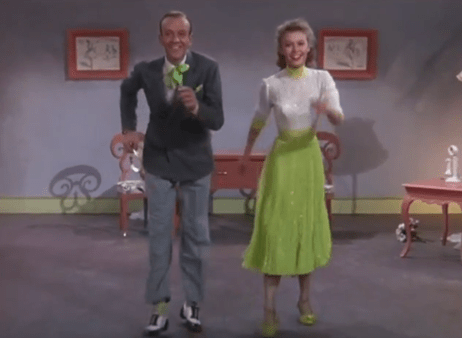
The extended sequence purportedly took a plethora of takes, upwards of 100, while the final fall into the grass left Fred and Ginger with black and blue backsides. They suffered and yet as the audience, we no doubt reap the benefits, especially because Shall We Dance hardly has their traditional big numbers like a Top Hat (1935) or Swing Time (1936) so seeing them on skates together is nearly consolation enough.

They show everyone by getting married, making it easy enough to get divorced so Linda can marry the man she’s meant to. Since their movies always took a page out of screwball comedies anyway, it makes sense this picture is another riff on the comedy of remarriage, which could be a sub-genre all its own.

Ultimately, two shows are merged in an instance of inspiration and yet that doesn’t mean that Petrov’s got the girl. An oddly disconcerting final number follows as Astaire dances with a host of gals all donning Ginger Roger’s face, disrupted by a shushing war instigated by our favorite misfits Blore and Horton. Though the picture could have used a feisty female like a Helen Broderick or Alice Brady, there’s also never enough of Blore and Horton to suit their faithful fans. They make every film a little more colorful, and it would hardly be an Astaire-Rogers picture without a stellar supporting cast of veteran jokesmiths.

Surveying Shall We Dance, it’s certainly not at the top of the pantheon of the movie musicals that these two icons made together, but it’s ripe with some of the usual delights in spite of a laborious plot and a different brand of dancing than we’re used to. It’s hard to complain too much about the results. There’s no doubt the entertainment value for true aficionados still remains.

3.5/5 Stars
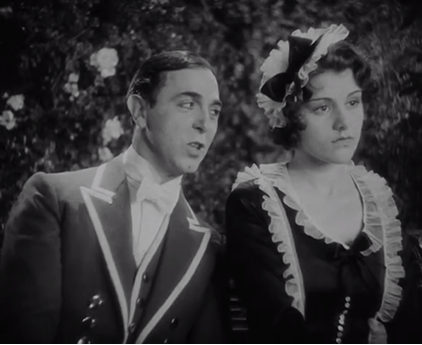
The Gay Divorcee (1934): The Astaire & Rogers Foolproof Formula

the gay divorcee.png

The plots to the Astaire and Rogers musicals are usually deceptively simple. Thus, thanks be to their dancing transcending it all. The affair opens in some posh corner of Europe where the always dithering Edward Everett Horton is sitting with Fred Astaire who has to prove his identity to get out of paying a check. They’ve both conveniently misplaced their wallets. After a routine complete with pretty girls and dancing fingers, he gives an impromptu performance of his own bringing down the house and proving he really is world-renowned performer Guy Holden.

Later on, at the docks, a fellow American, arriving in England (Ginger Rogers), is meeting her lovably fatuous aunt (Alice Brady) only to have her dress accidentally caught in a travel trunk. The man who comes to her aid and subsequently rips her garment is, of course, Astaire. Being a gentleman and genuinely taken with her, he gives her his coat to cover up, but the damage has already been done. She finds him a bit bothersome. You can tell it instantly by every look of disdain she throws him. Meanwhile, he eats up any pretense to talk with her, though she dismisses his advances. It’s how the story always goes.

He turns his resolve to find the girl, matched with the everyday occurrence of getting dressed to go out on the town, into the number “Needle in a Haystack,” which has Astaire exuding his typical elan on taps. Of the millions of women around, he’s looking for one very particular needle, and he’s not above canvassing the streets, even if it’s an insurmountable task, made increasingly apparent through montage. It goes to all this trouble only to very coincidentally rear-end her as he’s rubbernecking (adding yet another reason for her not to like him much).

Meanwhile, Egbert (Horton) is looking to make his father proud of him in the family law firm, though he’s never seemed to have much gumption or stomach for the trade. His worst nightmare, Hortense (the same Alice Brady) comes back into his life also bringing with her the proposition of a case that just might be his opportunity to assert himself. Mimi, the same woman constantly harried by Holden, is looking to get out of a loveless marriage and so the inept lawyer suggests setting up a rendezvous with a professional gigolo to end the union for good.

He invites Guy along for the ride knowing the sunshine, gaiety, and girls might do him good as a distraction for his lovesickness. He needs to forget this girl he’s so taken with. However, they’ve failed to compare notes. It doesn’t take extra-sensory perception to read where the picture will go from here, in fact, there’s hardly a need to continue. The human mind might do a finer job in its vivid imagination to derive what complications will arise from such a premise.

It’s a pleasant surprise to see Edward Horton doing a little saucy jig, “K-nock K-nees,” which also proves an early showcase for 40s wartime superstar Betty Grable if you’re able to recognize her. Likewise, in the subsequent scenes, Eric Blore is delightful as ever, this time as a waiter with his typical crisp & snooty delivery, ably sparring with the comic foibles of Horton.

Fortuitously, he turns up in several more instances to serve up the tea things along with idle chatter to anyone who will lend an ear. Astaire and Rogers’s first number together is the Cole Porter standard “Night and Day,” only to birth further misunderstands thanks to one ironic code phrase, “Chance is the fool’s name for fate.” Don’t ask for an explanation.

“The Continental” is an impressively glossy number that until Gene Kelly conjured up his American in Paris (1951) dream sequence, clocked in as the industry’s longest continuous dance number. Some of it involves our leads, but not the whole thing. It feels much more like a Busby Berkeley extravaganza.

And yet right there you understand the exquisite nature of Astaire and Rogers because they made dancing into something intimate and personal. It was between two people as much as it was a lavish production number, and that’s what resonates with us even after the curtain falls and we’ve been wowed by the expansive nature of the staging.

Yes, the geologist husband finally makes his token appearance as expected and the hired romancer Tonetti (Erik Rhodes) continues to bumble along in an effort to play his raffish role. Of course, Astaire proves far more convincing in the part of the lover finally getting the girl as expected.

Does any of this matter? Hardly. But it’s one final opportunity to get Astaire, Rogers, Blore, Horton, and everyone else in a room together. That’s surely enough to recommend this frolicking trifle of gaiety starring everyone’s favorite couple on taps. There’s nothing better to lift your spirits than Astaire and Rogers.

4/5 Stars

AFI Corner: Villains #30 Travis Bickle

travis bickle taxi driver

In this column, I go back to my roots with The American Film Institute’s Top 100 Lists, a good place to start for those interested in Classic Hollywood films. It’s in concurrence with #AFIMovieClub and the 10th anniversary of becoming a classic movie fan myself.  Thanks for reading.

The first time I ever saw Taxi Driver — owing partially to AFI’s list of heroes and villains and my own naivete at the time — I think I legitimately did think of Travis Bickle as a villain. At least he was a volatile human being I didn’t know what to do with. He unnerved me in a sense. Hence, villainy. It makes it a lot easier to categorize him in such a way because it makes it unnecessary to consider his character in more complicated terms.

However, over subsequent viewings and as I’ve grown as a person, my thoughts on Travis have evolved even a little bit. Sure, there still is the same knee-jerk reaction to his brand of vigilantism that goes to the extreme. And yet I look at him, his genuine desire to clean up the revolting streets, his sense of compulsion to protect Jodie Foster’s character — how do you come to terms with him?

These are not bad desires per se, but they get twisted over the course of the movie. By the time of his dream-like ascension, the angst of this cabbie and Vietnam vet has taken him off the proverbial deep-end.

The final scenes of Taxi Driver — even the ones leading up to the climax — and following thereafter, do not make me angry at Travis. On the contrary, I pity him and question what kind of world we live where someone can come to believe that they are a hero in their little world of self-delusion. And yet it doesn’t end simply there. Something more exists. For even the briefest of moments I think and question: Is there someone or something like Travis Bickle inside myself?

After all, if he started from a place of genuine altruism, what about me?  I can be, at times, petty and self-serving on my worst days (or even some of my better ones). You never set out to be a villain. Sometimes it just happens due to the proclivities of human nature and how we are wired.

So, on a good day is Travis a hero and on a bad day, a villain? I’m not sure if it’s as easy as that. But I would like to slightly push back against the villain title. I think what drew Paul Schrader, Martin Scorsese, and Robert De Niro toward the character was this inherent sense of the everyman ambiguity.

He could be any of us. The character is a barometer of the times and a culture coming to terms with the times. Even as De Niro leers into the mirror gruffly yelling, “You talking to me?” he’s not just calling out to his own reflection. We are all in his place. It’s yet to be known how we respond. That’s what makes it one of the most memorable characterizations of the 1970s. As much as I don’t want to admit it, Travis spells out the best and worst about us.

Classic Movie Beginner’s Guide: Ginger Rogers

As we continue to look at musicals our recent beginner’s guides have been focusing on stars at the center of some of the best films of the era. Today let’s focus on Ginger Rogers.

Aside from being part of the incomparable dance partnership with Fred Astaire, Ginger Rogers was also an accomplished comedienne and a tested dramatic actress who showed surprising elasticity throughout her varied career. Here are just a handful of her best movies.

Gold Diggers of 1933

Image result for gold diggers of 1933 ginger rogers

Some might forget Busby Berkeley started to choreograph a new syntax for the movie musical and crucial to one of the industry’s most successful Depression_era backstage dramas was Ginger Rogers. Joining forces with Joan Blondell and Aline Macmahon, among others, they build on the success of 42nd Street.

Top Hat (1935)

Image result for top hat 1935

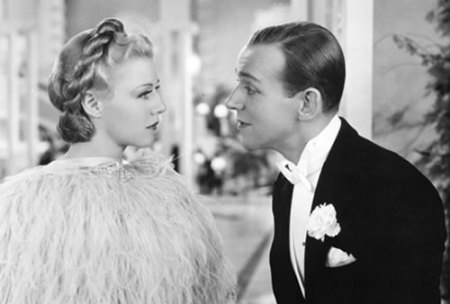
For some people, this is the ultimate Astaire and Rogers movie featuring some of the most extravagant sets and career-defining numbers together. The cast is rounded out by old favorites like Edward Everett Horton and Eric Blore. However, of course, the main attraction amid the screwball foibles are our shimmering leads, Rogers sporting her iconic feathery ensemble.

Swing Time (1936)

Image result for swing time 1936

Others will say this George Stevens-directed feature is actually the greatest Astaire-Rogers pairing and who would blame them? The dancing is phenomenal and the songs equally amicable including standards like “The Way You Look Tonight.” Surprise, surprise, Ginger and Fred are magical together yet again.

Vivacious Lady (1938)

Image result for vivacious lady 1938

So many films could earn this spot but Vivacious Lady is buoyed by the real-life chemistry and friendship of Ginger Rogers and James Stewart. The material is fairly light, but they handle it with ease. In a turning of the tables, Stewart was yet to be a big star and Ginger Rogers vouched for him. Greater things were yet to come for both of them.

Worth Watching

Flying Down to Rio, The Gay Divorcee, Roberta, Follow The Fleet, Shall We Dance, Stage Door, Bachelor Mother, Kitty Foyle, Major and The Minor, I’ll Be Seeing You, Monkey Business, etc.

Close Encounters of The Third Kind (1977): Sci-Fi, Spielberg, and Truffaut

close encounters of the third kind 1.png

Close Encounters is built on a mystery and Steven Spielberg’s follow-up to Jaws starts off in a jarring fashion challenging us to stay with him. Because he quickly throws us into the action and suggests this is a sci-fi tale on a global scale.

Bob Balaban, a cartographer-turned-French translator, speaks for all of us trying to figure out what’s going on, yelling out against whirring old WWII fighter engines, “I don’t understand!” Two lines of juxtaposed dialogue are all we need. The planes were reported missing in 1945. But they look brand new! It takes a moment to tease out the dramatic situation, but there we are. The question is how did this happen? As this is a Spielberg creation, we must point our gaze heavenward or more precisely to the outer reaches of the galaxy.

Francois Truffaut somehow feels like a special piece of casting. The Nouvelle Vague director and hero of Spielberg is cast as Lacombe, a French scientist leading a surprisingly cooperative international team.

It’s not simply because this is the only film he acted in that he didn’t also direct. It has to do with his temperament and the subject matter. There’s something serene and utterly profound about Truffaut. He’s deeply human and engaged and yet feels implacable even as everyone else — the Americans especially — seem frantic and harried. He’s a calming force in a literal maelstrom.

Because Spielberg immediately sets the picture up as not only a national but a global storyline with implications for the entire world. It’s not just higher-ups and government officials covertly working on the issue. Extraterrestrial life would mean potential hysteria, especially for the common man. In this regard, he introduces a few stand-ins.

One is Roy Neary (Richard Dreyfuss). He loves to tinker, isn’t a particularly devoted father or husband, and he’s a staunch believer his kiddos should grow up with the quality entertainment he had as a kid like Pinocchio, instead of vacuous putt-putt games.

If we are to be honest, Dreyfuss can be a perfectly genial hero in something like American Graffiti or even Jaws, but within this narrative, reflected by his family life, he often comes off whiny and obnoxious, and it hurts his rapport with the audience.

In this particular instance, there’s some difficulty in feeling a true human connection with him even as we are drawn and fascinated by what forces he might have witnessed because that is the million-dollar mystery propelling the picture and keeping humanity agog with visions of UFOs and the great unknown of outer space.

Yes, we are planted in the ’70s so if you want to blame his wife (Terri Garr) for not being a particular understanding or his children for being exasperating you can, but today it just makes him out to be a selfish dolt. This isn’t the same whimsy of some of his cinematic predecessors; it just feels like immaturity.

Sadly, without a substantial protagonist, a Hollywood blockbuster like this can feel intermittently detached and impersonal. It’s not based on lack of effort by the director or the actor. We simply don’t like the man.

It’s much more agreeable to stick with the sci-fi elements because this is where the film really has its deepest successes. Special effects hardly feel like a detriment. They are simple and practical casting just enough of a spell to hold up. But they are not there to do all the heavy lifting.

The first encounter happens when Roy is driving down a country road in his truck only to be ambushed by the most spellbinding sight he’s ever witnessed in his life. It’s greater than any Aurora Borealis and sends his car into a state of zero gravity. The only indication he has after the fact of what he’s just seen is a burning sunburn across the side of his face.

From that point on Roy is doggedly firm in his resolve. It’s almost a primordial urge. He has to see the beautiful lights again, he has to understand them, he needs everyone to appreciate them as much as he does.

One person who does is a single mother, Jillian Guiller, whose little boy Barry has some transcendental encounters in the evening hours, drawn to forces outside of himself — the same forces pulling Roy to something unnameable. In fact, they are the same forces Lacombe is so intent on learning more about. It leads his team traipsing around Mexico, India, Mongolia, etc. all on the trail of this great unexplainable mystery.

For Roy, unadulterated obsession sets in. He can’t get the image out of his head. His wife is frightened. His kids think he’s crazy, and they have every right to. He drags all the family out to stare at the sky. He loses his job. He starts shoveling dirt through the kitchen window with the whole neighborhood watching the spectacle.

With his wife driving off in a tizzy, trying to rescue her family from a maniacal husband who needs mental health, he goes back inside. They fail to see the final destination, the symbol so many people have subconsciously remembered. It’s a clue of where our story must travel.

That leads us to a family road trip — at least one my family took while I was in high school. One of the stops was Devil’s Tower, christened the first National Monument by Teddy Roosevelt in 1906. Like Mt. Rushmore in North By Northwest — which I coincidentally saw on the same vacation — Devil’s Tower is an iconic American symbol. Natural and still somehow mystifying even otherwordly. The perfect seat for our finale.

It’s a mesmerizing experience sitting atop Devil’s Tower taking in the bright lights, the musical patterns of communication putting John Williams’ talents to the best possible use. Though it would be lying to say it didn’t verge on monotony in patches, at its very best, Spielberg has an unabashed appreciation for the wide-eyed spectacle and his stroke of genius is taking a very concrete relic and making it so integral to this encounter.

There’s something totem-like, it is a monolith in its own right, and suggests something as ancient as time itself. His other choice is to make the creatures on the other end the most amiable beings imaginable. Years of watching The Thing from Another World and Body Snatchers taught a different paradigm, but Spielberg is an optimist at heart. It shows through and through as the story is carried away by the exponential magic of the final climactic moments.

In many regards, it is a taste. For those still capable of awe where special effects or time or comprehension don’t get in the way of enjoyment, those final moments can indeed be spellbinding. It’s true their trance-like grip reached out to me. The only regret is some of the momentary distractions leading us on this road. It takes a whole lot of roadblocks and digressions to finally get us to our close encounter.

There’s something else nagging inside me. Dreyfuss fulfilled his unerring obsession like an angelic pioneer sent off to the great unknown. He reached the apex as he conceived it. There is nothing more for him to do. Still, one must wonder how exactly are the wife and kids doing at his sister-in-laws? It seems Spielberg has conveniently left the problematic issues of earth behind for the extraterrestrial. Too bad we are not afforded the same luxury.

4/5 Stars


Note: I viewed the Director’s Cut although there is also the previous theatrical cut and the special edition featuring an extended “mothership” scene.

Small Change (1976): A Story of Love and Adolescence

Argent_poche.jpgFrancois Truffaut has a knack for understanding children in all their intricacies. One suspects it’s because he’s never really grown up himself. He is a child at heart with even his earliest films of the Nouvelle Vague channeling the joy and the passion of a younger individual.

First, there was The 400 Blows, most literally, as an autobiographical docu-drama of youth and then Jules et Jim brimming with the freneticism to tell a historical romance with frolicking verve. I feel much the same energy as the boys hurtle through the streets of their little town of Thiers against the opening credits.

He accents it with the scoring of Maurice Jaubert and later on applies the crooning of Charles Tremet to give it an unmistakably French spirit. It’s a different time, a different generation even, but Truffaut has not lost any of his passion or lust for life, once again managing to tap into the exuberance of youth.

It’s nothing spectacular mind you. Small Change is mostly vignette-driven. It subsists off minor pieces of observation and scenes that might easily have a place in real life. Truffaut takes interest in the daily activities of kids and the important business that takes up their time. We are afforded the opportunity to sit back lazily and appreciate the mundane aspects of the community as they happen.

The local school is a humble place, but its admirable pursuits in the name of academics are as old as the Greeks. Resources are one thing certainly. It helps to have means and yet more crucial is a safe space for incubation where young minds can lean into their curiosities. Mediator thy name is teacher, and what a delight to find some of these individuals are more than up for the task.

Boys struggle to memorize and offer the proper feeling to their assigned passages until Ms. Petit ducks out and one of their members can be heard out of the second story window giving a rendition that would make future thespians everywhere proud. It’s moments like these that surprise us magnificently.

If you will, they’re like anti-400 Blows moments or more exactly triumphant answers to the earlier film. Where teachers aren’t authoritarian tyrants all the time nor kids untethered hooligans. Sure, there’s some of both intermittently, but Truffaut finds time to make both factions gel and feel human.

Mostly it comes with living in a neighborhood where everyone knows everybody else. Patrick gladly takes a neighbor’s young son back home and stops by to say hello to the teacher Mr. Richet and his wife, who live down the hall.

Movie theaters are communal spaces where everyone shows up. Ms. Petit’s even there in the back with her boyfriend. It’s a reminder to all the younger generation, adults — even teachers — are real people too.

There is one new boy in town whom nobody knows and his personal life is all but invisible. He doesn’t talk much, his personal hygiene leaves something to be desired, and he seems to lack all the materials they’re supposed to bring to class. He’s one of those kids some might term a “bad influence,” but even he can get in on the latest episode of Columbo making its round through the corridors of the school the night after.

Julien, with his shaggy mop of black hair, is one of them even as he plays at the outsider and shows signs of a tumultuous home life. Youth can be tender even as it’s also shown to be mean-spirited and crude at times. What’s joyous about Small Change is how affection and quality relationships are allowed to take center stage. They are present with teachers and parents too.

But there’s space for humor too. A single mother scrimps as she takes care of her baby and looks eagerly for love. Her little boy is a precocious one wandering into all the open doors, terrorizing the cat and such trifles. In one death-defying stunt, he takes a fall and comes away from it giggling while leaving his mother with a near-heart attack.

Sylvie is a little girl who uses the water from her fishbowl ( inhabited by Plic and Ploc) to brush down her favorite bag, dirtied with age and similar means of upkeepI’m reminded of a hilarious incident where the resourceful little girl balking at going to dinner with her parents commandeers her father’s bullhorn and manages to have an all-included dinner pullied to herself through the open window.

In a concerted effort to save some pocket money, the rambunctious De Luca boys go into the haircutting business, maiming their friend’s head in the process with the most grotesque results.

Meanwhile, Patrick is smitten with the mother of a classmate, Madame Riffle. The lavish advertisement of a man and woman on the wall of a shop fills his mind with dreamy ideas (Comfort on the rails). Still, unlike one of his cocksure peers, he’s tentative when it comes to necking in the theater with their classmates. It’s not the right environment for puppy love. He doesn’t know the girls they’ve met up with. There are too many people around. It’s all forced.

He gets his chance later on with a pretty girl at camp named Martine who causes his heart to go pitter-patter. They only have eyes for one another even amidst the teasing of their peers. You can tell how genuine and sweet it is in the clumsy, bright-eyed manner of youth.

With Truffaut’s own views of adolescence, trauma, and innocent love, one is reminded of descendants like Wes Anderson’s Moonrise Kingdom. This is where he gets it from. There is not one without the other. What makes Small Change intermittently wonderful is how it captures the specificity of its unique time and place. In its own way, it’s an unadulterated descendent of The 400 Blows from a brighter, happier time.

It’s as if Truffaut and the rest of the world has found the love they’ve been craving.  At the very least, they have enough hope to keep on trying. That’s one of the beauties of youth: indefatigable naivete, at times, yes, but more so, relentless optimism.

On the last day of school, before the bell rings for summer, Mr. Richet gives his attentive pupils one final rallying cry:

“Time flies. Before long, you will have children of your own. If you love them, they will love you. If they don’t feel you love them, they will transfer their love and tenderness to other people. Or to things. That’s life! Each of us needs to be loved!”

4/5 Stars

Note: The film is also known as Pocket Money in English-speaking countries, although due to the release of a Paul Newman movie of the same name a few years prior, Steven Spielberg suggested the alternative title for the American release.

AFI Corner: Alternative Picks Vol. 1

hail-the-conquering-hero-4

The AFI Corner column is in concurrence with #AFIMovieClub and the 10th anniversary of becoming a classic movie fan myself.  Thanks for reading.

I hinted at several things in my Introduction to this column. Namely, the AFI lists are great but hardly comprehensive. There are numerous blind spots. It’s folly to think 100 titles (or even a couple hundred) can encompass every good movie.

However, they triggered so many rabbit holes for me — to different directors, actors even foreign cinema — and I’m glad for these asides. In no particular order, I want to point out some titles you won’t find on the AFI Lists. It’s not in an effort to be contrarian, mind you. On the contrary, I want to shine a light on more great movies!

Make Way for Tomorrow (1937)

Leo McCarey is represented on 100 Laughs with The Awful Truth, but it is Make Way for Tomorrow that remains his other often unsung masterpiece. Among many other accolades, it served as the inspiration for Yasujiro Ozu’s Tokyo Story focusing on an elderly couple slowly forgotten by their grown children. It’s a surprising sensitive picture for the day and age. Beulah Bondi and Victor Moore couldn’t be better.

Shadow of a Doubt (1943)

Hitchcock obviously gets a lot of visibility on the AFI lists and rightly so. However, if we want to toss out another film that he often considered his personal favorite (featuring one of my personal favorites: Teresa Wright), Shadow of a Doubt is a worthy thriller to include. Having spent time in Santa Rosa, California, I’m equally fascinated by its portrait of idyllic Americana in the face of a merry widow murderer (Joseph Cotten).

Out of The Past (1947)

It’s hard to believe there wasn’t much love for Out of The Past on the AFI lists. After all, it’s prime Robert Mitchum (#23 on AFI Stars) an up-and-coming Kirk Douglas (#17), and an inscrutable Jane Greer. However, from my own explorations, its director Jacques Tourneur is one of the unsung masters of genre pictures in Hollywood ranging from Cat People to Joel McCrea westerns.

Only Angels Have Wings (1939)

Howard Hawks is another fairly well-represented figure across AFI’s filmography. This aviation-adventure picture is one of the missing treasures featuring a bountiful cast headed by Cary Grant (#2 Stars), Jean Arthur, and Rita Hayworth (#19). It exemplifies Hawks’s wonderful sense of atmosphere and rowdy, fun-loving camaraderie.

Hail The Conquering Hero (1944)

Likewise, Preston Sturges is no slouch when it comes to AFI, whether by merit of Sullivan’s Travels, The Lady Eve, or The Palm Beach Story. However, one of my personal favorites is Hail The Conquering Hero. I find it to be such a pointed war picture, taking hilarious aim at a genre that was quick to lean on schmaltz and propaganda, especially during an event as cataclysmic as WWII.

What are some other alternative movies to add to AFI’s lists?

7 Women (1966): John Ford’s Final Film

7 Women.png

7 Women is an oddity that nevertheless deserves a more prominent reputation. Here we have the inauspicious final film of John Ford, becoming the capstone to a career spanning decades and plenty of classics.

However, there’s no John Wayne in this picture nor western panoramas. Still, it sticks with you and delivers a considerable drama chock full of immense potential in such a short span of time.

The story takes place in a Christian mission situated in China near the Mongolia border. The year is 1935. Though the territory has some protection, there is still a world of feudal violence brooding around this stronghold of Christian virtue.

The religious subtext alone has enough thematic intrigue to keep the story continuously compelling. On top of this, you have the rather unusual circumstances (both then and now) of having an entire cast packed with top-tier female performers.

What sets the picture apart is how it becomes a kind of battleground for morality as people of different breeds chafe against each other, further exacerbated by the harrowing backdrop all around them.

Miss Agatha Andrews (Margaret Leighton) runs her compound with puritanical virtue that would be off-putting if there were anyone to stand up against her. Instead, all her cohorts take her pharisee-like fervor benevolently because they share faith in the same God.

Among them is the right-hand Miss Argent always prepared to pay her services.  Sue Lyon is able to subvert her image as a youthful seductress in Lolita for that of an angelic missionary, who is taken under Andrew’s wing. She leads the orphans in renditions of “Jesus Loves Me” and is a cloistered young woman of genuine faith.

Eddie Albert feels strangely cast as a teacher — especially since it’s the Green Acres era — but bless his soul, he’s still as wonderful as ever. He could do it all, and he’s the perfect counterpoint to all the women in his stead, including his peckish wife, the pregnant Florrie (Betty Field).

Their lives could very easily continue in relative peace if not for the arrival of a lady doctor named Cartwright (Anne Bancroft as a last-minute replacement for Patricia Neal). It becomes apparent all too quickly she is the utter antithesis of all that Miss Andrews aspires for her immaculate city on a hill to stand for.

They immediately have it out over everything from cigarettes at a dinner table (ironic for a doctor who is supposed to care for the human body) and the liberal use of coarse language unbecoming a woman. They very much represent two distinct worldviews, and they have an impasse. Dr. Cartwright won’t agree to be shipped out; she has a job to look after Florrie’s baby, while her employer isn’t about to let her camp become a house of sin.

Her protests are final, noting the good doctor will never fit into “a Christian community,” and she takes this as a personal affront, asking the impressionable Emma if she wants to live in Dr. Cartwright’s world.

Admittedly, her points aren’t entirely unfounded as their new apothecary proclaims spiritually is dead because she’s never seen God take care of anyone. It’s the pragmatic truth as she sees it but to such an ardent zealot as Miss Andrews, these are blasphemous words.

While Ford never strikes me as a persistently religious figure, he was raised Catholic and his pictures from 3 Godfathers and The Quiet Man to 7 Women do provide portraits of different figures of the faith. This is arguably the most robust conversation, a heavy indictment of holier-than-thou morality versus actual sacrificial lives lived out of love.

7 Women 2.png

If all this back and forth is playing out in the foreground, the background begins to heat up with word of marauders ravaging the territory.  Miss Andrews’ own hypocrisy is laid to bear when missionaries from differing denominations (among them Anna Lee) are begrudgingly allowed asylum.

At least Dr. Cartwright is a straight shooter. It’s when the real crisis strikes, true character is always revealed. Our suspicions are confirmed as the real heroes come out of the woodwork.

When the compound is overtaken by cholera and drastic measures are in order, the Dr. takes charge for the sake of everyone. Then, the local Chinese garrison flees, leaving them as sitting ducks. It’s inevitable. The feared Warlord Tunga Khan will soon be on their doorstep.

What we don’t know are the results of this impending invasion. To its credit, 7 Women does not spare us from the senseless killing; it is a horrible feeling to know no life is sacred in a film. Those who are spared are locked away to watch the bloodshed.

Mike Mazurski and all his Mongolian cronies are the film’s one obvious blind spot. It’s a moment where the film acts its age. And yet even underneath this apparent flaw, you have this strange counter-story as if in an alternate reality Woody Strode, former UCLA star, is going head to head against Mazursky who was himself a professional wrestler. It’s this weird subtext that’s strangely riveting as they battle for control of this rowdy assemblage of bandits.

With time, Miss Andrews becomes completely unhinged spouting off scripture and losing all pretense of a peaceful, righteous figure. She finally gets put in her place by one of her closest companions. (“What right have you to shout abuse behind our celibate walls”). She sees the Pharisee for who she is.

Again, it is the heathen — the woman of the world — who shows wells of affection when it comes to protecting the weak and the helpless and even those who despise her guts. There is another verse pertinent to her character, redeemed as she is, in her unapologetic profaneness. “There is no greater love than to lay down one’s life for one’s friends.” The actions are what speak on her behalf.

In her final hour, Ford christens Bancroft with what should be remembered as an iconic doorway shot all her own because she knows what she has done, sacrificing herself for everyone, ready to drink the cup of wrath.

She goes out as fiery as she came in. In fact, Anne Bancroft kills it, despite Ford christening her with the rather unflattering moniker of “The Maid of Monotone.” This movie would lose so much fury without her husky heart and soul at its core.

The 7 Women is a fitting final twist in an illustrious career. In a mountain of westerns revolving around men’s men where only a few sturdy lasses on par with Maureen O’Hara were ever able to break in, Ford goes and makes a film populated with women.

What’s even more rewarding is how much there is to cull through. While it might have unceremoniously become the bookend of Ford’s career, it’s no less of an achievement. Taking stock of everything, it’s a criminally underseen gem that adds yet another compelling contour to the old coot’s already complex career in Hollywood.

Once asked in an interview about his favorite picture of Jean Renoir, Ford always the eloquent elocutionist responded curtly, “I like all of them.” We certainly can attribute this to the usual irascibility of the director, but it seems like a fitting way to consider his own work.

While pictures like Stagecoach and The Searchers get their due, even an offering like 7 Women, seemingly minor, taken as part of a broader career, is still full of Ford himself. “If you’ve seen one, you’ve seen them all” could not be further from the truth.

With Ford, it’s like each individual picture is giving you another side of him; artistically and thematically he is a part of these movies. The images speak on his behalf. All the better for someone so notoriously difficult to pin down. Look at his films if you want to know the man.

4/5 Stars