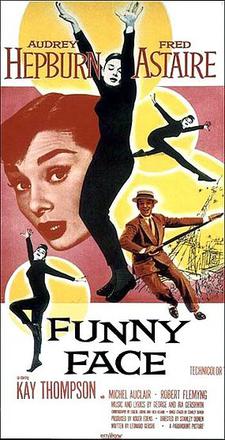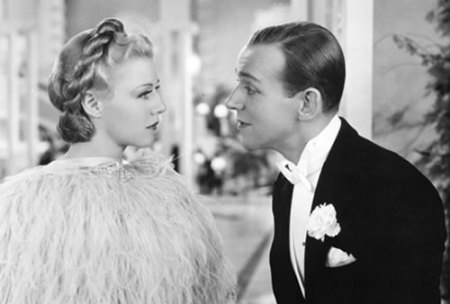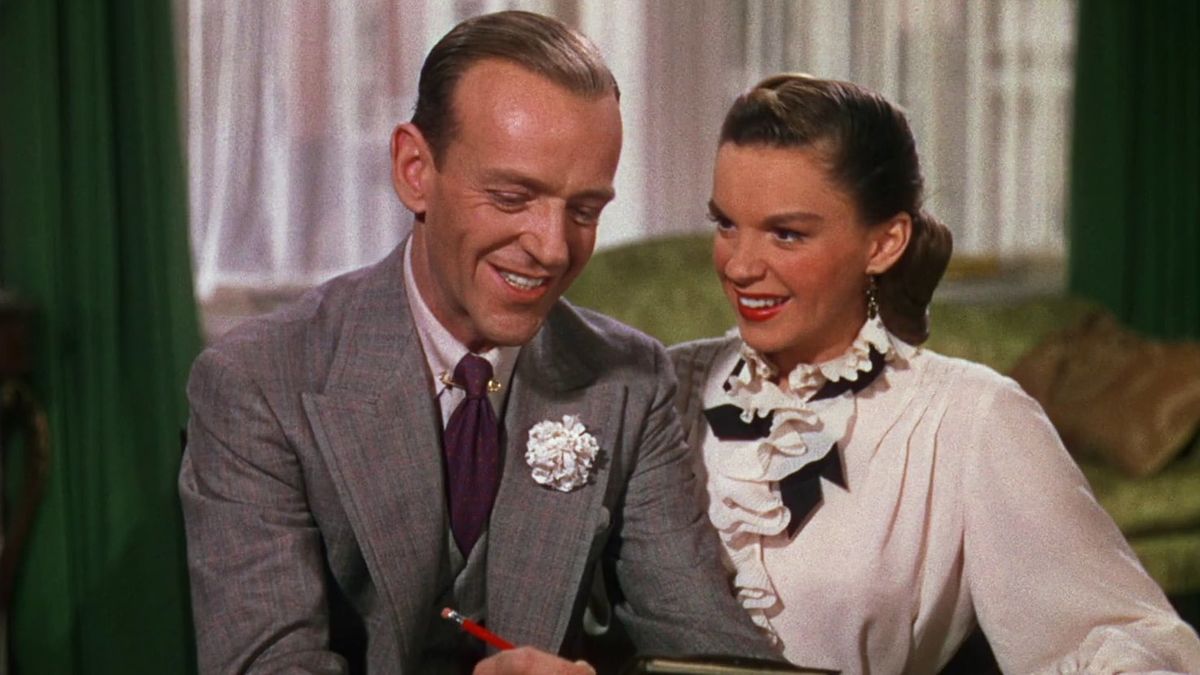
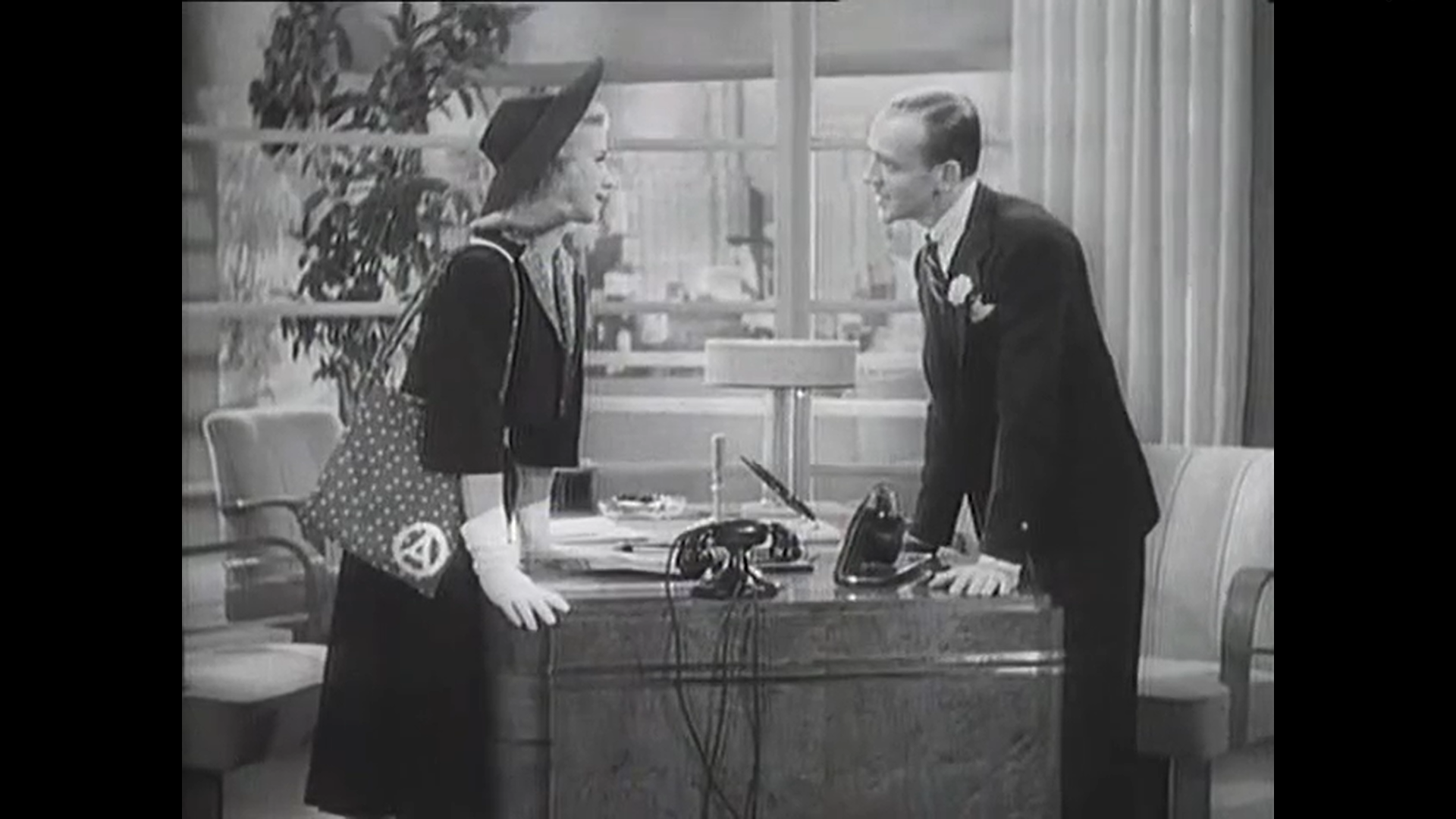
Carefree (1938)

Ralph Bellamy, Jack Carson, and Fred Astaire sounds like a stellar triumvirate for a movie, and Carefree does us a favor by getting the three men together. Bellamy takes up his usual post as the other man and jilted lover, Stephen Arden. Amanda Cooper (Ginger Rogers) can’t seem to make a decision to marry him, and so she agrees to visit his buddy, who just happens to be a psychiatrist.

Fred Astaire as Dr. Tony Flagg is quite the piece of casting, and the situation gets more outlandish when she happens to overhear some of his condescending dictation about the female psyche.

By the time he calls her in for psychoanalysis with perfect candor, she’s already wise to him becoming the most wearisome patient he can possibly imagine. No one takes kindly to disparaging remarks.

With old pros like Clarence Kolb and Franklin Pangborn rounding out the cast at the local country club, you know exactly what you’re going to get. Luella Gear isn’t quite Helen Broderick as far as the wisecracks go, but she has a kind of warm, bright-eyed gameliness in her own right. Behind a certain level of propriety, as Amanda’s Aunt Cora, there’s also a dry sense of humor.

Although it feels like Rogers’s picture for the most part, a high point for Astaire is watching him make dance out of golf, looking quite competent with both as he hits balls off the tee with a rapid fire cadence perfectly in step.

There’s also a dreamscape Astaire and Rogers number within Amanda’s mind, giving license to their longest and most luxuriant kiss to date on celluloid. “I Used to Be Color Blind” would have been more spectacular and made more thematic sense if it had been filmed in Technicolor, but the slow-motion action has a novelty to it. It’s also a secret she must keep to herself: She must subconsciously love Tony, not Stephen.

Not much stock should be put into Astaire’s therapy techniques because they only serve to aggravate the situation, though this is very much on purpose. Ginger under anesthesia allows the story to play up its best screwball antics, and she was always game for a laugh and a few shenanigans.

She proved time and time again in movies of the era like Vivacious Lady and Bachelor Mother, that she was an unmatched comedienne, even when there was little to no dancing for her to partake in. Carefree ventures into the arena of near-surreal silent comedy as she effectively plays a “drunk” character bumbling nearby traffic, giving the stink eye to truck drivers and the like.

“The Yam” is a quirky piece of puff, but it’s exhilarating to watch Astaire and Rogers in one of their most wide-ranging immersive dances. Usually, we get these specified incubated perimeters in which to enjoy their dancing and marvel at their prowess.

Here, it feels like giddy performance art where everyone is drawn into the far more fluid frame with them as they pick up onlookers like an ever-growing amoeba. They move their way through the country club, strutting through the dining rooms past tables as Rogers bounces in and out of the seats with a sweep of her partner’s arms. It’s an utterly delightful outpouring from the consummate professionals.

In a subsequent scene, Astaire talks to his subconscious in the mirror. He knows he’s falling in love with Amanda, and he tries one final desperate act to salvage her relationship with his friend. He hypnotizes her and implants the idea that “men like him should be shot down like dogs.” It’s definitely not a recommended method, but it sets Rogers up for the final act.

Watching the actress skeet shooting Tyrolian hats under the spell of hypnosis is one of the more hilarious things in the picture. It’s good ol’ fashioned fun playing off Kolb’s ornery judge character. One doesn’t work as well without the other.

But there’s also a real menace, even if it’s screwy watching her tromp around the club as the men flee every which way to stay out of the line of fire of her shotgun. Astaire’s ploy worked a little too well.

He realizes he still loves her and expresses his feelings with the crooning classic “Change Partners” imbued with a kind of melancholic yearning out on the dance floor. He waits until the eleventh hour, but with Jack Carson’s help, they try to get into Amanda to thwart Stephen and make sure the right people get married on the wedding day.

There’s a subtle shift in this film within the Astaire and Rogers canon in that it leads with the screwball elements, with the musical aspects playing almost a secondary role. In other words, it breaks with their typical formula and relies on a more compact screwball structure and the capacity of its stars. But the movie also feels like a supreme showcase for what Rogers was capable of on her own.

3.5/5 Stars
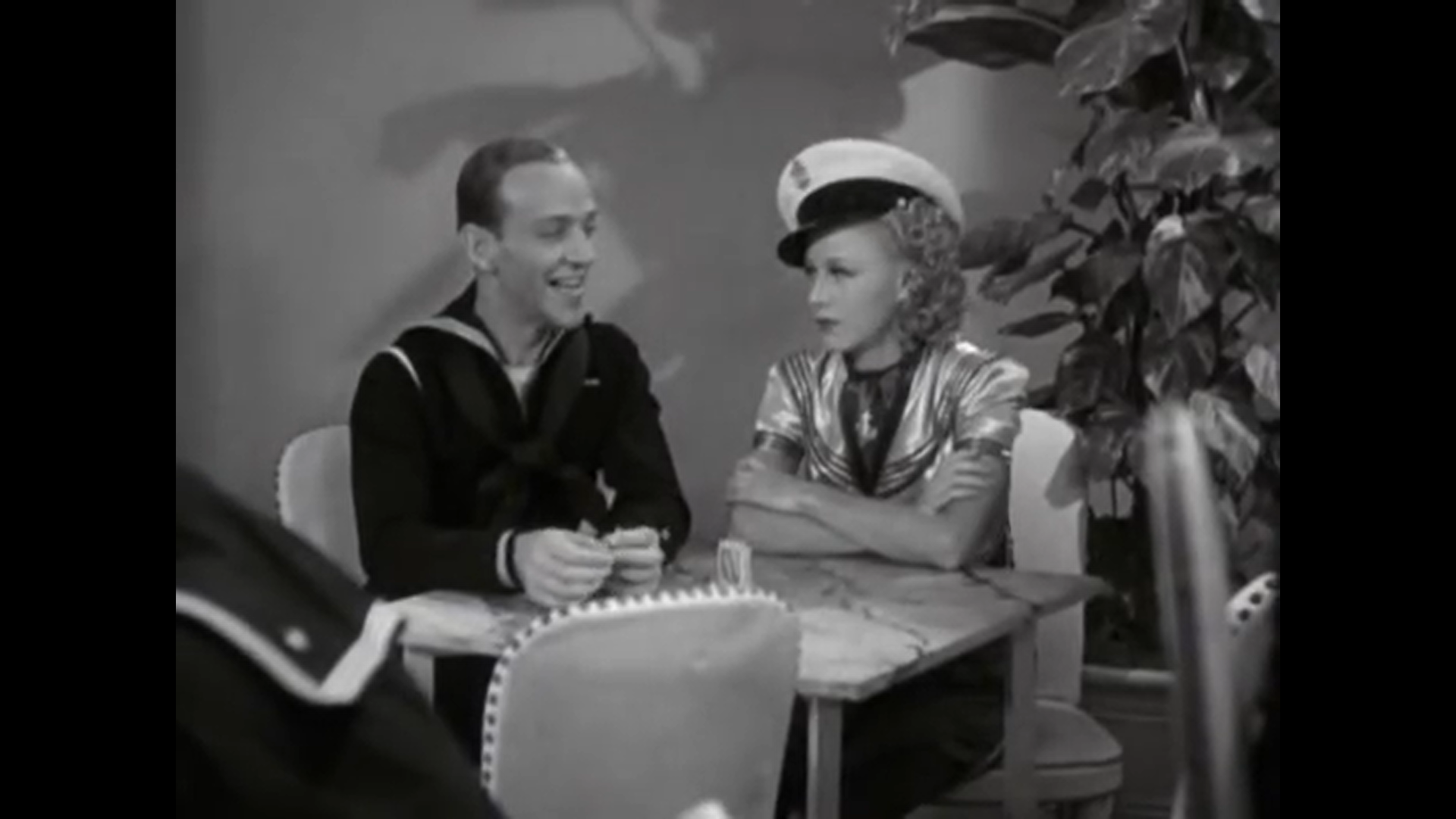
Follow The Fleet (1936)

Taken in the lineage of movie musicals, Follow The Fleet feels like a prototype for On The Town, or maybe there were just more movies focusing on sailors on leave back in the day. It’s like romances set on ocean liners. With the proliferation of commercial air travel, it’s possible a whole subgenre went kaput. For now, it’s safe, and the boys descend on Frisco.

Fred Astaire stars as a gum-smacking sailor, Blake Baker. He wears the abrasiveness lightly because he was always an appealing personality beyond his graceful taps. Randolph Scott takes on the role of the best bud, Bilge Smith, as they continue their pairing from Roberta. Astaire similarly has a girl he wants to check in on…They had a falling out, and you can just about imagine who might be playing her.

As the sailors roll into the city, it has the distinct stench of a pile of pesky high schoolers infecting the place. They sneak into a local joint on one ticket, and Bilge hooks them up with a couple of paper bags of beer from the outside. All they require is the establishment’s table, and they do the rest themselves.

Connie Martin (Harriet Hilliard) plays a homely, bespectacled brunette girl who makes Randolph’s acquaintance; she needs a man to get inside, and he obliges, though he’s quick to brush her off and forget about it. Connie also just happens to be the sister of Sherry (Ginger Rogers), who’s the floor show at Paradise.

It’s the old trope we’ve known since the dawn of time. Ginger Rogers hails from the Gentlemen Prefer Blondes school. As she points out, men like blondes because they look dumb. The operative word is “look” since you would never believe someone pulling one over on Ginger Rogers.  “It takes a lot of brains to be dumb.”

Lucille Ball enlisted to make Connie look presentable. The ugly duckling arc feels dead on arrival. This movie just needed another plot to bide its time. Her new look makes a startling impression on Bilge, and we know she has feelings for him already. His problem is living a transient life; he’s also easily swayed by shinier, more affluent objects in the form of divorced socialites.

Rather like Roberta, the sluggish romance all but writes itself, making Astaire and Rogers the primary reason to stay with the picture and see it through. There’s the fun pretense of a dance-off with another couple, and then Astaire and Rogers go nuclear into another stratosphere. The scene becomes there’s, and there’s alone. The movie almost seems to forget there were ever any other dances spliced into the scene, and we do too. 

The sailors are whisked away on a moment’s notice, and the women — as the title implies — must take up pursuit! The movie requires it. Connie vows to get a boat so the man that she loves can captain it.

It’s rather hypnotic seeing Astaire tapping on deck with a whole host of sailors keeping time behind him; there’s a military cadence to it with a certain added level of artfulness. It’s like the maritime context creates a playground for him to then work within and offer us some novel hoofing.

There’s also a cruel comic irony watching him return to town trying to nab his girl an audition and derailing a “sure thing’s” chances by spiking her drink with bicarbonate of soda. His wires get horribly crossed. You can fill in the rest because Ginger’s the poor woman who suffers at his hands. Being pretty plucky herself, she’s more than equipped for some brutal payback.

These moments of “plot” are the movie’s saving grace because at least A & R’s romantic entanglements are mostly comedic. Rogers has the feistiness to make them a joy, and Astaire doesn’t have a malicious bone in his body, so the comedy comes off mostly affable and light.

The final act is comprised of putting on a show to keep Connie from losing the refurbished ship she sunk her savings into — she did it for Scott, but you hardly need to know this. Nor the fact that Blake has to go AWOL to get to the benefit in time. It doesn’t matter.

All that matters is that Fred is there to dance with Ginger, and everything else falls away. The apex of the movie is “Let’s Face The Music and Dance,” which feels like a quintessential American Songbook number that I’ve been sleeping on. My sincerest apologies to Irving Berlin.

It’s classic  Astaire and Rogers at their classy best, dancing on the deck of the ship and making us forget the sitcom fluff for something transcendent like they gave us so often. It’s a worthy place to end.

I said my apologies to Berlin, and now I owe one to Ms. Hiliard. I didn’t realize she was thee Harriet of Ozzie and Harriet fame until I was practically finished with this review. The longevity of her career in itself is quite remarkable.

3.5/5 Stars

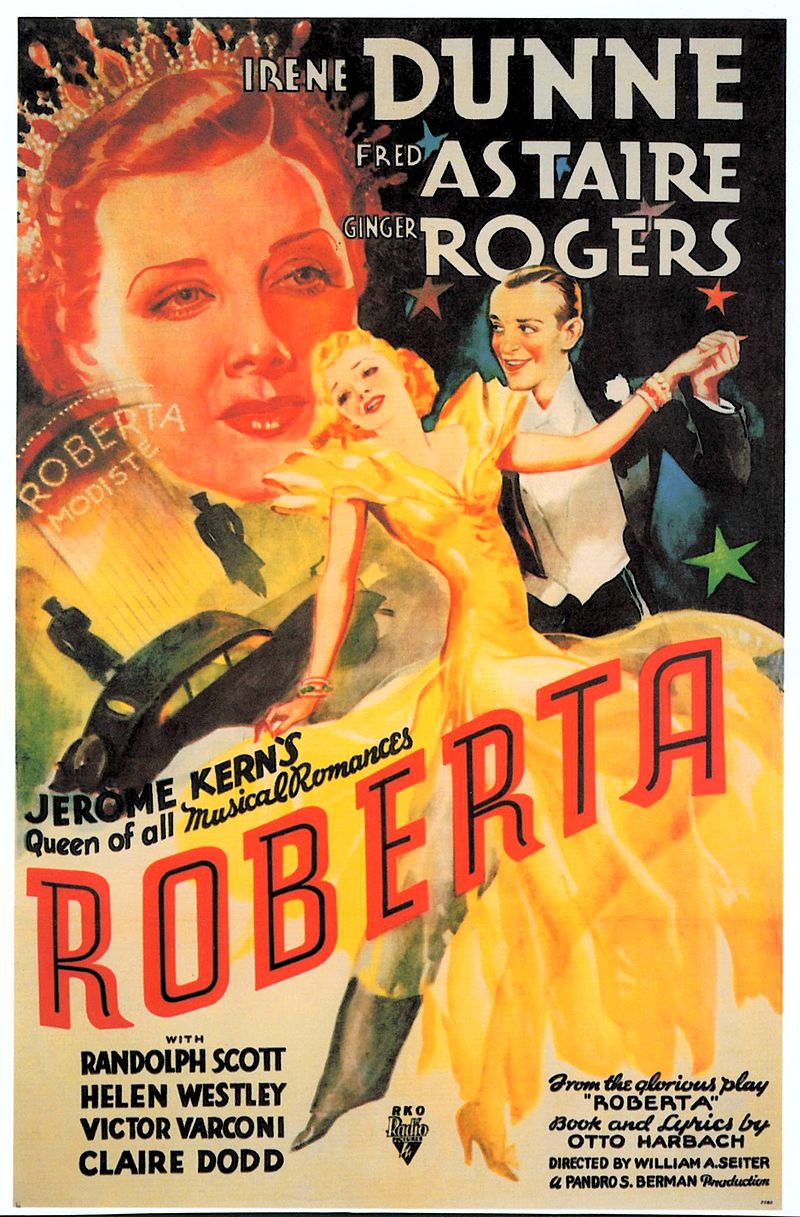
Roberta (1935)

Roberta opens with a troupe of musicians known as the Wabash Indianans who perform a wonderfully kooky organ routine in the middle of a train depot. It’s so inventive in fact, including the verbal gymnastics of Candy Candido, that they get sacked before they can even begin their gig in France. The proprietor was looking for some more exotic entertainment.

The boys need a fallback plan fast. Huck Haines (Fred Astaire) vaguely knows a girl named Lizzie, and John Kent (Randolph Scott), well, his aunt just happens to be the most famous dressmaker in the city. Only in the movies…

Time is of the essence, and so he pays the famed monoymous Roberta (Helen Westley) a visit. Scott gets stuck in the gilded elevator and has his meet-cute with Irene Dunne. It took a moment to recognize her because she addressed him in French. Stephanie (Dunne) is Roberta’s designer and most faithful staff member.

Scott is instantly smitten and goes leaping up and racing across the room just to have the chance to open the door for her. He rumbles around with the giddy energy of a colt; his aunt likens him to her favorite Newfoundland puppy.

If you’re keeping score, there’s one name that hasn’t cropped up yet. Ginger Rogers shows up as a feisty countess; her accent is worse than Dunne’s, but it doesn’t matter. She’s got the spunk to make it count. She stands at the balcony listening to the band do their performance, and when she actually gets face-to-face with Astaire, there’s really some fun to be had.

Flying Down to Rio found them coming into their own; they were sidekicks who caught the eyes of the audience with their craze-creating “Carioca” routine. With Roberta, they had already hit it big with The Gay Divorcee, and now they get to have a good time with the material without the onus of the story being on them.

They seem to relish this kind of sidekick role; it’s almost like they’re playing a level of meta comedy here because they know all the beats of the story and what it takes to have the commensurate repartee. After all, outside the film, they’ve already built up a cache of goodwill.

We really begin to understand it when they both drop the act. Because she’s not a countess but the same fast-talking dame named Lizzie he knew in a former life. Now their familiarity makes sense for the sake of the story.

In “I’ll Be Hard to Handle,” they get reacquainted with some flirtatious dancing as they reminisce about old times. This devolves into a dance-off with a slap for good measure, all captured in a rush of an unbroken take between two consummate performers loving what they do in front of us.

It feels like things are humming along. The demonstrative nightclub owner Alexander Petrovich Moskovitch Voyda, who communicates only in raised octaves, is coaxed by Lizzie into offering the boys a job this time around. Things are looking up.

There’s even a French lesson with Randolph Scott and Fred Astaire, which so obviously lays the groundwork for “Moses Supposes” in Singin in the Rain. It’s impossible to see it any other way.

Admittedly, Scott and Dunne have a rapport I like, though I’m equally tempted to say I want to see the movie with Astaire and Rogers at the reins. They almost need two separate movies because the story’s not big enough for all they have to offer. The script goes tugging and seesawing good-naturedly enough between the players, but the story almost doesn’t know how to handle it all.

It’s an embarrassment of riches, and it’s not even named for any of them. This distinction goes to Helen Westley. Then, Auntie Auntie dies peacefully — Scott and Dunne have a pact to run her fashion empire together, and John’s old flame Sophie comes from America for the obligatory complication.

She and Astaire don’t mask their mutual disdain for each other, and her entrance is great for the sake of comedy if little else. The fact that they have a bet over how her dress will be received by John pays dividends simply with the opportunity of watching Astaire’s smug face as he struts off and palms her dough.

Roberta could be a stolid affair straight through, and it is from time to time. No disservice to the lovely Irene, but her style of singing went out about 80 years ago, and I will always be enraptured by the Platters’ cut of “Smoke Gets In Your Eyes.”

I realized what made the Astaire and Rogers formula work was that they cut out the middle man: they were the floor show, the romance, and comedy all wrapped up into one. Roberta almost has too many parts.

Irene Dunne’s a star deserving top billing to be sure, but it’s easy to say the same about her costars even if it’s in retrospect. Still, there are enough delights in this one to look kindly on it.

3.5/5 Stars

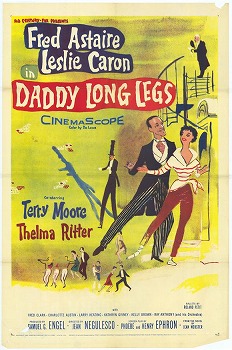
Daddy Long Legs (1955)

The movie opens with a snooty art docent bloviating to a rapt audience about the various paintings within the Pendleton family collection from Renoir to Whistler. The joke is that the latest member of the family, Jervis Pendleton III, has gone a bit off the rails. It’s reflected in his portrait and by the fact he bangs away on his drums in the next room over like the eccentric, happy-go-luck magnate that he is.

The action quickly gets transposed from New York to France. The reason doesn’t matter much. However, the aforementioned Mr. Jervis happens to wander onto the premises of a local orphanage in search of a telephone. Instead, he discovers a young woman named Julie Andre (Leslie Caron) from a respectable distance.

He notices the rapport she has with the kids in her care and learns she, too, is an orphan without family or prospects. Right on the spot, he feels moved to do something. He gets back to his grousing second-in-command, Griggs — the man managing his assets — and vows to sponsor her (since adoption is out of the question).

If it’s not apparent already, it’s a fluffy little fairy tale, a bit too thick in the middle, but soon enough Leslie Caron finds herself off to America! Our French Cinderella travels to New York to begin university thanks to her mysterious benefactor.

Daddy Long Legs becomes a kind of collegiate musical having more in common with the worlds of Good News or Take Care of My Little Girl than it does An American in Paris (or even the cross-cultural Silk Stockings), though she is a Frenchwoman in America if you will. It’s a not-so-subtle twist on the formula as Caron receives her room, two new roommates (including a perky Terry Moore), and some light hazing from the upperclassmen. Two trunks also arrive at her doorstep, laden with the most exquisite of clothes.

Fred Astaire disappears for a while, and it becomes Caron’s movie by design. Her absent sponsor forgets about her, running off to do who knows what, as is his nature. He’s a creature of caprice. She’s left melancholy and teary-eyed as she writes to her pen pal, “Daddy Long Legs,” who never writes her back.

That doesn’t mean no one’s reading her heartfelt messages. Namely, the company secretary played by the pitch-perfect Thelma Ritter (one could watch her all day). She’s a closet romantic who grows misty with each subsequent letter added to the growing dossier. In her eyes, this is cruel and unusual punishment; someone needs to respond to the girl! She has a point.

Fred Clark plays his curmudgeonly corporate sui,t who has no time for sentiments. He has enough grief keeping the boss’s affairs in order while he’s off gallivanting around.

One of the first standout musical numbers has Caron conjuring up her dream benefactor. The movie quite vividly brings her dreams to life about who he might be, from a Stetson-wearing moneybags to a suave playboy in a top hat and tails, and finally a guardian angel. This last incarnation is one of the most enchanting, bringing our two stars together in a bit of a fantasy where Astaire effectively guides her steps like an angelic shadow, though they very rarely touch.

Eventually, Astaire does respawn in the flesh, and being such a good-natured fellow, he decides to pay a visit to his college girl under a pretense. You see, his niece (Terry Moore) conveniently is Julie’s roommate, so he goes down to the school with his sister-in-law while actually wanting to catch a glimpse of his orphan, who has come into her own with campus life.

It’s no small effort to try and disregard the universe where Astaire going to a college dance is not cringey, especially when there’s a comment made about his leering at co-eds and how very young they are. Perhaps Daddy Long Legs is more self-aware of the disparity between its stars than most of its contemporaries.

It gets a bit more tolerable with Astaire hamming it up on the dance floor with a full dance card, all while feigning ignorance (he only knows the box step). And of course, all the students want to be hospitable to Linda’s elderly uncle.

When it’s their turn, Caron and Astaire set up court near the statue of his dear grandfather, and she divulges to him about her relationship with “Daddy Long Legs.” The movie tried to kickstart its own dance craze, the “Slewfoot,” and I gather it didn’t catch on. Although watching Astaire and Caron do anything together feels spectacular in itself. It need not be more.

Astaire is also still a stellar interpreter of song. Here it takes the form of “Something’s Gotta Give,” but it also foregrounds the uncomfortable undercurrents of this relationship inching toward romance. It doesn’t help when Jervis’s indignant friend (Larry Keating), eavesdropping next door, makes an unflattering comparison between him and King David of biblical times, even if it is only a misunderstanding.

Thus, it’s easiest to talk about the film on the plane of performance and the brand of physicality where romance is implied on the dance floor. Though he does sneak a quick kiss, Astaire was always best in this kind of Classical Hollywood’s coded distillation of passion, most memorably achieved with Ginger Rogers. There’s an elegance to the metaphor and two people being connected and knowing one another through dance.

Astaire and Caron match each other step to step and grace for grace. The way they move down to their hands and the tilt of their heads each represent the complete epitome and essence of elegance. It’s like there’s a giant tractor beam drawing us in.

The final opportunity for Caron to do some ballet would feel like a missed opportunity otherwise, but the ensuing Hong Kong Cafe segment feels a bit queasy, like she’s cast as her own diminutive version of a sensual Cyd Charisse, and it doesn’t fit with Caron’s image, especially for such a young woman.

But despite whatever misgivings the plot might engender, Leslie Caron and Fred Astaire are able to transcend these pitfalls with bits of movie magic. What’s more, at such a precocious age, Caron had the distinction of dancing opposite the two greatest movie dancers of all time (There are six women in the coveted club). And she is hardly an ancillary addition. This must be stated outright.

The partnership only works if both parties are up to it. With her rigorous training as a ballerina, she more than holds her own and blesses the audience in the process.

In fact, although Fred would continue to be visible in That’s Entertainment extravaganzas and TV specials with Barrie Chase, he was in the twilight years of his film career. Although she ascended early, Caron still had much further to go; she was just beginning as a star.

3.5/5 Stars

CMBA Blogathon: Classic Hollywood Stars on The Dick Cavett Show

This is my entry in The CMBA Spring Blogathon: Big Stars on the Small Screen

There are several more recent late-night hosts like Stephen Colbert or Conan O’Brien who have managed to use the truncated form (and podcasts) to try and go deeper with guests beyond surface-level pleasantries. Colbert even had Dick Cavett on his show, and I’m sure he’s not the only one.

However, as I’ve pored over more and more of his interviews over on Youtube, it feels like Dick Cavett was often the gold standard for lengthier, in-depth discussions will all sorts of talents and luminaries. He had several Beatles on his show, boxing champions, prominent thinkers, along with plenty of Classic Hollywood talent. And his show in its various forms acted as a representation of the dying art of the extended interview.

Cavett’s gift seemed to be his capacity to somehow straddle two worlds. He was an intellectual with a dry comic wit, but also a midwesterner who dressed mostly innocuously and came off unassuming. He looked establishment and yet crammed his shows full of personalities like Janis Joplin and Muhammad Ali.

Often the pairing of his guests seems downright peculiar (ie. Joplin and Raquel Welch for one). However, when he was given the opportunity to sit down with one individual and have a conversation, there were often some wonderful tidbits that came out in the process. And he has a non-grating style of asking the questions we want to know without making them sound totally asinine. He also normally took time to listen.

It does feel like he sits down, not for an interview, but for a chat with a friend. And in some cases, people like Groucho and Brando became his friends in real life even as he did his best to coax answers out of the most reticent guests by making them feel comfortable.

I could spend a significant amount of time just discussing some of the directors he had on his show like Alfred Hitchcock, Orson Welles, even Frank Capra, but I thought I would focus on a handful of the stars. Here we go:

Groucho Marx (1969 and 71):

Cavett was quick to praise Groucho as one of his heroes, and it’s fun to watch them together full of laughter but also genuine affection. You can tell the appreciation is mutual between them and it makes the discussions lively.

One anecdote involves Groucho’s encounter with Greta Garbo in the elevator. Not seeing who it was, he pulled her hat brim way down over her head, and when she gave him a withering look, he apologized and said, “I’m terribly sorry, I thought you were a fellow I knew in Kansas City.” That’s Groucho to a tee.

In one candid moment, Groucho says he doesn’t read the news anymore before bed because it’s just a remake of what he’s been hearing all day. It goes to show there’s nothing new under the sun or in the news cycle.

Fred Astaire (1970 and 71):

This is a lovely set of interviews. Astaire is quick to deflect praise and mentions how he doesn’t like watching his old movies because he’s always thinking about how he could do it better. He also provides some insight on a few of his numbers from films like Funny Face. It turns out he’s still got it and besides dancing with Dick, he does a seated rendition of “A Fine Romance” much to the audience’s jubilation.

It turns out his grandson likes the Beatles, and Astaire even owns some of their records himself. On top of his career as a dancer (or “hoofer”), he wrote quite a few songs of his own. I recall seeing him do a rendition of his composition “City of the Angels,” but I could not find it anywhere online.

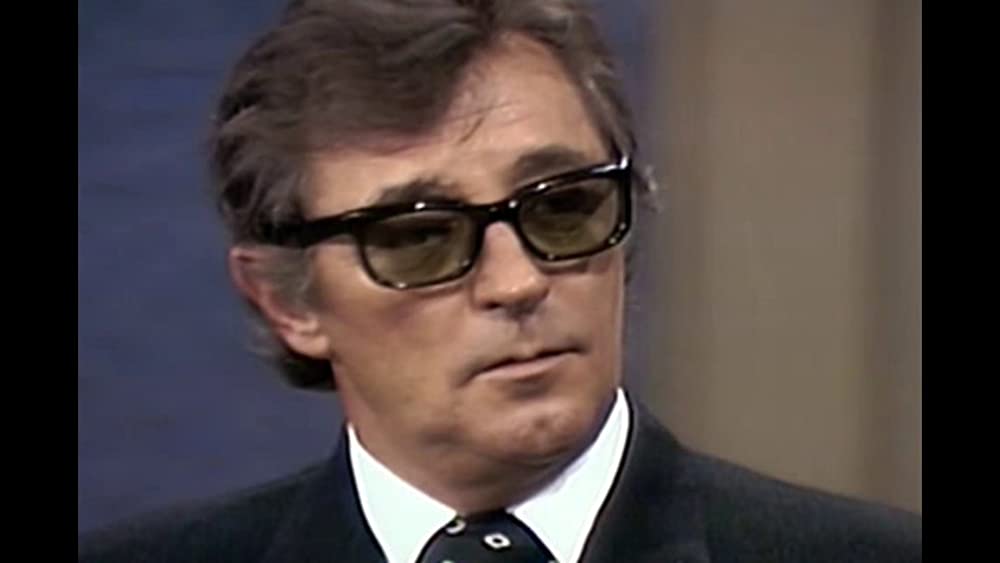
Robert Mitchum (1971)

Mitchum is an actor I’ve grown to admire over the years, and Cavett makes a point of acknowledging he was known in Hollywood as a tough interview. However, he’s surprisingly forthcoming. He talks about his school years, his time in a southern chain gang, his famous drug bust, and also insomnia.

He recounts sitting in on a Hopalong Cassidy movie with his wife early in his career and eavesdropping on a lady saying, “That is the most immoral face I’ve ever seen!” He made a career out of it starting as a “mule” for RKO as he called it. Since the air date is around Ryan’s Daughter’s release, he also mentions an experience when he was in Ireland with Richard Harris, and he got in an altercation with a local who mistook Mitchum for Kirk Douglas! Otherwise, I’m impressed by his use of words like convivial and peregrination.

Bette Davis (1971)

Bette Davis is such a vibrant personality, and she regales the audience with her early career, her battles with Warner Bros, and how she ties into Gone With The Wind lore. She calls Eroll Flynn the most beautiful man to ever live, and the most charming, but in her estimation, he could not have played Rhett Butler.

She also shares how she perceives Now, Voyager would have developed after the credits, in that her protagonist would have ultimately ended up with Claud Rains’ character because he had a strength perhaps missing from Paul Heinreid. Davis talks more about her friendship with Rains — a man she called “witty, amusing, and beautiful.” She even takes time to mention her most repulsive screen kiss with an actor who (in 1971) was still alive and therefore left nameless. Although she is quick to praise some English actors including Richard Harris and Dirk Bogarde.

Marlon Brando (1973)

Marlon Brando feels like another person who was notoriously difficult to pin down. Here he’s quite candid about his thoughts on racism against minorities and, at the time, the quite controversial boycott of the Academy Awards.

When Cavett tries to talk about acting style, Brando makes the case that all human beings are acting all the time in life just to survive. Cavett’s trying to get at how what Brando does is far and away from what anybody else can manage, but perhaps it’s semantics.

Brando goes on to say that acting is a good business — a worthy craft — but he doesn’t think of it in terms of art like other people. It’s intriguing since many would laud him for being a part of some of the most artistic production of the 20th century. (Side note: Brando uses the word “inured” which I thought was pretty impressive).

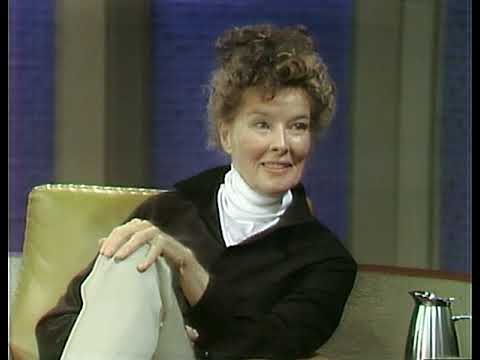
Katharine Hepburn (1973)

Like Bette Davis, Katharine Hepurn was considered for Gone With The Wind as she had working relationships with the producer David O. Selznick and the original director George Cukor. She and Cavett also spend some time talking about Humphrey Bogart, and Hepburn says he was a gent with good manners and completely different than his persona. She said Spencer Tracy always seemed a bit uncomfortable as a man being a professional actor, but Bogey seemed to love it and be proud of his job.

She calls the movie business thrilling, but she had no interest in immortality or people remembering her in the year 2050. As we’re now only a couple decades away, I can say that people certainly will remember stars such as her, and we’re thankful for their movies and interviews like these to help keep their stories alive for ensuing generations. I count myself among this lucky group who can reap the benefit of this readily available visual history both on the big and small screen.

For fun, I wanted to make a list of their films including my personal favorites. In no particular order off the top of my head these were my choices:

Duck Soup (1933)
Night at The Opera (1935)
Swing Time (1936)
The Band Wagon (1953)
-Out of The Past (1947)
-Night of The Hunter (1955)
-The Little Foxes (1941)
All About Eve (1950)
The Godfather (1972)
On The Waterfront (1954)
Philadelphia Story (1940)
The African Queen (1951)

Dancing Lady (1933): Joan Crawford & Clark Gable

Screenshot 2020-03-27 at 84300 AM

You know the drill. In the throes of the Depression, the idle rich fritter their wealth away at such social events as striptease and then attend the ensuing night court until they get bored with the whole affair. Tod Newton (Franchot Tone) is one of their ilk, but he’s more engaged than others thanks to the pretty girl on the other side of the courtroom.

Down-on-her-luck Janie Barlow (an effulgent Joan Crawford) is a casualty of a police raid undertaken on the saucy dancing joint she’s been working at. Beyond being smitten, Tone (Crawford’s real-life husband for a time), is invested in helping give her a leg up, ulterior motives notwithstanding.

If it’s not obvious already, Dancing Lady has a premise to rival Warner Bros’ superlative successes with risque backstage, rags-to-riches musicals like 42nd Street. So, while the plot is nothing special, it somehow taps into Crawford’s innate sense of ambition as an actress.

There’s a feeling she’s not entirely acting a part; she’s driven to make it to the top. It’s this impetus that leads her to stick to “thousand-to-one-shots” over any man — even Park Avenue know-it-alls swimming in cash. She’s going to make it of her own accord. She’s going uptown toward the art world.

The script purposefully bears down on the vernacular to differentiate the patricians from the plebians and with it Janie’s attempts to make something of herself — first, through improved diction and then a newly cultivated wardrobe.

Without knowing it, she’s probably aspiring to the entertainment funded by such nincompoops as Mr. Bradley and his roly-poly walking gag of a son Junior. They are a father and son comic echo chamber if you will, and they also hold the purse strings for one of the industry’s latest productions.

It’s not altogether glamourous stuff but Patch Gallagher (Clark Gable) and his taskmaster-like regimen, turning chorus girls into a full-fledged production, is the “big time” for someone like Janie. The only problem is getting an audition. The head honcho has his right-hand man Steve (Ted Healy) run interference for him — it didn’t go so well for a wisecracking Eve Arden. Still, the “Dutchess” is an assiduous gal if there ever was one.

Director Robert Z Leonard is evidently enamored with his whip pans, but he does evoke pace rather well, especially when Crawford tries furiously to catch up with Gable as he streaks down the sidewalk. While it’s a cliched rom-com montage that would be recycled time-and-time again, it still stands out within the context of the film. The leads don’t speak a word to one another for several minutes at least.

In what feels like a non-sequitur, the Three Stooges make a lightning-quick cameo. Well, they actually show up twice, posing as stagehands. It’s true they feel completely at odds with Joan Crawford’s story arc, but it’s delightful to see them, even momentarily, as she continues her ascension. This is only to be surpassed by the appearance of Fred Astaire! (And I nearly forgot to mention Nelson Eddy, so there you go).

Tone continues to go to great lengths to win her affections, secretly bankrolling her star vehicle, dancing and dining her, and flaunting his swimming pools. When all else fails, he resorts to taking her to Cuba, conveniently far away from the other man in her life and the career she’s chosen.

The red-hot sparks are given a literal gymnasium to work themselves out in — positively buzzing between Crawford and Gable — as they get in their morning exercise to keep their svelte dancing figure and brawny physique respectively. It goes unspoken, but an unwritten rule of storytelling tips us off that antagonism usually denotes love. They have copious amounts ready-made to dish out at one another.

Unfortunately, by this point, the story gets less and less interesting by the minute as it continues to sink into the preconceived notions of the genre. In other words, what we suspect to be derivative proves itself to be precisely that. It speaks to the charisma of the stars who make the well-trod paces watchable, even engaging, and there are a few momentary delights around the fringes.

The final extravaganza is a not-too-veiled Busby Berkeley knockoff infatuated with beer. The surreal foray that follows offers up a luxuriant carousel of beauties and giant fan blades strapped with women — not to mention the surreal moment when a host of old maids go behind a curtain only to be dismantled to come out as gorgeous dancing ladies.

With Fred Astaire showcased prominently alongside Joan in a very fluffy ensemble, it felt strangely out of place. Astaire and Rogers had yet to be placed together and it’s true their trajectories could have been so much different. I don’t know a thimbleful about dancing, but at the very least, Crawford has an earnestness on taps. Though, she’s not quite Ginger Rogers either. No one ever said she was.

With Tone’s gigolo scorned and “The Duchess” going in to check on her dejected “Duke” after their stunning success, there’s a sense the working-class heroes are being reunited in a triumphant victory for all the blue-collar folks in the audience. In other words, it’s not just Depression-era pap, there’s this genuine element of wish fulfillment.

The movie is gracious enough to supply one last obligatory scene between Crawford and Gable for contemporary audiences. Because there are a lot of distractions (and some unique surprises like Astaire), but the romantic chemistry is present and delivered on a silver platter with the kiss that the whole movie’s been culminating to. Surprising, I know. What’s the axiom? Give the people what they want? Dancing Lady is case and point.

3.5/5 Stars

Funny Face (1957) Shows Audrey Hepburn’s Enduring Beauty

Funny_Face_1957.jpgI’m not an expert on fashion photographers, but with only a passing interest in the industry, two of the most luminous names I know are probably Richard Avedon and Bob Willougby. Their names seem to crop up more than almost anyone when you consider film stills. It’s no coincidence that they both famously did shoots of Audrey Hepburn: one of the most widely photographed women of all time.
I never realized it before, but it also seems little coincidence that Richard Avedon is fairly close in name to Richard “Dick” Avery, a fashion photographer, played by Fred Astaire in this picture. Avedon himself was an advisor on the musical even providing the now-iconic headshot of Hepburn, capturing her iconic eyes and the contours of her face.

That’s the first level of reality being reworked for a bit of frothy fantasy. We’re met in the opening minutes by a histrionic tastemaker, Magazine matriarch Maggie Prescott (an uproariously assertive Kay Thompson) who comes off a bit strong but slowly sinks into our affections. Ruta Lee is constantly scampering about with the rest of her staff, getting whisked around by Prescott’s every whim.

She champions a change in direction for Quality magazine as they’ve gotten a bit lax and set in the status quo, and so she catalyzes a pink extravaganza to shake up the fashion world. It just might work.

Astaire is as affable as ever, remaining mellow with age and yet the models he has to deal with, in his line of work, are shown to be ditzy and a dime a dozen. He proposes an even bolder deviation from the norm than Prescott. The idea: Taking a bookkeeper, frumpy and austere at first glance, and turning her into a starlet.

Hepburn makes for the sweetest intellectual, running a bookshop that gets overrun by a magazine syndicate in Greenwich Village. She’s all but lost in the fray while simultaneously giving Avery the touch of inspiration. It’s right there in her face.

As she flees from the editor’s frenzied staff of ladies, intent on finding her and making her over, it’s in the darkroom where she seeks refuge and comes face-to-face again with Avery, who lightens her spirits and makes her feel at ease. Now I can check another thing off my list, as Hepburn and Astaire share a lovely darkroom dance together, which I hardly remembered from before.

In the end, she takes a minor liking in the idea of traveling to Paris for a photo shoot, even if it’s only a means to get her closer to the philosopher that shes always deeply admired for his work with empathicalism. Apparently, it’s all the rage in some circles.

At any rate, a new kind of fashion icon is born. She’s denoted by “Character, Spirit, and Intelligence.” Imagine that. Of course, the bookish Jo Stockton doesn’t see it either. She confesses, “I have no illusions about my looks. I think my face is funny.” Upon closer observation, the near autobiographical aspects seep out again.

Because, if memory serves me right, Hepburn never considered herself attractive or glamorous, even if she was seen as such the world over. Her figure was too slight or her nose too this, and her eyes not enough that. It’s the typical human fallacy to only see the blemishes and imperfections. We either have too big a view of ourselves or too little. It takes other people to straighten us out. We see a funny face, and they see the character that dwells therein — the adorableness and glamour Audrey Hepburn personfied.

In Funny Face Hepburn also gets to relive some of her training as she initially had an extensive background in ballet and dance as a teenager. Her most visible number comprises a beatnik hangout teaming with new and peculiar forms of artistic expression. There she is right in the midst of them whipping around with a peppy hand-clapping verve that sees her arms and springy ponytail flying too.

Back on the fashion circuit, she’s turned into a stunning pink bird of paradise with the spotlight beaming down on her and everyone entranced by her pure exquisiteness. Meanwhile, Astaire gives his cane dances of old a facelift with an umbrella and overcoat, including a brief interlude as a whimsical matador.

“He Loves and She Loves” has them at their most euphoric, acting outt a wedding scene that can never be. They are co-workers and nothing more. But when the fashion gala is made a shambles of, and they have a major tiff over a certain French philosopher named Emile Flostre (Michel Auclair), it looks to be the end of the story. However, we’ve seen enough movies to know not to get up and leave in the seventh inning. There’s a comeback in the ninth.

Hepburn’s voice makes an appearance in all of its demure glory. While not spectacular in nature, I’m a proponent of hearing people’s actual voices when they’re given the task of trebling through a tune. I’m of the sentiment that I would rather hear an unadorned, even “warts and all” performance opposed to the airbrushed “dubbed” showings that were so prevalent. Hepburn was a particular casualty of this phenomenon in My Fair Lady (1964), even as her quivering rendition of “Moon River” goes down as one of the most intimate performances on film. I rest my case.

While not the most cohesive musical out there, we have enough glimmers of fun and frivolous entertainment to more than satiate our wants. Of course, our stars are two of the most sunshiny personalities the movies ever bore, and together there’s the expected amount of good-natured amiability. At least, in the end.

Likewise, Cole Porter and the rich imagery courtesy of Stanley Donen, Richard Avedon, Technicolor, et. al. make the balloons brighter and the wardrobes all the more luxuriant. A true feast for the eyes, as they say, even if the plot could be tipped over with a feather.

3.5/5 Stars

The Band Wagon (1953) with Fred & Cyd

the band wagon 1.png

Some may recall the opening titles of Top Hat (1935). They play over a man’s hat only for the head under it to move as the names subside, and we find Fred Astaire under its brim in his coat and tails. Now, well nigh 20 years later, the same imagery is being called upon.

There’s an auction going on, including the sale of, of all things, a top hat evoking the same Astaire and Rogers musicals of old. It’s not in much demand as the man who formerly wore it, to much acclaim, is now a has-been. In fact, the biographical aspects of the picture are striking even when we can’t quite discern the fiction from the half-truths. Maybe that’s the key.

Already Fred Astaire himself had announced retirement several times, though one could hardly concede his career had stalled. In another bit of fitting parallelism, Adolph Green and Betty Comden penned a husband and wife duo for the storyline much like them (sans marriage). The head maestro character had some inspiration in Jose Ferrer who at the time had at least three shows on Broadway and was starring in a fourth.

The dashes of authenticity are all but undeniable as is a minor cameo by fawned-over heartthrob Ava Gardner. Consequently, I always thought the actress shared some minor resemblance to Cyd Charisse who was promoted to leading lady in this movie.

Out of these details blooms a picture that’s a fascinating exercise in touched-up reality because we see the ins and outs of a production with a behind-the-scenes narrative akin to Singin in the Rain. It makes us feel like we’re a part of something on an intimate level.

The early “Shoeshine” number with Astaire checking out a penny arcade, shows the inherent allure of a Minnelli-Astaire partnership. Because it was Astaire who made film dancing what it is, intent on capturing as much of the action in full-bodied, undisrupted takes. The focus was on the dancers, and there was an examination of their skill announcing unequivocally that there was nothing phony about them.

But as technology began to change and more complex camera setups became possible, this newfound capability was seen as an aid to the art rather than a detraction. Gene Kelly was of this thought as well. With the combination of sashaying forms and a dynamic camera, there was a greater capacity to capture the true energy that came out of dance. One could argue reality was lost, but some other emotional life force was gained.

And we see that here with Astaire grooving around past fortune-tellers and shooting galleries with the world tapping along with him. He and the real-life singing shoeshiner, Leroy Daniels, build an indisputable cadence through a momentary collaboration. It proves infectious.  Minnelli who himself had a background in set design seems most fully in his element surrounded by extras, colors, and any amount of toys to move around and orchestrate.

When Jefferey Cordoba (Jack Buchanan) finally signs on to direct and joins this dream team, he brings an endearing brand of histrionics with him. At his most quotable, he says, “In my mind, there is no difference between the magic rhythms of Bill Shakespeare’s immortal verse and the magic rhythms of Bill Robinson’s immortal feet.”

“That’s Entertainment!” captures his pure enthusiasm for the industry, giving anyone free rein to tell a story, where the world and the stage overlap and as the Bard said, all the various individuals are merely players.

However, this show previously envisioned as a happy-go-lucky musical hit parade soon takes on a life of its own, morphing into a retelling of Faust. We see Tony Hunter stretching himself as an actor, something Astaire himself was probably uncomfortable with. Likewise, he’s equally nervous about starring with Gabrielle Gerard who is a rapidly rising talent, thanks to the controlling nature of her choreographer boyfriend (James Mitchell).

Aside from her skill, her height is also something that the veteran dancer is self-conscience about. He smokes incessantly. She never does. So they each bring their insecurities and nerves to the production, erupting in a series of miscommunications during their first encounter. Still, the show charges onward regardless.

Even as the production proves to be a trainwreck and opening night approaches, it is the joint realization that they’re both out of sorts helping Tony and Gaby right their relationship. They take a ride through the park and wind up in arguably their most integral dance together.

Because it says, with two bodies in motion, what every other picture that’s not a musical must do through romantic dialogue or meaningful action. And it’s like the Astaire and Rogers films of old. Similarly, dance is not simply a diversion — something pretty to look at —  but it becomes the building blocks for our characters’ chemistry.

I find their forms marvelous together, both equally long and graceful side-by-side and in each other’s arms. The movements are so measured, effortless, and attuned, leading them right back into their carriage from whence they came.

Cordoba gets progressively carried away with his vision in what feels like tinges of The Red Shoes. Pyrotechnics and an excessive amount of props mask the core assets of the show, which are the performers themselves. What was purported to be a surefire success, just as easily becomes a monumental flop as the social elites walk out of the preview like zombies leaving a wake. Even if the image is laughable, it also acts as a reminder that all great forms of entertainment start with human beings.

“I Love Louisa” is a kind of musical reprieve as the whole gang, from the stars to the bit performers, try to shake the shell shock. The fun is put back into the players, their art, and this whole movie as Tony resolves to take their production in a new direction — as a musical revue.

I couldn’t help watching Cyd Charisse, for some reason, during the song. No, she’s not the focal point, but there she is prancing about and having a merry old time with all the extras in the background. They’re all a community of people enjoying their failure together. Bonding over it. It’s bigger than one individual. It’s easy to acknowledge The Band Wagon might be thoroughly enjoyable for these periphery elements alone.

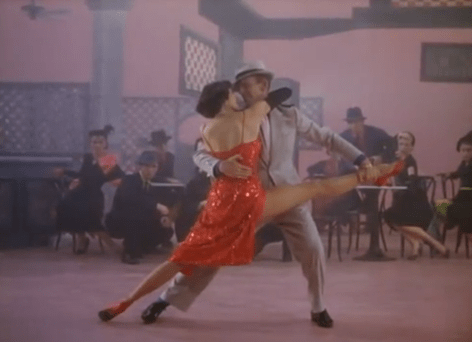
There are a couple, dare I say, throwaway placeholders to follow. Certainly, not the best of musical team Schwartz and Dietz. But “Girl Hunt — A Murder Mystery in Jazz,” is a labyrinthian sequence capturing the essence of the dark genre through voiceover and stylized visuals being interpreted through muscular dance. There are dual roles for Charisse as the deadly female. The action culminating in a seedy, smoke-filled cafe complete with a final showdown with a femme fatale in drop-dead red.

In this redressed form, they’re a stirring success. We are reminded sentimentally that the cast has become a family and Tony is their unlikely head. There’s one rousing reprise of “That’s Entertainment!” and Fred and Cyd (not Ginger, sorry folks) share a kiss.

The Band Wagon is a testament that Astaire was far from washed up and Charisse proves herself ably by his side as one of his best co-stars.  What imprints itself, when the curtains have fallen on this backstage musical, is just how congenial it is. There are few better offerings from MGM, capable of both exuberance and something even more difficult to find these days: bona fide poise. Singin in the Rain is beloved by many and yet The Band Wagon is deserving of much the same repute, whether it’s won it already or not.

Just watch Astaire and Charisse together. Her beauty is surpassed only by her presence as a dancer. He might be 20 years older and yet never seems to break a sweat, pulling off each routine with astounding ease. Look at his elasticity in the shoeshine chair as living proof. And when they strut, extending their legs with concerted purpose, it’s immaculate. We call them routines but they are not, imbued instead with a gliding elegance that looks almost foreign to us today. There’s nothing else to be said. It’s pure class personified and they make it deeply enchanting.

4.5/5 Stars

Three Little Words (1950) and Tin Pan Alley

three little words 1.png

Here is a tale of Tin Pan Alley and the ensuing partnership of real-life songwriting duo Bert Kalmar and Harry Ruby. The cast was what had me deeply intrigued because, in this day and age, my only connection to the two songsmiths is “I Wanna Be Loved by You,” memorably performed by Marilyn Monroe in Some Like it Hot (1959). In this film, it’s given a cutesy performance by an up-and-comer named Debbie Reynolds.

However, that’s not much of a background to go off of, but boy, do I enjoy Fred Astaire and Vera-Ellen. Having them together is a tantalizing proposition indeed. Red Skelton always struck me more as a mainstay of Ed Sullivan Show reruns than an actor and Arlene Dahl was a relatively recent discovery. Still, each performer contributes to the overwhelming appeal.

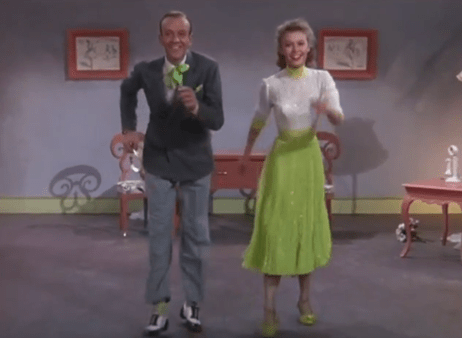
Three Little Words immediately introduces an opening number with Astaire and Vera-Ellen which starts things off on the right foot with its toe-tapping assets. They are a close-knit song-and-dance pair with talk floating between them about getting married. She’s in love with him. He’s in love with her…and his work.

Their next performance of “Mr. and Mrs. Hoofer at Home” might be the film’s finest hour as far as the dance numbers go, showcasing the technical expertise of its stars who make it look delightfully effortless. I could not help recalling first Keaton’s One Week (1920) and then a bit of Chaplin from Modern Times (1936) in his dream house with Paulette Goddard.

Because here we have the continuation of the same motif as articulated this time around by Astaire and Vera-Ellen. The novelty is taking something so integral to American life, that is the home, gender roles, and the cult of domesticity as it were, and personifying it visually through metaphor and movement. It works wonders in such a colorfully abstract space.

It’s no coincidence that Keaton and Chaplin were comics of a very physical nature. Likewise, the dance of Astaire with his leading lady is equally silly, in a sense, but also so very inventive in how it expresses the mundane rhythms of life many of us experience every day. It’s my favorite out-and-out moment in the picture.

three little words 2.png

Because I’ve always maintained a fairly conflicted relationship with musical biopics. The prime example might be Yankee Doodle Dandy, which has spectacular moments thanks to the indelible James Cagney, but it also comes off rather flat and insipid in other patches. The agenda is complicated by the fact that we are taking a real person’s life and trying to dress it up. We can hardly look at it like fact and yet we are often dealing with real names and real places. It’s this odd brand of authenticity that feels sanitized and in some ways totally fake.

But if we take it for what it is, enjoy the dance numbers, and disregard the dubious guises that men like Astaire and Red Skelton are putting on, it’s easy enough to enjoy their charms. There are glimpses of how the musical creative process works and a vaudeville nostalgia wafts over the picture, which no doubt endeared Astaire to the project. One slight nod I picked up on was Gloria De Haven playing a character (I think) named after her father, Carter De Haven, though her mother was on the Vaudeville circuit as well.

It’s a fluke knee injury that finally leads to the unlikely pairing of our two down-and-outers. It begins down a contentious road and never quite rights itself, but along the way, they crank out such well-received hits as “My Sunny Tennessee” and “So Long Oolong” both unquestionably catchy.

You begin to understand more deeply the culture of the time when every family had a piano in the living room to gather around and radio had yet to take over the country. In such a period, sheet music and tunes crafted by the likes of Kalmar and Ruby were all the rage.

Because they could be reprinted and replayed time and time again. Thus, it wasn’t so much about the artist, unless you had the good fortune (and the money) to see them live. It was about the writers and lyricists who could pen catchy tunes agreeable to a wide audience. That was the way the industry went. We were a long way off from rockability, disc jockeys, and record sales.

three little words 3.png

While Kalmar finally gets it into his skull to marry Jessie thanks to her prodding, Ruby continues to pick the wrong girls, starting with a flirty nightclub dancer (Gale Robbins) who has about a million beaus at her disposal. His friends watch out for his interests, and he ultimately winds up with a beautiful actress (Dahl as the real-life Eileen Percy), under hilarious circumstances. She’s a big deal now, but Ruby doesn’t remember that they’ve met before…

The creative output continues in spurts from more songs, then distractions, then Animal Crackers with the Marx Brothers, and more songs. Ultimately, a spat breaks up the partnership for what seems like the last time. Though Ruby is now married and equally happy, the wives know their men need to get back together.

With a certain amount of forethought, both missuses strike up a reunion between their husbands by giving them a bit of a helpful push instigated by Phil Regan’s popular radio show. In one regard, nothing has changed. They’re still as ornery as ever, but they retain that same glimpse of brilliance — smiles breaking over their faces one last time.

Three Little Words was probably more true to life than some biopics of its day and amid what is dressed up or relatively accurate, the most interesting ideas on the table have to do with the creative collaboration between two men. It’s true that in such instances, opposites attract. One is usually musically-inspired, coming up with tunes just like that, and the other able to tinker with words to make them fit perfectly with a melody. On their own, they would be nowhere, and yet together, they’re able to literally create music to our ears.

But the other side of such a partnership is the invariable disagreements that arise. There’s the inevitable conflict that comes from two personalities with personal vision and diverging personalities. The most iconic examples I always go back to were The Beatles because by the end you had three leads with John and Paul and George. Although Harrison was the third-fiddle, after the breakup, he would release arguably the greatest album of any of their solo careers: All Things Must Past.

However, sometimes there’s also a lack of interest and then a desire for a change of pace. In this story, Bert is obsessed with being a magician and even tries his hand at playwriting. Meanwhile, Harry has always held onto the aspirations of being a big-league ballplayer. The real miracle is that they stayed together for so long, crafting such a bevy of classics.

3.5/5 Stars

Classic Movie Beginner’s Guide: Fred Astaire

In our ongoing series of Classic Movie Beginner’s Guides, we focus on a single person from Classic Hollywood for those who want an overview.

This week let’s look at one of the preeminent film dancers of all-time: Fred Astaire! After starting out on the stage with his sister Adele, during the 1930s Astaire tapped his way toward cinematic immortality thanks to his coruscating partnership with Ginger Rogers.

They were paired in a number of screwball-infused musicals that still rank among the best pictures the Hollywood dream factory put out during the 1940s. What set Astaire apart was his tireless choreography, the graceful elegance of his figure, and his often underrated singing voice introducing the world to a bevy of classics.

Top Hat (1935)

The Movie Projector: Top Hat (1935)

The romantic rebuttals are only a pretense for this glorious extravaganza replete with Art Deco stylings and a stupendous screwball cast loaded with the likes of Edward Everett Horton and Eric Blore. Astaire introduced a pair of Irving Berlin classics in “Cheek-to-Cheek” and “Top Hat, White Tie, and Tails” as he and Ginger dance away off toward perfection.

Swing Time (1936)

Swing Time (1936) directed by George Stevens • Reviews, film + ...

A worthy successor to Top Hat, Swing Time assembled the talents of George Stevens and Jerome Kerns offering Astaire yet another immortal classic, “The Way You Look Tonight.” However, the splendor of Fred & Ginger together is magic with number after number feeling like an absolute knockout including the likes of “Pick Yourself Up” and “Waltz in Swing Time.” They balance charm with elegance divinely.

Easter Parade (1948)

Easter Parade (1948) directed by Charles Walters • Reviews, film + ...

Fred Astaire finally got paired with Judy Garland in this Holiday-themed looker blooming with glorious Springtime Technicolor and luscious costuming. “Happy Easter” and “Drum Crazy” start him off on a particularly jovial note, and he never looks back. The compositions of Irving Berlin are swell as is the easy-going rapport of Astaire and Garland carrying the picture away into loveliness.

The Band Wagon (1953)

Howard Hampton on Vincente Minnelli's The Band Wagon (1953 ...

As his finest late-period work and an impeccable companion to Singin’ in The Rain, Fred is partnered with the always elegant Cyd Charisse as they dance their way through the sartorial splendor of Vincent Minnelli’s picture. Astaire gets one of his peppiest numbers with “A Shine on Your Shoes.” The real showstoppers are “That’s Entertainment as well as an epic film noir finale.

Worth Watching

Flying Down to Rio, The Gay Divorcee, Roberta, Follow The Fleet, Shall We Dance, Broadway Melody of 1940, You’ll Never Get Rich, You Were Never Lovelier, Three Little Words,  Royal Wedding, Funny Face, Silk Stockings, On The Beach, Santa Claus is Coming to Town, etc.