The Strange Affair of Uncle Harry (1945)

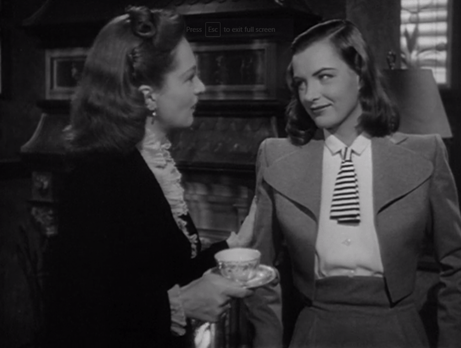
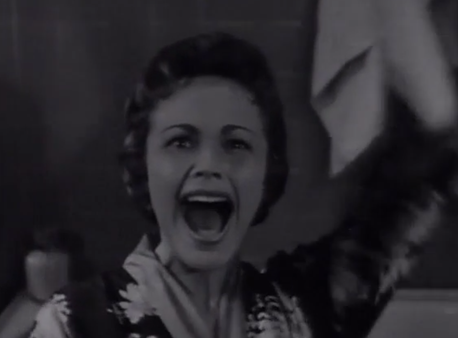
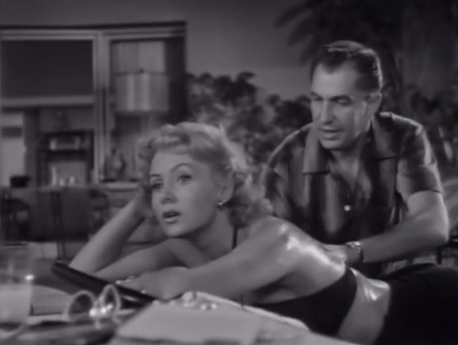
the strange affair of uncle harry 1It’s a B-picture title to be sure but with Robert Siodmak and such an ensemble, this is an enticing noir all the same. The well-to-do Quincy family of small-town America are an odd bunch, still holding onto their surname with pride as they slowly drift further and further into obscurity within the walls of their old mansion.

George Sanders is always a perennial favorite due to his dry wit and often snooty manner but here as Harry, we see him as all those things yet also trapped by his circumstances. Ella Raines, unfortunately, one of the often forgotten starlets of the 1940s, plays his savior in a sense and when she comes into his life there’s a chance to shake up all that is monotonous and stuffy about his existence.

Because he is constrained by his family name and a pair of sisters who rely on him continually for moral and emotional support. The eccentric Hester is always carrying an accusatory tone towards the housekeeper and getting bent out of shape about small trifles.

the strange affair of uncle harry 2The dominating sister Letty, played by Geraldine Fitzgerald, is more aloof in her ways, veiling everything with a conviction that what she does, she does for the good of her brother. But it’s all really due to the fact that she cannot bear to let him go. In this way, she’s constantly controlling his life and undermining his happiness. She’s hardly your typical femme fatale, more cultured and refined than most, but there’s still something exacting about her.

It’s when the tempered exterior and well-mannered formalities begin to crumble that her ulterior motives become more evident. Feigning illness just to keep him on a string and buying poison for some nefarious purpose. This unnerving dynamic between siblings becomes more tenuous for Harry,  accentuated by the fact that Letty, as played by Geraldine Fitzgerald, is quite attractive.

As far as the ending, there could have been five different outcomes and the one chosen fits the expectations of the contemporary audiences and the censorship board. Frankly, the affability of Ella Raines makes me want to enjoy this denouement, but my appreciation for film-noir makes me realize that this story deserved a dark turn to hammer home a genuinely twisted little picture. Still, Robert Siodmak is time after time one of the most interesting craftsmen of film-noir big and small. So it is with this morsel. Above all, I gained a newfound appreciation for the noteworthy work of Fitzgerald in particular.

3.5/5 Stars

Journey to Italy (1954)

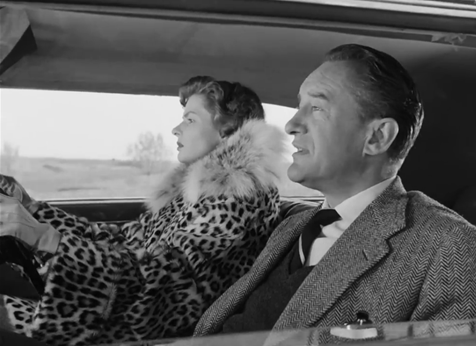
journeytoitaly1Journey to Italy is the splintering of a relationship where the slivers of bitterness begin to wedge themselves under the skin. It’s like slow, painful, nagging torture. Roberto Rossellini’s noted romance film feels like the antithesis of Roman Holiday. It avoids the other film’s bustling streets for more secluded getaways. It leaves behind fairytale romance and fun, for the bitter onset of marriage and middle-age. It seems hardly exciting, mostly driving and sitting, drinking and eating. Rather droll to say the least. And yet this in itself is juxtaposed with lively impassioned tunes and historic pieces of architecture and sculpture snuggled up against the Italian countryside. Because it is a goldmine of culture whether you look at Pompey or the remnants of the Greeks and Romans. There is a glorious history here and yet it makes for a rather meandering backdrop for our two stars Ingrid Bergman and George Sanders. Again, Bergman especially was a big name (and at the time Rosselini’s lover) and though usually a supporting player Sanders was usually held in high regard. They feel like the exact inverses of Gregory Peck and Audrey Hepburn, in a way that’s rather intriguing.

journeytoitaly2Yet again, as an audience, we do feel like tourists taking in the sights, but this time we’re riding along with a couple who don’t know what to do when they’re alone together. They don’t know what one is to say or how one is to act, because, in all honesty, they haven’t tried too hard. We don’t get much of their backstory, but they are certainly well-off because he takes his work seriously and it shows. But he hasn’t taken his marriage all that seriously and that shows too. His wife is more like his partner in this business endeavor they have going. She keeps up appearances, and he can offer her a lot in return, but hardly love.

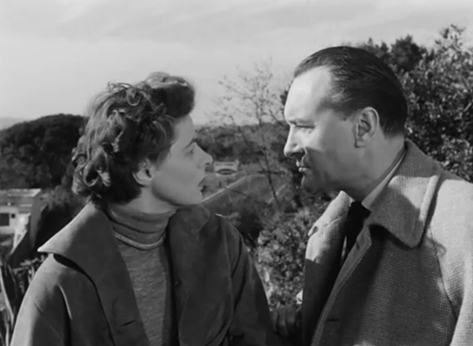
It struck me that is a film about a faltering relationship and here is a couple that seems to be apart as much as they are together.They think that the best thing they can do is stay away from each other because no damage can be done that way. There’s jealousy, pettiness, biting sarcasm, all ready and waiting to be unleashed. Alex fosters a liking for a young Italian girl, and although Katherine doesn’t know all the details, she suspects as much from him. To combat Sander’s snide tone that can cut to the quick, Bergman counters with a thick layer of sulking.

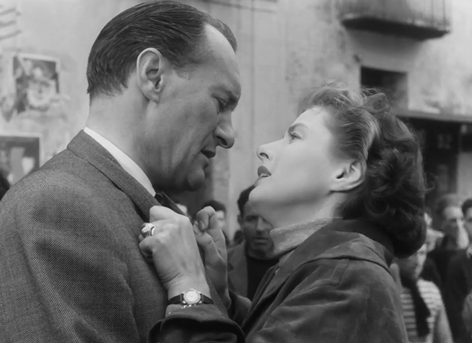
journeytoitaly3Thus, I’m not sure about the denouement of this film. Will they stay together or get the divorce that they both seem to have come to terms with? It seems like they might possibly make things work, or is that just the work of the romantic Italian countryside around them? Because no passionate embrace can alleviate and completely overshadow their myriad of problems. They are unable to communicate on a meaningful level, and they treat each other rather poorly more often than not.

In fact, this film is an interesting study, but there is a lack of investment in these characters. After all, it’s only a quick snapshot that gives us a feel for a relationship. I’m probably partial to the similar feeling Before Midnight (2013) because we are already given two films beforehand to truly grow invested in the characters and their story. But there’s no doubt that Rosselini’s film with Bergman and Sanders is well worth the journey.

4/5 Stars

Review: All About Eve (1950)

EveEveMargotCasswellWitt“Fasten your seatbelts. It’s going to be a bumpy night” ~ Margo Channing

It’s cliche, I do admit, but they simply do not make films like this anymore. Stories about people talking where the actors take center stage. In this case, the story from Joseph L. Mankiewicz is about the Broadway stage and all that happens behind the curtains, in the dressing rooms, and behind the closed doors of the royalty of that profession.There is so much that could be dissected, antagonized over, or acknowledged so I will move through it the best way I know how.

A moment must be spent acknowledging that this is the film that revitalized the career of Bette Davis. She was the tops during the 30s and early 40s, but the role of the histrionic stage icon Margo Channing was her comeback and it thoroughly suited Davis. I have actually never been a fan of hers because I always found her rather arrogant and she scares me visually. However, All About Eve plays on my personal sentiments wonderfully. When we’re first introduced to Margo, she’s everything we expect in a Bette Davis character, and truth be told I don’t really like her. But interestingly enough that changes. That’s where Eve and the rest of the cast come in.

The film is book-ended by the wonderfully wry and snooty commentary of theater critic Addison DeWitt (George Sanders). He makes it his mission to rake every new play over the coals, and he can be merciless. But he also is a great ally and he proves so for young Eve Harrington (Anne Baxter). Because, after all, this film is her story, we just don’t quite understand why at the beginning.

Eve came from humble roots and was the most devoted young fan of Margo Channing. She would attend every one of her performances and wait outside her dressing room timidly, just to get a glimpse of the star. One of Margo’s best friends Karen Richards (Celeste Holm) was accustomed to seeing the girl and in a kindly gesture she invited Eve up to the dressing room. And just like that Eve had her backstage pass into this world rounded out by Margo Channing, Karen, her husband the playwright Lloyd Richards (Hugh Marlowe), and the young director Bill Simpson (Gary Merrill) who also happens to be Margo’s suitor.

She begins unassuming enough on the outskirts of their little group. Always seen, not heard. Always thoughtful and ready to be of service. Eve takes on the role of Margo’s personal assistant just like that and an ego like Channing doesn’t mind. In fact, everyone seems to like having her around except the skeptical Birdie (embodied by the always spunky Thelma Ritter).

As time marches on, Eve loses her charm. More and more it feels as if she’s analyzing Margo. Watching her every move. Monitoring her success and slowly moving in. She plants the idea that she can be the next understudy and so it is. One fateful night Karen agrees to stall Margo and Eve gets her big chance as an understudy. She of course politely invites all the major critics to see the performance. It was the conscientious thing to do after all. Ironically, it’s at this point where things turn. Margo becomes the victim and in her great vulnerability, while sharing with Karen, we begin to sympathize with this woman hiding behind the facade of Margo Channing. Meanwhile, Eve continues her ascent using whatever means possible. She alienates Margo and begins driving a wedge between the always amiable working relationship of Lloyd and Bill. Eve even resorts to blackmail and home wrecking sharing her master plot with Addison.

She’s used everybody else and so he seems like the next logical target. However, he’s too much like her. He’s too cynical to fall for her act, and he points out a few chinks in her armor. So like that we end up back at the award ceremony where Eve is about to win her big award. Now we know all the clawing and backstabbing it took for her to get there. Now all that is veiled under her perfectly demure features and charming voice. But we see it on the faces of all the ones who sit there knowingly. Each one knows all too well the damage that this girl has done. She came out of the woodwork, used and abused them because everything was about Eve. Nothing else mattered to her.

But the beauty of the film’s ending is that the cycle continues. Margo is fading away yes, and Eve is taking her place, but that means that there are more Eves where she came from. Young girls obsessed with stardom, fame, and success. It’s a frightening evolution and it proves to be a sharp indictment of the industry as a whole.

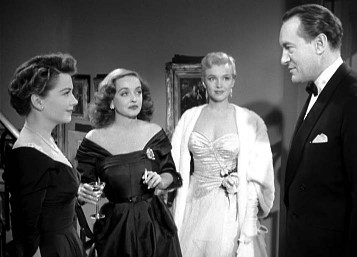
The five leads are solid and their performances shift as the Margo-Eve dynamic fluctuates. However, George Sanders is possibly the most enjoyable character, because, despite his cruel wit, he’s the one who is outside of Eve’s influence, or at least he catches her in her charade. There’s something utterly satisfying in that. Also, he has some memorable moments alongside the aspiring Ms. Casswell (none other than the show-stopping Marilyn Monroe in an early role). So really this is a film about the performances and they are well worth it because they suggest that in such a cultured world, so many things lurk under the surface. It might be insecurity, fear, suppressed desire, or savagery. Humanity is most definitely messy, you just have to look behind the curtain sometimes.

5/5 Stars

While the City Sleeps (1956)

whilethecity1While the City Sleeps has a brilliant cold open followed by a pounding title sequence, courtesy of Fritz Lang, that brings to mind a bit of Diabolique and Psycho. The rest of the film turns into a case to find the wanted lipstick murderer (based on a real killer), but that only holds part of our attention.

When newspaper magnate Mr. Kyne dies suddenly, his begrudging son Walter (Vincent Price) takes over intent on shaking up the status quo and putting his mark on the company. He soon turns three men against each other as they desperately fight for the new position of executive director. The first is veteran newspaper editor John Day Griffith (played by the always memorable character actor Thomas Mitchell). The second candidate is chief of the wire service Mark Loving (George Sanders) who is Griffith’s main competitor. Finally, in the third spot is Harry Kritzer who happens to have a secret ace in the hole. Each of them is tasked with finding out the real scoop about the serial killer, and it turns into a real tooth and claw ordeal. Within the glass cubicles, everything can be seen, but not everything is heard and that’s where the secrets get disclosed.

On the outside looking in, so to speak, is star TV reporter Edward Mobley (Dana Andrew), who agrees to help his friend Griffith by doing a little digging around about the murderer. He gets some tips from a cop friend Lt. Kaufmann (Howard Duff), and Mobley tries to smoke the killer out on air. However, it leads to the potential endangerment of his fiancée Nancy, who also happens to be Loving’s secretary. Loving has his love directed towards a female reporter named Mildred Donner (Ida Lupino), who attempts to needle Mobley for info. At the same time, the killer is on the move once more, with Nancy being an obvious target. Mr. Kritzer’s own romantic entanglements get him in trouble because he is seeing Kyne’s beautiful but detached wife Dorothy (Rhonda Fleming). Mildred finds out about them and they have some talking to do. Mobley also has some making up to do with Nancy after she finds out Mildred came to see him. It’s a big mess.

whilethecity3Mobley juggles everything from his love life to the big scoop and they apprehend the killer, but things at Kyne’s don’t wind up exactly the way they expected. Mobley looks to move on from the paper with Nancy, but even he cannot get away that easily.

While the City Sleeps is an underrated tale from Lang that is positively stacked with big names. Its pacing can be deliberate at times, but it is just as much an indictment of journalism as it is a thriller. The office is a web of deception with so many interconnections between these work factions. Those you would normally expect to be scrupulous seem to give up their honor in the face of this new promotion. In a sense, Mobley seems to be outside of this fray and yet he cannot help but get involved in it. It doesn’t help that nothing turns out the way it’s supposed to. Everybody seems to gain something, but nobody really wins the game.

I must say it was great to see Dana Andrews in one of these leading roles again and although their roles were smaller, Ida Lupino and George Sanders still were a deliciously stuffy and corrupt pair. I was never really a fan of Vincent Price due to the roles he normally plays, but I was inclined to like Howard Duff (Lupino’s real-life husband) in his turn as the policemen. It goes without saying that Rhonda Fleming is positively beautiful, but she also cannot be trusted. I guess that applies to about every character in this film. It’s certainly a cynical world out there that Lang paints, where the killer might be caught, but corruption is never fully quelled.

4/5 Stars

The Ghost and Mrs. Muir (1947)

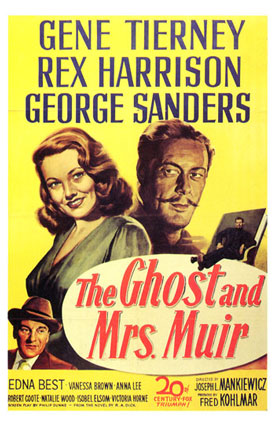
f5ab0-the-ghost-and-mrs-muir-postersStarring Gene Tierney, Rex Harrison, and George Sanders, the film is about a widowed mother who moves with her daughter to a supposedly haunted house. She and the ghost have some altercations but she will not be intimidated and she has fallen in love with the unique home. Soon Mrs. Muir and the Ghost bond as he dictates his life story for her book. However, once it is done, they realize the problems with their relationship. Mrs. Muir falls for a human man and when it gets serious Michael decides to leave her life, causing her not to remember him. Soon the years pass and the unmarried Mrs. Muir is getting older with her daughter growing up. Finally Mrs. Muir passes away peacefully and now she is reunited with the one she forgot and they can be happy for eternity. This is a very nice film and Tierney and Harrison are both wonderful in their roles. Although the plot is simple it is unique and enjoyable all the same.

4/5 Stars

Rebecca (1940) – Alfred Hitchcock

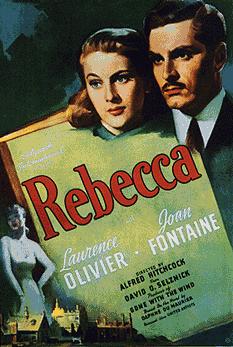
This film directed by Alfred Hitchcock and starring Laurence Olivier with Joan Fontaine, was adapted from the Daphne du Maurier novel of the same name. The story begins in Monte Carlo where Max De Winter (Olivier) and a young woman (Fontaine) have a chance meeting as she is working for an older lady. Soon she learns that his previous wife died the year before. Fairly soon the two of them are attracted to each other and Max has plans of marriage and returning to his Manderley. However, back home the fairy tale is over and the new Mrs. De Winter is constantly tormented by the housekeeper Mrs. Danvers. Pretty soon Max himself seems to have changed. Confused Mrs. De Winter must learn what happened to Rebecca, the lady who was so enchanting. When she actually finds out the truth it is almost too much to bear. Like many Hitchcock films this one is certainly worth watching and it was actually his first American film. Olivier, Fontaine, George Sanders, and Judith Anderson all have very good performances.

4.5/5 Stars

Foreign Correspondent (1940) – Alfred Hitchcock

Directed by Alfred Hitchcock, this film stars a cast including Joel McCrea, Laraine Day, Herbert Marshall, and George Sanders. Wanting a good scoop about events in Europe a newspaper editor sends a reporter off to dig something up. Joel McCrea’s character finds himself entangled in a complicated kidnapping scheme and assassination. On top of that he falls in love while on the job. With no one believing him at first, he must try and gather the facts that ultimately might lead to a war. Dodging two attempts on his own life, he knows he is getting close. However, little does he know how near he actually is. After more twists and turns McCrea finally gets his story and the girl but at a cost. From the scenes in the windmill until the tense moments on the plane, this movie does much to intrigue. It serves a double purpose, a decent piece of propaganda and a good thriller.

4/5 Stars

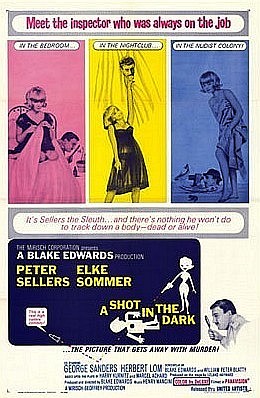
A Shot in the Dark (1964)

4a292-shot_in_the_dark

Starring a cast including Peter Sellers, Elke Sommers, Herbert Lom, and George Sanders, this comedy-mystery opens with several bustling individuals in a mansion, followed by a gunshot. A pretty maid who was found with the gun is assumed to be guilty, but the bumbling Inspector Clouseau thinks otherwise. He has run ins with his crazy boss, his man servant Kato, and the police, while he clumsily tires to solve the case. Everything seems to point to Maria after more murders. However, Clouseau spends time with her and it becomes evident to us that a black-gloved man is after him. In the melodramatic, chaotic final scene, Clouseau attempts to name the murderer, and the case is solved, no thanks to him. This second installment of the Pink Panther had some funny moments and the slapstick was very good.

4/5 Stars

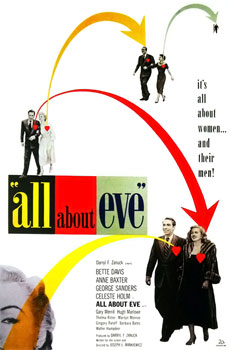
All About Eve (1950)

f37d4-allabouteveEve Harrington (Anne Baxter) is a seemingly modest and conscientious girl who gets the chance of a lifetime. She is able to meet a great Broadway star (Bette Davis) as well as her close circle of friends. Soon she is helping this Margot Channing by taking care of errands and odd jobs. This ambitious girl finally convinces one of Margot’s friends Karen (Celeste Holm), to let her be an understudy. And so when Margot is detained the night of a show, Eve gets her chance at the big time. However, Eve soon shows a different side of herself; one of back-stabbing and blackmail. Through her manipulation, she meets a famous critic (George Sanders) and wins an award. However, he has her pegged and the truth becomes evident. By the end of the film, Eve seems to have fallen for the same trap that Margot had. This film was pretty good and featured a good cast including Thelma Ritter and a young Marilyn Monroe. As Davis exclaims, “fasten your seat belts!”

4.5/5 Stars