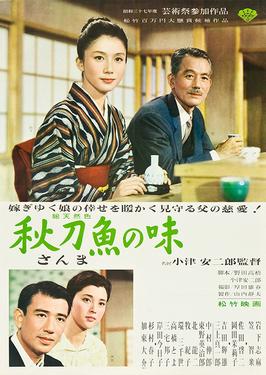
 There’s something overwhelmingly soothing about Ozu, simultaneously slowing my pulse and calming my nerves. Yes, An Autumn Afternoon stands as his final film. Yes, he would sadly pass away the following year. But there’s a comfort to watching his films unfold — even his last one. The drama is everyday and somehow disarming and pleasant. We often take for granted that Ozu was not planning to end here. This was not supposed to be his last film. It just happened that way.
However, that is the way that the world turns and with such of an outcome we get one final candid view of the director at work — his confident and streamlined aesthetic that at this point is instantly recognizable. It’s not simply about content, though his film examines many of his usual preoccupations of years gone by. It’s really about the form.
His palette is by this point assured and at the same time vibrant and free. Everything is in its precise place, the colors bright and cheerful — a certain amount of authenticity married with simple visuals that take impeccable staging, facades, and a static camera to tell his narrative in a very particular way.
And he’s willing to break the rules of perspective that have forever been textbook Hollywood law and yet the way he does it is hardly off-putting. In fact, it’s rather reassuring. His figures always looking at us directly, carrying on conversations, sharing in pleasantries or even chortling together over some small trifle. And we get to be fully a part of that both the trivialities and the drama.
Still, I am constantly being drawn to different things around the edges of the screen. Distracted in a good way by various bottles placed throughout the frame, bowls placed in front of our figures, or Suntory logos that hang overhead. Important, certainly not, but still they mesmerize me for some unexplainable reason.
And I have long gotten over any amount of impatience in the pacing of Ozu. Shots of empty rooms. Seemingly pointless conversations. Eating and drinking. It’s all palatable. It’s more about savoring every little moment for what it is. Because that’s what Ozu was truly a master at capturing. So many people behind a camera can capture high drama with enough action, intrigue, and scandal. But it takes a fairly fearless individual to put a microscope (or a movie camera for that matter) up to the banality of life. Yet it’s the true irony, that it’s precisely in those places we kind find so much truth pertinent to our own existences. Yes, it’s true.
Meals with friends. Family conversations. Husbands. Wives. Fathers. Daughters. Brothers. And so on. It’s no surprise that these are all things that Ozu looked at before and if he had continued making films he would have undoubtedly continued. The same social mores and familial relationships that while uniquely Japanese, still share enough with the rest of humanity to be oddly universal.
In this case, his favorite protagonist (Chishu Ryu) is a widower who lives with his grown daughter and son. It’s his buddies who chide him to let his daughter go so she can get married before she’s an old maid. And while in previous iterations Ozu looked deeply at the heartbreak, the emotional effects are slight. The daughter is relatively happy. The father is wistful but still resolved to live his life. The ever-changing aspects of life are felt but hardly earth-shattering. Instead, mankind is forced to continually wax and wane with the times. There is a time for a laughter, a time for tears, a time for work, a time for play, and so on.
Although the father-daughter relationship is the nucleus the film boasts a surprising depth of character. There are coworkers, old war acquaintances, former teachers, and the brother and sister-in-law. In fact, the venerable Mariko Okada is always one of my favorites in Ozu’s films and she picks up where she left off in Late Autumn with a certain spunkiness and vivacity.
If this must be our exit point from Ozu’s work, it’s a relatively easy place to leave. It’s a beautiful, warm portrait of modernity. Two old war buddies can assert that maybe it was for the best that the Allies won the war. A husband can really want a pair of golf clubs, though he doesn’t have the money to buy them. Old men can gather around a table for a party and joke about their old teachers. It’s a delectable slice of life.
4.5/5 Stars
 Whaddya hear, whaddya say ~ Jimmy Cagney as Rocky Sullivan
 Our introduction to The Mortal Storm feels rather flat. Bright and bland in more ways than one as we become accustomed to our main storyline. Professor Viktor Roth (Frank Morgan) is held in high regard all throughout the community as a prominent lecturer at the local university and beloved by his colleagues and family. The year is 1933 and the Bavarian Alps are still a merry and gay place to live. That’s our understanding early on as the Professor celebrates his 60th birthday with much fanfare and receives a commemorative memento from his class.
 Are you a mod or a rocker? ~ reporter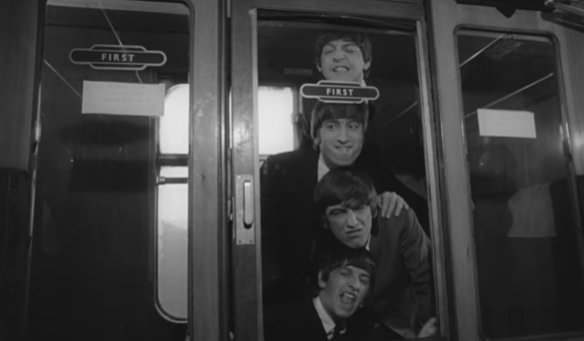
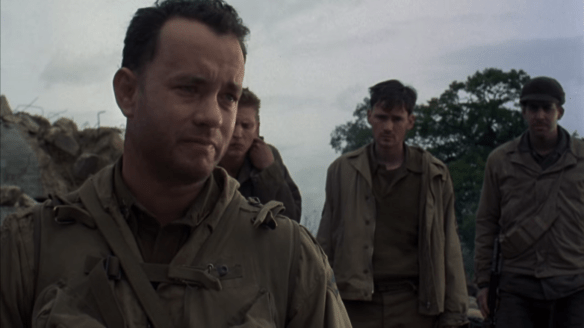 There’s something remarkably moving about the beginning of Saving Private Ryan. I’ve only felt it a few times in my own lifetime whether it was family members recognizing names on the Vietnam Memorial tears in their eyes or walking over the sunken remains of the U.S.S. Arizona at Pearl Harbor. It’s these types of memories that don’t leave us — even as outsiders — people who cannot understand these historical moments firsthand.
 The Greek gods created a woman – Pandora. She was beautiful and charming and versed in the art of flattery. But the gods also gave her a box containing all the evils of the world. The heedless woman opened the box, and all evil was loosed upon us.
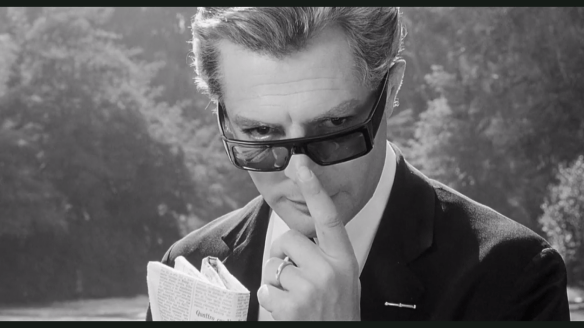
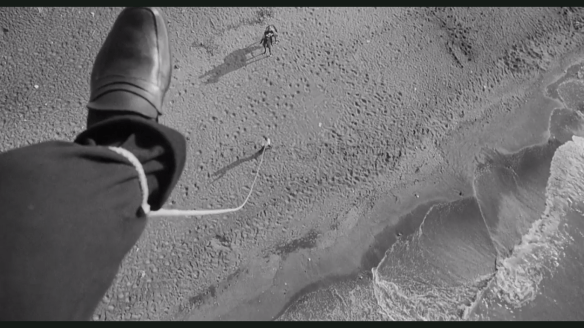
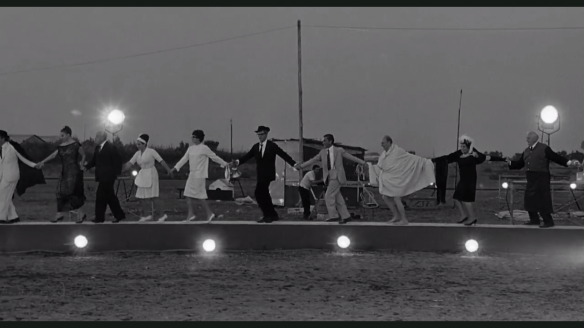
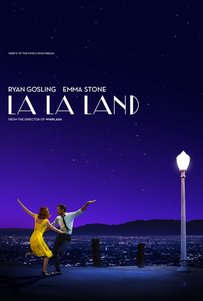 After watching this film two things become astoundingly obvious. Damien Chazelle has an equally unquenchable passion for film and for jazz. He’s also extremely bold, going all the way when it comes to choices as a director with everything from camera set-ups, lighting, staging, even casting. In fact, let’s start right there.
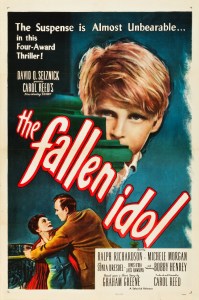 Fallen Idol is a fascinating film for how it develops inner turmoil. It’s earnestly interested in the point of view of a child and as such, it functions on multiple levels –that of both kids and adults. Philippe’s (Bobby Henrey) home is the embassy as his father is a French ambassador who is always away on the job. So Phil’s a little boy who is perpetually in the care of servants. Namely the authoritarian Mrs. Baines (Sonia Dresdel) and her good-natured husband (Ralph Richardson).
