
 “Feelings can creep up just like that” – Mr. Chow
Wong Kar-wai’s In the Mood for Love is a visual exhibition in style. It has a smooth elegance that extends across its entire length. Colors mixed with 1960s nostalgia. Decadence mixed with urban depression. The perfect blending of the cinematography of Christopher Doyle and Mark Lee Ping Bin. There are brief fades between many sequences and more often than not a shot has a focal point while the fringes are out of focus, but it’s all strangely beautiful. We’re often viewing characters from behind or from the side — seeing how they interact with their environments that keep them confined in a certain space. The numerous hallways, doorways, and rooms that cohesively make up their existence.
 But enough talk about aesthetics at least for the present. The film opens in 1962 with two couples moving into an apartment complex simultaneously. There are four individuals involved obviously, but we only ever see two of them. Mr. Chow is a journalist and his wife is often away for business leaving him alone. The stunning Mrs. Chan works as a secretary and she too feels lonely due to her husband’s many trips abroad. There’s the constant passing in the hallways at times and in truth, it can be laborious at times. After all, they are both perfectly civil and respectable people, although one night they finally have a tete a tete at a cafe. It’s there where they come to understanding about their significant others. Coincidences are not so coincidental. They are both cheating with the other’s spouse.
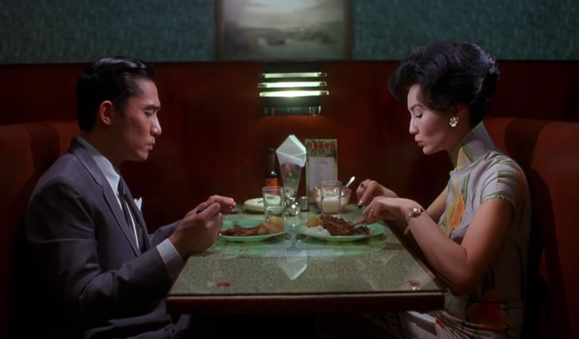 And of course, Mr. Chow and Mrs. Chan do not want to stoop to that level so they keep their relationship platonic worrying about what the neighbors will say, but also taking great comfort in the other’s company. Even together there is a distance, a restraint, that I suppose reflects the times — reflects the cultural expectations of that time. But the isolation and the loneliness is far too great and Mr. Chow enlists his new companion’s help in crafting a martial arts serial for the local newspaper. For once in their lives, they have the kind of interpersonal relationships they crave, and in this way In the Mood for Love shares some of the same sentiments as David Lean’s Brief Encounter.
Although Mr. Chow shows perhaps even greater restraint finally moving away from his love and relocating because he knows she will never leave her husband. Thus, it’s not worth the risk for them to stay together unless she were to come with him. But as often happens in such situations stars are not meant to cross and they constantly miss each other between Hong Kong, then Singapore, and finally Chow goes to Cambodia. And that’s where his story ends.With a detached denouement that is cryptic and in the same instance deeply melancholy.
 An important distinction to makes is that In the Mood for Love could have been a lurid drama, but with only two of the characters shown it becomes a more intimate even sorrowful portrait of forbidden love. In truth, it’s a portrait accented with spiraling wisps of cigarette smoke and the rhythmic water droplets of falling rain. The always fashionable Mrs. Chan is dressed impeccably in wonderful juxtaposition to the atmosphere behind her. “Yumeji’s Theme” is constantly pirouetting and sashaying around the images on screen combined with the sultry notes of “Quizas, Quizas, Quizas” courtesy of Nat King Cole.
It’s a mesmerizing recipe that tells of the complexities and intricacies that run through interpersonal relationships. What crosses the line? What is moral? What is fair in love and Wong Kar-wai’s universe? That’s just it. This is one of those films that has grace enough not to give us all the answers but instead, leaves us captivated by its vision. The rest is left up to us to judge as we see fit. It maintains an air of mystery, because, after all, love is far from a two-dimensional phenomenon.
4.5/5 Stars
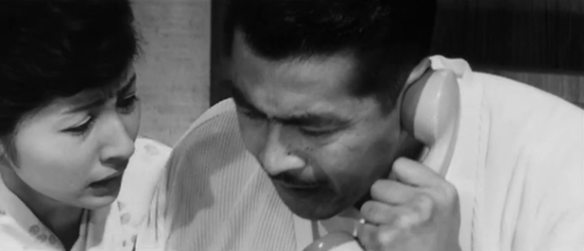 High and Low (or Heaven and Hell in the original Japanese) is a yin and yang film about the polarity of man in many ways. Gondo (Toshiro Mifune) is an affluent executive in the National Shoe Company. He worked his way up the corporate ladder from the age 16, because of his determination and commitment to a quality product. Now his colleagues want his help in forcing the company’s czar out. They come to his modernistic hilltop abode to get his support. Instead, they receive his ire, splitting in a huff. What follows is a risky plan of action from Gondo that is both fearless and shrewd. He takes all his capital to buy stock in the company so he can take over, but his whole financial stability hangs in the balance. He knows exactly what it means, but he wasn’t suspecting certain unforeseen developments.
 At this point, the police are called and they arrive incognito, ready to stake out the joint and do the best they can to get the boy back safe and sound. This section of the film almost in its entirety takes place within the confines of Gondo’s house and namely the front room overlooking the city. It’s the perfect set up for Akira Kurosawa to situate his actors. He uses full use of the widescreen and his fluid camera movements keep them perfectly arranged within the frame.
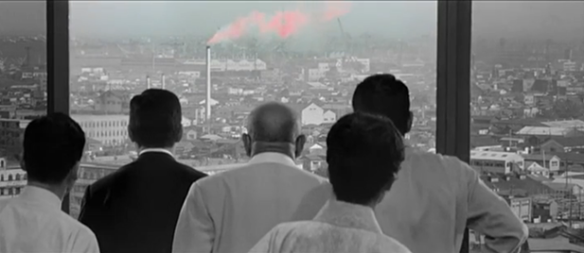 Finally, with the help of Shinichi, they make a startling discovery that ties back to the kidnapper. And the boy’s drawings along with a colorful stream of smoke help them move in ever closer. What follows is an elaborate web of trails through the streets as they work to catch the culprit in his crime, to put him away for good. And it works.
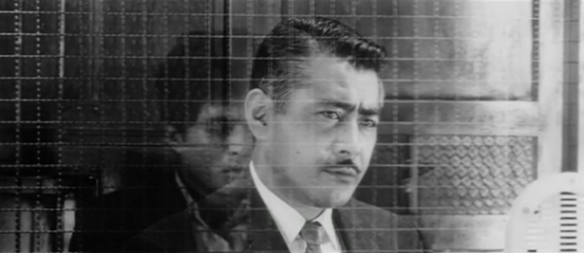 But High and Low cannot end there without a consideration of the consequences. Gondo has been brought low. He’s losing his mansion and must start a new job on the bottom of the food chain once more. His enemy requests a final meeting as he prepares for his imminent fate, and this is perhaps the most grippingly painful scene. Gondo’s face-to-face with the man who made him suffer so much. Toshiro Mifune’s violent acting style serves him well as he wrestles so intensely with his own conscience. And yet at this junction, he is past that. What is he to do but listen? In this way, it’s difficult to know who to feel sorrier for — the man who is resigned to a certain fate passively or the one who goes out proud and arrogantly against death. Both have entered some dark territory and it’s no longer about high or low or even heaven and hell. They’re stuck in some middle ground. An equally frightening purgatory.
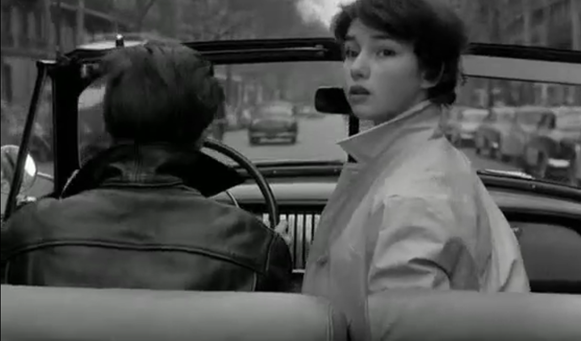
 an anxious Mrs. Carala begins to listlessly comb the streets trying to gather what happened to her lover. Where did he go? Julien
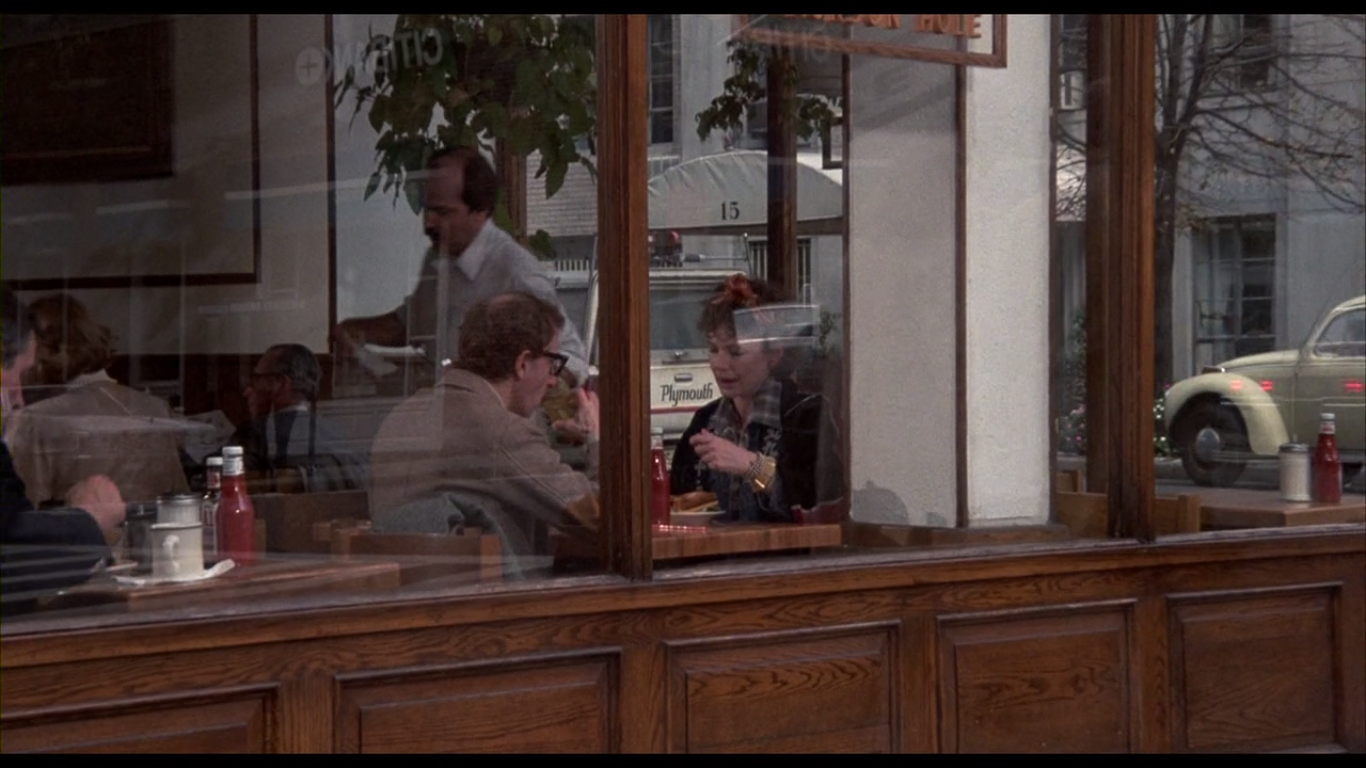
 It is well documented that Shadow of a Doubt was Hitchcock’s personal favorite of his own films. That’s quite a telling statement when you do a quick scroll through some of the titles up for contention. Vertigo, Psycho, Rear Window, North by Northwest, Notorious, even The Birds. And yet the famed “Master of Suspense” chose the often glossed over Shadow of a Doubt. If we take a slightly closer look it makes a great deal of sense as the film follows through with one of Hitch’s most prominent credos, “There is no terror in the bang, only in the anticipation of it.”
 His train comes barreling towards town with smoke spewing ominously. For now, his oblivious family is just happy to see his face, especially his oldest niece and namesake Charlie (
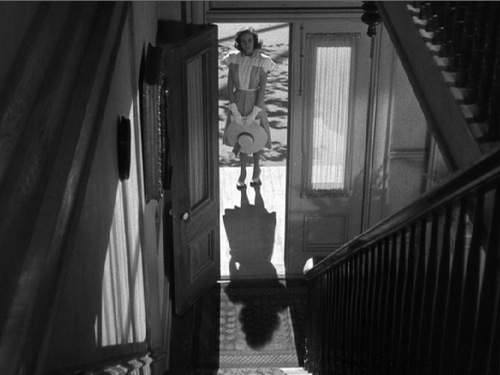 Unfortunately, the role of Detective Saunders feels rather shallow, but that’s hardly something to get stuck on. If that were the case, we could easily point to Charlie’s parents who seem way too old. But they are perfectly average, ordinary folks, as played by Henry Travers and Patricia Collinge. The script work of the preeminent Thorton Wilder (Our Town) and the on-location shooting in the Everytown of Santa Rosa lend a universality to this thriller’s impending dread.



 I don’t usually do this because it dates me, but I still remember buying Finding Nemo on DVD, because it was one of the first films I ever bought. It was one of the first films I ever felt was worthy enough to spend my hard-earned birthday money on or whatever the case was.
