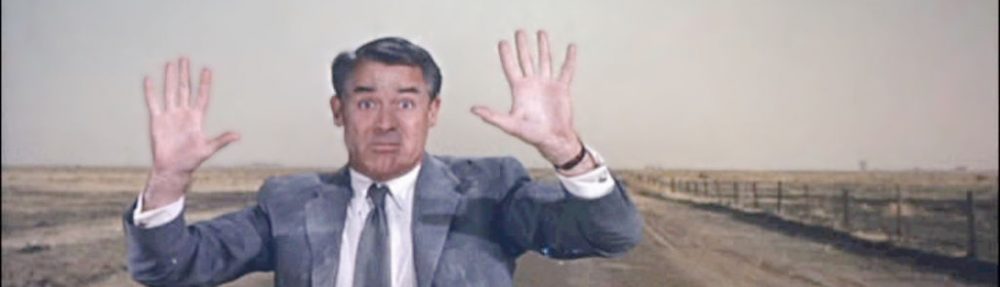
 “Two people shouldn’t know each other too well if they want to fall in love. But, then, maybe they shouldn’t fall in love at all.” – Vittoria
When it comes to being aloof, apathetic, and distant Monica Vitti knew no equal, and she works so marvelously against the worlds that Michelangelo Antonioni creates. Her sultry pair of eyes speaks volumes as far as sensuality and charm — making words hardly necessary. When we look at her and how she moves so indifferently through this romantic space with her former lover, it becomes all too obvious. There’s no feeling there. There’s no magic left to be tapped into. That happens with love sometimes, and it’s excruciatingly painful, even to watch.
In these opening minutes, nothing is said yet it’s hardly boring. There’s something tantalizing about sitting and waiting for some piece of exposition to come our way. Besides Antonioni’s extended shot length, a steadily smooth camera, use of mirrors, and a wonderful manipulation of the interior space to frame shots keep us constantly engaged.
 The initial scene in the stock exchange is gloriously tumultuous and it never lets up. This is the dashing young Piero’s (Alain Delon) domain that he rushes through with lithe business savvy. What this arena becomes is the quintessential Italian marketplace, a hectic theater of business made up of all kinds, involved parties and observers alike. Vittoria (Vitti) is one of those who looks on with mild interest and really throughout the entire film she is a keen observer as much as she is a person of action.
Through the mutual connection of her distraught mother, she and Piero become acquaintances. No more, no less. But we expect there to be more, because how could you waste stars like Vitti and Delon without at least a few romantic interludes? But we are made to wait patiently as they share a little contact, watch the extraction of Piero’s car from its underwater mortuary, and take a long walk.
Again, Antonioni continues with glorious panoramas, a meticulous framing of shots, and exquisite overall composition of mise-en-scene. It makes every image that comes onscreen hold merit and they stay onscreen certainly long enough for you to truly appreciate them. He’s audacious enough not to feel the need to have his figures centered in the frame, and he dances around them, placing them really wherever he pleases, but there’s still something strangely satisfying about it. Doorways, trees, pillars, heads all work nicely.
 And the narrative becomes perhaps even more tantalizing than love because it’s the prospect of romance that keeps it going. But it never seems fully realized. It’s frustrating, unfulfilling in a sense, like most of his films. Whether it’s an unsolved mystery or the most perplexing conundrum mankind has ever faced romantic attraction, he always leaves us an open-ended denouement.
There are laughs and moments of immense satisfaction, but they are transient — invariably lasting for only a very brief instant. In fact, this film’s finale is a dour twist that submerges L’Eclisse even lower than we could ever expect. With a title such as “Eclipse,” there’s a potential for foresight, but there also are very few warning signs. Then, all of a sudden, we are privy to a newspaper dotted with headlines like “nuclear arms race” and “fragile peace.” That is all.
It’s in these final moments that L’Eclisse takes a far more haunting turn than Dr. Strangelove and any of its compatriots. It just stops. No explanation. Not even a sign of our protagonists. Again, it’s that maddening ambiguity that comes with waiting out this lull. But the ultimate joke is that there is nothing after the lull. The frame literally gets darker and quieter and then everything ends altogether. There is nothing more. Enveloped in darkness, it simply ceases to be, another enigmatic visual tour de force from one of Italy’s most fascinating titans.
4.5/5 Stars
 If you’ve read any of my reviews on the original trilogy, you undoubtedly know that Star Wars had a tremendous impact on my childhood. That’s true for many young boys. It was the film franchise of choice, and it wasn’t just a series of movies. The beauty of Star Wars is that it encompasses an entire galaxy of dreams beyond our own. It’s a world that reflects ours in many ways — the difference is that they have lightsabers. But not just lightsabers. Aliens. Spaceships. Planets. The Force. Characters who for all intent and purposes live like us. Good, that is in constant conflict with the evil in the world. It’s a struggle that is constantly evolving.
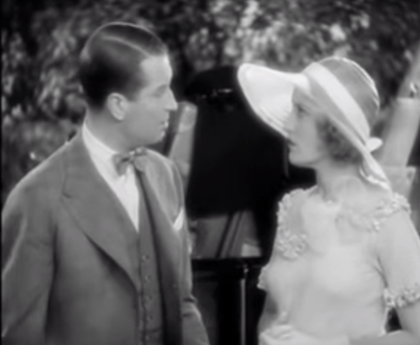
 The Awful Truth came out of a trend that was in vogue during the 1930s. It’s called a comedy of “remarriage.” During the Hays Code era, it allowed films to nimbly skirt the whole issue of divorce and extramarital romance. We would see it again in the more remembered screwball His Girl Friday and various other forms as My Favorite Wife and The Lady Eve.
 We are definitely in the age of the well-wrought period piece and Brooklyn has all the trappings you could want. Adapted from Colm Toibin’s novel the film showcases a pure, noble heroine in Eillis Lacy who like many others makes the journey from her homeland of Ireland to the golden-paved streets of New York.
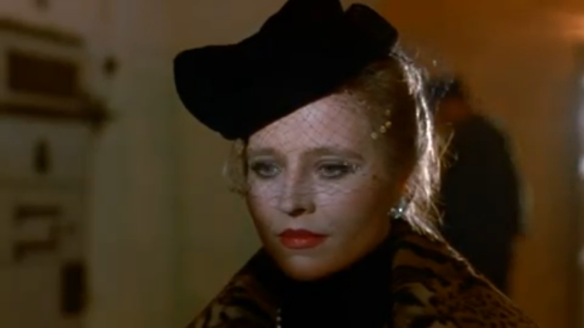 The Marriage of Maria Braun opens with a bang and a thud, literally, as bombs rain down on Germany in the waning hours of WWII. It’s perhaps the most chaotic wedding ceremony ever put to celluloid. And the story ends in an equally theatrical fashion.
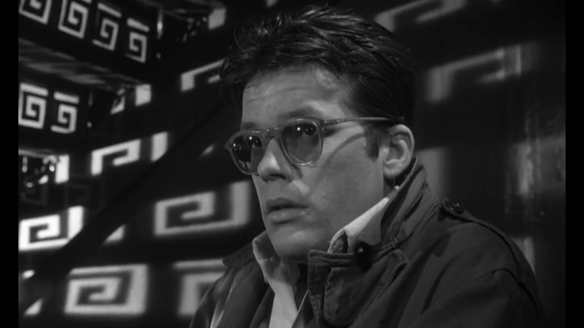 We’re used to getting our hands dirty in the thick of World War II, whether it is in the European theater or the Pacific, but very rarely do we consider the consequences that come in the wake of such an earth-shattering event. Things do not end just like that. There must be periods of rebuilding and rehabilitation. There is unrest and upheaval as the world continues to groan in response.
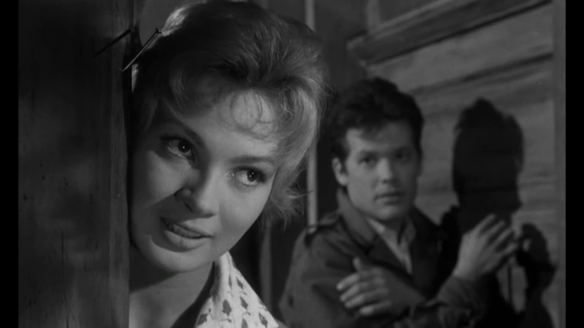 There are love scenes that are quiet, subdued, and truly intimate. In fact, it feels rather like Hiroshima Mon Amour where the camera lingers so closely on two figures in such close proximity. There does not have to be great movement or dramatic interludes because having two people next to each other should be enough. The historical context in itself seems to be enough. For that film, it meant Japan post-1945. For this one, it’s Poland after the clouds of war have lifted.
 Peter Lorre has a face that will forever live in cinematic infamy, and it started with M. In truth, Fritz Lang’s drama involving a serial killer feels fresh and engaging even after all these years, maybe because humanity hasn’t changed all that much. We still murder, we still kill, we still seek justice, we still give into our base desires, and there’s not a perfect person among of us. Each one of us has our faults — our own personal downfalls.
 This is unequivocally the age of sound! That’s what this film proclaims from the rooftops with its symphony of syncopation as the world of Paris awakens from its slumber. Its opening rhythms are pure ingenuity and the glorious unfoldings never cease for the rest of the cheery production.
 My father has always maintained that two of his favorite films are The Magnificent Seven and True Grit. The first one makes sense with its stellar cast, resplendent score, and some top rate gunslinging. The second film, well, it makes sense too, but for completely different reasons.
 “Nobody throws me my own guns and says ride on. Nobody” ~ James Coburn as Britt
 Into the valley road the seven rather like the light brigade, at first simply preparing to train up and prepare their little village of farmers to fight back against the brutal outlaw Calvera (Eli Wallach). But there’s something that happens over time. When you spend time in close proximity with people, eating their food and sharing their shelter, it’s hard not to build a bond — a connection that holds you there. At first, it seems of little consequence when the enemy gets beaten back, but everyone knows they will return with a vengeance.
 And we get the final skirmish with guns blazing, bullets flying, and lives being put on the line. Here is a film where the final body count deeply matters. Not so much of the enemy, but of our heroes, because each one chisels out a little niche for themselves. Everyone has worth and importance even as they jockey for screen time and it pays off in the end. They fight with honor just as they die with honor. Perhaps it might seem futile, but not without significance. The little village is left in peace to live out their days in tranquility. Calvera’s final words echo in their ears: “You came back – for a place like this. Why? A man like you. Why?”
