Cleo from 5 to 7 (1962)

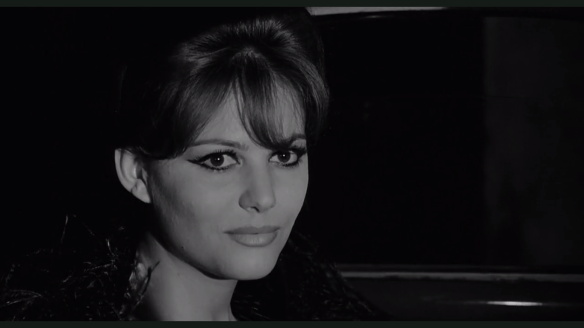
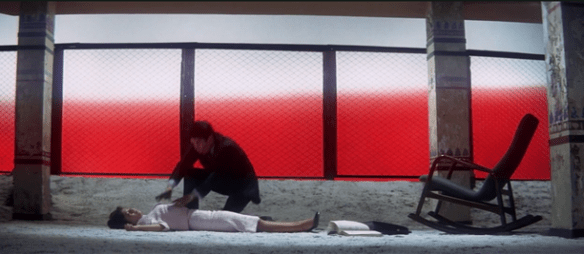
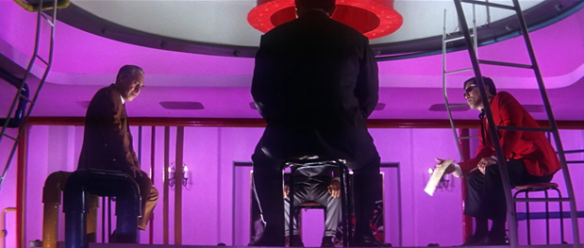
cleo-from-5-to-7It’s a joy to watch Agnes Varda dance. Or, more precisely, it’s a joy to watch her camera dance. Because that’s exactly what it does. Her film opens in color, catching our attention, vibrant and alive as the credits roll and a young woman (Corinne Marchand) gets her fortune read by an old lady. She’s worried about her fate. We can gather that much and this is her way of coping. Superstition and tarot cards but she’s trying and the results are not quite to her fancy.

And from that point on Varda’s camera continues to move dynamically but her film quickly turns to black and white as if to say something. Our main heroine, this young, attractive singer named Cleo has sunk into a sense of despondency. For the next two hours, she must wait it out to hear the news from her doctor. The news being whether or not she has been stricken with cancer. And if cancer then recovery or even….death. This is her existential crisis.

In the following moments, the camera falls back as an observer even donning her point of view from time to time and that’s the true enjoyment of this film. There are stakes laid out right from beginning and those remain in the back of our minds but it’s really about how we get there. How she gets there.

Cleo walks the streets of Paris browsing shop windows for hats, taking cab rides through the city, patronizing local establishments, resting at her flat with her assistant, and even calling on friends.

It becomes obvious that Cleo needs other people in her life whether she knows it or not. There’s an importance in solititude when she gets to examine the passing world and take in the serenity of running water in a park on a peaceful afternoon. But it’s the people that bring some color to her life. True, she does note that everyone spoils me, no one loves me, undoubtedly bemoaning the quick house call by her lover, the doting of her houskeeper, and the comical buffoonery of her pianist and lyricist duo.

But she also calls on her friend Dorothee who models by day in a sculptor’s studio taking in the bustling Parisian streets with all sorts of people but more importantly time for all sorts of conversation both superficial and sincere. They visit the local cinema and are treated to a silent comedy short (starring Nouvelle Vague power couple Jean-Luc Godard and Anna Karina). As the girl’s boyfriend rightly ascertains comedy is good for the soul. It can help alleviate a world of hurt.

Cleo’s final confidante comes quite by chance. A soldier on leave from Algeria as it turns out. He’s at first forward, then didactic, and finally utterly sincere. He’s perhaps just the type of person Cleo was looking for without even realizing it — someone who is perfectly obliging with conversation when she feels completely taciturn. Theirs is a quick friendship as he agrees to go with her to the hospital for the impending news and she, in turn, looks to see him off to the train station as he goes back from whence he came.

And does the film’s conclusion suffice? Not particularly. It’s abrupt and unsatisfying after all that prolonged wait but curiously Cleo seems at peace. Perhaps that is enough. What this film does impeccably is capture a moment as if it was pure and true and utterly authentic. It takes real world issues and a real world setting, synthesizing them into a fictional storyline that still functions as the every day would.

This is the world of the Cold War, war in Algeria, Edith Piaf in the hospital, Elmer Gantry, Bridget Bardot, and French pop music. It’s all melded together, bits and pieces, and moments and ideas and snapshots into a thoroughly engaging piece that becomes a sort of rumination on life and death and all those things that complicate living. If it all sounds like a jumbled mess of words it is and instead of trying to comprehend it by any amount of diction you should do yourself an immense favor and see Agnes Varda’s Cleo from 5 to 7 for yourself. If you are disappointed then I am truly sorry for you. Because it’s a wonderful film.

4.5/5 Stars
An Autumn Afternoon (1962)

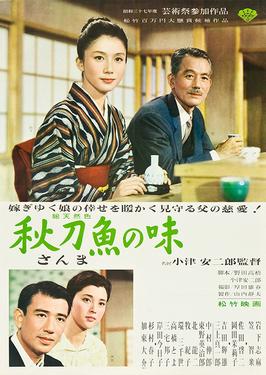
an_autumn_afternoon_filmposterThere’s something overwhelmingly soothing about Ozu, simultaneously slowing my pulse and calming my nerves. Yes, An Autumn Afternoon stands as his final film. Yes, he would sadly pass away the following year. But there’s a comfort to watching his films unfold — even his last one. The drama is everyday and somehow disarming and pleasant. We often take for granted that Ozu was not planning to end here. This was not supposed to be his last film. It just happened that way.

However, that is the way that the world turns and with such of an outcome we get one final candid view of the director at work — his confident and streamlined aesthetic that at this point is instantly recognizable. It’s not simply about content, though his film examines many of his usual preoccupations of years gone by. It’s really about the form.

His palette is by this point assured and at the same time vibrant and free. Everything is in its precise place, the colors bright and cheerful — a certain amount of authenticity married with simple visuals that take impeccable staging, facades, and a static camera to tell his narrative in a very particular way.

And he’s willing to break the rules of perspective that have forever been textbook Hollywood law and yet the way he does it is hardly off-putting. In fact, it’s rather reassuring. His figures always looking at us directly, carrying on conversations, sharing in pleasantries or even chortling together over some small trifle. And we get to be fully a part of that both the trivialities and the drama.

Still, I am constantly being drawn to different things around the edges of the screen. Distracted in a good way by various bottles placed throughout the frame, bowls placed in front of our figures, or Suntory logos that hang overhead. Important, certainly not, but still they mesmerize me for some unexplainable reason.

And I have long gotten over any amount of impatience in the pacing of Ozu. Shots of empty rooms. Seemingly pointless conversations. Eating and drinking. It’s all palatable. It’s more about savoring every little moment for what it is. Because that’s what Ozu was truly a master at capturing. So many people behind a camera can capture high drama with enough action, intrigue, and scandal. But it takes a fairly fearless individual to put a microscope (or a movie camera for that matter) up to the banality of life. Yet it’s the true irony, that it’s precisely in those places we kind find so much truth pertinent to our own existences.  Yes, it’s true.

Meals with friends. Family conversations. Husbands. Wives. Fathers. Daughters. Brothers. And so on. It’s no surprise that these are all things that Ozu looked at before and if he had continued making films he would have undoubtedly continued. The same social mores and familial relationships that while uniquely Japanese, still share enough with the rest of humanity to be oddly universal.

In this case, his favorite protagonist (Chishu Ryu) is a widower who lives with his grown daughter and son. It’s his buddies who chide him to let his daughter go so she can get married before she’s an old maid. And while in previous iterations Ozu looked deeply at the heartbreak, the emotional effects are slight. The daughter is relatively happy. The father is wistful but still resolved to live his life. The ever-changing aspects of life are felt but hardly earth-shattering. Instead, mankind is forced to continually wax and wane with the times. There is a time for a laughter, a time for tears, a time for work, a time for play, and so on.

Although the father-daughter relationship is the nucleus the film boasts a surprising depth of character. There are coworkers, old war acquaintances, former teachers, and the brother and sister-in-law. In fact, the venerable Mariko Okada is always one of my favorites in Ozu’s films and she picks up where she left off in Late Autumn with a certain spunkiness and vivacity.

If this must be our exit point from Ozu’s work, it’s a relatively easy place to leave. It’s a beautiful, warm portrait of modernity. Two old war buddies can assert that maybe it was for the best that the Allies won the war. A husband can really want a pair of golf clubs, though he doesn’t have the money to buy them. Old men can gather around a table for a party and joke about their old teachers. It’s a delectable slice of life.

4.5/5 Stars

Sophie Scholl: The Final Days (2005)

sophieschollSophie Scholl: The Final Days is a film that people need to see or at the very least people need to know the story being told. For those who don’t know, Sophie Scholl was a twenty-something college student. That’s not altogether extraordinary. But her circumstances and what she did in the midst of them were remarkable.
It’s easy to assume that life under Nazi authority wouldn’t be so bad for Aryans, nationals, or the general public. But it just takes looking at a story like Sophie Scholl’s and her older brother Hans and that assumption quickly falls apart. Because their lives reflect an alternative to the master narrative, the kind of counter example that is often visible if you look hard enough.

You see, these two young people in solidarity with numerous others took a stand against the oppressive Nazi regime calling for passive resistance, the cessation of violence, and championing the ultimate worth of all people–even Jews and the disabled.

That was a radical departure and utter blasphemy in the face of the stringent rhetoric of the Nazi party. But so were the heady words that The White Rose movement was circulating in those incredibly perilous, heavily policed and censored days and they knew full well the risks that they were taking. Yet they did it anyway, typing up hundreds of anti-Nazi pamphlets to be mailed and further distributed across their university campus.

The film takes a very direct approach to its narrative spending little to no time in building up its character’s backstory instead, throwing us headlong into their business with the printing and dissemination of their message. The film is immediately filled with a palpable tension but it does make you question where the film can go from here as it manages to reach such an unnerving state early on.

In truth, The Final Days spends most of its time in interrogation rooms and prison cells. It’s a stripped down storyline that nevertheless rings with truth and exudes an unassailable depth that says something of the characters at its core. They are remarkable human beings. Bold, brave, resilient, all those things, and yet they were only a group of young college students. Here is a woman younger than me who under tremendous duress and pressure of an astronomical nature, nevertheless showed tremendous poise, resolve, and true strength of character.

Julia Jentsch gives a phenomenal performance as the eponymous heroine in both its composure and restrained strength, never faltering and very rarely succumbing to any amount of emotion until the final moments. And even then she maintains a resolute spirit that seems content even unto death.  Some people are born older and so it seems with Sophie Scholl. Thus, let no one look down on you because you are young because if Sophie’s life is any indication at all you can do so much with this life even in youth.

But the film also becomes a bit of an ideological battle as Sophie spends hour after hour being grilled, belittled, and berated by Gestapo Investigator Robert Mohr. Initially, it all starts with an attempt of catching Scholl in her lie and yet she’s so self-assured in her answers, it’s very difficult to trip her up. And even when they get beyond the beginning hurdles of interrogation they duel on deeper topics altogether from law to freedom of speech, to spirituality.

In her prison cell, when she’s not conversing with her fellow prisoner, Sophie prays to God as she puts it, “stammering to him” but she also holds unswervingly to her faith, maintaining an undeniable reverence for her God and a firm belief that every individual is made in the image of God. That she too is made in his image. Therefore no one has any right to pass divine judgment or dictate whether someone lives or dies. Certainly, the Nazis are no different.

In one striking discourse, Mohr grills Sophie with the following question, “Why do you risk so much for false ideas?” She answers matter of factly. It’s because of her conscious and going further still it’s because every life is precious. A 21-year-old girl was able to grasp what the Nazis were too poisoned, narrow-minded, and proud to see. The inherent worth found in every human being.

That’s why the court scene in Sophie Scholl will incense most viewers and it should. The man who presides over the show trial is a vindictive man seething with indignation against these insignificant, worthless traitors as he sees them. But he’s so utterly blinded. He has no legitimate right to pass any sort of judgment on them. They are so much more honorable than he could ever be. And yet he holds the ultimate authority in this regime and they do not.

To the very end, The Final Days proved to be one of the most taxing films I have watched in some time but even in its endings, it finds hope and stories worth telling. That in itself makes it a wonderful film to discover.

4/5 Stars

Note: This post was originally written on February 28th and scheduled to be released next month but it seemed like a story necessary for this particular point in time.


Veronika Voss (1982)

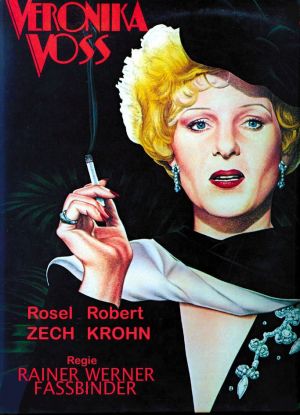
veronikavossYou get a sense that if they had ever met, Norma Desmond and Veronika Voss might have been good friends. Either that or they would have hated each other’s guts. And the reason for that is quite clear. They share so many similarities. Both are fading stars, prima donnas, who used to be big shots and now not so much and that seems to scare them so much so that they try and cover their insecurities with delusions of grandeur. Having to look at your near reflection would be utterly unnerving.

In the case of Rainer Werner Fassbinder’s penultimate film, the tale of Veronika Voss actually finds inspiration in a real-life figure. It’s often true that you cannot make something like this up. You can play with the truth and stretch it a bit but still, there’s at least a kernel of reality here. The source of the story is the UFA actress Sybille Schmitz a star who came under fire for her continued work in the German film industry during the Nazi regime along with a disclosed love affair with Joseph Goebbels. That in itself made her a somewhat controversial legend. That and her tragic demise…

But rather like his forefather Billy Wilder, it seems like Fassbinder too was interested in teasing out a bit of the comedy and bitter tragedy of such a bygone star. Someone who used to be big and must begin to acknowledge the fact that they are no longer what they once were. Except very rarely are they willing to acknowledge their shortcomings. There lies the tension in Sunset Boulevard and Veronika Voss.

Voss, as played by Rosel Zech, is perpetually out of breath, preoccupied with lighting and shadow, the perfect environments to showcase her looks. Nervously trying to hold onto the last shreds of her waning fame. Now she’s scrimping to get just one role a far cry from her commanding star power when she worked with her one-time husband and screenwriter.

She’s rather incredulous when she meets Robert Krohn (Hilmar Thate) a bland sports journalist who doesn’t have the slightest idea who the great Veronika Voss is. Imagine that. It’s hard to know if that’s actually something to be surprised about or if it simply dictates the sign of the times. In 1955 Voss is an apparent nobody, a has-been. She simply has not accepted the reality.

Robert has a girlfriend and they seem generally happy but still, he begins a bit of an amorous romance with Voss. However, he also gazes into the deep recesses of her personal life which are currently dictated by the controlling and manipulative Dr. Katz. The lady doctor constantly keeps the dwindling star medicated and helpless, sucking dry all her assets in the process.

The film ends calamitously but its pale tones almost make us forget the drama. Instead, all conflict gives way to a distinct wistfulness. Popping pills and alcohol are a lethal combination (Fassbinder’s own death is a testament to that), but there’s something so debilitating about human greed and treachery. It’s positively lecherous, sucking the lifeblood out of all adjoining entities.

Going back to the Norma Desmond and Veronika Voss parallels, there’s no doubt that both are thoroughly tragic figures. It shows how fickle humanity can be. We’re so quick to love someone when they provide some sort of agency or pleasure but lose that allure and you’re kicked to the curb. That’s the way things often work — the sad inner workings of the world.

Fassbinder always has a knack for framing his sequences given his background in the theater and numerous scenes are shot through windows, windshields, and the like. Also noticeable are the quick transitions and wipes cutting from scene to scene like films of old. Voss also utilizes a fascinating layered sound developing an auditory collage of dialogue, score, and diegetic music. Featured tunes like Johnny Horton’s Battle of New Orleans and Tennessee Ernie’s Ford’s brooding Sixteen Tons serve a double purpose. They lend a specific time stamp to the alert viewer, while the country sounds simultaneously feel strikingly at odds with this world that we are introduced to.

But one last time the parallels become obvious, this time between the director and his subject. There’s a sense that he knew all too well what it was like to be someone like Veronika Voss. Famous beyond your years and in the same breath so utterly tragic. And both their lives, the adapted truth and the reality, arrived at much the same devastating ending. As surely as sparks fly, Man seems born to trouble.

4/5 Stars

Pandora’s Box (1929)

pandoras_box_filmThe Greek gods created a woman – Pandora. She was beautiful and charming and versed in the art of flattery. But the gods also gave her a box containing all the evils of the world. The heedless woman opened the box, and all evil was loosed upon us.
It’s often extraordinary the international platform that silent films afforded their stars. Pandora’s Box is one of the now lauded pinnacles of Weimar cinema and yet its main starlet — its acclaimed cover girl — was an American. With her bob hairstyle and vivacious sensuality, Lousie Brooks became synonymous with the Lulu character she portrayed in this film. It was this persona that caused her to rival other noteworthy contemporaries including Marlene Dietrich and Greta Garbo.

Except she differed in that Hollywood was not her first choice. Hollywood was not what made her a star. In fact, she shied away from that route, instead opting for other avenues altogether. That’s how she wound up partnering with director G.W. Pabst in not only Pandora’s Box but another classic, Diary of a Lost Girl. Then when she had enough she retired from the trade allowing her legacy to be championed by film aficionados years later.

The film in itself is really a bit of a parable taking inspiration from Greek mythology and sectioned off into Acts like a stage play. Pandora’s Box, is of course, the titular object that released all the evils into the world leaving only hope behind. The parallels are planted early on as Lulu lives life with a flirtatious vitality but that’s precisely what leaves a wake of destruction in her path. She woos every man who comes her way, a dancer and performer for all who will lend an eye. As of right now, she is the mistress of a well-to-do businessman named Schlon but he realizes that he needs to protect his image.

He plans to marry another woman but Lulu finds a way to unwittingly needle her way back into his life forcing his hand and ultimately winning him over again. But the conquests that come her way never last and she truly is a destructive temptress — a landmark femme fatale — she cannot help but flaunt her sexuality. She’s energetic, pernicious, meretricious.

The turning point of the film comes at Lulu’s trial sequence for the deed that she unwittingly perpetrated. The prosecutor stands over her wagging his finger as she’s veiled in somber shades of black. Her journey could end there but instead, she is granted another reprieve and escapes with two companions to London.

Not being bogged down by Production Codes of any kind, Pandora’s Box plays with some surprisingly frank themes most obvious of those being Lulu’s overt sexuality as well as adultery, prostitution, scandal, and so many other taboos. However, what makes the film quake with emotion is the very fact that Lulu is hardly an evil individual. Misled, immoral, and destructive yes, but it’s easy to feel sorry for her. Hers is the ultimate tragic narrative because while she assuredly ruins other people, she’s only injuring herself even more so. She dredges up so much hurt and elicits so much violence. All her attempts at love are only met with brutality.

Through it all, we follow faithfully even though we know from the outset it’s all for naught. And that’s a credit to Louise Brooks’s portrayal because there’s no doubt that she has that special something that makes you turn an eye and look. Her performance runs the gamut of emotions so uninhibited, lively, and free. There’s a universal vim and vigor to her that still feels fresh to this day in an otherwise archaic mode of filmmaking.

The amazing thing is that she probably could have been a bigger star than she actually was. She never really realized the potential that she had like a Dietrich or a Garbo but that’s not what she wanted. Still, the notability came her way anyways. Sadly, real life and the cinematic seem closer than you might expect. Her life was hardly as tragic as a film but you wonder if she ever found love chasing after men as she did.

4.5/5 Stars

Review: 8 1/2 (1963)

8.5 1.png

Is the subject of this film a religious one? – A Religious Leader 

Yes, well, in a manner of speaking. – Guido

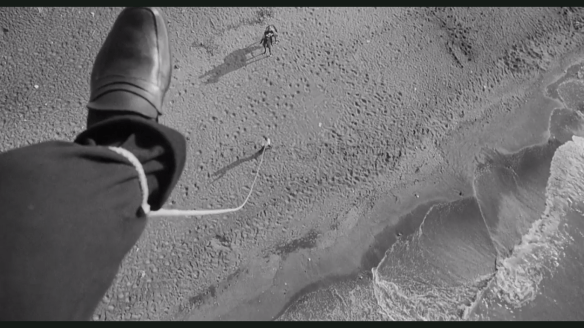
It famously opens with a dream. Our main character stuck in a silent traffic jam, completely disillusioned by the scene around him until he’s able to escape everything inhibiting him and soar into the upper echelons of the atmosphere. But it hardly lasts. Soon he finds himself tethered, being brought back down to earth.

8.5 2.png

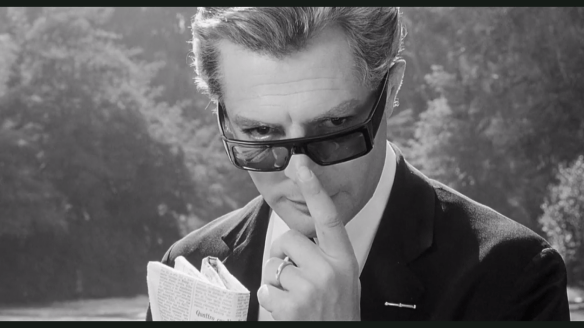
Our protagonist of sorts turns out to be Guido (the famed Italian icon Marcello Mastroianni), a film director who is going through a spell of director’s block. His most recent activities include an extended stay at a luxury spa at the behest of his doctors. It’s also early on in the film that someone asks him if his next film is also going to be one devoid of hope. It’s a very quick statement but in some sense, it sets the groundwork for Fellini’s entire film.

And it is a very personal film and a fascinating exploration of the art of filmmaking — the thing making it the most compelling is the strange suspicion that parts of Fellini himself dwell inside of Guido. Perhaps Guido shares a bit of his philosophy and stance or more precisely Fellini is like his main character.

The film within a film soon becomes evident and in that sense, it’s also a personal picture. Its title being derived from the number of pictures the Maestro had directed thus far. And numerous meta qualities come to the fore, most obviously when Guido is going through the screen tests his producer (Guido Alberti) and wife Luisa (Anouk Aimee) among those viewing the proceedings.

But going back to that issue of hope, the film’s finale has always been striking to me but I realized that it takes on new meaning put in the context of higher issues altogether. In some respects, Guido or Fellini, whichever you prefer, is trying to derive some sort of higher meaning, whatever that means to him.

8.5 4.png

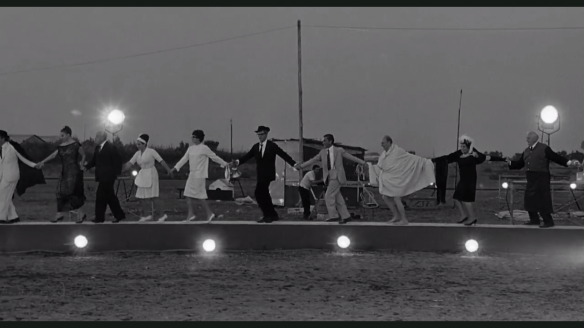
That’s in part why he has his legions of characters join hands in an almost communal dance of absurdity. Simultaneously, a journalist can be heard throwing his questions out, “Are you for or against eroticism?” and in the same breath, “Do you believe in God?” Because this is Fellini’s answer — the solution he has drawn up for himself. There is a sense of grandiose absurdity that is full of dreamscapes — where the distinction between reality and fantasy hardly means anything. Because in the eye of the beholder they are hardly different.

On purely a level of spectacle, it’s indubitably a fascinating set-up. Fellini is known for his quintessential style. To be Felliniesque is to be wrapped up in the surreal and the fantastic. But the philosophical conclusions that go hand in hand with such a provocative approach to film are rather disheartening. If this is part of what Fellini is trying to grapple with as it pertains to love and ultimate truth then 8 1/2 does fall back on a rather dismal ending.

As Guido explains to the man of the cloth, he is looking for some flash of understanding, some obvious moment of truth, like Saul at Damascus. He, like all his peers, carries the foundations of a Catholic upbringing. The religious authorities tell them that there is no salvation outside the church. His strict Catholic school told him what was wrong. Likewise, Guido plans to have a spaceship in his next film — humanities “new Noah’s Ark.” And it’s true that space exploration has been the final frontier, a beacon of potential hopes and truths. You see that in later works like 2001 and Solaris.  However, Noah’s Ark was also a vessel to escape destruction as much as it was a ship of exploration.

In drawing other cinematic comparisons, Fellini’s film revolves around a pointless MacGuffin (the phrase Asa Nisi Masa) rather like Welles famed Rosebud. Truthfully, this is a comedy in the same way perhaps Citizen Kane is a comedy. In a similar way, Guido seems isolated, but his mind, in particular, is twisted up with fantasies.

The most divisive scene in the film is yet another fantasy conjured up by Guido that is either extraordinary humorous or sadly indicative of his state of being depending on how you view it. He dreams himself in the stead of all the women he has crossed paths with thus far, all ready and waiting on his whim — his personal harem of sorts — totally and completely objectified for his pleasure. Again, it’s played for truly comic effect but what are the implications?

8.5 3.png

As the eternal beauty Claudia (Claudia Cardinale) notes, “He doesn’t know how to love.” She speaks of Guido’s protagonist but as the meta-ness suggests, this protagonist is Guido himself and going down even a layer further maybe even Fellini too. It’s precisely these problems that tie back into Guido’s disillusionment. “There’s no part in the film. And there’s no film. There’s nothing anywhere,” he says to Claudia.

Chaos and nothingness. True perfection is nothingness. His final conclusion? Life is a celebration. Let’s live it together. In essence, it’s true but the carnival showmanship and parlor tricks cannot obscure the bottom line here. As Francis Schaeffer once noted someone like Fellini “has no way to distinguish between right and wrong, or even between what is objectively true as opposed to illusion or fantasy.” That’s a terrifying world to come to terms with. During filming, Fellini supposedly kept a note on his camera to remind himself that this was a comedy film. But much like Citizen Kane, perhaps there’s a need to label it a tragicomedy. You cannot deal with such issues without elation being matched with some amount of melancholy.

5/5 Stars

Review: The 400 Blows (1959)

400 blows 1.png

Being a great believer in context,  it was a wonderful thing watching 400 Blows once more because I felt like I knew this man behind the camera so much better and I knew this character Antoine (Jean-Pierre Leaud) even better than he knew himself. After all, he was just coming into his own in this initial film.  I was also aware of some cameos including Francois Truffaut himself, Jean-Pierre Brialy and of course Jeanne Moreau, all important forces in the French New Wave movement.

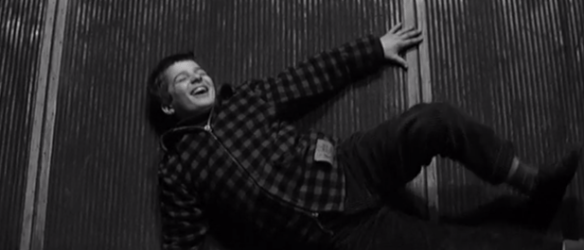
However, one the most powerful things is the degree of foresight we gain about Antoine Doinel. All the things that make up his life at this juncture in time have repercussions later on that Truffaut continued to examine as he matured. We can see the gears turning as the boy develops as an adolescent. He skips out on class to go to the cinema and the carnival. He purloins a bottle of milk out of thirst, steals little trinkets from the ladies room and finally a typewriter from his father’s work. He receives the ire of his teacher and goes home to the cramped conditions and turbulence of his home life. His mother and step-father are constantly bickering. His mother is having an affair. It’s not a very happy life or a firm foundation for a boy to grow up in. And it shows.

In many of these moments, the autobiographical aspects come to the fore. Before Antoine’s story was simply a depiction of realism but as time goes on it becomes more obvious that Truffaut is being very transparent in showing bits and pieces of his own experiences. What’s striking is that this is hardly a bitter film. Somber and melancholy, yes, but it hardly ever seems to cast blame. It shows the brief moments of reverie along with the pain and that’s why I am a great admirer of Truffaut. He’s a deeply heartfelt and personal filmmaker, no more evident than in The 400 Blows.

400 blows 4.png

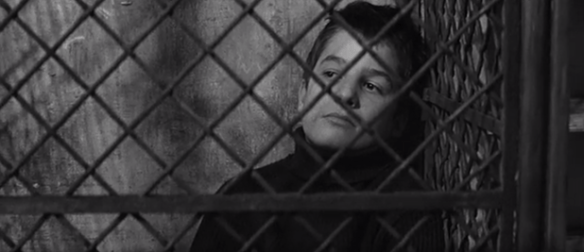
Antoine Doinel is a vagrant and pretty dismal kid, getting in all sorts of trouble and yet Truffaut makes us sympathize with him and to an extent we see the director’s point of view too. He’s the one trying to fall asleep while his parents bicker about what to do with him. He runs away from home and relies on the charity of a friend. He’s being locked up in a jail cell on his way to juvenile detention. He talks to a psychologist candidly about his parents never trusting him. All those moments have the power to move.

And the film is so easy to watch, so simple and wonderful and honest and unassuming, it’s almost hard to remember how influential this film was for not only jump-starting the French New Wave but for rejuvenating cinema in general. Hollywood didn’t make movies like this. That’s all I had ever seen for the longest time. But the likes of Truffaut, Godard and even Renoir, De Sica and Rossellini revealed to me that there are numerous ways to make an impassioned cinematic experience.

400 blows 3.png

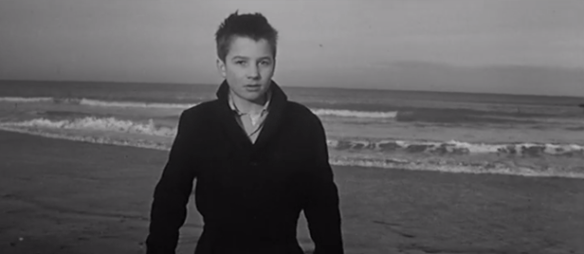
As always, my mind returns to the climatic freeze frame of The 400 Blows. It remains with me and part of its iconic status is undoubtedly due to how it sums up this boy so perfectly. There’s a sadness in the eyes that without saying anything denotes all that we have already seen. It’s the perfect summation of his story thus far and with that look, it’s difficult to forget his hardships–his flaws too. Perhaps it allows us to extend grace to him because we can see firsthand that he’s in dire need of some. He has not been offered much his entire life with true love and affection being traded for punishment and biting remarks. True, his story does not end here but it’s a telling chapter of his life. Arguably the most formative years for the rest of his existence.

Within the storyline, Truffaut includes passing references for his love of the cinema and even suggests his promise with his writing composition though his teacher accuses him of plagiarism. But from these troubled roots came a man who loved movies to an extent that few others could claim. He was passionate both as a critic, champion, and creator.

Thus, it makes perfect sense that this film was dedicated to the memory of Andre Bazin, the noted founder of Cahiers du Cinema. Truffaut undoubtedly owed a tremendous debt to the magazine and its editor but he also elevated it with his own amount of passion. That same passion comes out in The 400 Blows and really all the subsequent films he made before his death. His movies are wonderful because each one shows that he genuinely cares about the material on its own individual merit. That is the kind of director that I want to watch.

5/5 Stars

Divorce Italian Style (1961)

Divorceitalian.jpgI never thought I’d get so fed up with hearing the name “Fefe.” But it’s true. There’s a first time for everything. In fact, Fefe is the name of our main character played so magnificently by Italian icon Marcello Mastroianni. In my very narrow view, he still very much epitomizes Italian cinema for me.

As for the film, a Sicilian Baron Ferdinando finds himself in rather an unfortunate conundrum — at least from his point of view. He relates through voice-over his family dynamic, with his parents, his soon to be engaged sister, his doting wife (Daniela Rocca), and of course his beautiful ingenue cousin Angela (Stefania Sandrelli). Aside from not being particularly enthralled with married life, the bigger problem is that Ferdinando is infatuated with Angela. He can’t take his eyes off her.

For those who are paying attention this comedy from director Pietro Germi, at times feels strikingly similar to the screwball comedies of Classic Hollywood where men such as Preston Sturges made light work of society by skirting censorship and building a barrage of gags almost to the point of being incomprehensible. But they might also conjure up comparisons with the darkly funny Ealing comedies out of England. And it’s true that films like Divorce Italian Style also carry a very particular name, “Commedia all’italiana” or comedy in the Italian way.

What becomes evident in a film such as Divorce Italian Style is the pointed attack on Italian social mores — the very framework that the culture is built on — and all involved are poking fun. Morality, class distinction, even the institution of marriage, are all dissected satirically as our protagonist goes through his life dreaming of knocking his wife off and living happily ever after with Angela — a girl that shares his affection — if only society didn’t say otherwise (she gets whisked to a life in a convent to maintain her purity).  Not to be deterred, the Baron attempts to hitch his wife up with a suitable suitor and as the shameful scandal finally breaks over his wife, he secretly jumps for joy. He’s getting a step closer to what he wants.

Meanwhile, the men about town all ogle at every girl that happens to walk by. Fefe’s old man is constantly harassing the maid, and more than once he walks in on his sister and her beau making out passionately.  There’s even a theatrical screening of Fellini’s La Dolce Vita (also starring Mastroianni) which literally seems to break any form of censorship in the town. The crowds flock to it joyously — men and women alike — because they want to see the lavish romance projected up onto the screen.

Mastroianni is not surprisingly a long way off from his debonair lovers taken the likes of La Dolce Vita, La Notte or 8 and 1/2. He goes through the film with a certain comedic despondency. He’s hardly a real figure. Comic and dismal with overblown ideas of how to make his existence invariably better. It’s quite a display because while it’s easy to laugh it’s also rather pitiful.

So Divorce Italian Style is perhaps even more audacious than the screwball comedies of the 30s and 40s. Because it gives the plotting Fefe the “happy” ending he was hoping for. It actually gives it to him, but the comic (or sad) thing, in the end, is that his girl is already playing footsies with another man. You see if we look at what is going on here,  he’s never going to find contentment. The ultimate irony, if there was a sequel, is that it would probably show Fefe actually trying to kill his wife because she’s cheating on him. Then it wouldn’t be so funny.

Yes, the strict societal pressures put on the members of this Sicilian community undoubtedly deserve to be questioned. There is so much obvious hypocrisy bubbling up through the layers of society and it makes for provocative comedy. But also there’s something to be said for living life under some sort of moral framework. Otherwise, life is purely about our pleasures, what makes us feel good, what our desires are and oftentimes those fail to regard what is beneficial for others. Needless to say, I’m partial to “Marriage,” not “Divorce” Italian Style — or any other way for that matter. However, I won’t even try to tackle the whole marrying your cousin thing. This is a comedy after all and Stefania Sandrelli is quite pretty. I don’t blame “Fefe” too much. He’s only human.

4/5 Stars

Solaris (1972)

solaris 1.png

Now I can finally say that I have entered the cinematic world of Andrei Tarkovsky and I am better for it. Solaris somehow traces the lines of a paradox rather remarkably. It’s a sprawling epic of nearly 3 hours and yet hardly ever feels overlong. It moves through its rhythms contemplatively but never feels too slow. And though it’s a sci-fi story, it never loses sight of its human components which remain its guiding light to the end.

To Tarkovsky’s credit, he’s able to retain the film’s continual ability to mesmerize again and again and he never lets up. I know for certain viewers this will be dull monotony–even for me at times–but for others, it’s pure magic. Repeatably fascinating for both its enigmatic mysteries and revelations. Because it delivers both up willingly to the engaged viewer.

Like any master painter, Tarkovsky begins the film by laying down his base coats. We’re introduced to enigmatic psychologist Kris Kelvin while simultaneously accustoming ourselves to the director’s naturalistic imagery — glossy and distinct. It’s in these opening moments at the home of his father back on earth where the audience gains more insight and Kris prepares himself to mount a journey to the space station orbiting the planet Solaris. Only three crew members still survive there and the psychologist is being sent to check in on them and continue to expand the reaches of human knowledge. That’s the idea at least.

However, when Kris gets to the space station it’s far from welcoming, austere and dilapidated thanks to poor upkeep. Now only two crew members remain, the curiously odd Dr. Snaut and the cold cynic Dr. Sartorious. Both men will give Kris very little information about the general state of affairs. And he only learns later that his colleague Gibarian committed suicide for some inexplicable reason.

But the film enters its most perplexing stages when Kris receives a visit from a mysterious woman — her name is Hari and for reasons unknown to us, Kris is very close to her. And his emotional state from that time forth is constantly being manipulated by the presence of this special visitor. He’s frightened of her. Then in love and completely devoted to her well-being. And despite the adamant insistence of his colleagues, he will not believe her to be an apparition. He holds onto the fact that this woman in front of him who is constantly self-destructive and in the same instance totally devoted to him, is the woman he knows and loves. But the question is not so much whether or not that is true, but what Kelvin will do with all that has been thrust upon him as a result.

On the whole, Solaris is a visual treat but not due to grandiose visions of space.  Instead, Tarkovsky blends color and sepia footage into a patchwork while juxtaposing the environmental beauty of underwater vegetation with the dour interiors of the space station. And the suspension of disbelief is maintained through the use of simple special effects and the underlying fact that this film is not really reliant on pyrotechnics of any kind. It’s about people. An equally remarkable observation is the fact that Tarkovsky seems to be self-assured enough to have his characters play their roles with relative restraint. Numerous times they face away from the camera. In other films, directors would be afraid of such a tactic, but here it only works to heighten the amount of intrigue.

It’s a philosophical and psychological study that happens to take place on a space station. And that’s really like any of the great sci-fi movies of our times. They’re not really about science-fiction or technology or robots or any of that. They’re only another mode to tell the most human of narratives even in the outer reaches of the galaxy or in futuristic worlds.

It’s also highly reductive to call this Tarkovsky’s 2001. In deference to both films really. In fact, the director did not see Kubrick’s film until well afterward and I think I too would side with his conclusion that 2001 is a little bit too “sterile.” While 2001 is a decidedly grand narrative of exploration and technological advancement, you can easily make the case that Solaris is a film most precisely about the incredibly human emotion of love. Although it’s also about the human search for some kind of truth much in the same way as its predecessor, it’s also far more personal. Solaris feels more intimate and true — perhaps even more closely tied to some of Ridley Scott’s themes in Blade Runner. Particularly his examination on what exactly separates man and machine when they share striking similarities.

As far as sound goes, there is a score to Solaris, but Tarkovsky only utilizes it at the precise moments, more often than not foregoing typical music for either electronic distortions or perhaps even more boldly complete silence. He also gives nods to the great Flemish master Pieter Bruegel using his work in the set designs inside the space station.

Truthfully, it’s easy to peg Solaris as a pessimistic movie but it’s as preoccupied with morality as it is with the pursuit of knowledge. It’s as much about the innate human desire for love as it is psychological torment. And its ending strikes a note of poignancy and bitter despair in the same instance.  But if you want profound cinema that stays with you and marinates in your mind then look no further. I will certainly be returning to Tarkovsky sooner rather than later.

5/5 Stars

Tokyo Drifter (1966)

tokyo-drifter-1

Seijun Suzuki’s Tokyo Drifter is a paramount attraction of 60s camp packaged in a yakuza   B-film. It opens with highly stylized black and white imagery injected with almost psychedelic shades of color that never again leave the film’s palette. Its setting is Tokyo, Japan — but far different than any Tokyo humanity has actually seen in recent history. As such it does not exist and never has. Only in the mind of the director. It’s a swinging place of ultra-cool yakuza, jazzy vibes, and a fantastical atmosphere. Oddly indicative of the shoestring budget it was hewn from and still somehow invariably engaging.

tokyo drifter 2.png

We spend much of the film following in the footsteps of our eponymous lead Phoenix Tetsu (Tetsuya Watari), a yakuza hitman whose every effort to go straight is being challenged and impeded on all sides. He cannot escape the life that defines him and finds himself continually caught in a web of yakuza gang wars that will not give him a moment’s peace. There are gunfights, brawls, even a bit of swordplay. He has a romantic flame, a sullen nightclub singer who serenades the world with her melancholy tunes, but even she cannot redeem his existence. There are always hitmen either after his life or looking to drag him back into the fray that he threw off.

But going into plot points and character arcs already strays too far from what makes this film enjoyable. There’s often the heightened tension found in many of Sergio Leone’s greatest Spaghetti Westerns here, employing many of the same stylized characterizations. The fact that our main protagonist announces himself through song and whistling strangely feels reminiscent to “Harmonica” (Charles Bronson) in Once Upon a Time in the West. But this is a different beast. Rambunctious, chaotic and vibrant as it is.

tokyo drifter 3.png

Once more Suzuki is gifted in taking the mediocre — a narrative with very little to it — then instilling it with all sorts of energy similar to other inspired mavericks like Sam Fuller. But by the end, he’s transformed the narrative into an incomprehensible bedlam blessed with his own wickedly stylish aesthetic. There are sweet suits and shiny wheels. Nothing feels the least bit realistic. And it’s filled to the gills with surrealist situations conceived out of Suzuki’s own whimsical vision. Still, all the while it’s influenced by pop art and to some degree Technicolor musicals of the 1950s. It’s a sight to be sure, leaving its indelible mark on the b film niche. If anyone says low budget gangster flicks are the dregs of cinema, they’ve obviously never been acquainted with Seijun Suzuki

3.5/5 Stars