The Yearling (1946): A Boy and His Deer

the yearling 1.png

“When I was a child I spake like a child…” ~ 1 Corinthians 13

Like the previous year’s Valley of Decision, The Yearling opens with an establishing shot paired with Gregory Peck’s voice, this time in a folksier register. Aside from being unoriginal, one can hardly condemn director Clarence Brown for an act of plagiarism.

However, what it does go to exemplify is a certain amount of unspoken structure supplied to Old Hollywood films. This shorthand, along with needlessly informational title cards, feel very much like the bane of the era’s filmmaking. It’s as if with the age of the talking picture, film’s forgot about the primacy of the image and as such, they dumbed down movies for their audiences. After all, it’s so easy for dialogue to become a constant crutch to fill in any ambiguities.

Even despite this aspect, The Yearling still has innumerable elements going for it. Gregory Peck is a fine actor, even making ho-hum voiceover moderately palatable, and the gorgeous Technicolor tones of nature within the film are breathtakingly resplendent. In fact, the movie proves a well-situated follow-up to Brown’s earlier success, National Velvet. It is a portrait of pioneering before the days of Old Yeller, joining together such lucrative elements as adolescence and animals.

The adolescent in this tale, adapted from Marjorie Kinnan Rawling’s eponymous novel, is Jody (Claude Jarman Jr.), and the fauna deserves mentioning later on (although you probably already know what it is).

For now, the amiable Penny Baxter (Peck) and his boy form a bit of a good-natured partnership, sticking together as the men of the house. Their chemistry is undeniable making their onscreen pairing as father and son ripe with all kinds of affection. None of it feels like a fake veneer plastered on for the benefit of the audience.

The third member of the Baxter household is Ora (Jane Wyman), the no-nonsense wife and mother who’s both homely and severe, completely different than her kinfolk. Still, there’s something within her that Wyman does so well to intimate through her characterization. Thus, despite all she says and does that under normal circumstances might make us dislike her, most will find it within themselves to give her the benefit of the doubt. So much of it is understated and unspoken even as she never gives an inch. Her maternal heartbeat is undeniable although it maybe periodically obscured.

The Yearling really is fable-like by providing an impression of a way of life focused on a frontier family and more directly, the young boy who grows up right before our very eyes. While there is a narrative of sorts — all the events can be strung together as subsequent rungs in the journey — it’s mostly a vignette-driven piece meant to reflect the vicissitude of life.

One moment father and son are streaking through the forest with the family dogs to subdue ol’ Slewfoot, the ornery bear who mercilessly slaughtered one of their livestock. It becomes a lively jaunt and the first lesson in the boy’s nascent repertoire.

Due to the utter uselessness of his firearm in the tense encounter with the bear, Penny takes it upon himself to acquire a new weapon, and he manages quite ably through a bit of horse-trading with the nearest neighbors. One of the bunch is an ornery fellow also easily duped. By the end of the confrontation, he’s given up a beautiful rifle for an underperforming pooch.

Then there are the momentous trips into town to pick up materials at the general store. Mama is still dreaming of a well someday, and the obliging shopkeeper (Henry Travers) offers the boy a mouth organ as he comes face to face with a girl his own age. It’s hardly young love.

Instead, father and son get involved in a right neighborly brawl in the center of town, which is yet another of the film’s more jocular moments. It’s not afraid of the humor to punctuate the drama of life.

Because the next scene of note is really the turning point. Out in the forest, Penny is bitten by a rattler and fortuitously he’s able to shoot a nearby doe using the bodily organs to draw out the poison. It’s a scary incident leaving the man of the house weak and his son aims to take the orphaned doe as the pet he’s always been begging for.

The rapturous crescendo of angelic audio grandeur introducing our true main character is laid on a bit thick. However, if your heart is ready to be melted and you have held onto a shard of childhood innocence, The Yearling can remain a powerful tale of youth. No scene is more emblematic than this one.

the yearling 2

The film’s title comes front and center once again as we watch the parallel characters of a growing boy and his growing companion. He dotes over the little deer taking him to bed and imploring his mother not to take his pride and join away from him. Though the animal ruins them on multiple occasions trampling their crops.

If it’s not the fault of a creature, then nature whips up its own retribution. Their next tribulation is carried out by a torrential downpour decimating their hard-earned crops and sending emotions to a fever pitch. Evoking the sufferings of Job hardly seems a welcomed antidote to their plight.

But then, something begins to happen. A boy is becoming a man as he begins bearing the load of toil normally carried by his obliging father. He builds a fence to keep his deer out while fixing up their camp.

Then, they must say goodbye to a newlywed bride and groom. We don’t know them well but the family is deeply affected. Their exit by sea is a bittersweet departure, and as they ride back home Jody glumly notes, “I don’t like people going away it’s like they were dying.” His father only condolence is an honest observation, “That’s life boy. Getting and losing.” He must come to accept it. Death, goodbyes, trials; they never exactly get easier, but we must do our best to push through them with the support of our loved ones.

The Yearling might seem lightweight compared to some similar stories, but one must try and recall our own childhoods, where any number of thoughts and feelings experienced for the first time became monumental markers of life. That first pet you had. The death of a friend. The first girl you ever had a crush on. Each takes on varying degrees of importance in The Yearling and even for a story rich in sentimentality, these really are moral parables at their core.

Because it strikes some balance between maintaining a child-like wonder and zest for life while also understanding sometimes we must literally put to death our former ways. Finding that balance just might be one of the keys to a meaningful existence.

3.5/5 Stars
Valley of Decision (1945): Greer Garson & Gregory Peck

valley of decision 1.png

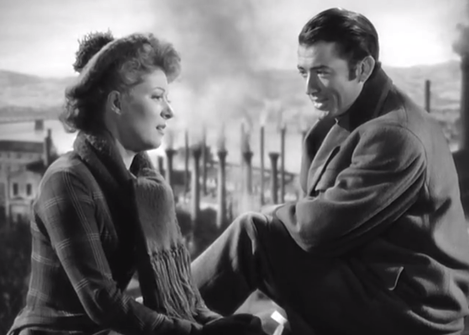
Gregory Peck’s pleasantly resonant voice brings us into the moment. The scene is unimaginative yet unmistakable with its obviously scaled-down establishing shot. Pittsburgh. Smokestacks and steel. These are the days of Andrew Carnegie and the transcontinental railroad wrapping its way east to west, making mythical magnates out of mortal men.

Valley of Decision is about this same monumental national narrative albeit stripped down to a microcosm meant to be far more intimate. In a manner of speaking, it succeeds by first setting our sights on a group of Irish immigrants. They are stereotypically spirited with a brogue to match.

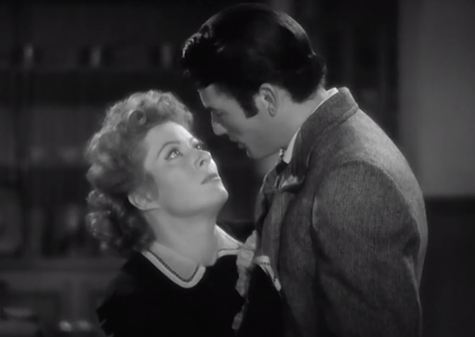
Mary Rafferty (Greer Garson) makes her way home through the humble neighborhood she calls home to announce the latest piece of news. Amidst tough times, she has found herself a decent wage! The only complication is that she’ll be serving as maid to the Scott family, owners of the town’s local mill. Although Mary’s not a girl to turn down a job, her curmudgeon father (Lionel Barrymore) has maintained a lifelong grudge against Mr. Scott, seeing as it was the factory that lost him the use of his legs. He’s never forgiven them even with the recompense they’ve provided.

This is an instant source of conflict although it’s initially unrealized. Because given how they are built up, it’s rather surprising how everyone in the Scott household seems generally benevolent, if not a bit stuffy.

Mary arrives and we’re curious to know her place. We get our first look at Gregory Peck. He sneaks up the stairs to be rushed by his affectionate siblings. His mother (Gladys Cooper) follows in all civility. Each moment is taken in by the new help, perched in the drawing-room with each reaction made blatantly obvious. This is her first impression as well as ours and she beams ear to ear.

Garson’s character girds a spellbinding wit of the Irish about her, settling into her new occupation for the Scott family quite seamlessly and casting off her early nerves. Between the dishes and the spoiled children, she handles it with disarming aplomb and a certain bright-eyed reverence as only Greer Garson can supply.

valley of decision 2

If it’s not obvious already, Valley of Decision is a social drama with characters tied closely together. There’s the sectioning off of social spheres between the affluent and their more humble help. Then, you have the meeting of the men over cigars and business as the women busy themselves with frivolities. Curtains, for instance.

Tiptoeing through all these spaces like a fly on the wall is Mary Rafferty. Certainly, her place in this world is obvious, and yet she is accorded a very unique role walking through the parlors and dining rooms of the elite — privy to their conversations and activities — and an integral part of every part of her lives. No matter her family background.

It’s no secret a burgeoning romance starts in on her innocently enough. She’s a fine and glowing conversationalist. He’s charming and handsome. How could they not get together? But she dutifully understands her place. It wouldn’t be proper and with no prompting, she makes her way across the Atlantic in service of Ms. Connie (Marsha Hunt), effectively increasing the space between them. The mistress of the manor understands her predicament and privately pities her.

Then, one day there is a strike at the factories. Again, it’s no shocking epiphany. Anger and discontent are churned up and the bullish pride of Mr. Scott (Donald Crisp) and the sense of license for better wages by the unionizer Jim Brennon, looks to be at an impasse.

The true “valley of decision” (an allusion to the Old Testament’s admonition from Joel) is when all the events come to an inevitable head. A fragile peace can be maintained no longer, and all sides suffer calamitous devastation. Because the consequences are great when the Scotts and their opposition come face to face to have it out for good. Not even Mary nor her relinquished lover can make it right again.

Whether torn from the pages of the book or dreamed up by the screenwriter, Valley of Decision is very much a stilted melodrama with all sorts of manipulative twists coming at us with such continued force, it gets to be wearisome. It never ends.

The narrative flits so undecidedly between the warm chemistry of the leads and this overly theatrical landscape played out against the family’s steel mills. You might blend How Green is My Valley, King’s Row, Giant, Home for the Hill, and other analogous films, but somehow Valley of Decision still comes out the weakest of the brood. It cannot seem to reconcile its main conceit to a satisfying end.

It’s assembled with all the trimmings people might easily turn their noses up at when considering Hollywood movies of old. It boasts sentiment and courts melodrama. There’s the aforementioned voiceover to set the stage and stirring crescendos of mighty music in love and in tragedy. Characters can easily be pigeon-holed by their types all the way down to a spoiled Marsha Hunt, the insufferable childhood sweetheart played to a tee by Jessica Tandy, and Dan Duryea, not quite having found his more suitable niche as a noir baddie.

There’s also the underpinnings of Mary courting on the side of the wealthy and well-to-do. She sympathizes with them, making them seem like the victims of a system more so than the destitute bottom dwellers. I’m not sure what to do with this.

Because it’s true Mr. and Mrs. Scott are a most benevolent pair, and we grow to love them. Crotchety Lionel Barrymore, sulking in his wheelchair, doesn’t do much for the P.A. of the common man, but nonetheless, it’s a startling turn.

Taken as these disparate pieces placed together, the movie is an uneven compilation, all but borne on the shoulders of Greer Garson and Gregory Peck, who by any cursory glance, seem ill-suited as romantic partners. At the very least, they’re disparate figures.

She was a mature star, finally coming into her own as one of the prominent performers from the U.K. now making it big in Hollywood. He was an up-and-coming stage actor with the formidable build and roots in La Jolla California then Cal. Yet they share an amicable spirit somehow allowing them to fit together due to their mere ability to counter one another’s playful ebullience.

It does feel like a remarkable crossroads in careers. Garson was beloved, but would never regain her major box office with the dawning of the 50s and new tastes (even with a resurgence of success in the 60s). Gregory Peck was just beginning. One wonders what Greer thought of Roman Holiday and To Kill a Mockingbird? It’s easy enough to believe she would have liked them.

3/5 Stars

Madame Curie (1943): Starring The Indomitable Greer Garson

madame curie 2

Physics and Mathematics are the two primary focuses of Marie Curie’s life. In the early days, when she was one of the few solitary women in a Parisian sphere of academia, dominated by dismissive men, she still went by her maiden name and took on the rigors of study with ardent relish.

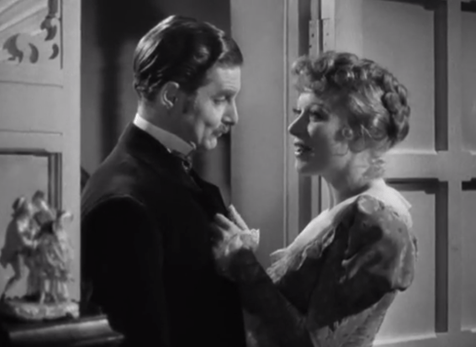
Thus, when her kindly professor (Albert Basserman), the prototypical white wizard with a likable twinkle in his eye, invites her over to his home to meet famed professor Pierre Curie (Walter Pidgeon), she jumps at the opportunity, purely on a professional basis. However, I will not suggest for even one moment Madame Curie takes its material into anything close to unconventional territory.

What looks to be an intimate affair turns out to be a bustling party packed with people. The two academics feel sorely out of place amidst the socializing and gravitate toward one another even more dramatically. There’s nothing concrete at the moment because we must remember these are two people with the utmost sense of dignity. They’re able to counter one another with a certain genteel propriety, not the klutzy screwball meet-cutes of some of their contemporaries. This no doubt plays to their personal advantage.

Time passes and Pierre grants the ambitious woman to set up shop in his laboratory, tucked away in a shabby little corner. Once more she jumps at the chance, seeing the space, completely devoid of any sort of facilities, as the perfect proofing ground for her ideas.

She immediately leaves an impression on the youthful lab assistant (Robert Walker). However, it’s her inexhaustible work in radiation that leads Pierre to revere her. Because over time he grows accustomed to her, at least in a professional sense.  While shrugging off her graduation initially, he finds himself making an appearance all the same. He’s compelled to.

The next course of action is his hesitant invitation on a weekend away, and she gladly accepts, meeting his parents out in the country over croquet, including an uncharacteristically bristly Henry Travers playing the elder Curie. The budding romance is obvious, and it’s convenient for our stars.

Mervyn LeRoy’s film, on the whole, is a lightweight, cordial biography working loosely with facts to draw up the life of Madame Curie and her future husband. It’s just as much a vehicle for the lasting chemistry of Garson and Pidgeon as it is an ode to one of the most renowned scientists of the turn-of-the-century. While I’m not exactly the most gifted empiricist, even I am aware of the substantial shadow the Curie name casts over the discipline. In some small manner, this movie allows them to be appreciated and palatable for a mainstream audience, albeit an audience of wartime viewers.

Even this admission is telling, suggesting this tale of romance and biography functions as a bit of timeless morale boosting. It showcases love and the triumph of the human spirit, even in the face of bitter tragedy. Still, it does not immediately signal propaganda like Mrs. Miniver or other such entries. This might be to its benefit.

madame curie 1.png

Taking everything into account, what makes it rather extraordinary is Garson’s heroine because certainly, Marie Curie is well-deserving of a biographical treatment and in an age where women were kept out of such positions, she provides a paradigmatic example for future generations. (No one can rebuff her two Nobel Prizes!)

Both her work and her career are important to her. The same goes for her future husband. But even with their work as a constant distraction, they realize in between the long lab sessions, living life without one another would leave a void. Beyond this, their work would be far less meaningful. In his rather roundabout manner, Pierre professes his need for her, comparing their marriage to NaCl. It’s not exactly romantic to be table salt, but they work well together, and they do form a solid union.

While the scientific jargon, filled with chemical elements, feels a bit clunky, it’s admittedly difficult to figure out a way to make their regimen of uranium-based experiments riveting. The major takeaway is the uphill push for funding since Curie is dismissed on all sides, not only based on her unprecedented research, but also for the arbitrary fact, she’s the opposite sex of every stodgy member of the scientific board.

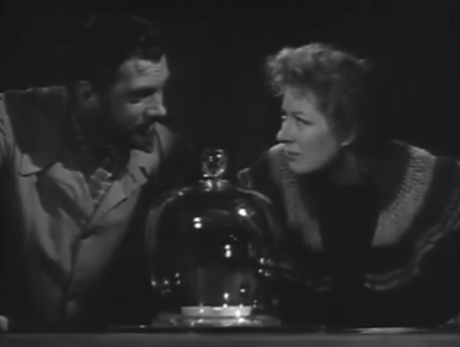
Not to be daunted, the couple sets up business in a shack, and the Curies take on the task with their usual tenacity, their sole objective: separating barium from radium. This is Madame Curie in its stagnant phase and yet no one can doubt Greer Garson’s candor. One is reminded of the crushing moment she thinks the radium has all but evaporated and with it four years of toil. She’s nearly inconsolable.

Then, when their success is finally validated, she’s looking into her husband’s eyes and commending him as a great man, not by the standards of the world, but due to his kindness, gentleness, and wisdom. It’s a striking moment because this is no doubt her story, but as with any union, it takes two people to make it work.

But she subsequently has another sublime moment of indescribable vulnerability, pained to her core by the most grievous loss of her life thus far. She is a woman of science and of great intellect, but the service Garson does for Curie (authentic or not) is making her all the more human at her lowest point.

The final verdict remains that Madame Curie is an unimaginative bit of hagiography, but for the faithful fans of Greer Garson and Walter Pidgeon, it is another fitting eulogy to their joint talents. For some, this might be enough to charitably see past what flaws there are.

3/5 Stars

Pride and Prejudice (1940): Laurence Olivier and Greer Garson

Prideandprejudice.jpg

When you grow up with a sister, I imagine most people are aware of books like Pride and Prejudice, Little Women, Anne of Greene Gables, and Little House on The Prairie. However, especially when you’re young, you rarely appreciate them fully or comprehend how notable they are as cultural artifacts.

It’s my ever-growing esteem for Jane Austen’s Pride & Prejudice that makes me hold any adaptation to a higher standard. Otherwise, it would be easy enough to settle. But the coloring of the characters, their tete-a-tetes, the comic orchestrations, and the explorations of themes inherent in British society, make the material that much more sacrosanct. As time grows older, her works seem to draw more audiences, not less.

Thus, I’ve found myself not so much a stickler for out and out faithfulness to the source, although if it’s not broke, why fix it? Still, I desire these adaptations to stay true to the essence of what the author created.

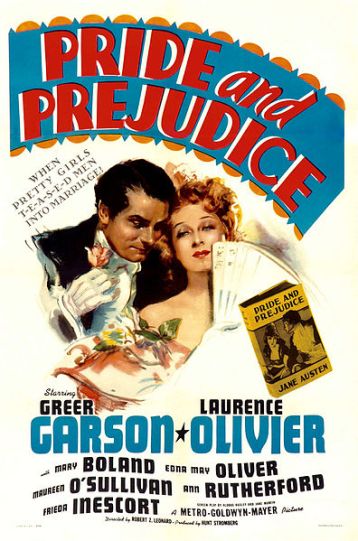
It’s true Hollywood has always had an affection for its literary adaptations, and it was little different in the olden days of the studio system. Because what any book or intellectual property essentially guarantees is some kind of preformed fanbase to pull from. However, these attempts to capitalize always come with widely varied results. This MGM version, helmed by the all but forgotten Robert Z. Leonard, falls somewhere in the middle. It’s hardly forgettable and yet it lacks the required magic to send it in to the pantheon of Austen cinematic transcendence.

For those left unawares, Pride and Prejudice is a story of the Bennett family, consisting of five sisters, their benevolent father, and a hyperbolic mother looking for every opportunity to marry her daughters off to the man with the largest inheritance.

When two eligible young men, a kind-faced Mr. Bingley (Bruce Lester) and the rather more curt and severe Mr. Darcy (Laurence Olivier), rent the grand estate of Netherfield, along with a haughty sister, Ms. Bingley (Frieda Inescourt), it causes quite the stir in town.

The matriarch, Mrs. Bennet (Mary Boland), is the epitome of a fussy busybody who, nevertheless, has draped about her a certain maternal charm. Edmund Gwenn calmly uses his bright-eyed wit to upstage his wife’s blustering. They make a formidable pair of comics.

Among their children, Jane (Maureen O’Sullivan) is the perfectly docile beauty with the richest prospects of marriage. Elizabeth (Greer Garson) is proud and passionate. Mary (Marsha Hunt) is bespectacled and depicted as a bit of an oddball. The two youngest, Lydia (Ann Rutherford) and Kitty (Heather Angel) are tittering adolescents swayed by a dashing manner and a handsome uniform.

The story is conveniently recontextualized for the Victorian-era and the main purpose served is in the costuming department. Not only could the studio save money by repurposing some of their wardrobes, but they could also lean into a greater level of opulence that would not have been available in the actual day of the Bennetts. Except for absolute purists, I see no way in which this historical inaccuracy harms the success of the picture.

It is also the opening ball reinforcing the ensuing conflict by introducing Elizabeth’s genuine distaste that she harbors for Mr. Darcy, perceiving him to be a total supercilious snob. What’s more, her feelings are not entirely unwarranted. This dissension is borne in the title itself: The pride of Elizabeth and the prejudice of someone bearing the breeding of Mr. Darcy. For that matter, it could be the other way around, Elizabeth’s prejudice toward the upper echelon and his own inbred pride.

Every successive encounter between them, Elizabeth does everything to confirm her assumptions about him. It means they are never on amicable terms with one another, no matter the words that might leave their lips. She is hardly reticent about airing her contempt for the man.

Every slight dispensed by those purported to be above her in status is further internationalized and often finds its way out in a barbed attack on Mr. Darcy since he proves to be the easiest target of ridicule. Even as Darcy’s romantic advances continue in earnest, Elizabeth has great relish in embarrassing him over a bout of archery. The consequence is understood, but somehow it feels a bit foreign to the propriety of Austen’s universe.

In parallel and, ultimately, intertwined romances, Jane and Mr. Bingley incur and off and on relationship defined not so much by grating behavior between the two of them but the forces of inertia working around them.

Following her own flight of fancy, Kitty winds up running off with a soldier named Mr. Wickham, who seems charming enough. However, it conveniently shrouds a past of ill-repute that Darcy holds against the man while Elizabeth gives Wickham the benefit of the doubt. It’s yet another grievance she can hold against the stuffy aristocrat.

These paces are all Austen, but similar to the numerous versions of Little Women, it’s the performers who really mold it into their own. I love Greer Garson to death, and she does an amiable job but it’s hard to dismiss her predetermined disposition. She is always one of the most vivacious screen personalities and though she gets to shine in the final act, up to that point, she’s meant to be proud and brazenly forthright in the mode of her literary counterpart. It doesn’t feel quite like her temperament.

On his part, Olivier does well enough as Darcy; he certainly has a presence about him and the repute to make it seem viable. However, the romance is not as vibrant as it might have been. It feels a bit stunted, and it cannot be conveniently attributed to the social context.

Like its successor Jane Eyre (1943), it’s also rather jolting to see Aldous Huxley’s name in the screen credits. My high school days of reading A Brave New World make any period piece feel like a blatant anachronism on his repertoire. Still, this alone can hardly stand as a substantive piece of criticism.

It does feel some of the best and most well-regarded lines are not emphasized enough within the structure of the scenes and while there are certainly considerable elements of the original story, they are never done too many favors.

Mr. Collins feels like a miserable sot and a bore of a man and with the screwball caricature of Melville Cooper, it feels all the more like miscasting. Meanwhile, Mrs. Bingely has a lacerating post to maintain as the picture’s snide gossip. It appears her only function in the plot is to be churlish, making Darcy incrementally more tolerable.

Edna May Oliver for one is always prepared to play a no-nonsense patroness, in this case, Lady Catherine, who orchestrates events so her dear nephew might test the waters of romance.  Because Mr. Darcy and Ms. Bennett are meant to be together and they are both able to cast aside their own issues to recognize just how much they care for one another.

Finally watching Olivier and Garson in a passionate embrace is a dream come true but, as for myself, I couldn’t help but get distracted by fond memories of Wuthering Heights and Random Harvest. How I wish I could same the same of this movie. Still, I’m clouded by my own blind spots and personal hangups. You must make your own judgment.

3.5/5 Stars

The Courtship of Eddie’s Father (1963): A Father and Son Story

The Courtship of Eddie’s Father gives off all the signs of a light and frothy romantic comedy. You might envision it already: a widower-about-town with his son playing matchmaker as he tries to navigate the plethora of pretty girls who just happen to orbit around him.

But we must make some distinctions. This is also a film about a little boy and his father after the death of someone very precious to both of them. A wife and a mother. You cannot easily laugh this plot point away, and the movie never does.

It’s equally important to note who our director is. No one would wager this is the artistic height of Vicente Minnelli, but it’s not a throwaway rom-com either; no matter what contemporary audiences might have been led to believe. I’m thinking most specifically of the scene early on where Ron Howard erupts, bawling over his pet goldfish now floating upside down in the tank. His father storms out of the room to go find his bottle and glass as his little boy is comforted by their neighbor from across the hall (Shirley Jones).

Does Minnelli dare include this scene? It risks feeling overwrought, and it absolutely kills any of the convivial feelings the movie looked to engender. But there are plenty more of those to come, and here we get something actually grasping for some kind of meaning; it’s an attempt to make sense of real-life issues, albeit through the Hollywood guise of gorgeous Panavision Metrocolor. This is Minnelli at his best with substance breaking through his usual lavish photography and expert set dressing.

And yet here is some of the quintessential essence of the picture, daring to be more than meets the eye. We are reminded grief is okay and it is natural — they will both miss “Mommy” — and instead of holding in their feelings, they must be open with one another. It’s the only way they can hope to cope. The whole film is a progression along this theme. Lest anyone get the wrong idea, this is really a father and son picture.

While I won’t say Glenn Ford is as obvious a father figure as Andy Griffith, he still manages the necessary rapport with Ron Howard, and I always do marvel at Howard’s poise for such a young actor. They often tell the stories of child actors who had an expiration date because once their cuteness wore off they didn’t have the acting chops to make it.

Although Howard has transitioned to the director’s chair, I watch him in individual episodes of Andy Griffith or a movie like this, and it does feel like he was capable of range beyond his years. Yes, he’s cute. That’s the easy part, but he also navigates his way through the more labored scenes where there are other emotions. The picture’s always able to fall back on that core relationship.

However, before I overcompensate, The Courtship of Eddie’s Father has plenty of the kind of goofy, at times cringe-worthy, rom-com moments of a certain era. It allows the movie to remain innocent at heart even as it courts other issues.

Take one evening where the two bachelors stop off at an arcade only to make the acquaintance of bodacious Dollye Daly (Stella Stevens). They meet when she asks to borrow Tom’s son for a couple of minutes to ward off the local mashers as she tries to build up her self-confidence. Then, there’s Ford’s colleague at work. Jerry Van Dyke’s flirty radio personality has a habit of proposing dinner dates on the air.

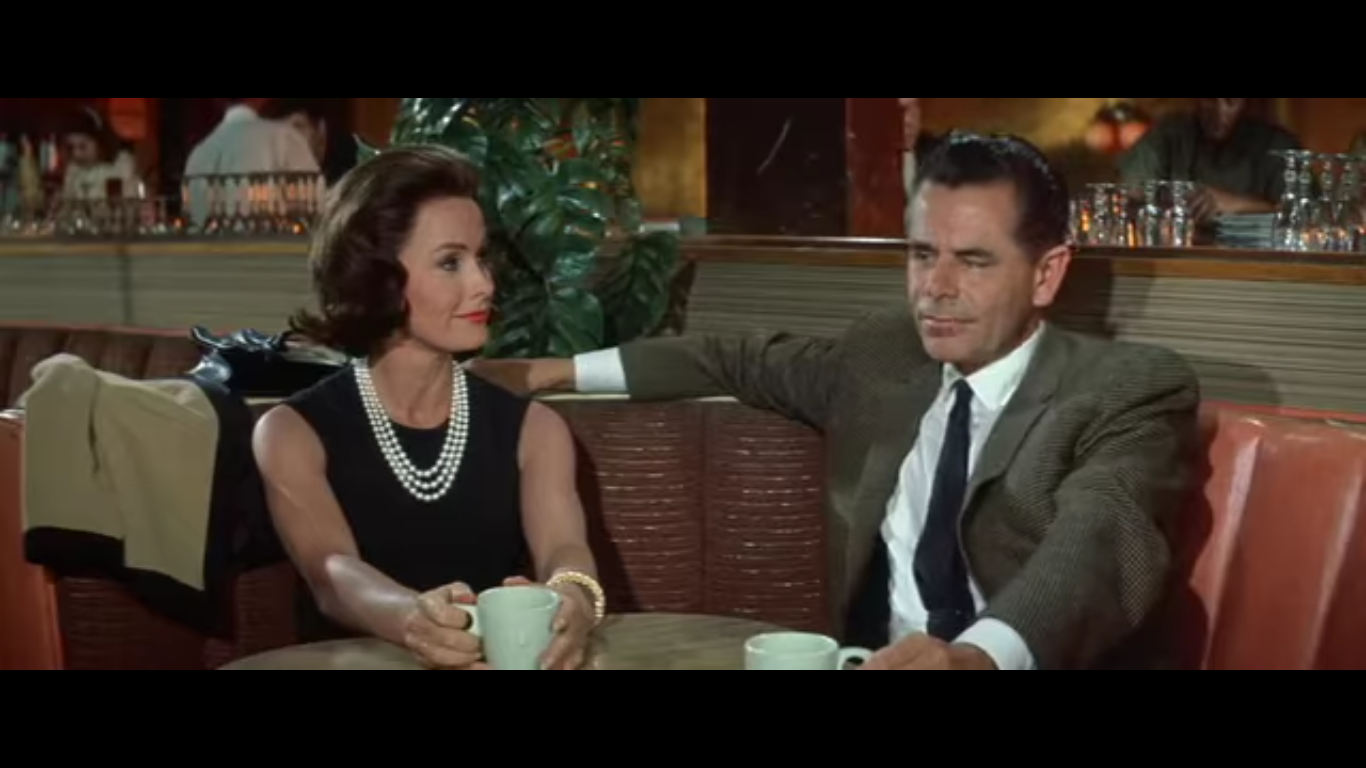
Dina Merrill is a career woman who knows what she wants, and her brand of quiet and mature sophistication is rightfully attractive to Tom. She’s looking for a man to love her on equal terms and despite what her aloof elegance might say against her, she’s another deeply sympathetic figure.

A movie that looks to be about a man and three women actually is at the same time simplified and made vastly more complicated. Dollye and Norman fall in together over bowling. So Eddie’s first choice of partners for his dad falls through. Now to the nitty-gritty. The main tension is between a boy’s feelings and his father’s.

Elizabeth is familiar and comfortable; both a good friend to their deceased mother/wife and an ever-present figure across the hall. She’s a cinematic creation and the kind of person brimming with well-meaning affection. Tom’s feelings for her are complicated. Eddie’s are simple. He feels safe in her presence. There’s a kind of maternal understanding and trust between them already.

Although it’s never stated explicitly, Rita, on the other hand, is attractive because she is so different. When Tom looks at her and spends time with her, he’s rarely reminded of his wife. With Elizabeth, he can’t help but see her. For his boy this is security and for him, it’s a kind of crippling torture. He cannot bear it.

Like any bright kid, Eddie’s extremely observant and precocious in many ways. He asks all the innocently probing questions about how babies are made etc. For him, differentiating cartoon villains from the good guys is a matter of round eyes and thin eyes (along with other salient features).

In one scene, he gives a comical appraisal of Ride the High Country. Meanwhile, for a few brief moments, his father falls asleep to Mogambo‘s screen passion playing out between Clark Gable and the much younger Grace Kelly. I’m not sure if it’s a subconscious reflection of Tom’s own yearning to have the love and affection back in his life. If anything, it’s a striking portent.

His jovial housekeeper (Roberta Sherwood) warns him of such a woman looking to take advantage of what he has to offer. Graciously, there aren’t any such women found in the frames of this picture. A New Years’ party with Rita is lovely, and he comes home late at night in a mild euphoria only to bump into Elizabeth. She had a night out with the same old successful doctor; it’s hardly love.

Later, they hold a frenzied birthday party for Eddie that’s chaos personified with all the little kiddies running around. Elizabeth is right in the middle of the adolescent maelstrom and Rita is absent. Then, as his father grows more serious and Eddie has his heartbroken at summer camp, he makes an irrevocable decision. He runs away and seeks refuge with the one person who makes him feel safe — his maternal rock of Gibraltar. If you follow the dramatic arc, there’s only one place the romance can lead.

Yes, it’s rom-com wish-fulfillment, but I’d like to think there’s also a sense of clarity with the movie resorting back to where we needed it to go. What a lovely admission it is that the women are not the easily caricatured heroes and villains of Eddie’s comic book imagination, nor are they completely trivialized down to their appearance. If anything, we get past the superficiality promoted by marketing campaigns.

It’s a father and son movie, first and foremost, and yet we end up admiring all of them. What a lovely person Shirley Jones is. Stella Stevens brims with unparalleled intelligence, and Dina Merill is blessed with poise. Jerry Van Dyke’s not completely repulsive. If he’s the weakest link, then there are worse prices to pay.

3.5/5 Stars

Battleground (1949): Bastogne and The Screaming Eagles

battleground 1.png

“We must never again let any force dedicated to a super-race or a super-idea, or super-anything become strong enough to impose itself upon a free world. We must be smart enough and tough enough in the beginning to put out the fire before it starts spreading.”  ~ Leon Ames as the Chaplain

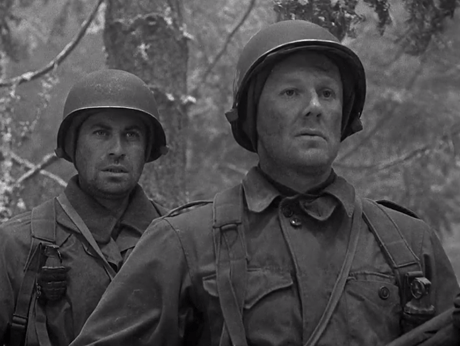
This is the story of Bastogne in 1944 and the renowned Screaming Eagles. Admittedly, if you’re like me, this means very little, but fortunately, we are in good company because the men we get to know over the course of two hours didn’t know anything about the city either when they first arrived. This was not the Battle of the Bulge; it was simply a stepping stone or a weigh station on the road to their future destination. That is until it became, you guessed it, a battleground in its own right.

For the time being, they can be found drilling in smartly executed formations and getting ready for an unnamed assignment ahead. This is our chance to feel them out before they get in the thick of everything.

Director William A. Wellman does them a service in the first full scene together spread out in their cots. There’s barely enough room for the dust to settle but within the close confines, camaraderie is immediately palpable as is each man’s personality.

What a great group of guys they are covering a lot of the bases of humanity. Van Johnson and even a Don Taylor are easy to pin down because of their broad appeal and charm. They make most any armed forces picture a little more affable. Among their finest traits is exuding good old-fashioned Americanism.

There’s old college grad Jarves (John Hodiak), who gets jeered for his presumed stuffiness. There’s the gruff cynic (Douglas Fowley) always playing around with his set of false chompers like his most prized possession. (They kind of are because without them he can’t eat). Squished in with them is the gangly and drawling southern boy (Jerome Courtland), who feels like an easy trope to target in these pictures. The new recruit (Marshall Thompson) can be found nervously bed-hopping from cot to cot trying to find one he can take.

In something genuinely unusual for the period, even a Latino from L.A. (Ricardo Montalban) is represented. His best bud Pops (George Murphy) all but has a ticket home on a hardship discharge. A young Richard Jaeckel rounds out the band along with a chaw chewing James Whitmore, acting as their weathered drill sergeant.

What is meaningful about these relationships is how they reach outside the confines of the film with this inferred history we don’t know explicitly, and yet we can read into it. We know what guys have a bone to pick with the army and the ones who are trying to make the best of it.

The perilous journey ahead is riddled with enemy planes overhead, and the fog of war is quite literally laid on thick, complimenting the mud the army trucks slog through on the road. One minute they’re diving into ditches at the sound of sniper fire, and the next they are tasked with the backbreaking toil that goes with digging in for the evening, only to be pulled away on revised orders.

battleground 2.png

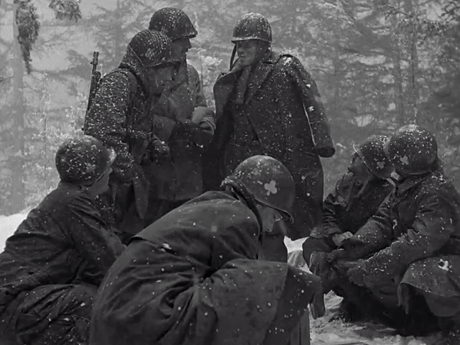
There’s absolutely nothing permanent aside from the constant patrolling, lack of sleep, and perpetual snow. Battleground is one of the snowiest war movies I can recall, at times, deeply striking and equally relentless

Private Holley scores quite a cache of eggs, dreaming of the scramble he’s whisking up in his helmet time and time again — only to get pulled off for another assignment. Watching the yolk drip from his helmet is one of the defining images of the film for me as is his utter indifference. You’re never clean so why even bother.

As a fitting inflection of the Cold War, we have Germans in G.I. uniforms sneaking behind Allied lines to wreak havoc and sabotage important strategic assets like bridges. More than anything, it continually triggers this terrifying threat of infiltration. Thus, one cannot help but draw a connection to the Chaplain’s stirring speech later on (reference at the top of this page).

Amid the paranoia, it’s almost hilarious to think that the best way of telling friend from foe is baseball terms, idioms, Terry and the Pirates references, and the relationship status of the war’s favorite pinup Betty Grable (Note: Cesar Romero is out for Harry James).

When they do come upon the Krauts, Wellman captures the firefight and the subsequent hand-to-hand combat in a stylized manner to conform to the Hollywood production codes. Regardless, he manages to accentuate the rough-and-tumble brutality through boots pounding on the snow and violent inferences.

Battleground leaves unabashed sentimentality behind and it is not squeamish about death. People get picked off one by one leaving a trail of dead and wounded in their plucky company. This carnage hurts because of the rapport we build up. But even in the face of these micro-tragedies, there is no time to mourn, and their stand against the Germans proves a gutsy one. There’s no other alternative in their minds.

As we bunker down, it’s true the ensemble melds together nicely with no one actor totally upstaging the others. Certainly, Van Johnson is just left of center, if not the undisputed headliner, but even he has to navigate conventional feelings of fear and loathing when it comes to military service. He is by no means impervious to the toils of war.

In a moment of duress, Holly looks all but ready to turn tail ignominiously, but he finds his courage in the urging of another man who looks up to him — as they double back on the German lines and catch them off guard. They’ve girded their loins about them now and when ceasefire agreements and surrender are suggested by the enemy, they unceremoniously scoff at the very idea.

As alluded to already, in the thick of the hard pelting enemy artillery fire, the Chaplain holds an impromptu service. He’s of a certain denomination, but a very succinct point is made of the fact his service and his message is all-inclusive. In fact, it’s hardly a spiritual homily at all but a candid rallying cry against the forces of evil. It’s one of the most blatant examples of the film getting on any sort of didactic soapbox.

In response, each man kneels down to pray in his own way the enemy artillery fire still bursting in the background. The results are a stirring image of solidarity. They have not yet begun to fight.

Even in the simulated soundstage action, there is a compelling commitment to the atmosphere, which aids rather than hinders the story being told. It brims with the elements and forces of nature on all sides. In a last-ditch effort, all the terminally ill are moved out of the makeshift hospital, and the walking wounded are brought in for one final stand of desperation.

There is a slight sense Robert Pirosh’s script skipped over what might have been the most rousing scene. Wellman tackles the counterattack from the rallied forces with their new batch of airlifted ammunition, gasoline, and K rations in only an extended montage.

battleground 3.png

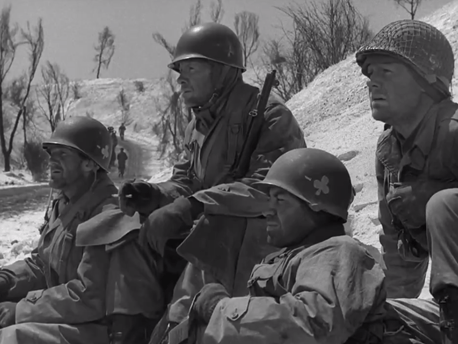
Although the ending of the war is a foregone conclusion, it very nearly could have been a letdown that we don’t get a more pronounced action scene. However, it’s quickly salvaged by the effectiveness of the final scene. It says all the same things and exudes all the same battered but resolute emotion with one simple drill, leading them off toward the rear. The men sound off with a renewed vigor knowing theirs was a job well done.

In my book, James Whitmore is the unsung hero of the picture because his grizzled mug brings so much understood texture to the world of the movie. Van Johnson is the vision of what an idealized American G.I. is and Whitmore is the more likely reality. And in the final minutes, he’s the one who leads them to the finish line. He maintains an unswerving grit and pride as tenacious as anyone.

Battleground is quite the sensational war picture while also holding the distinction of being one of the most high profile WWII films following the conflict’s cessation. It allows for this strange limbo of sorts where the war is still fresh and within grasp of the collective consciousness, but there is enough wiggle room to begin looking back in hindsight.

Surely it’s not a complete portrait, but it does well to blend shades of action with the everyday gumption needed to make it through such a conflict. What a pleasure it is to be reminded each of these soldiers is a singular human being.

It’s refreshing to have their warmth and their fears in plain view along with their courage. It feels like we can look them in the eyes and truly marvel because they are not a whole lot different than us in many ways. Their courage is extraordinary in just how ordinary it appears.

4/5 Stars

Thirty Seconds Over Tokyo (1944): WWII Written by Dalton Trumbo

30 Seconds over Tokyo.png

“One-hundred and thirty-one days after December 7, 1941, a handful of young men, who had never dreamed of glory, struck the first blow at the heart of Japan. This is their true story we tell here.”

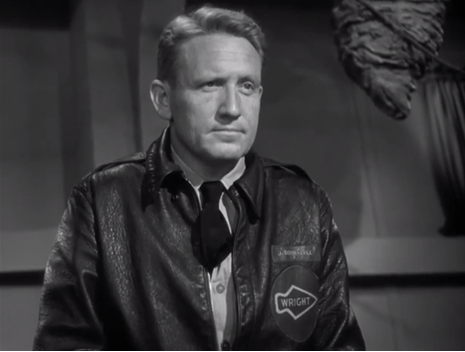
It’s easy enough to lump Air Force and Destination Tokyo with this subsequent film because we have the impediment of years between us. We have yet another cast rallied around a star; this time it’s Spencer Tracy leading the charge, as the pragmatic James Doolittle, on a highly confidential mission that would be known to future generations as the Doolittle Raids.

In the contemporary moment, if they had enough time and/or money an audience would possibly have a much easier time differentiating because each picture took on a slightly unique facet of the war. Air Force is all but a flying fortress in the days leading up to and directly following Pearl Harbor. Destination Tokyo is about the recon needed for the Doolittle Raid. 30 Seconds Over Tokyo is a bit like the triumphant exclamation point or at least the start of one.

The work wasn’t done for the Allies but it was a sign of forward progress. And with the benefit of hindsight, we can fill in the open-ended conclusion. We know V-J Day eventually happened only a year later. Consequently, it was also deemed one of the more accurate war pictures as far as military details go.

Much of Tracy’s time is spent as a no-nonsense observer of what is going on. The rest of his performance feels like it’s made up of monologues and yet, as is normally the case, he’s so candid and earnest when he delivers them. He quickly draws the moviegoer in just as he does with all the crew members under his command. It’s the magic he has over a rapt audience to the point you believe every word he says.

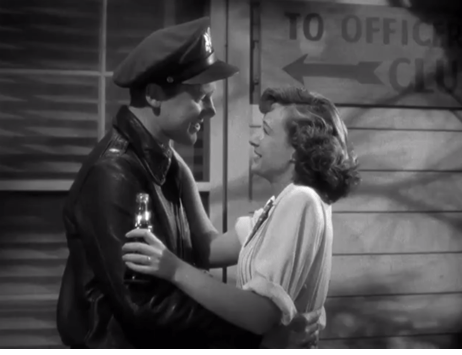
Otherwise, Lt. Ted Lawson (Van Johnson) is pretty much our lead. I know he’s not much of an emoter, but he might as well be our stand-in for the American G.I. For the time being, he is surrounded by a bevy of compatriots including Robert Walker, Don DeFore, and Robert Mitchum, among others. They all raise their hands when it comes to volunteering for a top-secret mission.

There’s an electricity in the air as they prepare for news of their assignment even as they are warned that they will be pushed to the limit of their capabilities and then some. The utmost secrecy is maintained and their training is commenced in earnest. The work is hard and they play hard after.

One of the crowd is a goofy down-home caricature portrayed by John R. Reilly. He can be found pounding away to the rhythms of “Chattanooga Choo Choo” in the barracks, intent on any merriment he can muster during off-hours. Meanwhile, the crew of the self-proclaimed Ruptured Duck becomes proficient in their new skill set.

30 seconds over Tokyo 2.png

In his free time, Lawson (Johnson) looks to get all the time in with his beaming wife as possible. Though Phyliss Thaxter glows with utter radiance in every scene, it does feel a bit overly twee at times.

Since a group of the fellas have their brides with them, they get together to dance, finding solidarity in songs like “Deep in The Heart of Texas” and a Hollywood mainstay, “Auld Lange Syne.” It’s especially effective for wringing out every last drop of emotion. Wives tearfully cling to their husbands for the last time, knowing that they will soon be separated for who knows how long.

Sure enough, the men get their assignment after coming aboard an aircraft carrier. They will be paying a visit to Tokyo by air and the anticipation sets in even as the flyers all look a bit like fish out of water (on the water). Regardless, it becomes a perfect excuse to play up the camaraderie between the army and the navy away from the football field. They’ve got a job to do, and they’ll do it together.

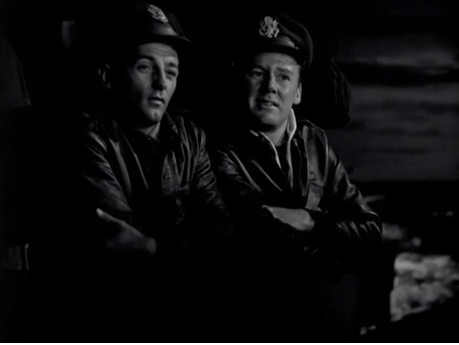
Robert Mitchum and Van Johnson share a most curious conversation lounging on the prow of the boat, staring off into the darkness. One can only imagine it is screenwriter Dalton Trumbo speaking — not in propaganda but humanity.

First, Johnson offers up how his mom had a Jap gardener once who seemed like a nice fellow. Mitchum says he doesn’t like ’em, but he doesn’t hate ’em either. They agree you get mixed up sometimes. Where are they going with this meandering interchange?

The answer: Trumbo’s brand of what might be most precisely termed “American progressivism.” Some rationale must be proposed for what is at hand and so he does his best. Though it foregoes demonizing the enemy, it takes an alternative path with the same conclusion. It’s the most rational progression. Drop a bomb on them or they’ll be dropping a bomb on Ellen or loved ones like her. It’s highly practical even as it remains problematic.

30 seconds over Tokyo 3.png

Still, the gears are turning. They have their final briefing with Doolittle and agree to meet in Chungking for the biggest party they’ve ever seen. In reality, the moment of truth really does feel like little more than thirty seconds. When they hit the mainland a flurry of Japanese Zeroes fly over, only to pass them by without notice, moving on with their normal patrol. It’s a lucky break.

They end up dropping their loads on the designated targets with efficiency. It’s the aftermath where things get a bit dicier, not so much due to the enemy but weather conditions. The Ruptured Duck is forced to bail out, sustaining injuries, and rescued by Chinese locals under bleak conditions.

Though poorly resourced and kept on the run by impending Japanese, the Chinese are held aloft as loyal Allies ready to aid in this joint cause against the Japanese. It becomes so intriguing how they become such sympathetic figures. Two close-ups come to mind. The Chinese characters are not kept at arm’s length. We are given a chance to study their faces. It’s maybe not a lot, but it’s something. The juxtaposition between the Chinese station versus the Japanese is made supremely obvious.

So while Thirty 30 Over Tokyo has understandably been lauded for a certain level of historical accuracy, there is still a necessity to parse through its stances as a cultural artifact. Like any film, it is a product of its times and a tribute to the minds behind it, whether Mervyn LeRoy or Dalton Trumbo. Each man no doubt had his own agenda, be it bugetary or ideological.

To that point, the picture is framed by a corny romantic crescendo that’s difficult to take seriously. Otherwise, it an intermittently rewarding portrait of a specific time in WWII history. It’s difficult to remake a movie such as this without losing some of its inherent credibility.

3.5/5 Stars

Dancing Lady (1933): Joan Crawford & Clark Gable

Screenshot 2020-03-27 at 84300 AM

You know the drill. In the throes of the Depression, the idle rich fritter their wealth away at such social events as striptease and then attend the ensuing night court until they get bored with the whole affair. Tod Newton (Franchot Tone) is one of their ilk, but he’s more engaged than others thanks to the pretty girl on the other side of the courtroom.

Down-on-her-luck Janie Barlow (an effulgent Joan Crawford) is a casualty of a police raid undertaken on the saucy dancing joint she’s been working at. Beyond being smitten, Tone (Crawford’s real-life husband for a time), is invested in helping give her a leg up, ulterior motives notwithstanding.

If it’s not obvious already, Dancing Lady has a premise to rival Warner Bros’ superlative successes with risque backstage, rags-to-riches musicals like 42nd Street. So, while the plot is nothing special, it somehow taps into Crawford’s innate sense of ambition as an actress.

There’s a feeling she’s not entirely acting a part; she’s driven to make it to the top. It’s this impetus that leads her to stick to “thousand-to-one-shots” over any man — even Park Avenue know-it-alls swimming in cash. She’s going to make it of her own accord. She’s going uptown toward the art world.

The script purposefully bears down on the vernacular to differentiate the patricians from the plebians and with it Janie’s attempts to make something of herself — first, through improved diction and then a newly cultivated wardrobe.

Without knowing it, she’s probably aspiring to the entertainment funded by such nincompoops as Mr. Bradley and his roly-poly walking gag of a son Junior. They are a father and son comic echo chamber if you will, and they also hold the purse strings for one of the industry’s latest productions.

It’s not altogether glamourous stuff but Patch Gallagher (Clark Gable) and his taskmaster-like regimen, turning chorus girls into a full-fledged production, is the “big time” for someone like Janie. The only problem is getting an audition. The head honcho has his right-hand man Steve (Ted Healy) run interference for him — it didn’t go so well for a wisecracking Eve Arden. Still, the “Dutchess” is an assiduous gal if there ever was one.

Director Robert Z Leonard is evidently enamored with his whip pans, but he does evoke pace rather well, especially when Crawford tries furiously to catch up with Gable as he streaks down the sidewalk. While it’s a cliched rom-com montage that would be recycled time-and-time again, it still stands out within the context of the film. The leads don’t speak a word to one another for several minutes at least.

In what feels like a non-sequitur, the Three Stooges make a lightning-quick cameo. Well, they actually show up twice, posing as stagehands. It’s true they feel completely at odds with Joan Crawford’s story arc, but it’s delightful to see them, even momentarily, as she continues her ascension. This is only to be surpassed by the appearance of Fred Astaire! (And I nearly forgot to mention Nelson Eddy, so there you go).

Tone continues to go to great lengths to win her affections, secretly bankrolling her star vehicle, dancing and dining her, and flaunting his swimming pools. When all else fails, he resorts to taking her to Cuba, conveniently far away from the other man in her life and the career she’s chosen.

The red-hot sparks are given a literal gymnasium to work themselves out in — positively buzzing between Crawford and Gable — as they get in their morning exercise to keep their svelte dancing figure and brawny physique respectively. It goes unspoken, but an unwritten rule of storytelling tips us off that antagonism usually denotes love. They have copious amounts ready-made to dish out at one another.

Unfortunately, by this point, the story gets less and less interesting by the minute as it continues to sink into the preconceived notions of the genre. In other words, what we suspect to be derivative proves itself to be precisely that. It speaks to the charisma of the stars who make the well-trod paces watchable, even engaging, and there are a few momentary delights around the fringes.

The final extravaganza is a not-too-veiled Busby Berkeley knockoff infatuated with beer. The surreal foray that follows offers up a luxuriant carousel of beauties and giant fan blades strapped with women — not to mention the surreal moment when a host of old maids go behind a curtain only to be dismantled to come out as gorgeous dancing ladies.

With Fred Astaire showcased prominently alongside Joan in a very fluffy ensemble, it felt strangely out of place. Astaire and Rogers had yet to be placed together and it’s true their trajectories could have been so much different. I don’t know a thimbleful about dancing, but at the very least, Crawford has an earnestness on taps. Though, she’s not quite Ginger Rogers either. No one ever said she was.

With Tone’s gigolo scorned and “The Duchess” going in to check on her dejected “Duke” after their stunning success, there’s a sense the working-class heroes are being reunited in a triumphant victory for all the blue-collar folks in the audience. In other words, it’s not just Depression-era pap, there’s this genuine element of wish fulfillment.

The movie is gracious enough to supply one last obligatory scene between Crawford and Gable for contemporary audiences. Because there are a lot of distractions (and some unique surprises like Astaire), but the romantic chemistry is present and delivered on a silver platter with the kiss that the whole movie’s been culminating to. Surprising, I know. What’s the axiom? Give the people what they want? Dancing Lady is case and point.

3.5/5 Stars

Our Dancing Daughters (1928): Joan Crawford Ascending

Our Dancing Daughters is an inflection point of silent film for the very fact it stands out for setting Joan Crawford up to be in incandescent star for generations to come. She calls upon her flapper talents and bouncy effervescence fully embodying the jazz age through the character of “Dangerous” Diana Medford.

Between glitzy wardrobing and the Charleston, she exerts herself as a first-rate girl about town. Because she, like everyone else of her age demographic, is out to have a good time, dance with boys, and partake of everything else youth affords. Although it is still a silent, the added benefit of a synchronized soundtrack imbues the party scenes with life to go along with Crawford’s infectious hoofing as the balloons fall all around them. 

Di’s doting friend Bea (Dorothy Sebastian) is having her own romantic tribulations, based on the searing baggage of a past love affair, now impinging on her present. Meanwhile, her greatest rival, Ann (Anita Page), a conniving opportunistic with a mother cut out of the same cloth, continues to jockey for the most advantageous romantic partner. Page is an unholy riot giving the part her all as the duplicitous gold digger who turns into a raucous and rebellious drunk. She more than holds her own as a foil and the film’s primary villain.

This is great, but we still have to contend with all the various trysts and dalliances taking place; what do they matter? All the talk of merrymaking and marrying rich gets kind of monotonous. The picture’s premise feels quite flat and it may be an added effect of antiquity.

Another complaint is how so many of the male co-stars blend together aside from John Mack Brown. They’re a generally innocuous bunch of ne’er do wells. Why are we supposed to be drawn to any of them? However, even as other elements feel staid and pat to go with the passage of time — the ending included — Crawford still manages to draw the eye. 

This prevailing curiosity feels genuine and not simply an academic appreciation from a historical distance. She engages when the movie doesn’t always manage to do so. It’s not merely about looks or fashion. These are only cursory traits. But can we all agree that those great big expressive of hers were made to be in movies?

Thank heavens we have Joan Crawford and her heroine to bolster Our Dancing Daughters. It begins with garnering a certain reputation. The charm drips off of her, or better yet, it flies, landing like pixie dust on all her beaus and the audiences out in the theater seats. Crawford as a persona is coming to the fore and becoming fully apparent. She might not be the proverbial Clara Bow “It Girl,” but there’s a similar infectious magnetism even sensuality to her, bursting off the screen.

Thus, when she catches the eye of a Mr. Blaine (Brown), an eligible, very rich, young bachelor, people take note; they snicker. Diana the Dangerous is at work. But for all her reputation, Di is really a very sympathetic, vulnerable girl. It’s like Hollywood (or maybe the entire country) had not yet been burdened with the cynical inclinations of the Great Depression.

They have yet to see utter destitution or debauchery a la Baby Face or Red-Headed Woman. In 1928, women in the movies still dream of the right man, they marry for love, and the heroic ones are bound to get their hearts broken. This is so crucial to Diana. She’s hardly as superficial as we would assume.

She falls more and more for Ben only for him to make a major faux pas by going for Annikins and her false showing of pious propriety. She’s anything but. Whereas Di’s totally out there and inherently honest. And what does it get her? Heartbreak. Because Crawford has youthful good intentions, open to being wounded, and she’s more than susceptible to it.

She begins her career on this surprisingly sympathetic note, heartbroken by a man, and forced to come to terms with it. But she plays it sincerely, where all the frivolity evaporates when it really matters, and when it begins to hurt the most. This is the key to the movie. It starts to mean something. We realize why we are watching. 

As her sceen life merged with her personal legacy, I’m not sure I always considered or ever imagined Joan Crawford to be a terribly sympathetic figure. She was larger-than-life, yes, but I rarely felt connected with her. At this early juncture in her career, she more than proved her mettle as a “good girl,” and when it’s done well, there’s nothing wrong with being good. In a world that’s unfair and harsh, it gives us stories fraught with genuine weight. There would still be time enough for Joan to grow scales. She was a resilient one to be sure. She had to be.

3.5/5 Stars

Goodbye Mr. Chips (1939): Championing Education

goodbye mr. chips 1.png

“Chips” of Brookfield School is a bit of a human institution. Now over 80 years of age and retired from his esteemed post at the school, he still is afforded a decent bit of celebrity. The years have not slowed down his wit nor the warmth behind his words. His full life has been a testament to both.

Thus, in his waning days, as he sneaks onto campus for convocation, against doctor’s orders, or takes a restful snooze in his parlor, there’s little sense of regret. The world around him is full of traditions and lineage. After all, Brookfield is a boys’ school with a certain classiness and pedigree. Reflected by the fact the professors dress in the garb we now only wear once in our scholastic career. They can be found in a cap and gown every day.

Likewise, the students are held to a certain standard of dress and expected to address their teachers in a manner customary in such environments. Still, the trilling voices of a boys’ choir hearken back to those days of yore when I was afforded the opportunity to enter such rapturous cathedrals as Canterbury, York Minster, and Lincoln. The impression they left on me is indisputable.

If we were to be critical, we might label it one of those stodgy, medieval institutions of a bygone era best forgotten in the contemporary world. Even Repton School, which served as a filming location, demonstrated long-ingrained toxic traditions of discrimination and bullying.

However, with all things, there is good to be gleaned and chaff better left on the threshing floor to be disposed of.  To be sure, the world depicted is open to such criticism, but if there is any form of antidote or satisfying counterargument it would be our unsung hero.

Because the disarming allure of this story is indebted to Mr. Chips (Robert Donat) and how he reflects all that is admirable about education. He singlehandedly removes it from a context we can never know first hand and makes platitudes and lessons universally understood. Progeny like Dead Poets Society are much the same. The time period does not matter so much as the message being preached.

The narrative succeeds in running the course of the years from his first day as a master at Brookfield up until his last, and this fluidity of time and space allows it to tell something as close to the scope of a real-life as is possible, within the time frame of two hours.

We come to realize Master Chippington was not beloved overnight. It was an arduous process full of failures and missteps. However, he does end up gaining the admiration of the boys in his stead, who were initially drawn to gags and partaking in their favorite blood sport — the undermining of their betters.

From the outset, as antiquated as these forms of British education are, we can immediately draw a bisecting line cutting straight through to the present. Because as long as there have been students and pupils, a war for supremacy has always been waged until the day where some form of mutual respect is settled upon. The struggle hasn’t changed so much as it’s evolved within new contexts.

In this age, it’s a world defined by caning for bad behavior and the promising glories of cricket cups, making all boys want to ditch their arithmetic and pointless studies for something of real substance – bragging rights out on the pitch.

Down the road, further still, he has a fresh mustache and years of experience under his belt. The boy he once consoled on the train years before is now a grown man returning to the stomping grounds of his youth; he is more an equal than a pupil. However, even someone as beloved as Chips is passed over for a promotion for housemaster. It’s the closest thing to an impediment in his career.

Gearing up for the second half, Goodbye Mr. Chips could very easily be a stuffy old drama under the watchful, if often moribund eye of Sam Wood. With leads so winsome and spry as Robert Donat and the ever effervescent Greer Garson, there’s little danger of such a grisly fate.

It’s true you only need one or two stellar pictures to have a career worth remembering for the ages. So it is with Donat. Despite being plagued by terminal asthma and dying fairly young, he stringed together several prominent roles, including Hitchcock’s 39 Steps, all but canonizing him as one of Britain’s finest leading men of the 1930s.

goodbye mr. chips 2.png

Meanwhile, Greer Garson still boasted a scintillating career ahead of her all through the 40s and 50s. The key to her enormous allure is on display front and center in Mr. Chips. She’s likable in any manner of speaking, gaining the immediate endearment of the audience, and never doing anything to alienate them thereafter.

But one is led to ask, in all of this vocational work in a boys’ school, where is one to happen upon Ms. Garson? The Alps, of course. What a lovely treat to have them both together propped up in the foggy mountainside sharing an amicable chat. There is still a certain propriety upheld when a man happens upon a woman. This is maintained and yet Katherine at the same time manages to be highly enlightened. Heaven forbid, she rides a new-fangled bicycle contraption in a dress (not side-saddle) and even holds aspirations to vote one day.

Regardless, she is a sanguine spirit who injects Chip’s vocation with a newfound idealism (even bestowing him with his apt nickname). She makes it exciting and heroic, breathing new life into his seemingly humdrum position, and it bleeds into the entire institution.

But first, there is the hesitant romance born while dancing the Waltz in Vienna. With Greer Garson in arm, any man would fly at the chance, and Chippington does his due diligence, dusting off his college dance moves. The marriage proposal in the wake of a departing train is the delightful capstone to the courtship. There are more joys to come.

The newly minted Mrs. Chippington brings the teachers’ room to a standstill with her utter radiance. In fact, it seems to happen just about any time she walks into a room or interacts with anyone. Garson leaves you glowing just being in her mere presence. They’re stupefied Chipping could have such good fortune, and yet they deeply deserve one another. She grants his life a newfound warmth and levity…

What a life it is — even in the cinema — where times at once so vibrant can be so unceremoniously quashed by adversity. It’s affecting in a very concrete manner. What’s even weightier is how time marches ever onward without much fanfare.

The indiscriminate carnage of WWI is felt within the halls of the school — it’s youthful ranks all but decimated by the bloodshed. One also recognizes Chips has witnessed so much. Generations, entire families, having passed under his tutelage. It is one of the wonders of education because I had the pleasure of having such a teacher in my life.

Being the youngest of three siblings, not everyone knows you as an entity connected with family. He might as well be our Mr. Chips, teaching at our high school for well nigh 50 years. The institutions of education have changed, but the merits of them have not. They become far more than facts and figures. They are a place to mature, cultivate character, and encourage individual thinking and fresh ideas to impact the world for the better.

Can we claim all of this is directly connected directly to education? I’m not sure, but I do know quality teachers have an immeasurable impact even as mediocre ones kill the same fertile grounds of knowledge. As the world changes, the need for excellent teachers is no less vital for the upkeep of our society at-large.

In his final hours, the frail Master Chippington is pitied for the lonely life he had. It’s true he lost loved ones. He beget no children of his own, and yet he peacefully asserts he engendered thousands of children. Because every lad from the ubiquitous Colley family (all portrayed by Terry Kilburn) and every other Tom, Dick, and Harry, whoever came through the halls of his school, was like a son. It’s not a mere sentiment. In his heart of hearts, he knows it. They do too. A life only has consequence based on how it is able to bless others. Mr. Chips understood this fact only too well.

What an amiable movie Goodbye Mr. Chips is championing pleasantness over any strain of abrasive negativity. It’s hardly fashionable, provocative, or radically cutting-edge. Then again, maybe a dose of chipper, idealistic entertainment goes against the grain in this often disillusioned world of ours. It has the power to melt your heart in the best possible way. In its place is left a warm smile.

4/5 Stars

Note: Goodbye Mr. Chips features a special dedication to producer Irving Thalberg who died suddenly in 1936. His impact on pictures such as this one cannot be understated.