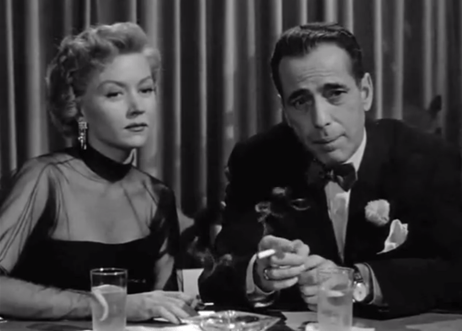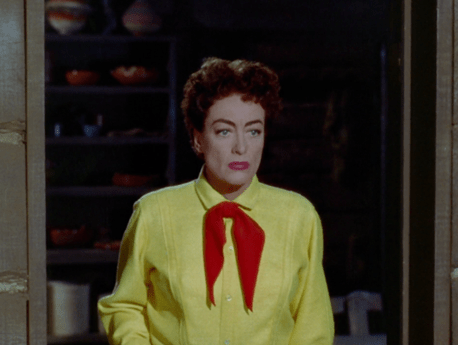
Bitter Victory (1957)

“He and you and I will become a part of history — of its futility” – Richard Burton as Jim Leith

Bitter Victory is a curious confluence of talents and material. Nicholas Ray was earmarked to helm this British war movie with French-American backing. Aside from the primary leads, the rest of the cast was purportedly decided by lottery.

The film’s aesthetic is somehow impeccably represented by the wide array of combat dummies shot in black in white accentuating the muted tones of a rational military drama. It’s instigated by a secret mission behind enemy lines in Benghazi. This is North Africa during WWII.

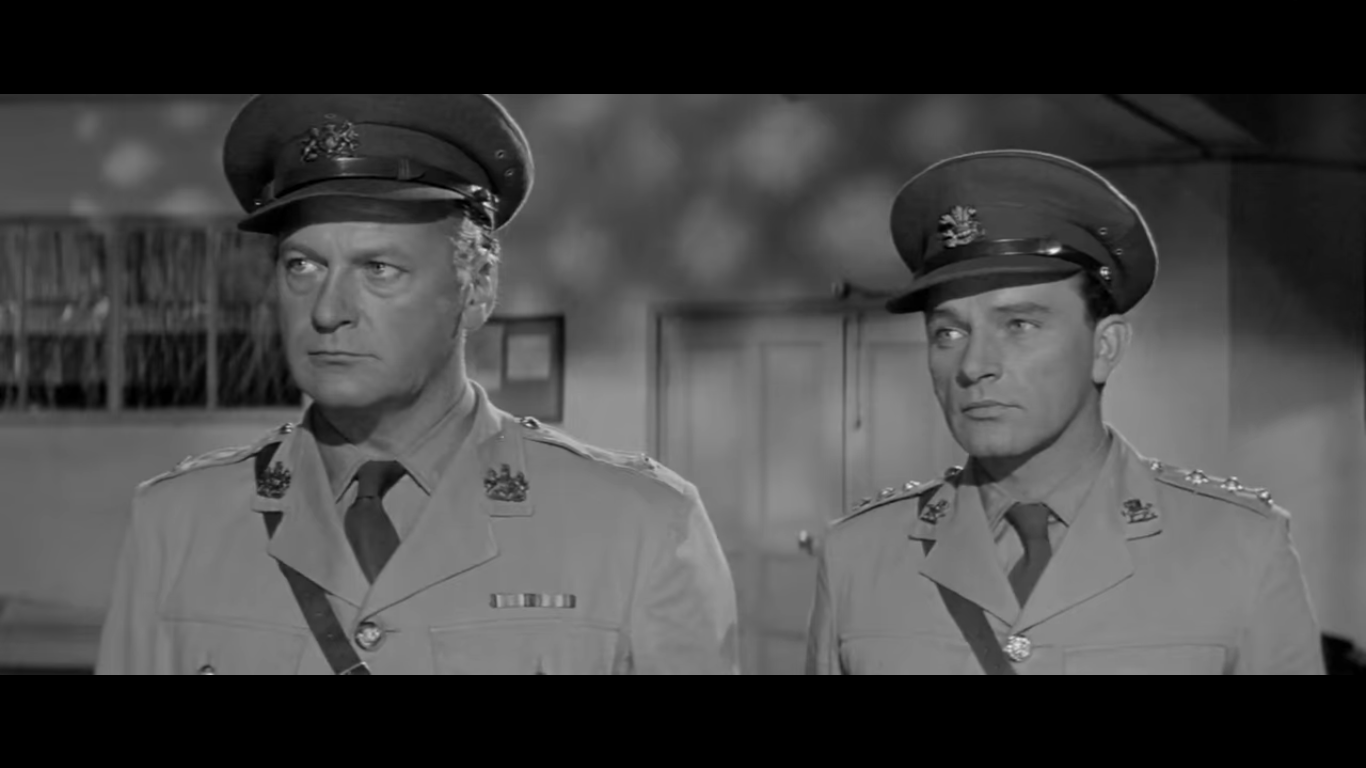
There are two men being considered to lead the excursion: A curt, lifelong soldier Major Brand (Curd Jurgens). He’s by the book and adamant no one see his weakness. Then, a young, handsome fellow named Captain Leigh (Richard Burton) with a certain no-nonsense perspicuity and a background in ancient artifacts, not the mechanisms of war. He’s volunteered to serve his country. Whatever that means.

There are some pleasantries, and they take off to the club for the enlisted, a momentary calm before the work at hand. Thrown into the narrative as we are, it becomes apparent these are characters with some kind of overlapping history in a broad sense, and we become aware of their subtext involving a woman (Ruth Roman).

At first, it isn’t so engaging. The soldier with the sound effects and pyrotechnics at the bar seems to do more with his inebriated histrionics than them. Still, Ray ends the mounting sequence with a kiss in a carriage. Except before we see it in full, the carriage whisks away in this brilliant bit of kinetic energy playing out on the screen.
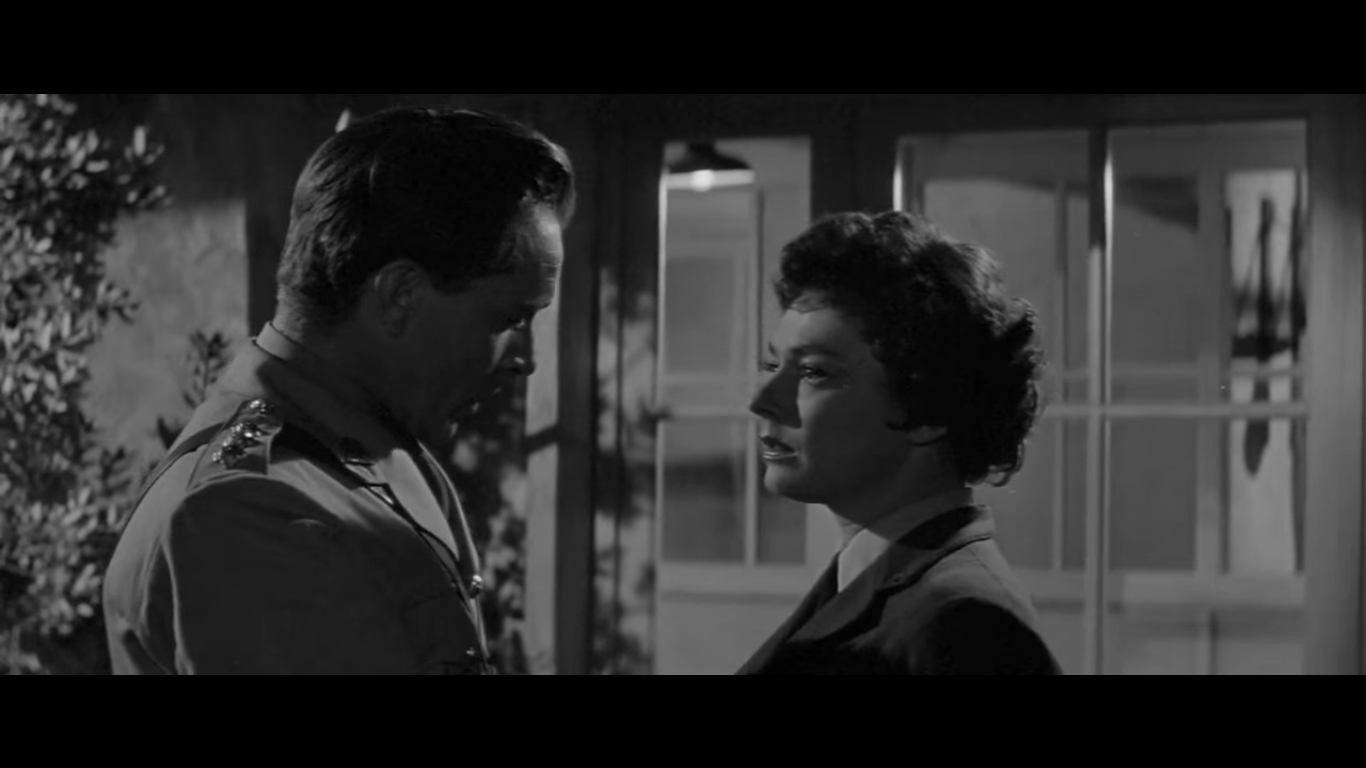
Roman is more mature and less delicate than we’ve ever seen her, partially thanks to the military garb but also due to the men she’s kept in her life. They’ve toughened her even as they grapple with romance.

It’s hardly a movie of jingoism as Burton represents a kind of jaundiced pessimism that would be his closest companion in The Spy Who Came in From The Cold as well. He’s hardly an adherent to wartime hero worship. And if Jurgens is beholden to the strictures of military protocol, he certainly doesn’t allow them to make him a joyful spirit. He’s constantly living life dictated by honor, fear, and his own inadequacies in command.

But we must remember there is a task at hand. They gather their company of recruits. Their plans are relayed through a model in a control room and curiously everyone seems to laugh off what might happen if their transportation a la humpback camel doesn’t make it to their rendezvous.

Soon they’ve become robed infiltrators cloaked by night loitering around the streets under Nazi occupation. Murder in the dark is silent though no less traumatic when it comes, even when it involves taking the life of an enemy in the line of duty.

These mission scenes have a clean and efficient luster, hardly dawdling when it comes to the action and as they disappear into the night and fight a skirmish over the sand dunes, it’s another perfect encapsulation of their clandestine task.

But the futility rushes back to Captain Leigh when it comes to the wounded. An enterprising soldier suggests getting a stretcher for a fallen comrade — but the pragmatist notes they would bleed to death in an hour — so the soldier goes down to offer a cigarette as a final consolation. He has an inherent human kindness and there’s something in Burton’s eyes as he watches. Is it regret or helplessness? Such decent showings of goodwill don’t come easily to him.

For some explicable reason, he stays behind as the others move forward. It might have been an order, but it might as well be to spite his superior. Whatever the reason, it’s hardly as baffling as Jurgens being cast as an Allied soldier. It feels like a gross mischaracterization no fault of his own.
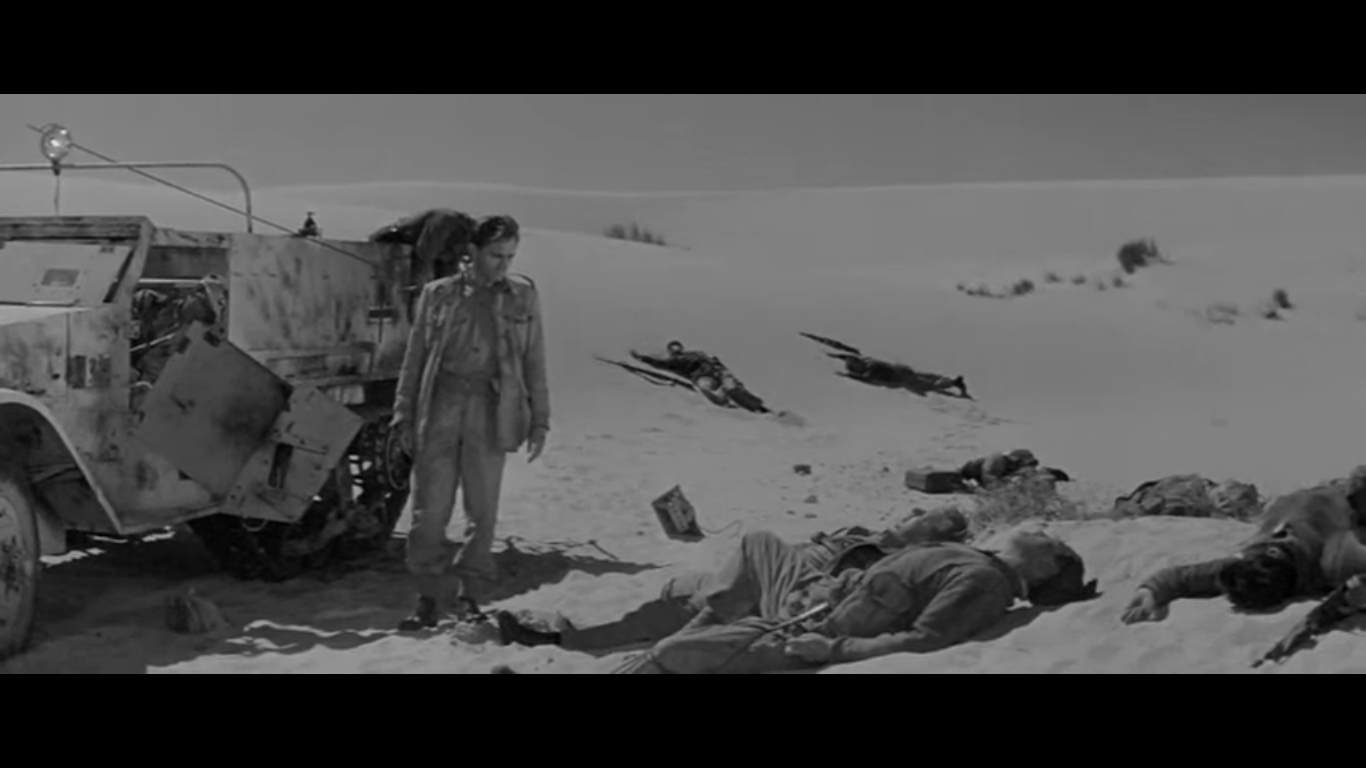
Bitter Victory does continue to tease out a version of the love triangle involving  David and Bathsheba where the man in the position of power is jealous for another man’s wife. Here the tables are turned. At the same time, the movie does feel like the antithesis of many “men on a mission” movies because it rarely feels bloated by pace, set pieces, and bits of narrative exposition and execution.

The character conflict becomes of greater interest than the actual task at hand. This is the movie’s wellspring because Burton and Jergens cultivate a mutual distaste throughout the entire movie. It continuously simmers and reaches the extremes of venomous vitriol. It’s more poisonous than the Germans, or even scorpions up a pant leg.

Burton bemusedly admits, “I kill the living and I save the dead,” and yet he still manages to scoff at his superior. “You have the Christian decency that forbids killing the dying man, but approves the work of a sharpshooter.” War so often seems to operate in baffling hypocrisies. It doesn’t make sense nor are the outcomes of war particularly equitable. They never have been.

When Roman clings to the arm of one of the barracks mannequins for support, her innate tenderness makes it feel like a totem for the man who didn’t come back. Again, it’s this dissonance of conflicting moods and emotions — what the military exonerates and exults in the service of duty and what the present company of soldiers standing by knows to be actually true.

The visual metaphor becomes even more overt when the same dummy is pinned with a medal. It comes to represent the core dilemma of the movie caught between duty, heroism, and the very manner in which we express and memorialize our sense of wartime. There are no easy answers. By the time Burton and Ray are done with us, they’ve blistered us to our core. You know a war picture has probably succeeded when it galls you and leaves you even momentarily disconsolate.

3.5/5 Stars
Run for Cover (1955)

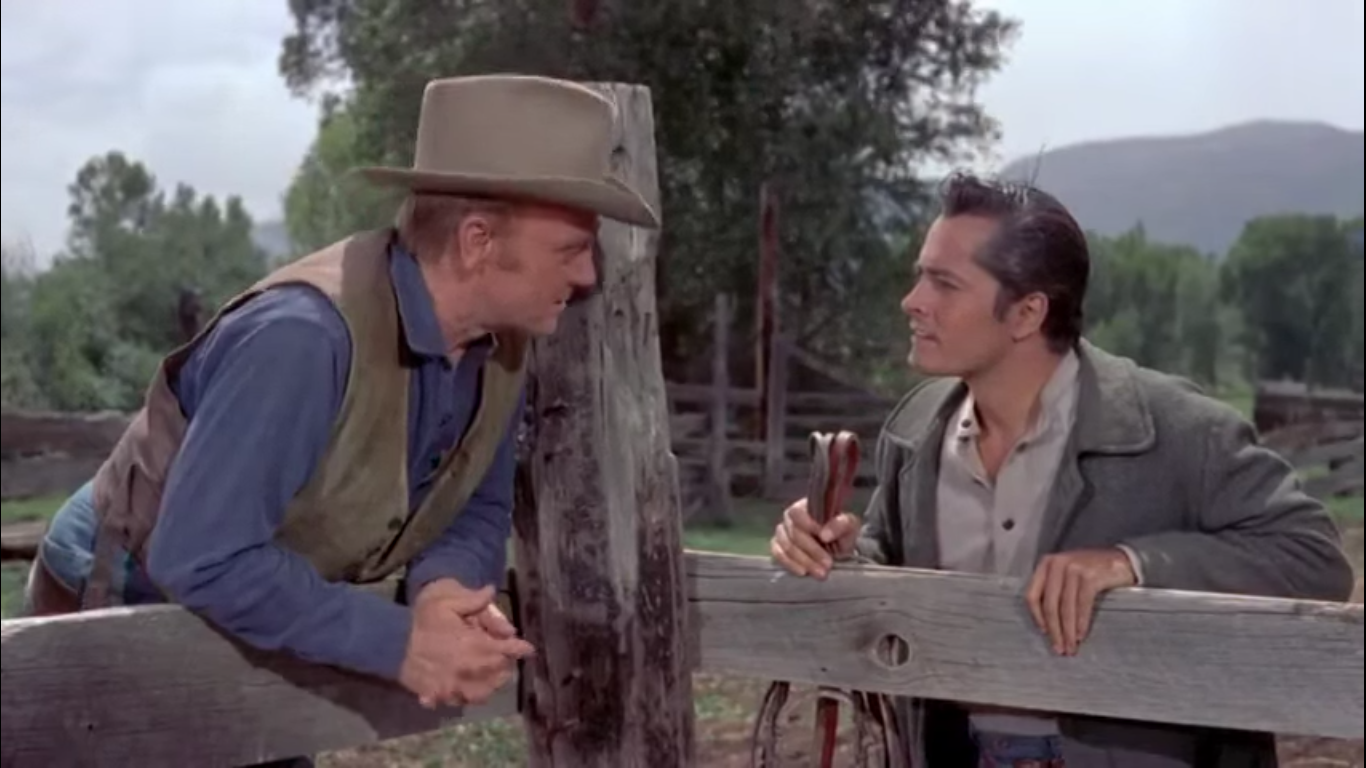
Run for Cover is rarely talked about in conversations of westerns, but there’s something fascinating about getting a James Cagney-led sagebrusher.  Like seeing Edward G. Robinson in The Violent Men, it’s hard not to read his entire history of gangster pictures into his backstory because although it’s a different decade, genre pictures still hold a place in the viewing public’s hearts.

Before they broke out with the likes of Hud, Harriet Frank Jr. and Irving Ravetch penned the story this movie was based on. Although it hardly has the pedigree of Nicholas Ray’s Johnny Guitar, the images of the picture are still stunning in their own right shot on location in Aztec, New Mexico.

The opening premise is frankly pretty corny. Cagney meets John Derek at a watering hole very conveniently. They ride on together with no apparent purpose except to get to the nearby town. Then, in a freak misunderstanding, while they’re shooting some scavengers out of the sky, the two men are mistaken for train robbers, and they have a bag full of cash literally dropped in their laps.

The locomotive heaps on the coal to race back to town to sound the alarm after their close scrape with the “outlaws.” Realizing what has happened, Cagney, always the level-headed one, looks to follow behind and return the money. They have nothing to hide. Still, there’s only one way this might end.

The mountains in the background are towering — truly awesome to look at — but there are more pressing matters at hand. It’s rather foreboding. It’s been some time between viewings, but there definitely are elements of The Ox-Bow Incident and Johnny Guitar here where the lynch-mob mentality takes over the local populations driven mostly by fear and traumatic experience.

However, this is all a false start, a way of developing the scenario ahead of us. It’s about that same man played by Cagney — now the town marshal — and his young companion who’s stricken with a life-altering injury. They must figure out what it means to live their lives.

Cagney rarely got a lot of late-period credit. There’s White Heat and then One, Two, Three comes to mind — these are marvelous showcases for his tenacious talents. Run for Cover is rarely talked about, whether it’s in the context of ’50s westerns, the career of Nicholas Ray, or that of Cagney himself.

But it does feel like another picture to buttress his legacy with. Not because it’s some grand masterpiece; he proves that he can make a slighter, quieter picture like this sing. Because his talents were not always purely bellicose or irascible. He has a more general charisma even later in his career.

He’s summed up so beautifully in a crucial scene. The doctor says Derek will never walk again. Cagney won’t hear of it, and he walks into the adjoining room as the boy lies on the floor crying out that he can’t get up. As their kindly Swedish benefactor (Viveca Lindfors) attends to him, Cagney simply beseeches him to “get up.”

There’s an authority in his words that feels almost Christ-like. It might seem like it comes out of a place of callousness, but really there is so much concern there. He doesn’t want the boy to give in and waste his life. In some manner, he is a miracle maker, a man of faith looking to bring the best out of this boy.

it’s a fairly slow-paced, straightforward western and this means much of the brunt of the movie must be carried by the merit of the performances — the relationships cultivated between them.

John Derek feels like little more than a pretty face, and the young actor might have said as much, but Cagney seems generous to him just as his character is generous to his young companion enlisting him as his deputy. He gives him credence and importance in this movie that he wouldn’t get otherwise without such a consummate professional to partner with.

There is some menace in the picture. Ernest Borgnine represents one — a shifty outlaw — and later some godless out-of-towners come tumbling into church mid “Christ The Lord is Risen Today” prepared to raid the bank.

What Run for Cover has to its advantage is how it turns all manner of dynamics on its head. The sheriff lambasts the townsfolk who are so righteous, so willing to condemn others, even as they are supposed to represent civilized society.

Then his one protégé becomes the film’s final and most crucial point of conflict, and this is not just like the Searchers, the ornery old man budding heads with the impetuous youth.

It’s a different kind of complication as they must face off against one another and come to terms with who they are down to their very core.  There’s a clear-cut emotional intensity that can only be resolved in one telling act. It’s tragedy and redemption all rolled up into one, and here we have something that feels distinctly of Nicholas Ray.

3.5/5 Stars

Born to Be Bad (1950)

“When you came here that first day, I fell flat on my face over your suitcase. I never really got up.” – Joan Leslie as Donna

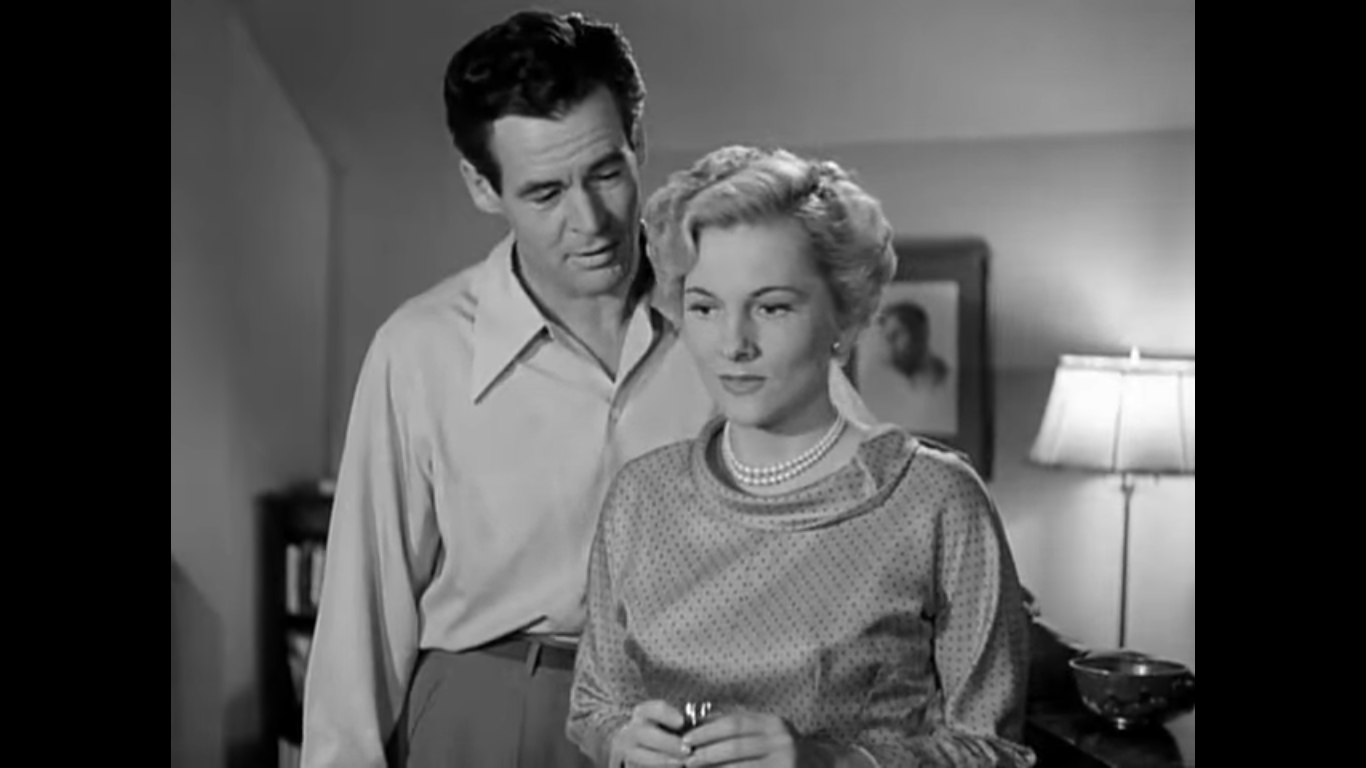
Born to Be Bad is not high-grade stuff. Its trashy exploitive title says as much, but it’s also worthwhile for exactly these reasons. Nicholas Ray would make a name for himself in Technicolor — not black and white — capturing a bevy of emotive performances from the likes of James Mason and James Dean. But it’s easy to forget some of his earlier films are equally stirring. Bogart in In a Lonely Place or Robert Ryan in On Dangerous Ground.

There’s something lighter, more convivial about the performances in Born to Be Bad, but straight down the line, it offers up a thoroughly intriguing cast. It has to do with how they can play off one another and couple up with various character dynamics forming between them.

We have a disorientating beginning because we don’t see Joan Fontaine, but someone who turns out to be Joan Leslie. She’s older now, mature, assured, and still more ebullient than I ever remembered her before in the early Warner Bros. days.

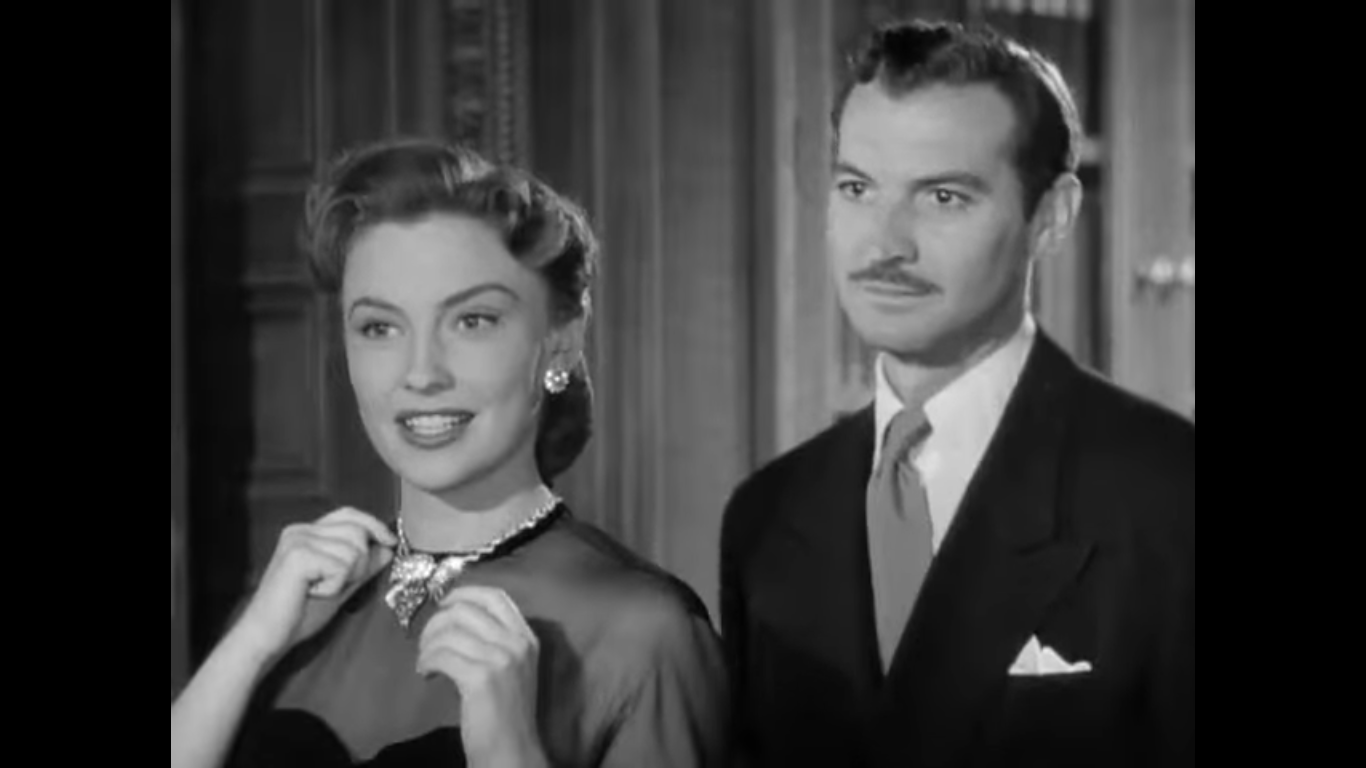
Within the context of the picture, she has reason to be. She’s deliriously happy, about to marry the love of her life, a rich moneybags (Zachary Scott), and yet she still finds time for a job and other wisecracking male companions. One’s a painter (Mel Ferrer), the other a purported novelist (Robert Ryan). There’s a happy-go-lucky familiarity to it all. We almost forget what the movie is meant to be about.

Then, Joan Leslie trips over a suitcase, her hair tossed violently askew, and she looks up to see the soft features of none other than Joan Fontaine perched on a couch. The unassuming beauty is her usual diffident self. However, this iteration of her screen image holds a manipulative underbelly.

As Cristabel ingratiates herself into Donna’s good graces and initiates designs on her man, it’s almost easy enough to dismiss her actions as first. She wheedles her way bit by bit until it’s more and more evident her ingenue from Rebecca or Suspicion has gone sour and self-serving.

Even when he’s partially a victim, Zachary Scott manages to give off a smarmy veneer. Robert Ryan has his own curious introduction, berating Cristabel when she’s on the phone, but it’s not a party line. He’s in the house and she wanders into the kitchen to see the stranger raiding the icebox. At first, she’s indignant. Then she starts to fall for his blunt charms.

Ryan would join forces again with Ray in On Dangerous Ground, and he seems like the kind of actor the director can use well. There’s a raw incisiveness to him that can function durably without sacrificing certain levels of emotional honesty. Because he has an unsparing frankness about him that one can either appreciate or become royally turned off by. Very rarely does Ryan elicit an apathetic response.

Fontaine does her part beautifully — her eyes constantly flittering around. In one particular conversation between Scott and Ferrer, she casually listens as she takes in the scene around her, just happy to be in such a place. She manages to be so helpful and so helpless getting everything she wants as a result.

Donna’s preparing to storm off to London, her relationship with Curtis torn asunder. Her pointed remarks to her rival have a delightful sting: “Somebody should have told the birds and the bees about you.” I don’t know what to make of it, but there’s something in Joan Leslie’s eyes when she’s been slighted that’s reminiscent of Marsha Hunt — a glint that Fontaine never owned. Leslie provides her a fine foil as we continue to explore a variation on the All About Eve dynamic.

Two exemplary shots of juxtaposition happen in adjacent scenes with Fontaine’s sparkling features framed on the chest of her man as she reposes there and, of course, there are two of them. She’s so good at flitting back and forth between two men. They both speak to her in different ways or rather, they both offer something unique that she can benefit from.

The jilted lovers, Leslie and Ryan, fall in together as friends and business associates if not romantic partners because there is something more in the works. Cristabel finally gets caught in her lies, though Born To Be Bad has a fairly lightweight ending. No one gets tragically wounded and everyone seems to laugh it off or get their wrist slapped. It’s not noir, nor is it effectively weighty, but it’s an intermittent pleasure to watch if you’re fond of the players. It more than lives up to its title.

3.5/5 Stars

Party Girl (1958): Sumptuous Visuals for a So-So Gangster Flick

party girl 1.png

Party Girl is yet another sumptuous Metrocolor feast from Nicholas Ray though the circumstances were admittedly less conducive for another masterpiece. In need of money, Ray took the job but instead getting his accustomed input on the script, he found himself being partnered with a producer he had no history with (Joe Pasternak) and two musical numbers he had little control over.

For someone like Ray, used to taking such middlebrow fare and making it inherently more interesting, the only plane he could really play on was the visual. So Party Girl is a minor success continuing his forays in expressionistic color schemes.

The film sets the scene in 1930s Chicago falling a few tiers under the Warner Bros. gangster flicks of the 30s or a hilarious homage like Some Like it Hot (1959). In this particular scenario, worldly-wise dancing girl Vicky Gaye (Cyd Charisse) is always ready to impart wisdom, and she’s too tough to get hurt by love.

While it can’t necessarily keep company with Ray’s most captivating works in terms of personified emotion or intensity, there are still elements to be thoroughly enjoyed. Cyd Charisse for one is as sultry as ever and if it weren’t for their almost abrupt nature, crammed into the story as they are, her two dance numbers do immense justice to her iconically svelte form. She’s still extraordinary.

Robert Taylor for another is compelling as a defender of criminals, capable of getting mobsters off the hook and willingly working for a big-time kingpin named Rico (Lee J. Cobb). Tommy Farrell’s major calling card is a debilitating limp that forces him to use a cane. But it never feels like a mere gimmick.

Ray consequently praised Taylor’s commitment to the role, gladly studying up on his part so he could convincingly play a cripple. The director even said the older man was on par with any of the Method adherents he had ever had the pleasure of working with. There you have commendation enough.

In trying to categorize Party Girl, you quickly realize it’s a bit of a disconcerting hybrid of a film. Some might say discombobulating more than anything, as it plays at the crossroads of different genres, not to mention different eras.

Taylor and Charisse were purportedly the final two contract players signed to MGM in 1958 and so more than anything, the picture was a justified excuse to put them to use before their contracts expired. But all things considered, their chemistry isn’t bad per se, and they both look lovely under the gaze of the camera.

Meanwhile, Lee J. Cobb is capable as a thinly-veiled Al Capone facsimile. He’s not uninteresting, but the part seems to have nothing surprising to boast. By the finale, the story has run its course and most of the air has left its sails. Aesthetically, the harsh colors somehow don’t play against onslaughts of gunfire the way black and white did in the days of yore.

Maybe unfairly it’s easy to criticize the film because it doesn’t quite stand up to the gangster flicks of old and yet, there’s no way to call it a full-fledged musical. But for any aficionados of the director or his starring players, they might be reason enough to revisit this minor cult favorite. Be assured, it’s by no means a cardboard, cookie cutter piece of work.

3/5 Stars

Bigger Than Life (1956): Nicholas Ray and George Mason Fit The Bill

bigger than life 1.png

James Mason gleaned the idea for Bigger Than Life from a contemporary article featured in The New Yorker by a medical writer named Berton Roueché. He detailed the side effects of the drug cortisone featured in real-life horror stories.

The title is certainly far from a misnomer and James Mason gives a performance to fill up the expanses of the screen bursting off it with furious abandon in all sorts of unwonted ways.

If my memory serves me correctly, there’s a shot at the entrance of the school where he’s being dropped off by his wife (Barbara Rush) who demurs that he’s always been 10 feet tall to her. The shot following has to be about the lowest angle conceivable with Mason positively towering over us until he walks forward and things become normalized.

It’s almost playful and still a disconcerting manipulation of the typical visual field. It’s indicative of much of the film. On the top layer, it’s the portrait of 1950s suburbia seen over and over again. There’s even an inadvertent connection to the quintessential nuclear family thanks to a pint-sized cameo from Jerry Mathers. But there’s also something pernicious gnawing away at our protagonist.

The film readily brings back the palette of Rebel Without a Cause we know and love, using the up-and-coming widescreen Cinemascope format, typifying the luscious productions of its era.

Ed Avery (James Mason) is a school teacher, one of those shining beacons of pedagogy and some things certainly have not changed. For such a noble profession, he can’t claim to be affluent. In fact, he’s moonlighting a couple nights a week in a cabbie service to make a bit more money. His wife Lou has a sneaking suspicion he might be cheating but how could he? He’s an utter angel.

His relationship with his best friend is borne in an introductory shot. Wally is played by none other than Walter Matthau. If that’s not enough, we meet him in a school corridor with a catcher’s mask strapped over his head and baseball gear filling up his hands. It’s a fairly slight part but as Matthau had a lengthy pedigree ahead of him, it’s a satisfying morsel to start.

Meanwhile, Barbara Rush gets few laurels as an actress, but she works handily as the loving spouse who Ed returns home to every evening. It feels strangely ironic because I almost unconsciously traced the line between Magnificent Obsession. It lies in their deep abiding roots in medical melodrama.  The first features Rush as a grown daughter and now she has progressed to a maternal figure, but the trauma remains constant.

bigger than life 3.png

Because, as it turns out, Avery is a fairly sick man with the clock ticking away on his life. Thank goodness there’s a miracle drug, “Cortisone,” which while still widely unknown has been used with some success on such cases as his. At first, the unassuming pills seem to be doing the trick.

Riding a generous streak, he takes his wife out to a dress shop to buy her the finest things and then gets his son a shiny new bicycle. James Mason is a riot in the store leaving his family speechless. He’s walking on cloud nine. Positively the picture of good health and yet every bit of heightened euphoria is a hint of something far more ruinous working underneath the surface.

Because the changes are no longer comical or imperceptible for that matter. It comes to tossing the football in the living room chiding his son’s lack of ability and resolve. There are unwarranted mood swings to follow and the broken shards of a mirror blatantly suggest what is to come.

Back to school night is highlighted by an uncharacteristic rant about the woes of childhood and the claptrap of modern education, which has parents in a huff. It’s the most recent sign of coming attractions. Megalomania begins to overtake him with ensuing ravings about new missions and leaving matrimonial shackles behind with increasingly radicalized rhetoric injected with delusions of grandeur.

Now his only resolve is to rear his son in the pursuit of self-efficacy as he begins to enact a dictatorial behavior over all his domain, berating a wayward milkman, turning an uninterested eye on food, sleep, feelings, or anything else that might get in his way. To get psychological, he blatantly disregards Maslow’s hierarchy of needs leaping straight to the pinnacle.

Meanwhile, his wife is scared stiff. Worried for her husband’s well-being as much as she is for her boy. And yet, if it gets around about mental trouble in the family, there will be no reprieve and so she tries to weather the storm. It becomes a suburban horror tiptoeing along an impossibly sickening tightrope. You couldn’t contrive something more calamitous if you tried.

Would you cope living with an utter tyrant if it meant your spouse and father could go on living? If pain was the only issue, then the answer seems ridiculously simple, but sometimes those conundrums are the most devastating to crack. In fact, it makes me sick in the stomach watching the mental breakdown exacerbate.

bigger than life 4.png

Overwhelmed by his psychosis, Ed begins spouting off scripture, one moment contemptuously, the next clearly intent on following Abraham’s lead by sacrificing his son without a second thought, twisting the words into another perverse commitment. He states his sentiments quite bluntly in one sequence as his wife hopelessly pleads in favor of compassion, “God was wrong.”

Turgid melodramas grow tiresome by the minute, and yet that fails to be the case when a film has far more to offer us whether it be artistry, irony, or social commentary. Equally compelling is a stirring dramatic situation at the core of Bigger Than Life.

Like the best films of Douglas Sirk, Nicholas Ray is able to pull off the histrionics of such a derided mode of filmmaking and allow it to remain enduringly interesting — even resonant today — to the extent possible. Far from wearing it thin, the passage of time makes it seem more horrifying by the hour.

However, as comes with the territory of such ludicrous dramaturgy, it easily becomes a hit or miss proposition. It will go too far for some and for others just far enough to make it compelling. I think I fall in the latter category because this is not just a sitcom episode. It surpasses those rhythms for something more substantial.

In its final moments, Bigger Than Life morphs into a frenzied Hitchcock thriller in a weird, insane way as we watch a banister snap like matchwood in the midst of chaos and a deranged man is caught in a frantic confrontation with his best friend.

And as inauspiciously as it began, it comes to an end like the lingering remnants of a bad dream, resolved and forgotten just as quickly. The status quo falls back into place in the culminating shot and wife and son reaffirm faith in their family unit, cradled in the loving arms of the man of the house.

James Mason is generally remembered as a suave villain, but he proves his merits equally so as a family man gone off the rails. His performance seamlessly hits all these beats that are simultaneously heightened, while still ringing with some note of inner truth. He is a tragic hero of the post-war, suburban age.

All of a sudden, evil comes not from within man himself but from outside stimuli. Though one could easily infer that such behavior indicates the perversity lying dormant, just waiting to be unleashed. It simply takes certain chemical triggers to send him hurtling back toward his darkest inclinations. Regardless, it’s a terrifying portrait of instability in technicolor. Often real-world nightmares are the worst of all.

4.5/5 Stars

The Lusty Men (1952): Nicholas Ray Transcends His Material Again

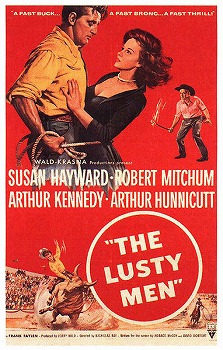
TheLustyMen7.jpgThe connotation of the film’s lurid title feels slightly deceptive. Because The Lusty Men might have basic elements of men who desire after women but it’s fairly restrained in this regard. At least more than I initially conceived. However, it is a film characterized by a zeal or a lust for life. The male protagonists are intent or were formerly driven in the pursuit of high living with all the benefit such a life affords.

We recognize this outright from a parade rolling down main street and then “The Wildest Show on Earth” that features the finest rodeo entertainment the world over. It’s high stakes and highly dangerous but also invariably lucrative. Many men are drawn to it greedily like moths to a flame.

Nicholas Ray sets up a high-octane environment of thrills that proves hardly as straightforward as one might imagine. Because the first man we meet is Jeff McCloud (Robert Mitchum), a lifelong rodeo man who, after his latest throw, has decided to take a break and leave the tantalizing life behind while he’s ahead. It’s a young man’s dream, but only the veterans live to make it a profession.

Coming from restless stock, he returns to his dilapidated childhood home now owned by an old homesteader (Burt Mustin) only to find the old tin can he buried two coins in when he was a kid. They’re still there and they’re also the only true assets he has to his name. Instantly we have a read on him. He has no possessions, a drifter, laconic in speech. You know the type and better yet you know exactly who he is with Robert Mitchum playing him — his true bread and butter.

He meets a pair of newlyweds, the Merritts, and manages to grab a job as a ranch hand. The husband Wes (Arthur Kennedy) is taken with the aura of the older man who has quite the reputation. For the time, Jeff takes it in stride.

It seems every film I see Susan Hayward in has managed to slip past me for a long time. But she fills the screen with an undoubted strength of her own. There’s something about her upper lip that I can’t quite put my finger on, but together with her near imperious gaze, you have a face capable of supreme expressiveness. She and McCloud both latched on to something. For her its a husband striving after what she wants. For him, its a man who can help him. It’s reciprocal.

This dynamic makes Kennedy’s character the most obvious and least interesting though, like Rancho Notorious, he’s meant to be playing a young man and manages to imbue the part with a cocky ebullience. He’s intent on a certain life and even if he seems a straight enough arrow, his way gets clouded by these aspirations.

We received glimpses early on, but The Lusty Men is also the most visceral and intensive rodeo movie I can recall. What follows is an ugly evolution in our characters; Wes most obviously. The distinction being, everything he is happens right before our eyes as he calls on the expertise of McCloud to help him conquer the rodeo circuit.

Everything Jeff exists as finds its origins outside of the frame, based on years and years as a rider with an unspoken history we can never completely comprehend. Mitchum carries the onus of time well, and it makes him continually intriguing.

We can’t quite get a line on him. He seems to go around as nice as you please. Maybe a fresh word or two but that’s just his personality (Hasta Luego. That’s Spanish for, “If the shower don’t work call McCloud”). There’s hardly an advance and yet you half expect him to be working a David & Bathsheba angle, except a battlefield has become a rodeo. He keeps the cards close until the last possible moment.

There’s a pool of weathered supporting players he reunites with including the broken but resolutely chipper Arthur Hunnicut, who maintains a taste for the rodeo even though he’s long since left the corral behind. Then, you have the likes of Al (Frank Faylen) and Rosemary, a match made in heaven, as they have all but resigned themselves to the life. It might as well be in their blood. The beauty is how their characters are almost contours but we want to know them more than we have the chance to.

Whenever you have a group of people who have bought into some sort of madness whether the stage, aviation, rodeo, or anything else, there is a near-insane amount of devotion put into the lifestyle. Look at Stage Door, Only Angels Have Ways, or West Side Story to see have a certain mentality easily pervades the world to create a collective consciousness of sorts.

This lifestyle becomes the status quo, and they have become so used to it and callous to the hardship, any trauma can hardly shake them out of it. Not unsurprisingly, such a dangerous profession comes with deadly repercussions. These hardships are what shake a person out of their reverie to decry the hazards at hand. It seems inconsequential to document them here because you can probably imagine them already.

With every person, it becomes a matter of weighing the pros and cons. There’s the choice of getting out of the cycle and ridding yourself of the dangers or otherwise willingly submitting yourself to the consequences.  Mitchum is such a curious individual because he seems to have made his peace and yet a woman he’s only pursuing half-heartedly leads him to take uncharacteristic risks.

But far from being regretful, in the end, he takes the tragedy thrust upon him with his usual coolness and casual indifference. Bitterness is not in his vocabulary, and he goes out just as he came into the film, aloof and yet somehow still showing a certain vulnerability. Because he allows affection to best him. There’s nothing shameful in that.

Rather than let the same lifestyle savage their souls, the Merritts get away too. Wes is shaken free of his bull-headedness, realizing in an instant there are far more important things than fast cash. What springs to mind are the care of a loving wife and the ability to grow old and gray together without the fear of constant peril.

The resolution is almost expected, but the actors shine as Nicholas Ray guides us through yet another outsider’s tale infused with authentic emotional longing. The film is constantly shifting between what we might easily call tropes or commonalities until it comes away with something different. It helps when you have three leading stars more than capable of playing the scenes with resonance, emoting when its called for and providing their characters with a greater tangibility.  Ray is one of those directors who continually manages to transcend his material.

The Lusty Men predates many similar films that spring to mind from Giant (1956) to The Misfits (1961) and even Hud (1963). Each one details a modern depiction of the West — having totally relinquished its glorious image and succumbed to real-world issues of aging, isolation, and decay. If you can believe it, The Lusty Men just might be the least ostentatious of them all, but it’s equally ripe for rediscovery.

4/5 Stars

5 Favorite Films of the 1950s: The B Sides

Just a day ago a whole slew of individuals shared their 5 Favorite Films of the 1950s for National Classic Movie Day. Thank you again to The Film & TV Cafe for spearheading that quality endeavor!

In retrospect, I realized all my choices were really “A Pictures,” which were difficult and yet at the same time fairly easy to choose. They were all no-brainer picks because I love them a great deal. Many others also chose the likes of Singin’ in The Rain, Roman Holiday, and Rear Window (for good reason, I might add).

However, the decisions that left me the most intrigued were, of course, the dark horses and the underappreciated gems. Certainly, you have to start somewhere when it comes to embarking on the classic movie journey, but half of the fun is unearthing treasures along the way. For instance, I was left charmed by the following picks, all wonderful films in their own right, that I would have never thought to choose:

People Will Talk, The Narrow Margin, The Earrings of Madame De…, It’s Always Fair WeatherThe Burmese Harp, and Night of the Demon, just to name a handful.

All of this to say, I was inspired by these folks to take on “Round 2” for my own edification. I’m going to leave my highly subjective list of “A Sides” behind for what I’ll term the “B Sides.” The only rule I’m going to place on myself is that this fresh set of picks must be what I deem to be “underrated movies.” Again, it’s a very subjective term, I know.

Regardless, here they are with only minor deliberation!

stars in my crown.png

Stars in My Crown (1950)

Jacques Tourneur is an unsung auteur and if all he had on his resume were Cat People (1942) and Out of The Past (1947), his would be quite the legacy. However, throughout the ’50s, he helmed a bevy of fabulous westerns and adventure pictures. I almost chose Wichita (1955), also starring Joel McCrea. In the end, this moving portrait of a frontier minister won out because it cultivates such a fine picture of how one is supposed to live in the midst of a bustling community of disparate individuals. This involves conflict, tension, tragedy, and ultimately, a great deal of human kindness.

the breaking point 1

The Breaking Point (1950)

Howard Hawks’s To Have and Have Not with Bogey and Bacall is probably more well-known but this version has merits of its own. Namely, a typically tenacious and compelling John Garfield playing a returning G.I. and family man trying to make a living in an unfeeling world. His wife portrayed by Phyllis Thaxter deserves a nod as well for her thoroughly honest effort. The movie gets bonus points for shooting in and around my old summer stomping grounds on Balboa Island.

bigger than life.png

Bigger Than Life (1956)

It does feel a bit like Nicholas Ray was the king of the 1950s. Rebel Without a Cause is the landmark thanks, in part, to James Dean. However, his best picture, on any given day, could be Johnny Guitar with Joan Crawford, On Dangerous Ground with Robert Ryan, or The Lusty Men with Robert Mitchum. Today I choose Bigger Than Life because James Mason gives, arguably, the performance of his career as a man turned maniacal by the effects of his new miracle drug, cortisone. It employs the same gorgeous Technicolor tones and Cinemascope Ray would become renowned for while also developing a truly terrifying portrait of 1950s suburbia.

ashesanddiamonds1

Ashes and Diamonds (1958)

I skipped James Dean’s most famous film, but never fear because in his place is a film featuring an actor who channeled the American icon’s angsty cool. In Andrzej Wajda’s Polish drama, set at the end of WWII, Zbigniew Cybulski embodies much of the same electric energy. His defining performance is central to a gripping tale about a country absolutely decimated by war, between German occupation and the ensuing columns of Russian soldiers arriving on their doorstep.

good morning.png

Good Morning (1959)

This might be my personal favorite of the Yasujiro Ozu’s films for its pure levity. The images are meticulously staged as per usual with glorious coloring. Every frame could easily be a painting. However, against this backdrop is a domestic story about two brothers who hope to wage a pouting war against their parents who won’t cave and buy them a TV like they want. The conceit is simple but the results are absolutely delightful.

Well, that just about wraps up my 5 supplemental picks…

Except I would be remiss if I didn’t share at least a handful of other outliers. Let me know what you think of the films I chose!

Honorable Mentions (in no particular order)

Review: In a Lonely Place (1950)

in a lonely place 1.png

Director Nicholas Ray customarily takes his material and subverts our expectations or better yet deconstructs the conventions that we often take for granted. But this is also matched with his penchant for showing a very raw and honest percolation of emotion. It causes every one of his movies to leave a perceptible toll on the audience because it’s difficult to have any other response. In a Lonely Place is another textbook example.

Here is a film with a murder plot which would normally be of primary concern. Instead, it ends up falling by the wayside to become nearly unimportant. It sounds almost callous to make such a claim since a life is at stake but then there is a bit of a detached quality permeating the picture.

A brooding Humphrey Bogart is at his most explosive as screenwriter Dixon Steele, a man with some talent, but a very odd way of exercising it. He’s an exasperating case for many in the industry, including his agent. Art Smith provides a wonderfully vivid performance as the agent nursing his ulcers while still faithfully standing by his client despite the turbulent nature of his temper. (Coincidentally Smith was featured in the earlier Dorothy B. Hughes adaptation Ride the Pink Horse).

It’s true “Dix” can be a tough man to figure out. Bogart may have played more appreciated, more iconic characters but there’s something especially raw about him here.

On top of Bogart’s performance, this is Nicholas Ray’s own examination of the Hollywood industry’s mechanisms, spitting out has-beens and flops as much as fame and fortune. There’s the continuous inner conflict between making a smash — the kind of trashy stuff that sells — and then trying to create something of worth on the spectrum of art.

If we had to draw up thematically similar films, All About Eve is a more flamboyant choice and Sunset Blvd. boasts the cynical edge but In a Lonely Place probably deserves to keep the same company with these noted classics from 1950 as a film of truly morose sentiments. It’s not simply cutting through the artifice of Hollywood. It’s trying to provide a deeper study of the people who are cogs of the industry.

After a precocious hat check girl (Martha Stewart) is found murdered it sets off an investigation by the police force. As Steele had requested the girl come over to his home to give him the plot summary of the low brow novel he is meant to adapt, just hours before her demise, he is placed on the top of the lists of suspects.

Conveniently, his neighbor across the courtyard, a bit part actress (Gloria Grahame at her most aloof and restrained), who he hardly knows, is brought in and vouches she saw him and it’s not a lie. He really was at home and he did not commit the crime.

If we wanted to, we could leave the story right there but that’s not all the film is working away at. It unravels in other ways too. In another world, this almost voyeuristic setting could have been made for Rear Window (1954) but this is not that film either.

Frank Lovejoy is the average cop with a thoughtful wife (Ms. Jeff Donnell) — a genuinely nice guy who knows “Dix” from back in their war days. He takes orders but he also has an inherent confidence in Steele as a human being. At any rate, he wouldn’t be prone to killing girls and so Brub helps to humanize this man in the eyes of the audience.

And yet there are still some troubling caveats on Dixon Steele. He owns a history of violent outbreaks but it goes beyond this. There’s a raging darkness that is part of his makeup as a character. He is tortured by hatred and by his own accompanying desolation. We can chalk it up to a number of things. His own personality. His lack of consistency. The often cruel industry that became his livelihood. It could be any number of these things or all of them.

In fact, for a film noir, the outcomes prove to be unique. It has murder but we never see it. There’s an actress who played countless femme fatales playing a slightly different iteration here. Even Bogart, though carrying a simmering temper that goes off on several occasions, is generally not a hardboiled heavy. Just a tormented screenwriter with demons to exorcize.

Beating up a college kid doesn’t go with the glorified and gritty brutality that might crop up in a Maltese Falcon (1941) or The Big Sleep (1946). It’s just callous barbarity in the normal world. Throwing phones or beating up friends in public is not normal behavior. There’s no other conventional excuse for it.

But this is Dixon Steele for you. He’s just a troubled man. Not an archetypal noir antihero. As much as we fear for the people in his stead, there’s also a mild pity reserved for him. He shows himself capable of love. He simply proves to be very ill-equipped for the endeavor.

The layers go deeper still and more personal as Gloria Grahame’s marriage with director Nicholas Ray was splintering and was finally absolved quietly during filming.

Beyond that, you get the sense, Bogart who financed the picture is playing someone, not unlike himself. Perhaps it’s the closest he ever got. Like the film, he found love in a woman, Lauren Bacall, many years his junior who nevertheless made him very happy. Sure Bogey was a success but it took him a long time to get to the top of the summit. He was a hard-drinker with a notoriously white-hot temper to match. Still, he was a romantic and an idealist in such a way we sympathize with. He’s ardently beloved today as he was in his heyday.

The contents of the story take on an entirely new spectrum of meaning with this personal context. In a Lonely Place wasn’t just an examination of Hollywood and the lives of people who could be real. In a Lonely Place feels far more transparent. It is Hollywood and these are the very people who find themselves caught up in its disillusioning grip.

Loneliness is there’s to have and to hold. They don’t need the prototypical genre conventions of graft and crime — the brand we conveniently label as film noir. There’s really little need for the more darkly cinematic overtones. They have themselves. That’s dismal enough already.

4.5/5 Stars

“I was born when she kissed me. I died when she left me. I lived a few weeks while she loved me.”

Johnny Guitar (1954)

johnny guitar 1.png

“I’m a stranger here myself.” ~ Sterling Hayden as Johnny Guitar

In watching even only a handful of Nicholas Ray films, it’s possible to discern fairly quickly that his films are often about the marginalized outsiders. Rebel Without a Cause (1955) is the most iconic example but this theme goes a lot further than that single movies. He even plays with the same ideas in Johnny Guitar his extraordinarily distinctive western from 1954.

There are other westerns that open like this. A stranger (Sterling Hayden) riding through the mountains and making his way to the nearest town. He overlooks a stagecoach robbery going down and miners blasting away at a mountain with dynamite. There must be a purpose to it all but the significance fails to resonate quite yet.

He goes to the local watering hole: Vienna’s. Except there’s no one there. It’s a ghost town. There are only a few solitary figures working the roulette wheels and the bar. No one else. But still, the stranger walks in as if he’s meant to be there. We don’t know why yet.

By all accounts, Sterling Hayden wasn’t much a cowboy but he had the presence of one. In the movies sometimes that’s enough. Here’s the eponymous Johnny Guitar, the man with his instrument strapped to his shoulder with little stake in the local goings-on.

Namely, the grudge match brewing between the hotel’s fierce proprietress Vienna (the always cutthroat Joan Crawford) and fiery western lass Emma Small (Mercedes McCambridge) who packs a whole posse of cattlemen including ornery John McIvers (the venerable Ward Bond). It doesn’t help matters that Vienna opens her doors to the despised Dancin’ Kid (Scott Brady) and his cronies.

We, like Johnny, have no particular stake in their quarrel though there is a sense of some past grievances. In fact, everyone seems to have a history but we are hardly ever given a nibble, never through flashback and rarely in exposition.

Nicholas Ray creates a gorgeous world in color that showcases some of the most attractive imagery of the West in Classic Hollywood on par with The Searchers (1956) and Rio Bravo (1959). And it boasts an equally colorful array of characters including quality supporting cast members like Bond, Ben Cooper, Ernest Borgnine, Royal Dano, John Carradine, Frank Ferguson, and Paul Fix.

But the subversion of all norms begins with Joan Crawford, the woman who loves the sound of the roulette wheels spinning, ever severe, packing a six-shooter in her blue jeans. While the TruColor does much to enhance not only the scenery but her performance as her piercing eyes burn through everyone she stares down. Johhny Guitar might be in our title but Vienna is our undisputed star.

The relish of the film is perfectly rendered by the complete lack of clarity initially. It’s trying to get a line on everyone in an attempt to understand what’s going on as their allegiances are made fairly evident. It’s a matter of picking a side. But the sides are incredibly difficult to decipher. In fact, even in her moments of complete innocence, it helps her character that Crawford very rarely comes off as a sympathetic person — in reality or on the screen. So if she’s our protagonist then we’re in for a tough outing.

Of course, the feud that’s central to the tale was also twofold unraveling on both sides of the camera. Mercedes McCambridge and Joan Crawford loathed each other to put it lightly. They probably wanted to tear each other’s hair out and while not the most benevolent of relationships, it undoubtedly stoked the fires of the film’s drama. In fact, it seems like there weren’t many people who did like working with Crawford. Hayden never wanted to be in another picture with her again either. Still, once more, it all functions in front of the camera exquisitely.

There’s certainly some truth in drawing up parallels with George Stevens’ Shane (1953) but the moral lines are a lot more jumbled and the intentions of the plot far less direct. Shane is a success because it’s a fine piece of classical storytelling still underlined with an imminent threat. Johnny Guitar is beguiling because it breaks with all the conventions of the West while still carrying its own amount of subtext that’s hard to figure.

Should we even care that the posse gets these men? But you see, that’s nearly beside the point. It’s not about right or wrong but this muddled center controlled by Joan Crawford and Sterling Hayden. The man and the woman with a bit of a past but not enough that they will fall into each other’s arms and live a faithful life at one another’s side. That’s just not in their nature. Still, riding the fence proves to be a taxing ordeal.

We witness the most peculiar bank robbery as far back as I can remember committed by the local outlaws who until they ran off with the loot hadn’t exactly done anything wrong, in spite of being despised by a whole town. In other words, they played the roles expected of them. Then, a pair of hangings takes place but instead of your typical unrepentant criminals being strung up, you have a kid and a woman both ending up with a rope around their necks. The enforcers’ stomachs begin to churn uneasily. This isn’t how mob justice is supposed to work.

Subsequently, the battle to subdue the frontier is brought home with the most unconventional showdown in the western canon that’s fundamentally also one of the most stunning. It blows up in your face and then leaves you questioning this entire ordeal.

Peggy Lee’s title track is used to sing them out as one final note in this dazzling western courtesy of Nicholas Ray; dazzling for the very reason that it does everything contrary to what we have learned. It continually makes a conscious choice to upend the accepted script attached to the mythology of the West, rewriting its own narrative full of vivid imagery and equally blistering outcomes.

4.5/5 Stars

On Dangerous Ground (1951)

on-dangerous-ground-1Father hear my prayer. Forgive him as you have forgiven all your children who have sinned. Don’t turn your face from him. Bring him, at last, to rest in your peace which he could never have found here. ~ Ida Lupino as Mary Malden

On Dangerous Ground is essentially a throwaway plot about nothing but Nicholas Ray turns it into to something — something about everything that is universal and even transcendent about film. Bernard Herrmann’s score draws the audience in with a killer hook as he did for many of Hitchcock’s most iconic films later in the decade.

There are cop killers on the loose and the force is on high alert. The particular cops that we have the benefit of following get the honor of scrounging around every dive bar and crummy joint in town where the scum of the earth dwell at all hours.

It’s in these opening vignettes that we are introduced to the seedy underbelly of the urban wasteland. It’s no good but there are innumerable interesting characters and they’re not all bad. There’s Doc at the drugstore ready to fix ailments while also being handy for a sundae. Streetcorner newsmen are ready with a tip in a pinch almost on cue.

Still, Jim Wilson (R0bert Ryan) is all out of sorts — restless and prone to aggressive outbreaks. He’s not sparing the rod when it comes to apprehending criminals and questioning riff raff. And the very fact that Robert Ryan almost always has a nondescript expression on his face make his more heated outbursts unnerving. It’s enough of an issue that the police chief (Ed Begley) has to get on him. His partners warn him too, namely, the veteran Pop who has his share of ailments while still finding some time to wax philosophical about life.

Soon, enough is enough and Wilson is transferred to a case out in the country tracking down the culprit in the murder of a young girl. And in these moments On Dangerous Ground becomes all too real. He’s actually on thin ice if you want to get really technical, in both the figurative and literal sense. The vengeful patriarch (Ward Bond) is out for blood, waving around his shotgun just waiting to fill someone full of lead. And as it happens, the story becomes a snowcapped manhunt out in the country with Nicholas Ray developing a second distinct world in stark juxtaposition with the first.

If you wait for Ida Lupino’s entrance you will not be disappointed because it is a fabulous one indeed. She and Robert Ryan do make a heady combination as the film devolves into an extraordinary sensitive picture. Ray’s use of closeups near the end is remarkable in creating an immense intimacy between his protagonists. It leads to the question, can a film about police brutality also be about a policeman’s loneliness? In this case, the answer is yes. Because it seems like a great deal of the people within this story are in a similar state. There are frightened youths as well as alienated and isolated individuals who do not know how exactly to deal with other humans. But thankfully we can all learn.

On Dangerous Ground isn’t so much a cynical film as it is melancholy and so, far from seeing its ending as a cop-out, it actually feels like an extension of what Ray was doing all along. It’s this passionate almost spiritual escape from the world at large as reflected in the setting and ultimate outcome. The cop starts to untangle the mess of his life and begins to settle on a firmer foundation. His story need not end in the bowels of darkness. A holiday in the country is still attainable for him.

4/5 Stars