The Empire Strikes Back (1980)

SW_-_Empire_Strikes_BackGrowing up, Star Wars was my life. I lived, ate, slept, and dreamt Star Wars. But notably, Empire Strikes Back was always my least favorite film in the original trilogy. In truth, it scared me because it showed a different side to this galaxy. It seemed to be ignoring the unwritten rule that good should and will always prevail over evil.

Now I know better than that. Every great film trilogy needs that moment where it delves into the darkness and scours the depths of despair. it’s in these moments that characters become solidified, pun intended, and we truly begin to care for them on a deeper level.

Because Empire Strikes Back is certainly a film about darkness; that’s part of the reason why I shied away from it growing up. But such evil always seems to reveal the polarities of nature.  To balance out the dark side there must be light. Heroics, sacrifice, and friendship come to the forefront because baseness calls for such a response from our protagonists.

Another reason I was not always a fan of Episode IV was rather shallow, I admit. Planets like Hoth, Dagobah, and even Bespin were just not as thrilling as Tatooine and Endor for some reason. That still holds true to some extent, but now the first issue I touched on takes greater precedent.

It’s in this story where the Rebels are struggling to survive, fleeing Hoth desperately from an Imperial garrison that seems largely regrouped and unfettered by the destruction of the Death Star. All seems bleak and hopeless once more. Things begin with Luke being kidnapped and dragged off to a Wampa lair. He almost gets crushed by an incoming AT-AT as his buddies get fried, and finally, he crashes his X-Wing into a swamp searching for a Jedi Master who is little more than a green muppet. It’s not much of a hero’s journey, or more precisely it’s a journey full of pitfalls and failures.

Meanwhile, sparks are flying between Han and Leia, not because of their chemistry, but their complete lack of any chemistry. He’s a scoundrel and she’s an aloof princess hardly enamored with his show of bravado. After all, he pilots a heap of junk and walks around with a furry walking carpet prone to fits of rage. C3P0 is at best comical every now and again when he’s not overly annoying. R2D2 is a spunky dynamo like always.  These hardly seem like complimentary words, and it’s hardly thoughtful commentary, but it sets the stage for brilliance.

The plot is contrived just as Vader contrives to lead Luke right into his trap. On both accounts, it works to perfection. Bespin becomes the perfect place for some major truth-bombs. The most obvious one pertaining to a certain person’s father. But we also see the evolution of Han and Leia’s relationship. We see the true camaraderie between Han and Chewie, and the real nature of Lando, another scoundrel with a heart of gold, much like his buddy Han. Finally, we find out that Leia has extraordinary powers of her own.

On a purely cinematic level, The Empire Strikes Back introduces us to our first real lightsaber battle we ever got and it never disappoints. True, Vader and Obi-Wan faced off, but that was more symbolic in nature. The bout between Luke and Vader was the next step, necessary for this story to progress. Luke has fallen and failed this time as the power of the dark side is too strong for him, but this is only the beginning. Any great trilogy must enter into the darkness certainly, but there’s also an ending to the story. Completely different than what came before. In this case, the Jedi will return prepared to bring order to the galaxy as it is meant to be.

Thus, I wasn’t completely against The Empire Strikes Back as a kid, because I knew it wasn’t the end of the story. We leave our characters on a hopeful note as they survey the vast galaxy in front of them. It’s far from being redeemed, but it’s also not too far gone. This is a space western for the ages with dramatic storytelling, twists, and turns worthy of one of the great series of our generation. Let’s just take another moment to salute John Williams too. Without him, Star Wars is far less. He makes this world of George Lucas come alive.

5/5 Stars

Hold Back the Dawn (1941)

holdbackthedawn boyer de havilland 5Hold Back the Dawn was written by the winning combination of Billy Wilder and Charles Brackett, but the director was actually Mitchell Leisen. That was the last time Wilder would let someone else take hold of his work. It’s actually rather meta, a film within a film. We see our director and a film being made (Complete with Veronica Lake), but that is only a pretense for this story to be told.

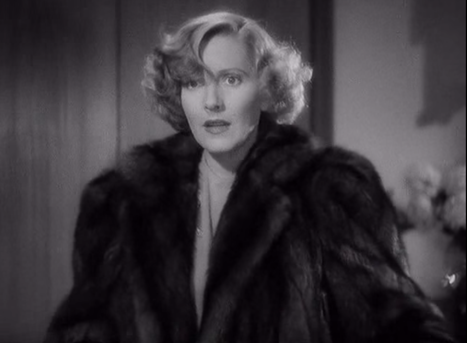
Georges Iscoveu (Charles Boyer) wanders into the studio hoping to tell his story to somebody who might help him. The tale goes something like this. Much like many other hopeful emigrants, he heads to Mexico in an attempt to try and get into the states, but he’s told that he’ll have to wait and so Iscoveu holes up at the Esperanza Hotel with all the other masses. Time passes and he is getting nowhere fast, but he does bump into an old partner in crime named Anita (Paulette Goddard). Undoubtedly using her feminine charms, she wrangled herself a husband in order to secure herself citizenship. Then she swiftly got a divorce to close the deal. She’s a real peach and she plants the idea in Georges because he is desperate after all.

The gears are turning and he sets his sights on the pretty young schoolteacher, who is in Mexico with some of her students. Their car is in the shop, and after swiping a sprocket, Georges goes into action.

With soaring rhetoric, he wins Miss Emmy Brown over and he puts a ring on it, a borrowed ring from Anita to be exact. He’s a real cad, but it is a Charles Boyer leading man.

To her credit, Olivia De Havilland plays this ingenue and small-town teacher with bright eyes and idealism. We cannot help but feel for her because this is a woman who is swept off her feet and she exhibits true affection. She’s naive, but as Georges acknowledges, she’s swell. Anita has plans for them to meet up once the marriage is terminated because she thinks that she and Georges can run in the same circles once more. But all the time he has spent with Emmy has not left him unchanged. Car rides and travels through Mexico becomes intimate and sweet. So somewhere there is a turning point in the psyche of Iscoveu. It no longer becomes a con game with Anita, but a true romance with Emmy.

However, the trouble comes when the inspector named Hammock (Walter Abel) comes sniffing around because the marriage of Emmy and Georges seems obviously fishy to him. But Ms. Brown does the noble thing and defends Georges not out of ignorance, but charity. She knows she was living a dream and is about to go back to reality, making the drive back to her home in Azusa, California.

Georgholdbackthedawn6es has what he had initially set out to get, but the story cannot be over. When he hears of a deadly car accident, he rushes across the border without heed of the law so that he can be with the love of his life. It’s a gushy conclusion that looks like it might end badly. After all, Iscoveu broke some major laws, but Hammock gives him some grace showing he’s a softy at heart. Even Anita gets what she’s always wanted.

The film is a treat because we not only get an A-grade performance from De Havilland, there’s a conniving Paulette Goddard, and even a brief cameo by everybody’s favorite Peekaboo girl Veronica Lake. Curt Bois (the pickpocket from Casablanca) also makes a spirited performance in one of the minor plots.

Hold Back the Dawn certainly begs the question whether Wilder’s own experiences are infused into this story since he often told anecdotes about his emigration into the U.S. which ultimately led him to success in Hollywood. Also, this film suggests that Mitchell Leisen is not so much a great director or a maker of masterpieces, but he is in his element with romances. However, I wonder if part of his success was having the likes of Billy Wilder and Preston Sturges writing scripts for some of his most prominent films (including Easy Living, Midnight, and Remember the Night).

4/5 Stars

Me & Earl and the Dying Girl: Depth and Dying (2015)

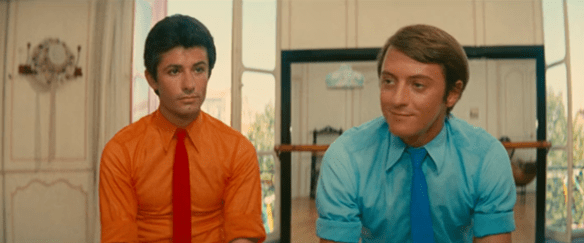
meandearlandthedyinggirl1What struck me about Me & Earl this time around was not just the cinematic homage or the quirky indieness, but the fluid movement of the camera matched with the ever-evolving score of Brian Eno. It made me appreciate this film yet again because some people might say it’s weighed down by over-trod tropes, but it leaves those in the dust. Others might criticize it for playing up to all the cinephiles out there in order to garner respect. Which might be true.

But in essence, this film resonates on such a greater level. All the side characters are fun and interesting and I’m sure all the various parodies will open the floodgates for some enthusiastic young moviegoers to discover film’s roots. Those are all wonderful perks of this story. And yet again, Greg Gaines feels so relatable it’s almost scary at times. He’s so insecure on so many levels, drifting in and out of the school corridors, awkward around dying girls, and awkward around girls in general. Most of this I pointed to already in my initial review.

However, it’s the work of director Alfonso Gomez-Rejon along with cinematographer Chung-hoon Chung that contribute an added layer of depth to this film. The gracefully spiraling camera is at times reminiscent of Ophuls ascending a staircase. There are perfectly symmetrical shots popping with colors that Wes Anderson would most certainly approve of. But like the great minimalists out there, the camera is still when necessary. In poignant moments when Greg and Rachael have real, heartfelt, even hurtful conversations, there’s no need for flashiness. It’s in these moments where those behind the camera prove their skill because we can see them having fun with their artistic vision, but we also notice the great deal of care they have for these characters.

meandearl2It never feels flashy or superficial in these crucial moments. Any slick plot device or cinematic allusion falls away to get at the heart and soul of this film. It’s about coping with death and finding closure in that terrible event in life. Specifically for this one young man, but it is universally applicable to most every one of us. Especially when you’re young because as young, naive individuals, death can feel like such a foreign adversary. It’s so far removed from our sensibilities, and that’s what makes it so painfully unnatural when it strikes. In many ways, Greg is our surrogate. For all those who struggled to find themselves in high school, or college, or even life in general. And for all of those, who took risks on friendship in a world full of death and dying. Once more Me & Earl and the Dying Girl proved its worth, not by being a perfect film, but by being a heartfelt one.

4.5/5 Stars

Review: Sullivan’s Travels (1941)

Veronica_Lake_and_Joel_McCrea_in_Sullivan's_TravelsIf Preston Sturges was a comic wordsmith then Sullivan’s Travels was his magnum opus. It has so many pieces worth talking about, despite it only running a meager 90 minutes. It is the kind of comedy that director John L. Sullivan (Joel McCrea) would want to make, and it’s a message movie against message movies. It’s a film about filmmaking (including mentions of Capra and Lubitsch). There’s even a scene where an ecstatic actress goes racing around the studio lot, completely disregarding the period piece she is acting in. The script has the undeniable frenetic poetry of Sturges and even takes time to wax philosophical at times. Sullivan opens the film with some very grandiose vision of what film can mean for the everyday filmgoer (I want this picture to be a commentary on modern conditions. Stark realism. The problems that confront the average man!).

Sturges’ film is scatterbrained and insane in its pacing at times. Take the opening speeding sequence as a newly bedraggled Sullivan tries to shake his caravan so he can really get a feel for the common man’s plight. It almost gives you a heart attack as they blitz down the road, people and everything imaginable flying every which way. It’s faster than most modern action sequences could achieve.

However, although Sturges is undoubtedly known for the strength of his scripts, it’s important to note that Sullivan’s Travels has some wonderful visual sequences. Many of them lack his typical lightning dialogue and instead rely on music and images to develop scenes. Sometimes it’s the plight of the homeless on the road as Sullivan and his companion make their way across country. I would have never thought of this comparison before, but sometimes his heroes elicit the same type of empathy that would be given to Charlie Chaplin or the Gamine (Paulette Goddard) in Modern Times. In that same way, this film so beautifully fluctuates between comedy and heartfelt drama.

Another beautiful thing about Sullivan’s Travels is the cast. Our star is Joel McCrea, who is sometimes known as the poor man’s Gary Cooper, but that is rather unfair because he’s a compelling actor in his own right. Just look at this film to prove his case. Also, he and Veronica Lake (Ms. Peekaboo Haircut herself) have a fun relationship going from the beginning when they first meet in a diner. You might say the shoe’s on the other foot since she thinks she’s doing a good deed for this down on his luck nobody. She has no idea that her “big boy” is actually a big shot movie director. However, it makes no difference, because in some ways she feels responsible for him, and so she takes part in his noble experiment even afterward. That’s where we build respect for them, and she, in turn, falls for him. It’s what we want as an audience. And we finally get it when Sullivan beats his death and a chain gain to return to civilization. His nagging wife has married some other boob, so Sullivan gets his girl.

Sometimes I feel like a broken record, but it definitely seems like they don’t make character actors like they used to. It helps that Sturges has a stock company of sorts and the studio system probably helped in propagating certain actors. However, there’s no doubt that players like William Demarest and Porter Hall are so memorable. Their voices. Their look. There’s no escaping them and there are numerous other faces that you get deja vu with. We’ve seen them before somewhere and just cannot place it.

Within this whole story of comedy, romance, and a heroes journey, there is, of course, a moral. However, I don’t mind Sturges and his simple didacticism. Because he ditches high rhetoric or sickening idealism for a simple conclusion (There’s a lot to be said for making people laugh). A Pluto cartoon short that brings a few giggles can be just as impactful in this world of ours compared to the next big Oscar drama. That’s what Sullivan’s Travels led to. A change in perspective through a hilarious itinerary.

5/5 Stars

I Married a Witch (1942)

I_Married_a_Witch_posterDirected by French emigre Rene Clair, I Married a Witch is a surprisingly cheeky comedy for the 1940s. The plot opens up with the Salem Witch Trials where a male and female witch are both to be burnt at the stake. However, before dying they cast a curse on the lineage of one Jonathan Wooley (played in Puritan garb by Fredric March), and so going forth all his ancestors are doomed to accursed marriages.

Now in the present (1942), the current ancestor Wallace Wooley (March) prepares for a run at the governorship as he also prepares to marry his disagreeable fiancee (Susan Hayward) to bolster his appeal on the campaign trail. Meanwhile, the spirits of Jennifer (Veronica Lake) and Daniel (Cecil Hathaway)  are finally released from their prison and they head out ready to cause all sorts of mischief. At first, they travel as smoke floating through the air and residing inside bottles. However, Jennifer has the brilliant idea of taking on human form so she can torment Wooley even more.

They follow to burn down the Pilgrim Hotel and then Jennifer gets Wooley to unwittingly rescue her from the burning remains, a hero. Little does he know what’s he’s done. She pulls all sorts of pranks on him that leave a bad impression on his housekeeper and are bound to get him in the doghouse with his fiancee. Veronica Lake is very alluring in a sing-song sort of way as her character tries to playfully seduce Wooley. She even crafts a love potion, but plans go awry when she actually ingests it. Now she’s hopelessly in love and she must try and crash Wallace’s wedding to win him back.

Joined by her father in physical form, they put the proceedings to a halt with a gust of wind and then Daniel tries to impede Jennifer by turning her into a frog, but he ends up drunk instead. Of course, Wallace is caught in yet another awkward spot with the witch. The wedding is off (along with the dreadful song “I Love You Truly”) and the campaign is done for…or is it?

imarriedawitch1

In the end, it looks like Wallace might lose his new found love, but she comes back to him, the moral of the story being, “love is stronger than witchcraft. It conjures up a Frank Sinatra song right about now.

This film has a whimsically absurd scenario bolstered by simple special effects that allow buildings to burst into flame, Jennifer to slide up the banister, and Daniel makes the car levitate. This is an obvious precursor to a pair of 1960s sitcoms. Veronica Lake’s performance is very reminiscent of Jeannie in I Dream of Jeannie and the plot feels like a plot line out of Bewitched since our heroine is also a witch. Too bad Robert Montgomery was not in this film. His daughter was a witch after all.

3.5/5

Call Northside 777 (1948)

callnorth1It’s not really noir and it’s hardly a procedural. After all, it’s not from the point of view of the cops, but an intrepid investigative journalist who is looking to clear a man’s name after 12 years. Henry Hathaway’s film has the feel of a docudrama much in the same vein as it’s post-war contemporaries T-Men and The Naked City.

It’s methodical. It goes through the paces. Setting up the story by first going back to the prohibition era in 1932. That was the year that the unassuming Frank Wiecek (Richard Conte) was sentenced to a 99-year sentence thanks to some eyewitness testimony.

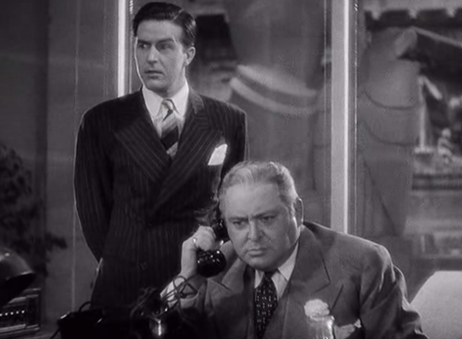
Years later the story catches the attention of a newspaper thanks to an odd ad in a paper offering a $5,000 reward for answers. The editor of the Chicago Times (Lee J Cobb) thinks there’s a story behind it and that sends his ace bloodhound P.J. McNeal (James Stewart) out to dig around for answers. Others have sympathy for Wiecek, but McNeal comes into the story as a skeptic. He’s just looking for an angle, a way to spin it to get a good story. But after testimony, lie detector tests, and bits and pieces of information he begins to change his tune.

However, the puzzle pieces just aren’t fitting together completely and he even begins searching around the Polish sector for the key witness Wanda Skutnik, but the state attorney’s office is putting pressure on him. In the end, it ends up being technology, in the form of blowing up a picture, that is able to set Wiecek free and it’s all thanks to McNeal.

Obviously, the main reason to watch this film is Stewart because this film feels strangely different than anything else he ever did. After the war, he was done with the idealism of Jefferson Smith and later on he would devote himself to westerns and thrillers steeped in psychology. Call Northside 777 is a rather straightforward film, about cold hard facts, and the truth. Almost like an episode of Dragnet with Stewart’s reporter standing in for Joe Friday. His dynamic with Helen Walker feels genuine and real so it’s a shame that his home life did not play more of a role. Richard Conte also does a good job at exuding innocence (very different from his role in The Big Combo). Aside from an understated role from Cobb, we also have E.G. Marshall, and we even see Thelma Ritter for a brief moment.

3.5/5 Stars

Review: Dr. Strangelove or: How I Learned to Stop Worrying and Love the Bomb (1964)

Dr._StrangeloveHow to speak of Dr. Strangelove? To clarify I mean the film and not the character. First and foremost, it’s one of those films that has so much significance, because of the era it came out of and for the way it represents that time and space. It’s the defining film about the Cold War, much in the same way All the President’s Men is identified with Watergate and the sentiments at the time.

This film is wickedly funny, and yet I never found myself laughing out loud. There was more often a smirk slowly forming on my face. This film is a landmark and an important piece of cinema and yet I could never say I have a passionate love for it. What sets it apart is the way that Kubrick is able to tackle the paranoia at the time.

His plot is utterly ridiculous and absurd and yet in anything, there is always a sliver of truth that seems all too real. A film throwing around talk of nuclear war and doomsday devices is rather bleak and so I suppose Dr. Strangelove is a type of morbid humor. Certainly a black, satirical comedy.

Kubrick’s story is split into three sections: There the B-52 bomber where the crew including Slim Pickens and a young James Earl Jones patrol the skies until they get the unmistakable order to proceed with “Plan R” which begins an attack on Russia. Slim Pickens is an inspired piece of casting with his iconic southern drawl because he plays everything straight, but you cannot help find it funny. He sticks out like a sore thumb in the cockpit and then there’s, of course, his mounting the bucking bomb, but that comes later…

The order was given on the command of a General Jack D. Ripper (Sterling Hayden) after he ordered his aide British officer Lionel Mandrake (Peter Sellers) to put their base on high alert. All this came about because of Ripper’s fears about fluoridation and bodily fluids. He’s sure the Commies have infiltrated and so he prepares to decimate them. He bypasses the president, all communication is cut off, and he locks himself and Mandrake up in his office. As far as he’s concerned the deed is done. He can just go on chomping on his cigar while comforting Mandrake. Because there’s no way that he would ever disclose the three-letter code so his aide can warn the Pentagon.

The final setting of the film takes place in the legendary war room which feels rather like a velodrome with a table in the center. There the highest officials of the nation gather round to try and figure out what to do about this national crisis. General Buck Turgidson (George C. Scott) advises the president on what to do about the situation while chewing away at a wad of gum. President Merkin Muffley (Sellers once more), is far from pleased and he even sends a call over “the hotline,” to the Russian Premier. He shares his deep regrets about the situation with Dimitri and it gives Sellers a stage on which to work his deadpan humor. Muffley also tries to maintain order after Turgidson and the Russian Ambassador get in a scuffle (Gentlemen, you can’t fight in here! This is the War Room!).

Meanwhile, a battle ensues at Ripper’s base as the apt billboard inscribed “Peace is our Program” sits in the background. This is an utterly ludicrous firefight and it ends with an appearance by Keenan Wynn ready to take Mandrake and Ripper captive. However, the general has already kicked the bucket and Mandrake attempts to use a payphone to reach the Pentagon.

But the best advice the president gets comes from Nazi defector Dr. Strangelove (Sellers number three), who is restricted to a wheelchair and still has trouble stifling his “Heil Hitler” and “Mein Fuhrer.” His final solution is to gather a few hundred people in mine shafts underground, away from the radiation, where they can procreate. The female to male ratio optimally would be 10:1 and that starts Turgidson salivating. We don’t quite know how it ends, but Kubrick ends with the iconic juxtaposition of nuclear bombs exploding as “We’ll Meet Again” wafts through the air. It’s the last brilliant piece of humor.

Dr. Strangelove is a great film in part because of its performances beginning with Sellers. We’re used to his lovable buffoon Inspector Clouseau and yet he’s quite different here. Each character is starkly different in fact, but each one is played straight with their assorted quirks laid out for us.  Slim Pickens, a man also known for his comedic sidekick roles is playing it straight, which is also funny in itself.

Finally, George C. Scott is one of the stars that we would label a dramatic actor, and yet this is probably the most over the top and odd performance of his career. It’s wonderfully vibrant in all respects from the gesticulation of his body to his facial expressions.

Everything’s an odd mix where hysteria with global consequence is matter-of-fact. There’s no fighting in war rooms. There are Cold Wars and Hotlines. Nazi Doctors advise the president and Russian ambassadors are tackled to the ground. It’s pointing to the inconsistencies in this world that we live in. It’s a satire about the absurdity of nuclear deterrence in an age where that was en vogue.

4.5/5 Stars

Review: Short Term 12 (2013)

shortterm1In recent years Hollywood has been the land of superhero films, special effects extravaganzas, and star-studded drama. It all fits into the mold of this industry personified by sun-soaked beaches joined with excessive glitz and glam.Go down the California coast to San Diego and you find a slightly more humble, but still highly prevalent affluent beach culture. Look no further than La Jolla and that reality is extremely evident. That’s part of what makes Daniel Destin Cretton’s film so credible. It’s not like that. But it’s important to start from the beginning to understand why that is.

Cretton, who is originally from Hawaii, came to San Diego in order to attend Point Loma Nazarene, one of these pristine waterfront getaways that also doubles as a school. Afterwards, he went through film school at San Diego State. However, in between his two stints in school, he spent some time working as staff for a short-term home for teens. It proved to be a formative experience and the jumping off point for Short Term 12.

It began as a short film for Cretton’s Master’s thesis, but with the proper funding, he turned his modest work into a full-fledged feature project. However, this is far from your typical Hollywood production and it undercuts the typical San Diego persona. Instead, this story literally bleeds with humanity flooding out of its veins like no other.  In other words, it’s not your high-brow epic. It’s truthful, gritty, and inherently real. The facility pictured here feels like a more typical San Diego, depressed, humble, and full of people fighting against the currents of life.

shortterm4These characters are not caricatures, but reflections of people who could very easily be real. Headlining the modest cast is Brie Larson, who is on the rise with a few more mainstream roles on the horizon. With Grace, she channels a spirit that is so affecting in a raw, visceral way. She is the catalyst of the workers who are meant to be a stabilizing force on the kids in their care. Day in and day out they must deal with angry outbursts, insubordination, and sometimes worse. It’s a difficult job, to put it lightly, and yet Grace does the work dutifully with an unfaltering mix of tough love and compassion.

These kids often come from the worst of family background including abuse. Grace was one of those kids herself and now she helps others with a group of staff including her partner and best friend Mason. In essence, she is their friend and champion, but behind this facade lies a girl — timid and scared. Not ready to let others in after she so readily enters into the lives of others.

The kids are a big part of this story as they deal with their baggage, but first and foremost Short Term 12 is the story of Grace. The story of how she finally learns to open up her life, to confront the pain, and allow herself to be vulnerable with the one she loves.

In so many of these characters, there are a multitude of emotions that brew in isolation. So much is pent up inside and so much goes unspoken. It’s barely hidden under the surface but always written on faces and in averted gazes. This is not a pretty film and it should not be because life rarely is the perfect portrait that movies often seem to paint. Drama is not dazzling theatricality; it’s dirty and low, besmirching all that it touches.  There’s so much loneliness to be parsed through, in the adults and adolescents alike, before problems can be resolved. They are never made perfect, but the film leaves these people better than when they started.  Life goes on much as it had before, and a great deal of hope is unearthed beneath all the debris. So though it might not be pretty, it is unmistakably beautiful.

shortterm2The director’s unsteady handheld camera feels a little abrasive at times, but also brutally honest, spending a great deal of time on close-ups. Cretton’s script is relatively simple, still, it continually brims with harsh realities and little moments that feel terribly human. It might be Grace sitting solemnly in an abortion clinic, the brooding Marcus throwing down a heartfelt rap, or Jayden illustrating her pain through the story of an armless octopus. The minutiae work marvelously, collectively making these into people who we can truly feel for.

Many might vehemently disagree, but Short Term 12 seems to prove that all a film needs is a grain of truth mixed with some authentic humanity to be engaging. That is far more gratifying than any amount of special effects or explosions that Hollywood can manage to throw up on to the screen.  Unfortunately this is a criminally underseen film and hopefully, Netflix might help change that.  But if not it will take individuals championing lost clauses just like the workers in this story. They never gave up on these kids and they were willing to go the whole nine yards when everyone else had forgotten. Please do yourself a favor and do not forget Short Term 12. I certainly won’t be forgetting it anytime soon.

4/5 Stars

The Dark Corner (1946)

Dark_Corner_1946“I’m backed up into a dark corner and I don’t know who’s hitting me.”

It’s always satisfying to find another little gem of a film-noir, and I think this thriller from Henry Hathaway fits that bill. Our stars include a serious and quite beautiful Lucille Ball along with Mark Stevens as gumshoe Bradford Galt. He’s more of a Cornel Wilde type. A rather nondescript lead compared to Bogey or even Dick Powell, but he works well enough as the focal point of this story.

He served a stretch in prison after he was framed for a murder wrap and now he’s a P.I. trying to keep himself on the right side of the law. But nevertheless, it’s a dirty business that’s bound to catch up with him. He’s being shadowed by a man in a white suit and almost gets mowed down by a car that had his name on it. His secretary Ms. Kathleen Stewart genuinely worries for his safety and tries to help him, so he reluctantly lets her into his life.

Everything seems to point back to one man. Anthony Jardine was the attorney who set Galt up and sent him off to the clink. It only makes sense that he would want to silence the P.I. for good. After all, if not him who else could it be? Except things get especially dicey when Galt gets framed once more and this time he knows for sure his old nemesis cannot be involved.darkcorner1The race is on for the real murderer because Galt must also attempt to clear his name before he gets charged with another killing leading to a date with the electric chair. This is when a juicy piece of dramatic irony comes in since as the audience we know who has it out for the P.I. We just don’t know why… Some sleuthing leads Galt to another crime scene and finally to an art gallery where he follows a hunch. His suspicions were on point, and he finally fights his way out of the corner.

It should go without saying that The Dark Corner is beautifully shot with a lot of wonderful low lit sequences that are deliciously moody. Interestingly enough, the storyline is infused with a lot of Culture whether it is jazz music or pieces of fine art. It’s a weird juxtaposition of this noir world bleeding into these higher echelons of society. The people and places criss-cross and intertwine in a web of the urban and the urbane. It proves that treachery can rise up from any level of society.

3.5/5 Stars

The Professionals (1966)

220px-Movie_poster_for_-The_Professionals-Who wouldn’t be enticed by a film entitled The Professionals? It feels a little like an amalgamation of The Magnificent Seven, The Dirty Dozen, with a  little sprinkling of Mission Impossible, and dare I say The Wild Bunch? We have a band of four big-time pros who are brought together to rescue the wife of a man named Grant (Ralph Bellamy). She is being held at ransom in the heart of Mexico. That’s no small task in the wake of Pancho Villa and the Mexican-American conflict, but these men are the best of the best.

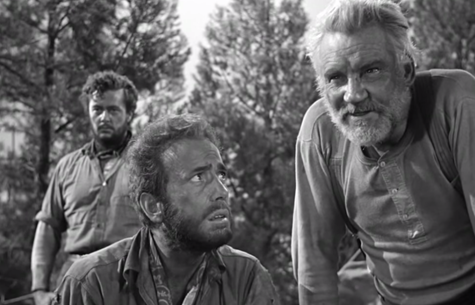
The leader is none other than Lee Marvin (of The Dirty Dozen) with his prematurely white hair, leading the band as Rico Fardan, a skilled tactician, and former U.S. Army Officer. He is joined by Jake Sharp (Woody Strode), who is the best tracker around and also a crack shot with a bow and arrow. Next, comes skilled horseman and pack master Hans Ehrengard (Robert Ryan), who keeps mainly to himself. The most dynamic part is that of Bill Dolworth (Burt Lancaster), an unscrupulous scrounger who nevertheless is a good shot and an artist when it comes to using explosives. He’s not what you call a trustworthy type, but Rico would trust this man with his life and that says a lot.

Richard Brooks story is straightforward enough. This dream team goes in with their mission clear: The man who stands in there way is revolutionary turned outlaw Jesus Raza (Jack Palance), who is the one keeping Maria (Claudia Cardinale) captive.

As they push forward, they witness the brutality of Raza and his men as they raid a passing train and execute many of the occupants. Soon Fardan and his crew move in on Raza’s compound and wreak havoc one night so they can pull Maria out and take her to safety. But she seems like a very reluctant damsel in distress. She also seems very intimate with Raza. That’s the first sign that something’s up, but still, they follow the parameters of the assignment and pull her out.

Retribution follows and after a gunfight The Professionals flee through the mountains with Raza in hot pursuit. They use explosives to try and impede the progress of the rebels, and then Dolworth resolves to stay back to bide his partners time so they can get across the border. It’s at this point that he fights like one of the magnificent seven, in an impressive rearguard action that has his foes befuddled.

It’s when he actually comes face to face with his enemy that things become interesting. They know him and he knows them. Once upon a time, he fought with Raza and he was also acquainted with the lively female marksman Chiquita. When they finally get back to good ol’ Mr. Grant they find he’s not as straight-laced as they once thought, so they make a costly decision. They lose out on their big payoff but do the honorable thing by setting Maria free.

The Professionals gives us want we want. Honestly, we want cool characters and fun action sequences and that’s essentially what we get. There’s quite a bit of fairly graphic violence too for a ’60s western signaling a slow change in the genre. Lee Marvin is impeccable as the self-assured, tough as nails commanding type. Lancaster is, of course, the most interesting, and I can only imagine he had the most fun because playing a scoundrel would undoubtedly be a treat. Strode, Palance, and Cardinale were enjoyable to watch in their own rights as well since we did not necessarily need a whole lot of depth from them. It was only Robert Ryan’s role that felt rather like a throwaway part that did not have much to it. No matter, the Professionals was still an enjoyable all-star western.

J.W. Grant: You bastard.

Rico: Yes, sir. In my case an accident of birth. But you, sir, you’re a self-made man.

4/5 Stars