One Way Passage (1932)

one way passage 1.png

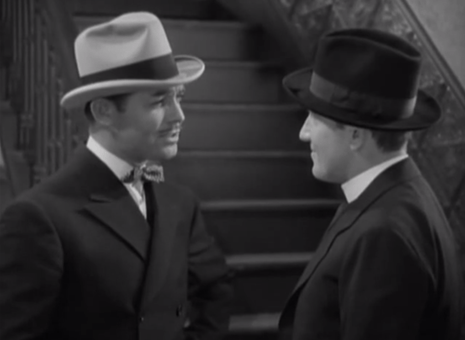
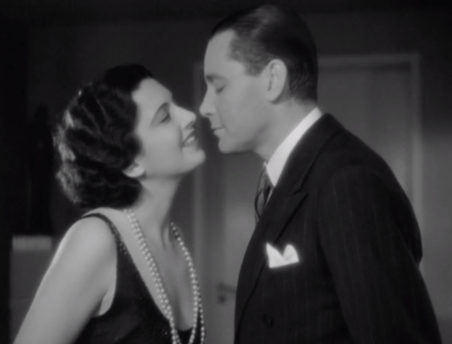
There’s a myth that makes the rounds every so often suggesting films of yore were always stagnant affairs. You only have to look at the opening bar sequence directed by Tay Garnett in this picture to confirm such an assertion is an unequivocal falsity. The camera is alive and well in One Way Passage.

William Powell is beloved by classic movies fans the world over but you genuinely wonder if he’s much remembered outside of that faithful populous. The broader public has more wherewithal than often their given credit for and yet there’s no doubt Powell is less heralded than his gangster compatriots at Warner Bros.

Meanwhile, Kay Francis is an all but forgotten flame of the 1930s who is no less glamorous or alluring today. If you run the numbers, she was one of the highest paid and biggest box office attractions well into the mid-1930s. Although soon Bette Davis would take on the mantle. But this context will seem insignificant 80 years on. That’s why it’s such a charming realization this film is a true gem worthy of the talents involved and certainly worthy of being rediscovered today.

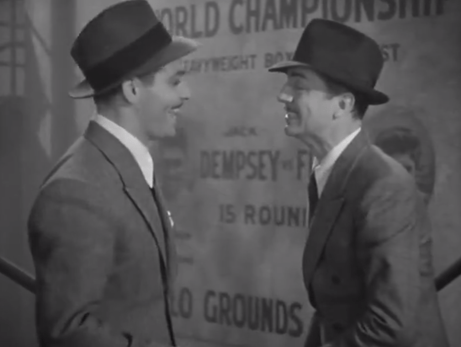
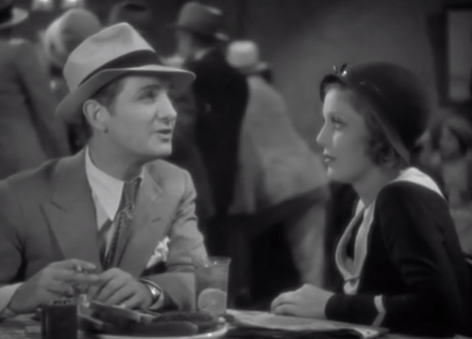
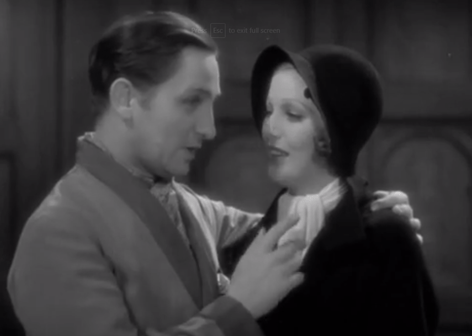
All we need is a bar. It becomes one of the crucial settings in the picture. A pair of memorable bartenders played by Mike Donlin and Roscoe Karns give each some added coloring. People are gay and jovial. Two merrymakers accidentally clip each other but it hardly feels like a clumsy meet-cute or it’s exactly that.

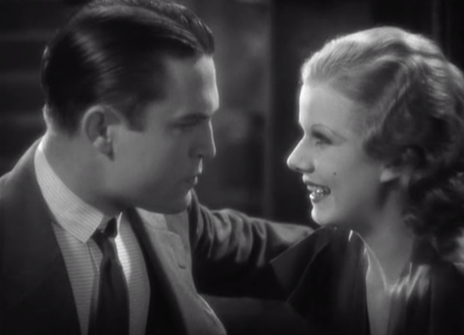
Except there’s a star-crossed undertone to it all. No time is spent piddling around. We look into their eyes and meet the gazes of Joan (Kay Francis) and Dan (William Powell). They share the moment and it’s lovely but they bid adieu and head their separate ways to forego ruining the electricity they achieved.

Little do we know we have been introduced to a debonair criminal. A gentleman scoundrel if you can imagine the prototype.  The shorthand is in place and it’s easy enough to decipher so there’s little to no need to mince words or drag out the exposition.  In fact, Jim’s so charming we don’t even realize he’s on the wrong side of the law until a copper sticks a gun in his back.

That’s the key to this picture because at such a short running time it cuts its story down to the essentials, excising the superfluous information and streamlining the events in such a way that is endowed with a playfulness but moreover a grand passion.

Because the inevitable happens and they pass not like ships in the night but aboard an ocean liner named the S.S. Maloa making its way toward Hawaii and ultimately San Francisco.

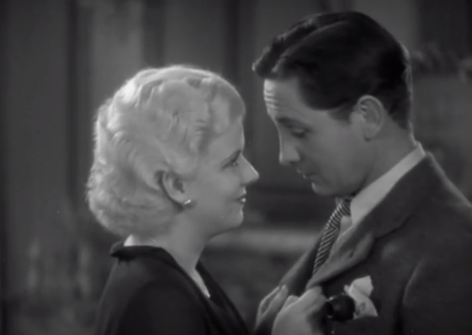
Far from sputtering, their initial connection only blooms with each passing day together. Of course, she doesn’t know he’s being sent to San Quentin and he has no idea she is terminally ill even near her deathbed. But in this respect, their obliviousness puts them on equal footing.

one way passage 2.png

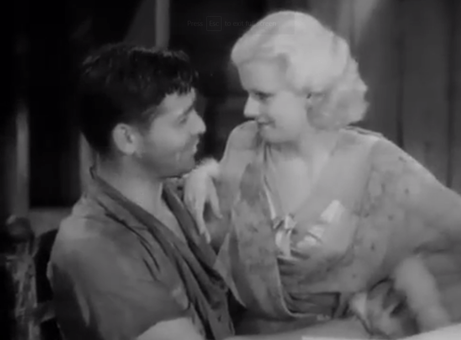
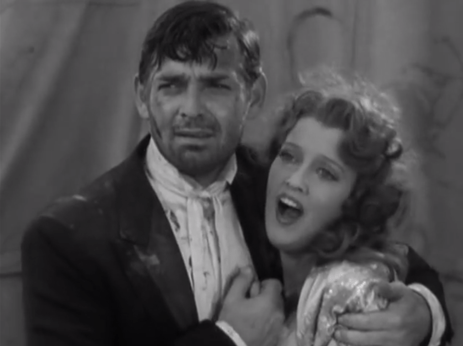
Joan says she wants to crowd all the intense beautiful happiness into the life she has left. It’s the perfect aspirations for this picture to deliver on because there’s this heightened intensity and that allows it to provide such a potent story in a matter of a few minutes. As things look that’s all they have.

They are going out in a blaze of glory and there’s no more apt description than that. The picture has no time for realism and so it foregoes that for something far more moving in at least in this particular instance. They are imbued with the poetry of star-crossed lovers aboard a sea vessel with an imminent conclusion already in place.

The cop Steve (Warren Hymer) seems like a real brusque stickler and yet he’s baffled by Dan’s charity. He relents since the man saves his life. It’s the only thing that allows this captured petty thief to maintain some kind of pretense of normality with Joan. Steve has enough pity to allow his prisoner the dignity of playing the role he has been cast in.

Of course, Dan also gets some help from the constantly swacked Skippy (Frank McHugh) a con man with a sore spot for cops and the bane of every bartender he comes in contact with.  Then there’s Betty a fellow con woman masquerading as the “Countess Barihaus” (Aline MacMahon in a glowing performance), who has the entire ship cast under her spell including Steve. Not only do they provide the film with an amiable strain of comedy, but they also buy their friend his few hours in paradise with his constant companion. But the dread comes upon us because we realize even as the film’s minutes tick away so rapidly — this euphoria cannot last. It will not.

one way passage 3.png

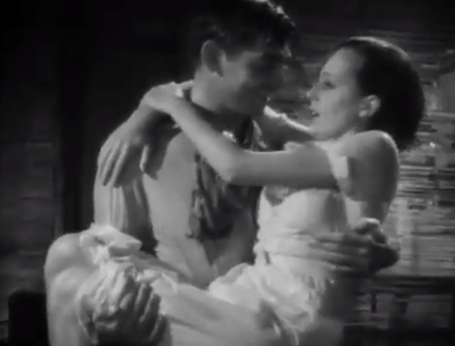
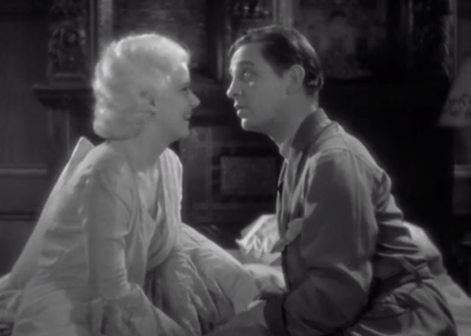
They share one last tearful kiss and wave goodbye  with one final “Auf wiedersehen.” But the perfection of it is that the illusion they’ve managed to hold onto isn’t even broken in their final moments together. There’s such an undercurrent to the scene — so many things they could bring up or that they could say — and yet they are content in truly cherishing it. The sequence is wafted over with the epitome of bittersweet emotions. And yet they can hold onto the next dream — a reunion on New Year’s Eve.

When it’s all said and done, it’s a wonderful ending that lets us float away on our doubts clinging to the hopeful ending we want to be true. That’s what the great romances do. They do not quash the sentiment beating inside our hearts but they suggest even if it is folly there still is some insurmountable worth in striving for love. Let that connection between our heart and our emotions never be absolved. Because yes, we are rational beings but what does that do for us if we have not love? This picture will probably rip your heart out but it does so tenderly and with the utmost amount of tact. It deserves to be seen by more people.

4/5 Stars

Girls About Town (1931)

girls about town 1.png

I came to this film for Kay Francis and I stayed because of Kay Francis, George Cukor, Joel McCrea, Eugene Pallette, and Lilyan Tashman. All to say, it is a supreme pleasure to watch this cast in action and already Cukor seems capable of handling the material in a way that intuitively understands the comedy while never losing sight of the romantic heart. That balance seems key.

But we also see another Cukor hallmark with two strong female characters who are central to the film’s integrity. Wanda (Francis) and Marie (Tashman) make a living as girls about town. They are bankrolled to get comfortable with out-of-town businessmen. Because a little female company and a lot of bubbly makes any business transaction go down smoothly.

Marie doesn’t mind the vocation but you can see it in Wanda’s eyes. She’s tired of the same haggard men and droll conversation. She wants something of a little more substance. An actual man and a real relationship.

Yet she concedes to do another gig as part of a yacht excursion that’s looking to schmooze a wealthy whale of a man named Benjamin Thomas (Palette). He also is a self-proclaimed king of practical joking. In fact, he doesn’t know when to quit whether it’s glasses of water or deep sea diving for golf balls. Marie gravitates to him for a laugh.

Meanwhile, Wanda has her eyes set on the younger one, Mr. Benjamin’s associate (McCrea) who isn’t much for conversation or any kind of companionship. As hard as she tries there’s nothing doing. But they finally strike up a compromise by playing “pretend.” Their relationship becomes jovial. The only problem is that Wanda is falling for a man who never meant to romance her. Things get a little too real.

But thank goodness, the feelings are mutual and it looks like they will be together for good. A zoo might as well be the tunnel of love as our two euphoric romantics smooch their way through the animals. At this point, the love story is floating on air. Until Jim mentions marriage.

Here Girls About Town earns its keep as a Pre-Code picture due to its subject matter, the flippancy with which it deals with romance, and even fairly radical views on the necessity of the institution of marriage between two people.  None is the focal point per se but they certainly make the picture quite bold even in what it deems to be the status quo when placed up against films that came a mere three or four years later. The inevitable bomb is dropped but it hits like a pin drop. She’s married already. She doesn’t even bat an eye. Divorce is what is called for and there’s no reason her husband would not grant her one. She hasn’t lived with him for a time.

girls about town 2.png

The films secondary narrative involves Benny’s own wife coming back into his life to try and save his reputation only to join forces with the surprisingly reasonable Marie as they scheme to get the old curmudgeon to spend his money and show his affection for his wife.

The final complication just gets better and better and it keeps the picture interesting. At this crucial stage, Wanda’s spineless husband Alex turns an about face and crosses paths with Jim to talk it out.  Now the indignant Jim smells blackmail and lashes out not only at this man but his formerly soon-to-be wife. You can see the heady implications.

But there’s something more to Alex. Perhaps he’s not the villain we assumed him to be. That would have been too easy. So instead of getting the money back from him, Wanda sets her sights on the next best option. An impromptu auction is undertaken as the girls rally to raise $10,000, complete with a heel for a gavel and a wheeling-dealing Marie presiding.

Certainly, it’s not the necessity but the principle of the matter as Wanda wants to pay her man back to show her true character. She was never looking to take advantage of him and she is willing to go to great lengths to renew his trust. It’s made easier by the fact that he’s torn up about what happened. Now she has him where she wants him. Her days as a girl about town are numbered.

Ernest Haller is our cinematographer and there are several setups that are particularly interesting because they trade out our normal frame of reference as the audience by putting us in different places. The first instance comes in the zoo where we find ourselves literally inside different cages with a bear and then some reptiles.

Then, there’s a later sequence where we similarly end up behind the glass of a display case. And of course, we can’t hear the exchange going on outside but the pantomime gets it across just fine. But the creme de la creme is the flurry of close-ups on Palette’s face when he sees all the jewels that he thought he bought for another woman on his wife. Priceless.

3.5/5 Stars

Cocoanuts (1929)

the cocoanuts 3.png

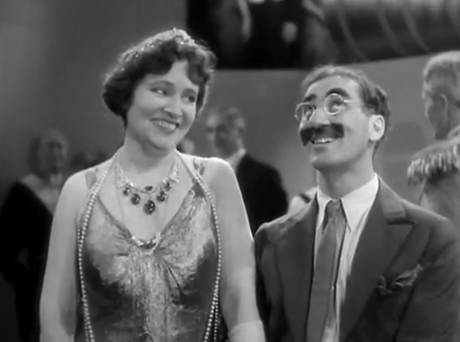
“Did anyone ever tell you that you look like the Prince of Wales?” ~ Kay Francis, Chico, and Groucho.

The Marx Brothers were modern comedians. Out of Groucho Marx alone, there are numerous comics spawned and basking in his incomparable shadow. When certain jokes come out you can all but tip your hat to him. But also Chico and Harpo had their own personas and they worked with each other to simultaneously set up different bits and turn those bits into pandemonium that have overtaken the world with laughter over and over again.

And that’s not over one film or with one studio but over a whole host of projects. For all I know, Harpo Marx went through life mute (I Love Lucy cameos don’t tell me any different) and Chico really did use that accent of his. Even Groucho who was arguably the most visible thanks to You Bet Your Life, What’s My Line, and memorable Dick Cavett interviews, though he lost the greasepaint mustache and eyebrows, still maintained much the same witty image his entire life.

Playing purely the numbers game most comedy teams are duos. Think of most of the great ones. But the Marx Brothers had three and even four when Zeppo was around. They were all family. So when this well-oiled mechanism of chaos is released it really does a number on people. They were known for overwhelming producers in real life with their antics and they do precisely the same thing to each individual audience member who watches them onscreen — at least the ones who don’t mind being railroaded a little. That is their lasting impact.

The fact Cocoanuts was their first film and from the 1920s makes more an impression on my mind. Because talking pictures hadn’t been around for all that long. Sure, some of their gags could have been retroactively transferred to the silent cinema but in many ways, the talkies suited them just fine. After all, they were a vaudeville act and The Cocoanuts was a success on the stage before it was a film. Even during filming, they were already at work on their latest production Animal Crackers (which would again become a film the following year).

Where does that leave us? Looking at The Cocoanuts today, it definitely is stagey because well, it came from a stage play. Furthermore, it’s a rather odd combination having Irving Berlin and The Marx Brothers names attached to the film. Given the main attraction, there’s probably too much singing anyways although the overhead shots soon accredited to Busby Berkeley are quite prominent here.

If we turn our attention to the opening moment, Groucho is on the staircase of the Hotel de Cocoanut giving his restless bellboys some wise words full of crap about money. Meanwhile, a seductive woman (Kay Francis) and her suitor look to steal the priceless necklace of one of the few vacationers (Margaret Dumont) and pin the crime on someone else for their own nefarious purposes. This might not be a criticism you hear often but there’s too much plot and not enough Marx Brothers.

cocoanuts 2.png

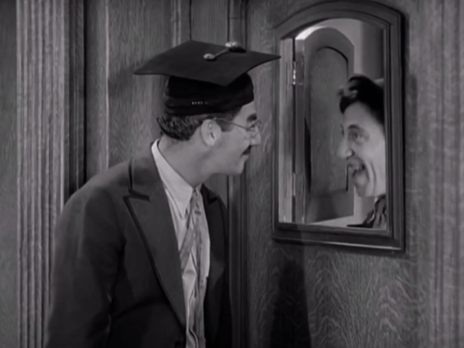
Let’s cut right to the best gags. There’s the adjoining room & slamming door gag which provides one of the most pointed moments where the boys are all working seamlessly together to promote chaos on celluloid.

Groucho and Chico have one of their bits over a map and linguistic disconnect that Groucho riddles with his puns and Chico then decimates with his miscomprehension of English vernacular (Most famously Viaduct becomes Why a duck?). Watch it if you don’t understand what that means. In Marx Brothers terms it’s probably poetry in motion.

There’s an auction, termed a big swindle by Groucho but even with Chico’s involvement in the chicanery, for some unknowable reason, they don’t seem to be making any money. Finally, Groucho and Harpo play Tic Tac Toe on a man’s chest and act boorish at a dinner party before running off for the plot’s real finale. Let’s face it. The picture ended right when they left the stage.

The improv and dynamic nature of the Brothers given their vaudeville roots makes me realize just how much their shows would have been blessed by repeated performances and the heat of the moment. Though we can’t have that luxury at least we have this film to remember those hoodlums who elevated the art form of anarchy and wisecracking to new heights.

3.5/5 Stars

Good News (1947)

good news 1.png

The title Good News means next to nothing to me but it does suggest a certain sunny disposition we tend to equate with MGM musicals of the period. That assumption is fairly well-founded. Furthermore, I am well aware of Adolph Green and Betty Comden, that screenplay dream team, an integral part of Arthur Freed’s unit that had so many quality pictures to their name.

Most obvious inclusions include Singin in the Rain (1952), On the Town (1949), and The Band Wagon (1953). And here they are working in the realm of retro nostalgia pieces, their forte, a light comedy scattered with quips and a substantive lineup of tunes. But the important differentiation here is that this was the first one. This is where it all began, in theory at least, making them into a screenwriting mainstay. While the picture has long since been overshadowed by its successors and was never a huge box office success, there’s no doubting the unassuming charms still present in Good News.

Like Singin in the Rain (1952), the year is 1927 but instead of film sets in a Hollywood back lot, we are met with the world of Flappers and Sheiks — the names for boys and girls on college campuses across Middle America. On this particular campus, good ol’ Tait University, the boys are batty about football and girls and the girls are batty about boys — at least on a very basic level. So nothing is all that different.

And yet for anyone born in the latter half of the 20th-century, you can’t help and look at the depictions and think that everything is different.  Whether its styles of clothing, social rituals, colloquialisms, practically everything. Granted this is a musical.

Still, the school’s All-American running back Tommy Marlowe (Peter Lawford) shimmies, shakes, struts, and sings with his buddies about the necessity of being a ladies’ man on campus. Because when they’re not on the field the subject of utmost importance is girls. Obviously. Thus, when a new girl fresh off of finishing school brings her refined manners, stuffy French vocabulary, and flamboyant dress, all the boys heads start turning including Tommy’s.

But as is often the case, not everyone is so infatuated or completely distracted by the opposite sex. For instance, we meet Connie Lane (June Allyson) as she calls for a wrench to remedy a leaky sink and she’s dressed to the nines. She’s a good student and pays her way through school at the local library. Boys are not her main concern though that’s not to say that romance doesn’t tickle her fancy.

So the film is a frolicking and invariably cheesy examination of the mating rituals of college kids. It’s crazy stuff sometimes but be assured we are in for a light and breezy good time — a squeaky-clean version of what college life is if you will.  It’s also short on plot but what is there proves to be a springboard for song and dance. For the most part, that’s promise enough.

A highlight is the familiar velvety fog of crooner Mel Torme as well as the rather dorky but endearing wiles of Joan McCracken who feels much in the same vein to parts Betty Garret would ultimately play. Of course, this is really the Lawford and Allyson show as they must come to know each other, show genuine feelings, get confused about it all, and fall back together again. That’s the way the story has been told since the dawn of time. This one is little different.

A formative number comes off as a musical French lesson as Tommy goes under the tutelage of Ms. Lane to land the new girl in town who is giving him the cold shoulder. Meanwhile, Allyson imparts her knowledge and delivers a warm rendition of the tune, “All The Best Things in Life Are Free.”

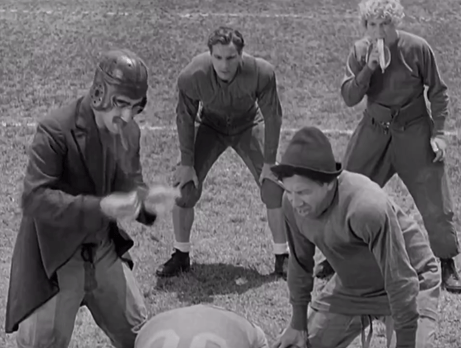
“Pass the Peace Pipe” at the local soda fountain — a song that feels doubly archaic coming from the 1920s through the 1940s to the present day — is no less a lively foot-tapping number to be sure. But be relieved that the football scrimmage is not turned into a giant musical number of its own. Football is football and dance is dance. Each gets its own arena and there are plenty of theatrics in both. The cherry on top is a stellar large-scale dance number, “Varsity Drag,” to sum it all up in a rousing fashion much as it began.

3.5/5 Stars

It Happens Every Spring (1949)

It_Happens_Every_Spring_VHSDoes this film glorify those who cheat and deceive taking advantage of others through the advances of modern science? Certainly not! Well, maybe a little but this is one of those ludicrous stories that never makes a pretense of being real life or a moral tale for that matter. It’s just a zany story that’s actually quite rewarding to be a part of.

At its core is a middling college researcher. He’s in love with a girl but not rich enough to offer her much of anything. What’s more intimidating is that her father is the dean of the school and Vernon’s tireless amount of research is getting him nowhere fast. Another seemingly trivial detail remains that every spring he gets obsessed with baseball and becomes distracted in his lectures, in his lab, and in life in general.

If you want to think about one of Disneys live-action classics, it’s easy to draw some similarities between this film and The Absent-Minded Professor (1961). In the latter film, flubber is used for an advantage on the basketball court. Here it’s all about baseball.

Vernon Simpson (Ray Milland) discovers the extraordinary characteristics of his new substance methylethylpropylbutyl quite by accident when he rolls a dampened baseball by a block of wood only to have the two repel. His eyes almost pop out of their sockets when it works time after time. The implications are simple. He can harness this discovery to make it in the MLB and S.T. Louis has aspirations for a pennant but needs pitching. This is his chance to realize his dreams.

The film admittedly doesn’t explain much about why Vernon is infatuated with baseball. Perhaps it was enough that most Americans still were taken with it since it was “The National Pastime.” Regardless, he hurriedly gets a leave of absence from work and provides a cryptic message to his girl not to worry about him.

His baseball career as chronicled by the film is a meteoric rise that totally revels in its completely ludicrous nature. He walks into the clubhouse talks with the manager (Ted De Corsia) and the teams head executive (Ed Begley) who doubt this adamant thick-headed nobody who brags he can win 30 games. Boy, does he shut them up and they’re glad he did.

Most everything is textbook as far as a film about a science researcher playing major league baseball and using a miracle substance to win ballgames can be. His girlfriend thinks he’s involved with the mob. He tries to keep his true identity a secret under the pseudonym King Kelly, and he begins to form a bond with his veteran bunkmate and backstop Monk Lanigan (Paul Douglas). I’ve always been a fan of Paul Douglas as an actor because he plays his characters straight with a gruff yet palpable sincerity. It’s little different here. Milland though hardly an American bred on stickball nevertheless is a charmingly scatterbrained lead.

I didn’t realize it until now but I’m rather fond of science fiction baseball comedies. It breaks every rule of baseball. It’s absurd. There’s so much to call into question and yet I don’t want to. But just for the fun of it all, let’s look at a few obvious inaccuracies from It Happens Every Spring.

King Kelly would never get a win if he came into a game that his team was already winning and yet he asks for $1,000 in compensation for such an appearance. Furthermore, it looks like he’s committing a balk about everytime he winds up. And if he’s not then baserunners would be stealing on him all day because he never pitches from the stretch. He’d be an easy target.

Believe it or not, Kelly actually doctoring the baseball, secret formula aside, definitely is not all that ludicrous. Pitches such as the spitball and scuffball were famously used in the games early days. Pitchers like Burleigh Grimes, a personal favorite of mine, made a living off the pitch and though the spitball, in particular, was outlawed in 1920, pitchers like Grimes were grandfathered in. He continued throwing it until 1934.

Still, that didn’t completely deter later pitchers from using it like another Dodger great Preacher Roe and then Gaylord Perry in the modern era. As long as you didn’t get caught there was no recompense and the same can be said of Kelly. Again, we’re not glorifying cheating. Don’t get any ideas.

3.5/5 Stars

Babes in Toyland (1934)

babes in toyland 1.png

Laurel and Hardy had better films with better gags and more iconic moments but Babes in Toyland, or The March of The Wooden Soldiers as it was also known as develops the most immersive fantastical world that they ever had the privilege of gallivanting through. It’s almost fitting that we find them in an almost childlike world because they brought laughter to not only adults but a plethora of children as well and this picture does them both justice.

It’s true that out of the imagination of babes (which was consequently Oliver Hardy’s lifelong nickname) comes a film steeped in nursery rhythms and kiddie stories. Above all, it proves to be the perfect playground for two of comedy’s greatest treasures as they play Make-Believe in a world of Mother Goose, the Three Little Pigs, Old King Coal, and a host of others. Except it’s not made up at all. By 1930s standards everything is very much alive and it very easily could be a child’s delight. Also, rather unwittingly a minor Christmas classic was born.

Ollie Dee and Stannie Dumm, as they are affectionately called, work at the local toy factory in Toyland and reside in a Shoe with a certain Old Woman as well as Little Bo Peep.

But she is being accosted by the resident villain and shoe forecloser Silas Barnaby. He’s a hyperbolic, conniving, cackling antagonist who undoubtedly finds origins in the invariably black and white worlds of a child’s fantasy (It’s no coincidence that Disney’s canon has boasted some of the most iconic villains). He’s played by none other than 21-year-old Henry Brandon and though he’s draped in a beard there’s no doubt that his stunts in the final scenes evoke the physique of a young man.

Anyways, our heroes promise to raise the necessary money to keep the shoe so Little Bo Beep doesn’t have to marry such a horrible fellow. But of course they go and make a shamble of things messing up Santa’s wooden soldier order and they get fired. Even a trojan Christmas present in July sent to Barnaby fails because of Stan’s typical good-natured idiocy.

He’s up to his usual tricks as the lovable pal who begins his trademark sniveling while his friend is getting tortured with a dunk tank only to offer Ollie a glass of water once he’s made it back to dry land with his usual vacuous deadpan. Furthermore, still plagued by malapropisms, he turns “heartbroken” into “housebroken” and similarly misconstrues other words.

The villainous Barnaby is not to be outdone. First trying to arrest Ollie and then framing Bo Peep’s true love with the kidnapping of one of the three pigs. Banishment to the dreaded Bogeyland looks all too imminent. Still, Babes in Toyland stages one of the most delightful battles of good versus evil that evokes everything from The Nutcracker to The Wizard of Oz. Toys become ammunition and buildings are to be sieged as everything comes alive.

Like Our Relations two years later, this film employs one of the oldest sitcom tricks but here it’s all but forgivable. Because, again, television tropes hadn’t been invented yet much less television. It’s true that the kids will probably enjoy this the most or perhaps the young at heart. Still, Hal Roach delivers another Laurel and Hardy comedy with its share of child-like charm and some dashes of Disney magic (namely a Mickey Mouse lookalike and the Three Little Pigs theme song). Yes, it’s puerile entertainment but what’s wrong with that?

3.5/5 Stars

Tristana (1970)

tristana 1.png

In the Hebrew Pentateuch, the Levitical law lays out a framework of precepts quite clearly that the people were meant to follow. One iteration can be paraphrased like so: If a man marries both a woman and her mother it is perversion. There must be no wickedness among you.

Doing a once over of the Spanish elite Don Lope (Fernando Rey), we see in him a man who came out of nobility and nevertheless lives a fairly humble life for the very fact that he’s never held a day job. He’s upper class by title and pretense only. Subsequently, his moral makeup is very much the same as he nobly provides a home for an orphaned ingenue (Catherine Deneuve).

Like his status, it is nearly all for show. It’s under the pretense of charity and the guise of a gentleman that he takes in the young Tristana, still in mourning following her dear mother’s death. Don Lope touts himself as a gallant defender of the weak and undoubtedly sees himself as a dying breed of man. Still, as his devoted housekeeper, Saturna remarks, when it comes to women he’s got horns and a tail. It’s hardly a secret.

We note the times in Spain during the 1920s or 30s. It is an irreligious generation as reflected in the deterioration and lack of importance placed in the church bell tower which used to be crucial to the daily rhythms of people’s lives. Now they’re too distracted by other pleasures.

Don Lope for one, does not concern himself with issues of money. Haggling is of great distaste to him. Instead in the quiet corridors of some great cathedral, he asks Tristana for a clandestine kiss. It’s the root of his perverse desires. Afterward, he makes troubling statements like, I’m your father and your husband and he seems to wholeheartedly believe them.

So despite the presence of Deneuve, in some respect, the narrative is more akin to Viridiana (1961) than Belle de Jour (1967) with Rey once more involved in a romantic tryst where he seems to be the main proponent of the relationship.

His spiritual beliefs come down to a few basic points including the assertion that Jesus was the first socialist and that the real priests are the men who look after the weak, fighting against hypocrisy and the powerful. He’s not altogether wrong but the words prove ironic coming from his lips. Because we know full well his own seemingly incongruent behaviors.

Still, it’s too true that we can equally criticize the advice of the local priest. However benevolent he might be, his words to Tristana stands in the face of what seems to be inherently right. He knows full well what Don Lope has done and yet he does next to nothing to protect the girl. All he can entreat her is to stay with him because he seems to have changed and treats her well enough.  That is all.

Fernando Rey’s character is obviously problematic to grapple with even if the performance itself is of merit. Because he’s this baffling mixture of old-fashioned values which give the pretense of respectability and honor. He’s not outrightly despicable, masking his indiscretions well. Perhaps because in his own mind’s eye these are hardly sins at all.

In realizing this we’ve come to what’s most problematic about him. Because he’s created his own code, in a sense, since there is no universal moral code that he falls back on. He is a strict adherent to moral relativism. You see, usually religious people, people who grew up in faith have something to check themselves with — Levitical law for instance.

Far from being legalistic, grace was in theory supposed to accord adherents the ability to forgive others but also be forgiven and live in complete freedom if they were penitent. But Don Lope can’t be troubled with religiosity, the commandments, and dos and don’ts of the church are all he sees. They seem so restrictive. Undoubtedly because most of the people living by them misinterpret their intentions and as a result carry on repressed even harshly ascetic existences. And yet in disregarding the same, Don Lope’s own “morals” cause him to step over accepted boundaries.

Thus, his relationship with Tristana from the day he betrays her innocence is forever tainted. And there is no grace there and no sense of repentance as if he actually did nothing wrong, and so he doesn’t really change. It only serves in making his victim more bitter by the hour.

Rey’s performance might be the most crucial but being partial to Catherine Deneuve there’s no question that her transformation from a young grieving woman of such pure naivete is striking. Because she’s so innocent only to become tarnished by Don Lope’s behavior. She’s a far cry from the woman she arrived in his home as — both physically and mentally. It’s taken its toll.

She is plagued by morbid dreams but Bunuel has gotten a great deal more subtle with his surrealist diversions skillfully weaving them into the framework of reality with seamless aptitude. There are individual moments that you don’t realize are actually dream-like until the bubble has burst and you’re out of them.

So the film utilizes a fairly straightforward narrative for Bunuel but that must be taken with a grain of salt. Because it’s contorted along the same lines of subversion and social norms that the Spanish director is usually fond of lambasting with his typical iconoclastic verve. It’s not always blatant in this picture but still evident.

Ultimately it becomes a story of revenge as Tristana finds love with another man (Franco Nero) and yet still feels trapped by Lope. As a result, her heart grows hard and full of resentment toward the old man who ruined her. To return the favor, she is all but ready to ruin him. It’s a lovely sentiment.

In reading some over the career of Luis Bunuel I’ve realized the correlation between him and Alfred Hitchcock in a couple areas. First, they were very much visual filmmakers who knew what they were shooting before they ever got on set. The movie was already inside their heads and made. They simply needed to use the actors and equipment at their disposal to get it done.

Furthermore, thematically since they both had a Catholic background and a slightly sardonic wit, you often see touches of those sensibilities throughout their pictures. Hitchcock in the likes of Rear Window (1954) and Vertigo (1958), also considered themes of sexual obsession and deep-seated vices which Bunuel held a similar preoccupation with. I’ve always held a preference for “The Master of Suspense” but I must still pay my deference to the latter as a tirelessly inventive filmmaker who proved to have remarkable longevity.

4/5 Stars

Diary of a Chambermaid (1964)

diary of a chambermaid 64 1.png

Luis Bunuel made a name for himself ever since his early work on Un Chien Andalou (1929) as king of the surrealist filmmakers. That and bashing the bourgeoisie. Some might be surprised in finding that Diary of a Chambermaid, adapted from the eponymous 1900 novel of Octave Mirbeau, is a fairly straightforward narrative for him.

From what I gather, that’s not to say its fully faithful to its source but more so it does not send the narrative hurtling into surrealistic visions like many of his other prominent works. What’s not missing is his typical acerbic wit that belittles the lifestyle of the upper class partially through the eyes of a Chambermaid named Celestine (Jeanne Moreau).

Before it’s begun we already know it’s charted out a diverging course from that which Jean Renoir’s Hollywood effort tread. That goes without question because not simply the directors but the systems that they were working under prove drastically different. Thus, there’s little reason to label this a remake. It’s an entirely different beast.

Furthermore, their leading ladies, the vivacious Paulette Goddard, and the aloof Jeanne Moreau could not be more different muses. The latter dame of France projects even a mild indifference to the hoops she’s put through.

Moreau actually received the part over Silvia Pinal who was intent on being in the picture (even learning French for the role). Bunuel was no doubt happy to have Pinal aboard as well but ultimately the French backing won out.

While he did not get his initially chosen leading lady, Bunuel nevertheless was blessed with one of his other most prolific collaborators the young French screenwriter Jean-Claude Carriere who would go on to work with the director on many of his most prestigious later works.

Celestine, as portrayed here, is not an altogether awful human being — she does show some amount of heart even — but that does not mean she fails to realize the degree of power she has over people.

Yes, she’s only a chambermaid. There’s an elder gentleman who resides in the manor. His adult daughter who oversees much of their affairs. And we have the upstairs-downstairs drama at hand most certainly with gossip being traded. Especially about the Madame’s husband (Michel Piccoli) whose raging libido means he is just about to pronounce his love for anything that moves.

However, in this particular picture, the Monsieur Monteil also has an ongoing feud with the retired army officer next door who is constantly ridiculing him and tossing refuse onto his property. In fact, there are numerous other exemplary moments of wry humor like when a pronounced animal lover annihilates a butterfly at point-blank range his first time using a shotgun. Or the fact that the same man who turns out to be Lord of the manor finds Celestine far too long a name and christens her Marie; that’s what all his past maids went by.

But as Bunuel pictures are accustomed to doing, this one slowly begins to roll out the carpet of perversity masked under refined sophistication. The master has Celestine read to him in the evenings and quite nonchalantly asks to touch her calf. He says she has nothing to fear and otherwise he might be the most charming individual in the home. He’s simply exercising a few whims, after all, he’s advanced in years. He should be given leeway… That’s how the rationalization goes anyway. However, the moment is as cringe-worthy as it is despicable especially in an age where such acts of sexual harassment are finally being brought to the fore and into the light.

Except in a Bunuel picture these proclivities were never really hidden. He tantalizes and nearly taunts you with them. Because this elderly “gentleman” is not the only one. The perpetually vexed husband keeps inquiring if Celestine has settled in because he wants to have a love affair with her. He promises that he’s not a brute though his past history seems to suggest otherwise.

Then, there’s brusque chauffeur Joseph who initially picked her up at the station. He relishes the opportunity of making the goose for dinner suffer because they taste better that way. And he also brandishes callous statements about killing jews after scanning the newspaper headlines. His anti-semitic sentiments are never in question.

The crass behavior doesn’t end there either. The father dies and on the very same day, a darling little girl that Celestine had taken care of is prematurely pulled from the picture as well. Both have dubious shrouds lingering over them. Amid it all, Celestine nearly leaves her post but comes back and the marriage proposals keep on coming from every man. She finally ends up with probably the nicest of the lot. It turns out hurling insults and garbage is almost docile.

Even the priest while not necessarily a wayward figure provides no type of spiritual guidance. He has no wisdom to impart. Instead entreating his parishioners to give to his church. There is no one righteous, not even one.

One of the few moments Bunuel does stray from normal classical filmmaking comes in the final frames. The first time you see it the immediate assumption is your eyes must be playing a trick on you.

But then we see a mass of protesters jump once, then again, and one final time so that they have all disappeared from the screen with each subsequent cut. One final lightning bolt for good measure and the books close on Bunuel’s rueful indictment of the bourgeoisie. It was very much his favorite pastime.

And yet any neat explanation of the film — even if it is more conventional as a narrative — is soon eviscerated by any number of complications. The contradiction in character, political undertones, and even a finale that indubitably has ties to Bunuel’s early career all spring to mind. His picture L`Age d’Or (1930) was decried with a similar protest. There’s no doubt that with each subsequent picture, the director pushed the cinematic boundaries with schemes of visionary ingenuity. Love him or hate him, there is no denying the skill in his craft.

4/5 Stars

Los Olvidados (1950)

Los-Olvidados-Poster.jpg

The opening narration of Los Olvidados asserts that the great modern cities of the world including New York, Paris, and London all mask issues of poverty and delinquency amid their magnificent structures. This is a universal problem that plagues Mexico as well.

In Los Olvidados a test case is being proposed and the solution left open-ended because change is still necessary. There’s still need for some kind of resolution. Whether it’s completely true word for word is nearly beyond the point because it feels authentic. There’s little need to make up a world as dire and ugly as this one unless there’s at least a grain of reality in every frame.

Where boys break out of reform school, stone blind beggars in retaliation, and form gangs as a kind of social safety net to lash out at their environment. Beating up the poor and the helpless. They too are poor but this band of theirs allows them to be less helpless and prey on others instead. That’s their main tactic of survival in their life of impoverished vagrancy.

It proves to be a harrowing exhibition in social realism and though defamed in its day, its candid and at times brutal depiction of juvenile delinquency has gained it a spot as one of Mexico’s most prestigious pictures. There’s no doubt that it’s a violent picture seething with adolescent rage. The only question is how much is environmental and how much is a product of the individuals?

As much as this film is disquieting and repulses me to the core of my being, I cannot deny its place as an important commentary and cinematic landmark from Luis Bunuel. The Spaniard is a master who always makes my skin crawl and challenges my very convictions. Los Olvidados succeeds in doing the very same thing again by forcing us to acknowledge the loathsomeness in the world that we so often want to brush under the rug. It’s there. There’s no denying it. Man left to his own devices will send the world hurtling towards malicious chaos.

There’s an intent to every moment with action streamlined but never feeling rushed or forced in its everyday rhythms that provide a seamless illusion of real life. Luis Bunuel still finds space to imprint Los Olvidados with his own surrealist vision as a young boy, Pedro, is haunted by a grinning corpse to mirror the dead body now laying in a ditch where he served as an accomplice. However, his disquieting nightmares are compounded by a mother complex. He wants her love and yet seems to do everything to receive her ire.

In a world such as this where we see the brokenness and the sheer depths of poverty, it seems like it would be easy to empathize and yet this film makes it rather difficult. Because some of these boys are so boorish. So violent and dirty-minded. There’s no sense of decency even if they wanted it and their leader Jaibo is the worst of the lot.

But there are two boys that I do have some lingering sympathy for. Pedro is not unlike the others. Out on the street getting into trouble and the like. And yet there’s something in him that is trying to reform. He looks to find work and he wants the love and affection of his mother once more. The problem is she’s already given up on him. There is no love in her heart. And his pals are constantly impeding his road to reform. That’s as much as an indictment as the city that has no effective system to give these boys a better life or the boys themselves who live wayward existences.

The second sympathetic figure simply goes by “Eyes” and he’s been waiting patiently for his father to return. He hasn’t. Instead, he becomes the guide to the ornery street musician who makes a living in the town square when he’s not accosted by young gangsters. “Eyes” gets pulled into the drama too but there’s an innate integrity that’s lacking in most of his contemporaries. He generally treats the old man well and respects the pretty young ingenue Meche. That cannot save any of them from an awful existence.

The final image is grotesque. Not for the graphic nature of the imagery but the metaphoric juxtaposition. A body thrown into a trash ditch like a bag of flour. There’s no value to it and the people who do it while not the perpetrators are further implicated in this societal problem. They trade pleasantries with the mother as she searches for her son — a son she never seemed to love — until he’s in trouble. The issues run so deep it hurts to watch. The finger can be pointed in any direction.

The problems must fall on the parents, adults, and peers who do not find it within themselves to speak up or to continue loving or fighting for change. Complacency and hard hearts are just as bad a problem as juvenile delinquency. Put them together and you sow nothing but generations upon generations of human beings damned before they even have a chance at a decent life. It’s over 60 years on and we’re probably still searching for many of the answers to these very same issues. As much as I would like to admit that this film is outdated, to make such a statement would be heedlessly ignorant.

Because of course Los Olvidados in English is literally translated to “The Forgotten.” There’s part of your problem right there. As humans we so easily forget. We brush problems under the rug, pass the buck, and so on. Before you know it years have gone by and a new generation of youths are all but forgotten. The deadly cycle begins again and never ends until someone champions radical change. Until that day they will continue as the unnamed, unwanted, forgotten foes of society. Los Olividados.

4.5/5 Stars

The Southerner (1945)

the southerner 1.png

It’s easy to infer there is an innate kinship between famed director Jean Renoir and the folks within this picture. Certainly, he was no peasant, by any means related to those found in Millet’s The Gleaners. However, like his painterly father Auguste Renoir (a figure I always find myself reverting back to) he had a penchant for people and nature underlined by a genteel eye for beauty.

That is not to say, Jean was exactly the same. His films can often be socially-minded, capable of both satire and commentary. But underlying such themes is always this same sense of natural and artistic pulchritude.

Though his output in the states is generally forgotten, upon closer analysis, efforts like The Diary of a Chambermaid (1946) and The Woman on The Beach (1947) have glimmers of his brilliance as an auteur. We can even see how the content often fit Renoir, though the system and in some cases, the performers might not have.  However, in its day, most everyone seemed to agree that of all his efforts as an expatriate, The Southerner was his finest achievement stateside. I don’t disagree.

At its core, Zachary Scott gives an understated performance full of grit and common decency as the head of the Tucker clan. Right beside him, his wife, Nona (Betty Field) exhibits a stalwart character exuding both affection and maternal grace, a constant rock to steady her man. In an inciting event that feels strikingly similar to The Grapes of Wrath (1940), Gramps dies and the family sets out on a pilgrimage in search of a new life. This will eventually lead them to a strip of land to call their own.

While Scott’s no Henry Fonda, I’m pretty sure even John Ford would consider Jean Renoir his equal if not a superior director. Regardless, both are visual filmmakers of the most visceral kind. In fact, Poetic Realism was an attempt to put a label on Renoir’s exquisite naturalism, placing the human form in environments like modern day evocations of the Garden of Eden in an otherwise sullied world. A Day in The Country (1936) or even Toni (1938) stand as stunning earlier examples from his native France.

Compared to his other American efforts, The Southerner has the most straightforward and even conventional narrative. Because the story is simplistic and the dialogue unadorned; at it’s worst it’s throwaway. However, it effectively provides a bulwark for Renoir to capture strains of humanity with a truth that gleams with his usual sensibilities. Again, like Ford, such a minimal plot frees him up for digressions that are more lyrical and character based so by the end of the picture as short as it is, we feel like we have witnessed something full-bodied and singular.

The Tuckers have the most darling little kids. Beulah Bondi subverts her angelic image as the cackling, particularly ornery granny. Their new life is hard, their resources scant, and yet the Tuckers are cisterns full to the brim with indefatigable spirit. Sam is driven by the humble desire of Man to cultivate his own land. He never says it implicitly but God was a Creator and so it’s almost innate for him to want to do some of the same.

But Tucker, like Job, is born to trouble with backbreaking labor and constant devastation. His boy is stricken with sickness needing nutrition from vegetables, lemons, and milk that they either don’t have or can’t afford. The Tuckers live by a creed of family and neighborliness but they receive no such charity from those nearest to them. It’s like the gruff farmer next door is seeking to see them fail. Nature too is all but looking to sink them. There’s no amount of clemency

In one pleading moment, Tucker even walks out to his decimated crop he’s toiled over for so long and talks to God in the most candid of ways. It’s like a modern-day psalmist asking the honest questions. His resolution is to keep going and hold his family together thanks to the unremitting determination shared by his wife.

However, overlaid on this is also the struggle between the new urban centers and all the natural wonders of God’s green earth. We saw it in Renoir films such as The Human Beast (1938). In Sam’s case, his friend all but guarantees him a steady factory job and yet he continually balks at the chance. His calling is to be in the fields no matter how inexorable his opposition might prove to be.

The beauty is that we get a bit of a reprieve from the constant barrage of misfortune. It comes in the form of a wedding when two jolly old folks get hitched and it births the most joyous occasion. Partying ensues full of good-old-fashioned gaiety and square dancing brimming over with laughter and hilarious antics made 10 times more humorous in the company of others. Each and every one of them is a part of this grand joke. The Job-like assaults keep on coming and yet in the company of others they hardly seem as catastrophic. There you have a secret to life.

I rather like the conclusion Renoir’s film makes tacitly. It’s quite evident in the following aphorism voiced by one of the characters, “It takes all kinds to make up this world.” So this is not the Romanticist where everything mechanical and technological is inherently bad. Nor is farming or the land being tilled and cultivated any less important. They share equal footing and they need each other.

Again, it’s the humanism of Renoir fully realized. This is an American story, the most American narrative undertaken by the French director. However, in the waning days of WWII, you cannot help but see this as a universal rallying cry. Out of the ashes of destruction and international animosity, ill-will, and hatred, we need each other. Come to think of it, the credo is a timeless one at that. We could use these words now as much as we ever did. There you have a secret to the relevance of Jean Renoir.

4/5 Stars