
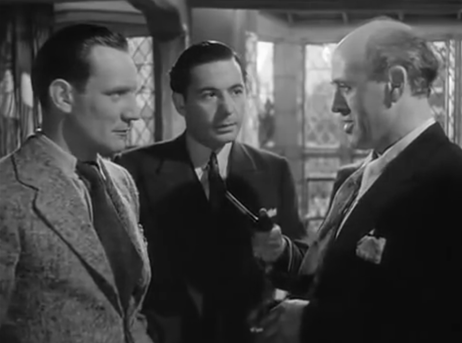
 Green for Danger gives murder mysteries a good name because it is drawn up excellently but also with a degree of charm and that should not be taken too lightly or maybe it should. But either way, there’s no doubt that director Sidney Gilliat’s tale based off of a novel by Christianna Brand is quality entertainment.
Early on the fitting backdrop of wartime Britain circa 1944 is developed from a historical moment that is uniquely dynamic in its own right. The German V1 “doodlebug” rockets are raining down overhead leaving the Isles in rubble. In such an environment nurses and doctors must work continually to care for numerous patients in need of medical assistance. The most pivotal patient for the sake of this story is the seemingly unextraordinary postman Mr. Huggins. Complications on the operating table do not bode well for him and he doesn’t make it. Though it hardly seems the pretense for murder.
Still, some are not so sure. Namely, the suspicious Sister Bates and yet another murder, this time more blatant, gathers the attention of Scotland Yard and so they send one of their men over — our trusty narrator — the one and only Inspector Cockerill (Alastair Sim).
He dictates the entire story with a rather amused detachment, conducting his job with a certain degree of care but he doesn’t mind a laugh or two. It’s truly a delightful performance from Sim, playing the jocular inspector like we’ve never seen before. His is a dryly wicked wit and he’s even prone to little bits of physical antics. One moment he watches with the giddy satisfaction of a schoolboy as the doctors duke it out, making no effort to stop the violence. But he also makes full use of a pair of voluminous eyes that can shift between sly glances and glaring accusations whenever the change is called for.
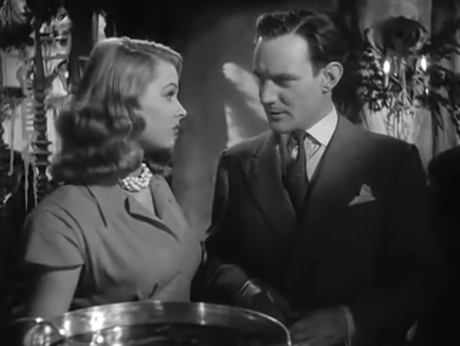 He comes in and steals the film but he does have some enjoyable castmates to work off of. Dr. Barnes (Trevor Howard) the anesthesiologist and the suave surgeon Mr. Eden (Leo Genn) are both in love with the same girl and understandably so. The attractive Nurse Freddi (Sally Gray) is a real prize but only one among a taut nursing staff including the fragile Nurse Sanson and the always lively Nurse Woods (Megs Jenkins). Before the Inspector arrives on the scene they are the true backbone of the storyline and it’s confirmed early on that the murderer comes from within their ranks. The age-old puzzle is left, to decipher who the culprit is and for what nefarious purpose.
It’s hardly a spoiler to say that the revelation of the murderer and the reason for the murders is hardly the highlight of the film. Because although we are dragged along by our curiosity as we have been trained to do with such mysteries, engaging films such as Green for Danger have more depth than the simple patterns of intrigue with a big reveal at the end. Because once you’ve seen one, you’ve seen them all, or at least you won’t be surprised the next time around. But this rendition has enough life in its characters, specifically Sim, to work beyond a basic murder mystery plot.
It strikes me that British backdrops often serve as the best environments for Whodunits and the quintessential nature of this reality has to do with certain sensibilities that the British people generally embody. They are civilized, proper, and not prone to the same fits of drama as other people. There’s also a reason that film-noir is an American genre and not really English. That darkness seeps out more readily and uninhibited.
But the Whodunit can still function because, despite their outward exteriors, that does not mean the characters within this film cannot still stoop to jealous action and even murder. Green for Danger is a thoroughly enjoyable exercise in such themes.
4/5 Stars
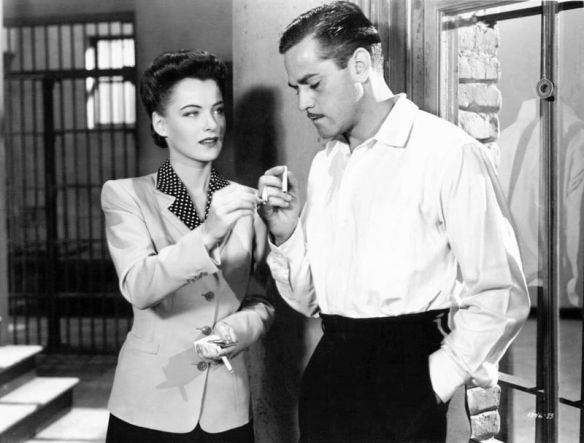 Robert Siodmak might not be the foremost of lauded directors, but it’s indisputable that film noir as a genre, a movement, a style, whatever you want to call it, would be a lot less interesting without him.
 It might sound like meager praise but Wonder Woman is the most engrossing DC offering thus far. It also seems almost unfair to compare across the aisle against main rival Marvel with its terribly lucrative cottage industry or for the very fact that any comparison might suggest how derivative this feature must be.
 The strands of our lives are woven together and neither time nor the world can break them.
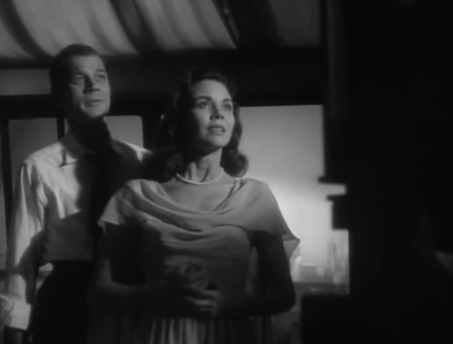 But it’s a chance encounter with a young girl named Jennie (Jennifer Jones) that gives Eben the type of inspiration that every artist dreams of because it’s precisely this spontaneous spark of joyous energy he needs to add something vibrant to his own life. In her constantly evolving role, Jennifer Jones exudes an effervescence, a certain radiance in body and spirit that lights up the screen in embodying this apparition of a girl.
 I find that despite his pedigree Joseph Cotten still comes off as an underrated actor and with each film I see him, I enjoy him immensely. Maybe for those very qualities. He’s not altogether handsome but he has a pleasant face. His voice isn’t the most formidable or debonair but it does have character. The supporting players lend some Irish flair to the cast and it’s striking that everyone from Ethel Barrymore to Lilian Gish glows with a certain hope. There is no obvious antagonistic force in this film. Eben Adams found his inspiration — the muse of a lifetime — and that passion is enough to lay the foundations of a film.
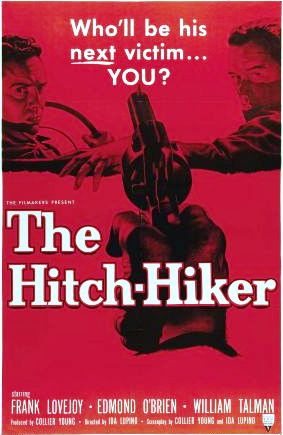 Part of the harrowing allure of the Hitch-Hiker is that it’s actually based on a true incident that occurred only a year before the events shown. It’s not as if someone took artistic license with some murderers and made it into a horror spectacle. Hitchcock’s Psycho especially comes to mind.
 It disappoints me that I was not more taken with the material than I was but despite not being wholly engaged, there are still some fascinating aspects to Panic in the Streets. Though a somewhat simple picture, it seems possible that I might just need to give it a second viewing soon. Let’s begin with the reality.
 Are you a mod or a rocker? ~ reporter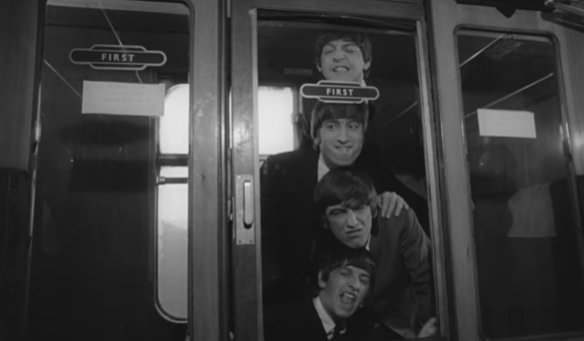
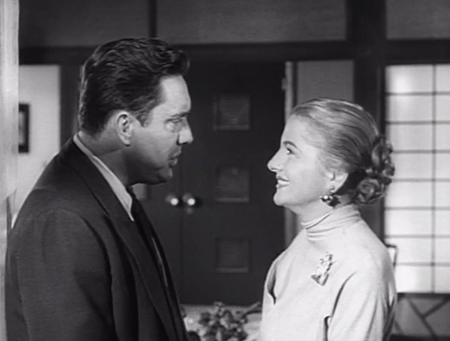 I despise you and I pity you. ~ Edmund Gwenn as Mr. Jordan
 Except at first what Harry does, does not seem like infidelity. In one integral scene Harry takes one of those bus tours to see the stars because, after all, Beverly Hills is that land of movie stars and their extravagant lifestyles. Jimmy Stewart, Jack Benny, Oscar Levant, Barbara Stanwyck, and Jane Wyman are all given a nod. There are even a few playful in-jokes to the always genial Edmund Gwenn who turns up as the adoption agent. All of this is essentially fluff but it’s on that same ride where he meets someone — a woman named Phyllis Martin (Ida Lupino).
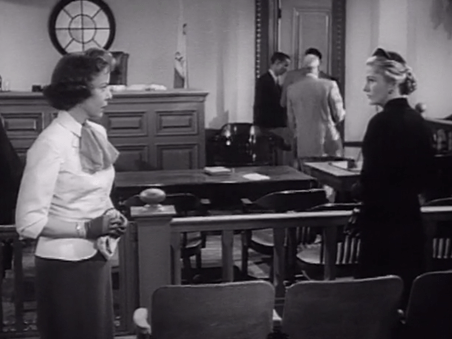 It strikes me how it’s often the small, tiny, unassuming pictures that impact me the most and this film did wrench my heart over the course of only a very few minutes. The final court sequence sums up the reasons quite well because it ends the film on a moral note setting up a rather convicting paradigm.

