
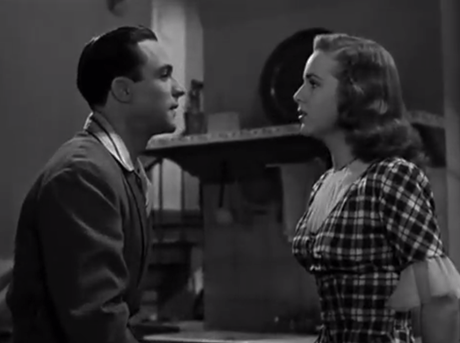
Christmas Holiday begins as a movie we’ve probably seen before countless times. A returning G.I. (Dean Harens) is getting ready for some Christmas leave except our star is as stiff as cardboard and that comes before he gets the sobering news. The girl he was intent on marrying has duped him to go get hitched to another man. Despite the pleading of his happy-go-lucky war buddy, he makes the decision to head out to San Francisco all the same.
Inclement winter weather sets up a dark and stormy detour in New Orleans and fortuitously takes the story into slightly different terrain. Unfortunately, Herman Mankiewicz’s script takes so very long to frame its story, it feels like there is a lot of catching up to do.
Although the picture is directed by quintessential film noir craftsman Robert Siodmak, Christmas Holiday is a weird clashing of discordant elements, namely musical numbers with the chiaroscuro malaise of noir. Irving Berlin’s compositions even make an appearance in the form of “Always” repeated throughout the picture as a bit of a romantic musical cue.
On first glance, such a dreary picture doesn’t become Deanna Durbin. She is a songstress first and apt at romantic comedy. And yet in keeping a broader mind, she isn’t too bad in this one. It seems like the material itself is to her detriment, that and an equally jarring characterization by her leading man. Because if we’re honest, a dark, brooding Gene Kelly almost feels like an oxymoron — especially as he plays a craven murderer named Robert Manette.
Again, if we run the same test and give him the benefit of the doubt, it simply does not take, regardless of the material. He feels out of his element, and it’s nominally okay because we have so many future forays to appreciate him for. Still, it does leave one scratching one’s head. While early in his career, he had already made For Me and My Gal as well as Cover Girl so it’s not like no one knew he could sing and dance.
If we summed up the glut of Christmas Holiday‘s plot, it is a less effective riff off Shadow of a Doubt in the sense that we have an everyday man who also moonlights as a murderer. I suppose most killers are like that, but the dichotomy is made so blatant with Joseph Cotten in the former film and Gene Kelly in this one. Similar to future projects like White Heat or Psycho, there is also a mother complex, albeit far less intriguing.
As much as I love Siodmak to death, it’s hard to champion a rather tepid release like this. Measured criticism once again falls on the script, which spends time setting up a character who is only of peripheral importance. It invests in a romance we already know through flashback ended tragically. Any attempts for tension between mother and daughter-in-law feel essentially dull and uninspired.
There’s no pace or ticking time bomb revealed to keep us fully engaged in these dealings until the last possible moment. This is when Manette is out of prison and returning to his missus, whom he believes has been unfaithful. Then, the expected rush from the fateful confrontation is all but nonexistent. Durbin’s wounded reaction is probably the best part.
Based on a Somerset Maugham story or not, the title Christmas Holiday also feels like a total misnomer. In fact, the entire movie feels like a sidebar conversation to what should have been a different film altogether. Man was not meant to subsist on atmospherics alone. There needs to be some form of compelling narrative or at least interesting ideas to mull over. Christmas Holiday is lacking in this department.
3/5 Stars
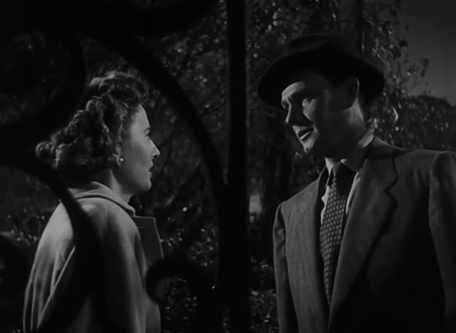
 Aesthetically, Robert Siodmak’s roots in German Expressionism are crucial to the formation of the film-noir world as we know it today and Criss Cross has to be one of the most diverting additions to his repertoire. Once more he’s paired with his star from The Killers (1946) Burt Lancaster with another raging score from Miklos Rozsa and yet again there is a heist involved. However, whereas the film inspired by Hemingway’s original story was a story about a washed-up boxer — a humble Citizen Kane if you will — with some criminal elements mixed in, Criss Cross is all thriller. It represents the subset of film-noir that is the heist film, but it would hardly be film-noir without something going terribly wrong. This event is integral to the plotting as is the love triangle that becomes the main axis of the ensuing action.
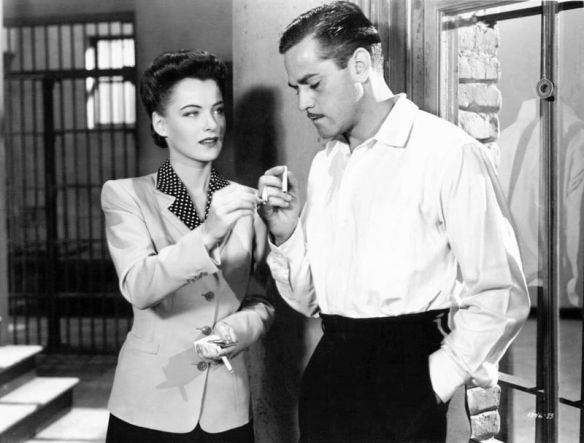 Robert Siodmak might not be the foremost of lauded directors, but it’s indisputable that film noir as a genre, a movement, a style, whatever you want to call it, would be a lot less interesting without him.
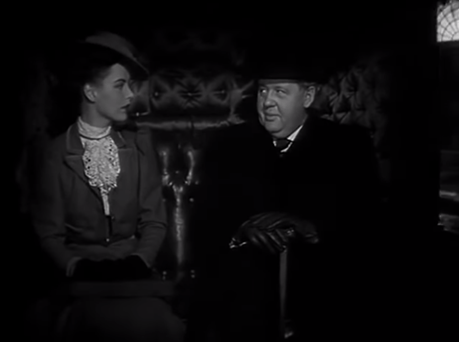
 It’s a B-picture title to be sure but with Robert Siodmak and such an ensemble, this is an enticing noir all the same. The well-to-do Quincy family of small-town America are an odd bunch, still holding onto their surname with pride as they slowly drift further and further into obscurity within the walls of their old mansion.
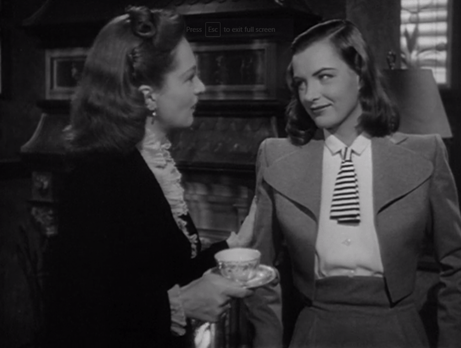 The dominating sister Letty, played by Geraldine Fitzgerald, is more aloof in her ways, veiling everything with a conviction that what she does, she does for the good of her brother. But it’s all really due to the fact that she cannot bear to let him go. In this way, she’s constantly controlling his life and undermining his happiness. She’s hardly your typical femme fatale, more cultured and refined than most, but there’s still something exacting about her.


 4 Star Films