

“After you’re married… That’s a funny thing to hear your wife say!” – Joel McCrea as Tom Jeffers
All the timeless Preston Sturges pictures have the pace of a freight train barreling down the tracks in loop de loops and figure eights. The Prologue of The Palm Beach Story sets up a raucous race to make it to a wedding ceremony involving a bride and a groom…and a woman tied up… It’s gone in a blink. Hold that thought.
Cut to present. There’s Franklin Pangborn, always hustled and harried. This time as an apartment manager trying to show off the new apartments he has for lease to the grouchy, incessantly deaf Wienie King and his bubbly wife. These two initial scenes are textbook examples of how to juxtapose people and places for comic effect. In fact, sometimes Sturges will gladly lean into the joke before giving us any indication of what his story really pertains to.
When we finally find a premise, he’s already taken us for a spin. Because the previously revealed bride and groom, Tom and Gerry Jeffers (Joel McCrea and Claudette Colbert), sunk all their money trying to get a bite — namely the $99,000 he needs to get his suspended airport project off the ground. As of right now, there are no takers, and their marriage has tanked. Strangely enough, they still love each other madly. At the very least, their constant quarreling seems to hint at their continued devotion. That’s the wrinkle.
She wants to get a divorce (sacrificially, of course) so she might hook a rich husband to pay for his pet project. He selfishly wants to stay married to her. He tries to hold onto her, racing out of their apartment, in only the bed linens, as she resolves to go to Palm Beach — to find herself a millionaire — for him.
Sturges relishes the comic situation, which verges on the risque, especially for the day and age. The script was even repeatedly balked at by the Production Codes for the very same reasons and still they manage to mention the word “sex” quite frankly (Gasp)!
What becomes most evident is this increasingly flippant disregard for the institution of marriage. The ensuing world and the situations arising make sense originating from a man who himself came out of affluent circles with a row of marriages left in his wake. He’s in a sense writing what he knows intimately while still utilizing his own idiosyncratic perspective.
It’s a glorious trip to Palm Beach as he loads the cars end to end with his stock company, comprising a traveling circus of dopey millionaires making up the Ale and Quail Club. Gerrie gratefully becomes their mascot as they pay her way to the far off land of the Florida coast.
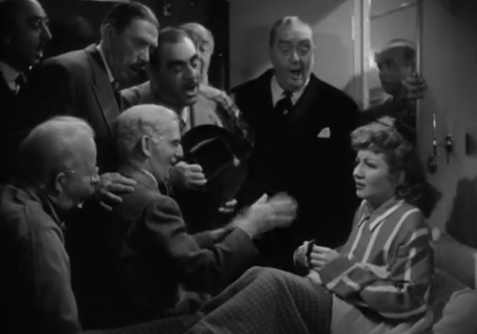
In typical Sturges fashion, he overwhelms the screen with the sheer force of bodies and figures from the likes of William Demarest, Al Bridge, and just about anyone else you’ve ever seen in a Sturges film before. They divert themselves with any number of dalliances including hiccups, trap shooting crackers, and nighttime serenades of “Sweet Adaline.”
What’s even more hilarious is how we never actually see these characters again. They serve their purpose and service the writer-director’s scatterbrained devices. The extended sequence functions as its own standalone vessel of amusement.
He really is the king of writing robust character parts that, while never throwaway, need not be overly important. Today it feels like every bit role must be functional. For Sturges, a character functions, first and foremost, if they add to the comic maelstrom he’s whipping up. When they serve their purpose he can zip onward toward further zaniness.
Likewise, aside from being entertaining, The Wienie King is Sturges’s great enabler within the entire picture, gladly shoveling out money as if it were nothing, for rent and plane tickets — whatever the story requires — and despite his apparent obliviousness, he has these near-surreal bouts of hyper-lucidity. In considering his character, one cannot help surmising a stopped clock is right twice a day – even a tone-deaf one.
There must be a story, but the script gladly supplies a vehicle full of hilarity to deliver the goods for the benefit of the audience. As we progress with the ever-whirling thingamajig of wackiness, there’s the introduction of Rudy Vallee. The former matinee idol shows a certain penchant for comedy in his own right, added to the Sturges hall of fame of crazy aristocrats.
His dry idiosyncrasies serve him well, from the methodical removal and placing of his specs to the ongoing accounting he does in his little black book. Even a couple rueful in-jokes to his earlier crooning days, including “Isn’t It Romantic?,” send a few knowing winks toward the perceptive viewer.
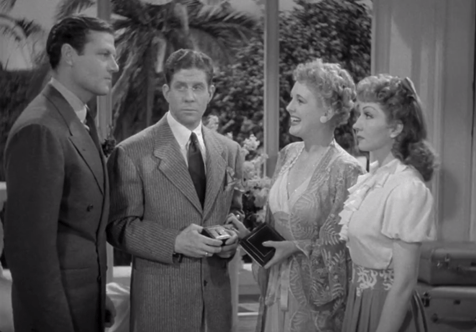
Although she purportedly struggled with her director’s style of mile-a-minute dialogue, Mary Astor, nevertheless, does the corkscrew language a major service as the ably speedy-mouthed Princess Centimillia, who bowls one over with her mixture of glitzy upper crust exuberance and ready-made amorousness. The perfect foil for her dry brother dear “Snoodles.”
To round out the quartet (quintet if you include the single misfire Toto), Tom Jeffers arrives to reclaim his wife but finds himself being turned into a brother named Captain McGlue before he can get in a word edgewise. The quarreling goes on behind closed doors as estranged husband and wife both find themselves romantic objects — currently pursued by other people.
One can’t help to compare it to Midnight, the Billy Wilder penned film with all sorts of little white lies and shenanigans being pulled to keep the charade going for as long as possible. It’s true often the best screwball farces — including some of Sturges’s successes — involve people donning aliases with highly comic ends, of course. Even in this frenetic company, The Palm Beach Story might be more outlandish than most, on par with the rambunctious insanity of Some Like it Hot.
What a glorious wisenheimer Sturges is holding off on the one loose end we’ve been wondering about since the outset of the movie only for it to be the final payoff, setting in motion another story that we’ll never hope to see. Everything is bookended by this ultimate gag that plays as pure Sturges. He’s shoehorned the whole story just so he can swoop in from left field with the most propitious footnote.
At its best, The Palm Beach Story exudes all the zany charms of Sturges’s screwiest works between a finely wrought cast with plenty of whiz-bang patter that time and time again gladly succumbs to silliness. Preston Sturges does his secondary characters a major service, and they more than return the favor. It’s a picture totally stolen away by the supporting cast and rightfully so.
4/5 Stars




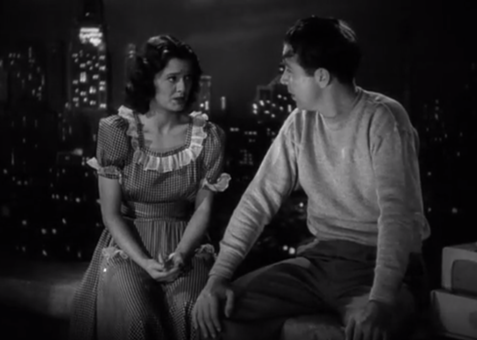
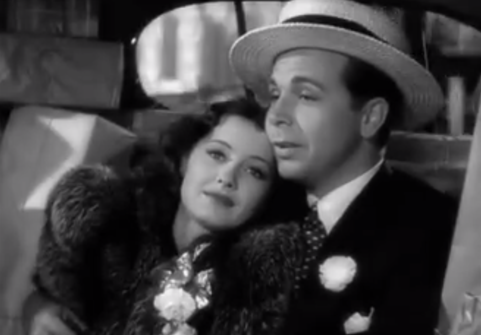
 Previously, whenever I thought of Elvis and films, my first inclination was to think musical and then secondly because, by some form of osmosis the culture had taught me this, Elvis went with Ann-Margret. In truth, they were astoundingly only ever in this one picture together but what a picture for them to be in. It left an indelible impact on both stars as much as it did their audience.
 The opening credits roll and recognition comes with each name that pops on the screen. Jean Arthur, James Stewart, Claude Rains, Edward Arnold, Guy Kibbee, Thomas Mitchell, Eugene Palette, Beulah Bondi, H.B. Warner, Harry Carey, Porter Hall, Charles Lane, William Demarest, Jack Carson, and of course, Frank Capra himself.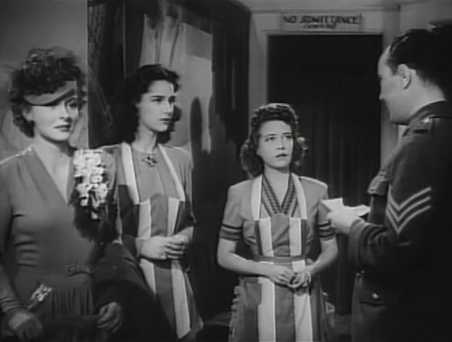
 There are also strategic vignettes sprinkled throughout to boost morale and the camaraderie between allies. A few Brits can be heard taking part in the gaiety and making friends with our protagonists. A table of Hispanic soldiers takes in a floor show. One of our hostesses gets a moving letter from her older brother in the marines who is bent on returning to his family and proving that his training can outlast any “Jap” out there. There’s a last-minute marriage ceremony that we are privy to. Sam Jaffe introduces the audience to a few Russian allies, an Australian soldier has just returned from the front, and several Chinese air cadets get a rousing appreciation. Merle Oberon (the only actress close to being Asian in the film) gives them a stirring sendoff. Finally,
  “You have the darndest way of bouncing a fellow down and bumping him up again” ~ Henry Fonda as Charles Pike
 In fact, we have a brilliant introduction to her as she narrates the scene unfolding in front of her with the aid of her compact mirror. She trips up the bumbling bachelor and their introduction is the first exclamation point in a bumpy relationship. She’s ready to play him and marry rich and famous, because he’s a pretty naive fellow, and stiff around the ladies. Fonda’s nervous charm proves the perfect recipe for success as he is constantly being overwhelmed by Stanwyck’s frenetic barrage. His defenses are down and he hasn’t the foggiest what has hit him. Either he was really that uncomfortable or otherwise, he does a superb job of faking it since there’s never another moment where he’s not being fondled or manipulated.
 The story could end there, but Sturges has set his story up perfectly for a killer second act. Jean plans a perfectly sneaky revenge plan to get back at “Hopsy” by posing as the British niece of another con man (Eric Blore). He uses his own wily charm and influence to get them an invitation to the Pike household for dinner. There we see several other great character actors in action including Horace Pike (Eugene Pallette), and the perennial sourpuss Muggsy (William Demarest). Jean shows up now as the Lady Eve and successfully convinces her “Hopsy” that she is a completely different individual. The film works wonderfully on this axle of ludicrousness because young Pike is completely befuddled and awestruck again. He goes thudding, clanking, and crashing all evening long, a true victim of love. Pike thought he lost one girl for good and here’s another even better prospect. A whirlwind romance follows and everything is falling into place beautifully. There’s a frantic montage in preparation for the big day and then it happens. They get hitched. Afterwards, it’s all done and the two lovebirds are on a train barreling down the tracks interspersed with the long laundry list of all Eve’s beaus from Angus, to Herman, and Cecil and so on. It’s Charles’ worst nightmare, and he hopes to get out of it as quickly as possible.
 What makes Sturges’ film so wonderful is all the parts making up the whole. His script is perfectly contrived mayhem. He sprinkles it with his typical slapstick, his loudmouthed stock company lends an added layer, and his typically lightning-quick repartee is brought to life by his leads. Stanwyck was the quintessential leading lady of the 1940s and in 1941 she was in fine form (Balls of Fire and Meet John Doe). She can dance so effortlessly between dynamic comedy to heartfelt drama that is positively palpable. She overshadows Fonda in a sense, but they still work together, because he is her perfect foil, the precise innocent fool to fall into her web of feminine wiles. She can muss up his hair, manhandle him, and completely manipulate his feelings. Yet we still like both of them in spite of it. They are a hilarious match, and there’s space for some passionate canoodling as well. It’s probably one of the most perfectly wonderful, utterly dysfunctional relationships we could ever hope to see put on screen. By continually whipping out punch line after punch line to the very last quip, Sturges makes this comedy look positively effortless.
 4 Star Films