Stage Door Canteen (1943)

stagedoorcan2

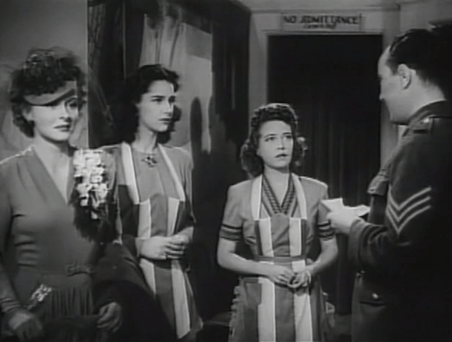
Director Frank Borzage’s Stage Door Canteen is a gentle-handed piece of propaganda. It plays out rather like a scripted 1940s wartime reality. It’s less a film and more of a historical relic commemorating the eponymous Stage Door Canteen in New York City. Thus, any effort to give it some sort of rating almost seems beside the point, because it was meant to be a rallying cry of comfort, entertainment, and escape from the war right outside. It met the general public right where they were and inundated them with mega star power. This wasn’t the only nightclub or film to do this either. The Stage Door’s west coast counterpart was the Hollywood Canteen, and it received a film treatment of its own in 1944.

In truth, the real nightclub was still in full use every day so the next best alternative was the RKO Lot in Culver City. That’s where it all happens like a day in the life. We follow three soldiers: the perfect cross-section of white red-blooded American G.I.s. Each one gets to dance and talk their last days away with a pretty girl serving as a hostess at the canteen. Each one of them will never forget it.

The entertainment is full of partial cameos, pop-ups, and performances from a plethora of stars. For even the most well-acquainted modern viewer, it’s hard to recognize all the faces and names that show up. Katherine Cornell, Count Basie, and Yehudi Menuhin are a few such figures who come to mind.

stagedoorcan1There are also strategic vignettes sprinkled throughout to boost morale and the camaraderie between allies. A few Brits can be heard taking part in the gaiety and making friends with our protagonists. A table of Hispanic soldiers takes in a floor show. One of our hostesses gets a moving letter from her older brother in the marines who is bent on returning to his family and proving that his training can outlast any “Jap” out there. There’s a last-minute marriage ceremony that we are privy to. Sam Jaffe introduces the audience to a few Russian allies, an Australian soldier has just returned from the front, and several Chinese air cadets get a rousing appreciation. Merle Oberon (the only actress close to being Asian in the film) gives them a stirring sendoff. Finally, Katharine Hepburn drops in for the premier cameo, to tie together all the loose ends and rally her fellow men and women to keep on keeping on for the sake of the country, so that the Allies might win the war.

From our modern day perspective, this might all come off like saccharine hogwash, but that’s not giving the material its due sensitivity. For that point in history, it was exactly what the American public was looking for. Today it’s a fascinating piece of remembrance. Then, it was still a story with a “to be continued” ending.

3.5/5 Stars

Sunflower (1970)


sunflower

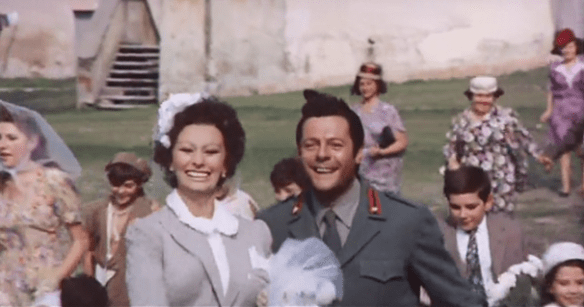
Vittorio De Sica is at the forefront of Europe’s most accessible filmmakers of the 20th century and that’s because the stories he crafts are heartfelt, moving, and also enter comical territory with ease. Sunflower pairs him once again with two of Italy’s Titans Sophia Loren and Marcello Mastroianni, and as you would expect the film starts off full of passion, playfulness, and a little pasta. It’s the dawn of WWII and the frisky pair is in love, deciding to get a quick marriage so they might get a 12 day leave before Antonio has to ship out.

In a sense, this is a kind of war film, because Anto gets sent off to the Russian Front and we get a glimpse of the harsh realities there. We are treated to some newsreel style war footage all the while veiled with a billowing red flag. Sunflower is not a film about the politics of the war per se, but rather the effect that war has on people and their relationships.  It can heighten passion, tear people apart, and change lives for good.

When the news comes home that the war is over, there is a flood of relief and then everyone including Giovanna (Sophia Loren) frantically begins the search for their kith and kin. Worried mothers and wives bring their long-cherished photos into train stations clinging to the hope that just one person passing by will be able to give them some fragment of hope. That’s what Giovanni gets and it’s not much, but a jaded soldier who suffered alongside Anto tells her the last time they were together, he was freezing to death in the snow. Her first reaction is to berate him, but he’s too tired to care by now. So she prepares for the journey to Russia to find the whereabouts of her long-lost love. She will not take no for an answer, but what she finds is more painful than even she could expect. It’s a different type of scar, a different type of hurt that no one could foresee.

sunflower1In some respects, Sunflower feels like a precursor to Life is Beautiful (1997), because both films are full of hopefulness, but they both exist as heart-wrenching stories. They deliver the same moving swells of emotion, but for different reasons. Sunflower ends up feeling a little like Umbrellas of Cherbourg in its tragedy. But the title seems to suggest, maybe, just maybe, like the old adage says, out of the ashes beauty can still rise. All the pain and suffering are only the fertilizer for flowers to spring up from the desolated earth. A memorial of what has happened, but also a harbinger for the future.

This is truly an international film because although it’s in Italian, it was partially shot in Russia (a first for the USSR) and features Russian performer Lyudmila Savelyeva in a prominent role. But the lovely score comes courtesy of America’s own Henry Mancini, rounding out this film perfectly. It’s another pleasant surprise from Vittorio De Sica.

4/5 Stars

Phoenix (2014)

Phoenix_(2014_film)_POSTER

Speak low when you speak, love
Our summer day withers away too soon, too soon
Speak low when you speak, love
Our moment is swift
Like ships adrift we’re swept apart too soon
~ Speak Low (1943)

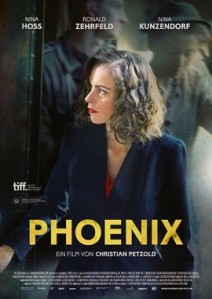
Anyone who’s watched a Christian Petzold film already knows that he crafts fascinating almost spellbinding films and that quality rests greatly on the laurels of Nina Hoss. Phoenix is yet another film that is a mesmerizing enigma.

It’s positively entrancing with its pacing — where you almost get lost within its minutes. Because although time never moves fast you quickly lose track as the mind is soon overwhelmed with a plethora of questions. In fact, all the time while you’re watching it all you can do is question. Implausibilities all but fade away in the presence of such uncertainty. If anything they get lost in the rubble.

It feels as if we’re trying to construct our own truth, which is almost maddeningly impossible because none of these characters seem ready to divulge any information. The past is a black shroud that everyone is reluctant to talk about. It makes sense because that soon after what do you say about the Holocaust? How do you cope or even begin to acknowledge the horrors that went on? It’s only 50, 60, 70 years later that we’ve finally been able to broach the subject as outsiders — people who did not experience those events firsthand. It’s easier for us to try and talk about it because we can never fully comprehend the climate. What would we have done? What would have happened to us? What would our lives have looked like in the aftermath?

The characters in Phoenix are beings in that post-war wasteland with specters hanging over them, and lives scarred by pain and suffering. They’re trying to salvage their existences the best they can, but they’re hardly existing as they did before the war. But allow me to backtrack for a moment.

Nelly (Nina Hoss) is physically maimed so horribly that her face is constantly covered in bloody bandages. Petzold does us a favor by not showing her visage before she gets reconstructive surgery. Like the shadow of the Holocaust, we are forced to imagine it on our own which is far more powerful. This is what her face looks like and this is perhaps how it happened.

What we do know is that she was arrested on October 4th, 1944 and her husband Johnny was as well. But Nelly’s faithful friend and guardian angel Lene says that he betrayed her. That’s what she believes, and yet upon hearing this news it hardly alters Nelly’s response. She’s still intent on finding him and picking up all the pieces. When she has a little more strength she begins wandering about the American sector looking for any signs of her former beau.

It turns out that Johnny works as a waiter in a cabaret Hall called Phoenix. When he first sets eyes on Nelly — it’s not his wife that he sees, but a wonderful impostor. She’s a woman who is strikingly similar, but her face is different. She’s the perfect accomplice as Johnny, or Johannes as he now goes tries to secure his dead wife’s assets.

What follows is his mission to make her into his old wife.  In many ways, it works as an inversion of the Vertigo conundrum. He thinks he’s making this woman into his deceased wife, and he coaches, dresses, and shapes her more in the image of Nelly. However, this hardly feels like an obsessive desire of dashed love, but a project to get him closer to his final goal. It’s not that sentimental, but Nelly follows along with the whole thing benevolently. To be close to Johnny is enough. But how does she even begin to break the news? Perhaps most frightening of all what will Johnny’s reaction be? After all, the wartime has changed them both.

So if you want to break it down to its most basic roots, Phoenix feels rather like a Holocaust film meeting Vertigo. But in essence, it defies that type of simple categorization. It lacks the odious horror of flashbacks and the glossy Hollywood production values of the latter. It fills its own niche altogether that even channels some of the darkness of noir. And there is no cathartic moment of emotional release. Instead, we are forced to watch as the characters bury their thoughts and feelings deeper and deeper. Perhaps they lie there somewhere under the surface. However, these are not histrionic people. They feel common and every day led by the performances of Hoss and Ronald Zehrfeld.

In this way, the performances are muted and repressed. In fact, there is little headway in the film and few epiphanies until the very end. That’s when for a few brief solitary moments things fall into place. We don’t know what will happen afterward, and in a way, we are suspended in the moment — left to ponder so many things. You could either make the case that Phoenix has shallow characters, or that there is so much depth within them that we cannot even begin to understand — like icebergs still partially submerged.

Many wonderful films lose so much of their magic because they dispel too much — give away too many of their hard-fought secrets. But Phoenix makes us work through everything, and it can be hard going certainly, and yet it is a thoroughly gratifying experience. We watch movies to be moved. We watch movies to be perplexed. We watch movies to acknowledge our wonderment in the human condition because it is a complex quandary that continually reveals new bits of enlightenment. Phoenix might leave us with more riddles than answers, and we should be content in that reality. That’s part of the magic.Like the mythical Phoenix of old, in a way, these characters try and die to their old selves, and rise out of the ashes a new.  Life is never that easy — always being clouded by doubts as our pasts come back to haunt us. It’s how we deal with that past that matters most.

4.5/5 Stars

Bridge to the Sun (1961)

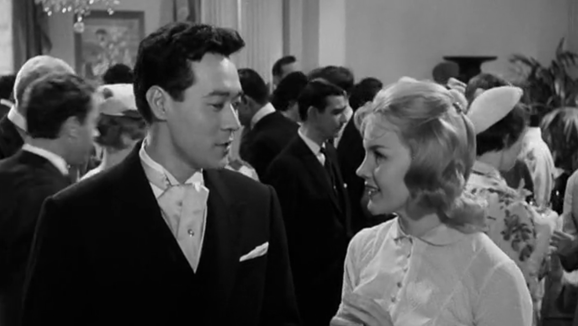
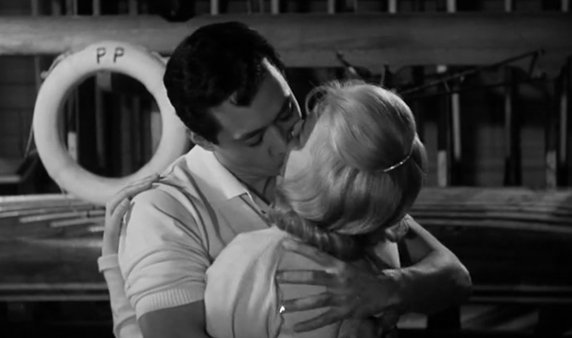
bridgetothesun1Bridge to the Sun is one of those films that was ahead of its time. Its main players are hardly remembered by modern audiences. Belgium director Etienne Perier was only a little blip on the Hollywood radar. The leading lady Carroll Baker was probably more notorious for her controversial role in Tennessee’s William’s Baby Doll than she was famous. James Shigeta was a pioneering actor, who was famously told, “If you were white, you’d be a hell of a big star.” He aged gracefully, but was slowly relegated from leading roles to bit parts in Hawaii Five-O and Die Hard. In truth, the film, based on the memoirs of one Gwen Terasaki, does suffer from a clunky script at times, and the box office returns were not too favorable. In fact, it was an outrageous flop back in 1961.

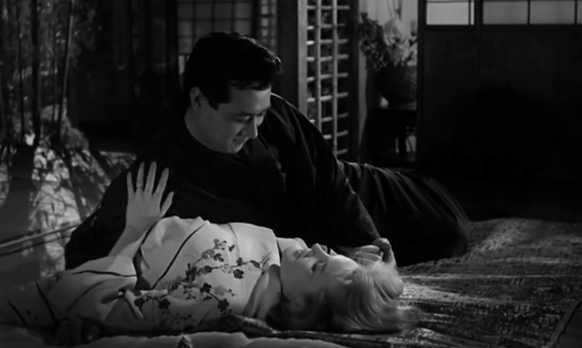
But now, with a fresh pair of eyes from the 21st century, Bridge to the Sun looks different and dare I say, groundbreaking for its candid depiction of interracial romance. Certainly, this is the story of two people falling in love, but under very different circumstances, in a very different world circa 1935. Gwen is a talkative young woman from Johnson City, Tennessee, who is more than thrilled to venture to the Japanese embassy with her aunt. Like any ignorant American she wants to meet a real-life Japanese, altogether bewitched by their manners and culture. Chopsticks are not exactly her forte, nor sushi. And yet the moment she meets the handsome young Japanese Ambassador Hidenari “Terry” Terasaki, there is an immediate connection. Yes, their cultures are so different which they will be reminded of again and again, but most importantly they love each other passionately. So much so that they disregard relatives and even superiors when it comes to whom they will spend the rest of their lives with. Theirs’ is a true romance.

bridgetothesun2In fact, this film does not shy away from showing that affection, even though it undoubtedly made some viewers squeamish at the time. More than once Gwen and Terry embrace in intimate moments that signify the deep-seated love that holds them together. Because it’s far from easy. Gwen finds it difficult living in a Japanese culture where the woman is meant to be wholly subservient to her husband. She’s fine with the bowing and the taking off of shoes even, but not being allowed to talk is about the limit. With his family, her strong, lovable husband now seems cold and distant. However, they cannot stay mad forever and soon enough their little girl Mako is born, making them a happy little family. But of course, imperial Japan and isolationist America are on the brink of conflict and Terry and his family are tottering on the brink of calamity. He’s seemingly one man trying to hold together the relations of two nations that he has such close ties to. One because of his wife, the other due to his birth. Then, on a fateful day in December 1941 Japan struck the first blow and life would never be the same. Terry is now being detained and Gwen is fearful she might be forever separated from her husband. Disregarding what everyone else says, she takes her young daughter and follows her husband once again to his homeland – knowing full well what might be in store for her and her daughter.

bridgetothesun5And when they arrive abroad there is the discrimination and the myriad of strange looks. Even as she makes the long journey across the sea all the white folk scoff at her, but Gwen takes it calmly and fearlessly. Once overseas the climate has changed greatly and now Terry is being questioned for his loyalty. The ethnicity of his wife doesn’t help and the firebombs raining down from above don’t exactly calm their nerves. But again and again, Terry and Gwen prove to be a resilient couple. The anomaly that should never have happened—seemingly could never have happened, and yet they did and they remained unequivocally together.

The days drag on and the plight of the people is worse and worse as Gwen waits anxiously for Terry to return. Finally, he does, badly battered, but soon enough the war ends and a happier ending seems in store. Well, perhaps it’s not quite as cheerful as we should want, but the one true fact is that Bridge to the Sun remains a love story to the end and that’s something you cannot snatch away from it.

As a Japanese-American myself, this film really hits home in many ways. There’s this strange dichotomy developed between Japan and the U.S. Both had their share of prejudice, but it was not so much modern systematic racism, but ignorant bigotry. They got so caught up in their own culture and ways of doing things they were not ready to open up to others. Thus, whites were meant for whites and “Orientals” with “Orientals.” Certainly, this is a narrow-minded presupposition and this story speaks to that longstanding injustice.

Mind you, there is no maliciousness in this statement because it goes both ways. The Japanese at times undoubtedly treated Gwen perhaps far worse than the Americans treated Terry. But the point is that these two represented something special. Maybe they did not think so in the moment because they were in love. But their story is gripping simply due to the fact that it feels like the exception, just like Carroll Baker and James Shigeta playing opposite each other was the exception. That is why I’m drawn to stories like this, and not just in film, but life and history. I don’t want to know just about the status quo, I want to know about those who were willing to step out and be different. I want to know who was brave enough to step out and be a bridge to the sun, whether that may be Japan or somewhere else altogether.

3.5/5 Stars

5 Fingers (1952)

5fingersHonestly, this doesn’t feel like a typical Joseph L. Mankiewicz film. It was written by someone else and because he was nearing the end of his contract with 20th Century, he didn’t end up editing the project. Supposedly the overseeing of Daryl Zanuck led to several scenes being scrapped which Mankiewicz thought were good. Also, as a director, his name does not usually scream spy thriller like an Alfred Hitchcock. He’s more in his element with cultured dramas about relationships. However, 5 Fingers is still an engaging tale based on the historical wartime events surrounding the informant code-named Cicero.

In real life, Elyesa Bazna was an Albanian born valet who worked under the British ambassador to Turkey. He played both sides, first ingratiating himself as a gentleman among the Brits and then taking pictures of top secret information and passing it off to the Germans in the period between 1943-44. Cicero, as he was called, could easily come off as an abhorrent traitor and yet James Mason plays his character Diello with an adeptness that is underlined with an air of civility. We don’t particularly care for the man, but he’s not a monster, just a bit crooked and concerned with personal gain. Mason certainly did have a knack for playing the criminal type and I must admit I’m curious to watch more films with him because his performances have not quite won me over yet. There’s still time for that.

The film altogether is not that tense, but it does set the groundwork for some interesting interactions which all seem to stem from Cicero. He is subservient and aloof when it comes to serving the ambassador. He’s quite open with the Countess Anna Staviska (Danielle Darreux), who turns into a confident, romantic partner, and in some ways an accomplice — just wait. Meanwhile, he deals with the Germans self-assuredly knowing what he wants and how he’s going to get it. He’s no slouch and he seems devilishly good at the spy game.

Throw in some double-crossing from the countess and a dynamite word like “Overlord” (aka D-Day) and Dellio finds himself on the run with the Brit’s counterintelligence operative (Michael Rennie) hot on his tail. Thanks to his assistance, the Germans are trying to protect him as he gets ready to hightail it to South America. There’s one small thing he didn’t account for. He’s been duped. He and the countess both. All he can do is break out in a fit of laughter. I’m not sure if that’s how the real story ended — probably not, but it makes for a fitting conclusion of this tale as his money slowly drifts away in the wind.

3.5/5 Stars

Review: Schindler’s List (1993)

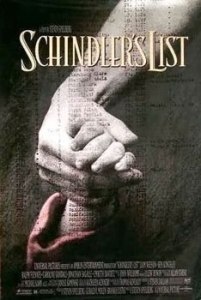
Schindler's_List_movieWhat is there to say about Schindler’s List except that it is necessary viewing for its depiction of Shoah, suggesting that, literally, out of the ashes beauty and hope will rise. It would be rather callous to call Steven Spielberg’s film pure entertainment. True, he comes with a pedigree that includes such escapist classics like Jaws, Raiders of the Lost Ark, and Jurassic Park. However, Schindler’s List is a far different creature and it is arguably his most significant film. It is so moving on a heart-wrenchingly beautiful level. Because great films are more than entertainment, pure and simple. They are affecting, tapping into some deep well inside of us that causes us to laugh, to cry, and have feelings.

Schindler’s List shows us the horrors of the Holocaust without dumbing them down. We see those getting shot. We see the naked bodies. We see the mass graves and the billowing ashes. It can be hard to watch. Abrasive in its content, but not in its form. The film itself is beautifully cast in black-in-white with the most moving of compositions by John Williams and poignant performances by many. But permeating through all of this is, of course, the tragedy, but with the tragedy comes the hope which is crucial to a story such as this.

Spielberg’s reference point is one man named Oskar Schindler (Liam Neeson), who not only was a war profiteer and womanizer but a member of a Nazi party. He’s not afraid of ingratiating himself with the right people to make a pretty penny off the imminent war because in his mind it’s all good business acumen. And aside from his affiliations, what’s not to like about him? He’s well-groomed, a gentleman, and charismatic. It still would be a far cry to call him a hero, at least not yet.

With his main motive still being money, he makes contact with a Jewish man named Itzhak Stern (Ben Kingsley) who not only has the bookkeeping abilities he is looking for but also connections to the black market and Jewish investors. So as the ghettos in Poland fill up to the brim, Schindler is quick to capitalize, offering the Jews more practical resources in exchange for their money. They get something, but he’s the big winner. He begins to set up his factory for the production of pots and pans which proves to be a lucrative business, especially with most of the bigwigs on his side. At the same time, he takes on Jewish laborers since they’re cheap, and Stein is able to save them from a fate of a concentration camp or being shot.

Our primary villain, Amon Goeth (Ralph Fiennes) is ordered to start a new camp and just like that the ghettos are closed and the Jews are forced out. He is a despicable creature and a sadist to the max, exemplified by the many people he shoots from his balcony in the mornings. There’s no provocation for it. He just does it because he can. He is not the type of man you can seemingly deal with normally, and yet being a man with immense charisma, Schindler does just that, all in the name of business.

But Schindler too sees the chaos, destruction, and killing that is going on. He can not try to underplay it now since he has seen it all firsthand. But there is a point in the film where his focus slowly evolves from a desire to make money to actually saving Jews from complete annihilation. The most obvious moment occurs after he sees the little girl in the red coat lying in a wagon, dead. Moments earlier he had seen her scampering through the streets, an innocent beacon of color amidst the chaos. What is the world coming to when a girl such as this can be killed for no apparent reason? It begs for a response from Schindler. He can no longer be a passive observer and so he does take action.

With the aid of the ever faithful Stern, Schindler is able to construct a list of over a 1,000 Jews to save from the concentration camps. As the war is going poorly for the Germans, Goeth is ordered to transfer his prisoners to Auschwitz, and although Schindler almost loses all his workers, he is able to save them by literally buying all their lives from Goeth. He spends his entire fortune to save them as well as ensuring that his armament plant does not actually make any working shells. It’s bad business, but it is all in the name of one of the greatest acts of humanity he could perform.

In one final word to the people, Schindler protects his Jews one last time, daring the Nazis working at his factory to kill them or go home to their families as men. They silently choose the latter, and he flees the camp as a war profiteer.  He breaks down looking at the few possessions he has left suggesting that more Jews could have been saved with them, but the Jews in front of him, represented by Stern, point out the great good he did. They bestow upon him a ring with the inscription: “Whoever saves one life saves the world entire.”

He is gone now and the story of Schindler’s Jews is not yet complete, because they do not know where to go, but they head out with purpose making their way towards the future. And it is in this moment that their story stops being a memory and breaks on into the present. It is a wonderfully powerful device from Spielberg that evokes an overwhelming flood of emotion. In a line of solidarity, the Schindler Jews walk forward toward the grave of Oskar Schindler. Nothing can quite explain the feelings pulsing through the body as we watch actors and their real-life counterparts laying stones on the grave of this man, much like the Israelites laying stones down in remembrance of what their God did for them.  In one final moment, Schindler’s wife lays one final stone and Liam Neeson lays downs a final rose and we see his imposing but solitary silhouette off in the distance. It’s magnificent, to say the least.

Out of the many scenes that become ingrained in the mind, there were two that especially resonated with me. One of them occurs when the children were trying to evade capture and imminent death. In such a life or death situation they willingly resolved to literally swim in the urine of the outhouse. Another scene that got an immense reaction from me was when all the naked women, with their hair now cut off, are herded into the showers. Both they and the audience think this is the end of their lives so it is almost a cruel trick when water begins flooding from the shower heads. I’m not sure the last time I have felt so much anxiety as an observer. It’s hard to discount.

There are so many great performances big and small, but Liam Neeson and Ralph Fiennes are both superb. We always love a good anti-hero or at least a complex one, and Oskar Schindler fits that bill beautifully. Also, we love the same in our villain, and I must say although I absolutely despised Goeth for all his evil, I must admit that somehow I still felt sorry for him. He was only a cog in the machine, a lonely man who was really so insignificant, in spite of what he wanted to believe. He shoots Jews, beats them, and yet can have such a twisted and somehow intimate relationship with his Jewish maid Helen.

For over 20 years this film has been a beacon of hope and fragment of truth from a period of history that contains so much darkness. Hopefully, it can continue being that touchstone to the past so that there is never the danger that anyone would forget these catastrophic events, but also the heroes like Oskar Schindler who through their actions were able to do a great deal of good.

5/5 Stars
Miracle of Morgan’s Creek (1944)

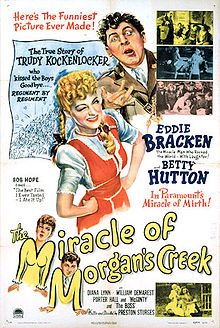
220px-The_Miracle_of_Morgans_Creek_1944_posterPreston Sturges was a revelation when I first saw Sullivan’s Travels and then The Lady Eve. His scripts are always wildly hilarious and full of memorable characters, whether they are headliners or just supporting the stars. The Miracle of Morgan’s Creek (1944) was a lesser known film to me, starring Eddie Bracken and Betty Hutton, but I was ready to see what this screwball could deliver.

With the start of the war, there began a push on the home front to strengthen morale by throwing parties and drinking victory lemonade in honor of the boys going overseas. Young Trudy is intent on dancing the night away with a lot of soldier boys. She just wants to do her part in the war effort after all. Her grumpy and domineering daddy Mr. Kocklenlocker (William Demarest) forbade her from taking part in such a shindig.

She sullenly goes to the movies with Norval Jones (Eddie Bracken), the young man who has been infatuated with her since they were kids. However, she somehow talks Norval into letting her go off to a party, and she spends the night living it up, while he waits dejectedly at the theater. When she finally returns its late morning of the next day and Norval knows her father will kill him.

However, Trudy also discovers a ring on her finger signifying that she married a soldier in her wild stupor the night before. The only problem is she cannot remember who it was, there were so many soldiers that she danced with after all. On top of that, add the prospect of a baby and you have a real doozy that has small-town scandal written all over it.

Norval tries his best to help remedy things for Trudy, only to wind up in jail with a big to-do building up — even making its way to the governor! Things don’t look good for poor Norval until Trudy gives birth and it’s a MIRACLE! When he finds out about what happens he has a little fainting spell.

That’s the craziness that is the Miracle of Morgan’s Creek, thanks to the rapid-fire dialogue and caricatures created by Preston Sturges. William Demarest is especially memorable as the hard apple Mr. Kocklenlocker who is always bossing his daughters around, but he’s not all bad. By now Morgan’s Creek looks dated, but all the same, it is still a memorable piece of WWII homefront cinema. Supposedly it was standing room only back in the day and honestly, it’s surprising that this film ever got past the censors. Bigamy, pregnancy, and so much more all comically mentioned in a 1940s film. Who would have thought?

4/5 Stars

They Were Expendable (1945)

They_Were_Expendable_posterThere’s nothing very intriguing about a film entitled They Were Expendable. In essence, we already know what the conclusion of the film is, however it is important to understand the context of when this John Ford World War II docudrama was coming out. In 1945 the Nazis and Japanese had finally been quelled, and the Allies could look back at the sacrifices that had been made.

One such example was in the Philippines after Pearl Harbor. Despite being undermanned and without much support, the brave men in the navy wreaked havoc against the enemy trying to hold onto their strongholds as long as possible before being forced to evacuate. It is far from a glamorous moment in the war because the war seemed to favor Japan and our forces were made to flee. However, in those moments of distress and tragedy, bravery seemed to flourish and our resolve only greatened. General Douglas MacArthur summed up the sentiments of every man when he promised, “I shall return.”

That being said, John Ford’s They Were Expendable is not always easy to follow; it can feel slow and deliberate, however, it exudes a gritty realism that is hard not to appreciate. It certainly is patriotic, but it does not often over sentimentalize war with high drama. We see it for what it often is. It means smoke, explosions, shipwrecks, death. It means breaking apart friends, crews, and men and women who care about each other.

Part of that realism is probably helped by Ford’s work filming a documentary of the Battle of Midway and lead Robert Montgomery (who plays Lt. Brickley) also fought on a P.T. boat during the war. Although he was not ever in the military, John Wayne always has a knack for reflecting American ideals of grit and determination. That’s why he was made for westerns as well as war films. This time around playing the fiery but loyal Lt. Rusty Ryan. Donna Reed on her part has a rather small role, and yet it is an integral part because she represents the brave nurses who support the military. She is the lifter of morale, the girl next door, all these ideals that fit this pretty young lady from Iowa. It’s hard to know if she’s just playing herself or not.

At times it’s a hard film to follow because it often seems to jump or skip events. Maybe it happens in an attempt to cover more story or maybe Ford did not want to hold his viewer’s hand, I’m not sure. I do know that I am far less of an informed viewer about this time period or this moment in World War II history. It often seems like most of the limelight is given to mainland Europe and not the Pacific.

As much as I was drawing connections and finding similarities, this film is far from McHale’s Navy. The story is far more somber, more realistic, and at times depressing to watch. It’s the kind of film that could only be made after we had won. It affirms our American resolve and honors those who paid the ultimate sacrifice. That and the film’s beautiful low lit images make it worth watching. The cinematography makes numerous scenes far more interesting by layering characters in darkness and accentuating the shadows in a hospital corridor for instance. Rather than making everything feel stylized, it only helps to augment the realism that makes They Were Expendable a worthy testament of WWII.

3.5/5 Stars

Act of Violence (1948)

ActofViolenceAct of Violence is an interesting post-war moral tale from director Fred Zinnemann. Frank (Van Heflin) returned home from war a hero. He now has a small child with his pretty young wife Edith (Janet Leigh) in the vibrant California town of Santa Lisa.

Little is known about his P.O.W. past and all his comrades were killed. Except one. His friend Joe (Robert Ryan) is still alive but he is plagued by a crippled leg now. He finds out about Frank’s whereabouts and it become his personal vendetta to straighten him out. The innocent Edith is in the dark about the whole ordeal and with the shadow of Joe constantly haunting him, Frank must family face the specter of his past.

He goes off on a business trip to escape and there out of desperation he winds up hiring a hit man to get Joe off his back. The two former buddies set up a meeting (which is really a trap), But as would be expected it does not work out as planned. Justice is dealt but there is still a strange sense of moral ambiguity. This is  certainly not Zinnemann’s best work, but it brings up some interesting questions about moral scruples and personal conflict.

3.5/5 Stars

Hangmen Also Die! (1943)

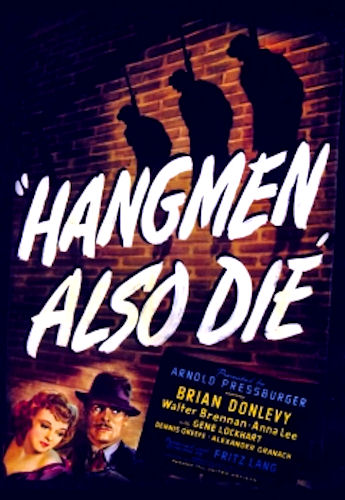
Hangmen_Also_Die_1943There are some fine pieces of intrigue in this modest WWII period film from Fritz Lang. The plot is based off real events in Czechoslovakia surrounding the assassination of Nazi Holocaust proponent Reinhold Heydrich. Mascha (Anna Lee) finds herself admidst a web of trouble when she helps a member of the underground after he commits the killing. But the Nazis are soon hounding her and it brings danger to her father’s household (Walter Brennan) . Ultimately she is forced to choose where her greatest allegiance stands.The film features Gene Lockhart playing the Nazi collaborator Czaka. Perhaps this film is not all that realistic and the casting is not perfect (although I did enjoy seeing Anna Lee in a leading role). At the time it came out this movie functioned as an anti-Nazi film and it still packs a decent punch from that perspective. It deserves some acknowledgement at the very least.

3.5/5 Stars