

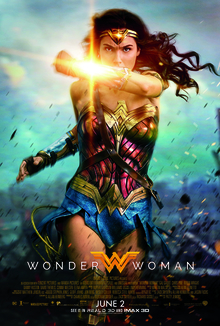
 It might sound like meager praise but Wonder Woman is the most engrossing DC offering thus far. It also seems almost unfair to compare across the aisle against main rival Marvel with its terribly lucrative cottage industry or for the very fact that any comparison might suggest how derivative this feature must be.
Yes, Man of Steel and Batman V. Superman cannot hold a candle to most of their competition and Suicide Squad was an atrocious misfire. But this is a film that stands on its own two feet — on the feet of its director Patty Jenkins (Monster) and its heroine Gal Gadot.
Jenkins’ Wonder Woman is ripe for praise and adulation on multiple fronts. Its closest equivalent would be Captain America: The First Avenger (2011) with its period setting as a stunning backdrop for a superhero narrative. In this one, Diana Prince (Gadot in her first true starring role) is joined by a ragtag band of renegades including Steve Trevor (Chris Pine) and his eclectic compatriots including a drunken sharpshooter, a failed actor with a penchant for linguistics, and a resourceful Native American of formidable stock. They look to sneak into the heart of enemy territory to bring a decisive end to the war (in this case WWI).
But the film also plays a bit like a fish out of water comedy. Diana is the girl born of the Amazons in antiquity and isolation living out the legacy of Greek mythology — which consequently also seems fused with the Judeo-Christian God and the Fall depicted in Genesis.
Like Thor, she too is god-like, a being outside the realm of humans, trained by her aunt Antiope (Robin Wright) and shielded from the outside world by her mother (Connie Nielsen). Thus, when she actually enters into their world it’s ripe with humorous cultural incongruities. Casual conversation about ancient treatises on sex, sporting the latest fashions which are a bit more modest than her typical attire, learning how to dance, and getting her first taste of an ice cream cone. Each brings a smile to our faces as an audience.
Still, despite her immense skills and innumerable abilities, Diana like Agent Peggy Carter from Marvel is faced with a culture that is not ready for someone who is simultaneously beautiful, strong, independent and wholly unencumbered by normal male patriarchy. Someone who will not be repressed, blasting through the glass ceilings and cathedral steeples for that matter.
Diana can hardly comprehend how these discrepancies exist. In her eyes secretaries are only glorified slaves and powerful men who sit together in rooms making decisions have no honor whatsoever as their men are brutally slaughtered. It’s ludicrous and it many ways she’s not wrong. We begin to empathize with her character and the problems she sees in the world — the innate desire she holds to make everything right.
Because that gets to what is really truly phenomenal about Wonder Woman. For even the mild superhero enthusiasts she is emblematic of the entire genre with everyone from Batman to Superman, Captain America, Spiderman, Hulk, and all the others. But the one thing that puts her in a class entirely her own is that she is a woman. And this is not meant to single her out but to suggest how important this film is. Lynda Carter gave a landmark performance on the television airwaves in the 1970s but this is the first time this monumental icon has made it to the big stage and it is long overdue.
As such this film becomes a fitting parable reflecting the struggles of women in a callous industry and an oft callous world. Diana becomes a champion of all those women thoroughly capable of living life with individuality, confidence, and above all love for their fellow human beings. Diana comes at life from what some narrow-minded folks might call a woman’s perspective caring deeply about the helpless and their suffering but for the rest of us, it’s a very human point of view.
However, it’s equally important to note that in an attempt to make Diana of great import does in no way relegate the other characters and Steve (Chris Pine) becomes one of the most enjoyable supporting blokes in recent memory.
Gadot and Pine play complementary roles that perfectly mesh together. They’re both brave, they’re both extraordinary, they both care deeply but it can be in different ways. Steve finds himself rescued by Diana and protected by her immense powers as he continues his espionage activities behind German lines. Still, he’s able to explain the intricacies of the world to her and lead her to realize that humanity is not as black and white as she assumed it to be. That is big. In Diana’s eyes, the whole arc of the film is like so. If she can kill Ares, war will be over and mankind will fall back into unity as Zeus had originally ascribed.
Wonder Woman supplies a final twist that while somewhat understandable from a cinematic point of view still manages to take a little of the meaning out of Diana’s realization. Since this is also a love story, that in some ways slightly salvages an ending that succumbs to the usual superhero tropes and pyrotechnics. It’s this further discovery that while Diana may not be to blame for all this chaos, humanity despite their faults is still worth fighting for. What Steve calls “truth” I would probably call “grace” and it’s semantics really but it simply suggests this idea that we do for others what they do not deserve, out of love, the highest noblest form of sacrificial love — always seeing others before yourself even those you disagree with — even when it comes at great cost. For Steve and Diana, those mean two entirely different things again as he tries to thwart the Germans nefarious intentions and she battles it out with someone with powers, not unlike her own.
Despite an admittedly clunky framing device to set up its narrative, the film does learn something from the Suicide Squad as well by focusing on origin story over a mere objective or mindless action. Wonder Woman begins to falter when it simply gets caught up in the normal rhythms of superhero films with villains, explosions, and the like.
What’s interesting are these characters, the wounds that they carry with them, their environments and how that shapes the world that they find themselves in. In this case, Gal Gadot proves to be a winsome heroine with an impeccable blend of innocent beauty, boldness, and heart that’s completely disarming. Meanwhile, Pine’s as charming as ever but let’s not forget whose film this is because we’ve waited long enough. Wonder Woman has made a triumphal return and not a moment too soon for DC.
4/5 Stars
Happy Independence Day!
 The strands of our lives are woven together and neither time nor the world can break them.
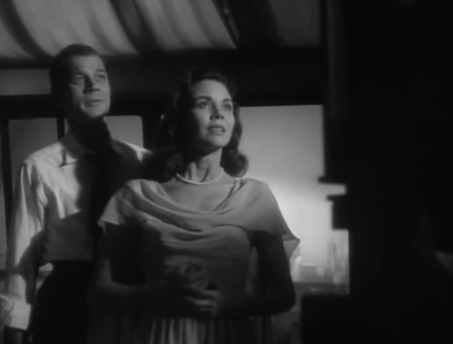 But it’s a chance encounter with a young girl named Jennie (Jennifer Jones) that gives Eben the type of inspiration that every artist dreams of because it’s precisely this spontaneous spark of joyous energy he needs to add something vibrant to his own life. In her constantly evolving role, Jennifer Jones exudes an effervescence, a certain radiance in body and spirit that lights up the screen in embodying this apparition of a girl.
 I find that despite his pedigree Joseph Cotten still comes off as an underrated actor and with each film I see him, I enjoy him immensely. Maybe for those very qualities. He’s not altogether handsome but he has a pleasant face. His voice isn’t the most formidable or debonair but it does have character. The supporting players lend some Irish flair to the cast and it’s striking that everyone from Ethel Barrymore to Lilian Gish glows with a certain hope. There is no obvious antagonistic force in this film. Eben Adams found his inspiration — the muse of a lifetime — and that passion is enough to lay the foundations of a film.
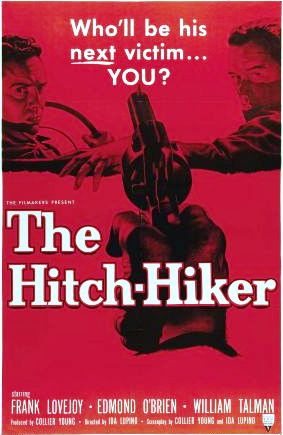 Part of the harrowing allure of the Hitch-Hiker is that it’s actually based on a true incident that occurred only a year before the events shown. It’s not as if someone took artistic license with some murderers and made it into a horror spectacle. Hitchcock’s Psycho especially comes to mind.
 It disappoints me that I was not more taken with the material than I was but despite not being wholly engaged, there are still some fascinating aspects to Panic in the Streets. Though a somewhat simple picture, it seems possible that I might just need to give it a second viewing soon. Let’s begin with the reality.

 Are you a mod or a rocker? ~ reporter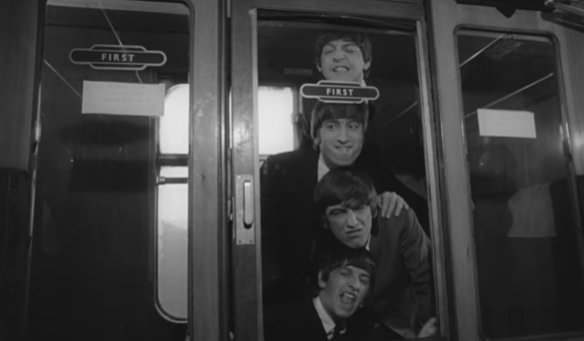
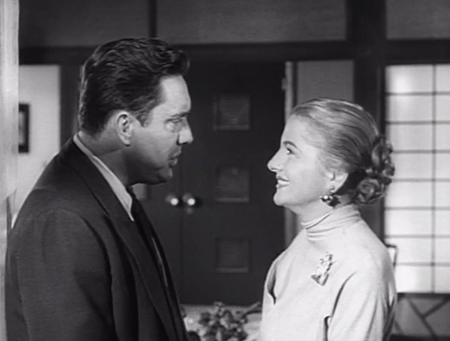 I despise you and I pity you. ~ Edmund Gwenn as Mr. Jordan
 Except at first what Harry does, does not seem like infidelity. In one integral scene Harry takes one of those bus tours to see the stars because, after all, Beverly Hills is that land of movie stars and their extravagant lifestyles. Jimmy Stewart, Jack Benny, Oscar Levant, Barbara Stanwyck, and Jane Wyman are all given a nod. There are even a few playful in-jokes to the always genial Edmund Gwenn who turns up as the adoption agent. All of this is essentially fluff but it’s on that same ride where he meets someone — a woman named Phyllis Martin (Ida Lupino).
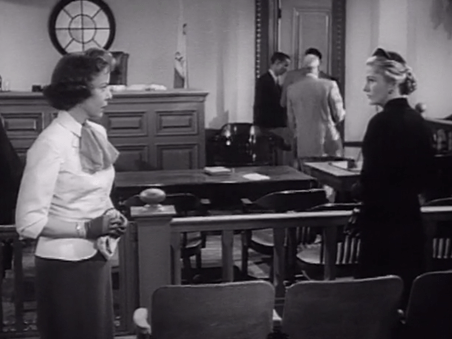 It strikes me how it’s often the small, tiny, unassuming pictures that impact me the most and this film did wrench my heart over the course of only a very few minutes. The final court sequence sums up the reasons quite well because it ends the film on a moral note setting up a rather convicting paradigm.
 Soldiers returning home from war is a recurring theme in films such as The Best Years of Our Lives and Act of Violence and given the circumstances it makes sense. This was the reality. Men returning home from war as heroes. But even heroes have to re-acclimate to the world they left behind.
 With Dashiell Hammett’s The Maltese Falcon making a splash just the year before and giving a big leg up to its star Humphrey Bogart as well as its director John Huston, it’s no surprise that another such film would be in the works to capitalize on the success. This time it was based on Hammett’s novel The Glass Key and it would actually be a remake of a previous film from the 30s starring George Raft.
 4 Star Films