Unknown's avatar

About 4 Star Films

I am a film critic and historian preserving a love of good movies. Check out my blog, 4 Star Films, and follow me on Twitter @FourStarFilmFan or Letterboxd. Thank you for reading!

Paterson (2016): Poetry in Everyday Rhythms

paterson 1

“Awesome. A bus driver who likes Emily Dickinson.”

This sincere pronouncement comes from a young girl — a fellow poet — as she leaves to go off with her mother and sister. She leaves behind Paterson (Adam Driver), a pensive bus driver, sitting on the brick wall, having gifted him one of her poems. Theirs is an instant connection. One of appreciation for observation, for words, for beauty.

Paterson is ripe with moments like this ambushing us with an understated resonance. Scenes of kindred spirits seeking each other out and finding some meaningful common denominator that they can relish together.

Jim Jarmusch feels like a man born of a different era — the last bastion of the old way. There are other directors who are older and more storied like Martin Scorsese or Clint Eastwood perhaps, but he is learned and the disciple of some of the great cinematic artists of the 20th century. We’re talking about titans as diverse as Robert Bresson, Nicholas Ray, and Sam Fuller.

He understands space and framing, how they define a composition. He’s not afraid of time or silence and how they can build into something revelatory. Normally, his creations might be defined as off-kilter and individual. He was very much at the epicenter of the indie film movement that revamped in the 80s. In fact, the true glory of Paterson is how pedestrian and how plain, how ordinary, and how pleasant it feels.

It’s actually not Emily Dickinson but William Carlos Williams who is Paterson’s favorite poet. There’s a self-reflexive nature to it. I know little about Williams work aside from the fact he has an epic poem called “Paterson.” And it’s true our story takes place in Paterson, New Jersey, where our main character acts as a stand-in for the town (and the poem) he shares a name with.

It’s an observational film just as Paterson is a man who watches the world passing by, existing all around him, as he drives his usual route. He is not someone the world normally esteems as an artist; he is a humble blue-collar poet. He fills up his days listening to conversations about Hurricane Carter or between a pair of high school anarchists (a nod to Wes Anderson’s youthful lovers in Moonrise Kingdom).

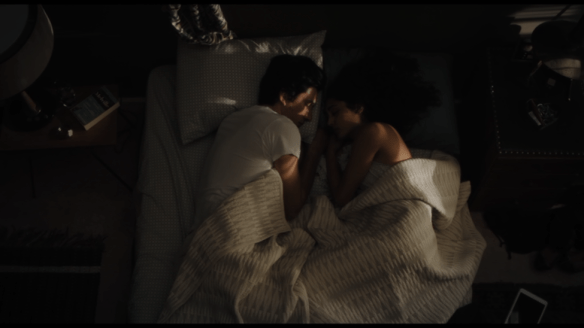
There’s not an antagonistic bone in the man’s body, and the movie happens to deliver a particularly warm portrait of marriage. As he spends his days working and nights tucked away writing or walking the dog, his wife (Golshifteh Farahani in a marvelous piece of casting) is swept up by dreams of cupcakes and country singing, even as she supports his writing. She is both the antithesis and the utter complement to Adam Driver.

Laura coaxes him to share his work and get it out so people can enjoy it as much as she does. Her palette and interior decorating are dominated by black and white, and she revels in her side hustles. Whether or not she becomes some great culinary or country music star seems immaterial. Paterson gently reciprocates the encouragement abounding in their household and what remains are modest joys.

The story is not beholden to typical structures of narrative. Although it does have something in common with the creation poetry of Genesis, working in the rhythms of the week in an unflustered, unhurried manner. There’s a tranquility to it all, displaying the innate power of habit and routine

Like clockwork, he goes out to walk the dog, a bothered bulldog named Marvin. We never ask to know why he does it. It’s become a kind of established fact. Just as the nightly stop at the bar to chew the fat happens. The conversations cover local heroes like Sam & Dave or Lou Costello. It feels inconsequential but somehow pertinent to the kind of syntax and meter the story is looking to evoke.

The poems read throughout the movie by Adam Driver in a deliberate, partially stunted diction are much the same, exhibiting this kind of straightforward, no-frills lucidity. He rehashes and molds them methodically before jotting them down in his hidden notebook. In fact, they are penned by Ron Padgett, a writer deeply admired by Jarmusch himself.

As someone who has dabbled in the art, you respect people who are brazen enough to become untethered from something so comforting as rhyme. Because rhyme gives you some sense that you are creating something beyond prose. It takes a braver, more audacious soul to strip it down and make it so closely reminiscent of normal everyday language and yet articulated and manipulated just enough that there is no recourse but to call it poetry.

Likewise, the dialogue throughout the movie is not realistic in nature. The words feel specifically chosen — very particular — not always right or real but given to their own cadence. There’s something so refreshing and freeing about it because it allows us to live our lives and feel they have meaning and significance in their very ordinariness.

Akin to the security guard in Museum Hours, here is a man living for more than a paycheck, and they both seem to see beyond the normal things that distract us — to somehow come to terms with beauty in the most extraordinary of places. And by this, I actually mean the ordinary places where others fail to look or cannot see.

I realized halfway through, Paterson has no cell phone; it’s part of what plants him into an altogether different era and makes him feel like a man Jarmusch might admire and heartily identify with. He lives a simpler, some might say, purer life without white noise and distractions.

However implausible, the moment that feels like a climax truly does burn deep, speaking as someone who has devoted a lot of time to writing — much of it unseen by the external world. To lose your work is a horrifying thought, but it also serves as a reality check.

It’s not so much devoting time to writing but having enjoyed the process — being able to uncover and appreciate and put words to what you have been so privileged to experience as a living, breathing human being. If we write and create merely to be remembered, it will never satiate. How much more can we relish the process if we enjoy every rhythm?

Because it’s exactly that: a process. As another character who traverses a tough world of his own admits to Paterson, “The sun still rises every day and sets every evening. Always another day.” It’s inevitable and a bit of a final exhortation — to Paterson and to all of us.
paterson 2
The final scene is the kind of cinematic loveliness you find in a certain brand of movie — the Museum Hours and the Columbuses of the world. Where there are interactions that are amicable, pensive, and beautiful.

They need not be rife with conflict or gargantuan stakes. They are found compelling for the mere fact they drink deeply of the wells of mankind and speak to who we are as people. Crossing cultures and borders and time and space to fuse human beings together.
It could be art, it could be architecture, it could simply be the need for human contact.

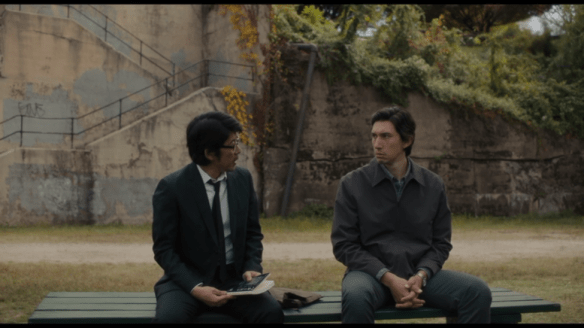
Here it’s poetry. A Japanese sojourner (Masatoshi Nagase) sits down at a bench with Paterson, and they share what can only be described as a moment — albeit a cinematic one — and it’s exquisite in all its unadorned subtleties.

We need one another and we can light the fire under others providing inspiration, hope, and subtle encouragement. Far from entertaining angels unawares, it might just as easily be that we can give a lift to a burgeoning artist or at the very least an unassuming one.

If nothing else, Paterson is a stirring reminder and a quiet call to appreciate and cultivate the beauty around us. We are in it together. Art need not always be a profession. Sometimes it fills the spaces in between bleeding out of people’s lives because they know no other way. They cook for sheer passion. They play music because they have to. They write out of some otherworldly compulsion.

This is art at its most elemental form, and we are all better for it. Paterson reminds us about the rhythms of life and how everyday ordinariness can be magnificent and more than worthy of our creative energies.

4.5/5 Stars

Till We Meet Again (1944): Directed by Frank Borzage

Till_We_Meet_Again_poster

This is my entry in the CMBA’s Hidden Classics Blogathon!

The movie is built out of the opening juxtaposition. A youthful nun with an angelic countenance (Barbara Britton) lifts up supplications to her triune God asking for prayers on their behalf — herself and the host of children and other sisters around them.

Their daily discipline is disrupted by a commotion down the road — Nazi soldiers firing after fleeing prisoners. It’s a signifier of tense times, but very real and pertinent ones in a French village plunged deep into Nazi occupation.

One of the girls asks Sister Clothhilde, “What happened outside?” All she can manage in response is that she doesn’t know, nor does she want to know. It suggests the core tenets of her character, maintaining all levels of religious piety, even her own serenity, above all else. She’s cloistered from the outside world.

Because it’s true the convent walls provide a buffer — a peaceful asylum — and for someone like the young sister it’s all she’s ever known and all she’s ever loved. Sister Clothilde is generally content with the amiable life of a nun, taking care of the young children in her dormitory with warmth and diligence. That could be the end of it right there, but as this is a movie, of course, there must be more.

The Reverend Mother has a rather pointed distaste for the Germans (enduring three wars will do that to even the most generous of spirits), but she and the local Major Krupp maintain their etiquette amid obdurate conflict. He has orders to make a search for runaway prisoners, and she is adamant about not opening her doors. For a time they can play the game easily enough, and Sister Clothilde can remain equally ignorant of the world outside.

However, all of this changes with the appearance of a wanted American pilot carrying vital information for the local underground. He all but appears out of nowhere, happening upon the sister quite by accident. In the darkness and the solitude, there is something strange outlined around them. It’s not menace nor romantic melodrama exactly but a yet to be discovered facet in their relationship.

Milland, terse and paranoid, wants to get to his contact and the sister wants nothing of his world. Ultimately, she has no choice but to become a part of it. There is no one else and so she instantly finds herself giving up her small comforts for a mission of immense peril that, coincidentally, takes her outside the walls she’s grown so accustomed to. She goes from a woman of faith to a full-fledged civilian on the outside, given a new name — that of Louise Dupree — and betrothed in marriage.

If there are all the nuts and bolts of a cloak and dagger thriller, these are never a part of Frank Borzage’s primary agenda. After all, he is a far cry from a Friz Lang or an Alfred Hitchcock. I’m thinking of Ministry of Fear or even Foreign Correspondent in particular. Also, although it’s not as robust as The Mortal Storm, Till We Meet Again becomes both an extension of that world and its themes courtesy of screenwriter Lenore Coffee.

What’s evident is Borzage’s forever visible sense of this kind of high-minded naturalism. Where they can momentarily forget the task at hand, that is getting to a distant airbase and freedom, so they can help return a wayward baby bird back to its mother. Is there a need for such a scene? In a word, no, but in Borzage’s conception, this is the more crucial matter because it denotes something elemental.

Man’s duty is not only to his fellow man but to the creatures on God’s green earth. The director gravitates toward acts of care and goodness as opposed to the needless destruction as represented by the Nazis in their brutish, insensitive clumsiness.

Even as they travel together and “Louise” comes to know John as a most intimate friend, she learns a great deal from his assertions. That God is everywhere: reflected in acts of beauty, nature, the vows of marriage, and the goodness that crops up in any person who lives in this world.

It comes through thanks to Milland gushing affection about the marvelous intricacies of marriage between two human beings in intimate union, babies, jam in the morning newspapers, and tripping over the slippers. To her own astonishment, he speaks the words with a kind of devoted reverence. “You say it like a litany — a kind of prayer.”

But to those who think of Borzage as merely a starry-eyed dreamer, the movie is still compelling when they are forced to evade the Nazis, now trailing them with ill-intent and more precise intel. The sense of dread is immediate, and there are stakes.

In another key scene, after she’s done so much on this treacherous journey, the sister makes one false step. Smoke billows out from a dimly lit room, and she rushes toward it to sound the alarm for John to make his getaway. Instead, out steps an old adversary showing himself from under the shroud of darkness.

She is from thenceforward intimidated and threatened in a way that feels so real you can just imagine have it was used against so many victims before her. She has committed an act of treason, put herself beyond the protection of her church, and acted as an enemy of the German Reich. Under such duress, she has every right to feel hopeless.

Instead, she makes a personal judgment, a double sacrifice out of this transcendental love of hers. It’s not simply romantic love but love wrapped up with ideals and goodness that must be shielded from the Nazis at all cost.

They escape to England with Milland, and she lets him go gladly. But the second sacrifice is the Christ-like one. If I have to spell it out for you then the allusion means nothing nor the cross she holds in her grasp. You have to see it for yourself.

Although it’s sublimely sentimental and swelling with angel’s song, this simply means Till We Meet Again is yet another definitive Borzage picture. It’s somehow fitting he would trace the line of religious iconography all throughout the picture even as a woman learns what her faith means in all walks of life.

Far from trivializing it, her vocation feels richer, bolder, and freer than it ever was before. And yet with Borzage, he’s not so much a champion of religious ardor as he is a believer in the grandeur available in life for those who readily embrace it.

These large, esoteric, unsearchable concepts whether they be spiritual, transcendent, or in other ways ethereal are there for the taking. For a humble movie, Till We Meet Again gets swept up with the same scope. Importantly, it’s kept accessible by the candor of Milland and the vestal warmth of Barbara Britton. Because it is once and for all a litany — a kind of layman’s prayer.

4/5 Stars

6 Decades Blogathon for National Classic Movie Day

Thank you to Classic Film and TV Cafe for hosting this year’s 6 Films — 6 Decades Blogathon for National Classic Movie Day!

It’s been a perennial enjoyment the last few years to hear the topic and then go to work curating a personal list. In keeping with the impetus of the occasion, I wanted to share some lesser-known films that I’ve enjoyed over the course of the last year or two.

This is a list of new favorites if you will, ranging from the 20s to the 70s, and like every year, I will do my best to fudge the rules to get as many extra recommendations in as I can. I hope you don’t hold it against me and hopefully, you will find some of these films as enjoyable as I did.

Without further ado, here are my picks, and once more, Happy National Classic Movie Day!

Go West (1925)

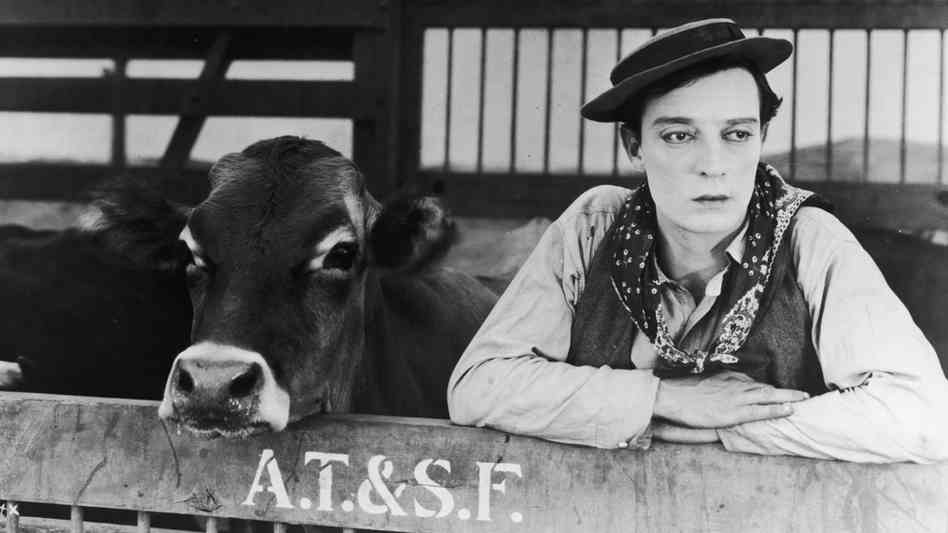
Riding High With Buster Keaton in “Go West” – Cowboys and Indians Magazine

I feel like in the 21st century — and this is only a personal observation — Buster Keaton has grown in esteem. Chaplin was always the zenith of cinematic pathos and heart. He cannot be disregarded as the one-time king of the movies. But Keaton, with his Stone Face and irrepressible spirit, is also strangely compelling in the modern arena we find ourselves in.

In pictures like Sherlock Jr. and Steamboat Bill Jr., he’s part magician, part daredevil stuntman, who, in the age before CGI, dared to play with our expectations and put himself in all sorts of visual gags for our amusement. It’s extraordinary to watch him even a century later. But whereas The Tramp was taken with Edna Purviance, the pretty blind girl (Virginia Cherill), or even Paulette Goddard’s feisty Gamin, Buster Keaton’s finest leading lady could arguably be a cow.

Go West earns its title from the potentially apocryphal quote from Horace Greeley, but the glories of the movie are born out of Keaton’s ability to take on all the nascent tropes of the Western landscape. He’s the anti-cowboy, the city slicker, the cast aside everyman, who doesn’t quite fit the world. And yet he’s still a hero, and he gets the girl in the end. You might think I’m being facetious, but I’m not. Keaton seems to love that cow, and it’s strangely poignant.

The Stranger’s Return (1933)

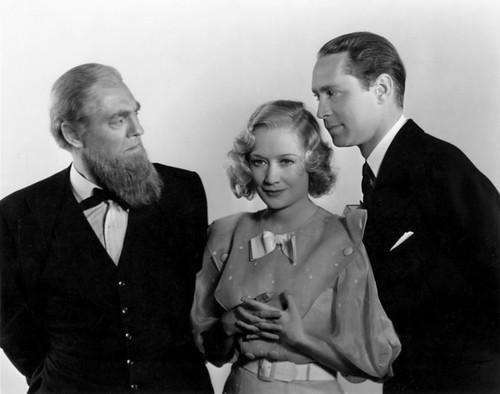
It’s remarkable to me that a film like The Stranger’s Return rarely seems to get many plaudits. Lionel Barrymore is a hoot as a cantankerous Iowa farmer, playing what feels like the affectionate archetype for all such roles and welcoming his city-dwelling granddaughter into the fold.

Miriam Hopkins has rarely been so amiable and opposite Franchot Tone, King Vidor develops this profound congeniality of spirit played against these elemental images of rural American life. It’s a collision of two worlds and yet any chafing comes more so from the hardened hearts of relatives than the nature of one’s upbringing. It moved me a great deal even as I consider the different worlds I’ve been blessed to frequent.

If you want to go down other cinematic rabbit holes, I would also recommend Ernst Lubitsch’s The Broken Lullaby with Barrymore. For Miriam Hopkins, you might consider The Story of Temple Drake, and for director King Vidor, I was equally fascinated by the Depression-era saga Our Daily Bread.

The Children Are Watching Us (1944)

Janus Films — The Children Are Watching Us

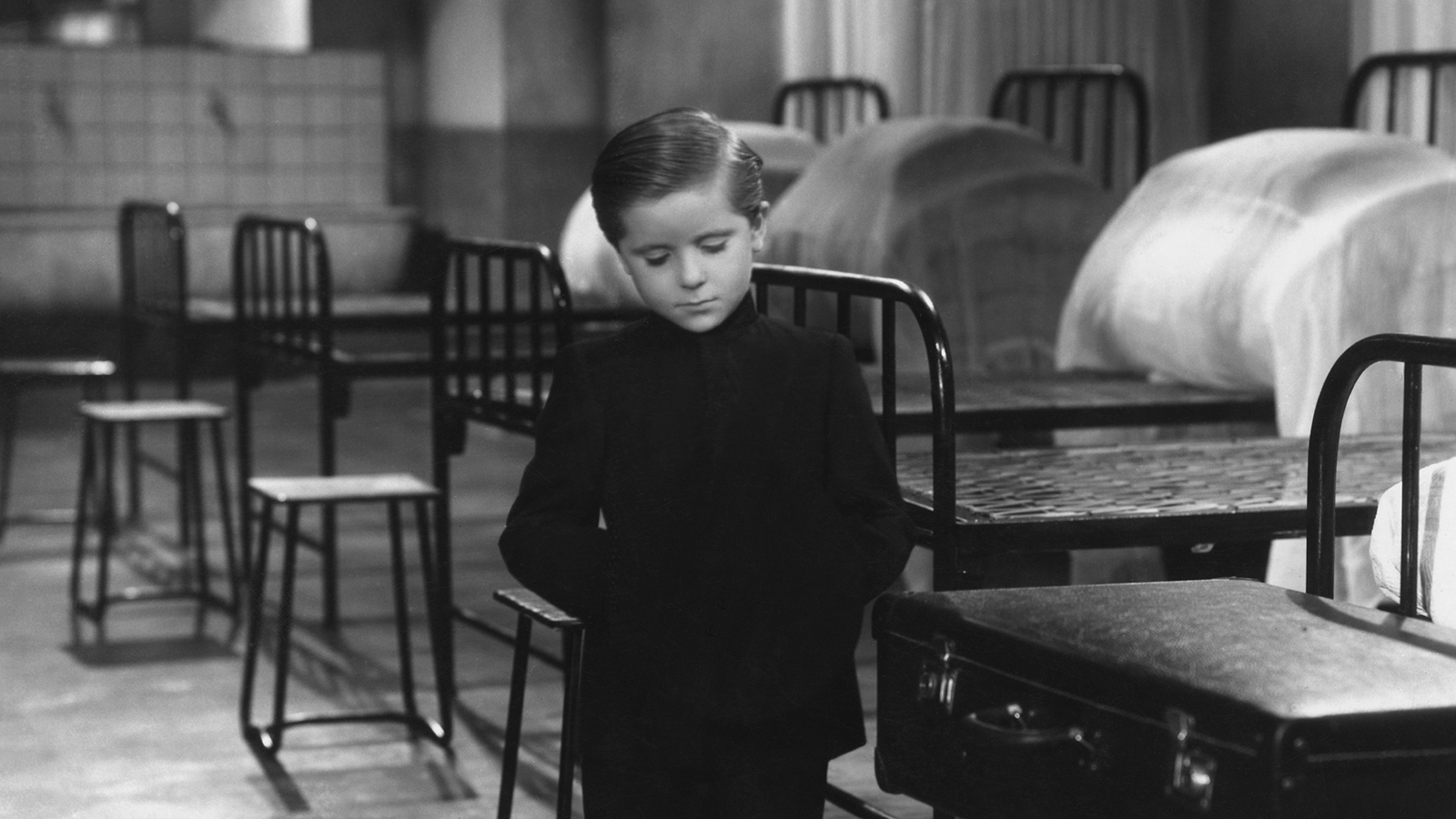
During the beginning of 2021, I went on a bit of an Italian neorealist odyssey, beginning with some of the less appreciated films of Vittorio De Sica (at least by me). While Bicycle Thieves is a high watermark, even an early film like The Children Are Watching Us shows his innate concern for human beings of all stripes.

This is not a portrait of economic poverty as much as it depicts poverty of relationships and emotion. In what might feel like a predecessor to two British classics in Brief Encounter and Fallen Idol, a young boy’s childhood is fractured by his mother’s infidelity. While his father tries to save their marriage and they gain a brief respite on a family vacation, these attempts at reconciliation are not enough to save their crumbling family unit.

What’s most devastating is how this young boy is left so vulnerable — caught in the middle of warring parents — and stricken with anxiety. In a tumultuous, wartime landscape, it’s no less miraculous De Sica got the movie made. It’s not exactly a portrait of the perfect fascist family. Instead, what it boasts are the pathos and humanity that would color the actor-director’s entire career going forward.

Violent Saturday (1955)

Violent Saturday (1955) | MUBI

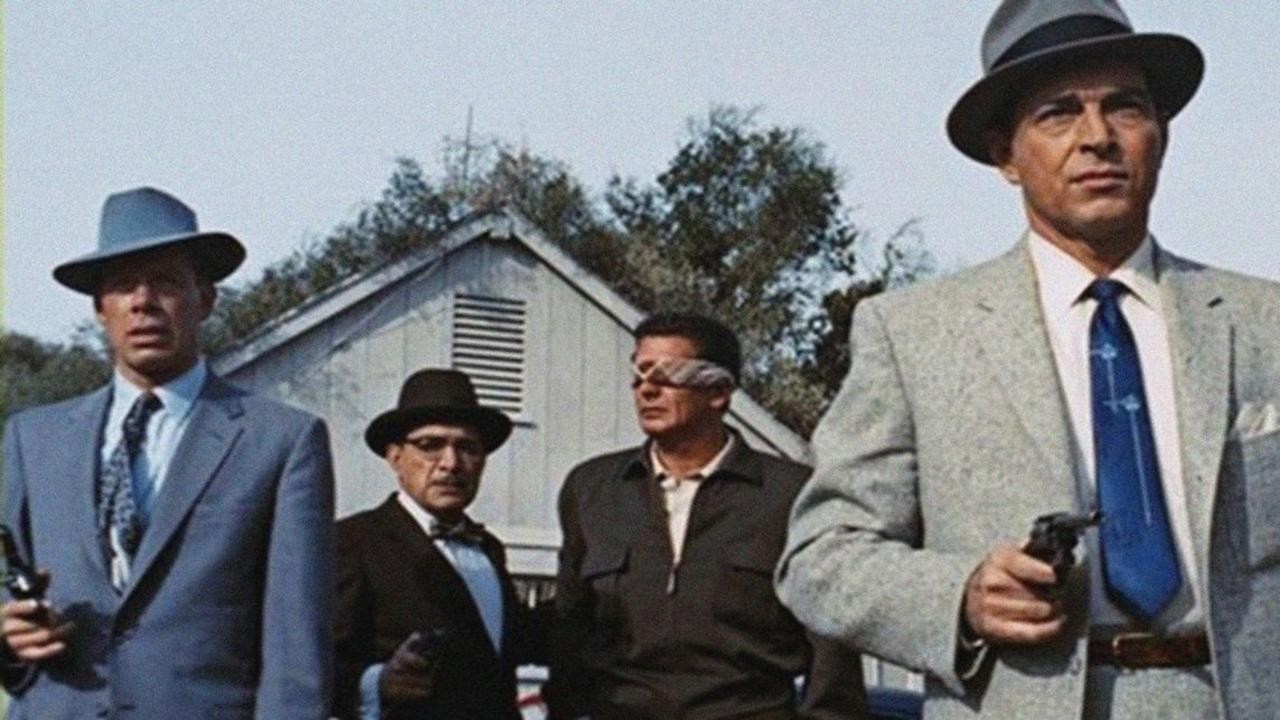
Color noir is a kind of personal preoccupation of mine: Inferno, Slightly Scarlet, The Revolt of Mamie Stover, Hell on Frisco Bay, and a Kiss Before Dying all are blessed with another dimension because of their cinematography. Violent Saturday is arguably the most compelling of the lot of them because of how it so fluidly intertwines this microcosm of post-war America with the ugliness of crime.

Richard Fleischer’s film takes ample time to introduce us to the town — its inhabitants — and what is going on behind the scenes. Three men, led by Stephen McNally and Lee Marvin, spearhead a bank robbery plot. But we simultaneously are privy to all the dirty laundry dredged up in a community like this.

These criminals are the obvious villains, and yet we come to understand there’s a moral gradient throughout the entire community. The out-of-towners are not the totality of evil just as the townsfolk aren’t unconditionally saintly. The picture boasts a cast of multitudes including Victor Mature, Richard Egan, Silvia Sidney, Virginia Leith, Tommy Noonan, and Ernest Borgnine. The ending comes with emotional consequence.

Nothing But a Man (1964)

Nothing But a Man was a recent revelation. It was a film that I meant to watch for years — there were always vague notions that it was an early addition to the National Film Registry — and yet one very rarely hears a word about it. The story is rudimentary, about a black man returning to his roots in The South, trying to make a living, and ultimately falling in love.

However, the film also feels like a bit of a time capsule. Although filmed up north, it gives us a stark impression of what life in the Jim Crow South remained for a black man in the 1960s. The March on Washington was only the year before and The Voting Rights Act has little bearing on this man’s day-to-day. The smallest act of defiance against the prevailing white community will easily get him blackballed.

I’ve appreciated Ivan Dixon for his supporting spot on Hogan’s Heroes and his prolific directorial career (Even his brief stints in A Raisin in The Sun, Too Late Blues, and A Patch of Blue). Still, Nothing But a Man, showcases his talents like no other. Likewise, I only just registered Abbey Lincoln as a jazz talent, but I have a new appreciation for her. She exhibits a poise and a genuine concern that lends real weight to their relationship. It’s not simply about drama; it’s the privilege to observe these moments with them — to feel their elation, their pain, and their inalienable yearning for dignity.

Les Choses de la Vie (1970)

Les Choses de la Vie | Institut français du Royaume-Uni

Even in the aftermath of the cultural zeitgeist that exploded out of the French New Wave, the likes of Godard, Truffaut, Rohmer, Chabrol, and Rivette et al. released a steady stream of films. One of the filmmakers you hear a great deal less about — and one who was never associated with this hallowed group — was Claude Sautet.

Still, in his work with the likes of Romy Schneider and Michel Piccoli, he carved out a place worthy of at least some recognition in the annals of French cinema. If one would attempt to describe his work with something like The Things of Life, you could grasp at a term like “melodrama,” but it is never in the fashion of Douglas Sirk. It’s a film of melancholy and a subtler approach to splintering romance.

It somehow takes the motifs of Godard’s Weekend with the constant vicissitude of the continental Two for The Road to alight on its own tale of love nailed down by the performances of Piccoli and Schneider. They are both caught in the kind of fated cycle that bears this lingering sense of tragedy.

Honorable Mentions (in no exact order):

  • Dishonored (1931) Dir. by Josef Von Sternberg
  • Pilgrimage (1933) Dir. by John Ford
  • TIll We Meet Again (1944) Dir. by Frank Borzage
  • Bonjour Tritesse (1958) Dir. by Otto Preminger
  • Scaramouche (1952) Dir. by George Sidney
  • Pale Flower (1964) Dir. by Masahiro Shinoda
  • Courtship of Eddie’s Father (1963) Dir. by Vincente Minnelli
  • Girl With a Suitcase (1961) Dir. by Valerio Zurlini
  • Sergeant Rutledge (1960) Dir. by John Ford
  • Buck and The Preacher (1972) Dir. by Sidney Poitier
  • Cooley High (1975) Dir. by Michael Schultz
  • My Name is Nobody (1973) Dir. by Tonino Valerii

Magnificent Obsession (1935): Stahl Vs. Sirk Again

Screenshot 2020-01-12 at 85221 PM.png

As I continue my mini odyssey considering the differences between the melodrama of John M. Stahl and Douglas Sirk, one of the finest exhibit pieces is an early scene in Magnificent Obsession.

The beloved Dr. Hudson has died because the life-saving pulmotor he needed was being used on someone else. An irresponsible playboy, named Bob Merrick, is saved in his place, having capsized his boat during one of his typically drunken evenings. It just doesn’t seem fair. One man so good is lost and the man who probably doesn’t deserve to live regains his life. It’s a rather blatant allegory of Christian grace and it makes sense, after all, Magnificent Obssession was supposedly penned by a minister: Lloyd C. Douglas.

Here is my long-winded point. This plays as a critical scene in Sirk’s picture. We see Merrick on the water and we see it happen right in front of us. However, in Stahl’s rendition, it’s all over and done with after a few throway lines of expositional dialogue between doctors. It’s as if he’s purposefully shying away from the drama. It’s this quality that might save Magnificent Obsession from being a total bore.

I never gave much thought to it before, but Robert Taylor makes a modest approximation of Rock Hudson a few decades earlier. One could say Rock’s career was far more successful and well-remembered, but they both manage the smart-aleck ne’er do well quite easily. In both cases, this was one of the early movies helping to put them in the public eye as legitimate star power.

Regardless, a curious dichotomy is purposefully set up by the movie, with one man unseen a beloved martyr, and another one alive, the incorrigible playboy. Dr. Hudson’s goodness hangs over Merrick’s life — haunting him in a sense — making him feel even worse about who he is as a person.

Soon he’s struggling with self-loathing. Although it feels more complicated than that because he’s still overtly narcissistic; deep down he knows everyone dislikes him vehemently.

It becomes a movie of who Merrick falls into company with after sneaking out of the hospital against protocol. First, it’s Masterson (Charles Butterworth) who might as well be his comic sidekick unwittingly carried away by all his mischief.

Next, it’s Mrs. Hudson (Irene Dunne) the beautiful young wife of the man he indirectly killed. When he actually finds out who she is he feels even more ashamed to show his face in front of her. He just wants to get drunk and try to forget.

Then, by some curious bit of Providence, he winds up at the home of a stonecutter. The man happened to be a close friend of Dr. Hudson. Similar to Sirk’s rendition, he imparts the wisdom the good doctor provided him. He was taught how to make contact with a source of infinite power. If you think this sounds like a seance and pseudo-science, you’re not alone. It feels like the strangest introduction of religion into the storyline imaginable with electrical energy acting as some mystical metaphor for God.

This layman makes another fascinating statement that might not sound all that foreign to us today. He’s not interested in religion but interested in Jesus — the God-man — who was so successful in the science of generating human power. It’s as if he was a mere humanitarian or an entrepreneur in human capital.

I always have trouble dealing with these kinds of expressions in relation to the Christian doctrinal claims. It’s not that it’s simplistic; rather it seems to totally disregard some of the things this God-man purportedly said. They feel radical, unsettling, incisive at times — surely not warm and fuzzy enough for a movie like this.

Still, this pseudo-Gospel becomes a journey to find people who need help and then giving it to them. But, of course, there’s a catch. You must give to others in absolute secrecy — it’s a scrooge-like endeavor and there’s some truth in this kind of altruism, still, it feels laughable even folly to call it a theory to be followed.

It’s a kind of pay-your-way to the good person’s club, whether you believe in the afterlife or just in being a good person in a legalistic sense. Either way, surely we can agree these strict parameters seem suspect.

Regardless, Merrick somehow gets swept up by them as he vows to put this “theory” into practice. He’s done so much to injure and totally destroy Helen Hudson’s life through his own selfish negligence.

However, in a strange way, it’s as if he’s in pursuit of his dead rival’s wife. Although it might be totally out of the goodness of a changed heart, he looks to reconnect with her, and give her life new joy. It all feels rather twee in comparison to Sirk’s update, which at least swells with the kind of grandiloquence which seems, at the very least, self-aware.

As much as I admire Irene Dunne as an unsung and ever adaptable talent and my mild affinity for Robert Taylor has gotten a boost in recent days, Magnificent Obsession is rather hard to take. It’s an outlandish drama full to the brim with preposterousness that doesn’t even attempt to court any semblance of reality. Similarly, its religiosity, romance, and just about everything else feels sugar-coated and simplified. Somehow it hasn’t maintained its flavor as well as some of Stahl’s earlier efforts.

3/5 Stars

Imitation of Life (1934): Stahl Vs. Sirk

Screenshot 2020-01-12 at 84419 AM.png

The opening shot of Imitation of Life is memorable for its sheer novelty and the very simplicity of the space. It’s not an establishing shot of a place or a person. Instead, it’s of a rubber duck bobbing in the bathwater as a little girl whines about wanting her “Quack Quack” off-screen.

This is how we’re introduced to single mother Bea Pullman (Claudette Colbert) and her daughter. A moment later, an African-American woman, Delilah Johnson (Louise Beavers) shows up on her doorstep having mixed up an address (in her defense I’ve mixed up some avenues too).

In a matter of minutes, they’ve decided to join forces. They both lack money and resources, but they gladly make do with what they have, happy to share one another’s company as they raise their daughters together.

Bea starts setting up a shop on the boardwalk armed by Delilah’s secret pancake recipe and her own ambition. One of the movie’s more troubling caveats is how Delilah has little ambition in life and proves herself to be perfectly content looking after Bea’s home as her friend gets all the credit for her family heirloom.

While Delilah remains content sinking into the periphery, with $19 to their names, Bea takes a risk on their venture. They have to rent out the space, get a fresh coat of paint up, and of course, you can’t have a restaurant without furnishings. She finagles her way into all sorts of deals and alliances — one of her newfound associates happens to be a typically jolly Alan Hale. However, it’s the nasal-voiced Ned Sparks who gives them the $100,000 idea: “box it.” Immediately their business takes off with a sustainable reach.

Auntie Delilah’s Pancake Shop is bustling with business. It has a certain antiquated charm to it. The image is a combination of Aunt Jemima and some of the more troubling images out of Jim Crow minstrel culture.

However, the most intriguing — and the most groundbreaking — aspect of Imitation of Life is how it grapples with questions of personal identity throughout its run. These are questions that still manage to challenge and perplex me to this day. My heart breaks for Peola. She is Delilah’s light-skinned daughter who is ashamed of both her race and her mother.

Even as Louise Beavers’s role is dubious at times, reminiscent of some of Hollywood’s worst portrayals, Fredi Washington represents the hardship for African-Americans trying to break out of the molds set out for them. There were rarely roles of strength for the likes of Josephine Baker, a Paul Robeson, a Lena Horne, or a Rex Ingram, parts that fully illuminated their talents.

As with the later adaptation, this becomes the most intriguing piece of commentary, particularly in this instance since Washington actually identified as black and was proud of her heritage never choosing to pass as white. Her real life played as the antithesis of her character even as it comments on the hallowed place being white had in American society in the 30s and beyond.

Their stake in the pancake game blows up and as the exulted mastermind, our heroine becomes the Claudette Colbert one might be more accustomed to, glamourous and good-humored as ever. Warren William makes his dashing entrance at the party, and they’re smitten at first sight. It’s a particularly amicable role for him beyond his typical hard-nosed Rockefellers, and he proves adept enough at the characterization even if it’s not too stretching.

The budding romance with the ichthyologist is amicable if the most humdrum part of the picture. As is the return of a precocious Jessie from school. She forms a crush on her mother’s beau and you can fill in the rest. More interesting still is Peola totally repudiating her mother and with it, her identity, foregoing a prestigious negro college by looking to pass as white and get work in everyday society.

These are the biggest issues on hand, and it’s all romance and family in line with much of Stahl’s melodrama. He is not Sirk after all. But what exactly does that mean? Because thanks to both Imitation of Life and then Magnificent Obsession, it feels like there’s a need to try and decipher the variations in John M. Stahl’s work compared to Douglas Sirk. If nothing else, it might help get him out of the other man’s shadow.

There are obvious distinct differences in content — Colbert’s pancakes instead of Turner’s acting — although many of the same narrative beats are present. Sirk obviously eclipses this drama through sheer decadence, color, and all manner of staging. He was the maestro of using near-trashy spectacle to subvert his material, making it burst with new ironies. However, his picture also feels updated to somehow fit so distinctly into the civil rights conversation of the ’50s and ’60s.

Stahl’s earlier version is more sedate and straight while still being imbued with its own burgeoning power. We have to take it more sincerely at face value. So in a sense, for 1934, the story certainly pushes boundaries, and Stahl is capable of drawing out the subtleties with the typically raw candor we might attribute to many of his movies from the period.

Certainly, Louise Beavers’ funeral doesn’t have the color nor a Mahalia Jackson dirge, but somehow, again, it fits into the context of the surrounding scenes. There’s still indubitable pomp and circumstance to the solemn occasion. We feel this intuitively. We witness the casket being brought out of the church and black men in uniform, armed with sabers, guiding the procession.

This image alone plays interference against all the images of Stephin Fetchit, Willie Best, Hattie McDaniel, and even Louise Beavers propagating stereotypes of mindless, weak, subservient blacks. It gives off this innate amount of dignity.

After you’ve seen Sirk’s version, of course, it’s difficult to go back — it’s true Stahl’s version pales in comparison — and yet you could say this is almost by design. It’s as if his predilection is toward anticlimax or at the very least cushioning the blows of melodrama in an arena where Sirk would lay it on thick for all its worth.

Thus, we end not on the hard-hitting tears of a daughter but gay reminisces of “Quack Quack.” It’s like we watched two completely different stories: The white family and then the black family. Maybe that’s the point.

3.5/5 Stars

Waterloo Bridge (1931): Pre-Code Edition

Screenshot 2020-01-11 at 82932 AM.png

Many might best remember Vivien Leigh and Robert Taylor in the 1940 version of Waterloo Bridge. It’s immediately obvious this movie has a very different flavor from the outset. It’s an earthier more boisterous version of Waterloo Bridge before the Production Codes took their axes to the original material.

James Whale’s camera pans across a gay gang of chorus girls on the stage — they are alive and bursting with perky energy — putting on a show for their patrons. Behind the curtains and after-hours, the girls maintain the buzz as they chat in their skimpy Pre-Code attire. One of their ilk is Myra Deaville (Mae Clarke).

It’s delightful how the camera takes such a shine to our heroine though it’s so obvious to see she might play second or third fiddle to the band of big wigs and aristocrats in the world at-large. She really does feel like a nobody far away from home. Still, there’s something to be said for her way of life.

As is, London has a lovely artificiality that we can breathe in and still enjoy as the characters amble along the streets with car horns and horse carts to go with the post boxes and street lamps.

Likewise, the beats feel raw and unkempt in a way the 1940 remake would never have dared or been capable of to begin with. Somehow it takes on a grander more chaotic scale in the hands of James Whale. And yet the characters and vernacular are more casual even familiar.

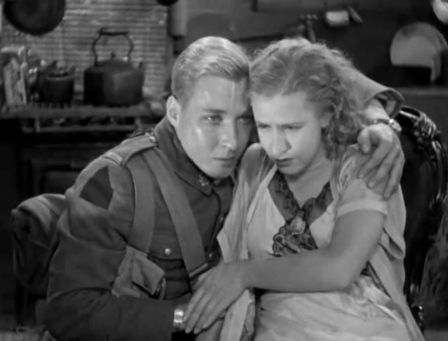
Douglass Montgomery feels like an honest-to-goodness callow soldier boy. He doesn’t have the slightest sense of what he’s gotten himself into and with anything he does, there’s a latent fallibility you don’t get with Robert Taylor. He never feels endangered in the same way.

Likewise, Mae Clark is affecting yet generally capable of exuding an everyday ordinariness. We hardly remember her star compared to the likes of Vivien Leigh, who headlined one of the most grandiose, decadent epics of all time. Their trajectories and legacies could not be more disparate This is just the film to raise her reputation above one crackerjack scene playing opposite James Cagney and a Lemon.

She’s no star (the film coincidentally features a young Bette Davis), and the story seems to like it that way. Because both Clarke and Montgomery, by today’s standards, are hardly highly touted figures, but somehow they fit so genuinely here within the provided context.

It’s a youthful dynamic with a 19-year-old doughboy and the dance hall performer who’s been around. She also carries the forlorn look rather well even as Montgomery’s face is fresh and boyish.

They meet helping an old lady pick her potatoes off of Waterloo Bridge. It’s the same air raid from the earlier film with a certain frenzied uncertainty of war in the atmosphere. The gas runs out in her shabby apartment, and they talk to each other about their lives, mouths crammed with food.

It also cultivates a different dimension of ex-pats away from home. Because both Roy and Myra are born and bred Americans, and so there’s this inherent otherness they engender. It’s the type of visible difference that makes it all the more believable they would gravitate toward one another.

Furthermore, the film is not just consigned to the urban cityscapes but finds its way out into the countryside far from the signs of tumult and war. Because whereas the later version had the reverie of dance and “Auld Lang Syne,” this version needs its own escape valve, a respite before the final act’s guttural finale.

Here Myra is thrown in with Roy’s mother and an avuncular old step-father, hard of hearing and loving a good whiskey and soda. He’s a puttering scene-stealer — mostly because Bette Davis has nothing of import to do as an amiable sister. Her time would come in due time.

Meanwhile, the drama goes on behind the scenes as Myra is a woman of such genuine conscience — she admits she picked Roy up on Waterloo Bridge — she is no chorus girl. Though she could marry him, she chooses not to. She understands the mores of society and is willing to abide by them, even when it hurts.

You can call it the hooker with the heart of gold archetype to be sure, but what it really brings out is a culture so quick to label people as pariahs and outcasts — dirty and sinful folks not fit to be seen with the rest of God-fearing humanity. Then, behind closed doors, there’s gossip and what-have-you in the guise of propriety.

In the end, between passionate kisses, a crowded truck of onlookers shipping out to the front, and zeppelins raining down incendiaries, there’s not a moment to breathe before the curtain falls. This might be very well by design. Still, this movie zips along with a raw vitality worthy of consideration.

3.5/5 Stars

Johnny Eager (1941): Taylor and Turner Spark Dynamite

Screenshot 2020-01-08 at 91406 PM.png

“Are you thinking of allowing her to play Roxanne to your Cyrano?” – Van Hefflin to Robert Taylor

Pretty faces don’t always add up to a quality movie and if you want to find where the faults lie, you might look between the players and the script then split the difference. Johnny Eager has all the Classic Hollywood trappings that very well could have made it dead on arrival — especially years later.

Because our protagonist has a name that only exists in the movies (or Hollywood for that matter). He’s a gangster from the old days formerly clad in the finest of threads and raking in the dough. To this day, he’s unrepentant or at least blatantly honest about how he feels; he’s no chump, even despite a stint he did behind bars.

Now he’s on the outside on parole making a go at propriety as a cabby. After this preliminary bit of eye-opening exposition, the story has all but telegraphed its intentions, really no fault of its own. It doesn’t take much imagination to put a reformed Robert Taylor and a curious young sociology debutant like Lana Turner together.

They meet through his parole officer: a white-haired, benevolent picture of authority. He seems to believe every man is capable of reform and human goodness if only given a chance. His secretary, on the other hand, gives Johnny the stink eye. Lisbeth Bard can hardly take her eyes off of him.

Of course, none of this is on the level because Johnny is busy getting into his old rackets, including an ambitious plan to resurrect the Algonquin dog races to make a killing out of it. Simultaneously, he’s double-dealing, getting his sister and bratty niece to masquerade as his alibi. They’re nicely compensated of course to play up a squeaky clean picture of domesticity.

One has to laugh. The authorities must be idiots and Johnny accordingly plays them for fools. He’s a modern-day Machiavelli and this combination of authority, guile, strength, and charm makes Johnny Eager come off a bit more significant than a walking caricature.

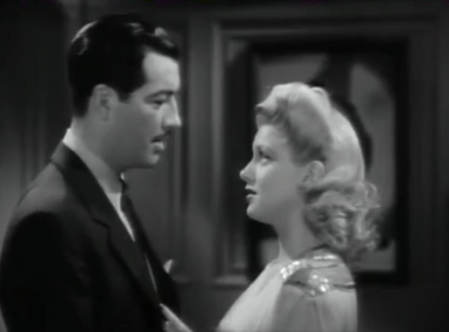
It’s true Taylor had caught ahold of something in his career and whether or not he was considered a negligent actor and merely a pretty face, he brings a definite machismo to the screen more than capable of knocking off everyone else around him. He’s without a doubt the center of the action despite the plethora of scene stealers around him.

But one cannot forget the diffident school girl played by Turner, quoting Cyrano de Bergerac and sporting a hat to beat them all. What overtakes her exactly? Is it some compulsion to flirt to convert a wayward soul? Is it simply yearning passion? Whatever the reason, the film is full of “inamorata” — men and women lovers.

Not least among them is Van Heflin who’s quite the educated fellow, quick and rich on the prose, especially when he’s soused with liquor. Jeb is Johnny’s most faithful friend for reasons the movie never puts to words. But whereas everyone else is either a hired ally, a paid stooge, or an easy rival, Jeb stays by him because he has no one else.

The film is at its most engaging tracing the lines and mixing its reference points between literate dames and men pontificating with a grandiloquent verbosity while the thugs rattle off their own barb-wire jargon prickling the ears. They tumble around inside the head as the most unrealistic and simultaneously peculiar cocktail of discordant voices.

Heflin does very little compared to the other forthcoming gruff, garble-mouthed, shifty-eyed types, and yet he doesn’t need to because the words flowing off his lips play like riffs off the rest of the film. He seems to relish every soliloquy he gets to run off, and it definitely leaves an overall impression.

But the real fire is between Taylor and Turner for as long as they get on screen together. Aside from Johnny’s clandestine activity, Lisbeth Bard’s step-father happens to be a crucial man. Edward Arnold aptly plays the domineering and vengeful district attorney, who just so happens to be situated in the most convenient place in the movie. He helped put Eager away in the penitentiary as a service to the public. Now Johnny’s looking to stick it to him with Lisbeth implicated in his own crimes.

Could it be he never loved her at all? It always functioned as business over love? Regardless of his motives, enemies become accomplices as he leverages his new position to open up the long-dormant dog racing track. Everyone across the board has got an angle. What sets Johnny apart is his self-serving shrewdness, never blinded by sentimentalities such as sacrificial love, grace, or a guilty conscience.

Meanwhile, Lisabeth is overtaken by mental frailty and paranoia. She’s not bred for the cutthroat gangster’s life like Johnny. Her tragic hysteria forces him into a type of hero’s choice. It’s what all Hollywood movies ask of their protagonists. Something is required of them in the end.

In its day, Johnny Eager was a stirling success, and if history is any indication, it might have one of the most tragic days in American history to thank. It premiered in Los Angeles on December 9th, 1941. For those keeping tabs, this is two days after Pearl Harbor.

It heightens the dramatics just enough to bring out of the realm of reality and into the spaces of escapism. Where illicit romance can shoot off like fireworks on the screen between two scintillating specimens like Taylor and Turner. They were TNT as the contemporary advertisements so aptly framed it. They were the eye candy; they were the distraction to take the masses away from the tragedy right outside those cinema doors.

In a short time, the movies would be acting as a comment on the world at-large and the war at-large with propaganda machines spinning on all cylinders. For now, they still act as a counterpoint saying something about the state of a nation by not saying anything at all.

The story ends in a somewhat comforting manner, ultimately capping off with a Hollywood moralism that made sense, creating heroes out of gangsters far away from the chaos of sneak attacks and brazen days of infamy. It just goes to show life is more ambiguous and thus more complex than a movie.

3.5/5 Stars

Waterloo Bridge (1940) and The Farewell Waltz

Screenshot 2020-01-05 at 62101 PM.png

If you’re like me, Waterloo conjures up a limited array of mental images. Napoleon and The Battle of Waterloo. The Kinks and Waterloo Sunset. That’s about the extent of it. Now I can add Vivien Leigh, Robert Taylor, and Waterloo Bridge to the list.

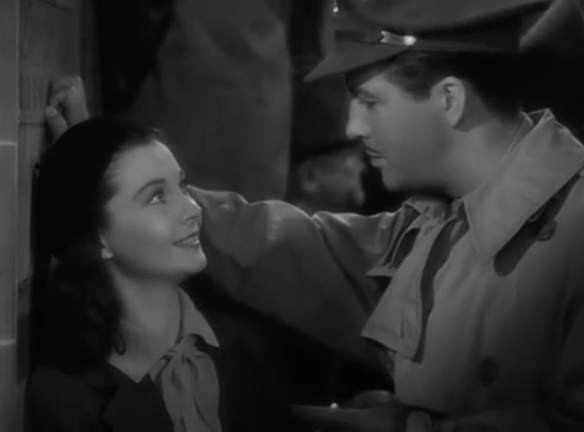
Fittingly, our opening prologue begins at the titular location, as a handsome man with a touch of gray, dressed in military attire, makes a ponderous appearance. The place holds an obvious resonance for him even as he holds an unnamed token in his hands. This is Robert Taylor. He probably looks too virile to be an old man, but that’s hardly his fault. At any rate, he’s preparing to give one of the most continuously amiable performances of his career.

Then, we’re back in time. For a minute the cultural moment caught me off guard. Even though the flashback seemed to denote the first war to end all wars, how our star couple first meets, heading to the Underground for an air raid, feels like a distinctly World War II-era image. However, it happened earlier as well, and it makes for a very practical meet-cute.

With the Germans threatening to rain down their ammunition, the Underground is stuffed to the gills with all sorts including Captain Roy Cronin and Myra Lester (Vivien Leigh), a member of a ballet troupe. This might be their first and last meeting, but the spell between them is too bewitching. The cinematic mechanisms of star-crossed love are at work.

There’s a warmth and romantic civility bathing the picture, and it’s the kind of feeling you often seem to get in pictures of old — at least the most supernal ones. I can think of a handful: Random Harvest, Love Affair, Now Voyager, maybe The Ghost and Mrs. Muir. In a word: Stars. Because the scenario can change and yet when the talents fit together, there’s just something so disarming and delightful released into the atmosphere.

We want to soak it in and be in the moments with them to feel the same swells of emotion. Whether war or some other force pulls them apart or gets in the way of their love, they always face it with a good humor and a grace that we can live vicariously through as the audience out in the dark.

All of this might see like an admittedly surprising proclamation because anyone who knows anything about Leigh will first consider Gone With The Wind from the year before and then her larger-than-life relationship with Laurence Olivier. He was the man she wanted for this picture. Alas, he was called to make Pride and Prejudice (1940). What came into being with Waterloo Bridge is probably better.

Oh that we could be as handsome a Scotsman as Robert Taylor (with a better accent) or such an immaculate and gorgeous ballerina as Vivien Leigh. As such, their romance is set in this heightened supercharged arena created by wartime.

The film’s most illustrious scene is the “Farewell Waltz” by candlelight, played to the soft melancholy tones of “Auld Lang Syne.” In the silence or, rather, without dialogue, the magic of the moment is the film’s apogee. That song becomes one of the strongest motifs at the movie’s disposal.

It might have been the most bittersweet short film of all time if the first 30 minutes were all we got. All things considered, it wouldn’t be a bad place to end allowing the pleasantness to waft over us and invade our collective hearts and minds.

Still, their story continues for over an hour more. There must be complications. Robert Taylor is soon on the train platform, a fellow soldier holds a bawling son amid the hubbub, and our protagonist’s head is on a swivel as he moves down the platform. The camera follows close behind; he’s anxious to see his love just one last time before he ships out for what may as well be forever. It sets the tone going forward.

Their joint life together suffers in the wake of his departure and we can say “departure” because the movie stays behind as he goes overseas. It works in the story’s favor not to break off and try and tell both sides because this way it gets at the feelings of those left behind fretting on the home front.

Still, the final act needs something more. In comparison, it feels like a bit throwaway as if the movie is coasting on the power of those first minutes of romance and quite literally that haunting chorus of “Auld Lang Syne.”

You can write it off as sanitized rendition of its 1931 brethren or otherwise call for a perceptive reading between the lines, but what the picture must resolve once and for all is Myra’s shame — the guilt she holds onto while her man is gone.

Because even with the spunky support of her best friend Kitty (Virginia Field), she is left destitute without the lifeline of her husband. Whether he lives or not, she must subsist someway, and she chooses the only conceivable path, prepared to live with the ignominious consequences.

The only way to redeem the ending is to reflect it back at the audience — back at all of us — because it’s indicative of what many of us deal with. It consists of the lies we tell ourselves when no one is around. We’re unlovable. We’re too far gone. We’re the Judas. But the movie fails to go anywhere creative and poor, downtrodden Myra hardly fits the description of a loveless tramp.

The final saving grace is Vivien Leigh. Her quizzical right eyebrow gives all of us lacking perfect facial symmetry hope. Despite her final moments being trance-like, she is more than capable of the art of captivation even in her character’s execution of the inevitable. If I don’t quite buy her convictions taking her to such a sorry conclusion — the logic seems a bit drastic even for the time period — it’s easy enough to get swept away by her emotion alone.

Robert Taylor for one, gives a performance brimming with vitality, and he feels like more than a chiseled block of wood. He reminds us that in order to have true love there must be two involved. That place. His token. They only maintain their meaning because he shared them with someone else. We get the privilege of being there with them both.

4/5 Stars

Unfinished Business (1941) for Irene Dunne

Screenshot 2020-01-04 at 82904 PM.png

Unfinished Business commences with a wedding ceremony we’re trying to place. Because it is not Irene Dunne getting married, although she stretches her famed vocal cords in lieu of a wedding march. It is her baby sister — the girl she’s mothered her entire life up to this point. Now that the responsibility is over with, she wants to give up motherhood to be herself. After all, she’s been settled down her entire life and now she wants to get unsettled.

She’s a rural Ohio gal and intially feels like the most simplistic, idealistic I’ve ever seen Irene Dunne in a picture. However, this might establish the wrong impression. Because Unfinished Business gives an inclination of being in the mold of Theodora Goes Wild, though it does make its own digressions in favor of a softer even sadder tone. It’s actually more complicated than it appears, and Dunne’s character is very much the same.

The whole conceit is in the title really, although it takes on multiple meanings. First, there’s the unfinished business in reference to her life thus far. And then, when she has a romantic encounter rudely sidelined and left unrequited, it’s quite something else entirely.

The heart of the story starts aboard the train she boards to who-knows-where to live a little. Instead, she gets seduced by a handsome man who’s waging a bet he can find the most attractive conquest on the train. Their expectations and the meaning of the encounter mean two very different things to both of them. She will never forget him with a starry-eyed infatuation. He’s moved on to other things and over women soon thereafter because that’s who Steve Duncan is.

Not to be totally paralyzed by love, Nancy, endeavoring for an opera career, spends her waking hours on her arias. By day she must settle for singing telephone messages to customers, a rather demeaning art compared to what she’s used to. Though it does wind up getting her a new job; the pays better even if it’s hardly a more glamorous turn.

Billy Ross is the first truly curious character actor out of the rank and file old Classical Hollywood normally bequeaths us in pictures like these. He has this sense about him that screams screwball comedy as does Eugene Pallete, though he comes later. But the distinction is how La Cava’s film never resorts to this plane of existence. This is a far cry from My Man Godfrey. At first, it seems like this is a bad thing.

Nancy’s still a few rungs below hatcheck girl hidden behind a counter at a switchboard still singing messages. At least this time she gets some company with a touch of humor in the form of Tommy Duncan (Robert Montgomery) who is, among other exploits, a noted alcoholic.

Montgomery’s delivery always feels abrupt and unsorted to me. Though I’m admittedly coming around to him because in this picture, in particular, he’s the one man who notices Nancy’s tears — going so far as to commandeer the switchboard for her. If you’re beginning to connect the dots, you’ll realize his older brother is Steve, her one-time, one-day love.

Nancy and Tommy prove to be a strange company going out together. It’s almost like they have a shared camaraderie however thinly connected. He can’t stand his brother with typical sibling syndrome, and she still harbors a melancholy flame. At any rate, they drown their sorrows with some extra hard milk.

They wake up in the morning — the valet (Eugene Pallette) calling on Mr. Duncan, his musical shoes needing a grease — and they have flown to South Carolina and gotten themselves Married! But it almost plays as matter-of-fact, not one of those wonky sitcoms episodes. The whole movie functions like this.

Nancy dresses up and goes “wild” in an effort to make up for her ho-hum existence thus far. It comes with mixed results, eliciting the grouchy contempt of their sleep-deprived butler Elmer. Part of the issue is how we only hear word of her merriment after the fact. We are robbed of the delight of Dunne going a little ditzy and a little wacky and breaking up the screen. This is not that kind of movie (although Montgomery does get an extended number with a pair of opera glasses).

Otherwise it feels subdued in comparison to other contemporary examples like My Favorite Wife or Here Comes Mr. Jordan. It’s very possible La Cava’s film was striving for a more delicate tone somewhere in between, which is certainly admirable, but it never seems to reach its optimal effectiveness.

While Dunne is always lovely and we do appreciate here more often than not, somehow the movie never feels centered even as Preston Foster and then Robert Montgomery drift into her life for different reasons. There is an emptiness to it. Can we say purposelessness?

But then maybe there you have a bit of Dunne’s predicament. Shall she wait around for love, focus on her career, marry for money? The options are in one way bountiful but no less restricting for a woman in her position.

One visually impactful scene comes right after the wrong Mrs. Duncan kisses the wrong Mr. Duncan. That is Dunne and Foster. The catty blonde at the party passes what she’s witnessed along gleefully, and the camera takes a hop, skip, and a whip across the various partygoers as the words catch like wildfire. It’s the most blatant of ripostes in a film where stories begin to quietly overlap. Still, it hardly unloads on the drama.

What sets the movie apart is probably the honesty — this underlying sense of pragmatism. I have no illusions that it is similar to Daisy Kenyon, but I remember watching that film and Joan Crawford’s role in it, which somehow felt unextraordinary. And yet I realized it was extraordinary for the ordinariness, at times, because it was so very unlike the cultivated or perceived Hollywood of the 40s, not to mention its lack of emotional hyperbole.

I’m curious if my gut reaction to Unfinished Business is very much the same. There’s an undue skill and finesse to it no doubt, but this never moved beyond observation and then admiration for an underrated director. It didn’t get to my core through laughs or drama like My Man Godfrey or Stage Door, and I must simply come to terms with it.

3/5 Stars

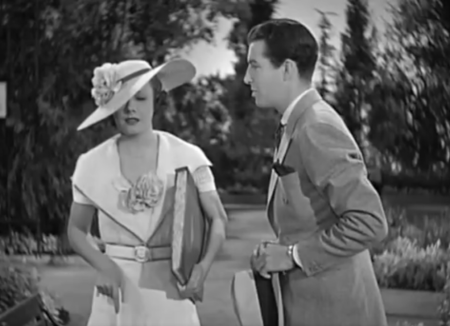
Theodora Goes Wild (1936): Irene Dunne The Comedienne

Screenshot 2020-01-04 at 80541 AM

The Lynfield Bugle, led by their fearless leader Jed Waterbury (Thomas Mitchell), keeps their nose to the proverbial grindstone printing the news as it happens in “The Biggest Little Town in Connecticut.”

Their latest act of rebellion constitutes printing a spread from the latest lurid bestseller from author Caroline Adams. It causes quite the to-do in such a proper, God-fearing community.

Because it’s true Lynfield has all the customary facets of a town its size, including emblematic moral watchdogs such as Rebecca Perry (Spring Byington), a key member in the Lynfield Literary Circle, the key force in swaying public opinion and consequently, keeping the town’s gossip in a state of constant flux. Rebecca just happens to be the most insufferable of them all.

With their mouths, they openly condemn Adam’s latest piece of titillating prose as they secretly relish its vivid detailings of passionate romance. One of their younger members, who sits zealously by, next to her two austere aunties (Elisabeth Risdon & Margaret McWade), is Theodora Lynn (Irene Dunne). She’s a devoted Sunday School teacher and plays the organ at church on a weekly basis.

Theodora also has a secret in the form of a pen name and a mendacious life as a writer, although that is rather harsh because this is Irene Dunne we’re talking about in a generally raucous screwball comedy. You see, she is the one and only Caroline Adams!

Her Uncle John is the so-called black sheep of the family (Robert Grieg) because he escaped the puritanical lives of his sisters for a much more “worldly” life in the city. He’s a jolly fellow and with a twinkle in his eye, he believes Theodora to be different. There’s still hope for her yet.

In fact, she has a streak in her that old Uncle John might just be downright proud of. It’s a decent streak mind you — helping a young woman be with her husband and setting her up with her job — but it’s the kind of activity people back home might turn their nose at. This all happens as she makes a meeting with her publisher incognito to talk business as part of her double life.

Although he does his best to keep her under wraps, that miracle elixir: whiskey has a habit of loosening the tongue. Their prying dinner companions are fascinated by the very contradictory nature of her character. Among them is a wry ne-er-do-well, Michael Grant (Melvyn Douglas). Soon the small-town gal finds herself in a fairly big city situation, in Grant’s bachelor pad, with deeply comic underpinnings.

Of course, nothing happens at first. That is until Theodora, that is Caroline Adams, has her cover blown — an old friend wanders through town quite by chance, with a furry companion Jake. He railroads his way into the aunties’ shed as a gardener and quickly sets up shop. As he sees it, he’s her deliverance from the clutches of her town, and he gleefully whistles his way into her life, tearing up their gardens backward and forwards.

She has very little in the form of a rebuttal aside from retaliating through a song of her own, “Be Still My Heart” through gritted teeth. This could be the end of the movie right there or else it wouldn’t have enough gas to wheeze its way to the finish. In this specific moment, it’s not what I would term a screwball in the strictest sense though, it does have a feel of some of the Loy and Powell comedies of the same vintage. Be it Libeled Lady, Love Crazy, or I Love You Again.

Screenshot 2020-01-04 at 95611 AM

Mervyn Douglas often feels like a version of Powell I don’t take a shining too quite as much. He has a similar playful banter at his disposal, even mustachioed good looks, but it doesn’t tickle the fancy in the same way — at least for me.

Irene Dunne, of course, in her first foray into out-and-out comedy is exquisite, although she would continue to up the ante with the likes of The Awful Truth, arguably her best film and the finest pairing she ever had with Cary Grant (or anyone for that matter).

But we must attend to this story because it doesn’t end right off, instead, it turns the tale on its head and once Theodora has been handily liberated of her small-town’s repressiveness, it gives her the freedom to have a go at Michael. Because it turns out they’re not all that different. He needs his own push of encouragement.

Instead of church choirs, temperance, and women’s book clubs, it involves high society, governorships, and public appearances. His father expects him to keep out of the newspapers and remain married to his estranged wife — at least until the public office is secured. Meanwhile, Michael becomes unhappier by the hour.

Dunne takes the movie by the horns now and truly kicks it into overdrive right when it could use a good jolt. The way she trollops and sashays around, first through her lover’s bachelor pad, and then making her way up the totem pool on the dance floor, with her new pal the governor, is the picture of jovial inhibition. She redefines our perceptions and the underlining dynamics of the movie shift wildly — and humorously — as a result of her antics.

She goes back to her publisher in fancy new duds absolutely gobsmacking him as she proceeds to drum up all the publicity she possibly can. Theodora Lynn is going to become a household name. Accordingly, she gets the newsboys in her corner, and they go to great lengths to help her (and themselves).

Soon she’s plastered over the front pages, and the ever-fastidious Bugle gets the scoop out. Like clockwork, the town is shaken into an uproar, and it even reaches the upper echelons too as Michael gets dragged into it. What a beautiful mess; just what the movie required to spruce it up. Theodora’s making waves like never before.

The key is how Dunne always has a firm handle on everything — turning the sass on and off as needed — she knows what she’s doing. Whereas other heroines are often dizzy and ditzy, like frantic hurricanes of passion and emotion, she’s probably the most controlled of all of them even as she does bring her own “wildness” to the party.

What’s even more hilarious is watching public opinion rise up like wildfire and turn in her favor. She gets as good a homecoming as the war heroes in Hail The Conquering Hero a few years down the line. All her decency and newfound transparency are met with affection.

By now, she’s harnessed the power of her neighborhood and finds a way to be a beacon of change in an uproarious manner with a romance to complement the major strides in her personal life.

As such, Theodora Goes Wild becomes a surprisingly pointed (and poignant) portrait of a young woman casting off the shackles of religious hypocrisy, societal repression, and general small-mindedness, all conveniently wrapped up in a quasi-screwball, rom-com format.

3.5/5 Stars