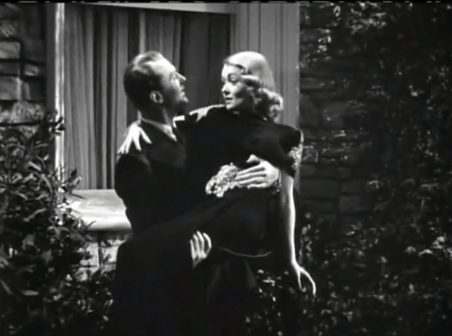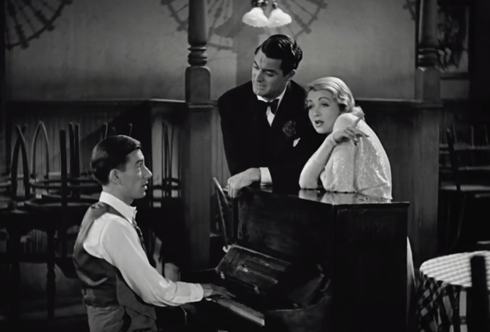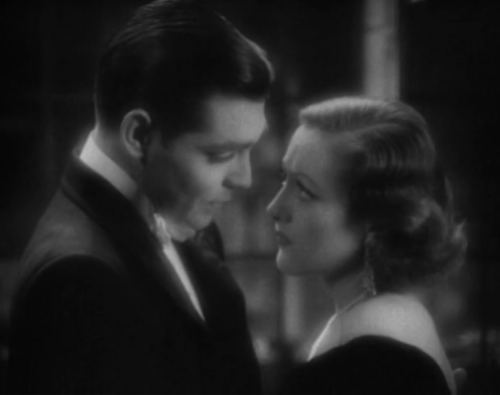
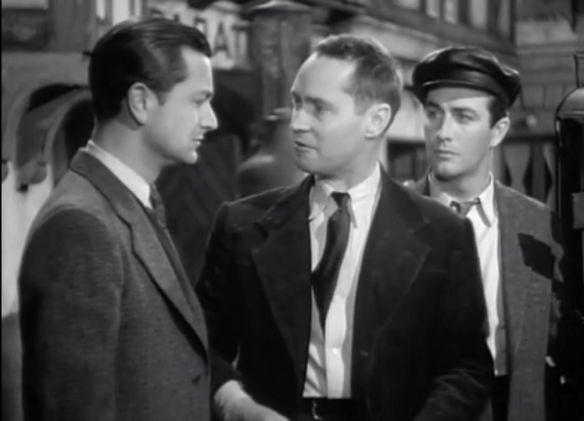
Three Comrades (1938) in Body and Soul

Screenshot 2019-12-27 at 100048 PM.png

“Germany’s a pretty rough sea if you’re drifting.” – Breuer

“But I’m not alone anymore. There are so many drifters!” – Patricia Hollmann

Erich Maria Remarque is of course most famous for his work All Quiet on The Western Front, which was adapted to great effect for the silver screen by Lewis Milestone in 1930. Three Comrades, another one of his novels, feels very much like an extension of the same themes found in the earlier novel.

We find ourselves at the tail-end of the Great War. Mainland Europe is jaded and bedraggled. One must recall these were the days before Nazism: a force that felt like personified evil. When we look around from trench to no man’s land, it feels like everyone’s equally besmirched, equally implicated in the senseless killing.

So in this regard, it’s not a far stretch of the imagination to think a cohort of three German veterans might be likable to an American audience (especially because they are also Caucasian). However, equally importantly, they are played by three strapping young talents with charm bouncing off them like pinballs. It’s how they’re able to leave the calamitousness of war behind and attempt to discover a new life of humble contentment.

It was the war that instilled them with a certain collective memory, both scarring and then firmly solidifying their friendship in the aftermath. They take the world on like the Three Musketeers: all for one and one for all. Together they happily resolve to become car mechanics, carving out a peaceful existence for themselves, even as their beloved country has succumbed to a kind of mob rule with rampant new ideologies. To each his own.

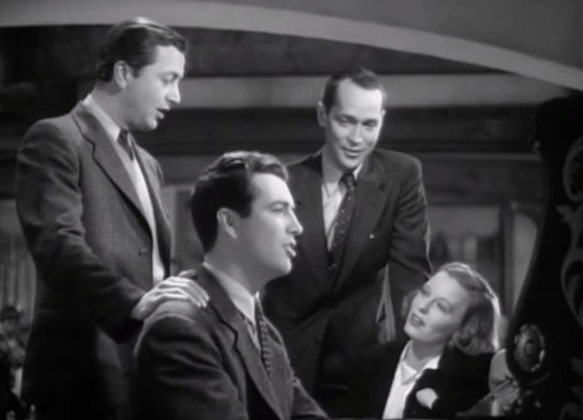
Erich Lokhamp is the first, played by a dashing, if a bit wooden, Robert Taylor. Though it’s his friends who really seem to bring him alive. Franchot Tone is Otto Koster, always ready to support his friends and speak sense into their lives. His brand of loyalty is finer than gold. The other is Gottfried Lenz (Robert Young) also light-hearted while stricken with the mind of an idealist. Still, he gladly gives up his social conscience for the sake of his friends’ well-being. At least for a time, life is happy.

But before there’s any greater stakes, it begins as three lads having a blast taking a stuffy socialite (Lionel Atwill) for a ride as they roar down the thoroughfares in their beloved, hopped-up creation “Baby.” It’s a bit of good fun, but it also introduces the trio to one of the most important people in their subsequent life together: Pat

Margaret Sullavan is at it yet again a husky-voiced, troubled soul and yet overwhelmingly resolute in her pursuit of love and the preservation of those around her. It’s a quality found in all these characters — this self-sacrificial nature that becomes so laudable, if not entirely necessary. She is the one who surmises how lovely it might be to pick when we were born. Perhaps an age of reason and quiet. This sounds like a Borzage picture. Because of course, they must make do with the here and now, where evil still exists in the world (as it does in any era).
Screenshot 2019-12-27 at 100806 PM

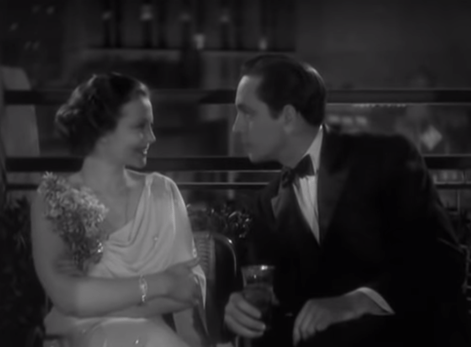
Their favorite hangout belongs to a jolly man named Alfons (Guy Kibbee). Erich takes his new girl there following some awkward interplay over the telephone. Also, his buddies always have a penchant for showing up uninvited to sit in on their evenings. It’s one of the added delights of the pictures because Young and Tone can supply the wisecracks to rib their friend.

I admire Otto and Gottfried even as I relate. They are faithful, they wish the best for their friends, act as encouragers — spurring each other on — and celebrating their victories while taking any setbacks as they always do: together.

This courtship brings with it other complications, namely trying to impress a high society girl of culture no matter how good-natured she might make out. It’s still easy for a man used to the inside of cars, to feel out of place with the social elite, dancing and wearing customary uncomfortable clothing, which also has a habit of coming apart at the seams. He even spins tall tales of rolling down to South America, an exotic land full of monkeys and coffee, just so he might be able to keep up with her.

All of this show proves unnecessary. This is how it works when you are smitten with a rich man’s girl and, more importantly, when she is in love with you. In another line that feels transcendent in the usual manner of Borzage, they aspire to being “lovers on the edge of eternity between day and night.”

A lesser film — or at least one ill-befitting the predilections of Borzage — would probably have made this a fight for the woman’s hand. It’s easy enough to see how this would have pulled the boys’ bond asunder. And yet these characters are more genial, enlightened, and well-intentioned. The story itself strives for something more. Young plays cupid urging his friend toward marriage. Tone’s character knocks out a concerto on their automobile as he tries to hammer away some sense into Pat in favor of his friend.

Propitiously, all this coaxing culminates in the quaintest wedding, which somehow fits all the players to a tee. Borzage captures it such that we feel we are there with them discovering it as it happens, partially spur of the moment, but also imbued with this star-crossed purposefulness. In step with everything else, their honeymoon to the seaside is as gay as can be until it is met with a setback.

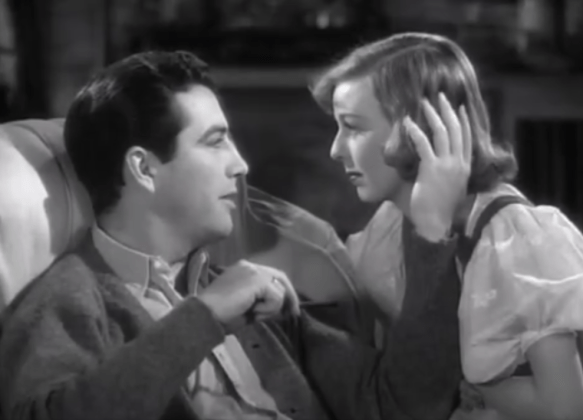
It plays into the film that Sullavan always feels emotionally strong and sturdy but often physically frail. Maybe she just exudes this quality between her throaty vocals grasping at words and the obdurance she gained a reputation for. But in Three Comrades, she is bedridden and in critical condition from hemorrhages — still nursing sickness that has clung to her for some time. Erich has little idea, but once again, Otto comes to their aid with his usual expediency. It only serves to bring them together.
Screenshot 2019-12-28 at 75036 AM

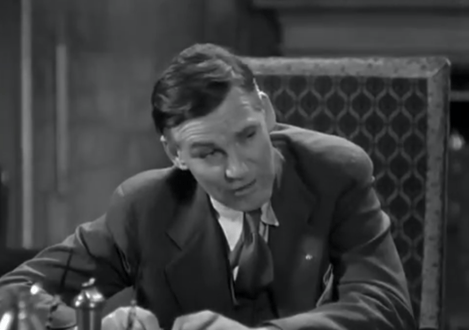
While remaining unnamed throughout the film, there’s little question that the rising Nazi Party is the instigator of public brawls. Dr. Becker (Henry Hull) speaks out on his soapbox about the need for reason in confronting the issues of the times, instead of the prevailing violence. Since it’s not the first scuffle or an isolated event, Gottfried feels compelled to stand up for his beliefs, putting his ideals on the line.

Meanwhile, Erich has a less politically charged fistfight in the streets over a work claim. He gets ganged up on before his comrades, of course, fly to his defense. Just like old times. Pat is placed in a sanitarium on the behest of her doctor (Monty Wooley) just in time for the snows of winter and then Christmas.

The violence continues to escalate, this time dragging Tone into a shootout in the streets with Handel’s “Hallelujah” clamoring in the background. It’s oddly hypnotic even as it spells what feels like the end of the beginning.

If it’s not apparent already where Three Comrades is going, it easily functions as a fitting companion piece to Borzage’s later Mortal Storm because there is this same uncanny prescience about it, although it probably did very little to halt the impending course of history. The unholy mechanisms were already in place.

Every Borzage movie makes the world a little broader and love a little grander to match. In this regard, the meeting of the prose of Erich Maria Remarque and F. Scott Fitzgerald somehow manages to work in the hands of a director.

What sets it apart from a melodrama like Douglas Sirk’s is the slow burn and how the characters take each moment on with their own brand of quiet fortitude. In many ways, love (and camaraderie) are an antidote to the wiles of the world. Our heroes know what’s inevitable and they brave it together — smiling until the end of days — even in the face of tragedy and hardship.

Is it high-minded and idealistic? Most assuredly. But it’s also one of the most blessed hallmarks of Frank Borzage’s filmmaking. This hallmark, more than anything, is why we can easily draw a line in the snow from something like Seventh Heaven or Man’s Castle to Three Comrades and then The Mortal Storm.

One is especially reminded of Margaret Sullavan because one of the pervading attributes of her characters is this all-encompassing dignity to see her to the end. We feel like unsightly sots and indignant peons compared to her eminent calm.

But really, the same might be said about all the players in Three Comrades. It’s a pacifist portrait. Not so much in prognostications of any sort. It has to do with the inner peace inside the characters that radiate out from them, due to their affections for one another. Thus, in a fitting Epilogue, with fighting breaking out in the city, the four inseparable friends walk off solemnly together. If not in body, then certainly in spirit.

4/5 Stars
The Shopworn Angel (1938): Remembering Margaret Sullavan

Screenshot 2019-12-24 at 110602 AM.png

“Dreaming’s alright if it’s all you got but if you find the real thing you’re just not satisfied with it anymore.” – Jimmy Stewart as Bill

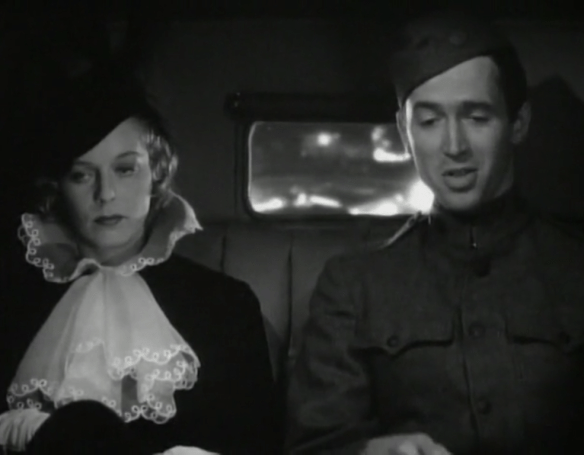
It’s 1917: the eve of the U.S. entry in WWI. The nation is yet to feel the jadedness of everyone else in mainland Europe. James Stewart seems perfectly cast as a fresh-faced soldier boy, or as the contemporary vernacular goes, a Doughboy, named Bill Pettigrew. The whole country seems to be caught up in Jingoism spurred on by the tunes of George M. Cohan and exuberant patriotic parades.

For his part, when he’s not drilling with his buddies, Bill is observing the mating customs precipitated by men going off to war. The counter of the soda fountain boasts a waitress who is a sweetheart to the masses. He gains a lesson in the facts of life.

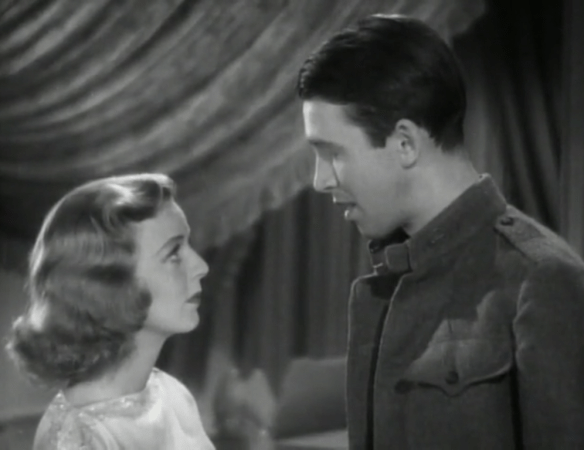
For Daisy Heath (Margaret Sullavan), it disrupts her rest as she tries to sleep off the previous night’s reveries. She looks perfectly disheveled in a kind of manicured Hollywood sort of way, lounging in her evening dress, hair perfectly askew.

Her longtime socializing partner is the perfectly civilized Sam Bailey (Walter Pidgeon) who looks to have never worked a day in his life, at least in any menial capacity. The war doesn’t concern people of their stature or breeding, and they’d rather not be bothered with its nuisance. She makes a living on the stage where he finances and they spend their evenings drowning in the bubbly ’til the wee hours of the morning.

These would remain two separate stories of two vastly incongruous lifestyles if it were not for Jimmy Stewart’s penchant for stepping into oncoming traffic. You see, he’s from a small, two-horse town where the horses outnumber the automobiles.

So when he’s just about run over, about to join back with his outfit, he finds himself thrown into a cab commandeered by a demonstrative but kindly street cop who’s looking out for his servicemen. However, when the doors close his coinhabitant happens to be Ms. Heath.

Given the circumstances, they get off on the wrong foot as she feels put upon and turns slightly snide, cutting Stewart’s callow Texaner’s naivete down to size. She’s a city dweller with no patience for yokums of his ilk. Again, this initial encounter might as well be the end of the picture right there, if not for Bill’s attempt at a masquerade to impress the boys.

From the story he dreams up, his beau is an extravagant movie star, and he’s got them all heartily impressed (if he’s telling the truth). In other words, they’re rightfully suspicious their dorky buddy could land such a dame.

Next Time We Love proved a fairly stale weepie, albeit boasting the fledgling leads as well as a handsome best friend played by Ray Milland. Here you have an agreeable, if lesser, second-fiddle in Walter Pidgeon. However, while maintaining Sullavan and Stewart, it has more get-up-and-go in its chassis to carry us forward.

Whereas Ralph Bellamy would always be playing this part as the other man on the outside looking in, Stewart gets the benefit of our attentions in his pursuit of a woman from such a different stratosphere than he’s accustomed to. After all, he’s just a “dumb country rube” as she so eloquently puts it, but he’s also got all the charm of Jimmy Stewart at his disposal, growing more assured by the minute.

One second he’s educating Pidgeon in the art of rolling cigarettes, and the novelty of the experience has the other man deciding he wants to put on a show for the soldiers. Far from being jealous, he seems caught up in camp life. Bill couldn’t be happier, getting a chance to show Daisy around camp one evening after the show, and she reciprocates by showing him the city limits.

They take on the raucous funhouse attractions of Coney Island together, and Sam finally allows his jealousy to come out; he’s realizing the depth of his feelings for Daisy even as she becomes more and more charmed by Bill’s brand of geniality. Still, their time together looks to have a short leash due to his impending deployment.

Surely it cannot last. And yet he makes a rash decision so he can see her one last time; he goes AWOL to say goodbye, and she drops everything to join him. It hits the height of the rom-com preposterousness right about here.

Screenshot 2019-12-24 at 90919 PM

At times, Shopworm Angel feels like a testy high wire act to navigate feelings without totally ruffling feathers. How will it fit together between Bill, Daisy, Sam, and the immovable reality of war? The pieces look ill-suited to align and yet on all accounts, the trio carries their parts with a certain aplomb that falls together nicely.

You may or may not be astonished by what happens next, but it sets up a teary-eyed ending where Sullavan goes out with a stiff upper lip singing “Pack up Your Troubles” (with the aid of Mary Martin’s vocals).

Shopworn Angel was reborn as a relic of the Pre-Code era meant for a fresh take with one of its icons, Jean Harlow, who died tragically in 1937. Instead, it got retrofitted with a new cast, including Sullavan, and toned down its content to appease the norms of the late ’30s, bleedings into the ’40s. Daisy was no longer a chorus singer but a stage performer and Sam, in part, gained a more respectable pedigree.

However, equally important to the film’s success is the subtext of Stewart and Sullavan in real life. Because not unlike their screen romance, Stewart had unacknowledged feelings for her even as their friendship and professional careers continued to bloom. His, in part, because she encouraged him and helped with drawing out his own tendencies in the performances he gave. Their first two pictures together are fine proof.

They both met in an acting brigade back in the early days, which included Henry Fonda, Stewart’s longtime friend and also Sullavan’s first husband. However, she was the one who broke first in Hollywood, and it was partially thanks to her encouragement and tutelage that Stewart was able to get a leg up in Hollywood. He got beyond the bit parts and supporting spots MGM was handing him in pictures like After The Thin Man and Wife Vs. Secretary to develop the persona the moviegoing world would come to admire.

The actual screen partnership between Sullavan and Stewart started off in The Next Time We Love with the pinnacle arriving in 1940 when they would star in Frank Borzage’s The Mortal Storm and then their most acclaimed pairing The Shop Around The Corner, which at the very least, has become revitalized through Christmastime viewing (and maybe its tenuous relationship with You Got Mail).

Thereabouts James Stewart would shoot off into superstardom on the silver screen and the Christmastime circuit. It’s a Wonderful Life is a Yuletide stalwart for many folks even if they don’t know a plethora of Stewart classics with the likes of Capra, Hitchcock, and Mann.

But the bottom line is that none of this would have been possible if not for Margaret Sullavan — an actress who was known to be difficult, who cycled through numerous marriages, and who ultimately died in 1960 before her time after struggles with hearing loss and mental illness. Still, do yourself a favor and search out her films.

While not to everyone’s taste, she is a singular actress with her own sense of beauty, assurance, and grace — husky-voiced but often warm and sentimental. Stewart loved her dearly and even after he was married in 1949 and she died in 1960, Sullavan’s lifelong friendship impacted him greatly.

It’s true you rarely forget those you came up with (like Henry Fonda) or those who were fighting in your corner (like Sullavan). Thanks be to Margaret Sullavan for being a friend to Jimmy Stewart and for leaving a body of work worth rediscovering on its own merit. She was a Good Fairy and a Shopworn Angel all rolled into one.

3.5/5 Stars

Little Man, What Now? (1934): Borzage Vs. The Depression

Screenshot 2019-12-29 at 92257 PM

Little Man, What Now? is a curious title although Carl Laemmle seemed to believe in the tale even giving it a public service announcement to make the point very clearly. This is a story for every man even as it seeks to document the daily problems of the contemporary society.

From the opening vignette, the movie preaches a message of peace, tolerance, and minding one’s own affairs like an upright citizen. If you’re like this jaded viewer, you grow wary of a picture with a self-serving agenda, especially one done poorly. Thankfully, Little Man is about a lot of ideas, including the things that get jumbled up inside a person’s head as they try to make their way through the world. Or rather, when they try and make their way through the world connected with someone else in marriage. This is Frank Borzage, after all, so a romance must be key.

One is reminded instantly we are in the throes of the Depression though this is Germany. It’s true much of the western industrialized world was plagued by stagnation and poverty. Herr Pinneberg (Douglass Montgomery) is a clerk and his tyrannical boss might very well be Ebenezer Scrooge though bald, bearded, and more oafish.

His family lives in the adjoining room with a cackling freckle-faced son and his dowdy daughter, who’s not had any luck landing a husband. Her belittling father has tried to up her prospects by hiring three bachelor’s to work for him. She dislikes them all except for Pinneberg. The feelings are not mutual, and he’s already wed. To keep his job, he conveniently keeps this detail a secret. It’s out of necessity. He’s madly in love with his wife.

Margaret Sullavan has a youthful vigor and prevailing spirit of a newlywed about her to be sure, but there’s also something deep and wise layered into her performance. She’s steady as her husband seems to crumble in the face of every change in the winds.

Next to her, Douglass Montgomery at times feels weak-willed and green, almost deserving of the world’s ill-fortunes because he gripes about them so much. And yet it’s difficult to be too harsh with him lest someone puts the mirror (with its three panes) up to my face as well.

We are continually reminded of the world’s many ailings from bigotry to unrest and poverty. Against this, Borzage literally captures them frolicking together in the lap of nature. While they do model a slightly different cross-section of Depression society from say Man’s Castle, they still exhibit the same rapturous affections for their beloved. Throughout the entire film, they remain the deliriously fixated center. What remains to be seen is how the characters and situations around them evolve.

The old man starts feeling positively chummy even as his daughter becomes petty even vindictive criticizing the “other woman” he was seen with. Speaking from experience, it doesn’t matter the age, there is a helplessness, nay, a uselessness that comes with being unemployed, especially when others are counting on you. Hans remains resolute when it matters most. Maintaining his pride and the love of a good wife mean more to him than money.

There’s another wonderfully staged scene between husband and wife as the merry-go-round sends our heroine round and round through the frame as she responds to her husband’s questions about where she’s been. She sheepishly admits she got so hungry she ate all the pieces of salmon from the market and now they have no dinner. Far from being angry, he laughs riotously. This is what love is.

Screenshot 2019-12-29 at 85936 PM

The movie is melodrama in the way that a life is full of smatterings of drama, cycling through the highs and lows, the devastations and elations, that come with the daily grind. The picture never feels like it’s aiming for a particular peak. Instead, it’s content enough to offer up vignettes because we have a couple to hold onto and root for, even as the scenery, the jobs, and the hardships change. They remain our steadfast point of reference.

Next, they make their way to Berlin, which we come to realize is only one decision out of a whole host they will have to make. They meet Hans’s step-mother at the station, a bubbly absent-minded woman always holding onto her inseparable dog.

However, she’s not so genial when you get to know her, and their desperate financial straits don’t help matters any. Thankfully, they have one friend, a most curious fellow named Jachmann. He’s a close associate with Mrs. Pinneberg. His real title, I couldn’t say.

Alan Hale was always the good-humor man but, in this case, he’s also a man with means. He just might be able to set them up with a home and a job, when he’s not kissing hands and laughing his head off, that is. Certainly, he’s some kind of shyster but a generous one with a heart of gold, especially when beautiful girls and their downtrodden husbands are concerned.

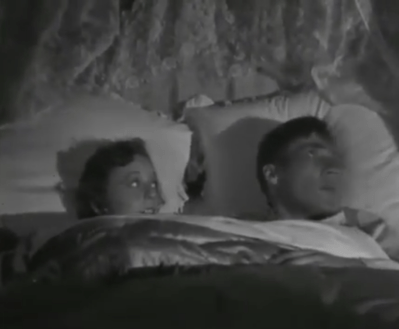
Another impeccable image comes when the couple is crammed in bed together as the mother’s party hits full stride just outside their doors. If we talk about the wage gap between our parent’s generation and us, this image of contrasting social statuses within a single family says as much about the Depression Era. However, it turns out she advertises in the papers because her home is actually a house of ill repute, and it carries with it a local reputation. They must move on.

Hans is a naive idealist and yet he rarely seems ready to make the sacrifices and the allowances his wife is; he’s not really willing to live within his means. Their new home has a Seventh Heaven rooftop, though he fails to see its quaint qualities; it’s close to a barn or better yet a stable.

If it was good enough for the baby at Christmastime, it’s good enough for them in their own humble estate. After all, being a Little Man is only in the eye of the beholder. In the eyes of his devoted wife, there couldn’t be a greater, grander, more important person to fill up her world.

As for the “What Now?” only time will tell. They rightfully state, “We created life so why should we be afraid of it?” What it does supply is this renewing sense of hope in the face of uncertainty. Again, it’s akin to the foremost Borzage pictures. It’s a testament to his convictions that he’s able to remain a romantic during the dog days of the Depression, and he keeps us believing in the power of love even within these dire straits.

3.5/5 Stars

Only Yesterday (1933): Margaret Sullavan Shines

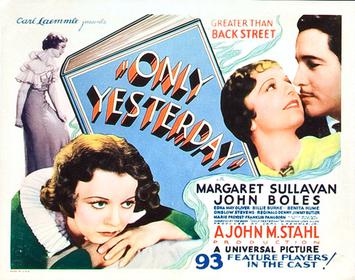
Only-Yesterday-1933-Lobbycard.jpg

In the opening designs of Only Yesterday, the New York Stock Exchange is encapsulated by its usual hubbub only to hit the skids of pandemonium when the market crashes. We’re talking about the Big Crash of 1929. It plays as the backdrop to our story, very much functioning as current events.

The backstory makes the film fall even closer to home. Because like just about everyone else, Universal Studios was saddled with their own financial troubles so it seems fitting Only Yesterday was the project made to get them out of the doghouse and salvage their holdings.

If we are to believe this film, part of what Black Tuesday did was totally humble both the rich and the poor (and the movie studios) in their separate estates. Before the sheer magnitude of the devastation has spread, we get a front-row seat at the party hosted in the home of Mr. and Mrs. James Emerson.

What becomes immediately apparent is the buzz of the atmosphere with tumultuous music and a smattering of glib zingers. There’s a cascading frivolity on all sides to go with the idle chatter supplied by such gossipping fiends as Franklin Pangborn.

However, Mr. Emerson (John Boles) comes home positively shellshocked because he’s been cleaned out. He’s in no state to make merry opting to disappear into his study. It’s in the backrooms and corridors where the crushing reality sets in, to the point of private devastation.

From the outset, Boles comes off as a sympathetic figure and a calming presence even as he comes to terms with the weight of the Crash and its innumerable implications. It’s true the man of the house looks to be teetering on the brink of suicide, if not for a mysterious letter on his desk.

He opens it up and thereby begins the heart and soul of our story. It is partially his story and someone else’s as well; it began before anyone knew of a Depression, in 1917. If you remember, without leafing through your history books, “The War to End All Wars” was reaching its conclusion.

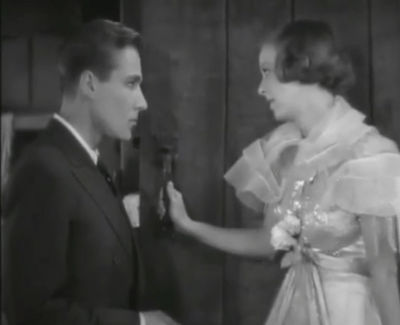
Back then James was a dashing soldier, unmarried, and still looking to finish up business overseas. It was on one such evening back in 17 where he met a buoyant young woman (Margaret Sullavan in her stellar debut) on a dance floor.

She is the picture of youth and her voice has yet to reach depths of only a few years later Regardless, precocious Mary Lane comes out of the woodwork to confess her love for him from afar after well nigh 2 years!

He takes it good-naturedly enough, altogether flattered anyone might look at him in this manner, and it leads to something — a dance and then whatever might come next. If the cynical would term it a one-night-stand, then it’s a little bit of paradise and Mary holds onto the evening.

In her mind, it’s the first of many, if not for the fateful news that the 309th is engaged to be shipped overseas. This is the event her whole life seems to hinge on up to this point; one evening was an entire lifetime. It just goes to show how the same event can take on differing degrees of resonance for two people.

It happens so quickly as to totally catch the audience off guard. James is off to fight a patriotic war and Mary is going up to New York as to not besmirch her family with her ignominy; she is with child.

Shopworn Angel would capture much the same jingoistic “Over There” milieu a few years down the road and yet that time around, not only would Margaret Sullavan be the veteran opposite a still callow Jimmy Stewart, the Production Codes would exert themselves more rigorously.

In terms of solely content, there’s little doubt Only Yesterday is armed with the uncompromising brazenness of the Pre-Code era. This includes a broad-minded perception of a woman’s place in an evolving society. It makes for a fascinating bit of observation, especially considering how Classical Hollywood would eventually settle into a status quo — a cult of domesticity tailored to the mid-20th century.

However, in Only Yesterday, we get Aunt Julia (Billie Burke), a progressive woman who has a life involving such independent-minded things as bob hairstyles and full-time employment. Aside from The Good Witch, Burke often played ditzy oddballs in numerous comedies where she wears on the viewer. Here there’s something resolute and distinctly likable about her because she does beat to a different drum.

The words leaving her lips are both an encouragement to her rejected niece even as they color how she sees the world in the 1930s. She has effectively worked to “kick the bottom out of the bucket called the old double standard” and she fervently believes “Today a woman can face life as honestly as a man can.”

Aunt Julia also helps to temper the situation swirling around Mary helping ease her mind. As a word of comfort, she says, “It’s no longer a tragedy, it isn’t even good melodrama, it’s just something that happened.” Meanwhile, Burke’s jovial suitor (Reginald Denny) seems like a playful generally affectionate chap. This portion is one of the film’s most carefree as a result.

Armistice eventually comes and with it parades of victory. We know what must happen now: a reunion. There don’t seem to be many close-ups throughout the film, but Sullavan gets a few of the most crucial ones when she’s reunited with her man only to realize he doesn’t remember her, having found someone else to love (Benita Hume). It’s a devastating bit of exposition and her face says it all.

If Gold Diggers of 1933 details a forgotten man, she’s a forgotten woman, although she’s not about to wait around to be noticed — she has a son to look after. It shows the depth of her character.

Mary shares a bit of the sacrificial devotion of Stella Dallas or the tragic unrequited point of view a la Letter from an Unknown Woman, maintaining a thin line of communication with her former love through a string of telegrams.

What’s astounding is even in her youthfulness — at only 24 years of age — Sullavan’s more than able to carry the weight of the performance, not only a vivacious ingenue but a mother who’s forced to weather the weight of the world alone. Like Stanwyck a few years later, they prove themselves wise far beyond their years. What a way to enter Hollywood.

Finally, it happens and The New Year brings her face to face with the man she once knew. Boles feels more and more of a cad over time, whether he was meaning to be or not. He has a steady demeanor, a serenity in his favor, but after being so ignorant of one woman, he manages to rebuttal his wife as well, all in a very civilized manner, mind you.

Even as Billie Burke represents something else, there’s still a prevailing sense that women can be cast aside for the sake of a story. Sullavan, on her part, exudes a quiet regality even unto death. What Mary has, however, is a legacy in the life of her child, and in him, like with any life, there is still some hope for the future.

From a historical perspective, there’s a lot to be learned. Even back then a young lad would rather go to the pictures to see Chaplin than read a book, and all the women want to look like Greta Garbo — one of the most sought-after glamour girls of the 30s. Some things never change.

It’s rather sobering to read Margaret Sullavan’s son Jimmy Jr. was played in real life by Jimmy Butler, who was affected by WWII like many were affected by the previous war — killed in action in France at the age of 23. It grounds Only Yesterday in real tragedy.

3.5/5 Stars

American Madness (1932) and The Capra-Riskin Connection

american madness 1

The entire premise is set around National Bank in New York City during The Depression. If it’s not enough explanation already, at least we have some hint of where we might be headed.

American Madness is an obvious relic of the saucier years of Capra and Riskin before the production codes set in and a movie like It Happened One Night dreamed up the “Walls of Jericho to maintain propriety between the sexes. In this picture, they kiss right out in the open and behind closed doors too. It doesn’t much matter.

With switchboard operators, secretaries, and people bustling every which way, there are also shades of Counselor at Law here. Again, we are dealing with a fairly limited space depicting working America in the 30s set against the backdrop of a Depression-era world. However, Capra’s picture appears more cognizant of its time and place, self-aware when it comes to poverty and the hard times hitting just about everyone.

The morning crowd comes in to open up the bank bemoaning one of their members who always finds a need to open the day with a corny joke out of his repertoire. His most pressing problem is owing $10 to someone else. That’s a lot of dough in the throes of the Depression!

The interest in these characters or their lives is not immediately apparent, and yet the story does pick up its steam borne on the shoulders of characters, dialogue, and a bit of drama.

There’s a joy in seeing fresh faces who became all too familiar friends in subsequent years. Sterling Holoway is one employer who gladly plays the gossip, supplying everyone else with his juicy tidbits over and over again (“You could have knocked me over with a pin”). Likewise, the obliging Principal at the It’s a Wonderful Life pool party (Harry Holman) passes through the bank seeking a loan. These are secondary pleasures of watching a film from an earlier decade like this.

Meanwhile, front and center is Matt (Pat O’Brien) a bank teller who the incumbent Mr. Dickson (Walter Huston) has set up with a job out of good faith. Everyone else seems to have given the man a bum steer because he served time once, but he’s been granted a second chance. With his sweetheart working under his boss, he feels beholden to his benefactor and maintains an unwavering loyalty toward him.

Because even as he mans his post and snatches kisses from his girl, a big to-do shakes the boardroom behind closed doors. “The four horsemen” and Dickson’s other partners have met on their own to discuss a merger. They want their other member to relinquish control of the company. They see the laundry list of outstanding loans and the needless hunches he’s backed as living proof. He’s sinking their upstanding institution into the ground. They’re all in agreement. It doesn’t help that the kindly Mr. Ives is always being cut off.

One has to admit, in a world sans Capra — gutted by the Depression — it seems like they have a valid point. Even this earlier rhetoric hints at a precursor to the Building and Loan that the Baileys famously ran. But when Walter Huston finally comes to the office with his affable charisma accommodating to all, we get something far more concrete.

Like any Capra/Riskin hero (George Bailey, Mr. Smith, Mr. Deeds, etc.), he finds his ideals under attack and makes a valiant effort to articulate why he feels so strongly about his convictions.

In his book, he’ll take an honest businessman against any amount of bad luck. To him, that is no risk and the way he sees it, it’s up to the bank to give people a break. He speaks in terms of relational capital where security is founded in quality character rather than stocks and bonds, even evoking one of the pillars of American banking, Alexander Hamilton.

Dickson readily invests in character that can pull the nation out of the doldrums, striving to keep cash liquid instead of allowing it to sit around in the vaults. It’s precisely because he runs their bank on such a flimsy thing as “faith,” he receives opposition. It’s true this point of contention really is an affront to all the “rational” sensibilities.

However although American Madness certainly acts as a platform for a certain call-to-action, in favor of the American everyman, there are mechanisms within the plot providing something to sink our teeth into.

american madness 2

Even as Dickson fights for his company, a blubbering inside man (Gavin Gordon) has found himself caught up with a noted gangster. However the spineless cad, also finds time to flirt with the boss’s wife. To him, it’s a bit more substantive and when Matt walks in on their would-be tryst, you can imagine his misgivings.

Then, a bank job goes down. Matt is a major suspect; he has a record, after all, and he doesn’t even try to exonerate himself. Of course, he’s covering for his boss, not that Dickson is guilty by any means. Still, it might kill him to find out his wife has drifted away from him, even as the bank begins to fold around him.

The once-formidable institution has its reputation steamrolled as the gossip makes the rounds. A “run” on the bank follows. This in itself is striking, not only as an early forerunner, again, of It’s a Wonderful Life, but also because, unlike that film, there is not the benefit of hindsight. These moments are being documented as close to real-time as you could manage. These are contemporary concerns laid out right in front of us.

Thus, the Depression is still fresh in the public consciousness; it still is a universal reality, and it shows me that the scene out of Capra’s later film was tapping into something real and profoundly relevant. My appreciation for both depictions broadens because of it. Although the ending is firmly planted in the Depression, it still manages to evoke the very same sentiments Capra would go back to in the final act of his greatest achievement after WWII.

But a short aside is in order. Because we can often quickly analyze someone like Alfred Hitchcock’s work and the through lines from 39 Steps to North by Northwest or even the evolution between his two versions of The Man Who Knew Too Much are easy enough to acknowledge. These happened over a period of decades.

We have the gestation period and the reworking of old ideas to garner more substantial results. However, even in a slightly less amount of time (about 14 years), Capra and Riskin managed a formidable collaboration with thematic elements that are also overtly visible.

Because fewer viewers are familiar with American Madness, less is made of the comparison, but the similarities are still uncanny. I’m not sure if it lessens the impact of the later film as much as it provides a blueprint and further proof that filmmakers often return to familiar themes to flesh them out even more.

In this case, going back to the well works because the culminating message champions the human spirit as Capra and Riskin always had a habit of doing. It’s smaller potatoes but still intermittently powerful blessed by Walter Huston’s own flawless magnetism. What’s more, Capra was on the cusp of his most fruitful period. It’s as if he would break out of the Depression into full bloom along with the American populous. For now, he and his collaborator were resigned to find a crevice of hope in the midst of the madness. It’s uplifting as only they could muster.

3.5/5 Stars

Merrily We Go to Hell (1932): Directed by Dorothy Arzner

merrily we roll to hell.png

Bubbly is flowing and the gaiety abounds. Alcohol is not an evil, just a tonic to loosen morals, tongues, and dour countenances. When Joan Prentice encounters Jerry Corbett for the first time at a party, she’s immediately taken with him. He’s a few drinks in and has let the merriment overtake him. It comes off charming if a bit dopey.

Merrily We Go to Hell feels like a provocative title, and it’s true this alcohol-drenched drama is a predecessor to the likes of The Lost Weekend and Days of Wine and Roses.

Sylvia Sidney is about as winsomely sweet as she ever was and ever could be playing a socialite at a party. Frederic March has momentary glimpses of warmth and allure, though it’s hardly his finest hour on the screen. However, it is a testament to how phenomenal his career was at points, and even a picture like this seems to suggest how often he is an underappreciated star of Classic Holldywood.

There’s also a third far more surprising presence in the movie filling what might be considered a minor bit part. Cary Grant is all there, but it’s a bit like seeing John Wayne in Baby Face or James Stewart in Wife vs. Secretary. We’re there but not quite there when it comes to their career trajectory. He still needed to meet Mae West and then Leo McCarey to really get the wheels rolling, thus entering the stratosphere of quintessential screwball suavity.

As it settles in, Dorothy Arzner’s picture is all for hitting the journalistic beats contemporary to the day and age. It’s a perfect arena for modern, capitalistic America. An arena of vocation, class, and in this case, alcohol. One easily recalls Platinum Blonde though March, despite all his able acting prowess somehow cannot muster the same fitting charisma Robert Williams managed as a newshound. The former performer lent almost a screwball sensibility to Frank Capra’s picture.

It’s the same kind of affable charm that made Jack Lemmon so effective even as he dipped into similar depths of hell in Days of Wine and Roses. But back to Platinum Blonde. It’s hard not to see the earlier movie’s imprint being reworked within this material (even unconsciously) with less handsome results. Because some of the same dynamics are present. We have a lead infatuated by a platinum blonde (Adrienne Allen) and then opposite him is the endearing “other girl” we know full well will actually win out his heart. At least, in theory.

And if that isn’t enough, both newsmen dabble in playwriting, suggesting the menial pavement-pounding, all for the sake of making a buck, giving way to a higher calling of art and patronage. It handily reflects rungs in the social ladder to mirror contemporary society, as the film’s of the Depression-era all have a habit of doing. Obviously, they can’t help it. This is their world.

However, in Merrily We Go To Hell, playwriting holds a more substantial role aside from being a narrative device for the sake of parallelism. It brings Jerry Corbett the highs and lows of such a career while throwing him back together with his former flame, the glamorous thespian Claire Hempstead. The scenario feels rudimentary and mediocre going through these typical dramatic progressions.

Before it becomes complicated, the film is a basic love story of the lowly working stiff smitten with the heiress, although not for money’s sake. As it predictably dips into drunken stupors, strained relations, and infidelity, the film actually loses some ground. Corbett rounds up his chums, partakes of some merriment, and resigns himself to the platinum blonde rival. In an act of preservation more than rebellion, his wife deflects by digging up her own beau (hence Cary Grant) in an attempt to be equally “modern.”

What resonates most fundamentally are some of the more curious shot selections by Arzner. She certainly manipulates the camera and the images in such a way we are aware of them as an audience, whether through early forms of product placement or a curious rear-view of two men sauntering through a mansion. It feels sporadically alive with invention and a very particular vision, even as it spirals toward an unimaginative soap opera denouement. The accompanying  Pre-Code elements are there, but the picture doesn’t entirely douse itself and drown in the melodrama.

This proves to be a key because any such digression could have been its final death. Instead, the sense of restraint and understatement proves a far more powerful tool of storytelling. It subtly undermines stock Pre-Code sordidness for something nominally more intriguing. This nor the actors, totally save the movie, but they keep it from completely sinking. More people are finally starting to talk about Arzner, and Merry We Go to Hell feels like a worthy touchstone in her career.

3/5 Stars

Merrily We Live! (1938): My Man Godfrey Redux

merrily we live

What a harebrained movie this is in all the best ways. The origins of Merrily We Live themselves are a tad murky or, at the very least, convoluted. It’s purportedly based on the novel The Dark Chapter, which subsequently received a Broadway adaptation, They All Want Something. There was a film in 1930, What a Man, with a similar vignette about a chauffeur falling in love with a woman. But for the classic film aficionado, basic similarities to My Man Godfrey are obvious enough to warrant some amount of comparison.

It is a shame ensuing generations have mostly forgotten Constance Bennett. (I must admit to paying more attention to her sister Joan.) Our leading man and amiable Englishman Brian Adherne is obliging if generally uninteresting. Certainly, we don’t have the pinpoint comic delivery of William Powell or the sheer frenzied force of comedic fury that is Carole Lombard so in this regard, Merrily We Live is a lesser effort, but that does not mean it can’t offer up its own mercurial delights.

We trade out a supporting cast of Alice Brady, Eugene Pallette, and Gail Patrick with one arguably just as good calling on the talents of Billie Burke, Clarence Kolb, and Bonita Granville. Alan Mowbray is one of the lone holdouts from the earlier picture. Thus, there is barely a drop in quality, which leads one to marvel at the sheer prolific nature of these character actors. It really was the heyday of the bit roles with actors building up such robust catalogues of appearances and seamlessly sliding into role after role.

The help, headed by Grosvenor (Mowbray), is constantly in disarray as the vexed valet threatens to walk out on his duties time and time again for all the egregious infractions he has to put up with. The latest affront was an unseen tramp named Ambrose (these character names are gold) who ran off with the family silver.

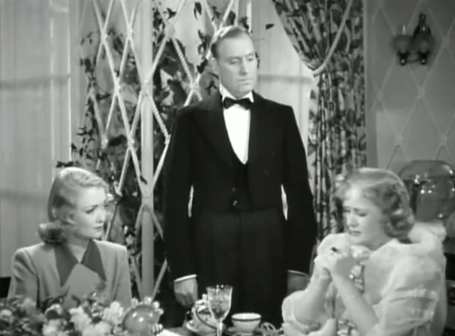
The breakfast table is an arena and a convenient microcosm for the wacky family dynamics to play out in farcical fashion. This particular morning, since there is a sudden lack of silverware in the house, the family must make do with any amount of ladles, chisels, and hammers. It’s highly irregular, but they are no normal menage.

merrily we live 3

We are blessed with another ridiculously rich and dysfunctional family of bickering oddballs. Constance Bennett, as the eldest daughter Geraldine “Jerry,” has a grand old time being mildly amused by the utter chaos that makes up their day-to-day in the lap of luxury and excess. She’s not quite as high-strung as Lombard before her, but bouncing off her family members is entertainment enough.

Baby sister Marion (Bonita Granville) is ready to whine and prank her way into getting funds for her latest scheme. She’s part whiny brat and certainly a budding comedienne. One need only remember her chilling turn in These Three to realize how starkly different she is. Then, their brother’s always bickering and complaining about the siblings he’s been saddled with.

Billie Burke is at her most ditsy-headed cycling through absent-minded hilarity and bubble-brained insufferableness. What’s not to like? She even holds a dinner party a la Dinner at Eight. Consequently, she’s also the source of some of this constant disarray with her most recent hobby of collecting “forgotten men” and bringing them on as servants. Ambrose was her latest pet project and also the most recent disaster.

Clarence Kolb is at his most physically brilliant given more than a mere scene or two to flex his comic talents. He doesn’t disappoint alongside his wacky costars. I’ve never been so delighted with his characterization while attempting to eat his breakfast or taking a cab home after becoming completely wasted.

The family is rounded out by their two absurdly named pooches “Get Off The Rug” and “You Too,” not to mention Mrs. Kilbourne’s pride and joys “Fishy Wishy.” It’s not so much pure spastic energy but the off-the-cuff remarks and sudden jolts of absurdity and slapstick carrying the film to its conclusion. These elements are what drag the story along its merry path of craziness with or without major plot points.

Of course, we would be remiss not to mention Rawlins (Adherne), the most important new piece in the screwball equation, acting as a bit of a willing catalyst for all the mayhem inside the mansion’s walls. There has to be one normal lout, and so he conveniently fits the bill as the resident straight man.

It begins when his car goes hurtling over the side of the road. He’s an author with no means of communication. His only recourse is to find a telephone. His attire and Mrs. Kilbourne’s dull-headed insistence pull him into the house quite by accident.

All he wants is to make his phone call, but he good-naturedly acquiesces when Mrs. brings him on to work as their new chauffeur. It’s a bit of good fun. This is the key. He gladly enables their quirkiness playing along with their daily madcap rituals.

merrily we live 2

One moment he’s assisting a fawning Jerry into the first-floor window after her flirtatious solicitation. Then, he’s covering for Mr. Kilbourne when he comes home from a bender with his buddies, as a cabbie tries to take advantage of him. The list of duties could go on and on, and very few of them have to do with his recently acquired occupation.

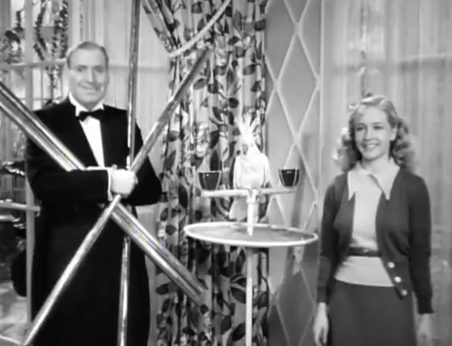
One of my personal high points from the movie includes Grosvenor repeatedly clunking into the chimes in the dining room, matched by the breakfast chatter. It’s not highbrow, but somehow I find this tromping around and people falling to the ground faint uproariously funny, in the right circumstances.

Merrily We Live is just the film, though one must admit it ends far too abruptly to do itself any favors. It’s a movie that’s never about the story anyway; it’s the brief instances of near serendipitous comic verve seemingly bottled more by accident than any amount of scripting. These are the interludes to truly relish and they just might be worth another viewing — once my blood pressure has settled down again.

3.5/5 Stars

Topper (1937): Cary Grant’s a Ghost

topper 1.png

We know what kind of movie we’re in for upon meeting Cary Grant, whistling a merry tune, as he drives his fancy wheels with his feet. His wife — a quizzical platinum blonde played to perfection by Constance Bennett — stares up at him in amusement. They are a picture of fun-loving decadence out of The Nick and Nora Charles mode.

Understandably, they are the main draw in Norman Z. McLeod’s corkscrew fantasy comedy but like its distant relative, The Thin Man, someone else’s name actually garners the title. In this particular instance, it is Mr. Topper (Roland Young), a highly successful businessman who is, nevertheless, enslaved by his rigid regimen, and it’s not of his own accord. His stifling spouse has cultivated his humdrum life like clockwork to her own liking. We don’t envy the man, hustled and harried as he is every day, with his breakfasts and innumerable sensibly scheduled appointments.

You quite forget Billie Burke can be insufferable in a different manner as the quietly exacting wife, giving the impression of a woman constantly on the verge of indignance, her voice teetering on the edge of fragility. I hardly believe myself saying this, but I like her at her more titteringly giddy spectrum. At least she’s allowed to be sympathetic; bubble-headed but sympathetic. If the point hasn’t been made apparent already, this enforced tedium is the baseline of the cinematic world needing to be spiced up by the Kerbies and their happy-go-lucky prodigality.

If we can hone in on a turning point, Topper really hits its stride in death — the death of Mr. and Mrs. Kirby, that is. Because as is the habit in the fantasy mills of Old Hollywood, our couple dies only to come back as ghostly versions of themselves, appearing and reappearing as easily as a snap of the figure.

They pull themselves away from the wreckage of their automobile and have their first out of body experience. Played straight, it would seem ghastly, but they are as gay and chipper as ever, nonchalantly debating how they’ll get through the pearly gates. Everything they did (or didn’t) learn in Sunday school says they need to do some good deeds. Regrettably, they’ve been living on the high horse for too long; they haven’t actually gotten around to the greatest commandment: loving their neighbors.

topper 3

Their pet project is “Toppy,” and he’s in need of vivification. His one act of rebellion against his wife is purchasing George Kirby’s old automobile. This is the foot in the door after he gets into a near-death fender bender of his own. It leads to his first out of body reunion with his old friends.

The movie effectively utilizes old-fashioned special effects dating back to the days of George Melies, making it effortless for Toppy’s two guardian socialites to drop in and out of his visual field. As an invisible Mr. Kirby makes himself useful changing the tire, Toppy is teased by the lady Kirby as she blows on a blade of grass like a giddy schoolgirl. It’s our first chance to play with the logic, the fact only the audience and Toppy are availed of seeing the deceased.

Because what’s really a treat are the ghosts and the ghosted. The ones who are oblivious to the somewhat explainable supernatural acts around them. We get similar moments in Here Comes Mr. Jordan and even It’s a Wonderful Life when the concrete and ethereal collide in a most comical fashion.

Roland Young does an admirable job in the part, and he’s on par with any number of the comparable characters of the day and age whether a Charlie Ruggles or Leo G. Carroll, though slightly less well-remembered for whatever reason. He finally has some pizzazz injected into his every day as the Kirby’s indulge his budding interests in wine, dancing, and song. He’s hardly a party animal, still, he gives it a go.

topper 2

It leads to a brawl in front of a restaurant that they must bail him out of and then a handful encounters with a hoodwinked doorman. At best, Mr. Topper is the hapless figure caught in the spectral screwball chaos with the Kirbys pulling all the strings for him. Unfortunately, the storyline becomes too stagnant without the constant presence of Grant and Bennett, visually or otherwise.

Toppy finds a new standard of living and comes to reconcile with his wife. These are wonderful things, mind you, but it feels like the movie itself has compromised and gone away from what really makes it zing — that is the screwball antics of its true leading couple. Without them, it feels insipid and frankly trite, arriving at its unequivocally saccharine ending.

He is the one playing it straight, in a boring perfunctory manner because this is what is requested of him. But there are a handful of quality character moments of note. Certainly, a befuddled house detective played by Eugene Palette is always good for a lark. Alan Mowbray is his typical snooty Jeeves-like valet and even Hoagy Carmichael shows up (in his screen debut) to knock back a tune on the honky-tonk with Cary and Constance.

I couldn’t help thinking, I wish our two dazzling leads had partnered in another rom-com. After all, Powell and Loy got together for over 12 offerings. Alas, it was not meant to be. It makes Topper even more crucial in charting the rise of the Cary Grant we would come to know and also an oft-forgotten starlet in Constance Bennett.

3/5 Stars

Dancing Lady (1933): Joan Crawford & Clark Gable

Screenshot 2020-03-27 at 84300 AM

You know the drill. In the throes of the Depression, the idle rich fritter their wealth away at such social events as striptease and then attend the ensuing night court until they get bored with the whole affair. Tod Newton (Franchot Tone) is one of their ilk, but he’s more engaged than others thanks to the pretty girl on the other side of the courtroom.

Down-on-her-luck Janie Barlow (an effulgent Joan Crawford) is a casualty of a police raid undertaken on the saucy dancing joint she’s been working at. Beyond being smitten, Tone (Crawford’s real-life husband for a time), is invested in helping give her a leg up, ulterior motives notwithstanding.

If it’s not obvious already, Dancing Lady has a premise to rival Warner Bros’ superlative successes with risque backstage, rags-to-riches musicals like 42nd Street. So, while the plot is nothing special, it somehow taps into Crawford’s innate sense of ambition as an actress.

There’s a feeling she’s not entirely acting a part; she’s driven to make it to the top. It’s this impetus that leads her to stick to “thousand-to-one-shots” over any man — even Park Avenue know-it-alls swimming in cash. She’s going to make it of her own accord. She’s going uptown toward the art world.

The script purposefully bears down on the vernacular to differentiate the patricians from the plebians and with it Janie’s attempts to make something of herself — first, through improved diction and then a newly cultivated wardrobe.

Without knowing it, she’s probably aspiring to the entertainment funded by such nincompoops as Mr. Bradley and his roly-poly walking gag of a son Junior. They are a father and son comic echo chamber if you will, and they also hold the purse strings for one of the industry’s latest productions.

It’s not altogether glamourous stuff but Patch Gallagher (Clark Gable) and his taskmaster-like regimen, turning chorus girls into a full-fledged production, is the “big time” for someone like Janie. The only problem is getting an audition. The head honcho has his right-hand man Steve (Ted Healy) run interference for him — it didn’t go so well for a wisecracking Eve Arden. Still, the “Dutchess” is an assiduous gal if there ever was one.

Director Robert Z Leonard is evidently enamored with his whip pans, but he does evoke pace rather well, especially when Crawford tries furiously to catch up with Gable as he streaks down the sidewalk. While it’s a cliched rom-com montage that would be recycled time-and-time again, it still stands out within the context of the film. The leads don’t speak a word to one another for several minutes at least.

In what feels like a non-sequitur, the Three Stooges make a lightning-quick cameo. Well, they actually show up twice, posing as stagehands. It’s true they feel completely at odds with Joan Crawford’s story arc, but it’s delightful to see them, even momentarily, as she continues her ascension. This is only to be surpassed by the appearance of Fred Astaire! (And I nearly forgot to mention Nelson Eddy, so there you go).

Tone continues to go to great lengths to win her affections, secretly bankrolling her star vehicle, dancing and dining her, and flaunting his swimming pools. When all else fails, he resorts to taking her to Cuba, conveniently far away from the other man in her life and the career she’s chosen.

The red-hot sparks are given a literal gymnasium to work themselves out in — positively buzzing between Crawford and Gable — as they get in their morning exercise to keep their svelte dancing figure and brawny physique respectively. It goes unspoken, but an unwritten rule of storytelling tips us off that antagonism usually denotes love. They have copious amounts ready-made to dish out at one another.

Unfortunately, by this point, the story gets less and less interesting by the minute as it continues to sink into the preconceived notions of the genre. In other words, what we suspect to be derivative proves itself to be precisely that. It speaks to the charisma of the stars who make the well-trod paces watchable, even engaging, and there are a few momentary delights around the fringes.

The final extravaganza is a not-too-veiled Busby Berkeley knockoff infatuated with beer. The surreal foray that follows offers up a luxuriant carousel of beauties and giant fan blades strapped with women — not to mention the surreal moment when a host of old maids go behind a curtain only to be dismantled to come out as gorgeous dancing ladies.

With Fred Astaire showcased prominently alongside Joan in a very fluffy ensemble, it felt strangely out of place. Astaire and Rogers had yet to be placed together and it’s true their trajectories could have been so much different. I don’t know a thimbleful about dancing, but at the very least, Crawford has an earnestness on taps. Though, she’s not quite Ginger Rogers either. No one ever said she was.

With Tone’s gigolo scorned and “The Duchess” going in to check on her dejected “Duke” after their stunning success, there’s a sense the working-class heroes are being reunited in a triumphant victory for all the blue-collar folks in the audience. In other words, it’s not just Depression-era pap, there’s this genuine element of wish fulfillment.

The movie is gracious enough to supply one last obligatory scene between Crawford and Gable for contemporary audiences. Because there are a lot of distractions (and some unique surprises like Astaire), but the romantic chemistry is present and delivered on a silver platter with the kiss that the whole movie’s been culminating to. Surprising, I know. What’s the axiom? Give the people what they want? Dancing Lady is case and point.

3.5/5 Stars

Possessed (1931): Joan Crawford and The “In” Crowd

Screenshot 2020-03-24 at 65703 PM

We open up on the Acme Paper Box Co., which has a down-and-dirty industry strewn about its edges. If the people flooding out of the factory are any indication, this will be a dusty, grubby, little picture.

Two of their employees are Al Manning (Wallace Ford) and Marian Martin (Joan Crawford). He’s a concrete worker with a penchant for bricks, and he’s also positively smitten with her. Meanwhile, her gaze is focused somewhere else. She’s not about to settle for “happiness on an installment plan.”

It’s summed up by the train tracks — a handy conduit for the luxurious upper classes who coast by with their dancing, music, and cocktails. They have no idea about a life like Marian’s, nor do they have any reason to care about it. However, she gravitates toward them, peering in at their affluence from the outside. She would do anything to breach the space in between.

She does meet one fellow as he knocks a few drinks back and stares out at the sorry landscape. They strike up a momentary conversation; it’s nothing more and nothing less, but it leaves an impression. Among other things, he tells her there two kinds of people: those who are “in” and those who are “out.” And before he’s whisked away, he offers her one of his cards like a (drunk) gentleman.

Richard “Skeets” Gallagher, a character who ultimately becomes of minor importance, nevertheless fascinates me for some unequivocal reason. As best as can be described, he is the kind of actor who feels stuck in the 1930s, and I mean it as a kind of backhanded compliment. There’s a frequency to his voice perfect for radio tones but somehow it’s hard to see him existing outside the era. That’s perfectly alright.

At any rate, intrepid Marian having eaten the fruit, so-to-speak, and gained knowledge about their world, can never go back to her simple ignorance. Instead, she returns to her mother and Al telling tales of what she’s just seen.

In the city, folks see the world as a woman’s oyster. Poor folks think men are meant to go out and get whatever they can out of life; women are meant to stay where they and get married. If anything is obvious, Joan Crawford’s not one for the shabby status quo. So she goes out and does something about it.

However, she really is in a sorry state, showing up on the doorstep of the one man she knows in town. With nothing else to lose, she tries to sneak her way into a lucky break, fumbling around brazenly, foot in her mouth, but she’s definitely got guts. There are no pretenses when she tries to get in with his friends; she’s a straight-forward gold digger and she knows what she wants.

For some, that’s a turnoff. For self-assured up-and-coming statesmen Mark Whitney (Clark Gable), he finds it oddly attractive and so he gladly leads her by the arm and allows her the benefit of his bounty. A few years down the road she’s made strides in the life of a social hostess. For all intent and purposes, she acts as the perfect wife. Directing the servants, choosing the wine, throwing dinner parties like a seasoned professional.

What’s the big reveal, you ask? They’re not married. They have a mutual agreement and being pragmatic seems to have paid off. Even as she continues to educate herself in the finer things, including French and German loves songs, there’s still something in her upbringing that sympathizes with a lowly tramp brought to one of their gatherings. The woman feels woefully, even uncomfortably, out of place, surrounded by so much class.

Marian realizes no manner of jewels or perfume can totally cover her own genetic makeup. The gravest development in the story starts in Crawford’s own character. She settles in and softens up. In some ways, she wants marriage, because she’s gone and fallen in love. It’s no longer a convenient relationship with fringe benefits.

Right here, it’s evident how it courts similar themes as Back Street or any movie about women trapped in somewhat unenviable positions in a society where their only recourse is to take what they can get by any means necessary. We pity them even as some of their actions feel unfortunate.

Al comes to the city bitten with the same bug that once got her, with the goal of making “the big time,” asking favors from the man she’s already attached to. He’s utterly ignorant of what he’s stepped into — what Marian’s arrangement entails — still, he knows what he wants.

It should be noted Clark Gable never gets a lingering closeup as fine as the ones extended to Crawford. After all, her name is over the title credits, not his. But what’s refreshing about his character — he doesn’t feel like an out-and-out cad — there’s some integrity to him. Still, life must complicate everything. Their relationship begins to disintegrate, on the behest of friends and advisors, as he must make a choice between a political career a woman.

A new normal is soon established. The wheels of the political movement begin to spin, unnamed naysayers look to stir up scandal against him, and Marian somehow evaporates into the background. The final scene is the lynchpin of it all. Joan Crawford feels like an anonymous civilian walking through the rain with her umbrella and mac amid the usual foot traffic. They all make their way to a grand pavilion with posters of her man plastered on all sides.

In a purely cinematic moment, she takes the stand on his defense and gives a tearful, overly sincere annunciation of his character. It wins over the audience as she’s overcome with emotion and stumbles out in tears.

Again, the key is that we follow Joan. We are with her as she bursts through the doors and totters her way out onto the street with the rain pelting her as she labors up the stairs…That’s when her leading man comes and wraps her up in his arms. It’s what these old movies were made for. The final embrace propelled by emotion and buoyed by the attractive glamour of their stars.

Enough films of the era take a bleaker road; it’s safe enough to give this one its Hollywood ending. It is Hollywood after all, the land where Lucille Laseurr could become Joan Crawford: one of the most indelible figures Hollywood ever created.

3.5/5 Stars