3 Godfathers (1948)

3 godfathers 1.png

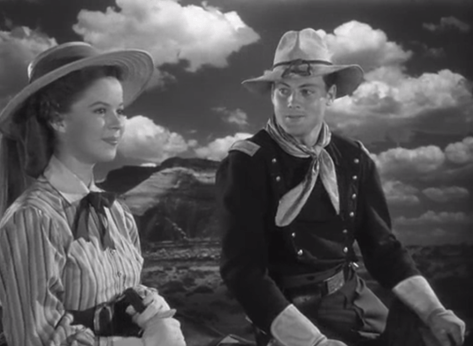
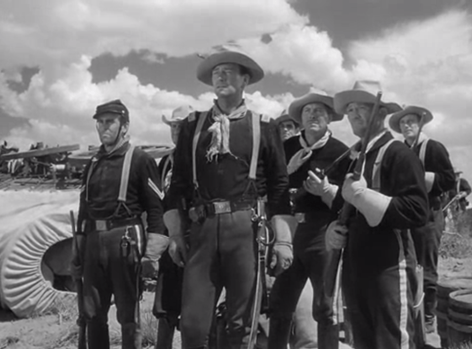
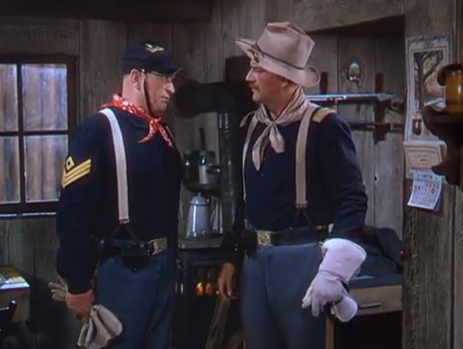
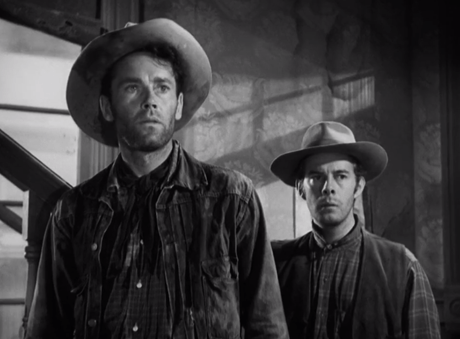
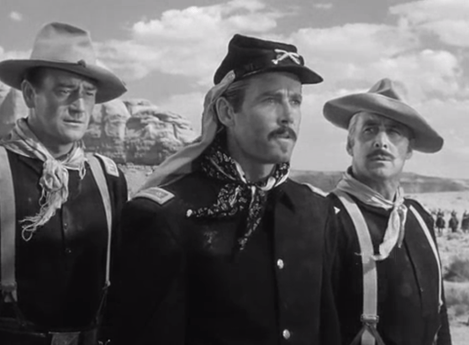
3 Godfathers is a Christmas western if there ever was one and it’s probably the most sensitive picture that John Ford ever made. Anyone familiar with Don Siegel’s short film Star in the Night (1945) might recognize basic similarities with this picture based on the same biblical motif of the three wise men.

Ford honors his dear friend, the late, great Harry Carey even christening him the “Bright Star Of The Early Western Sky” and it’s very true. In fact, the director probably would have never remade the film if Carey had not passed away in 1947. The reason being that he had worked on an earlier version called The Three Godfathers way back in 1916 and the Ford-helmed silent Marked Men (1929). Not satisfied with just that, the director subsequently cast Harry Carey Jr. as The Abilene Kid alongside John Wayne and  Pedro Armendáriz. Although a big star in Mexico by this point, Armendáriz garnered little respect from Ford as you might expect.

The script penned by film critic turned screenwriter Frank S. Nugent with Laurence Stallings and Robert Nathan, takes the story of three lawless bank robbers and turns them into modern-day incarnations of the trio of kings from the advent story.

The heady combination of some on-location photography in Death Valley, as well as early Technicolor, gives Ford’s picture an impressive composition even as it can’t quite stand up to his most iconic images. The story as well is a mild even maudlin affair at times but for the very fact that Ford rarely seemed to inch into such territory — or Wayne either for that matter — it does come as somewhat of a treat to behold.

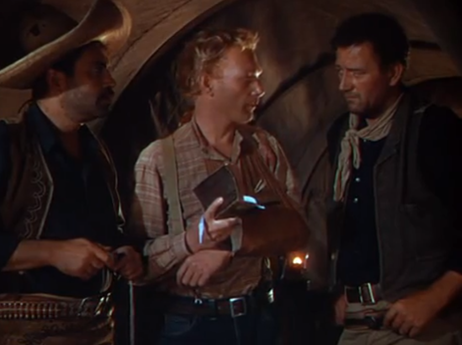
Because here we have three hoodlums, men of ill-repute who have robbed a bank and are on the lamb running for their lives. Ward Bond as the local sheriff — a decent man who also happens to be pretty shrewd — chases after our antiheroes with his hapless deputy (Hank Worden). Though they ride off, he cripples their water supply and looks to cut them off from any of the wells scattered across the territory. The lack of water could prove to be their downfall.

However, the story takes its most obvious turn when they happen upon a wagon. It turns out to not be completely abandoned as a one lies isolated and about ready to give birth to an infant son. Though she is too weak to continue she makes a vow with them that they protect her boy and make sure he grows up healthy and strong.

She doesn’t know their previous actions only the character that they exhibit in front of her and maybe it is even her angelic trust in them that causes each man to agree to this promise. All of the sudden they throw of the shells of their former selves and take on this seemingly virtuous task.

However, that does not make survival any easier living off the drippings of barrel cacti and traipsing across the salt flats with the noonday sun beating down. First, losing their horses in a ferocious maelstrom and with water scarce, they do everything in their power to take care of the child. Reading a baby book on how to look after an infant and bathing and feeding him. His Uncle William sings him “Gather at the River” as a lullaby. And all three men agree their godson will share their three names. Robert Hightower (Wayne) bickers with Pete about using Spanish around the baby. They want him to grow up American.

The Bible passage about finding a donkey to ride into Jerusalem gives some guidance fittingly as the child makes his pilgrimage to the town of New Jerusalem. We know that a miracle just might be in order.

The inevitable happens and Wayne must face off against Bond but what makes that dynamic far more meaningful is the child in their midst. Because Hightower’s care and concern for the child’s well-being reveals a side of him that is the complete antithesis of his outlaw persona. It’s a reflection that he is a redeemable figure and the film strikes a compromise between a really saccharine ending and cold hard reality. While no one will concede that it’s Ford’s best work, it’s nevertheless a fine vehicle for the talent and a thoroughly unique take on yuletide moviemaking.

3.5/5 Stars

Review: The Ox-Bow Incident (1943)

the ox-bow incident 1.png

We know the score. Two drifters ride into town. They sidle up to the bar for some shots, looking for something to do in a lazy Nevada dust-hole. Their faces are equally familiar to anyone who has ever seen even a few of the old oaters. Feisty Henry Fonda as Gil Carter and his more even-keeled pal Art (Henry Morgan). Though folks question what they’re doing around, it comes to nothing except an exuberant fist fight for Fonda just itching for some thrills. He’s not disappointed.

Soon the community catches wind of the death of a beloved local named Kincaid at the hands of cattle rustlers. The wheels are set in motion as the sleepy town awakens and a lynching mob forms under the guise of a posse. With the sheriff out of town doing his duty and the local judge incapable of stopping them, they ride off looking for vengeance and some excitement to liven up their one-horse town. As the deputy illegally swears in the entire crowd as temporary deputies, our boys Gil and Art reluctantly sign on as not to draw more suspicion to themselves.

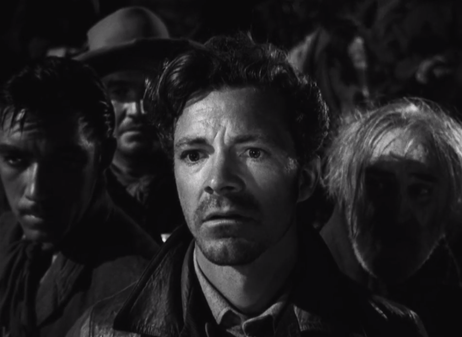
A Major Tetley (Frank Conroy) tries to take charge forcing his callow son (William Eythe) to join in as they begin their hunt. The two most reluctant and subsequently the most interesting additions to their party are the African-American preacher named Sparks (Leigh Whipper), whose own brother was lynched when he was a boy, and then the rational-minded Old Man Davies (Harry Davenport) who desires for true justice to be upheld. He is wary of the repercussions of a mob mentality.

Ultimately, they happen upon three strangers and circle them like ravenous wolves practically willing them to be guilty. In these crucial interludes, Wellman deliberately focuses on close-ups instead of scenery to ratchet the tension. It’s evident the bread and butter of this picture are within the characters themselves.

The crowd begins peppering the suspects with questions though they’ve already drawn up their answers for them. It doesn’t help that the trio’s leader (Dana Andrews) must try and explain some extenuating circumstances, namely how he acquired some of Kinkaid’s stock, which he purportedly bought off the murdered man without a bill of sale.

True, the posse doesn’t go off absolutely nothing but the integrity of democratic justice, as flawed as it might be, in the day-to-day, still maintains people are innocent until proven guilty. It’s not the other way around. That’s key. It also calls for not dealing in emotions like anger and hatred but impartial wisdom. Again, that might be impossible to attain but we must try our best. Otherwise, the consequences are potentially dire.

William A. Wellman was so eager to adapt Walter van Tilburg Clark’s original novel he agreed with Daryl Zanuck to direct two other pictures that are now all but forgotten. The Ox-Bow Incident might be small but it’s no less mighty thanks to the teaming of Wellman and Lamar Trotti. In fact, its volatility was so great no one knew how to market it during the war years. How do you try and redeem the debasement of humanity originating out of our own traditions, even as we try and reconcile that with the evil going on overseas? It’s a tall order.

the ox-bow incident 2.png

The equally horrifying thing is the fact lynchings had yet to be exterminated from American society and the blood of such injustice still soaked American soil. Though this is a showing of three men getting hung, one white (Andrews), one old (Francis Ford), one Mexican (a defiant Anthony Quinn), this could have just as easily been racially charged with African-American victims.

Regardless of guilt or innocence, justice was never meant to function in this fashion where lawlessness is masked by perceived legitimacy. Nothing good can come of it. Fonda’s own memories drew him to the material as he supposedly witnessed the lynching of a man named Will Brown in Omaha, Nebraska on September 28, 1919. You can only imagine how the images scalded him for life. 12 Angry Men (1957) is indubitably another film which dealt with comparable themes very close to his heart.

His part, along with Morgan by his side, remains crucial because they essentially act as impartial bystanders and their choice is faced by anyone at the crossroads of such an issue. Because good can be quantified by commission and omission just as evil can be perpetrated through action and inaction.

The final wallop of the film is, of course, finding out what the actuality of the matter is — knowing full well they acted in error. To cap off the most moving showing of his generally hardboiled career, as the dying family man, Dana Andrews touches them from the grave with his words one last time:

“A man just naturally can’t take the law into his own hands and hang people without hurtin’ everybody in the world, ’cause then he’s just not breaking one law but all laws. Law is a lot more than words you put in a book, or judges or lawyers or sheriffs you hire to carry it out. It’s everything people ever have found out about justice and what’s right and wrong. It’s the very conscience of humanity. There can’t be any such thing as civilization unless people have a conscience, because if people touch God anywhere, where is it except through their conscience? And what is anybody’s conscience except a little piece of the conscience of all men that ever lived?”

Even if his words serve the film more than they are the authentic words of a husband, their affecting nature is undebatable. Every man standing around the bar sullenly has been given a costly lesson — a lesson requiring the lives of three men. It’s fitting for our two drifters to ride out of town just as they came in the same hound dog sulking across the road. And yet so much has changed. If anything our hero has found his conscience in a sea of injustice.

4/5 Stars

Decoy (1946)

decoy 1.png

THIS IS MY VERY LATE ENTRY IN THE CMBA SPRING BLOGATHON: FEMME/HOMME FATALES OF FILM NOIR! 

Like any self-respecting noir, this one chooses to open in a grungy gas station bathroom with a hero (Herbert Rudley) disheveled, hobbling, and covered with grime. We can gather he’s been through hell. Better yet, Decoy begins at the end of the story with murder!

He hobbles past a gas station attendant, stands at the side of the road to hitch a ride to San Fransisco. Mind you, this is without saying a single word. Upon arriving, he wanders into a hotel. He takes the elevator up, pushes open the front door, sees an attractive woman packing and proceeds to fill her with lead! What’s even stranger is the cop who follows close at hand as if he knows exactly what’s about to happen. He plods in to find the shooter dead and the lady dying.

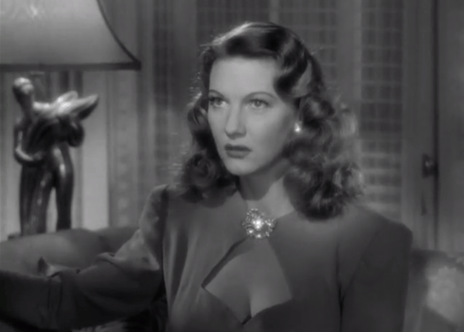
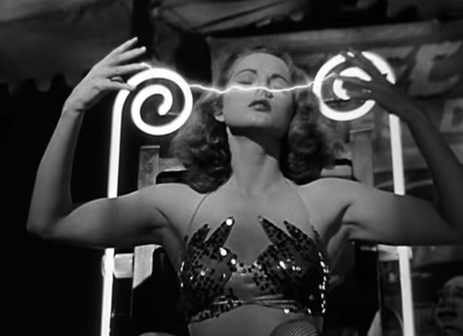
Here’s this pretty dame, Margot Shelby (Jean Gillie), in the arms of a hardboiled flat foot (Sheldon Leonard) recounting her indiscretions on her deathbed. Really all she’s doing is helping him pick up the stray pieces he already knew but for the audience, it’s all news. To get a line on the story, we must start back with an incarcerated gangster named Frankie Ollins (Robert Armstrong).

He is in line for the gas chamber and Margot has long been his girl. She assuages him, saying they’re lining up money to get him out of his jam — but she also is concerned about security — he has promised to keep her sitting pretty. And he has the resources to do it with $400,000 waiting out there for her somewhere. He just needs to give the word. We get the sense foul play might be a central component of our story.

From thenceforward she goes to work efficiently. She exerts her feminine charms on a local clinician who also regularly gives his services to the local prison. You see, he is pegged to do the autopsy on Frankie’s body just to make sure everything’s on the level. Except Margot’s got his head spinning — most of it happens off camera —  but we believe he’s fallen for her, like putty in her manicured, greedy little fingers.

And Margot goes all in, playing it up. The love angle is seemingly candid even as she tells him the plan to revive the “dead” gangster with Methylene Blue. We witness the gas chamber in a groggy POV shot. In another picture about regenerate gangsters, this would be the end. For Decoy it is merely the beginning.

Because Margot is the film’s greatest force as a notable apex in the gallery of B noir femmes. She keeps gangsters madly jealous, twisted around her fingers, and then righteous men start caving, relinquishing their high ideals just to be with her.

Two of the most oddball supporting characters in the pictures are the morgue attendants who distract themselves with solitaire and reading words out of the dictionary — a real hoot — but they are plain folk who don’t ask questions when the good doctor skips out on the normal autopsy.

They go on obliviously as the body gets carted off to the “oven” only to get picked up by waiting gangsters. By now, there’s little doubting it. Owens is to be resurrected and yet it’s the devil incarnate doing it! But someone like Margot is only operating in viable currency. People are only needed for their immediate value to her.

Frankie is out of the picture when he’s not needed, Jim Vincent (Edward Norris) is just a handy thug to have around, and of course, Dr. Craig’s expertise made him invaluable (although he does smoke cigs which always leaves me scratching my head).

Everyone else is under the illusion that she actually wants them. Her intentions surely cannot be completely self-serving? Can they? And yet she can be found jamming the accelerator to get rid of people and gunning down hapless accomplices with waves of giddy relish. Even on her deathbed, she gets the last laugh on a cop who falls momentarily under her spell. But for all her trouble she got absolute zilch. A creature of crazed avariciousness will ultimately be met with total destruction.

Jean Gillie’s accent somehow elevates her performance with an edge of refinement and respectability the British seem to have and yet her actions and words are like vicious daggers of selfishness. There is no other way to see her vindictiveness but within the context of film noir; it’s a pulpy delight. Detour is still the standard bearer and the pinnacle of Poverty Row, throw ’em together noir gems, but Gillie is a preeminent femme fatale, especially for such an unassuming picture.

3/5 Stars


The Search (1948)

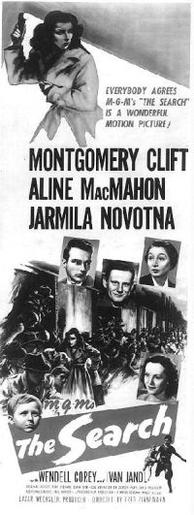
The_Search_posterAny knowledge of director Fred Zinnemann only aids in informing The Search. Formerly living in a Jewish family in Austria, he would immigrate to the bright lights of Hollywood in the 1930s only to have both his parents killed in the Holocaust. So if you think he had no stake in this picture you would be gravely mistaken.
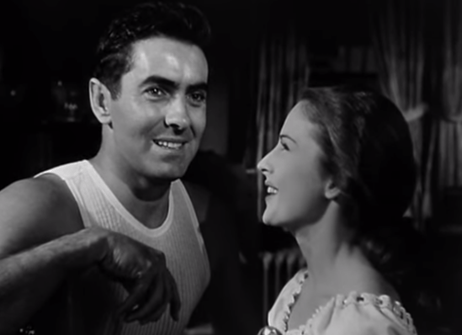
Like Carol Reed’s Third Man of the following year, Fred Zinnemann’s film does an impeccable job in its opening moments placing us in a landscape that feels all but tangible. Improved by true post-war locales, The Search gives audiences a fairly frank depiction of the trauma and destruction left in the wake of such an all-encompassing wave of carnage like WWII.

At least in this area alone, there is no sense that this is a facade or something fake and done up to look real. There’s little of that. Not least among the casualties are children displaced from all different nations and backgrounds. Subsisting without families through much of the war.

Now, with the clouds dissipating there is work to be done. It’s the task of understaffed personnel to begin sorting through all the pieces to try and get everyone back where they need to be. It seems an insurmountable job but they get on as best as they can.

Mrs. Murray is one of the workers we get to know, a woman with both a sense of pragmatic industry but also an underlying warmth. She knows if her job is done well, there will be many children given far better lives. She does everything in her power toward those ends.

Carrying a few points of reference from Aline MacMahon’s early career, it truly is a joy to watch her fall into this role which is a stark departure from the likes of One Way Passage (1932) or Gold Diggers of 1933 (1933). Certainly, it’s less flashy but no less meaningful. She makes it count.

The pure ambiguities created by language barriers is made palpable and for American viewers, there is a narrator but little in the way of interpretation. So much of what goes on is either left unsaid or must be taken with a grain of salt. That’s compounded by the fact the reticent children are afraid men in uniforms might be SS troopers or any word they let slip will be subsequently used to send them away to a concentration camp.

While it’s near impossible to take on two viewpoints at once, at any rate, we begin to understand not only Mrs. Murray’s predicament but also the well-founded fears of these displaced youths. That’s what leads one group of children, crammed into an ambulance marked with an ominous red cross, to scatter at the first opportunity. One includes a pale-faced boy named Karel who has remained all but silent during his initial questioning and yet his will to survive is insurmountable. Still, one needs food to survive and he doesn’t have any.

This problem is what prompts the initial meeting of the two figures who we might consider our heroes. It actually happens 40 minutes in and it nearly doesn’t amount to anything at all. Sitting in his jeep, lazily kicked back, eating a sandwich, is an army engineer named Steve (Montgomery Clift) who is soon being shipped back home.

He sees a small body pop up behind some rubble obviously eyeing his lunch. The boy’s afraid to take a handout and so the soldier puts his jeep in gear to drive off but thinking better of it, he turns around and tosses the boy his sandwich. Here we have the genesis of their curious relationship, at first tenuous, because Karel has learned to fear other people and their lack of formal communication lines makes mutual understanding even more difficult.

Though not as intense as his most revered parts, Monty Clift provides a genuine charm to the role, an all but effortless job at character building. Young Ivan Jandl knew no English going into the shoot but this same undoctored quality makes the opening sequences all the more imperative. He and Clift build a rapport that’s right there in front of us.

Initially, Karel lashes out thinking he is being held prisoner again. Steve tries to get him to understand his newfound freedom and when that is established, next comes the acquisition of language which the bright boy picks up quickly. One could say that The Search is at its finest when the pair is stuck in a space together. I’m not sure about others but I resonate with these scenes. The moments where a language barrier necessitates some form of universal understanding. Words have no meaning. Like in Film itself, actions can be far more universal than any amount of exquisite dialogue. For example, chocolate tastes “good.” Alcohol smells “bad.”

Together the soldier and the boy form a bond to the point Karel follows him around like a lost puppy. He doesn’t want to be abandoned. Not again. Of course, we know Steve must ship out soon… Meanwhile, Mrs. Murray enlists the help of a concentration camp survivor (Jarmila Novotná) who is looking determinedly for her son — the dramatic irony all but apparent, if it wasn’t already.

As Steve begins to teach “Jim” English lessons, he and his buddy Jerry (Wendell Corey) try and get some news on the boy’s origins. And all they have to go on is the telling tattoo on his forearm. It’s the arrival of family from stateside that sets something off. A switch goes on inside of Jim’s brain and he realizes he needs to find his “mother” because he comes to understand what that word means and that his is missing.

The Search endangers itself with a melodramatic turn of events and to a degree, they do come. Speaking for myself, I was a most agreeable recipient if that’s what it was. With the trills of angelic voices and a final maternal embrace — the conclusion the entire film has been charted for — some emotional manipulation might be on hand. However, in a period of rebuilding, though the past must not be forgotten, nevertheless, there is a deep abiding need for hope.  I would like to think that The Search is a film acknowledging precisely that and offering some solace.

Out of all the bombed out buildings, emaciated children racked with trauma, and horrors upon horrors, there is still something that can and must be clung to. When we are lost and alone, we can be found and returned to the place where we belong. There is no need to wander aimlessly because we have a home. Whether or not you believe this picture to be a purveyor of authenticity, Zinnemann has provided a revelatory parable of genuine sensitivity. I for one admire its aspirations greatly even if they might be imperfect. Such a time calls for this kind of hope.

4.5/5 Stars

Review: Nightmare Alley (1947)

nightmare alley 2.png

Tyrone Power was a handsome fellow and it led to a meteoric rise among Hollywood’s elite. But as often is the case, a pretty face can be your undoing as people only see a movie idol and not an actor. Daryl Zanuck for one saw one of his biggest box office draws in Tyrone Power and he was protective of that image even after coming back from the war.

However, to his credit, in Nightmare Alley Power persistently went after a role that put his talents on full display by wickedly subverting his longheld screen persona. Zanuck was undoubtedly horrified by the results and pulled the picture out of circulation as quickly as he possibly could while giving it little publicity. And yet thank goodness this picture remains today — a testament to the peculiar oddities that managed to come out of Hollywood — for one an A-list picture where one of the biggest names in the business plays an opportunistic sleazebag.

Stan Carlisle (Power) is an up-and-comer in a trashy traveling carnival that brings in the hordes of local yokums through sleight of hand, mysticism, and outright exploitation. One of their biggest acts is the dubiously named “Geek” show while Stan does his bit with “Madame Zeena” (Joan Blondell) and her alcoholic has-been husband.

Meanwhile, the young man’s charismatic qualities aid him in talking up hick sheriffs trying to close down the establishment and run them out of town. He seamlessly spouts off the gospel he learned in an orphanage to captivate his audience noting foxily, “Boy how I went for salvation. It’s kind of handy when you’re in a jam.” He can spin just about anything to get what he wants.

Though Pete is all dried up, Zeena still has it and the ever-industrious Stan convinces her to teach him the secret code that they used to utilize in the old days to completely captivate the crowds with feats of extrasensory perception. Ever the carnival showman he soon rebrands himself as a mentalist extraordinaire “The Great Stanton” taking his adoring carnival cohort Molly (Coleen Gray) along with him following a shotgun wedding demanded by the resident strongman (Mike Mazurksy). Zeena and the other carnival nobodies get left behind without a note of gratitude.

nightmare alley 3.png

There are innumerable intricacies found throughout Nightmare Alley but the overarching themes revolve around the three women in Stan’s life who ultimately shape his existence. Zeena is the veteran who gets him his foot up while her deck of tarot cards including a hangman remain a harbinger of future misgivings.

Only now do I realize that Colleen Gray’s demure qualities are rather reminiscent of Joan Fontaine and she remains a textbook guardian angel figure. In later years she would devote herself to numerous charities including Chuck Colson’s Prison Fellowship. What so easily gets forgotten, in the midst of Power’s disingenuous portrayal, is Helen Walker as the equally unscrupulous psychoanalyst who in many ways bests him in a very unconventional femme fatale role.

However, with Molly’s assistance, they’re initially able to begin to realize his dreams of the big time where they take their shows into swankier places with more respectable audiences who they are nevertheless still able to dazzle. And yet the recurring attribute of a man such as Carlisle is that he can never be satisfied. There must always be another greater success to follow up every previous exploit.

He unwittingly finds his next access point when crossing paths with the dubious analyst named Ms. Ritter (Walker) with extensive records on numerous influential people. She and her new accomplice go in cahoots and Carlise soon realizes his next aspiration that of a spook act. But far from just being a gimmick to get money, it becomes a form of spiritual comfort to people. In many ways, it seems like he is playing with fire. He hardly knows who he is dealing with in Lillith Ritter and he keeps the entire arrangement conveniently hidden from his wife.

Instead, he tries to use her in one last payoff with Molly masquerading as the specter of an old man’s long-lost beau. But she is so unlike Stan. She cannot manipulate a man in such a way and she’s equally afraid. She confronts her husband, “You make it sound so sacred and holy when all the time it’s just a gag with you…You’re just laughing your head off at these chumps. You think God’s going to stand for that?”

nightmare alley 5.png

Not only is Nightmare Alley a carnival noir with the dark palette courtesy of veteran Lee Garmes but thematically, we also take a cynical nosedive into ominous even sacrilegious territory. It’s an heir apparent to such 1930s films like Blue Angel (1930), Freaks (1932), and Miracle Woman (1931). Fundamentally it charts the rise and fall of a single man who used religious clout and chicanery only to end up as an ostracized carnival commodity. He went from using others to being used because he winds up a good-for-nothing. So the story predictably comes full circle.

The film is good enough not to give us a happy ending. Yes, it cuts the dramatic arc short but that only saves us from the foregone conclusion. Molly clings to a now paranoid and wasted Stan — a shell of the whip-smart punk he used to be — promising to take care of him. Zeena made that promise before to her husband too and look what happened to him.

There was no reemergence or getting back to the way things used to be. What’s to make us think that this version will be any different? In fact, it’s probably even more haunting than actually knowing definitively what will happen because we are forced to leave the movie in the shadowy ambiguities. What isn’t ambiguous is Tyrone Power in the most duplicitous and simultaneously most devastating showing of his career.

4/5 Stars

The Black Swan (1942)

the black swan 1.png

If you make your way to this swashbuckler you’ll find a movie set in The Spanish Main as England has just brokered a peace treaty with their imperialistic competitors. As you probably already surmised, you might as well leave your textbooks on maritime history at home because there’s no need to reference them here. Actually, I stand corrected. Captain Henry Morgan was a real person. Everything else is an excuse for pillaging gold and adventure on the high seas.

As someone educated on Tintin serials (ie. The Secret of the Unicorn) and “The Pirates Who Don’t Do Anything,” enjoying such a picture from perennial Hollywood journeyman Henry King is hardly a chore taken for what it is.

In the opening moments, we have coastal marauders who overrun a city to loot it and run off with pretty girls. They’ve even stretched a conceited official on the wrack for good measure. Except a counterattack by the local militia ensues and soon we learn from the reformed pirate, Henry Morgan himself (Laird Cregar), things have changed.

He has been made Magistrate of Jamaica in return for his loyalty and he calls his faithful scallywags to join him in a bit of respectability on the right side of the law. His longtime right-hand man, Jamie Waring (Tyrone Power), agrees to it, though some of the others led by treacherous Billy Leech (George Sanders) look to try their luck on the seas like always.

The pictures finest asset is a cast as thick as thieves. A particularly cheeky Tyrone Power is at the top his of game, looking like he’s having a swell time of it, being a bit of a dashing scoundrel right up there with Errol Flynn. Cregar is memorable yet again as the formidable blaggard with many a plume. He and “Jamie Boy” share a particularly humorous reunion when Power dumps a purportedly unconscious Maureen O’Hara like a sack of potatoes to give his old buddy, Captain Morgan, a warm welcome.

Meanwhile, George Sanders is almost unrecognizable as a mangy red beard. It’s one of those makeover jobs where you have to do a double take to try and differentiate that familiar voice hiding behind a very unfamiliar visage.

Following up his villainous turn opposite Power in Son of Fury (1942), Sanders is back and even better. Though not seemingly the athletic type or a swordsman for that matter, he lends the right amount of licentiousness and folly to his turn as Captain Leech.

Thomas Mitchell, a man who could play a character part in his sleep, colors in his role as the quintessential boisterous, bandanna-wearing sea hand who’s right by Jamie’s side whenever he’s needed. There’s even Anthony Quinn with an eye patch, though woefully underused and Maureen O’Hara, the most desirable “wench” there ever was on the Caribbean, as our only leading lady.

It must be acknowledged however the script all but wastes her talents as she hardly fits the archetype of your normative “damsel in distress” role, though her beauty in Technicolor is admittedly unsurpassed. While hampered by an unimaginative part, she still manages a few fiery exchanges with Power after his character kidnaps her as his bride-to-be and they subsequently build some kind of rapport out of the sparks in a mere scene or two.

The picture follows Jamie Boy as he scours the ocean for his old shipmate, Billy Leech, who is up to his old plundering ways, terrorizing the seas and ruining the tranquility of the two world powers. Though reformed, Morgan is under fire from a council that finds his position suspect as he was once in cahoots with the wanton criminal. The authorities at hand call for impeachment even as one among their ranks sows discord.

What else is expected except a final shootout on the seas complete with a barrage of cannons? Jamie is held prisoner by the man he was sworn to apprehend while other forces look to hang him for perceived insubordination. But Tyrone Power is more than up to the task of swinging through the yardarms to victory and getting the girl for good measure.

To this end, The Black Swan is wartime swashbuckling escapism, both fanciful and fairly lean in running time and resources. These, of course, were in part an effort toward wartime conservation but the reduced length does not keep it from being fulfilling. Perhaps it’s for the best they don’t make pictures like this anymore but, for its day, it’s an ebullient rollick worthy of the pirates within its frames. Maybe not its lady…

3.5/5 Stars

Blood and Sand (1941)

blood and sand 1.png

There’s little doubt Blood and Sand was a follow up to The Mark of Zorro (1940) meant to capitalize on the lucrative romantic pairing of devilishly handsome heartthrob Tyrone Power and winsome ingenue Linda Darnell. But what it sets out to do, it achieves through an ability to capture us in a joyously Hollywood confection. It pulls out all the stops to establish Spain for the moviegoing audience. Flamenca, guitar, castanets, swirling skirts, and sashaying ladies are all present bursting forth from the screen with multicolored gaiety and merriment.

The picture in straightforward fashion charters the rise of a young boy into a renowned matador with aims at commanding the grandest stage in all of Seville. Juan Gallardo (Power), buoyed by a tight-knit band of friends and propelled by lifelong ambition, is ultimately able to realize his dreams and to garner all the laurels lavished on the man of the hour.

Most important of all, he’s finally able to marry the girl whom he’s loved since childhood, the virginal beauty Carmen Espinosa (Darnell). She has dutifully waited for his triumphant return when he serenades her with a full band and presents her a wedding dress to pronounce his everlasting love. They’re young and deliriously happy.

While initially maligned as a fifth-rate talent, now the famed purveyor of public opinion, Natalio Curro, christens Gallardo the finest matador in all the land. Laird Cregar is more than capable as the pompous bullfighting critic who relishes the spotlight as well as his reputation as a tastemaker.

Likewise, everyone wants Juan to be the godfather of their child. He is in high demand and he catches everyone’s eye. Namely, the recently returned socialite Doña Sol des Muire (Rita Hayworth) coming from irrefutably high-class stock. She has her pick of the litter and she immediately becomes diverted by this dashing matador tossing him down a red rose in return for a couple tokens of his goodwill.

Meanwhile, Carmen remains faithful by his side praying every day he enters into the ring to do his work. She dotes on him with breakfast, reading the headlines about his finest hour, and remains his constant companion.  However, the allure of the “other woman” ensnares him and his fate is all but sealed. Just as he baits the bull, she soon has him reeling much the same. But the only real person to blame is himself.

His wife is betrayed in one heart-breaking confrontation, his finances are in disarray, his temper has alienated many of his closest allies, and his success in the ring has begun to falter. None of these plot developments are unforeseen. On the contrary, we expect them. As his mother reminds him, taking cues from the Biblical parables, “One can’t build on sand.” Because everything you worked so hard to erect will just as easily come tumbling down when the downpour hits.

It’s as much his own fault is it is the fickle masses who are so unforgiving. Pretty girls like Doña just as easily move on to a new toy, this time Juan’s lifelong rival Manolo (Anthony Quinn). And of course, Curro has been quick to pronounce the new man as the latest shining comet of the new season. He fails to add that comets burn brightly only to fizzle out in a nose dive. The tragic metaphor is a little too obvious.

But again, the picture is all spectacle and it’s ultimately bolstered by lavish costumes and the early shades of Technicolor offering a seminal example of 3-strip Hollywood opulence. Rouben Mamoulian’s artistry in mise en scene from his days with the stage are on display, played out to the nth degree. The screen and the stars are easy on the eyes. The director purportedly kept cans of spray paint on hand to touch up any necessary blasé patches with enhanced color. However he achieved it, Blood and Sand generally works.

True, bullfighting always seems like a barbarous pastime even as Hollywood can’t show that much. It does feel like a modernized incarnation of gladiatorial battles.  Just as the public is petty, it’s even a little difficult to feel sorry for our protagonist, though Linda Darnell, continually surrounded by Roman Catholic imagery, remains as the last vestige of saintly virtue.  She’s never been so pure.

The same cannot be said for Rita Hayworth in her secondary role, which in itself is a rather strange circumstance since she had yet to reach the heights of her later career and pictures like Gilda (1946). Tyrone Power could coast on his looks and charisma alone and he pretty much does.

3.5/5 Stars

Hangover Square (1945)

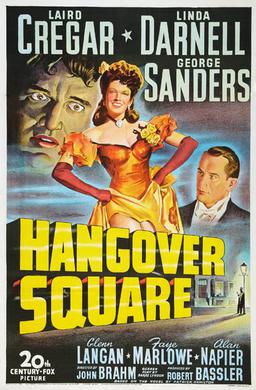
Hangover_Square.jpgWithout question, Hangover Square is in many respects analogous to The Lodger with the reteaming of director John Brahm with Laird Cregar and George Sanders. However, the biggest difference is that we have Cregar putting on on a new persona and losing over 100 pounds!

Among other things, it forced director John Brahm to shoot the production in sequence as to not completely decimate the continuity, based on the movies main protagonist. In fact, the actor initially turned down the part because of his aspirations to remake his image. Though he reconsidered when he saw the part could be played to his advantage and he turned Hangover Square into a superior vehicle.

If we want to break the movie down to its most incremental themes, it’s essentially about a man in Edwardian London torn apart by conflicting musical projects representing the two women in his life, who are effectively pulling him in opposite directions. He’s a mad genius whose personality disorder is completely torn asunder by the chafing in his life. It will only prove to be his undoing.

Like any good noir, there’s the femme fatale: Linda Darnell, hair puffed up in a bouffant, legs kicking gayly as she puts on her best English accent. She handily makes a coy nuisance of herself, cajoling him with her flittering eyelashes and then evolving into an icy heartbreaker on the turn of a dime when he no longer does her bidding.

Cregar gets walked all over as Veda sucks his talent dry for her own aspirations and the pursuit of a more dashing suitor who she vows to marry — even after making fragile promises to be his. She knows how to play him, if nothing else.

Barbara (Faye Marlowe) is the “Guardian Angel” who has everything including his best interest in mind. Her father (Alan Napier) has long been advising on Georges latest masterpiece — a Concierto that he has been laboring over for some time. She has been his astute pupil on the piano while also seeing right through not only Veda’s mediocrity as a performer but also her manipulative guise. There’s nothing sincere about her.

What we continuously see are reverberations of a Dr. Jekyll and Mr. Hyde tale. Here is a man of such musical receptivity able to craft pieces with such depth of feeling and yet there is another side of him — a side that strangles cats in his spare time and other things… Quite frankly his unaccounted behavior scares him and he goes to a Dr. Middleton (George Sanders) at Scotland Yard seeking some kind of aid.

It’s true that Hangover Square is a movie plagued by claustrophobic hysteria supplied not only by Cregar’s performance but the mise en scene as well. What we have is the artifice of gothic exterior-interiors with layers of ready-made atmospherics and foreboding scoring interjected with an instantaneous cacophony of chaos composed by the virtuoso artist Bernard Hermann.

One enduring moment is that of the burning effigy lit to high heaven on Guy Fawkes Day. It’s the quintessential image to capture the essence of our main character and the conflicted conflagration burning inside of him. Nero purportedly played his violin while Rome burned. George pounds away at the piano slavishly. But his story is a tragic tale of destructive genius that overtakes him. The final lingering images can’t help but leave an impression.

If Bogart sculpted psychopathic gangsters into hardbitten anti-heroes, later on, there’s a similar sense that Laird Cregar might have fashioned his menacing villains into conflicted but still heroic alternatives too. It’s mere conjecture and alas we will never know what could have been.

Two months before the picture was even released the actor would die from a heart attack, the ultimate tragedy brought on by his rapid weight loss. A fairly heavy man in most of his earlier roles, Cregar was committed to changing his physique in an effort to be leading man material. But, again, it was not in the stars.

While not a bona fide classic per se, Hangover Square remains as a chilly noir that’s not only a testament to Linda Darnell’s aptitude as a spellbinding black widow but to Cregar’s ability to make madness all but palpable. It’s a shame we lost him so suddenly because there’s no telling what heights his career might have reached. How true it is we very rarely appreciate someone’s talents until they are no longer available.

4/5 Stars


The Lodger (1944)

the lodger 2.png

“Love is very close to hate. Did you know that?” – Laird Cregar as Mr. Slade

Some perceptive viewers might well know that The Lodger is based off a novel by Marie Belloc Lowndes and it garnered a fairly high profile silent adaptation by Alfred Hitchcock followed by a sound version in 1932. Both pictures starred heartthrob Ivor Novello.

What the Hitchcock version boasts is his trademark eye for the visually cinematic even at this early juncture of his career. Still, the young director was a bit unsatisfied with a resolution that lacked the true punch of the original narrative. Honestly, he probably delivered the best thriller he could given the circumstances.

But with John Brahm’s rendition, this is as close to an uncompromised narrative as it can be while still meeting the requirements of the Hays Codes. What we have on our hands is a Jack The Ripper murderer who slits the throats of ladies all across England. And it’s not merely a bout of mistaken identity with Laird Cregar’s foreboding presence hanging over the picture moment by moment.

Merle Oberon, renowned for her immense beauty, did suffer some lacerations and scarring from a car accident in 1937. Her career continued unimpeded and in Lucien Ballard, she found a cinematographer she literally fell in love with. The reason being, he developed a lighting style — still called “The Obie” to this day — that completely hid her minor blemishes. As was the case with Minnelli and Garland, perhaps she fell in love more with the way he made her look than with the actual person. They would get divorced a few years later in 1949.

As far as her performance there’s little to criticize. She’s bright and beautiful as the dancehall singer, Kitty Langley, who lives with her aunt and uncle in the Whitechapel district. Admittedly she does seem a little well-to-do for her specific career path but no matter she’s quite the success.

Meanwhile, the ominous and rather taciturn gentleman Mr. Slade (Cregar) takes up residence in the Bontings’ home forewarning them about his nocturnal habits due to his research as well as his desire to be left alone as much as possible. Meanwhile, the rash of murders across the city continues and Scotland Yard has yet to apprehend the criminal.

An Inspector Warwick (Georges Sanders) comes to call on Ms. Langley as she was the last person to see Jack The Ripper’s latest victim alive — one washed up actress named Annie Rawley. In this way, our stars have been brought together but far more intriguing is the fact that such a foreboding character is staying right in their stead.

And it’s more than just a hunch that Mr. Slade might be the culprit. On top of his often erratic and suspect behavior, he’s obsessed with his genius-of-a-brother now deceased. He claims that beauty led to his sibling’s destruction and there’s little denying that he has some deep-rooted abhorrence for stage actresses.

So the inevitable must come. Everyone turns out for Kitty’s latest performance even the normally reclusive Slade and as he watches the show with its lavish costumes, provocative Cancan lines, and song and dance, we watch something begin to erupt.

What follows is the rest of a thrilling pandemonium-filled stage show that becomes a frenzy when it’s let out that the wanted lady killer is purportedly right in the very building. Cregar crazed and paranoid scrambles past sets and up into the rafters for a chance at escape. Ultimately he brandishes his knife for a desperate face off with the police force. In the end, he takes the path of least residence that nevertheless leaves an indelible impression.

Sanders and Oberon are fine talents, genial and all, but next to their supporting star they feel unremarkable. Of course, that comparison is already so unfairly weighted. Because Cregar is just that chilling. There’s little doubt that he captivates the screen and subsequently steals the picture in the final minutes. He’s the only reason you need to watch this one. If it means anything, the movie was a stirring success and it garnered a follow up in Hangover Square (1945) which might be even better. Cregars a showstopper in that one as well if you needed any indication.

3.5/5 Stars

It Happened Tomorrow (1944)

it happened tomorrow.png

Rene Clair makes no justifications for his flights of fancy and it’s true that the stuff is unabashedly whimsical to the zenith. He made a reputation for himself in his native France for his playful cinema and for the decade or so he was in Hollywood (1935-1945) he continued much in the same vein. Most people would say it came with lesser dividends though some of his more memorable offerings included I Married a Witch (1942) and this film, It Happened Tomorrow.

Again, it involves highly unconventional orchestration like he was all but accustomed to in his comedies. It’s nary for everyone. In fact, it probably relies too heavily on its nifty bit of novel storytelling involving a journalist who begins to receive the following day’s news in advance. He can predict the future and it proves advantageous for grabbing the scoop and betting on the horses among other trifles.

Subsequently, the film begins rolling out a red carpet full of tropes upon tropes. But no one can shame Clair for sticking to his own whimsical abstractions and if you do allow it to invade your space you might just find yourself taken with its jungle gym-like acrobatics through time.

It starts 50 years ahead of our story with the golden anniversary of a couple talking about a small matter that happened years before. Then we fall back to the 1890s where Lawrence Stevens (Dick Powell) has the monotonous distinction of penning obituaries for the local paper before finally being promoted to reporter by his grouchy editor Mr. Gordon.

But then something far more miraculous happens. Lawrence doesn’t realize the implications at first when Pop, a veteran newspaperman with a near-saintly demeanor, becomes Lawrence’s guardian angel. To speak in known references, he might very well be this movie’s Clarence. His true gift is offering his young colleague the following day’s headlines.

They involve, of all things, updated classified adds, irregular snowfall and then an Opera House Robbery — offering the first moment of realization that Lawrence might have something extra special in his grasp. Simultaneously he becomes, enamored with the clairvoyant half of a niece (Linda Darnell) and uncle fortune telling duo.

Not until reading a little further into Linda Darnell’s history did I realize just how young when she made it big in Hollywood. Like her finest efforts, she dazzles with that bright-eyed concern next to Dick Powell. Though he would begin the redefinition of his career shortly with his introduction as Philip Marlowe and upcoming hardboiled fare, there’s still time for something light. He carries it with his usual assured comic energy as the headlines continually drive him into action.

One night he’s saving a girl from jumping off a bridge — his own girl in fact — to make a prophecy come true and then the next morning he’s tipping off the suspicious police chief on where to capture some wanted bank robbers.

Lawrence is now the talk of the town and the go-to writer for the paper with his uncanny nose for news. Soon he’s asking for Sylvia’s hand in marriage though a momentous misunderstanding leads her uncle to insist on a shotgun arrangement. If that’s the case he gladly takes the poison. But to bankroll their happy future together he bets on sure thing after sure thing at the racetrack. After all, he can’t lose. Or can he?

If you could know when you were going to die would you know or is ignorance really bliss? The movie begins its downward spiral after Lawrence’s winnings are swiped and it is foretold that he will die the same day in a hotel at 6:25pm on the dot.

Flimsy physical comedy takes over as we plummet toward the inevitable despite Lawrence’s vehement attempts to derail fate. He still winds up in the lobby of the St. George Hotel, within the very confines where he is destined to be gunned down. Like clockwork, everything unspools toward that exact end. The most exasperating thing is he saw it all coming and could do nothing to stop it.

But with a knowing wink, Clair flips the conceit on its head and that’s the story’s flash of momentary brilliance because we see as the narrative gets back around how things can work out in such a convoluted but somehow logical fashion. The paper reads: Lawrence Stevens is Dead. Of course, we know he’s alive. But the movie manages to make the headline ring true. You can have your cake and eat it too.

3/5 Stars