The African Queen (1951)

1c3a0-the-african-queen-1With the ultimate pairing of Humphrey Bogart and Katharine Hepburn, this film throws together two starkly different people in extraordinary circumstances. Hepburn is a prim and proper missionary in Africa whose brother dies after a confrontation with German soldiers. Bogart is the rough-edged pilot of an old steamboat christened The African Queen. Together they take on the dangerous task of going down the river in order to sink a German ship. At first they are both at odds with each other and struggle to cope with their situation. However, with no one else to turn to, over time, they become close. Their bond is so great that they are willing to die rather than to be separated. This is truly a heartwarming story of love and loyalty with two legends who literally light up the screen.

5/5 Stars

In a Lonely Place (1950) – Film-Noir

Starring Humphrey Bogart and Gloria Grahame with direction by Nicholas Ray, the film is about a struggling screenwriter with a hot temper. Dixon Steele (Bogart) has not written a good script in a while but then one evening he has an enthusiastic young woman explain a novel he is supposed to adapt since he has not read it. Everything goes seemingly normal however the next morning she is dead and Steele is the main suspect. The police investigate, including Steele’s detective friend, but a neighbor gives an alibi which seems to save Steele. Soon Grahame begins to fall in love with him and vice versa. However, she soon realizes his violent side and second guesses Steele’s innocence since he has such a violent history. Although they are to be married it is broken off when he finds out she was going to leave. Only then does Grahame find out he was indeed innocent but the damage is already done and their relationship cannot be saved. This is a pretty good film noir with powerful characters.

4.5/5 Stars

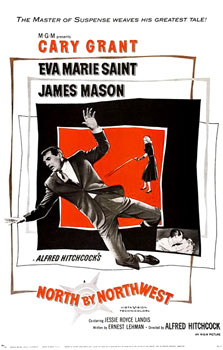
North by Northwest (1959) – Alfred Hitchcock

ed5e6-northbynorthwest1As the last collaboration between Cary Grant and Alfred Hitchcock, they came together to make the ultimate thriller in North by Northwest. Grant plays a common business man named Roger Thorndike who is framed as a killer in a very public place. All of the sudden he has become a fugitive on the run for a crime he never even committed. Along the way he meets a government agent (Eve Marie Sainte) while dodging the authorities. Trying to clear his name, Grant finds himself fleeing the actual killers. His adventures include a run-in with a crop dusting plane and eventually find him hanging for dear life.  However, he comes out on top in the end and he slowly falls in love too (of course). From the beginning when you see the opening credits and hear the score, you gear up for adventure and that is exactly what you get. It follows the wonderful tradition of Hitchcock films and it does not fail to entertain. Besides great locations, a memorable score, and interesting camera work, the story is wonderful.

5/5 Stars


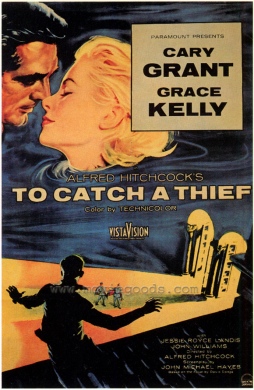
To Catch a Thief (1955) – Alfred Hitchcock

1b4d6-to_catch_a_thiefStarring Cary Grant and Grace Kelly and directed by Alfred Hitchcock, this film follows the life of a former cat burglar who is accused of thievery in France. An outbreak of thefts seem to point to John Robie and he seeks refuge with some old friends. He plans to clear his name by catching the real thief. He learns that a vacationing mother and daughter have the most expensive jewels and he strikes up a relationship. The daughter realizes what he is and goes on to tempt him to steal her valuables. When they actually go missing she suspects him. Trying to figure out what is going on Robie struggles with a possible burglar who falls to his death and he attends a ball with Francie who has pronounced her love for him. After a clever switch Robie waits for the real perpetrator only to be surprised. As a thriller and romance this is a fun film. The cinematography is excellent and Kelly’s wardrobe done by Edith Head is memorable. Cary Grant and Grace Kelly are certainly a memorable screen couple.

4/5 Stars

Dial M for Murder (1954) – Alfred Hitchcock

Directed by Alfred Hitchcock and starring Ray Milland, Grace Kelly, and Robert Cummings, this film tells the story of a married woman who has fallen for another man. However, her suspicious husband finds out and decides to have her murdered. Through a series of events he finds his murderer and sets everything up for the following evening. His plan goes awry and his wife lives so he must rush to cover up all his involvement. In the ensuing days Kelly’s character is accused of murder even though she was simply defending herself. She finds herself facing death and yet the clever police detective figures everything out. He realizes her innocence and traps Milland in his own plan. With the typical Hitchcock style and solid acting, this movie is full of many suspenseful moments and it became an early example of film making for 3D.

4/5 Stars

Where the Sidewalk Ends (1950) – Film-Noir


*May Contain Spoilers
Starring Dana Andrews and Gene Tierney with Karl Malden and director Otto Preminger, this film follows a ruthless police detective. Mark Dixon is notorious for his strong armed tactics and he is given orders to cool it. That same evening a mobster holds a crap game and things blow up when Tierney’s estrange husband fights the man on a lucky streak. The police catch wind of it and arrive finding the man dead with the husband gone. Dixon finds the husband and tries interrogating him but instead he accidentally kills the man. He must elaborately cover his tracks and when the police gather evidence it all point to Tierney’s amiable father. Dixon knows the truth and as he falls for Tierney’s character he tries to help her father’s case. In a last ditch effort he writes a letter of confession and tracks down the mobster to face death and close the case. However, he gets out alive and everything turns out fine except for his conscience. He has the letter opened and the truth comes out. Andrews and Tierney were paired again after Laura and I have to say I really enjoyed this film because of the tragic hero Andrews portrays.

4/5 Stars

The Wrong Man (1956) – Alfred Hitchcock

9c899-the-wrong-man-posterDirected by Alfred Hitchcock and starring Henry Fonda and Vera Miles, this film, based on a true story, is about an innocent man who is falsely accused of armed robbery. Manny is an unassuming musician who lives with his family in New York and barely scrapes by paying the bills. Unfortunately he closely resembles another man who held up a local insurance office. The police are called and then a few witnesses label Manny as the culprit. A coincidence on a writing sample seem to solidify his guilt and so he is jailed. Manny’s wife and family scrounge up the money for bail and a lawyer is found to represent him. Manny tries to prove he was on vacation during the incident but his three acquaintances are either dead or cannot be found. However, Manny has another alibi that his lawyer thinks may stand up in court. At the same time Rose begins to blame herself and her mental health deteriorates forcing Manny to put her in a sanitarium. His first appearance ends in a mistrial but Manny is still in despair. Finally good fortune strikes him when the real robber is finally caught. Manny is free but not without horrible consequences. I have to say Fonda is always so sympathetic in these type of roles and Miles has a good dramatic performance. Although it is lesser known, this film shows the diversity of Hitchcock. Here he essentially makes a documentary and it is just as powerful as many of his other great films in its own way.

4/5 Stars

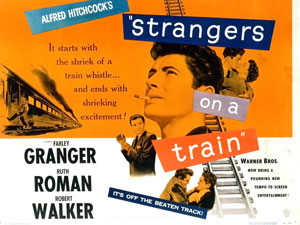
Strangers on a Train (1951) – Alfred Hitchcock

a7d8f-strangers_on_a_train_28film29In one of Hitchcock’s most intriguing thrillers, we watch events unfold as two distinctly different men meet each other. One is an unassuming tennis player and the other a wild-living rich kid. They both have the same desire though, to have someone out of their lives. With this in mind, Bruno proposes swapping murders. He will kill the tennis player’s unfaithful wife and Guy in turn will murder Bruno’s domineering father. Bruno goes ahead with the plan while Guy brushes it off and soon forgets it. Only too late does Guy find out what has happened and he is suddenly faced with a great dilemma . He does not want to commit murder but Bruno relentlessly shadows him expecting it to be done. In the final showdown the two men face off and Bruno is still adamant that he and Guy were always in it together. This film is great for many reasons, including the often unconventional cinematography, the intriguing characters who blur the line between good and evil, and of course the carousel scene at the end is always memorable. Farley Granger and Robert Walker both deliver very good performances that are probably the best of their careers.

5/5 Stars

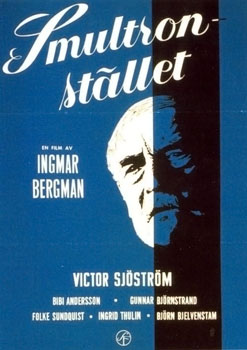
Wild Strawberries (1957)

Directed by Ingmar Bergman and starring Victor Sjostrom, the film follows an elderly doctor who travels by car to receive an honorary degree. Over the course of the day the old man has strange dreams and he also reminisces about his summers as a child with his family. He travels with his daughter in law and along the way they pick up energetic young people, deal with an unhappy married pair, stop at a gas station, and visit the old man’s lonely mother. The days events force him to face his past and realize his various faults. He also recognizes soon enough he will die. However, he finally comes to terms with it all and as a result he treats his daughter in law, son, and housekeeper differently. As with many Bergman films, this one is thought provoking. Some of the dream sequences were a bit odd but many of the characters and scenes were enjoyable.

 
5/5 Stars

Vertigo (1958) – Alfred Hitchcock

acaeb-vertigomovie*May Contain Spoilers!

Vertigo is an intriguing Hitchcock thriller, set in San Francisco, that has you cheering for Jimmy Stewart as he falls in love and struggles with his fear of heights. Right away you are met with the haunting opening credits and the dramatic opening sequence where Scottie (Stewart) acquires his vertigo. From then on Scottie must cope with his dizzying condition however, he has no time to remedy it since he suddenly finds himself tailing a beautiful woman for a friend. Much of the rest of the film seems surreal with minimal dialogue and interesting cinematography, leading up to the death of Madaleine (Kim Novak). Then the film switches gears and is mostly about the impact on Scottie who had become infatuated with Madaleine. Often he appears to be in a trance and he becomes obsessive after meeting Judy who looks strikingly like Elster’s dead wife. Scottie becomes controlling, trying to make Judy into the image of the woman he loved. She just wants him to love her for who she is but that cannot be. Fittingly, the film ends the way it began with drama and tragedy. This certainly is a fascinating view of human psychology and complex emotions. In order to appreciate this film it is almost necessary to watch it at least twice, once to understand the plot and then another time to spot the little details. Of all of Hitchcock’s work, I would say I still enjoy Rear Window or North by Northwest better but this film at least deserves a viewing or two.

5/5 Stars