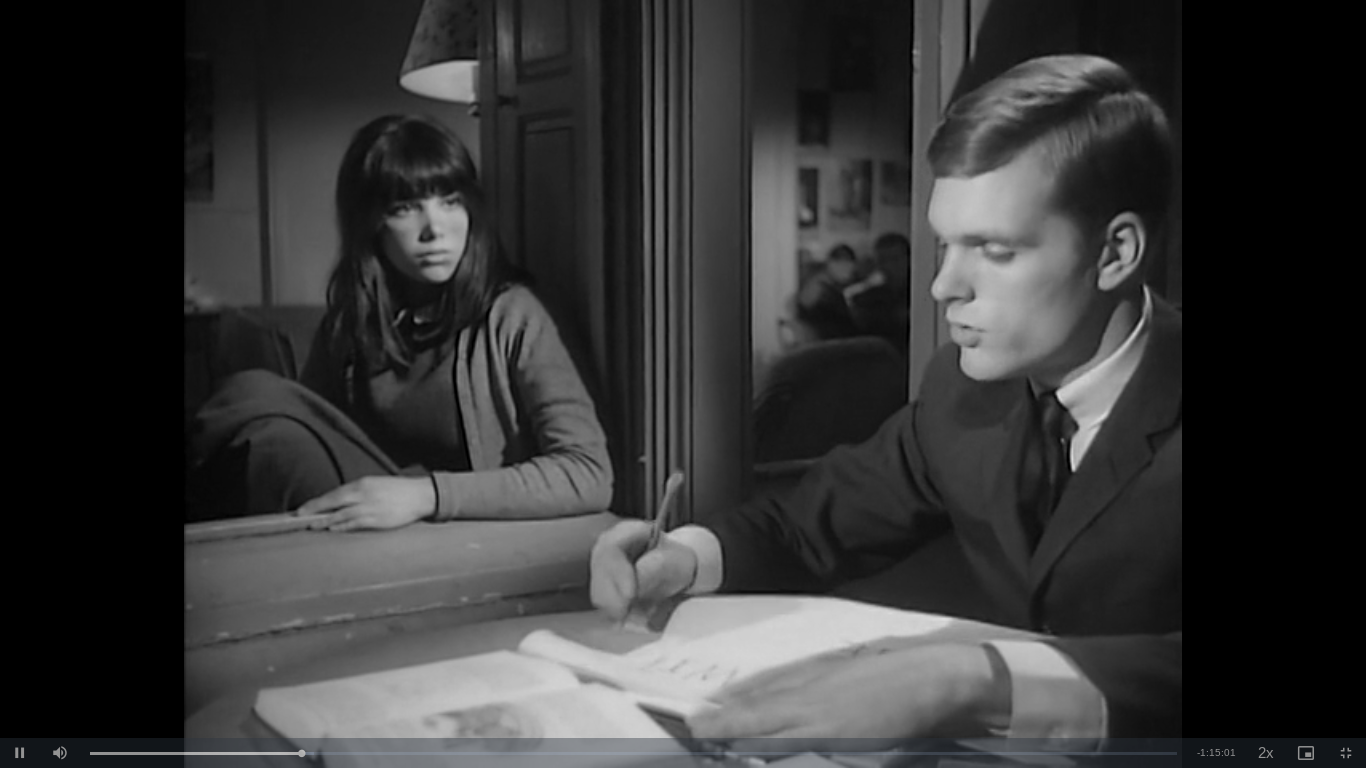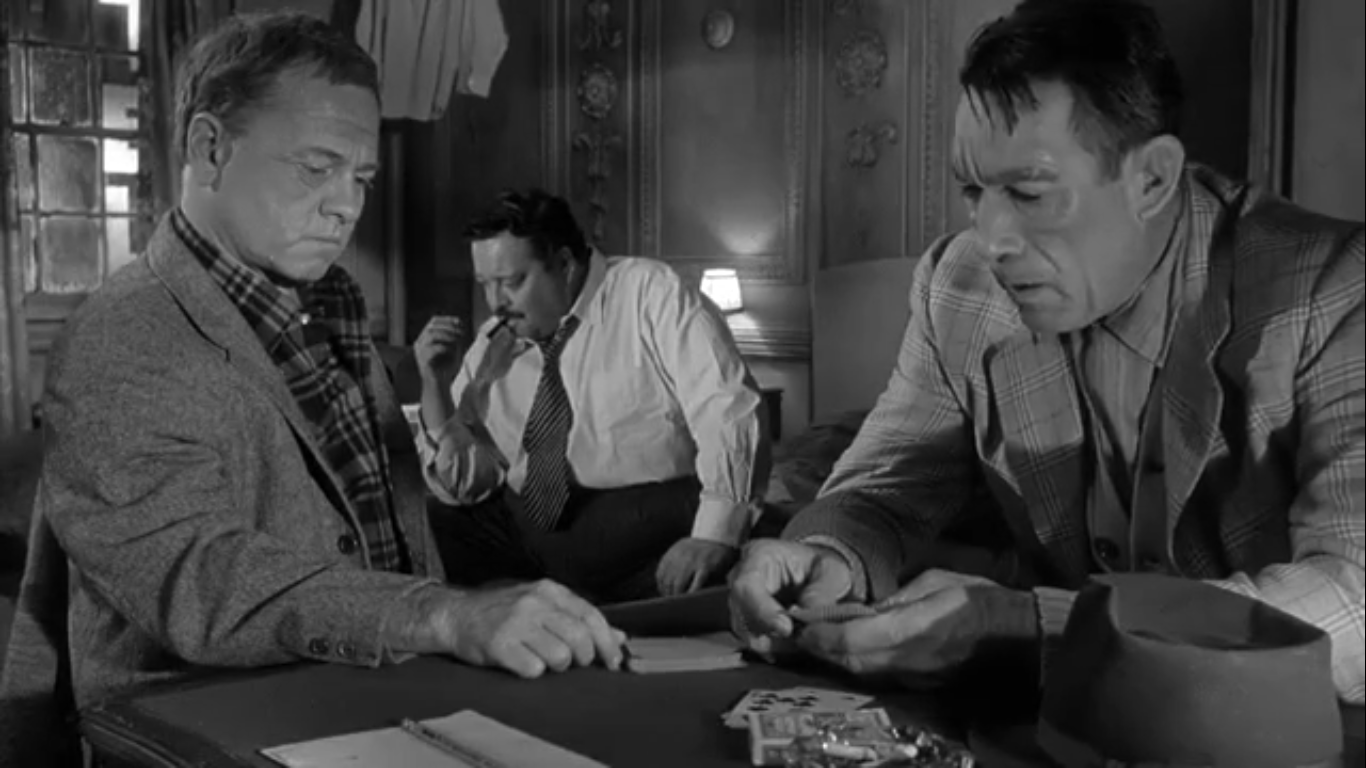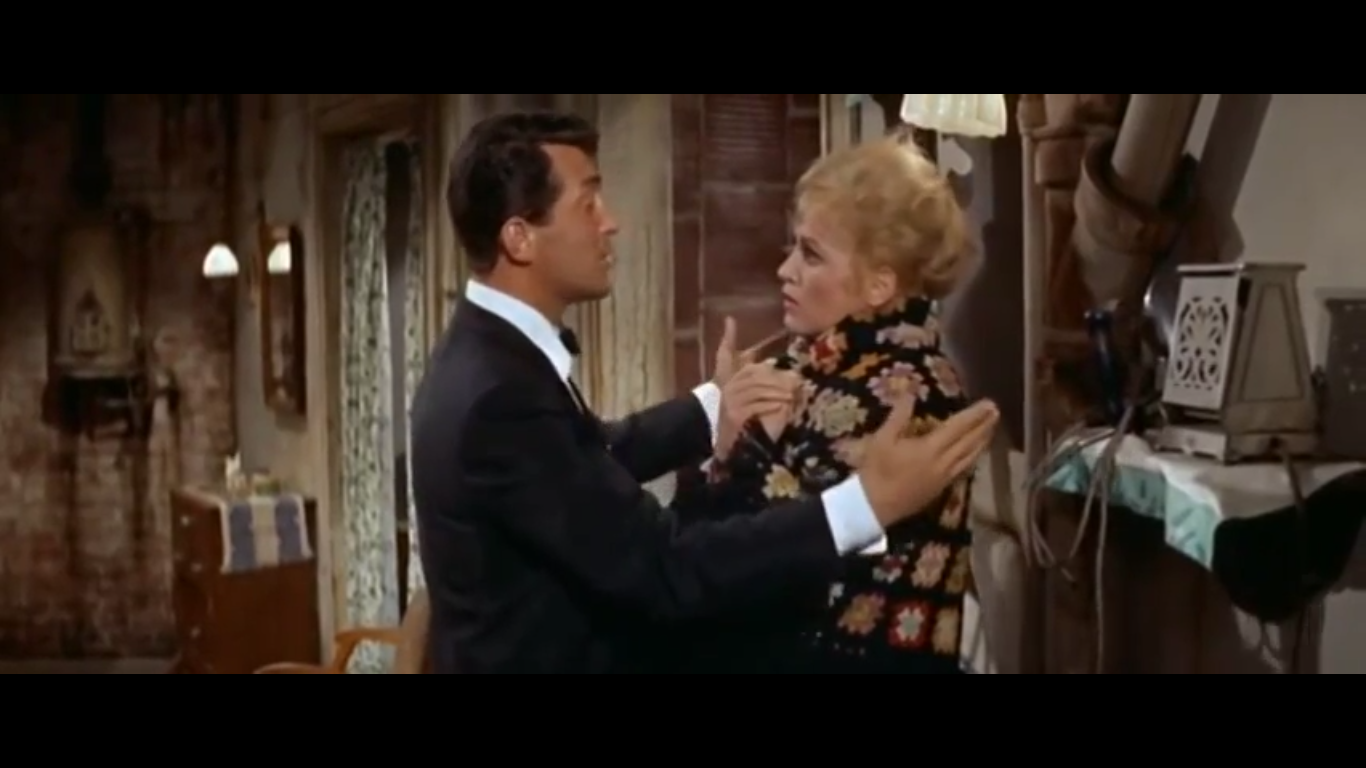
The Flaming Star (1960)

“No Ma. They ain’t my people. To tell the truth, I don’t know who’s my people. Maybe I don’t got any.” – Elvis as Pacer Burton

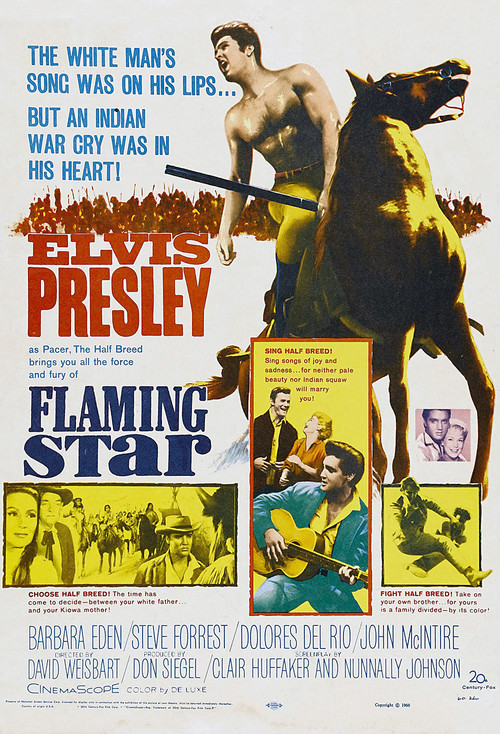
If I may be so bold The Flaming Star feels like an inflection point in Elvis Presley’s film career. It comes at a time where he’s still given the opportunity to act, and if he’s not some great talent, he’s certainly a charismatic performer in things like King Creole and  Clair Huffaker’s Flaming Star.

G.I. Blues came out the same year as Flaming Star, and it feels like a schematic for the rest of his films under Hal B. Wallis. They punched up the songs and mostly stripped down the plots. All they needed was Elvis as a commodity, not an actor, because that’s what tween audiences were paying for. Money talks.

Although you can hardly equate the two, The Flaming Star compares favorably to something like Rio Bravo in how a musical interlude is used only once within the broader narrative. Granted, this film is much more plot-driven than Hawks’s hangout movie.

I would not initially peg director Don Siegel for this kind of picture — it feels uncharacteristic — and yet you can see what he can bring to the movie, which at times has a ferocity and flashes of violence. Also, it’s about as far afield from a typical Elvis picture as you can get, being both an oater and a drama seething with family drama rather than cotton candy pap.

While initially the Native Americans make for a handy purveyor of conflict, there is another element that proves slightly more intriguing. Elvis’s parents are played by John McIntire and Dolores Del Rio so he’s part of a multi-ethnic family in a time where that is frowned upon as being scandalous. People like this are to be ostracized since they deviated from the status quo of cultural norms.

Because of its confluence of themes, it brought to mind two pictures in particular. Although Gunman’s Walk is more of a Cain and Abel story on the range, The Flaming Star provides a variation on these themes. Pacer (Elvis) and Clint (Steve Forrest) are far more benevolent, and yet in the broader society, there’s no denying that they are perceived differently.

Likewise, Bhowani Junction casts another famed dark-haired star, Ava Gardner, as a sympathetic mixed-race character. The story bristles with flaws out of the era, and yet its context allows it to court themes about personal identity and racism at a time when many of these themes were either sordid or commonly disregarded without much consideration.

Even the Native Americans are given some motivation, and they slowly grow into the movie as represented by Buffalo Horn (Rodolfo Acosta), a warrior who knows the Burtons even as he tries to protect his people’s way of life.

From his perspective, they must fight or else die with the influx of settlers; there’s also an especially aberrant strain of racism going through the white community. Given this context, it’s hard not to appreciate why the Indians have resorted to violence. Because there is very little middle ground. They see their way of life dwindling and slowly being made extinct.

In fact, the Burtons represent that middle, and they are on especially tenuous ground, caught between two warring sides as they look to maintain and defend their homestead. I imagined Barbara Eden would be a frothy love interest on the beach. Instead we get a young woman burning with anger. Her town grows wary and more prejudiced against the Burton family since they are left mostly unharmed while many loved ones in the white community have been killed.

Some of the beats of the movie feel inevitable, and it’s a credit to the performers that they are able to imbue them with meaning. I think of John McIntire when he eulogizes his wife. The story calls for her to be sacrificed, and yet he loved her dearly. He makes the loss stick so it means something consequential.

As they stand near her grave, he recites the words from Genesis: “And Adam called his wife Eve because she was the mother of all living.” Then, he looks up to God and asks him to take care of his wife. He means it sincerely.

Later, as their livelihood continues to crumble and fracture, Mr. Burton gives his blessing to Pacer, knowing what he feels led to do, turning away from the white community that now rejects him.

Although McIntire isn’t lauded or always well-remembered beyond the classic movie community, his performance here shows the breadth of his work. He could be a tough old cuss, and yet there’s such a moving humanity to him here.

He’s far from perfect, but we sympathize with him and the life he chose. He didn’t decide who he fell in love with; he wasn’t trying to make any kind of statement. He simply fell in love with a woman who didn’t look like him, got married, and raised two sons. Now in spite of his best efforts, his boys are forced to live with the consequences.

The flaming star itself is a dreamed up portent of death. It represents the fictions of a Hollywood movie frontier. And yet the very best of Hollywood comes out in the characters and Siegel’s commitment to punchy, economical drama.

3.5/5 Stars

A Big Hand for The Little Lady (1966)

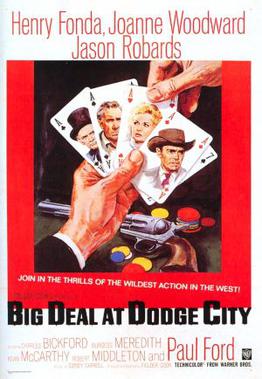
A Big Hand for The Little Lady is not something we see anymore: It’s a big, sprawling western brimming with comedy and a dash of intrigue. There’s a romping score from David Raksin and a frenzied opening as we watch the assembling of our secondary stars. And they are quite formidable from the grizzled Charles Bickford, Kevin McCarthy as a rapscallion with a glint in his eye, and the always irascible Jason Robards. They’re coming together, not for a showdown or a hanging, but for something far more momentous: a once-a-year poker game with astronomical stakes.

It’s mostly a contained western within the town and not just within the town, but within the local hotel and the backroom where only the richest and wealthiest are allowed a seat at the table. There’s little doubt that they could hold down a movie themselves, but they feel more like the entrée than the primary attraction.

For a time as an audience we are kept outside just wondering what’s happening between these rarefied few and then Henry Fonda, Joanne Woodward, and their son enter the scene.

Coming out as it did in 1966, A Big Hand for The Little Lady is one of those films that so easily melds with the TV age because it feels like a family movie and it was something that came of age originally on the stage courtesy of Fielder Cook.

What sets it apart as a movie are these stars, and they dole out. Fonda is his late period affable self and all his roles come off so seamlessly. Joanne Woodward may have been superseded finally by her super star husband Paul Newman, but this picture is a fine reminder of what a jubilant talent she was.

They come into town on their way to 40 acres of farm. They need some repairs on their wagon and they look to spend the night before heading on their way. It’s simple enough. Bu there must always be complications. Meredith (Fonda) proves himself to be a reformed gambler, but the temptation of a poker game is too great for him.

Kevin McCarthy has eyes for his radiant wife or sees a walking stooge before him. For whatever reason he vouches for the man and allows him in despite the remonstrations of his compatriots. They’re not accustomed to such interruptions to their yearly ritual.

Based on the facts that rules have never been bent for anyone, all of this feels like a very unprecedented development — not to mention a compromising of the rules. But Fonda goes to his hotel room to retrieve some of their life savings to front the $1,000 needed to just sit at the table.

What follows is a bizarre even absurd scenario as Fonda gets in too deep with all their funds, and he’s not left with enough collateral to stay in the game. They’ve bullied him out even as he has a killer hand of cards.

He proceeds to keel over on the spot into the loving arms of his wife, only for her to take up his mantle at the poker table as he gets attention from the local doc (Burgess Meredith). This, again, is highly irregular. They look down their noses at womenfolk, especially ones who have never played before.

After she learns the general premise of the game, she vows to put it on hold as she speaks with the bank manager. They go traipsing to the bank single file to meet Mr. Ballinger (Paul Ford), another irregular turn. While he won’t initially give her any help, once seeing her hand (another dubious red flag), he agrees to back her. What follows next is not something that needs writing about.

I’m not much for playing poker, but as a narrative device it’s one of my favorites because there’s always two levels to the game. It provides a concrete reason for a varied assortment of characters to sit down together — The Odd Couple is a favorite example — and there are usually stakes of another kind too.

However, here the movie almost feels like it reaches a premature climax with Joanne Woodward carrying a sway with the men that she hardly has time to build since most of the minutes beforehand she was away watching their wagon.

The film’s saving grace is it’s final abrupt revelation — I’m not sure if there are warning signs of any kind — but it’s a twist nonetheless. It’s also difficult not to see how Woodward’s acumen presages Paul Newman’s first-class showing and antics trying to agitate Robert Shaw in cards during The Sting.

The beauty of this movie is how it gives the actress the reins, and she proves herself to be the consummate performer. What’s more the cast is loaded with old pros who all seem game for a good time.

3/5 Stars

Shenandoah (1965)

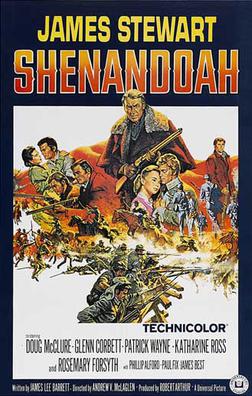
Shenandoah is a curious movie on multiple accounts. It’s not unreasonable to think that large families like the Anderson’s existed in real life for mere practicality sake. More children means more farmhands to put in a day’s work and keep things running. It’s a survival tactic.

However, this is a Hollywood family loaded to the hilt with handsome young men and pretty women who crowd around the dinner table as their father blesses the food. He believes in hard work and not relying on anyone for anything. That’s why you have so many kids. He also happens to be played by Jimmy Stewart.

His faith is rudimentary. He prays to God and wanders into church conspicuously late on Sundays at the behest of his late wife, but he’s a self-made man who believes in the effectiveness of his own sweat and toil.

The movie also happens to be released near the centennial of the Civil War’s end in 1865. 100 years have passed and there’s still an uneasiness about it. There’s a brand of nobility between a certain class of white man represented especially by George Kennedy in a brief but memorable cameo. These are good men caught up in an ugly conflict, slavery and racism notwithstanding.

But in the same context, there’s only one black man of note and he’s a childhood friend of Anderson’s youngest boy (Phillip Alford most known for To Kill a Mockingbird). Otherwise, Shenandoah doesn’t have much dialogue about the scourge of slavery; perhaps we can be generous and say this not the film’s primary focus. It’s content focusing on its Southern heroes as they attempt to stay out of the fray. It just happens to be against this particular landscape, but its aims are smaller.

Charlie Anderson and his family continue keeping to themselves and working their land. But their Virginia territory is being surrounded by skirmishing Confederate and Union soldiers. It’s inevitable they’re going to have to get involved; they won’t be allowed to sit it out. That’s not how humanity functions. It will affect them in some way.

Although we can see it happening a mile away when the youngest Anderson lad picks up a rebel hat in a stream and starts to wear it around, it’s a necessary choice. He and his buddy Gabriel (Eugene Jackson Jr.) are ambushed near a pond, and he’s taken away as a prisoner of war. In spite of his father’s best efforts, he’s forced to grow up fast and become a man.

While it’s not quite The Searchers, Charlie vows to get him back and he’s intent on finding him even if conditions seem dire. It gives the movie its drive and he and his sons (as well as his daughter played by Rosemary Forsyth) must navigate a treacherous world inflamed by war.

He leaves behind his son (Patrick Wayne) and daughter-in-law (Katharine Ross) to watch over their estate, and we know deep down in the recesses of our beings that no good can come of this. This intuition proves to be correct.

It’s a credit to James Stewart as an actor how he takes a painful if inevitable moment and makes it into something so gut-wrenching. He and the rest of his kids have gone searching for his youngest boy to no avail and they come back empty-handed.

Watching the road on their return is a young Rebel soldier of only 16 and his first reaction is to fire. Jacob Anderson (Glenn Corbett) is instantly killed, slumped in his saddle.

The boy is shocked and Stewart comes upon him with the seething rage pent up from all his Anthony Mann pictures. He’s going to kill the boy for what he’s done. He’s got him in his grips and for a split second he’s choking him to death in a surreal out-of-body experience. The emotion has overtaken him.

Then, he realizes what he’s doing and with anger still smoldering and tears almost welling in his eyes, he tells the boy he wants him to grow up and have children so that one day when someone kills one of them, he’ll know what it feels like.

Stewart elevates this scene into this galling interaction between two people that’s somehow vindictive and still heartbreaking. Because it’s the rage Stewart was always capable of in his Westerns, but this time he’s a father with the unconditional love that comes with such a distinction. He loves his children so deeply just as he loved his wife. It’s the root of all his fury.

When they sit down before the table to pray again, it’s a far more somber and scarce occasion. Half the bench is empty and it just doesn’t feel right. It’s their new reality. This is what war does. But on Sunday at the church service, something very special happens, and it makes Charlie’s shattered heart full once more.

Because of the time period of its release, I feel like Shenandoah functions better on this more universal gradient as a story about a father, one who just happens to live during the Civil War.

It’s hard not to watch the film and also place it up against the current events of the Vietnam conflict which was still in its relative infancy, at least based on U.S. involvement.

James Stewart was of course known to be a more conservative man and even flew a bombing mission over Vietnam on February 20, 1966. By the end of his military career, he would end with the rank of brigadier general. It’s necessary to come to grips with the ambiguity of this.

Because whether he recognized the implications or not — and he was hardly a dummy — Shenandoah does become a kind of antiwar statement running parallel to the Vietnam conflict. And this is while it still remains firmly entrenched in the kind of old Hollywood depicted in family westerns like The Rifleman or The Big Valley.

It’s not like you’re going to see hippie haircuts, acid trips, or postmodernist revisionism. It’s resolutely clean-cut. Within this framework, the pacifist inclinations are still clear in the tradition of William Wyler’s Friendly Persuasion (1956).

I was ruminating over this idea that while Stewart was an obvious patriot who was an avid pilot and served with honor during World War II, I’m not sure if he could be considered a war hawk. They aren’t quite the same thing.

Of course, you could have an entire sidebar about how the Vietnamese in the 20th century or the Blacks during the Civil War weren’t given the same considerations and dignity as whites, but I’m an optimist.

When I watch this film it makes me want to fight for family, something far greater than any political or personal agenda. It’s something worth living and even dying for. Of course, when you bring it into modernity and it butts up against current events, the issue becomes a lot more tangible and equally murky. It’s easier when you can take ideas in a theoretical context and they aren’t staring you right in the face.

3.5/5 Stars

La Piscine (1969): Alain Delon & Romy Schneider

On a superficial even subliminal level, La Piscine (The Swimming Pool in English) shares some nominal similarities with The Swimmer and The Graduate. Certainly, drawing the connections isn’t too difficult.

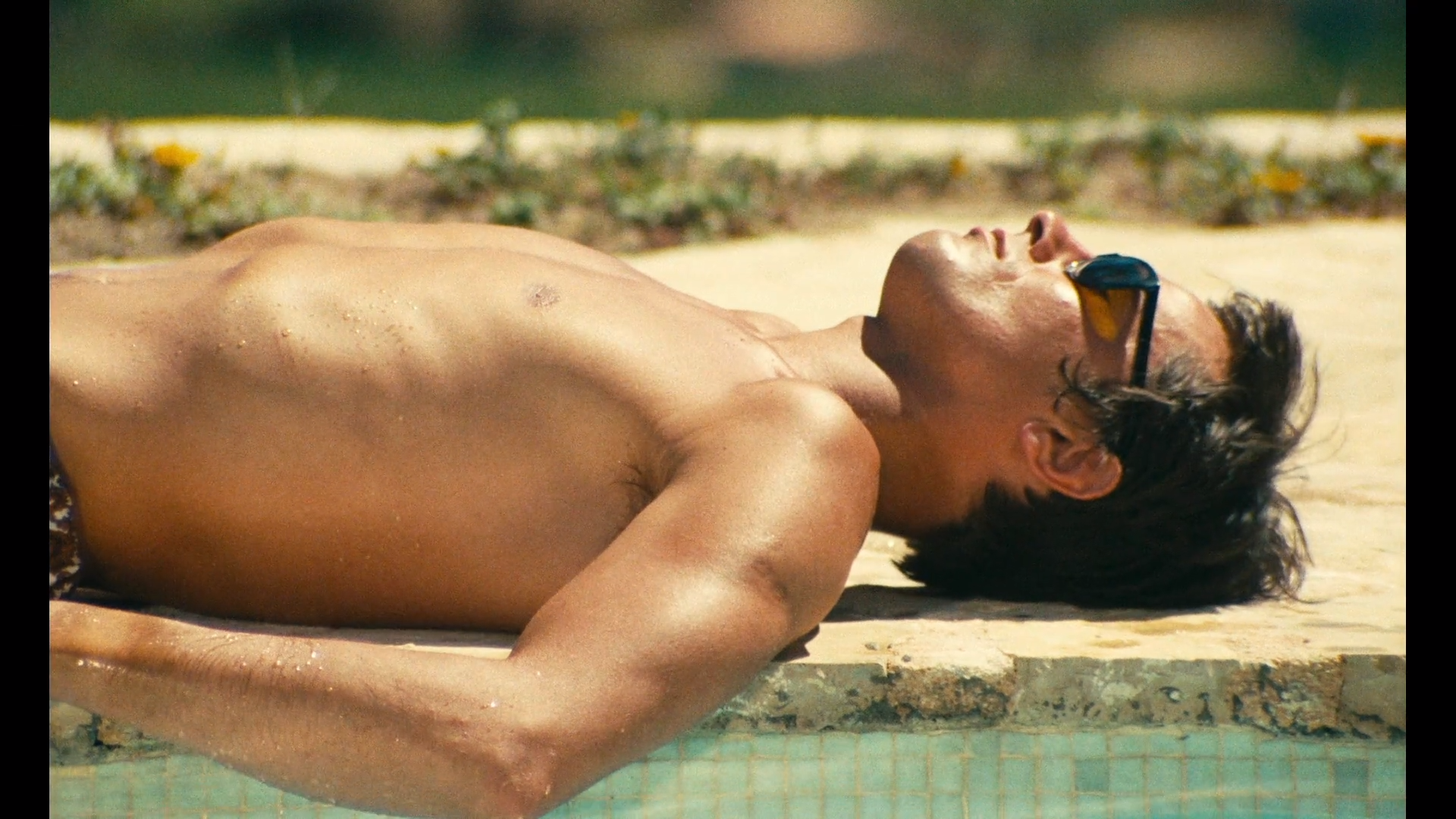
It’s a mood and a feeling as much as it is subject matter. We open on a rural villa in the French countryside with a veranda and a swimming pool. Perfect for lounging. There we find France’s great Adonis-turned-action hero Alain Delon.

He already gave his audience a taste in glimmering fare like Purple Noon, but he’s the personification of disaffected cool, and it’s little different in Jacques Deray’s film.

What’s developed in the first idle moments of the movie is this splendorous sun-soaked aesthetic. It’s akin to Benjamin Braddock floating in his parent’s pool or Burt Lancaster in his short cutoffs journeying from pool to pool in East Coast WASP country.

Jean-Paul (Delon) is at the tranquil getaway with his current lover Marianne (Romy Schneider), and it’s apparent they are in the frisky honeymoon stage full of delirium and amour. Viewed from the outside, the two stars feel like a European “It” couple though they hadn’t been officially together since the beginning of the decade.

Their auras are too big not to still associate their scintillating stardom. The movie relies on it heavily, and it’s quite effective. Because they are effective as the definition of intercontinental movie stars. You’d be hard-pressed to find two more photogenic people than Delon and Schneider.

Within the film, there’s no sense of how they came to own this property, but it’s a non-factor in the story. We come to accept their idleness, the fact that their housekeeper brings them breakfast on trays, and they have the complete freedom of the place be it sleeping in, languishing in the noonday sun, and really doing whatever they please. It’s a state of mind for the movie.

In such a space it becomes a question of what can happen and what will upend and break through the reverie. Our first signs of life come in the form of an old friend named Harry (Maurice Ronet) who makes an auspicious entrance.

He’s a bit of a ne’er-do-well, likable, but roguish, and difficult to pin down. He hardly seems the domestic type, and there’s a sense that he’s always on the run, chasing after the next adventure and fling.  Maintaining his personal freedom at whatever the cost. What’s the most surprising is he’s brought his aloof teenage daughter Penelope (Jane Birkin) along.

As someone always trying to hang onto the capriciousness of youth, he’s not the kind of person you expect to have a child; there’s some mention of her mother being a British girl he had relations with, but he’s not so much a parental influence as he is a companion. Mostly he just seems proud that she’s beautiful, and it’s fun to brag to his friends about her.

Critical to the film, he also had a past relationship with Marianne. How could he not, but then again, that was many years ago, and she’s now in love with Jean-Paul. It doesn’t take radar to recognize what might conceivably happen since it’s the ’60s and beautiful people are involved. It’s no coincidence Bob & Carol & Ted & Alice came out the same year.

True to form, Harry is the life of the party, and he always races off in his Maserati and comes back whenever he pleases; one night he comes with a gang of young bohemians in tow. He terms them his “bosom buddies,” and they dance the night away.

It becomes a point of friction watching who everyone spends most of the night with.  We see potential trouble from a mile away as they link up and an inkling of jealousy begins to seethe under the surface.

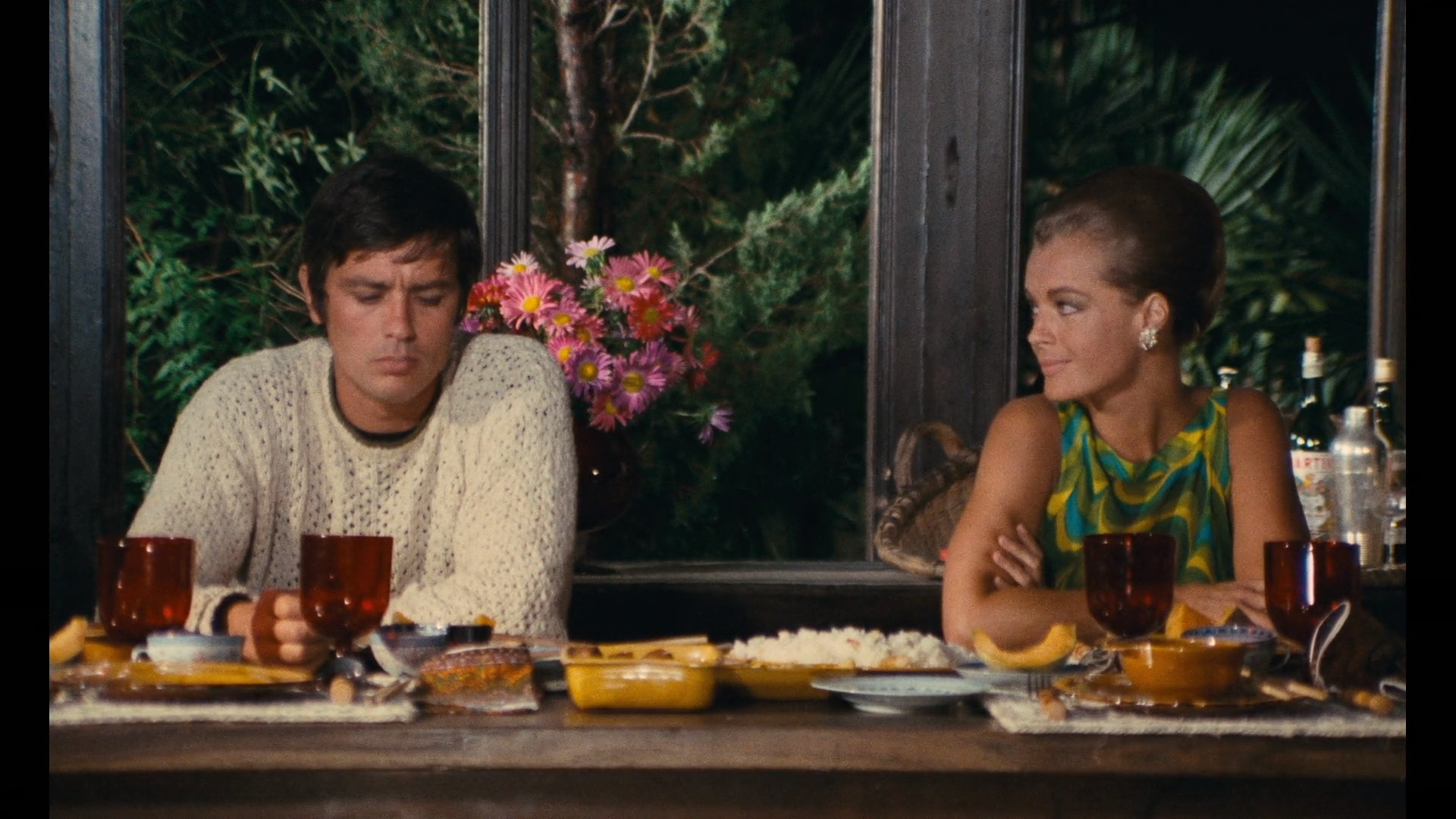
What a strange little family they make. One evening they sit down for a dinner of Chinese food of all things. Marianne and Harry went to town together — a perfectly romantic getaway — and Jean-Paul took Pen away to the sea.

Whether or not it’s an act of retaliation or not, it’s easy to perceive it as such. They sit around working their chopsticks, fidgeting, and trading glances. If the movie is about something it would be this. The elephant in the room as it were.

However, there is a lack of an interior when you break the film open and that’s part of what puts it below its contemporaries, at least in my estimation. There are gorgeous exteriors with gorgeous people, fabulous sartorial style, and not much else.

It’s a testament to the performers and their innate charisma because they make it compelling. But it lacks the kind of commentary or wit of The Graduate or even the fabular qualities of The Swimmer.

The final act of La Piscine takes it into the territory of a true thriller. For the first time, something happens that might have its place in a Henri-Georges Clouzot picture or even Jean-Pierre Melville. Until this dramatic inflection point, it’s a work of latent psychology and desire. I’m not sure if the shift is warranted or not.

However, there is something else worth noting. As of 2024, Alain Delon was still with us, but all his primary scene partners are all gone. Birkin died most recently in 2023, and both his friends, Romy Schneider and Maurice Ronet, were lost to us too soon.

This realization adds a different kind of knowing austerity to the proceedings, though it’s hardly required. Even without this insider information, we leave the film mostly empty, and it’s difficult to know whether this is a statement or merely a formalistic reality.

3.5/5 Stars

Note: This review was written before Alain Delon’s passing on August 18, 2024. 

The Intruder (1962)

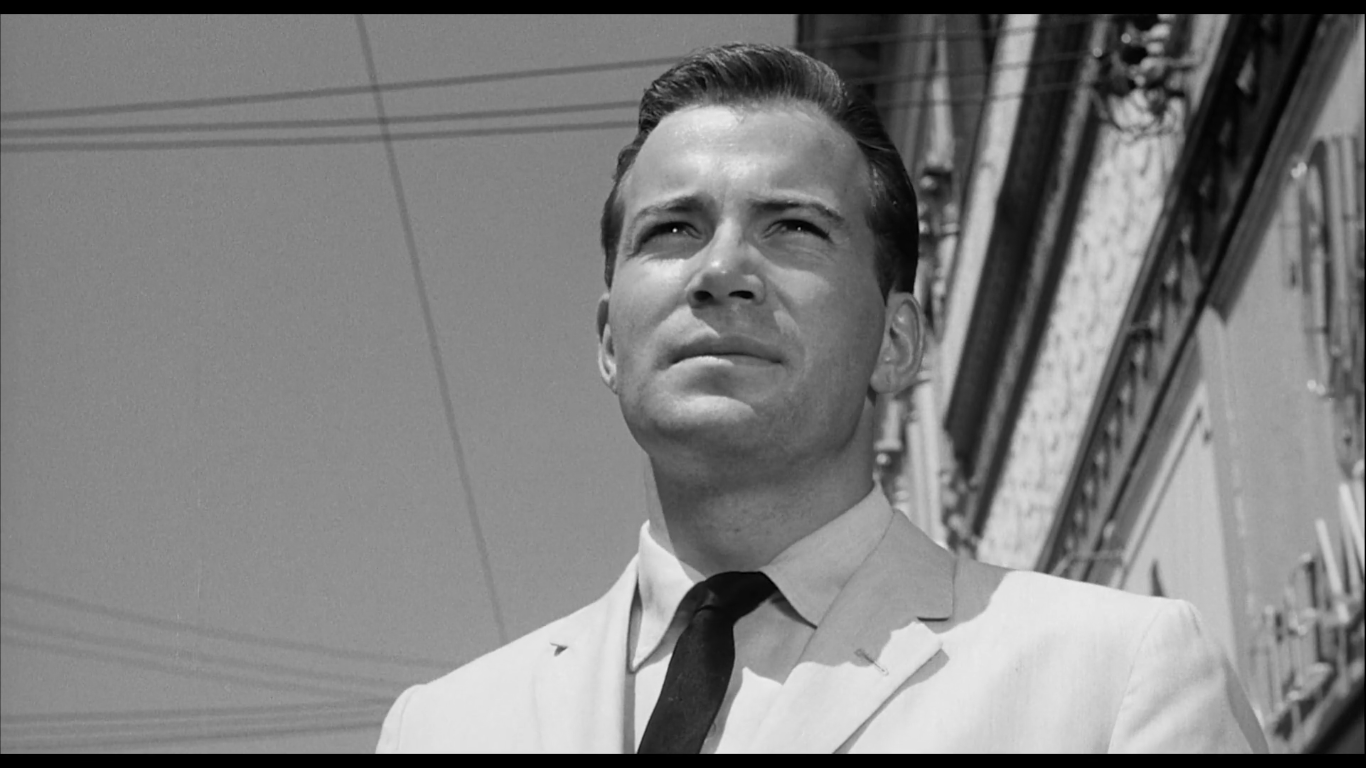
Before he became a caricature of his former self, even before the days of Captain Kirk and pop culture canonization, The Intruder is a reminder of something else in William Shatner. He still feels ripe and almost dangerous with a charisma that has yet to be calcified or even corroded by time.

The same could be said of Roger Corman at least if you only have a perfunctory understanding of his career like me. He is the master of fast and cheap entertainment turned out for profit at a rapid rate. Surely, The Intruder doesn’t fit into the patchwork of his career.

Before we blandly christen him the “King of Schlock,” a more nuanced observation seems to be in order, considering both his talents and his ambitions. Others must speak to this more knowledgeably. All I can say is that this specific film totally obliterates any preconceived notions of what we are getting.

Shatner stars as Adam Cramer, a self-described social reformer with a skeevy look in his eye to go with a cool disposition. He’s headed out on the latest bus to help the locals fight the government implementation of integration in the town’s high school. Under the guise of the freedom-loving Patrick Henry Society, he’s ready to stir up some action. Give me Liberty or Give me Death (though mostly death). In other words, a real creep.

He sets up shop at the local hotel — it bleeds with crusty southern hospitality — feeling like a stronghold for a racist status quo. He’s put up by a sweet ol’ lady while his next-door neighbors, a gregarious salesman (Leo Penn), and his flirtatious wife (Jeanne Cooper) don’t leave much to the imagination. We know what they’re doing and they don’t much care who knows it. It’s a good thing because the walls are especially thin in a place such as this.

Although the film is primarily white-centric, for a white audience, there are some black characters playing crucial roles on the periphery. One is the local minister, a man of faith who takes his calling seriously. He exhorts the youngest members of his congregation in meekness and prays over these 10 lambs from his flock. He’s well aware they are about to enter the valley of the shadow, a space no young person should have to be subjected to. Still, the letter of the law in some ways falls on their side in the face of threat and injury.

One evening on a grand old southern estate Cramer holds a rally to rile up the townspeople, spewing all sorts of epithets, and appealing to their spirit of discontentment.  The NAACP is a communist front, headed by a Jew. It’s all a sham. The government can’t be trusted and The Patrick Henry Society is tasked with preaching the truth — at least his version of it.

As we watch the masses be swayed and he skillfully plays them like a marionette with public opinion in his palm, the deviousness comes into full color. He’s a Lonesome Rhodes-type figure who uses his own magnetism to get what he wants.

When the whites, armed with their newfound ammunition, take to the streets ready to victimize a black family driving home the movie becomes too real. It’s almost like the film was overly cognizant of its time with an incisiveness toward the hot-button issues of the age. Even today it feels gutting to watch whether fiction or not. The images strike too close.

Shatner riding in a hooded caravan with a gang toting a cross through the black community is horrifying. There’s a faceless dynamiting of a church with the faithful minister left for dead. The only other time I recall something comparable in mainstream Hollywood was the mobbish vitriol in Phenix City Story a few years earlier. To Kill a Mockingbird is wistfully nostalgic in comparison. Right or wrong, The Intruder has no such illusions.

Cramer is a man who happily takes a prison sentence telling a wealthy backer (Robert Emhardt) to never underestimate a jail sentence — remember Socrates, Lenin, Hitler… How you can conflate all these men says so much about you. And of course, there’s no mention of Dr. King. This is not the kind of man to dignify a fellow reformer on the other team with an acknowledgment.

The most curious figure (aside from Cramer) is Tom McDaniel (Frank Maxwell). He’s a southern man. He’s been inculcated with the prevailing sentiments of the South, but he also seems to have a higher standard. It’s partially because he’s the herald of the local news — he has journalistic standards — but there’s something else we have to spend time with him to figure out. His wife disagrees. Grandpa wants to disown him. His daughter (Beverly Lunsford) is probably still trying to make sense of it all. Regardless, he believes the law must be carried out.

I don’t know if we ever get a clear indication of why. Although he’s not the only one we can say this about. I’m not sure if we ever get a precise reason for Cramer’s actions either. He’s not a Southerner and there’s never a clear indication he’s truly aligned with the white community, at least not when it gets right down to it. He’s not a Southerner. But he knows he can manipulate them for his purposes.

My fear is that the film is still too much the pipe dream of well-meaning moviemakers where southern guilt all of sudden turns a few solitary individuals into men and women of conscience. Maybe this is historically true. I don’t know, but for all the stories that ended like this with a life saved and a wolf in sheep’s clothing defrocked, we know that history was not always so forgiving. It is strewn with the names of men and women who were degraded, intimidated, and often killed.

That’s why part of me rumbles with a deep sentiment that must be acknowledged. It wants to cry out and warn folks not to see this movie. The inclination begins when they threaten to flip a black family’s car and reverberates again when a young white woman gets coerced into crying rape against a fellow black student named Joey (Charles Barnes).

There’s almost something indecent and profane about it as it echoes things that really came to pass. It’s this fine line I don’t know quite how to reconcile. Because I’ve rarely seen a movie this fierce and unflinching for the era, and yet in the same breath is this what is required then or now? It’s an open-ended rhetorical question. I don’t know the answer.

If the box office receipts are testament enough, the movie didn’t make much of a dent but for entirely different reasons. Roger Corman seems to have made his own implicit response. He never made another such picture again instead relegating his talents to Vincent Price Poe dramas and other such fare blessing the film world in another way. Yes, it was cheap entertainment, but also a breeding ground for some of the up-and-coming stars of the New Hollywood generation.

He did in fact make his own diagnosis of the film’s lack of success, which might be telling if not altogether definitive:

“I think it failed for two reasons. One: the audience at that time, the early sixties, simply didn’t want to see a picture about racial integration. Two: it was more of a lecture. From that moment on I thought my films should be entertainment on the surface and I should deliver any theme or idea or concept beneath the surface.”

Still, with a man’s face buried in the grass, a man fallen from grace head first, The Intruder totally reframes my perceptions of the now chubby anachronism of Shatner’s persona. I won’t say it redeems it so much as it augments it with a kind of duplicitous venom. It’s a new astounding contour to his career.

I’m still not sure if that’s a hearty recommendation or not. This is a very triggering film and a deeply onerous watch. The discerning viewer should make their own judgments. Because for some this kind of burden might be necessary. For others, it might be too heavy to bear.

4/5 Stars


Note: This review was written before Roger Corman’s passing on May 9, 2024

David & Lisa (1962)

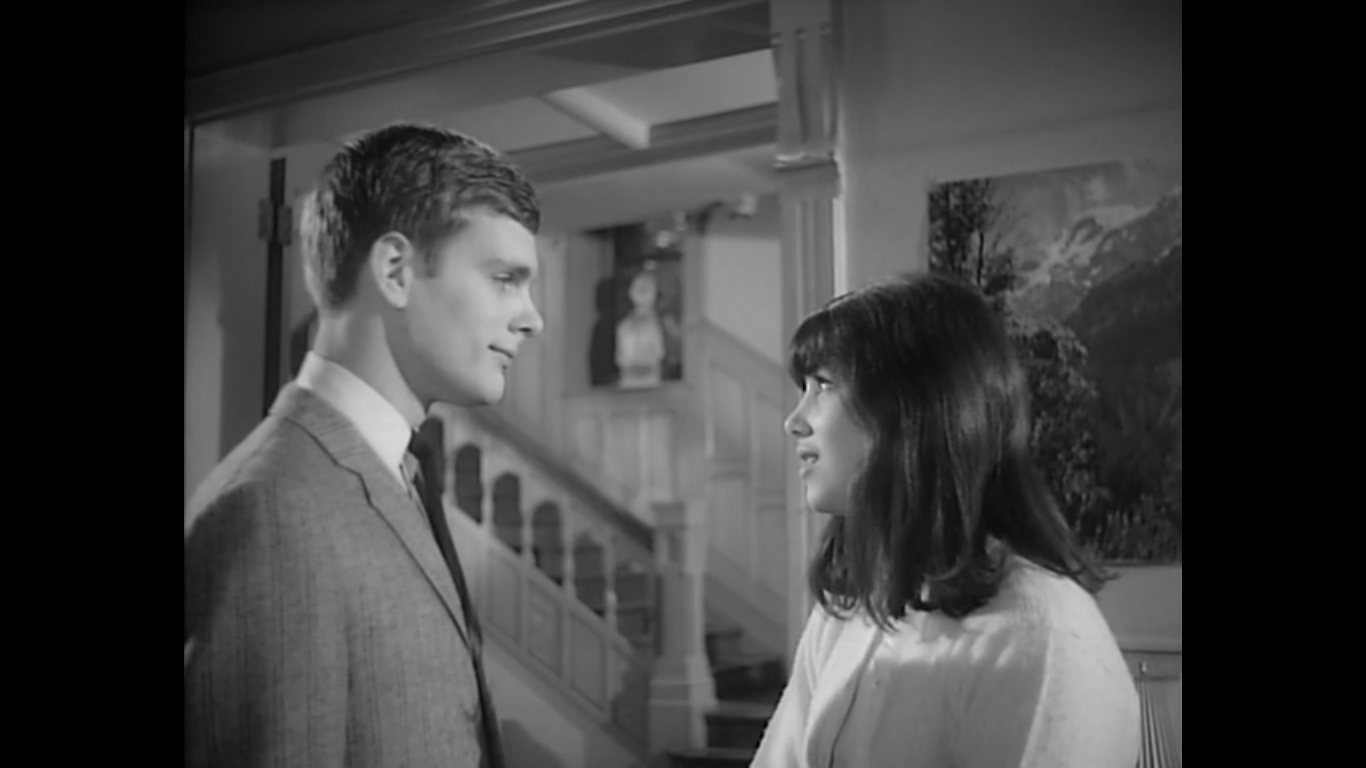
Keir Dullea is an actor who will always be most prominently remembered for Stanley Kubrick’s 2001: A Space Odyssey. He’s Dave of pod door fame. However, part of me wants to promote him as the lead in David and Lisa because this film from Frank Perry, in its quiet empathy and emerging relationships, feels more deeply like his film.

It relies heavily on his turn as a grim young man with OCD-like symptoms. As his mother drops him off at a psychiatric center for a brief stint, he immediately carries himself as a youth too smart for such an establishment. He’s an aloof loner with cold temples and the most severe eyes. Surely, this is a story about David’s transformation.

But the ampersand in the title reminds us that he only works in tandem with another life. Likewise, Dullea’s performance gains more meaning when he is put up next to Janet Margolin in her screen debut. She causes him to change and shift even as he elicits something out of Lisa.

Since I got my first introduction to Margolin in Take The Money and Run and became instantly smitten, it’s fabulous to see her in another role that plays so exquisitely off her inherent human charms. Lisa is a young teenager with a penchant for rhyme. If we want to diagnose her, she has schizophrenia, but the beauty of the film is watching people reach out to each other, instead of categorizing each other dismissively.

Even someone like Howard Da Silva is a pleasant surprise. In the old days, he mostly played conniving heavies in film noir; here he settles into the role of benevolent authority quite easily, and it’s a fine look for him. He wears it well. David is so quick to distrust him and what he stands for. Over time, the authenticity is so apparent that even he is won over. He comes to appreciate the place as home. It’s a space to belong.

However, if I’m honest, David and Lisa is the kind of film that feels like it might be frowned upon today if we know nothing about it. Still, there’s a tenderness in the love story that I can’t quite shake. It’s disarming and totally flies in the face of expectations.

I realized that whatever way you take it, there are these kinds of overt metaphors to the film. People who are different than the society around them somehow find solace in this shared sense of otherness. He meets her with rhyming and she meets him in a way by not reaching out with human touch. The things that ostracize them also have the inertia to draw them together.

If these are idiosyncrasies, then they respect them and respect each other enough to take their predilections seriously. Meanwhile, “normal” well-adjusted people at the local train station castigate them as weirdos better resigned to the funny farm.

But even when David makes a brief return home, the perceived distance at the dinner table and the manifold hangups of his own parents, make it apparent we do not live in a society of the well-balance and the imbalanced. Those in the former category either do a better job at hiding it or they have enough money to smooth it over. Success and status can cover a multitude of social sins, at least on the surface.

There’s one particularly crucial moment where I became mesmerized with Margolin watching her sway with the metronome although it precipitates a kind of demonstrative ending that doesn’t do the story much service. In one moment of annoyance, David lashes out at Lisa only to work tirelessly to win her back. Their chemistry is so fragile, held together by wisps of gossamer thread, but that makes it all the more vital to maintain.

When Dullea scampers up the Philadelphia steps, and they share a moment so much unspoken emotion is carried with them in the scene. It’s only the two of them. She no longer rhymes. She’s fully herself. “Me,” she says.

He reciprocates by doing the bravest most vulnerable thing he can, asking her to reach out and touch him. I remember a line of prose by C.S. Lewis about love being vulnerable and this lasting image is a testament to this truth. Here the pain and transparency brim with sympathy.

David and Lisa can be characterized as a romance, although it is one where the leads never kiss, never embrace and only touch in the final frame. Somehow it’s packed with more import than many other films claiming the same genre conventions. Because what some other films forget is that love and affection, romance, they all require so much more than physical touch. It’s about warmth and stillness. Willing to open yourself up and be hurt by other people even as you stretch yourself as a human being.

For a film about psychological disorders from so many years ago, there’s a gentle subtlety to David & Lisa; it’s quite extraordinary, and Dullea and Margolin make a wonderful pair together. It’s only a shame they were not both allotted even more high-profile vehicles commensurate with their talents.

3.5/5 Stars

Double Feature: Requiem for a Heavyweight (1956) and (1962)

Rooney, Gleason, and Quinn in the film version

Requiem for a Heavyweight was an early live television production that was so popular it garnered a feature-length adaptation a few years later.

It’s relatively easy to see the merits in both because although they enlisted the same director and screenwriter, the actors and the medium do quite a lot to make them feel textured and different. I couldn’t necessarily pick a favorite.

The original is bare-boned but intimate, and there’s a darker more caustic theatricality to the film version. It really comes down to preference. Here are my thoughts on the two versions:

Palance and Hunter on Playhouse 90

Requiem for a Heavyweight (1956)

This early showcase of the Playhouse 90 live TV format introduced the fragile and most sensitive version of Jack Palance. He’s a hoarse and husky-voiced journeyman boxer named Mountain McClintock.

One of his greatest claims to fame was that he was almost heavyweight champion of the world. But he’s most proud of his integrity. In 111 fights, he never took a dive. That includes his most recent bout. He got pulverized and still managed to make it seven rounds.

Between Rod Serling’s script — the writer called upon his own memories as a one-time boxer — and Palance’s endearing performance, you have the emotional heart of the tale. Because Mountain is proud and principled in his own way. He didn’t get into fighting to murder people or make a ton of money. It’s just the only thing he’s ever known — the only thing he was good at — and he took solace in it.

Now he’s on the way out. The Doc says he’d better quit before he earns more permanent damage. Somehow he’s impressionable like Lenny in Of Mice and Men. Despite his physical presence, he needs protectors and others to look after him. There are certain people in his corner he deeply trusts just as all his words and pearls of wisdom come from the mouths of others.

The real-life familial bond of Keenan and Ed Wynn is equally key because they play the two most important people in Mountain’s life. There’s Maish, his manager, who’s currently in a bit of a bind. Then, Army, his cutman, who’s more resigned to the inevitably around him. He’s seen a lot.

Keenan can exhibit a kind of gruff intensity role to role, but since I know Ed Wynn as such a jovial figure, I almost didn’t recognize him. Both of them exhibit an earnestness in their respective parts. Maish has compromised his integrity and now feels bitter toward Mountain, a has-been fighter he sunk so much time and money into. How is he supposed to get any recompense?

Mountain looks a bit pitiful walking into a job agency with no work experience and a kisser as roughed up as his. However, the attendant behind the desk (Kim Hunter) sees his goodness and drops her business spiel for something more personal.

She responds with heart, tracking him down to his favorite watering hole and vowing to try and help him resurrect his life. The bar serves as the graveyard and burial ground for all the hard-up fighters who wither away inside their own heads. Mountain might easily be headed toward this end and worst yet, he might lose his dignity in service of Maish’s debts…

We must remember what the medium of television accorded the makers. Visually, they were working in fuzzy black and white with tiny boxes of composition but also a more familial viewership. This ultimately impacts the creative choices and the film takes on a hopeful final note.

It’s fascinating to watch the production since it was being taped live and throughout I only noticed one flubbed line rushed over by a mother on the train. Otherwise, around all the orchestrating and simple sets, there’s very little taking us out of the story and disrupting the primary performances. Given the restraints, it’s quite a startling achievement.

3.5/5 Stars

Quinn and Gleason

Requiem for a Heavyweight (1962)

Ralph Nelson was the same director who filmed the original TV version. Instantly the big screen is more cinematic thanks to the subjective point of view in the ring. We see a solemn Jackie Gleason, the yelling Mickey Rooney, both standing just outside the ropes.

Then, the announcer calls out the name Cassius Clay, and there he is in all his youthful glory beating back the camera! It does feel like a bit of a gimmick, but then we finally see the face of Anthony Quinn battered and bruised and we have our movie.

I assumed the older Gleason was Army and having just recently been introduced to what Mickey Rooney was capable of in The Comedians, it seemed only too reasonable that he would play the more mercurial Maise. How wrong I was.

Quinn seems especially old for his part, but it’s intriguing to see how his character mythology was altered to fit his own Hollywood legacy. Mountain Rivera came out of New Mexico, he ditched school in the 6th grade (instead of 9th), and he’s been fighting longer than Palance’s counterpart. Still, like Palance, Quinn’s larynx sounds like it’s been beaten out of him positively eviscerated by his years of punishment in the ring.

The movie’s milieu is not too far away from The Hustler (also featuring Gleason) or the sensibilities of a TV-to-film scribe like Paddy Chayefsky. The jump to film also means it owns a sharper even more melancholic edge than its small-screen counterpart.

Maish (Gleason) is tailed and tracked out into the ring reminiscent of The Set-Up, and he’s threatened into paying up on his recently accrued debts. He needs the cash fast. Later, he willfully gets his dwindling prize fighter drunk. It’s all part of a ploy to keep him from getting a real job so he can earn money as a sideshow attraction in some trumped up wrestling showcase.

This time it is Julie Harris, who is tasked with helping Mountain turn a new leaf in his life. Her character never shared consequential time with Maish in the original version, but here they share dialogue on a stairwell adding an alternate dynamic to the picture. He says, “The rich get richer and the poor get drunk.” Mountain’s finished, and he’s skeptical of any do-gooder looking to peddle their charity. The edge of cynicism is deeply entrenched.

Also, in the previous rendition, there’s this happy denouement as we recognize Mountain entering into his post-boxing career. It’s possible for him to make something of himself and gain fulfillment beyond the ring by imparting his knowledge to younger generations.

Here it almost feels like the movie has been shifted and the focal point is Maish. Because he is the person who must come to terms with what he has done by totally denigrating Mountain for his own desperate gain.

When he’s marched out into the ring, totally racialized and trivialized, it sears with a level of pain television would have never dared. And we realize all the self-fulfilling prophesies have come true. Mountain really has become the geek, a kind of carnival show attraction, but it’s not out of his own desperation. He’s doing it for someone else. Mountain willfully subjects himself to the ignominy, but Maish is the one who must live with his conscience. I’m not sure what’s worse.

3.5/5 Stars

Vincente Minnelli Films (1958-62)

Gigi (1958)

Lerner & Loewe’s adaptation of Colette’s Gigi is a picture accentuating the France of Hollywood’s most opulent dreams and confections frequented by the consummate French people of the movies: Maurice Chevalier, Leslie Caron, and Louis Jordan.

Whether it’s Ernst Lubitsch or Billy Wilder or Vicente Minnelli, Chevalier doesn’t change much. He’s convivial with the audience existing just on the other side of the camera. He gives off his usual cheeky, harmless charm that doesn’t always play the best seeing as his first tune is about the litters of girls who will grow up to be married and unmarried young women in the future.

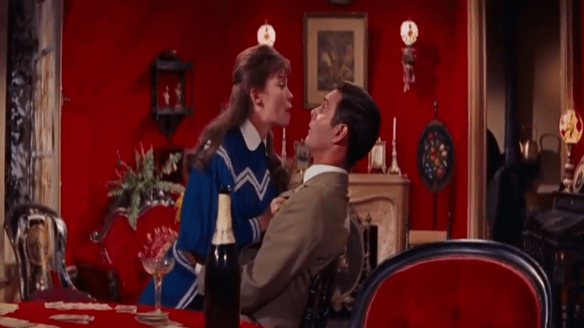
Gigi (Caron) is one of their ilk, a carefree gamine who lives under the auspices of her Grandmama’s house, a startling domicile touched by Minnelli’s charmed palette of deep red.

In some manner, Gigi seems to represent the worst of Minnelli. Yes, it was wildly popular in its day, but all of its manicured embellishment and immaculate set dressings feel mostly fatuous and merely for their own sake. While one can easily appreciate the pure spectacle of the thing, the director’s best pictures show a deep affection for characters.

Here all manner of songs and tête-à-têtes are cheery and bright, while never amounting to something more substantive. It’s easy to suggest the movie revels in its own frivolity. Gaston (Jordan) is a ridiculously wealthy young man and Eva Gabor is his companion, though the gossips get ahold of them. They’re not in love.

Another primary reservation with the picture is how Leslie Caron is summarily stripped of most of her powers. At times, dubbing feels like an accepted evil of these studio-era musicals or a stylistic choice of European maestros. However, in Caron’s case, not only is she not allowed to sing, she can’t talk for herself either (dubbed by the cutesy Betty Wand). I might be missing something, but this seems like a grave misfortune.

You can add to this fact the further grievance she never really has a traditional dance routine, and there’s nothing that can be appreciated about the picture in comparison to the crowning achievements of An American in Paris. All that’s left is to admire is her posture and how she traipses across the canvasses Minnelli has devised for the picture. This alone is hers to control, and she just about makes it enough.

My favorite scene was relatively simple. Gigi and Gaston are at the table playing cards, and they exude a free-and-easy camaraderie. If it’s love, then it’s more like brother and sister or fast friends who like to tease one another. It isn’t yet treacly with romance. Instead, they break out into a rousing rendition of “The Night They Invented Champagne,” which distills its point through an exuberant melody.

The lingering power of the film is how it does its work and grows on me over time. It considers this not totally original idea of trying to become who you are not in order to please others. Gigi must learn the breeding and the etiquette, acquire the clothes, and in short, turn herself inside out in order to fit into rarefied society.

Gaston doesn’t want her to be like that, attempting to replace all the elements of her character that make her who she is. This is what he likes about her. If it never turns to eros, then at the very least, it’s shared affection. Caron and Jordan make their auspicious entrance at Maxim’s and, it feels like a precursor to Audrey Hepburn’s introduction in My Fair Lady. It’s not a bad comparison since most of the film is filtered through speak-singing.

Does it have a happy ending? In a word, yes, but Chevalier singing about little girls doesn’t make me any less squeamish the second go around. Thankfully, Minnelli is no less of a technical master with Gigi. Still, film was not meant to live on formalistic techniques alone.

3/5 Stars
Bells Are Ringing (1960)

The title credits are so gay and cheery with so many admirable names flashing by on the screen, it almost negates the sorry realization that this is the last go-around for the famed Arthur Freed Unit at MGM. Pick out any of the names and there’s a history.

Say Adolph Green or Betty Comden for instance; they were the architects of some of the era’s finest. Anyone for Singin’ in the Rain or The Band Wagon? The movie spells the end of the era, though there would be a few later holdouts.

Like It’s Always Fair Weather, Will Success Spoil Rock Hunter?, or Pillow Talk, Bells Are Ringing is well aware of its cultural moment, and so it reminds us about the necessity of telephone answering services. Actually, one in particular called Susanswerphone.

It’s easy to love Judy Holliday from the outset as she’s playing crazy gymnastics on the telephone lines because automation hasn’t been created yet. Originally, she was a comedienne best remembered for a squeaky voice and a ditsy brain. Bells Are Ringing, which she originated on the stage, allows us to see a different contour of her movie personality, one that might as well hewn closer to the real person.

She does her work ably only to suffer through a dinner date from hell (with her real-life boyfriend Gerry Mulligan). However, we couldn’t have a movie without a dramatic situation.

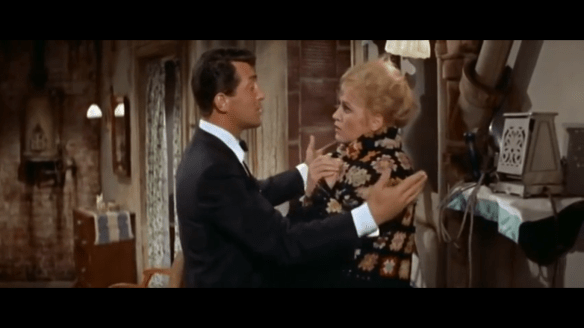
The staff are forewarned never to cross the line to “service” their clients. But she breaks the cardinal rule, overstepping the bounds of a passive telephone operator and becoming invested in the lives of those people she communicates with over the wires. Not least among them, one Jeffrey Moss (Dean Martin).

She’s just about lovesick over his voice. It’s no mistake that she puts on her lipstick before ringing him up to remind him about a pressing engagement, as if he can take in her appearance intravenously. Alexander Graham Bell never quite figured out the science behind that.

It’s not much of a mystery to us what Moss looks like. Because if you read the marquee, you know it’s Dino. But she doesn’t know that and scampers up to his room to save him. Surely there’s a Greek tragedy trapped in here somewhere. If it’s not about falling in love with a reflection or her own work of art, then it’s about the sound of a man’s voice. She wants to help him gain confidence in his own abilities as a writer.

But first please allow me one self-indulgent aside. Dean Martin had a point in unhitching himself from Jerry Lewis. Sure, Lewis had a groundbreaking career as an actor-director, but Dino was so much more than The Rat Pack and his TV program.

The string of movies he took on throughout the 50s and 60s never ceases to intrigue me. He could go from The Young Lions, Some Came Running, and Rio Bravo to pictures like Bells Are Ringing and Kiss Me Stupid. For someone with such a distinct professional image, he managed a steady array of parts.

The number “Just in Time” in the park is made by Holliday in striking red and Dino crooning through the night air. There’s a goofy brand of showmanship between them that we were lucky to see in many of the old MGM pictures. It’s their own rendition to complement Astaire and Charisse from Band Wagon showcasing Minnelli at his best and brightest as we are brought into a moment of fluid inspiration where all facets of the production look to be working on high cylinders.

At the nearby party, Holliday becomes overwhelmed by the Hollywood glamour scene, as all the folks jump out of the woodwork and start smooching as Martin descends down a spiral staircase. This only happens in the movies, and yet it’s a summation of her blatant otherness. She doesn’t fit in this crowd where everyone is on first name basis with the biggest names in the business (“Drop That Name”). It seems like their worlds are slowly drifting apart as her secret life is about to totally unravel.

However, Martin joins forces with a musical dentist and Mr. impressionist himself, Frank Gorshin, who puts on his best Brando impression as they bring the movie to a striking conclusion. The same woman has changed all their lives for the better. Now they want tot return the favor. Moral of the story, get yourself an answering service, especially one with someone who cares like Judy Holliday.

3.5/5 Stars
Two Weeks in Another Town (1962)

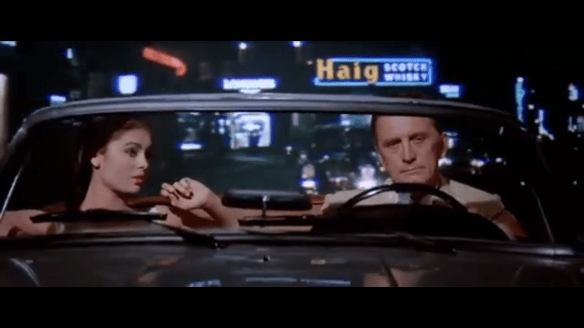
It might play as unwanted hyperbole, but when I look at Two Weeks in Another Town, it almost feels like a generational predecessor to Heaven’s Gate. Although Vincente Minnelli’s picture is well aware of the old hat and the emerging trends of cinema, it’s raging against the dying of the light, as it were. He subsequently bombed at the box office, and we witnessed the cinematic death knell of an era.

The director makes the transition from b&w to color well enough as you would expect nothing less from him. Kirk Douglas has what feels like a standard-issue role seething with rage thanks to a career hitting the skids. He’s bailed out of his sanitarium by a collaborator from the old days and shipped on-location to Rome.

There we get our first taste of a demonstrative Edward G. Robinson playing the tyrannical old cuss Maurice Kruger. He’s right off the set of the latest Cinecitta Studios big screen epic with George Hamilton, an Italian screen goddess, and Vito Scotti working the action.

But Two Weeks in Another Country is just as much about what is going on behind the scenes of the production. Robinson and Claire Trevor together again have a far from congenial reunion after Key Largo generations before. They’re part of Hollywood’s fading classes, though they’re far from relics.

Minnelli takes the personal nature of the material a step further. In a screening room watching The Bad and The Beautiful, the self-reflexivity has come full tilt as Douglas wrestles with his image onscreen from a decade before.

Meanwhile, Cyd Charisse makes her entrance on a jam-packed road flaunting herself in the traffic. She’s charged with playing Carlotta — Jack’s former wife — she’s bad and if her turn in Singin’ in the Rain is any indication, she’s fairly accomplished in this department. It’s almost a novelty role because she’s rarely the focus of the drama, only a sordid accent.

The pieces are there for a truly enrapturing experience as only the olden days of Hollywood can offer. I’m thinking of the days of Roman Holiday, sword and sandal epics, and La Dolce Vita. The movie is a reaction to all of them in the flourishing TV age with its glossy romance in beautiful cars, glorious rotundas, and luscious beaches.

It’s not bad per se, and yet it seems to reflect the very generational chasm it’s readily trying to comment on. George Hamilton utters the movie’s title and it’s all right there — utterly temporal and disposable in nature.

These moments and themes feel mostly empty and, again, while this might be precisely the point, it goes against our human desires. Either that or the movie is begging the audience to connect the dots. We want the critique wedded with entertainment. Because most of us are not trained to watch movies from a objective distance. Our mental wiring does not work like that especially when it comes to epics.

Jack is taken by a young starlet (Dalia Lavi) he meets by chance, thanks to her proximity to the troubled production. His and Veronica’s relationship becomes one of the focal points and one of the few deeply human connections in the picture.

Later, Jack’s bellicose benefactor, Maurice, falls ill. The added melodrama is to be expected along with raucous slap fights and the scramble to get the picture in under budget before the foreign backers try and pull out. The old has-been comes alive again — momentarily he has a purpose and companionship — until he’s besieged by new pressures.

Although it was purportedly edited down, it’s not too difficult to observe Minnelli doing his own version of Fellini’s earlier movie from 1960 with the dazed-out remnants of an orgy and a young Leslie Uggams singing her torch songs.

The apogee of the entire picture has to be Douglas and Charisse tearing through Rome in a mad fury. It’s the craziest, most chaotic car ride that can only be conceived in Hollywood; it’s so undisciplined and wrenched free of any of the constraints of realism. The back projections up to this point are totally expressionistic.

And as the car lurches and jerks around we realize we are seeing the film crossover: What we see behind the scenes and on the screen are one and the same, merely facades, and little more. It’s the kind of unbridled moment that could easily earn derisive laughter or genuine disbelief. There’s no way to eclipse the moment.

Instead, what follows is a cheery denouement out of a goofball comedy. Jack resolves to put his life back on track opting to leave behind his young leading man on the tarmac with a girl until they meet again. Hollywood, as is, was not totally dead — there was still some light in the tunnel — but if the box office receipts are any indication, tastes were changing.

3/5 Stars

CMBA Blogathon: Classic Hollywood Stars on The Dick Cavett Show

This is my entry in The CMBA Spring Blogathon: Big Stars on the Small Screen

There are several more recent late-night hosts like Stephen Colbert or Conan O’Brien who have managed to use the truncated form (and podcasts) to try and go deeper with guests beyond surface-level pleasantries. Colbert even had Dick Cavett on his show, and I’m sure he’s not the only one.

However, as I’ve pored over more and more of his interviews over on Youtube, it feels like Dick Cavett was often the gold standard for lengthier, in-depth discussions will all sorts of talents and luminaries. He had several Beatles on his show, boxing champions, prominent thinkers, along with plenty of Classic Hollywood talent. And his show in its various forms acted as a representation of the dying art of the extended interview.

Cavett’s gift seemed to be his capacity to somehow straddle two worlds. He was an intellectual with a dry comic wit, but also a midwesterner who dressed mostly innocuously and came off unassuming. He looked establishment and yet crammed his shows full of personalities like Janis Joplin and Muhammad Ali.

Often the pairing of his guests seems downright peculiar (ie. Joplin and Raquel Welch for one). However, when he was given the opportunity to sit down with one individual and have a conversation, there were often some wonderful tidbits that came out in the process. And he has a non-grating style of asking the questions we want to know without making them sound totally asinine. He also normally took time to listen.

It does feel like he sits down, not for an interview, but for a chat with a friend. And in some cases, people like Groucho and Brando became his friends in real life even as he did his best to coax answers out of the most reticent guests by making them feel comfortable.

I could spend a significant amount of time just discussing some of the directors he had on his show like Alfred Hitchcock, Orson Welles, even Frank Capra, but I thought I would focus on a handful of the stars. Here we go:

Groucho Marx (1969 and 71):

Cavett was quick to praise Groucho as one of his heroes, and it’s fun to watch them together full of laughter but also genuine affection. You can tell the appreciation is mutual between them and it makes the discussions lively.

One anecdote involves Groucho’s encounter with Greta Garbo in the elevator. Not seeing who it was, he pulled her hat brim way down over her head, and when she gave him a withering look, he apologized and said, “I’m terribly sorry, I thought you were a fellow I knew in Kansas City.” That’s Groucho to a tee.

In one candid moment, Groucho says he doesn’t read the news anymore before bed because it’s just a remake of what he’s been hearing all day. It goes to show there’s nothing new under the sun or in the news cycle.

Fred Astaire (1970 and 71):

This is a lovely set of interviews. Astaire is quick to deflect praise and mentions how he doesn’t like watching his old movies because he’s always thinking about how he could do it better. He also provides some insight on a few of his numbers from films like Funny Face. It turns out he’s still got it and besides dancing with Dick, he does a seated rendition of “A Fine Romance” much to the audience’s jubilation.

It turns out his grandson likes the Beatles, and Astaire even owns some of their records himself. On top of his career as a dancer (or “hoofer”), he wrote quite a few songs of his own. I recall seeing him do a rendition of his composition “City of the Angels,” but I could not find it anywhere online.

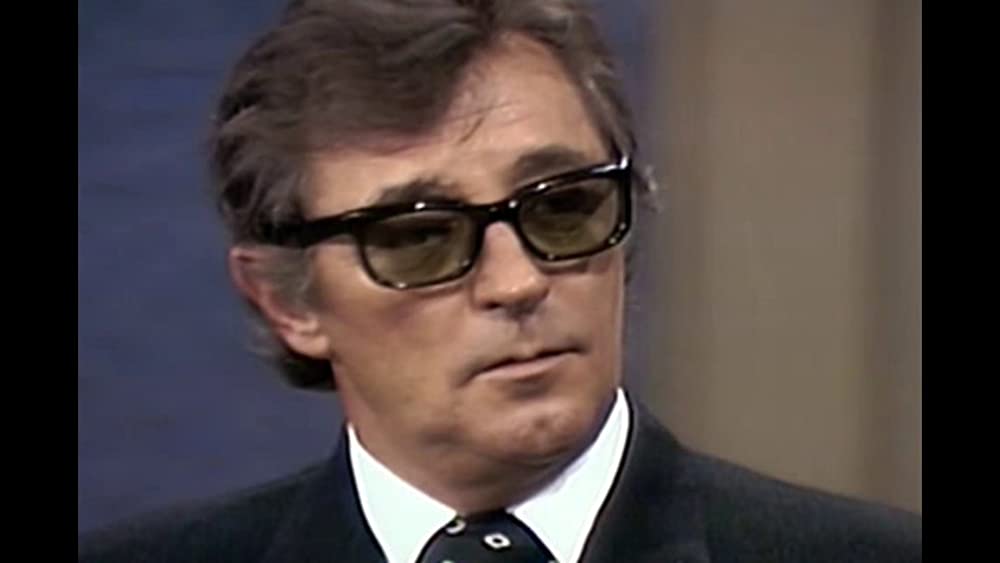
Robert Mitchum (1971)

Mitchum is an actor I’ve grown to admire over the years, and Cavett makes a point of acknowledging he was known in Hollywood as a tough interview. However, he’s surprisingly forthcoming. He talks about his school years, his time in a southern chain gang, his famous drug bust, and also insomnia.

He recounts sitting in on a Hopalong Cassidy movie with his wife early in his career and eavesdropping on a lady saying, “That is the most immoral face I’ve ever seen!” He made a career out of it starting as a “mule” for RKO as he called it. Since the air date is around Ryan’s Daughter’s release, he also mentions an experience when he was in Ireland with Richard Harris, and he got in an altercation with a local who mistook Mitchum for Kirk Douglas! Otherwise, I’m impressed by his use of words like convivial and peregrination.

Bette Davis (1971)

Bette Davis is such a vibrant personality, and she regales the audience with her early career, her battles with Warner Bros, and how she ties into Gone With The Wind lore. She calls Eroll Flynn the most beautiful man to ever live, and the most charming, but in her estimation, he could not have played Rhett Butler.

She also shares how she perceives Now, Voyager would have developed after the credits, in that her protagonist would have ultimately ended up with Claud Rains’ character because he had a strength perhaps missing from Paul Heinreid. Davis talks more about her friendship with Rains — a man she called “witty, amusing, and beautiful.” She even takes time to mention her most repulsive screen kiss with an actor who (in 1971) was still alive and therefore left nameless. Although she is quick to praise some English actors including Richard Harris and Dirk Bogarde.

Marlon Brando (1973)

Marlon Brando feels like another person who was notoriously difficult to pin down. Here he’s quite candid about his thoughts on racism against minorities and, at the time, the quite controversial boycott of the Academy Awards.

When Cavett tries to talk about acting style, Brando makes the case that all human beings are acting all the time in life just to survive. Cavett’s trying to get at how what Brando does is far and away from what anybody else can manage, but perhaps it’s semantics.

Brando goes on to say that acting is a good business — a worthy craft — but he doesn’t think of it in terms of art like other people. It’s intriguing since many would laud him for being a part of some of the most artistic production of the 20th century. (Side note: Brando uses the word “inured” which I thought was pretty impressive).

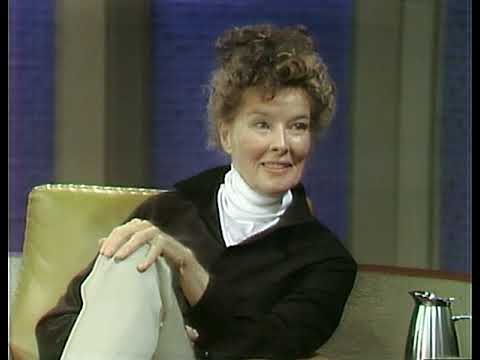
Katharine Hepburn (1973)

Like Bette Davis, Katharine Hepurn was considered for Gone With The Wind as she had working relationships with the producer David O. Selznick and the original director George Cukor. She and Cavett also spend some time talking about Humphrey Bogart, and Hepburn says he was a gent with good manners and completely different than his persona. She said Spencer Tracy always seemed a bit uncomfortable as a man being a professional actor, but Bogey seemed to love it and be proud of his job.

She calls the movie business thrilling, but she had no interest in immortality or people remembering her in the year 2050. As we’re now only a couple decades away, I can say that people certainly will remember stars such as her, and we’re thankful for their movies and interviews like these to help keep their stories alive for ensuing generations. I count myself among this lucky group who can reap the benefit of this readily available visual history both on the big and small screen.

For fun, I wanted to make a list of their films including my personal favorites. In no particular order off the top of my head these were my choices:

Duck Soup (1933)
Night at The Opera (1935)
Swing Time (1936)
The Band Wagon (1953)
-Out of The Past (1947)
-Night of The Hunter (1955)
-The Little Foxes (1941)
All About Eve (1950)
The Godfather (1972)
On The Waterfront (1954)
Philadelphia Story (1940)
The African Queen (1951)

Hour of The Gun (1967): James Garner and Jason Robards

The story is as old as the mythology of the West. You cannot avoid tales of Tombstone, Arizona on October 26, 1881 and the famed Gunfight at The O.K. Corral. John Ford covered the events most famously in My Darling Clementine headlined by Henry Fonda, Victor Mature, and Walter Brennan in the title roles.

A generation later, Burt Lancaster and Kirk Douglas teamed up to do their version. And the lineage runs a lot wider and deeper than this. It leaves one to wonder how many ways you can retell the same story with the same central characters.

Director John Sturges answers the question almost immediately by doing away with the one scene that this whole mythology effectively hinges on. The movie opens with the gunfight at the O.K. Corral, which feels more like a glorified street fight, done in seconds, with Clanton standing by and unharmed by the events at hand. Whether it plays more to the timber of actual history or not, it sets a precedent and recontextualizes everything we must relearn about these legendary figures of the West.

The men who play them are more than up to the task because of what they bring to the characterizations. Their names should be familiar. James Garner. Jason Robards. Robert Ryan. They are featured prominently in the title credits like figures on the marquee.

There might be some questions of where the movie might possibly go from here because it quickly disposes of its most “climactic moment,” underwhelming or not. Still, there manages to be a story built off the foundations of this inciting incident.

It becomes part courtroom drama momentarily, then it’s a town-wide conspiracy against the Earp brothers, and it finally turns deadly when they are ambushed with shotguns in the dead of night. The bloody gunfights and surreptitious ambushes are quickly deliberated over in the very same courtroom. There’s a kind of legal impasse.

Ryan always managed to be a fine villain, and it’s no different here. He plays Clanton as a shrewd businessman with most of the town on his payroll including sheriffs, public prosecutors, and a bevy of wanted gunmen (including a young Jon Voight). Though he never pulls the trigger himself, he has many minions in his pocket prepared to do his bidding. It’s a lot more convenient since he has the money to spend.

Hour of the Gun also feels like a western straddling two generations. Garner and Robards represent it well. Garner’s Maverick and to some extent his Local Sheriff put a different spin on the western genre as a kind of anti-western star, at least compared to the James Arness or Chuck Connors archetypes.

And Jason Robards, who only a year later would find his way into Sergio Leone’s epic spaghetti opera Once Upon a Time in The West, is equally adept in such an environment. He can be rugged and tough but not without a kind of wry sense of humor and intuition. We like them both for who they are. First, as performers and then as two of the West’s most prominent figures: Wyatt Earp and Doc Holliday respectively.

Lucien Ballard was a Hollywood veteran with saddlebags full of movie credits including many entries shooting his wife and leading lady Merle Oberon. Jerry Goldsmith takes on scoring duties with work that observes the purview of the West while reminding us of his crucial role in future New Hollywood and blockbuster hits.

It’s curious how the movie hews closer to history, and it looks to dispel myth and tell a version of the tale that feels more like a procedural. In some ways, it is a more modern expression of the western, though John Sturges is not in the Eastwood, Peckinpah, or even Leone school.

He was actually the very same man who helmed The Gunfight at The O.K. Corral with Lancaster and Douglas. But this is hardly a reworking in the way Howard Hawks remade Rio Bravo multiple times. Rather it feels like Sturges is intent on telling the tale with different terms more to his liking.

Initially, it builds off the legacy of The Magnificent Seven and The Great Escape where there’s something honest and sure about its telling, but it’s not gun shy. There’s still a sense of violence and ambiguity in other ways. Because hypocrisy exists in a world where as long as men have warrants and badges or they are fighting wars, killing is legalized. In all other contexts, it’s not permissible.

It becomes so easy to bend the rules either in service of good and often in the service of evil. Hour of The Gun ultimately is quick to distance itself from the comfortable morality of earlier westerns. This too is a bridge to its future brethren in the genre.

Doc is the man who ultimately assembles the troops; it’s a sequence we know well and somehow Sturges’s best films always captured this brand of male camaraderie — the kind of scenes that little boys of a certain generation aspired to. Getting together with their friends to fight the baddies. There’s still a sense of good fun and the kind of innocent naivete the western used to breed. Though it never amounts to anything.

It all comes down to Wyatt Earp and his personal vendettas. Garner shows a ferocity and a simmering rage that’s rare in him or at least he hides it well often through down-home charm or a coward’s prerogative. Here he’s driven by a sense of justice for the deaths of his brothers. He’s not squeamish when it comes to searching it out either.

The ending could not be a further departure from its predecessors. It feels like the dilapidated, windswept ruins and facades in pictures like Vera Cruz or Butch Cassidy and The Sundance Kid where the classic western modality goes to die in some sense.

Wyatt finally completes his search for Clayton and comes face-to-face with the man who was so very hard to find. Doc and some bandits stand by testily as Earp flips his badge to his friend, signaling this is a personal action not enacted under the letter of the law.

It’s a quick, unsentimental climax, but it stays true to the opening depiction of the O.K. Corral. I would not hasten to say it’s realistic as much as it gives a more murky and unembellished version of the story. Still, whether he meant to or not, Sturges effectively revises one of the most quoted American myths adding yet another complicating footnote to how we come to understand it. All other things considered, from the imagery to this commitment to a raw account of history, Garner and Robards are still the ones who make the picture.

3.5/5 Stars