Inside Llewyn Davis (2013)

insidel2More often than not Llewyn Davis turns out to be a worthy character and I mean that in the sense that he is readily watchable. This probably isn’t the real folk scene of the 1960s, but it is the time and place seen through the Coen Brothers’ somber lens. Inspired by musician Dave Von Ronk, Llewyn is his own unique entity entirely. The film itself has a dreary look of washed out tones mimicking the days that most of us now know from black and white imagery. There are folk tunes wall to wall, befitting such a melancholy film, adding layers of melody and ambiance to this austere world of isolation.

In fact, we first meet Llewyn in a low lit bar singing the ode “Hang me, Oh hang me.” He’s not some budding talent or has-been. He had a partner once, who committed suicide by jumping off a bridge. They had a record that came and went out almost as fast. The unsold copies sit in a warehouse somewhere rotting away with the rats. That’s really Llewyn’s life. He’s couch hopping his way through Greenwich Village, a pitiful wanderer with the cat he was entrusted with in one hand and his guitar in the other. In the frigid winter air, he doesn’t even have a real overcoat. He can barely afford it.

insidel4The film goes so many places only to return to where it was. So much goes on without anything happening and so on. Llewyn has it out with Jean, a transformed and caustic Carey Mulligan, who doesn’t know who the father of her baby is. How it could ever be Llewyn’s doesn’t make much sense, since she seems to despise his guts. Why would she sleep with him?

Llewyn alienates his sister with his misanthropic outlook and foul mouth. He loses and tries to recover the cat of his folk-loving friends the Gorffeins. How they ever became friends we’ll never know. A spur of the moment trip to Chicago comes up and with it, there’s the token John Goodman performance that feels like an absurd aside to the entire plot. Then again, the film’s only plot is the wanderings of Davis, so if meeting passengers while hitchhiker marks his journey it seems pertinent.  A trip to the Gate of Horn for an impromptu audition turns out to be unfruitful and it is the film’s most difficult scene. Davis lays all his heart and soul out there in a poignant performance and all he gets from the producer Bud Grossman (F. Murray Abraham) is that he should join a trio. He’s not solo material.

insidel5Llewyn returns to Greenwich dejected and things continue going poorly for him. So we end up leaving him about where we started. Bob Dylan, Joni Mitchell, Joan Baez would come in time, but it’s the musicians like Davis that are a sadder tale. Those who faded away over the years. Who lay beat up in an alley for heckling a performance in a hole-in-the-wall bar. It’s the circle of life of a folk singer and you wonder if he would ever have it any other way. Undoubtedly this folk oasis was a more hopping, more welcoming place than the Coen’s painted it, but it does suggest something powerful.

Why would somebody subject themselves to this type of lifestyle? Unless they’re insane and like to suffer, it must be that they really believe in the music. They believe in bearing their heart and soul because the music makes them feel alive. Obviously, there is more to life than music, some would argue that point, but it is a brilliant starting point. We can respect someone who sticks by their convictions and their passions. Even if it means chasing through the streets of Greenwich Village looking for a cat. You would never see me doing that. Maybe if it were a dog. Maybe.

4/5 Stars

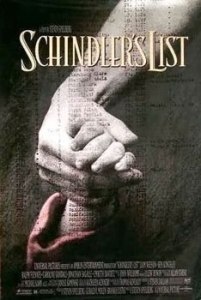
Review: Schindler’s List (1993)

Schindler's_List_movieWhat is there to say about Schindler’s List except that it is necessary viewing for its depiction of Shoah, suggesting that, literally, out of the ashes beauty and hope will rise. It would be rather callous to call Steven Spielberg’s film pure entertainment. True, he comes with a pedigree that includes such escapist classics like Jaws, Raiders of the Lost Ark, and Jurassic Park. However, Schindler’s List is a far different creature and it is arguably his most significant film. It is so moving on a heart-wrenchingly beautiful level. Because great films are more than entertainment, pure and simple. They are affecting, tapping into some deep well inside of us that causes us to laugh, to cry, and have feelings.

Schindler’s List shows us the horrors of the Holocaust without dumbing them down. We see those getting shot. We see the naked bodies. We see the mass graves and the billowing ashes. It can be hard to watch. Abrasive in its content, but not in its form. The film itself is beautifully cast in black-in-white with the most moving of compositions by John Williams and poignant performances by many. But permeating through all of this is, of course, the tragedy, but with the tragedy comes the hope which is crucial to a story such as this.

Spielberg’s reference point is one man named Oskar Schindler (Liam Neeson), who not only was a war profiteer and womanizer but a member of a Nazi party. He’s not afraid of ingratiating himself with the right people to make a pretty penny off the imminent war because in his mind it’s all good business acumen. And aside from his affiliations, what’s not to like about him? He’s well-groomed, a gentleman, and charismatic. It still would be a far cry to call him a hero, at least not yet.

With his main motive still being money, he makes contact with a Jewish man named Itzhak Stern (Ben Kingsley) who not only has the bookkeeping abilities he is looking for but also connections to the black market and Jewish investors. So as the ghettos in Poland fill up to the brim, Schindler is quick to capitalize, offering the Jews more practical resources in exchange for their money. They get something, but he’s the big winner. He begins to set up his factory for the production of pots and pans which proves to be a lucrative business, especially with most of the bigwigs on his side. At the same time, he takes on Jewish laborers since they’re cheap, and Stein is able to save them from a fate of a concentration camp or being shot.

Our primary villain, Amon Goeth (Ralph Fiennes) is ordered to start a new camp and just like that the ghettos are closed and the Jews are forced out. He is a despicable creature and a sadist to the max, exemplified by the many people he shoots from his balcony in the mornings. There’s no provocation for it. He just does it because he can. He is not the type of man you can seemingly deal with normally, and yet being a man with immense charisma, Schindler does just that, all in the name of business.

But Schindler too sees the chaos, destruction, and killing that is going on. He can not try to underplay it now since he has seen it all firsthand. But there is a point in the film where his focus slowly evolves from a desire to make money to actually saving Jews from complete annihilation. The most obvious moment occurs after he sees the little girl in the red coat lying in a wagon, dead. Moments earlier he had seen her scampering through the streets, an innocent beacon of color amidst the chaos. What is the world coming to when a girl such as this can be killed for no apparent reason? It begs for a response from Schindler. He can no longer be a passive observer and so he does take action.

With the aid of the ever faithful Stern, Schindler is able to construct a list of over a 1,000 Jews to save from the concentration camps. As the war is going poorly for the Germans, Goeth is ordered to transfer his prisoners to Auschwitz, and although Schindler almost loses all his workers, he is able to save them by literally buying all their lives from Goeth. He spends his entire fortune to save them as well as ensuring that his armament plant does not actually make any working shells. It’s bad business, but it is all in the name of one of the greatest acts of humanity he could perform.

In one final word to the people, Schindler protects his Jews one last time, daring the Nazis working at his factory to kill them or go home to their families as men. They silently choose the latter, and he flees the camp as a war profiteer.  He breaks down looking at the few possessions he has left suggesting that more Jews could have been saved with them, but the Jews in front of him, represented by Stern, point out the great good he did. They bestow upon him a ring with the inscription: “Whoever saves one life saves the world entire.”

He is gone now and the story of Schindler’s Jews is not yet complete, because they do not know where to go, but they head out with purpose making their way towards the future. And it is in this moment that their story stops being a memory and breaks on into the present. It is a wonderfully powerful device from Spielberg that evokes an overwhelming flood of emotion. In a line of solidarity, the Schindler Jews walk forward toward the grave of Oskar Schindler. Nothing can quite explain the feelings pulsing through the body as we watch actors and their real-life counterparts laying stones on the grave of this man, much like the Israelites laying stones down in remembrance of what their God did for them.  In one final moment, Schindler’s wife lays one final stone and Liam Neeson lays downs a final rose and we see his imposing but solitary silhouette off in the distance. It’s magnificent, to say the least.

Out of the many scenes that become ingrained in the mind, there were two that especially resonated with me. One of them occurs when the children were trying to evade capture and imminent death. In such a life or death situation they willingly resolved to literally swim in the urine of the outhouse. Another scene that got an immense reaction from me was when all the naked women, with their hair now cut off, are herded into the showers. Both they and the audience think this is the end of their lives so it is almost a cruel trick when water begins flooding from the shower heads. I’m not sure the last time I have felt so much anxiety as an observer. It’s hard to discount.

There are so many great performances big and small, but Liam Neeson and Ralph Fiennes are both superb. We always love a good anti-hero or at least a complex one, and Oskar Schindler fits that bill beautifully. Also, we love the same in our villain, and I must say although I absolutely despised Goeth for all his evil, I must admit that somehow I still felt sorry for him. He was only a cog in the machine, a lonely man who was really so insignificant, in spite of what he wanted to believe. He shoots Jews, beats them, and yet can have such a twisted and somehow intimate relationship with his Jewish maid Helen.

For over 20 years this film has been a beacon of hope and fragment of truth from a period of history that contains so much darkness. Hopefully, it can continue being that touchstone to the past so that there is never the danger that anyone would forget these catastrophic events, but also the heroes like Oskar Schindler who through their actions were able to do a great deal of good.

5/5 Stars

Young Mr. Lincoln (1939)

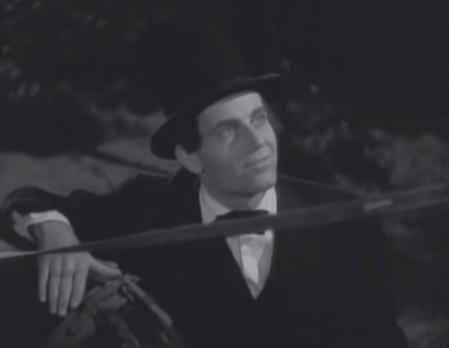
youngmr1Hailing from a year laden with numerous American classics, Young Mr. Lincoln is undoubtedly overlooked in deference to other titles like Gone with the Wind and The Wizard of Oz. Even John Ford’s own Stagecoach, starring John Wayne, overshadowed this autobiographical work headed by Henry Fonda. Then the next year they came out with The Grapes of Wrath and that title garnered praise for both men. But again, it seems like most have forgotten about Young Mr. Lincoln.

It really is a shame, because this is a quintessential Ford film, and Henry Fonda gives an iconic turn as one of the great historical giants of all time. Except instead of focusing on his major accomplishments, trials, or fatal death, this story contents itself with a simpler story. The focus is the fledgling law career of Abraham Lincoln, who back in 1857 is only a lanky country boy with a hankering for learning. He sees tragedy at a young age when people pass away around him and yet out of those formative years rises a man who is wise beyond his years, because he understands his fellow man and cares deeply about justice.

Lincoln is hardly a lawyer of any repute, and he seems hardly a political figure compared to the likes of the great Stephen Douglas. But the people respect him because he wins them over with his common sense and homespun witticisms. Aside from his ubiquitous top hat, he willingly judges pie eating contests, and play the Jew’s harp with feet reclined at his desk.  One of his dear admirers is the young socialite Mary Todd who takes an immense liking to him. He’s the kind of figure that the elite and common folk alike can truly respect.

So when two brothers are accused of murdering another man after a fight one night, it is Mr. Lincoln who avoids a lynching and appeals to the morals of the locals. He, in turn, promises the mother of the boys that he will do his very best to win their freedom and he does all he can to gain her trust.

When the trial begins he carefully picks the jury and faces off against a venerable prosecutor with much greater experience than himself. The mother of the accused saw the squabble, but she cannot bear to implicate her sons. Lincoln pleads on her behalf.  It also looks like the key witness and friend of the deceased man will put a seal on the case, but young Mr. Lincoln is not done yet.

Thus, the film ends and Lincoln is most certainly on the rise, but we get to imagine his future knowingly, on our own, because none of that length of the story is told. In that way, it’s rather interesting to juxtapose Ford’s film with Spielberg’s more recent biography Lincoln, starring Daniel Day-Lewis. They represent different generations of filmmaking, because the latter film takes a monumental moment in history, the passing of the 13th amendment, and places a magnifying glass to it. Focusing on all the individuals involved, and it is certainly going for an amount of period realism, starting with the impressive performance by Day-Lewis as our 16th president.

Young Mr. Lincoln is a lot simpler because it does not need to focus on the highlights. It takes as great of an interest in Abe’s origin story so to speak. On his part, Henry Fonda plays the role wonderfully using his mannerisms and plain speaking delivery to give a homey quality to Lincoln. He’s believable, but in a different way than Day-Lewis. It’s not better or worse necessarily, just different. That being said, Young Mr. Lincoln deserves a place among the exulted classics of that legendary year of 1939. Hopefully, it will continue to receive the respect that it deserves, because it is a moving and surprisingly very witty film. Probably in the way Abraham Lincoln was.

4.5/5 Stars

Love & Mercy (2015)

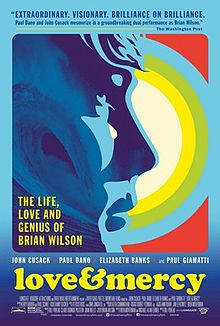
Love_&_Mercy_(poster)It’s a tough one. How do you do justice and even begin to scratch the surface of a living legend like Brian Wilson? His songs have brought joy to countless millions and numerous generations of music lovers. And yet out of all the joy he gave people, his life was steeped in so much pain and suffering. If anything became all too clear, it was the harsh reality of his life back then, but thankfully not now. At first, I didn’t understand the significance of the title (It’s the lead track of one of his albums back in 1988), but the words it hoists up are so perfect in describing his character.

I must say that I was a little skeptical of two actors playing Wilson. For those who don’t know, Paul Dano plays a young Wilson in the ’60s during his creative peak and familial turmoil. Then John Cusack picks his portrayal up in the ’80s when a messed up Wilson is being controlled by his quack psychiatrist Eugene Landi. They seem like two starkly different touch points, displaying two very different actors. Again, how could a director, in this case, Bill Pohlad, find cohesion out of this narrative chaos? But it works and ironically, that’s exactly what Brian Wilson did in his lifetime. That’s why he was such a mastermind.

As a young man his father abused him — hounded him to death. He suffered panic attacks, stopped touring, and embarked on some of the greatest musical odysseys anyone could ever hope to imagine.  We are thrown headlong into his genius during the Pet Sounds and Smile sessions. It might be a reenactment, but it feels like I am watching an artist at work. He’s on a different level, and it makes me appreciate each one of his songs even more. On a side note, I recently saw the documentary The Wrecking Crew, about the famed group of session musicians. And while they brought the skill in their craft, Wilson did truly bring artistic genius that was unique to him. That’s what, in many ways, caused a rift between him and his bandmate cousin Mike Love.

We are tossed back and forth from earlier past to later past as Wilson meets cars saleswoman Melinda Ledbetter (Elizabeth Banks) and embarks on a new journey as the manipulative Landi continues to drag him deeper and deeper into hell. In fact, sometimes it’s hard to imagine that this is the same Wilson and that is helped by Cusack’s performance. He is jumpy, helpless, muted, almost in a haze. But in him, you can see there is an immense vulnerability and capacity for love. That’s what Melinda sees as the layers get peeled back and that’s why it tears her apart seeing Brian suffer so.

As it turns out, Brian Wilson’s mind is not only a place of musical creation, but of fear, pain, and confusion. He was stuck between an antagonistic father and Landi’s manipulating presence. Whether it was the abuse, the drugs, the hallucinations, or a little bit of each, his story is one with a happy ending, and the film plays out that way. Isn’t it fitting that his immortal tune “Wouldn’t It Be Nice” closes the gates on this chapter of his story? It certainly is not over, still going, forever hopeful, and continuing to soar ever higher on a wave of positivity.

His genius astounds and now his resilience amazes me. He finally has found the Love & Mercy he deserved. Thank you Brian Wilson for gifting us such immortal tunes.

4/5 Stars

Catch me if You Can (2002)

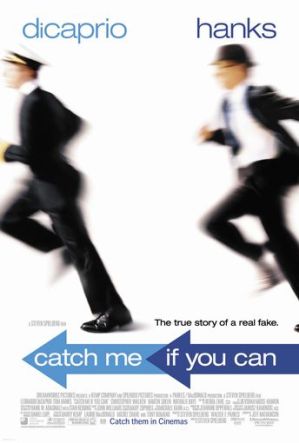
Catch_Me_If_You_CanDirected by Steve Spielberg and starring Leonardo DiCapprio, Tom Hanks and Christopher Walken, the film chronicles the exploits of Frank Abagnale. As a boy int he 1960s he grew up with an American father and French mother but after they get a divorce Frank flees home for good. As his money runs out Frank begins to pull confidence scams and he goes so far as impersonating a Pan-Am airline pilot.

He slowly moves across the country and cashes forged checks adding up to millions of dollars. Soon the FBI catches wind of him and agent Carl Hanratty (Tom Hanks) begins to track Frank. By now Frank has masqueraded as a doctor and a lawyer while also finding time to get married. Hanratty starts to close in again and this time Frank heads to Europe where he uses more of his forged checks.

Frank has a run-in with the French authorities but Carl got him out of it only to have Frank escape once more into the U.S. This time he is caught for good and given a 12 year sentence despite his youth. But thanks to Carl, Frank is offered a job with the FBI to lend his talents to check fraud. And from that point on Frank’s life was relatively normal.

I really enjoyed this story line, DiCaprio is good, the soundtrack is great (Come Fly with Me!) and the title sequence is unique. All in all this is an entertaining cat and mouse game that is well worth the time.

4/5 Stars

The Diving Bell and the Butterfly (2007)

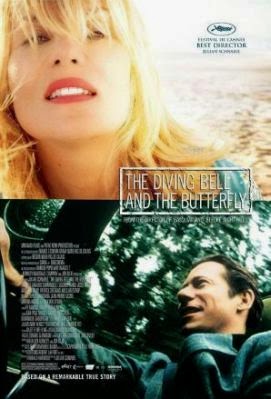
ca161-divingbellbutterflympIt’s beyond me how a film about a man who is all but paralyzed, except for his left eye, could be interesting. The main plot point follows his struggle to write a memoir using a tedious system where he blinks his eye for an assistant to transcribe. Maybe this does not sound all that engaging, but it most definitely is. No question. It has to do with how the film narrative is developed.

Bauby’s struggle is experienced first hand by the audience as we are stuck inside his head for the first portion of the film. It is a disconcerting perspective as we begin the film as helpless and confused as he is. We are there for every painfully difficult piece of progress, every one-sided conversation that Bauby (Mathieu Amalric) is unable to respond to, and every moment when he is powerless to act out. It is absolutely eye-opening. No pun intended. It’s simply the truth.

His progression is absolutely extraordinary. Beginning as a supposed “vegetable” who wished to die, to a man with an imagination that he was able to share with the world. He still had the ability and the passion for sharing his thoughts, memories, and desires with the world. He was physically so powerless and yet mentally so empowered.

Fragments of his story are given to us in pieces, although we still continue to return to the limited perspective he himself experiences. It is not easy to be sure. He must have others bathe him. The television channel is out of his control. There are doctors, therapists, friends, and family coming to see them, and he has no ability to physically interact. He still has feelings for his mistress, but the mother of his children still cares deeply for him. Sundays are hell with no one around.

Despite all that seems to drag him down, Bauby still is able to flutter above it all like a butterfly. With the help of his assistant and a strong will, he completed his memoir. 10 days later he would die, but his mission was accomplished. Maybe it seems like a rather unfortunate ending, but even if the lack of closure is unsatisfying, how it ended is the truth. Bauby was undoubtedly content because, despite the seemingly surmountable obstacles, he never lost his humanity. Being Locked-in could never take his mind from him. Ultimately, he was a winner and so his story ends on a somber yet powerful note.

It has been a while since I have been so affected by a film. I hope I will see another one like it very, very soon.

4.5/5 Stars

Amadeus (1984)

bcd5e-amadeus1

A common film would content itself with developing a biopic on one of the greatest composers of all time reaching the heights of the musical field in the musical capital of the world in Vienna. A typical film might paint on a canvas paying homage to a legend who revolutionized music with his genius.

This story opens as the long-forgotten composer Antonio Salieri (F. Murray Abraham) attempts to kill himself. He gets laid up in a Psych ward where a man of the cloth visits him wishing to hear his story and so the old man obliges. It’s a story that makes light and lacks reverence thanks to its title character.

Salieri was a court composer of prestige and great admiration, but even he knew Mozart was the true master and the first day they met was forever ingrained in his mind. For being such a genius Wolfgang Amadeus Mozart (Tom Hulce) is a jerk, to put it bluntly. Spoiled, conceited, dirty-minded and armed with a cackling laugh, he is hardly the image of a musical mastermind. How could God bless this man with such talent? How could God taunt Salieri using such a man? He makes a mockery of art and yet he is the best there ever was. Salieri must have some kind of justice.

But all that lies under the surface. Mozart is brought on by his Majesty to develop a German libretto. Salieri’s tolerance for God is lost and he turns his back, beginning his passive attack. He shames Mozart’s wife (Elizabeth Beridge) and sends her off as he is looking to undermine his rival as discreetly as possible.

Mozart himself has little desire to take on pupils he deems a waste of time and instead busies himself with his most ambitious piece yet. His father comes to town and is not amused with his son’s conduct or his antics at a masquerade ball. He has none of the sensibilities of a man like Salieri, but what he does have are the talent and brilliance.

Always one to push the boundaries, Mozart’s latest piece is based on the Marriage of Figaro which was expressly forbidden by His Majesty. But due to his skill, Mozart is able to get by with bending the rules. Salieri acknowledges his genius. He knows brilliance when he sees it, but he becomes even more resolved to bring about the death of his nemesis.

After the death of his father, Mozart slowly spirals down into drunkenness and poverty. Salieri manipulates the situation even further to play on the man’s emotions and the desperate Mozart becomes mad composing a funeral requiem requested by a specter of a man. The mysterious figure is, of course, a moonlighting Salieri who no longer sees his actions as justice against Mozart but against God himself and he wants to win.

In a horrible condition, the bedridden Mozart constructs his last great piece with the help of an incredulous Salieri. But Constanze will have none of it and the manuscript remains unfinished because she distrusts Salieri. Just like that Wolfgang Amadeus Mozart suddenly passes away. He’s dead and Salieri can have no satisfaction, no piece of Mozart’s brilliance. God would not give him the satisfaction, resigning him to be the so-called patron saint of mediocrity. God supposedly got the last laugh.

This is a film that makes me want to revise the noted statement to “only the great die young” as the mediocre slowly fade into oblivion. Salieri faced a cruel demise of his own as Mozart instantly became solidified as a legend. That is the irony of life that is made clear no matter how accurate the facts are. Because in Amadeus, the facts are not the most important. Milos Forman gives us a spectacle that is as grand as Mozart’s greatest masterpieces. But this is perhaps, more importantly, a film about human nature. Salieri is a man so ingrained with internal desires.

He wants to play God. He wants all things to play out as he sees fit. His malevolence is focused on others. It is even focused on God. But, in reality, it reflects the pain of his own heart. Humanity has a desire for excellence to be fully actualized. That is a lofty goal and an impossible target. Because ultimately there will always be a hole left within us. It was so with Salieri

Mozart was one of the greatest and most well-known composers of a generation if not ever. He was not a good man (few are), and he met with death early. Salieri seemed moral and yet he himself was undermined by deep-seated avarice and covetousness. Despite still having life, the world was essentially dead to him. He thought God was laughing at him. Neither man won.

4.5/5 Stars

Serpico (1973)

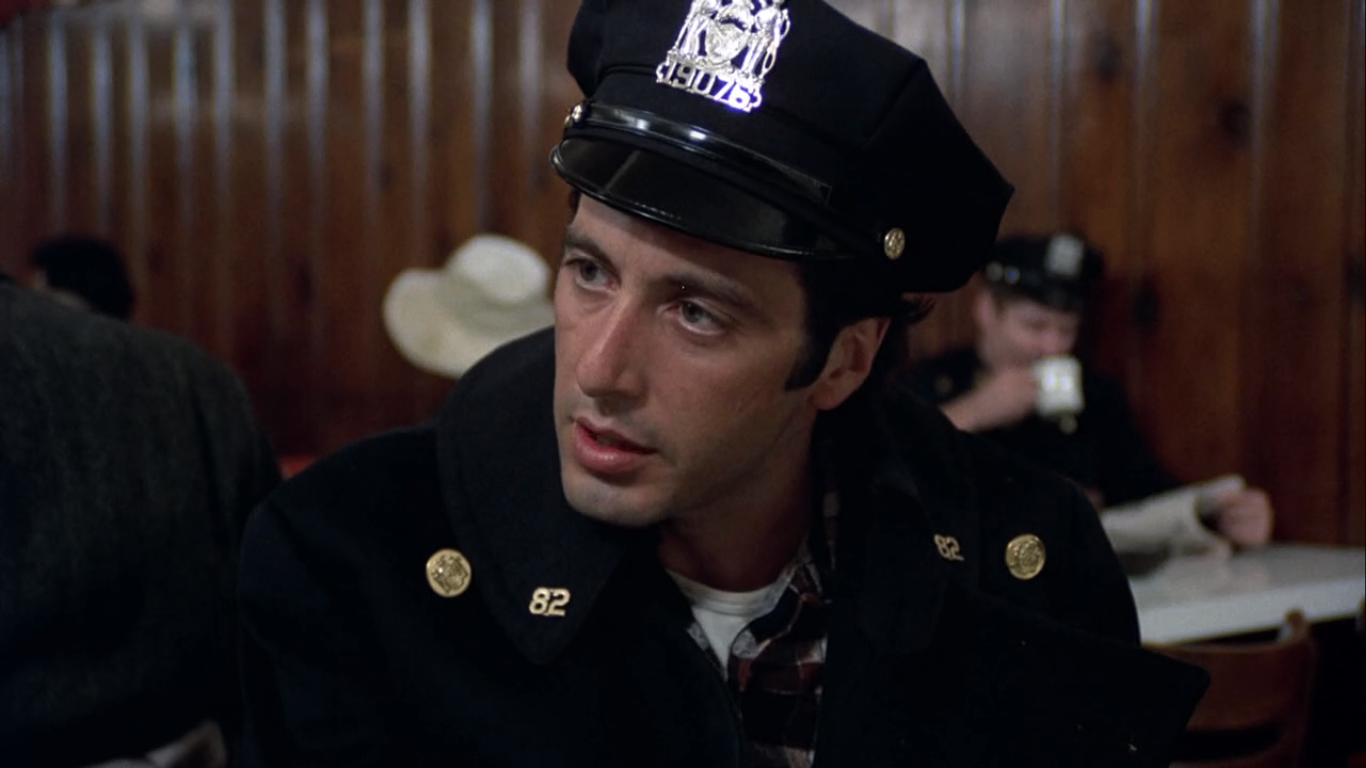
acd89-serp2“Come on Frank. Let’s face it. Who can trust a cop who don’t take money?”

This is the state of affairs in the police department that green police academy grad Frank Serpico (Al Pacino) finds himself thrown into. At first, he is unaware of it all as he moves up the ranks as a young uniformed cop. In fact, he looks exactly like a post-war Michael Corleone at this point. His new role seems like an honorable life of camaraderie, duty, and public service. The corrupt is obvious and distinct from the good. Soon his brash, forthright style creates waves, but it soon becomes apparent that he is not one to care about hurting egos.

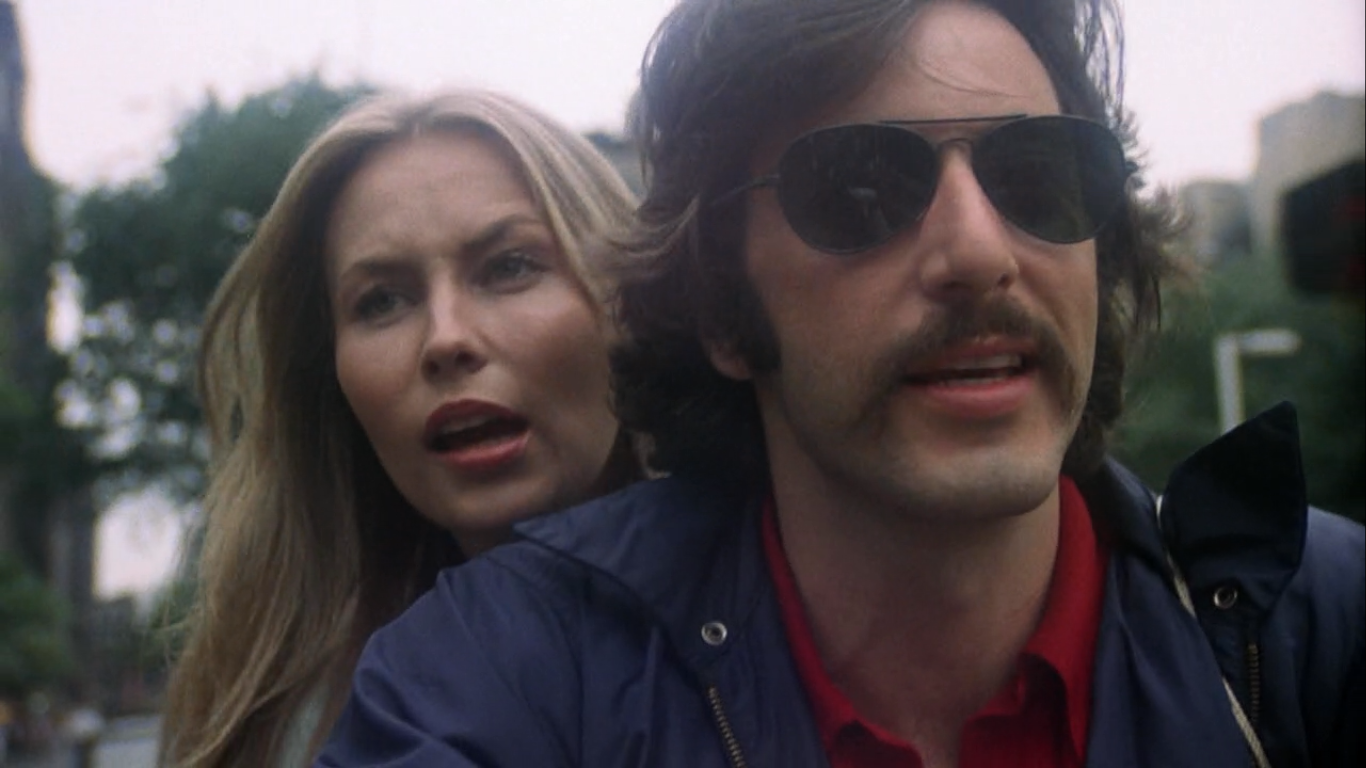
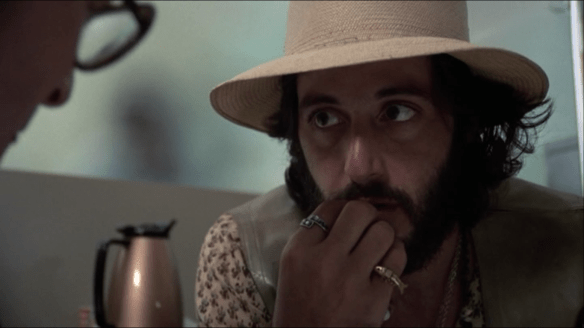
39dd2-serp2b3He moves on with his career working in plainclothes and getting a new apartment followed by a new dog. His appearance begins to change as well as he starts wearing a thick bushy beard and wearing hippy garb. It suits him fine in his work and outside he meets a pretty girl named Leslie Lane, but it’s not meant to be.

Serpico corroborates with colleague Bob Blair (Tony Roberts) trying to figure out how to bring attention to the bribes he has 60789-serp2b4been offered. But honest help is hard to find especially from someone who makes it stick. The higher ups care more about the reputation of the department over corruption, making progress difficult to come by. He continually bounces around from division to division and nobody seems to want him, or trust him for that matter. There are only a few honest Joes around and they are few and far between. Serpico gets transferred this time to the “upright” 7th division and begins seeing his next door neighbor named Laurie. Too soon he learns that one of his acquaintances is instrumental in the extortion that takes place department-wide. By now Frank is feared, hated, and despised because he will not take money under any circumstances. It takes its toll to be all alone in the force, and he lashes out at Laurie who leaves him for good. Now he truly is alone.
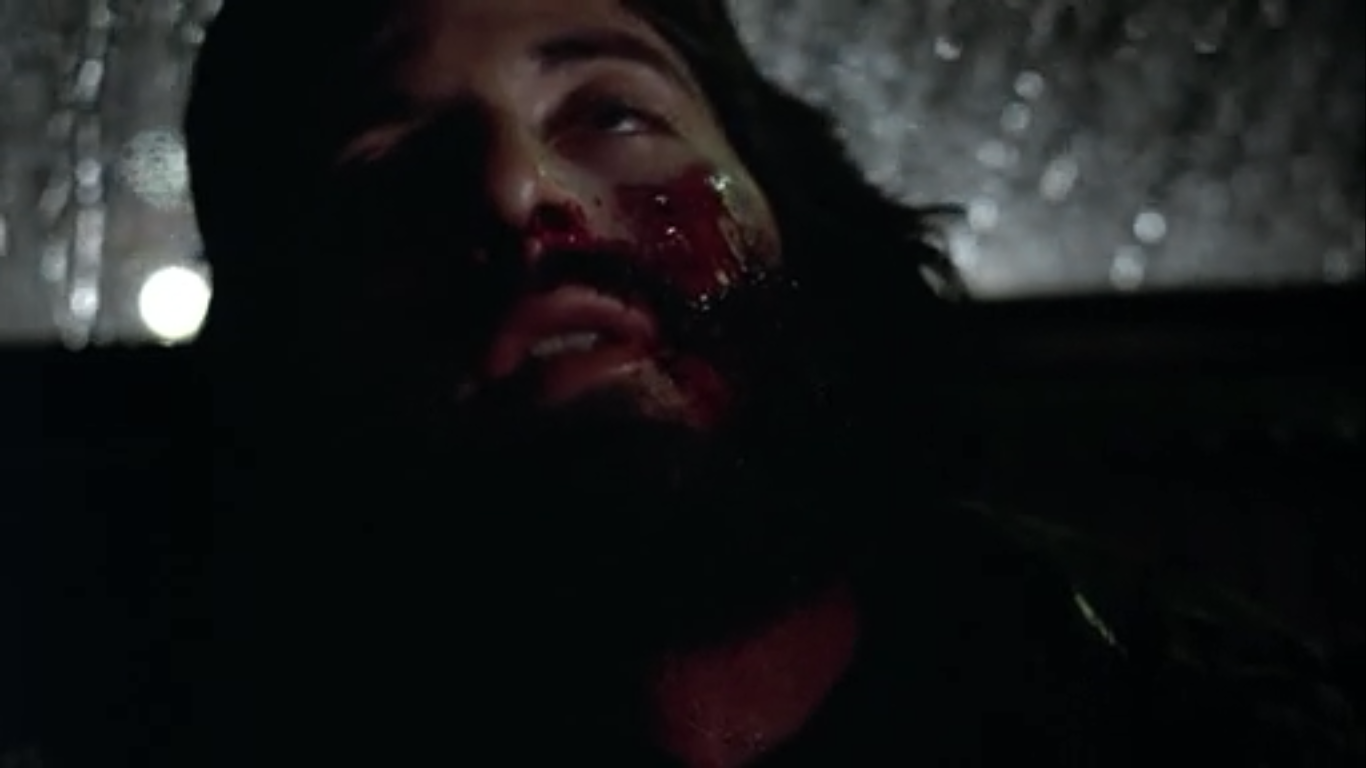
He becomes increasingly combative and paranoid as he gets ready to testify before the grand jury. Another case of bribes comes out and when Serpico and his upright partner try and report it nothing is done. As a last resort, Frank goes to The New York Times and they blow the cover right off. He soon receives an ominous death threat and gets shot when trying to bust someone.

He lays in the hospital recuperating asking for his guards to be relieved and watching the hate mail pile up. His badge is returned to him, but he rejects it in disgust, soon resigning from the police and waiting for a slow boat to Switzerland. That’s as far from New York as he could get.

It seems like there are so very many close-ups of Frank Serpico, and thus, over the course of the film we get the opportunity to truly study his face, or rather the face of Pacino as he embodies this character. His cold, aloof eyes, his facial hair that goes under several transformations, but that is only the outward appearance. It is his inner transformation that is most important because that is where his conscience lies, to guide him each and everyday on the beat.

My New York geography leaves something to be desired but that’s not the problem of native New Yorker Sidney Lumet. This is a story that takes place in New York, made for New York, and fit perfectly with its director. It seems like he knew the streets of the New York like the back of his hand, really creating an authentic atmosphere for this police biopic. It has a touch of The French Connection and yet it is a far more personal look at the life of Serpico himself.


This is also extraordinary because the story of Serpico was so fresh, still only a year or two old at most. Furthermore, the film has the same disillusioning and depressing tone of other dramas that came out of the 1970s. Back in the 1950s films like 12 Angry Men (Lumet’s debut) still had an air of idealism. That had mostly dissipated in the New Hollywood period, because the good guys aren’t black and white. Serpico is not the greatest guy around, but the one thing he has going for him is that he is not crooked and that’s saying a lot in the corrupt world he exists in. This is his story told with all the blemishes, personal troubles, and drama that went with it. The greatest service to him is that his story got told and hopefully truthfully enough.

4.5/5 Stars

Sergeant York (1941)

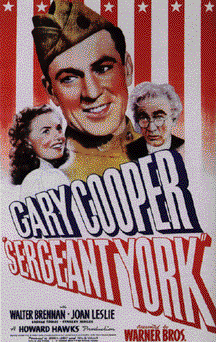
Starring a wonderful cast including Gary Cooper, Walter Brennan, and Joan Leslie with director Howard Hawks, this is a feel-good film. Alvin C. York (Cooper) lives in a small town in Tennessee where he works hard but also drinks a lot. Over time however he becomes a devout Christian and falls for a girl named Gracie (Leslie). He is hoping to get married and own a piece of bottom farm land. World War I begins and after a great conflict inside of himself, Alvin decides to go fight. While there he proves his valor, helping to capture 132 German soldiers almost single-handed.  He returns home a great hero and is reunited with his family and Gracie. Despite being a great war picture, this is also a very nice biography of a simple yet religious man who tried to live his life to the best of his abilities.

4/5 Stars

Walk the Line (2005)

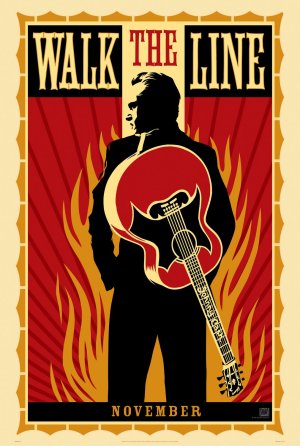
Walk_the_lineStarring Joaquin Phoenix and Reese Witherspoon, this biopic opens with Johnny Cash recalling his past as he gets ready to perform at Folsom prison. JR is the son of an abusive share cropper and his brother Jack dies when he is just a boy. He goes off to Korea and comes back with a few songs under his belt. Cash marries his girlfriend and they move to Memphis where Cash tries to get work. On a whim he tries to form a gospel band to audition at Sun Records. Initially it goes poorly until Cash begins to Sing Folsom Prison Blues. Soon Johnny Cash and The Tennessee Two are signed and touring with many different artists. There Cash meets the likes of Jerry Lee Lewis, Elvis Presley and of course June Carter. Cash begins to fall for the recently divorced Carter but she rejects his initial advances leading Cash to go to drinking and drugs. They part ways but then later on they begin to tour again. His music is a success but his relationship with June causes his marriage to go down the tubes. He continues to takes more pills. This is the low point in his career but June gives him a second chance. They perform together at Folsom in 1968 and then after one rejection of marriage, June finally accepts while they are performing a duet. The two of them continue to perform and raise a family together. Phoenix was commendable as Cash and Witherspoon’s vivacious performance gave life to this film. One things is for sure, johnny Cash had a hard life that was full of mistakes. That’s what made his music so good. It was often personal and most importantly human. Because humans make mistakes. Thank you Man in Black for giving us what you did. 4/5 Stars