Cocoanuts (1929)

the cocoanuts 3.png

“Did anyone ever tell you that you look like the Prince of Wales?” ~ Kay Francis, Chico, and Groucho.

The Marx Brothers were modern comedians. Out of Groucho Marx alone, there are numerous comics spawned and basking in his incomparable shadow. When certain jokes come out you can all but tip your hat to him. But also Chico and Harpo had their own personas and they worked with each other to simultaneously set up different bits and turn those bits into pandemonium that have overtaken the world with laughter over and over again.

And that’s not over one film or with one studio but over a whole host of projects. For all I know, Harpo Marx went through life mute (I Love Lucy cameos don’t tell me any different) and Chico really did use that accent of his. Even Groucho who was arguably the most visible thanks to You Bet Your Life, What’s My Line, and memorable Dick Cavett interviews, though he lost the greasepaint mustache and eyebrows, still maintained much the same witty image his entire life.

Playing purely the numbers game most comedy teams are duos. Think of most of the great ones. But the Marx Brothers had three and even four when Zeppo was around. They were all family. So when this well-oiled mechanism of chaos is released it really does a number on people. They were known for overwhelming producers in real life with their antics and they do precisely the same thing to each individual audience member who watches them onscreen — at least the ones who don’t mind being railroaded a little. That is their lasting impact.

The fact Cocoanuts was their first film and from the 1920s makes more an impression on my mind. Because talking pictures hadn’t been around for all that long. Sure, some of their gags could have been retroactively transferred to the silent cinema but in many ways, the talkies suited them just fine. After all, they were a vaudeville act and The Cocoanuts was a success on the stage before it was a film. Even during filming, they were already at work on their latest production Animal Crackers (which would again become a film the following year).

Where does that leave us? Looking at The Cocoanuts today, it definitely is stagey because well, it came from a stage play. Furthermore, it’s a rather odd combination having Irving Berlin and The Marx Brothers names attached to the film. Given the main attraction, there’s probably too much singing anyways although the overhead shots soon accredited to Busby Berkeley are quite prominent here.

If we turn our attention to the opening moment, Groucho is on the staircase of the Hotel de Cocoanut giving his restless bellboys some wise words full of crap about money. Meanwhile, a seductive woman (Kay Francis) and her suitor look to steal the priceless necklace of one of the few vacationers (Margaret Dumont) and pin the crime on someone else for their own nefarious purposes. This might not be a criticism you hear often but there’s too much plot and not enough Marx Brothers.

cocoanuts 2.png

Let’s cut right to the best gags. There’s the adjoining room & slamming door gag which provides one of the most pointed moments where the boys are all working seamlessly together to promote chaos on celluloid.

Groucho and Chico have one of their bits over a map and linguistic disconnect that Groucho riddles with his puns and Chico then decimates with his miscomprehension of English vernacular (Most famously Viaduct becomes Why a duck?). Watch it if you don’t understand what that means. In Marx Brothers terms it’s probably poetry in motion.

There’s an auction, termed a big swindle by Groucho but even with Chico’s involvement in the chicanery, for some unknowable reason, they don’t seem to be making any money. Finally, Groucho and Harpo play Tic Tac Toe on a man’s chest and act boorish at a dinner party before running off for the plot’s real finale. Let’s face it. The picture ended right when they left the stage.

The improv and dynamic nature of the Brothers given their vaudeville roots makes me realize just how much their shows would have been blessed by repeated performances and the heat of the moment. Though we can’t have that luxury at least we have this film to remember those hoodlums who elevated the art form of anarchy and wisecracking to new heights.

3.5/5 Stars
It Happens Every Spring (1949)

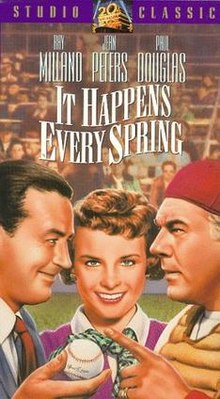
It_Happens_Every_Spring_VHSDoes this film glorify those who cheat and deceive taking advantage of others through the advances of modern science? Certainly not! Well, maybe a little but this is one of those ludicrous stories that never makes a pretense of being real life or a moral tale for that matter. It’s just a zany story that’s actually quite rewarding to be a part of.
At its core is a middling college researcher. He’s in love with a girl but not rich enough to offer her much of anything. What’s more intimidating is that her father is the dean of the school and Vernon’s tireless amount of research is getting him nowhere fast. Another seemingly trivial detail remains that every spring he gets obsessed with baseball and becomes distracted in his lectures, in his lab, and in life in general.

If you want to think about one of Disneys live-action classics, it’s easy to draw some similarities between this film and The Absent-Minded Professor (1961). In the latter film, flubber is used for an advantage on the basketball court. Here it’s all about baseball.

Vernon Simpson (Ray Milland) discovers the extraordinary characteristics of his new substance methylethylpropylbutyl quite by accident when he rolls a dampened baseball by a block of wood only to have the two repel. His eyes almost pop out of their sockets when it works time after time. The implications are simple. He can harness this discovery to make it in the MLB and S.T. Louis has aspirations for a pennant but needs pitching. This is his chance to realize his dreams.

The film admittedly doesn’t explain much about why Vernon is infatuated with baseball. Perhaps it was enough that most Americans still were taken with it since it was “The National Pastime.” Regardless, he hurriedly gets a leave of absence from work and provides a cryptic message to his girl not to worry about him.

His baseball career as chronicled by the film is a meteoric rise that totally revels in its completely ludicrous nature. He walks into the clubhouse talks with the manager (Ted De Corsia) and the teams head executive (Ed Begley) who doubt this adamant thick-headed nobody who brags he can win 30 games. Boy, does he shut them up and they’re glad he did.

Most everything is textbook as far as a film about a science researcher playing major league baseball and using a miracle substance to win ballgames can be. His girlfriend thinks he’s involved with the mob. He tries to keep his true identity a secret under the pseudonym King Kelly, and he begins to form a bond with his veteran bunkmate and backstop Monk Lanigan (Paul Douglas). I’ve always been a fan of Paul Douglas as an actor because he plays his characters straight with a gruff yet palpable sincerity. It’s little different here. Milland though hardly an American bred on stickball nevertheless is a charmingly scatterbrained lead.

I didn’t realize it until now but I’m rather fond of science fiction baseball comedies. It breaks every rule of baseball. It’s absurd. There’s so much to call into question and yet I don’t want to. But just for the fun of it all, let’s look at a few obvious inaccuracies from It Happens Every Spring.

King Kelly would never get a win if he came into a game that his team was already winning and yet he asks for $1,000 in compensation for such an appearance. Furthermore, it looks like he’s committing a balk about everytime he winds up. And if he’s not then baserunners would be stealing on him all day because he never pitches from the stretch. He’d be an easy target.

Believe it or not, Kelly actually doctoring the baseball, secret formula aside, definitely is not all that ludicrous. Pitches such as the spitball and scuffball were famously used in the games early days. Pitchers like Burleigh Grimes, a personal favorite of mine, made a living off the pitch and though the spitball, in particular, was outlawed in 1920, pitchers like Grimes were grandfathered in. He continued throwing it until 1934.

Still, that didn’t completely deter later pitchers from using it like another Dodger great Preacher Roe and then Gaylord Perry in the modern era. As long as you didn’t get caught there was no recompense and the same can be said of Kelly. Again, we’re not glorifying cheating. Don’t get any ideas.

3.5/5 Stars

Babes in Toyland (1934)

babes in toyland 1.png

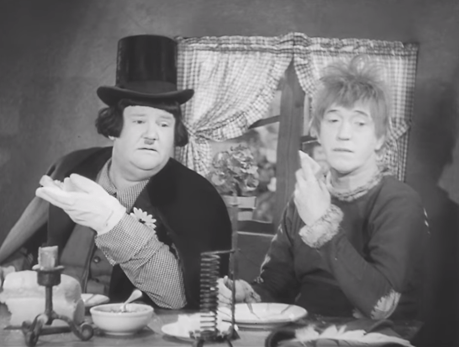
Laurel and Hardy had better films with better gags and more iconic moments but Babes in Toyland, or The March of The Wooden Soldiers as it was also known as develops the most immersive fantastical world that they ever had the privilege of gallivanting through. It’s almost fitting that we find them in an almost childlike world because they brought laughter to not only adults but a plethora of children as well and this picture does them both justice.

It’s true that out of the imagination of babes (which was consequently Oliver Hardy’s lifelong nickname) comes a film steeped in nursery rhythms and kiddie stories. Above all, it proves to be the perfect playground for two of comedy’s greatest treasures as they play Make-Believe in a world of Mother Goose, the Three Little Pigs, Old King Coal, and a host of others. Except it’s not made up at all. By 1930s standards everything is very much alive and it very easily could be a child’s delight. Also, rather unwittingly a minor Christmas classic was born.

Ollie Dee and Stannie Dumm, as they are affectionately called, work at the local toy factory in Toyland and reside in a Shoe with a certain Old Woman as well as Little Bo Peep.

But she is being accosted by the resident villain and shoe forecloser Silas Barnaby. He’s a hyperbolic, conniving, cackling antagonist who undoubtedly finds origins in the invariably black and white worlds of a child’s fantasy (It’s no coincidence that Disney’s canon has boasted some of the most iconic villains). He’s played by none other than 21-year-old Henry Brandon and though he’s draped in a beard there’s no doubt that his stunts in the final scenes evoke the physique of a young man.

Anyways, our heroes promise to raise the necessary money to keep the shoe so Little Bo Beep doesn’t have to marry such a horrible fellow. But of course they go and make a shamble of things messing up Santa’s wooden soldier order and they get fired. Even a trojan Christmas present in July sent to Barnaby fails because of Stan’s typical good-natured idiocy.

He’s up to his usual tricks as the lovable pal who begins his trademark sniveling while his friend is getting tortured with a dunk tank only to offer Ollie a glass of water once he’s made it back to dry land with his usual vacuous deadpan. Furthermore, still plagued by malapropisms, he turns “heartbroken” into “housebroken” and similarly misconstrues other words.

The villainous Barnaby is not to be outdone. First trying to arrest Ollie and then framing Bo Peep’s true love with the kidnapping of one of the three pigs. Banishment to the dreaded Bogeyland looks all too imminent. Still, Babes in Toyland stages one of the most delightful battles of good versus evil that evokes everything from The Nutcracker to The Wizard of Oz. Toys become ammunition and buildings are to be sieged as everything comes alive.

Like Our Relations two years later, this film employs one of the oldest sitcom tricks but here it’s all but forgivable. Because, again, television tropes hadn’t been invented yet much less television. It’s true that the kids will probably enjoy this the most or perhaps the young at heart. Still, Hal Roach delivers another Laurel and Hardy comedy with its share of child-like charm and some dashes of Disney magic (namely a Mickey Mouse lookalike and the Three Little Pigs theme song). Yes, it’s puerile entertainment but what’s wrong with that?

3.5/5 Stars

Diary of a Chambermaid (1946)

diary of a chambermaid 46 1

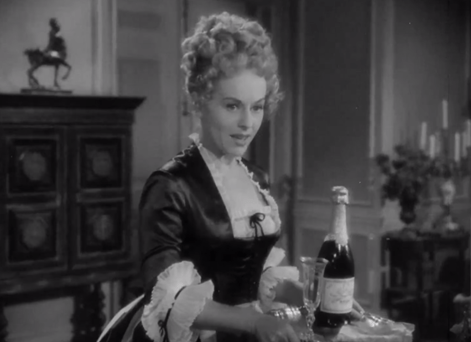
If Bunuel’s well-remembered adaptation of this material is considerably darker and biting as his pictures always seem to be, then Jean Renoir’s version is fittingly consistent with his own sentiments and oeuvre.

Celestine, as played by the ever precocious Paulette Goddard, looks to be one to tear asunder the stately tranquility of the estate she has been hired to serve at. But in fact what we are met with over time is quite the opposite and that’s one of the great ironies of this film.

Another is the fact that Renoir was called upon to make such a satire under the Hollywood production codes. He is no Bunuel and still, there is a certain anarchy and irreverence that can be taken from many of his native works.

You have only to look at Boudu Saved from Drowning (1932) or is acclaimed masterpiece Rules of the Game (1939) to see the social commentary at work. There is the same upstairs, downstairs dynamic and the pronounced divide between those with means and those who serve those with means.

Paulette Goddard gives a fine showing in the title role that puts her plucky and radiant chambermaid front and center. Whereas she often played opposite a romantic lead like a Chaplin or even Bob Hope, this is her picture and that’s a refreshing change of pace.

What she provides is her usual brand of bodacious energy that carries along her cohort Rose (Irene Ryan) and stands up to the severe and misogynistic valet Joseph (Francis Lederer) who has been in faithful service to the Lanlaire family for 10 years. It sets the tone for the entire picture but it also subsequently reveals that everyone in her vicinity has their own agenda.

There’s Joseph who much like her would love to leave behind his current life for a life of privilege and good fortune. Meanwhile, the controlling Madame Lanlaire (Judith Anderson) wants to use Celestine’s services and certain attributes to help keep her grown son (Hurd Hatfield) at home. She’s suffocated him for an entire lifetime.

The demure, bearded Mr. Lanlaire feels more at ease with Celestine than with his own wife and his feuding next door neighbor the idiosyncratic Captain Mauger (Goddard’s husband and the film’s screenwriter Burgess Meredith) wants to steal Celestine away and hire her on to work at his own estate. He’s even ready to propose marriage and give her nice things if only she’d accept.

So in a sense, if you want to look at the film in very basic terms, Celestine has numerous suitors. One who shares her personal aspirations. One who shares her romantic love. One who makes life a great deal more fun for her and so on. Though only one can end up with her in the end.

It is an admittedly strange circumstance to have a French director of such repute as Renoir directing an English language film from French source material no less. How we ended up with such a project is befuddling. But rather than get caught up in the incongruities it’s suitable to enjoy them for what they are. It could have been a shambles.

I am reminded of Vittorio De Sica’s Terminal Station (1953) that fell under Selznick’s control and was recut and reissued as Indiscretions of An American Wife. The conflicting visions proved to be a disaster.

Here it works to a satisfactory degree. It’s shot and feels like a Renoir film even if the actors themselves or the system they are working in does not. But a Hollywood exterior does not make this film impervious to improprieties. While in some respects it relieves the picture of its claws, there’s nevertheless yet another irony found therein, though the facade must be first pulled away.

It’s so eccentric and giddy with all the flourishes of classical Hollywood and quality supporting actors that it makes us almost forget the strange even indecent behavior that comes to pass. That’s because it’s a Hollywood picture and not a French one.

Furthermore, just because the action is set in France and orchestrated by a French director does not instantly mean that this is a satire of that society alone. Are we so blind as to see the conflicts and relational quibbles that dissect this film as being so far removed from our own?

Surely we don’t have any stratospheres like this or any people with these kinds of behavior in the United States? Charming and unrepressed chambermaids. Brooding men who are bent on vengeance. Mothers willing to use the allure of other women to manipulate their children into still loving them. I can’t speak to any of these things directly but only know we’re often more alike than we would care to admit.

So enjoy Renoir’s Chambermaid on the perfunctory level if you wish. It’s a quirky backroom comedy-drama bolstered by winsome Paulette Goddard. But if you want to see it for something more you may — a satire, a veiled look at risque themes, and anything else you can discern within its frames.

3.5/5 Stars

Midnight (1939)

midnight 1939.png

“You’re in a fine mess! You got to get a divorce from a man you’re not even married to!”

It was only a recent revelation that Claudette Colbert at times feels far too sophisticated to be playing beautiful hitchhikers or penniless taxi passengers as she does in It Happened One Night (1934) and this film, Midnight. Though it’s easy enough to explain away.

The screwball comedy has always thrived on incongruities as much as it did on the class divides between the rich and the poor. Where the extravagance is almost laughable in its boorish decadence and the little men still have lives seemingly worth living because they are free from societal pressures. After all, making just enough money to scrape by is nothing short of paradise.

In this way, Claudette Colbert was the perfect person to tiptoe this line because she could be cosmopolitan and was glamorous with all those other snooty folks. But she’s also a comedienne like the normal folks, seeing the humor and working it for the laughs just as much as she’s willing to do things that seem normal. A walking enigma she might be but she also makes Midnight a sublime comic fairy tale as our uproarious modern-day Cinderella.

One of her cohorts and romantic partners is Don Ameche, the Parisian cab driver Tibor Czerny who begrudgingly opens up his livelihood on wheels for her as a random act of kindness. As we mentioned before the smartly dressed Eve Peabody has no penny to her name or a franc for that matter.

But what she does have is audacity and it buys her a ticket into a lavish gathering as one Madame Czerny put on by some rich somebody or other. It doesn’t much matter since it’s all only a pretense anyway. Billy Wilder and Charles Brackett’s script unwittingly created the original party crasher plot.

Eve finds herself at a snobby patronage of the arts where the impassioned man at the piano plays either Chopin’s 12th Prelude or his 11th Etude. Again, it doesn’t much matter but it’s hilarious all the same.

What happens subsequently subverts expectations nicely. Instead of getting tossed out of the proceedings she winds up the fourth in a bridge game of rebels warring against tepid entertainment.

There’s the debonair Jacques Picot (Francis Lederer), Marcel (Rex O’Malley) the man who nearly gave Eve a fright by fetching her, and Helene Flammarion (Marry Astor) a married socialite who is more than a little buddy-buddy with the dashing Monsieur Picot.

The charade becomes increasingly awkward the longer it keeps going and going and going. Every Cinderella has her midnight. The real joke comes when the fanciful game finally ends only to be replaced with a new reality as a true to life Baroness. She has no idea how it happened and that’s where our last important party comes in — her fairy godmother so to speak.

Mr. Georges Flammard (John Barrymore) witnessed Eve putting on a nervous floorshow and was intrigued. Now he watches her masquerade continue and he sees how they can help each other out. It has nothing to do with a desire to fool around. On the contrary, in an attempt to undermine his wife’s philandering he wants to bankroll Eve’s little white lie a while longer until she can win Jacques over and pull him away from Mrs. Flammard. It works quite well too.

Meanwhile, the entire cabbie population of France looks for the mysterious girl at Tibor’s behest. It proves to be equivalent to any missing persons agency in town and it comes with made to order traffic jams to boot.

Midnight turns into a magnificent floorshow as all parties collide in an immaculate perfectly timed collision. Eve and Mr. Flammard’s joint ruse looks like it might soon be ousted by Marcel and Mrs. Flammard who are intent on finding the truth about this curious baroness. But the whole fantasy is saved by a dazzling entrance by one well-tailored gentleman, Baron Czerny.

Now a new round of sparring back and forth begins. It’s full of glorious escapades, riotous telephone conversations with fictitious daughters, and Eve and Tibor trying to one-up each other with tall tale after tall tale. One thing Eve has going for her is Mr. Flammard still in her corner working his magic and John Barrymore puts on a fine showing in the film’s latter moments — his devilish eyes still gleaming as bright as ever.

Monty Wooley is introduced into the plotline in the ultimate piece of pitch-perfect casting as an opinionated but easily swayed judge. Thanks be to Classic Hollywood where pompous Americans can preside over a Parisian divorce court. But what matters is the right people get together. So screwball and fairy tales can still coexist. Wilder would prove it once more with Balls of Fire.

John Barrymore has always struck me as the tortured talent of the silver screen. One could contend that he was the most prominent member of the Barrymore dynasty except whereas his siblings Lionel and Ethel aged gracefully he burned out. Midnight came a little too soon for him.

It’s been a longheld fact that Billy Wilder and his writing partner Charles Bracket gifted two quality scripts that were ultimately directed by Mitchell Leisen. The integrity of the work was compromised to the point that Billy Wilder vowed to become a director himself so no one could mess with his material and when the material being messed with was Midnight and Hold Back the Dawn (1941) it begs the question how would the same magnificent films have ended up in Wilder’s hands?

Nevertheless, the actors are a fine gathering of talent while the script does wonders with the typical Wilder-Brackett combination that squeezes innumerable wit out of its wonky plotline. Billy Wilder must always get the last word in and his scripts always do. This one is no exception.

4/5 Stars

Counselor at Law (1933)

counselor at law 1.png

The law offices of Simon and Tedesco are at the core of this film but it’s really George Simon who’s of particular interest to us. Based off a play by Elmer Rice, Counselor at Law is a self-contained office drama of great energetic verve. It’s handled assuredly by a young Hollywood director on the rise named William Wyler — a man who continued to make quality films throughout the 30s and by the 40s and 50s became lauded among Hollywood’s finest filmmakers. Here you can already see him reining in the chaos to hone in on a lucid story that’s witty and at times admittedly tragic.

We’re quickly introduced to an office positively buzzing with activity which sets the scene nicely. There are frequent coming and goings from office to office, mail deliveries, telephone lines crisscrossing this way and that with a reception area full of people.

It soon becomes apparent that there’s a head-spinning regiment of phone calls, appointments, and anything else you can imagine going on in this busy beehive on any given day. It makes a day at work seem like the most rewarding social experiment that you could possibly conduct in that revered tradition of people watching. Because as an audience that’s what we get the privilege to do as Rice’s adapted script constructs the beats of the story as a delightful web of interactions.

John Barrymore gives a frenetic performance as the whirling dervish of a lawyer Mr. Simon. And it feels like a stroke of genius that we never see him enter a court of law but only observe the various people and types he must work with to get his job done. It makes for an engrossing human drama that puts us in touch with a myriad of narratives all at once.

Instead, we get to know so much about his makeup and personal character. He receives multiple visits from his kindly mother who he playfully ribs or from his wife who he lavishes with affection constantly while she remains notably aloof. But that’s simply his way. He’s a mile a minute generally magnanimous soul who does his job well. Many folks in the town are indebted to him and though he’s successful, you get the sense he hasn’t forgotten about the little fellow on his way to the top.

This sentiment lays the groundwork for the film as a piece of commentary. It gets its source from a boy from the old neighborhood who got brought in by the cops for spewing communist sentiments on a street corner. Now his poor mother is asking a favor of Mr. Simon. He obliges only to get ridiculed and belittled by the proud young man.

As such Counselor at Law has a bit of a socio-economic angle as well suggesting the longheld stratosphere that was imposed the day that the first Europeans came off the Mayflower. Any following party has a harder time making it and yet some of the more assiduous ones do. It’s staying there that can be difficult.

But the attacks come from the bottom too. From the fiery youths who look at a self-made man such as Simon as someone who has sold out on his kind; he’s a dirty traitor. There’s no way to win. The American way seems a tough road to traverse and still come out a winner.

One such passing interaction with a past client, in particular, changes his entire day for the worse and a crucial fact that went unbeknownst to him could spell curtains to his career. In a matter of minutes, disbarment seems to be looming over him. He can’t take it.

But the film also has another layer. Love stories are playing out and there are two levels to it. Obviously, there is Simon and his wife who he adores and her “other man.” Then, there’s Rexy (Bebe Daniels), Mr. Simon’s faithful secretary constantly brushing off the frequent advances of a bookish but persistent Mr. Weinberg. But there’s also an unrequited love that’s unspoken and seems the most devastating of them all.

Ultimately, we are privy to the blessing and the curse of the workaholic. By the end of the film, Simon’s true love is still his work even if there’s a hint at something more. Whether or not he can maintain his lifestyle is left to the imagination and perhaps it is better that way. We leave him on the upswing but with questions still to ask. It suggests that the American Dream isn’t always quite what it seems. It can be equal parts joy and tragedy. The question is whether or not it is worth the risk.

4.5/5 Stars

Will Success Spoil Rock Hunter? (1957)

will success spoil rock hunter.png

From a corny title comes a  wonderfully corny opening complete with Tony Randall playing the opening notes of the 20th-Century theme and reading off a few cue cards to introduce the film.

What follows is much in the same vein. I sense this is all the doing of Frank Tashlin — the man who found his origins in the animated shorts of the 1940s and subsequently partnered with Jerry Lewis as well as Bob Hope in some of their best pictures.

Here he creates a zany world indeed. I feel inclined to play the comparison game: It’s part Bye Bye Birdie (1963), part Doris Day-Rock Hudson Rom-Com (contemporary numbers like Lover Come Back or  The Thrill of It All both spring to mind), and yet it manages to be a cut above of all of those subsequent contenders.

Tashlin in writing the script and directing has given the film a truly inventive lifeblood which is part satire, part romance, and all comedy in the traditions that he knows best — namely visual comedy. There’s the pomp and circumstance of getting a key to the executive washroom or the appalling unsightliness of some of the garish interiors, not to mention Jayne Mansfield’s prized poodle.

It seems important to start with Rock Hunter since his name is in the title of the picture. Rock (Randall) is a middle-range partner in a New York advertising agency. His aspirations aren’t too grand. He’s in love with his secretary and hopes to be wed soon and his niece lives with him. That’s important.

But everything changes the day that this little man has a big idea that could propel La Salle Agency to the top of the game. Why not get that beloved bodacious personality Rita Marlowe (Mansfield) to promote their “Stay Put Lipstick” brand with her trademark “Oh so kissable lips” and shrieking sigh?

The only problem is getting in contact with the clandestine star who has gone into hiding following a nasty breakup with her latest boyfriend. Although it doesn’t prove overly difficult as Rock has a key in — his niece is the president of the Rita Marlowe fan club and that means something.

Soon he finds himself face-to-face with the superstar lounging in the bathtub on the telephone with her old beau. At the behest of Rita, Rock masquerades as her boyfriend over the phone (as the first living, breathing male who walks through the door). Then she proceeds to give him a smooch on the lips that causes the already popped popcorn in his back pockets to pop again. Amazing.

Rock Hunter’s a little woozy from the experience bringing traffic to a standstill as if he’s just seen a goddess or something. Tabloids get a hold of it and the media frenzy kicks up the dust once the news breaks out about “Lover Doll” aka Rock Hunter who watches his stock skyrocket overnight. What makes it even funnier is the fact that this is no Conrad Birdie. This is a nobody middle-aged executive played by the always lovable often despondent-looking Tony Randall.

His new life involves being accosted in back alleyways by teenyboppers and a row of new public appearances with Rita in order to get her involvement in backing the company’s product. It’s all in a day’s work but to say it strains things with Jenny is putting it lightly.

The narrative is chock full of shameless plugs and bits of self-referential commentary be it Jayne Mansfield’s own The Girl Can’t Help It (1956), Elvis’s “Love Me Tender,” and the romantic hit Love is a Many Splendored Thing (1955). Meanwhile, Rita reads lurid Peyton Place in the bubble bath and the inimitable Groucho Marx makes a prominent cameo as Rita’s long lost love. The best phrase by far is the liberal use of “The poop!” It pretty much sums up what you are in for.

Undubitably this is Mansfield’s most notable role and it works because she’s really playing a version of herself, the tabloid icon that she was and one of the purported answers to Marilyn Monroe’s movie stardom. As such she does a fine job with the wacky comedy and it’s true that she too exudes that certain brand of innocent sexuality though she never was in the high caliber films that Marilyn could claim.

Wisecracking Joan Blondell is at it as well as Marlowe’s assistant who still finds a moment or two to wax philosophical about lost love. Tony Randall is just as enjoyable as he’s ever been except he’s a lead instead of a third wheel which proves to be a delightful change of pace.

Possibly the best gag involves an extended intermission or commercial break with Randall lauding the remarkable invention of television which subsequently turns him black and white and cuts off most of his face in its limited 21 inches before readjusting and being overtaken by static.

In just a few seconds of film Tashlin effectively shreds the industry that was slowly taking over for sheer convenience and making the picture shows of old a near dying breed. And of course, not to be outdone there has to be some lip service paid to radio enthusiasts who in themselves were all but dead. Here is a movie that doesn’t take itself too seriously and that plays to its strengths.

3.5/5 Stars

It Started With Eve (1941)

it started with eve 1.png

We enter a newsroom that feels like it could be ripped out of His Girl Friday (1940). The editor is lining up his copy for the following day with a big front-page spread on the renowned millionaire Jonathan Reynolds (Charles Laughton). They just need him to die and they can print it.

Of course, at this point, it looks like it’s all but in the books. He’s a very sick man, on his deathbed, straining at what look to be his final gasps of air. His son (Robert Cummings) is rushing away from his vacation to be at his father’s side before it’s too late. The doctor fears the worst but his son makes it back from Mexico City in time to catch his father.

They share some tearful exchanges. Then, comes the fateful moment where his dad asks to meet his new fiancee. Wanting to honor his father’s last wish, Johnny goes pell-mell to his fiancee’s hotel but she can’t be found anywhere and he tries everything.

In a frantic moment of duress, the man makes a decision that will forever alter the course of his life. A hatcheck girl at the hotel (Deanna Durbin) becomes the perfect stand-in for his fiancee on a dime.

Frantic, he promises her 50 bucks and takes her to his father’s bedside. They share a poignant exchange and Johnny thanks her for her services and thinks that is the end of it — of his father and his relationship with this woman — but he’s terribly mistaken on both accounts.

Against all medical opinions of the family doctor (Walter Catlett), Mr. Reynolds makes a miraculous recovery and is back to his old ways craving cigars and steak for breakfast. It’s joyous news until he wants to have breakfast with Gloria Pennington whose actual name is Anne Terry.

Now his son is in a jam and he pulls Anne away from her train to Ohio to keep his father happy by maintaining the charade. Now he’s in deeper than he wants with one “fiancee” hitting it off with his father and the other with her mother waiting to be introduced to Mr. Reynolds. Needless to say, the local bishop (Guy Kibbee) gets the wrong idea about the boy he has known from youth who has become a degenerate philanderer supposedly keeping company with two different women.

Johnny could care less. He’s still in a bind and his main goal is to get everything patched up by paying off this girl again and enlisting the help of the doctor to introduce his fiancee into their home very naturally before the big party his father is throwing. It’s easy enough to tell his father that they have a lover’s quarrel and the “engagement” is off.

And yet, Anne doesn’t let it go that easily and she returns to profess the error in her ways and make up. Because now she has a larger stake in this new relationship. She’s a struggling musician who has heaps of talent. It’s just that she’s never gotten a chance to share it with someone important. This is her one shot at a big break. But far from being an opportunistic girl, she also adores this man and to some extent likes his son for a certain amount of sensitivity that he has.

Durbin and Laughton are brilliant fun together because he remains the crazy glue that holds this “romance” together. While things look like they have run their course and Johnny has salvaged everything the way they were originally meant to be, Mr. Reynolds goes off script and does the unanticipated, he drops everything at his gathering to see Ms. Terry.

But of course, we already know they aren’t a real couple and so it makes for an initially awkward and then a surprisingly jovial evening, finished off with a lively round of the conga. Mr. Reynolds succeeds in almost giving his good doctor a heart attack and sends his son for a real loop. In another fit of Deja Vu, Johnny races after Anne’s departing train to catch up with her once more. This time for good.

Charles Laughton is undoubtedly the M.V.P. of the picture providing a delightfully grouchy yet lovable turn hidden behind a mustache and a happy old boy persona which channels a bit of a naughty schoolboy at that.

Cummings has a knack for the clumsy, flustered comedy that comes as a result of his initial bumblings. He and Durbin work through the hilarious miscommunications that ensue beautifully as standard procedure in such a screwball musical. Instead of kissing like normal people they giggle, cackle, pinch, bite and do about everything else including play fight around the interior study. But if that isn’t love then I don’t know what is.

4/5 Stars


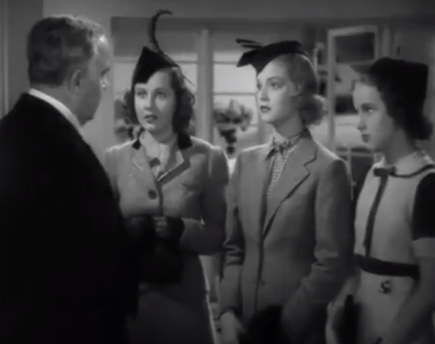
Three Smart Girls (1936)

three smart girls 1

Here is a comedy born of a certain time and age when they made such trifles. It’s the kind of plot where you can read it off in a single sentence but it’s further cushioned by cutesy moments and musical asides. Where growing girls say “Mummy” and “Daddy,” always fussing and screeching and bickering over this or that.

It could all get tiresome and too sugary if it weren’t redeemed by how very pleasant it is in reflecting adolescence. Yes, you could even call it absolute claptrap but there’s something special thrown into the concoction: Her name is Deanna Durbin.

Perhaps I am overstating her significance and making her stake larger than it possibly could be but I’d like to think on the contrary. Deanna Durbin is presented as “Universal’s newest discovery” and what a find she was. Beginning a run of many successful box office hits continuing up on through the war years, she was a beloved part of Americana.

Here was a teenage girl who with a voice and a carefully groomed persona helped salvage an entire studio and became so well-known and admired that by 1941 she would be the highest paid woman in America and the entire world, bar none, at the age of 21 (Look it up for yourself but don’t quote me).

Three Smart Girls is a film that means the very best and Henry Koster guides it along this path of sunshine and cheerfulness. There are numerous moments that say as much as Penny (Durbin) floats along with her two sisters (Barbara Read and Nan Grey) on a lake riding lazily on their sailboat in Switzerland while she knocks out a tune. Maybe it’s the girls squealing as they make use of their father’s exercise equipment and we watch Durbin repeatedly swing toward the camera until her face completely fills up the frame.

But I’ve put it off long enough. Here is my one sentence of exposition. The Three Craig girls make it their mission to go to New York and break of their father’s (Charles Winninger) engagement to a young gold digger so he can get back with their mother (Nella Walker). It’s a noble project and it also has the touches of an early Parent Trap (1961) which takes obvious inspiration from this picture.

The girls bring their flurry of teenage drama into their father’s bachelor lifestyle as well as subsequent heartbreak and tears that do finally give way to marital bliss (of course they do).

There seems to be a paradox to Deanna Durbin’s appeal. She had the feisty sass of a younger girl and the voice of an older one that sweeps you off your feet. It’s the kind of voice that I must admit sounds dubbed at times. That cannot conceivably be her singing!

She makes a line of hardened cops do a double take when she breaks out into an opera number in the police station trying to pull off a little white lie that’s she’s a Parisian songstress. It almost works too.

Ray Milland is wonderfully witty as the rich young gentleman who finds himself pulled into the girl’s charade on a miscommunication. In fact, it’s easy to prefer him in these lighter roles to his more dramatic turns that sometimes leave him looking like a stuffy cad. He can be quite charming actually. Mischa Auer also shows up but unfortunately isn’t given much to do.

But in the end, this evolved very much into Durbin’s film anyways and she does well to oblige the audience while her sisters are happily saddled with eligible young men and her parents get back together. They’re all a happy family again and there Penny is standing at the center of it all smiling broadly.

3.5/5 Stars

My Favorite Blonde (1942)

my favorite blonde

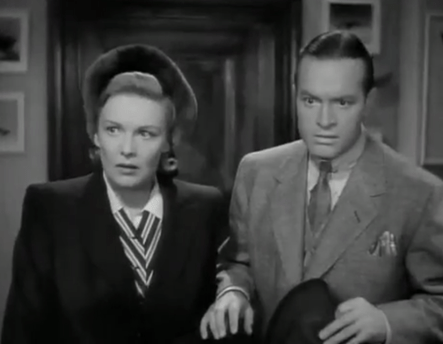
Bob Hope was one of the 20th centuries greatest personalities but sometimes his pictures weren’t always up to par. The most obvious exceptions would be the majority of the Road pictures with Bing Crosby, The Paleface films with Jane Russell, and this fun addition pairing our beloved funnyman with the divine Madeleine Carroll.

It’s not quite a Hitchcockian thriller but Madeleine Carroll provides an icy blonde secret agent while Bob Hope is in usual form with his typical smart-mouthed nitwit characterization that garners our love.

Carrying over some of the world from The 39 Steps (1935), enemy agents are looking to intercept invaluable secrets that are needing to make their way to America in the hands of Karen Bentley (Carroll). Her partner has already bought it and she has two tails observing her every move.

The place she chooses to hide away at is the backstage of a vaudeville joint where Larry Haines (Hope) is just finishing up with his penguin partner Percy who has a big contract coming in Hollywood. Larry has been included on the bill as an afterthought.

But all that is put on hold when this beautiful, mysterious woman wanders into his life. He gladly entertains her company and yet he doesn’t know what else comes with that proposition. In typical fashion, Hope’s character always bites off more than he can chew whether it be villains or women. He’s got no answer for either.

A near wordless confrontation occurs on a train as the girl hides and Hope sits with some leering thugs in the club car, filling the moments with nervous comedy bits.

His answer for Ms. Bentley isn’t much better. It’s the same type of patter that would be recycled in My Favorite Brunette (1946) or other Hope sketches where the woman plays it straight, seducing him and he’s outright oblivious from the first advance. He has no defenses to speak of. A few strands of cajoling baby talk and he’s putty in their hands.

But the gal gives him so many mixed signals he’s libel to run out on her cockamamie ways or let her have it (Yeah the little man is hurt and if the little woman doesn’t watch it she’s going to get a little hit in the head). Still, they somehow keep winding up in the same places. Perhaps it’s because she’s conveniently hidden vital international secrets under the lapel of his coat.

He somehow feels like the only normal fellow in a screwed up world but if everyone else is playing cloak and dagger games, that becomes the new normal and he begins to look all the crazier turning increasingly more paranoid due to the various antics around him. Maybe he doesn’t have all his buttons after all. If he’s our new archetype for the man-on-the-run, then I’m Cary Grant.

Some throwaway expositional dialogue over the film’s MacGuffin gives Hope ample time to retort with a joke about his ring being filled with Benny Goodman and his band (They had to drop a clarinet player. It was a little crowded). That exact moment exquisitely sums up why the film works. There’s the spy thriller arc that is continuously deflated and lampooned by Hope’s particular brand of comedic zingers.

An ingenious ploy to escape an apartment complex crawling with baddies leads to a rampage to trash the joint while drumming up some marital pandemonium that’s bound to bring some police. It’s sheer comedic chaos and…it works. Ironically, Cary Grant would reuse a similar gag in North by Northwest (1959).

Another moment Hope is taking on the mantle of a baby specialist, Doctor Higbie, much in the way that Robert Donat joins a political rally in The 39 Steps. Both men pull quips out of their backsides to stirring results on their way to their next juncture on their ever-changing itinerary.

Thanks to an absolutely nefarious move by that criminal mastermind Gale Sondergaard, a murder is called in by the real culprits and pinned on our heroes. But Hope continually proves his faithfulness or at least how much he likes the blonde with the face and a certain je ne sais quoi. And that’s part of Carroll’s allure but far from being a glamorous Brit, she proves just how much she can pull off the more screwball elements that Hope already seems at home in.

The home stretch leads to California with the murder rap still hanging over their heads and a funeral parlor in their sights. To get there it took them a bus, a plane, a winking Bing Crosby cameo, and a few watermelons a piece.

Like the best classic thrillers it’s not so much the outcome but the road it takes to get there that we relish the most. This one has a lot of lovely inane speed bumps that perfectly accentuate the utter contrast between Madeleine Carroll and Bob Hope’s character types. They actually end up making a witty romantic couple and Hope as always gets the last laugh in on camera.

4/5 Stars