
The question is, what to do with Slap Shot? It’s grungy, dirty, and foul-mouthed. Bloody and violent. Did I mention profane and boisterous? Loud and obnoxious? Yet somehow there’s still something idiosyncratically lovable about this board busting hockey film. Is it wrong to call it an adult version of The Bad News Bears? After all, the men that the film follows are actually real professional hockey players. Not some kid looking to play at their local gymnasium. Except hockey’s still not the biggest sport (not even today) and the Charleston Chiefs are a minor league club if I’ve ever seen one.
But it’s precisely that quality that keeps us around. Because we all gravitate towards the rejects and the bottom dwellers. The people we can easily feel sorry for and who simultaneously make us feel a little bit better about ourselves.
In bringing George Roy Hill back with Paul Newman and surrounding him with quite the cast of lug heads, epitomized by the gloriously violent Hanson Brothers, Slap Shot somehow became a cult classic.
Player-manager Reggie Dunlop is in the twilight of his career. It’s hardly a secret that the Chiefs aren’t doing so hot and it looks like this might be their last season. It’s a fairly abysmal existence for all involved then Dunlop has the bright idea to let go of any inhibitions. Soon he has his boys brawling with everyone imaginable. Opposing players, fans, referees, anyone who is living and breathing. The funny thing is that this new style of play actually elicits winning results and the public loves them for their brutality.
One perfect illustration of this chaotic pandemonium occurs when the opposing goalkeeper goes diving over the boards to continue his showdown with Paul Newman. They shared a few choice words beforehand. That’s putting it lightly.
But these are also the same group of guys who leave every battle bloodied and bruised. The same group of guys who wind up playing cards on the bus or get mesmerized by the latest corny soap opera on television at the local watering hole. They’re a sorry lot who also happen to be ridiculously funny at times.
It’s the rowdiest of films with at least a couple screws loose. If we were to be pretentious I guess who would chock it up to Slap Shot having “Character.” But I’m not sure if it would be too far from the truth to blame this film for leading the charge in legions of awful R-Rated comedies with no merit whatsoever.
Even with Slap Shot, there are some rather interesting tonal shifts. It’s as if Nancy Dowd’s script looks to get sincere once or twice. Or there were thoughts of getting dramatic. But then the gloves came off and the sticks were thrown aside and there was a collective “Nawww!” from all involved. Not surprisingly this was one of Paul Newman’s favorite roles because he’s not just a ne’er do well or an old crotchety wise guy, he’s a legitimate scuzzball.
Also, it doesn’t hurt that Slap Shot’s soundtrack is now synonymous with the bouncy infectious notes of Maxine Nightingale’s 1975 classic “Right Back Where We Started From.” The added addition of Fleetwood Mac doesn’t hurt it either. So, yes, I would hardly call this one a revered classic, and I’m still digging around for some redeeming qualities. I’ll let you know. But Slap Shot never claimed to be anything of those things.
It’s unashamedly crude. Gratuitously violent but so over the top as to be comic and there’s not even the slightest attempt to cover any of this up. It could be that Slap Shot is one of the more honest portrayals of human nature. Humanity loves sports. We’re often losers and outcasts with few redeeming qualities when you really get to know us. That’s by no means a promotion of Slap Shot but more of a qualification.
3/5 Stars
 I find that my own life was greatly influenced by my father during my most formative years, in particular in the realm of music. I grew up on the classics of the ‘60s. But there’s that juncture in time perhaps during middle school where you begin to branch out and you latch onto other sounds for some inexplicable reason. And it doesn’t have to be modern artists but even those who your parents never imparted to you. That is to say that “Brandy” by Looking Glass is such a song for me. I loved it the first time I heard it and not on any provocation of my parents. I consider it one of my own personal favorites.
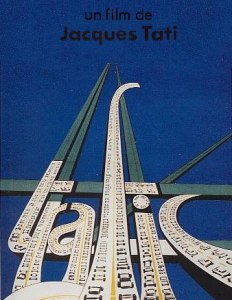 Watching films with French treasure Mr. Hulot (Jacques Tati) is a wonderful experience because, in some respects, it feels like he brings out the child in me. And if history is any indication — I’m not the only one — others feel this sensation too.
 It’s hard to grow tired of Bob Hope. In many ways, he’s a universal entertainer — transcending time — circumventing the decades with a brand of humor that is timeless. And the same goes for his iconic persona. He can quip with his lips like Groucho Marx but he’s more of a lovable dope. He likes to think he’s clever and when he lets his mouth run off Hope certainly is, in a cheeky sort of way. It’s just his characters who are always dumb.
 “I can be smart when it’s important, but most men don’t like it.” ~ Marilyn Monroe as Lorelei
 I’ve seen both versions of Father of the Bride and Steve Martin is fine and dandy but there is no better lovable curmudgeon than Spencer Tracy and he dons the role of the protective and skeptical father so effortlessly.
 “Things are only as meaningful as the meaning that we allow them to have.” ~ Beverly
 The fact that Miracle on 34th Street and this film came out the same year seems to suggest that there was something special in the air of New York City that year. It was a magical place, specifically during the Christmas season with Santa Claus going on trial and winning, while tramps helped reform millionaires. Admittedly, It Happened on Fifth Avenue is one of those films that could easily come under fire for its implausible plot, its unabashed sentiment, and any number of other things.
 This was not the film I expected from the outset, and oftentimes that’s a far more gratifying experience. Nostalgia was expected and this film certainly has it, even to the point of casting the legendary funny man and cultural icon Don Knotts in the integral role as the television repairman.
 4 Star Films