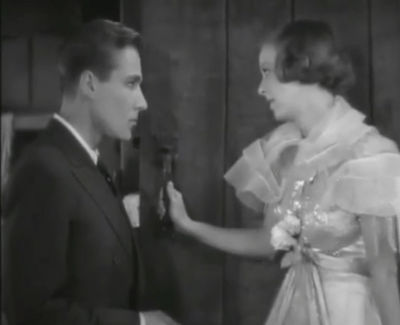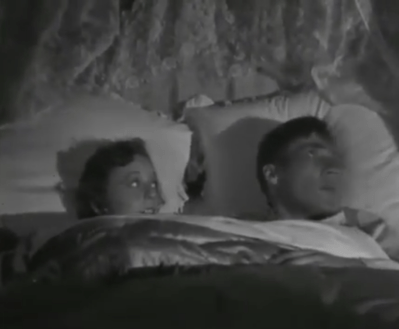
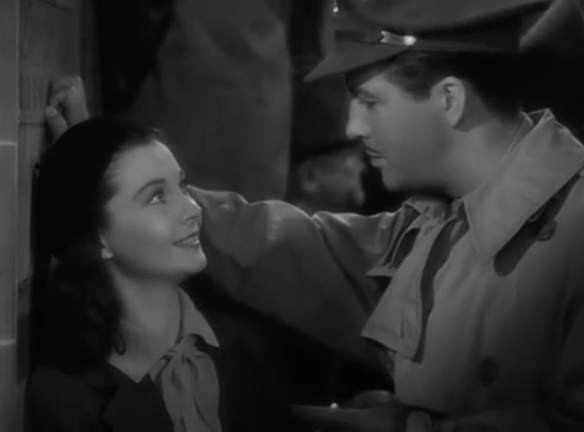
Back Street (1932): Irene Dunne and Director John Stahl

Back_Street_1932“There’s not one woman in a million who has ever found happiness in the back streets of any man’s life.”
John M. Stahl is a bit of a neglected craftsman, even by me. Like others, I became aware of him solely for Leave Her to Heaven, a noirish technicolor melodrama positively dominated by Gene Tierney.

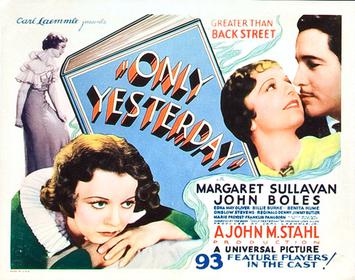
However, as with any director, he wasn’t formed in a vacuum and during the 1930s he worked on some of his most intriguing efforts like Back Street. Then, the following year’s Only Yesterday offered up similar dynamics, featuring Margaret Sullavan front and center. Sullavan and Dunne implement different personas and yet in trying to put my finger on what might draw them together, my mind goes instantly to one thing: class.

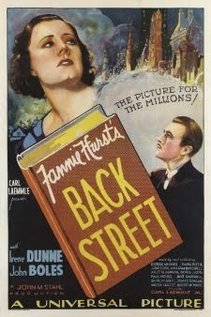
This particular story was adapted from a Fannie Hurst novel. Dunne ably anchors the leading role of Ray Schmidt, earning a bit of a reputation because she’s a glamorous girl who likes to get out and have a good time. However, there is a distinction to be made between a girl who has no standards and one who probably opens herself up too much. Ray fits in the latter category. She says it all in one fleeting line of dialogue, “It’s all the way or zero with me.”

Opposite her is John Boles as a gentleman narcissist somehow managing to suggest the jarring contrast of mild manners and infidelity in bodily form. Coincidentally, he would also reappear opposite Sullavan the following year. Here he meets Ray, this extraordinary girl while he is still engaged, and he’s instantly smitten. It happens when a mutual acquaintance introduces them in passing, as he makes his way out of Cincinnati. It’s the beginning of something that will define their lives.

One key benchmark occurs in a local park in front of the bandstand. Walter is to bring his mother to see the performance, and he conspires to have Ray show up, making a glowing appearance, as if by accident. It’s the bit of manufactured serendipity they need to gain approval in their relationship. And yet it never happens like it’s supposed to in the movies (at least the ones we usually play in our heads).

The story starts to construct itself out of these vignettes.  It’s now 5 years later. We’re on Wall Street in New York, and the two former flames bump into each other right where they left off. The fire hasn’t died because old habits die hard. Ray willingly waits for him because it’s true there’s something electric between them. Unfortunately, it disregards reality. He’s married with two children (all but unseen).

Instead of meeting on street corners and hiding in doorways, they get a bit more sophisticated. He furnishes her with a room and so now we have the new status quo where this clandestine, illicit thing feels almost mundane.

But that’s a curious factor to Stahl’s picture. Surely it is melodrama — especially on paper — but he makes it feel instinctively human. Of course, humanity isn’t always high-minded and righteous. It can be selfish and lonely and confused. In fact, we often embody these feelings most of all.

It’s not about the accumulation or even the escalation of scenes to the apex of a bigger climax. Instead, each moment supplies an impression to add another layer to this searing romance. And it’s in these successive snapshots from which we must fill in the gaps for ourselves. It’s a testament as much to what is shown onscreen as off. This is not in the sense of Production Codes getting in the way, but a concerted choice to have ellipsis set up all around the story. We drop and then pick up the narrative at these various intervals in the cycle of life.

Later he’s too busy to get away from all his professional and personal responsibilities. These are his excuses. She’s waiting on his words, for the ring of a telephone, playing solitaire. It feels like a thankless position to be in.

Down the hall from her, a woman is burnt badly in a house fire — all but disfigured, though she won’t call her husband — she is another kept woman. Is this the writing on the wall? Ray chides her to get out, preaching independence, although she doesn’t quite know how to put it into practice. She still believes she might just be the one in a million who will make it work.

It’s the film’s first true wrinkle when she makes a decision to break with convention. It remains to be seen what the consequences might be. Kurt (George Meeker), who’s had a crush on her since childhood, comes a-calling again, goofy and endearing as ever but having made good. He casts his usual line, and it might as well be the same old story. Ray looks at him and there is sadness even pain in her eyes. He thinks she’s rejecting him again because she’s not free, and he’s right, but not in the way he thinks.

The reunion with Walter, now a successful businessman in his own right, is a complicated thing. He has a way of exerting his will on her but making it feel like it’s her decision to determine whether he is happy or totally devastated.  It’s this driving, prevailing selfishness and woebegone attitude that dominates the story.

We settle into another scene. It’s on an ocean liner. Walter is with his wife and a grown son and daughter. It has the flavor of One Way Passage and a very different sort of Love Affair. One of the most heartbreaking scenes comes when the young upstart son comes to confront Ray to try and get her undesired presence out of their life. And in another movie this scene would play out like so — at least like how he’s imagined it. She’s the wicked, opportunistic woman ready to tear through a household with blackmail and scandal.

Still, we know Ray to her core, how much she loves — how decent and thoughtful she is — and yet she has somehow found herself in such a frowned upon station in life. It doesn’t seem fair. Then again, how much does she have herself to blame? Worse yet, is the fact that the men — the ones with money and the benefit of the doubt — are allowed the position of victim.

The whole family must come to terms with reality. Walter continues with his entitled streak telling his son, “a corner of my life belongs to me alone.” There Ray is somewhat loved but literally waiting on the end of the line for him even unto death. The ending is a kicker, a fitting dream for it to coast off on even as Ray’s own light finally goes out.

Back Street is a love story that could not have existed in mainstream Hollywood a mere 5 years later. It more than lives up to its title as this little, cofounding film working not in the mounting drama but the quiet splintering of a lovelorn soul. It befuddles my own sensibilities even as it makes me sympathize with the lovers in its grips.

3.5/5 Stars

Three Comrades (1938) in Body and Soul

Screenshot 2019-12-27 at 100048 PM.png

“Germany’s a pretty rough sea if you’re drifting.” – Breuer

“But I’m not alone anymore. There are so many drifters!” – Patricia Hollmann

Erich Maria Remarque is of course most famous for his work All Quiet on The Western Front, which was adapted to great effect for the silver screen by Lewis Milestone in 1930. Three Comrades, another one of his novels, feels very much like an extension of the same themes found in the earlier novel.

We find ourselves at the tail-end of the Great War. Mainland Europe is jaded and bedraggled. One must recall these were the days before Nazism: a force that felt like personified evil. When we look around from trench to no man’s land, it feels like everyone’s equally besmirched, equally implicated in the senseless killing.

So in this regard, it’s not a far stretch of the imagination to think a cohort of three German veterans might be likable to an American audience (especially because they are also Caucasian). However, equally importantly, they are played by three strapping young talents with charm bouncing off them like pinballs. It’s how they’re able to leave the calamitousness of war behind and attempt to discover a new life of humble contentment.

It was the war that instilled them with a certain collective memory, both scarring and then firmly solidifying their friendship in the aftermath. They take the world on like the Three Musketeers: all for one and one for all. Together they happily resolve to become car mechanics, carving out a peaceful existence for themselves, even as their beloved country has succumbed to a kind of mob rule with rampant new ideologies. To each his own.

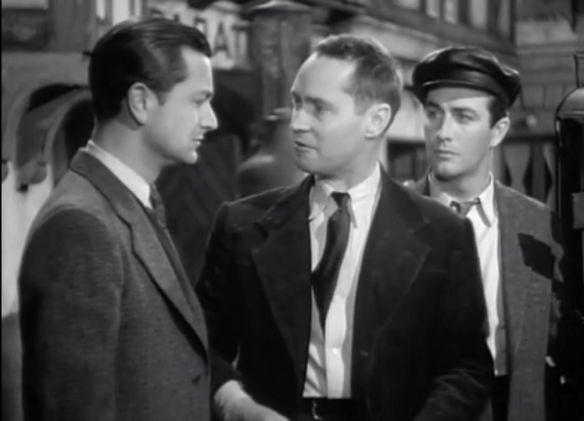
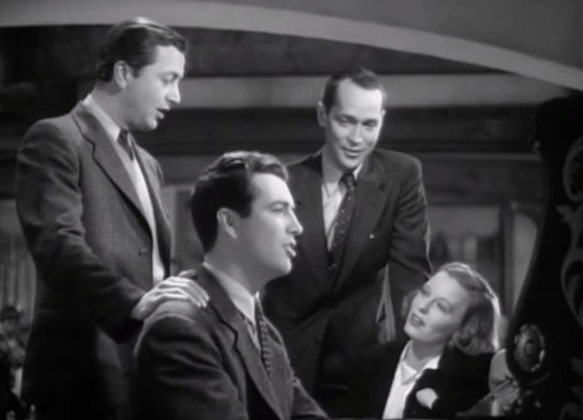
Erich Lokhamp is the first, played by a dashing, if a bit wooden, Robert Taylor. Though it’s his friends who really seem to bring him alive. Franchot Tone is Otto Koster, always ready to support his friends and speak sense into their lives. His brand of loyalty is finer than gold. The other is Gottfried Lenz (Robert Young) also light-hearted while stricken with the mind of an idealist. Still, he gladly gives up his social conscience for the sake of his friends’ well-being. At least for a time, life is happy.

But before there’s any greater stakes, it begins as three lads having a blast taking a stuffy socialite (Lionel Atwill) for a ride as they roar down the thoroughfares in their beloved, hopped-up creation “Baby.” It’s a bit of good fun, but it also introduces the trio to one of the most important people in their subsequent life together: Pat

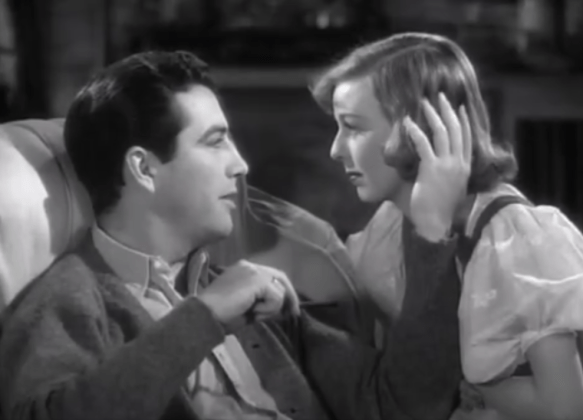
Margaret Sullavan is at it yet again a husky-voiced, troubled soul and yet overwhelmingly resolute in her pursuit of love and the preservation of those around her. It’s a quality found in all these characters — this self-sacrificial nature that becomes so laudable, if not entirely necessary. She is the one who surmises how lovely it might be to pick when we were born. Perhaps an age of reason and quiet. This sounds like a Borzage picture. Because of course, they must make do with the here and now, where evil still exists in the world (as it does in any era).

Screenshot 2019-12-27 at 100806 PM

Their favorite hangout belongs to a jolly man named Alfons (Guy Kibbee). Erich takes his new girl there following some awkward interplay over the telephone. Also, his buddies always have a penchant for showing up uninvited to sit in on their evenings. It’s one of the added delights of the pictures because Young and Tone can supply the wisecracks to rib their friend.

I admire Otto and Gottfried even as I relate. They are faithful, they wish the best for their friends, act as encouragers — spurring each other on — and celebrating their victories while taking any setbacks as they always do: together.

This courtship brings with it other complications, namely trying to impress a high society girl of culture no matter how good-natured she might make out. It’s still easy for a man used to the inside of cars, to feel out of place with the social elite, dancing and wearing customary uncomfortable clothing, which also has a habit of coming apart at the seams. He even spins tall tales of rolling down to South America, an exotic land full of monkeys and coffee, just so he might be able to keep up with her.

All of this show proves unnecessary. This is how it works when you are smitten with a rich man’s girl and, more importantly, when she is in love with you. In another line that feels transcendent in the usual manner of Borzage, they aspire to being “lovers on the edge of eternity between day and night.”

A lesser film — or at least one ill-befitting the predilections of Borzage — would probably have made this a fight for the woman’s hand. It’s easy enough to see how this would have pulled the boys’ bond asunder. And yet these characters are more genial, enlightened, and well-intentioned. The story itself strives for something more. Young plays cupid urging his friend toward marriage. Tone’s character knocks out a concerto on their automobile as he tries to hammer away some sense into Pat in favor of his friend.

Propitiously, all this coaxing culminates in the quaintest wedding, which somehow fits all the players to a tee. Borzage captures it such that we feel we are there with them discovering it as it happens, partially spur of the moment, but also imbued with this star-crossed purposefulness. In step with everything else, their honeymoon to the seaside is as gay as can be until it is met with a setback.

It plays into the film that Sullavan always feels emotionally strong and sturdy but often physically frail. Maybe she just exudes this quality between her throaty vocals grasping at words and the obdurance she gained a reputation for. But in Three Comrades, she is bedridden and in critical condition from hemorrhages — still nursing sickness that has clung to her for some time. Erich has little idea, but once again, Otto comes to their aid with his usual expediency. It only serves to bring them together.

Screenshot 2019-12-28 at 75036 AM

While remaining unnamed throughout the film, there’s little question that the rising Nazi Party is the instigator of public brawls. Dr. Becker (Henry Hull) speaks out on his soapbox about the need for reason in confronting the issues of the times, instead of the prevailing violence. Since it’s not the first scuffle or an isolated event, Gottfried feels compelled to stand up for his beliefs, putting his ideals on the line.

Meanwhile, Erich has a less politically charged fistfight in the streets over a work claim. He gets ganged up on before his comrades, of course, fly to his defense. Just like old times. Pat is placed in a sanitarium on the behest of her doctor (Monty Wooley) just in time for the snows of winter and then Christmas.

The violence continues to escalate, this time dragging Tone into a shootout in the streets with Handel’s “Hallelujah” clamoring in the background. It’s oddly hypnotic even as it spells what feels like the end of the beginning.

If it’s not apparent already where Three Comrades is going, it easily functions as a fitting companion piece to Borzage’s later Mortal Storm because there is this same uncanny prescience about it, although it probably did very little to halt the impending course of history. The unholy mechanisms were already in place.

Every Borzage movie makes the world a little broader and love a little grander to match. In this regard, the meeting of the prose of Erich Maria Remarque and F. Scott Fitzgerald somehow manages to work in the hands of a director.

What sets it apart from a melodrama like Douglas Sirk’s is the slow burn and how the characters take each moment on with their own brand of quiet fortitude. In many ways, love (and camaraderie) are an antidote to the wiles of the world. Our heroes know what’s inevitable and they brave it together — smiling until the end of days — even in the face of tragedy and hardship.

Is it high-minded and idealistic? Most assuredly. But it’s also one of the most blessed hallmarks of Frank Borzage’s filmmaking. This hallmark, more than anything, is why we can easily draw a line in the snow from something like Seventh Heaven or Man’s Castle to Three Comrades and then The Mortal Storm.

One is especially reminded of Margaret Sullavan because one of the pervading attributes of her characters is this all-encompassing dignity to see her to the end. We feel like unsightly sots and indignant peons compared to her eminent calm.

But really, the same might be said about all the players in Three Comrades. It’s a pacifist portrait. Not so much in prognostications of any sort. It has to do with the inner peace inside the characters that radiate out from them, due to their affections for one another. Thus, in a fitting Epilogue, with fighting breaking out in the city, the four inseparable friends walk off solemnly together. If not in body, then certainly in spirit.

4/5 Stars

The Shopworn Angel (1938): Remembering Margaret Sullavan

Screenshot 2019-12-24 at 110602 AM.png

“Dreaming’s alright if it’s all you got but if you find the real thing you’re just not satisfied with it anymore.” – Jimmy Stewart as Bill

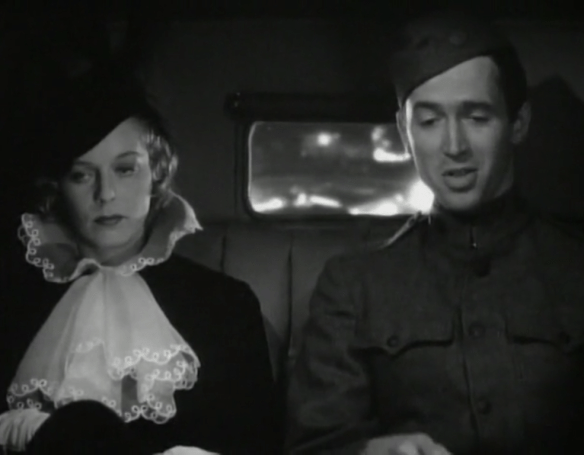
It’s 1917: the eve of the U.S. entry in WWI. The nation is yet to feel the jadedness of everyone else in mainland Europe. James Stewart seems perfectly cast as a fresh-faced soldier boy, or as the contemporary vernacular goes, a Doughboy, named Bill Pettigrew. The whole country seems to be caught up in Jingoism spurred on by the tunes of George M. Cohan and exuberant patriotic parades.

For his part, when he’s not drilling with his buddies, Bill is observing the mating customs precipitated by men going off to war. The counter of the soda fountain boasts a waitress who is a sweetheart to the masses. He gains a lesson in the facts of life.

For Daisy Heath (Margaret Sullavan), it disrupts her rest as she tries to sleep off the previous night’s reveries. She looks perfectly disheveled in a kind of manicured Hollywood sort of way, lounging in her evening dress, hair perfectly askew.

Her longtime socializing partner is the perfectly civilized Sam Bailey (Walter Pidgeon) who looks to have never worked a day in his life, at least in any menial capacity. The war doesn’t concern people of their stature or breeding, and they’d rather not be bothered with its nuisance. She makes a living on the stage where he finances and they spend their evenings drowning in the bubbly ’til the wee hours of the morning.

These would remain two separate stories of two vastly incongruous lifestyles if it were not for Jimmy Stewart’s penchant for stepping into oncoming traffic. You see, he’s from a small, two-horse town where the horses outnumber the automobiles.

So when he’s just about run over, about to join back with his outfit, he finds himself thrown into a cab commandeered by a demonstrative but kindly street cop who’s looking out for his servicemen. However, when the doors close his coinhabitant happens to be Ms. Heath.

Given the circumstances, they get off on the wrong foot as she feels put upon and turns slightly snide, cutting Stewart’s callow Texaner’s naivete down to size. She’s a city dweller with no patience for yokums of his ilk. Again, this initial encounter might as well be the end of the picture right there, if not for Bill’s attempt at a masquerade to impress the boys.

From the story he dreams up, his beau is an extravagant movie star, and he’s got them all heartily impressed (if he’s telling the truth). In other words, they’re rightfully suspicious their dorky buddy could land such a dame.

Next Time We Love proved a fairly stale weepie, albeit boasting the fledgling leads as well as a handsome best friend played by Ray Milland. Here you have an agreeable, if lesser, second-fiddle in Walter Pidgeon. However, while maintaining Sullavan and Stewart, it has more get-up-and-go in its chassis to carry us forward.

Whereas Ralph Bellamy would always be playing this part as the other man on the outside looking in, Stewart gets the benefit of our attentions in his pursuit of a woman from such a different stratosphere than he’s accustomed to. After all, he’s just a “dumb country rube” as she so eloquently puts it, but he’s also got all the charm of Jimmy Stewart at his disposal, growing more assured by the minute.

One second he’s educating Pidgeon in the art of rolling cigarettes, and the novelty of the experience has the other man deciding he wants to put on a show for the soldiers. Far from being jealous, he seems caught up in camp life. Bill couldn’t be happier, getting a chance to show Daisy around camp one evening after the show, and she reciprocates by showing him the city limits.

They take on the raucous funhouse attractions of Coney Island together, and Sam finally allows his jealousy to come out; he’s realizing the depth of his feelings for Daisy even as she becomes more and more charmed by Bill’s brand of geniality. Still, their time together looks to have a short leash due to his impending deployment.

Surely it cannot last. And yet he makes a rash decision so he can see her one last time; he goes AWOL to say goodbye, and she drops everything to join him. It hits the height of the rom-com preposterousness right about here.

Screenshot 2019-12-24 at 90919 PM

At times, Shopworm Angel feels like a testy high wire act to navigate feelings without totally ruffling feathers. How will it fit together between Bill, Daisy, Sam, and the immovable reality of war? The pieces look ill-suited to align and yet on all accounts, the trio carries their parts with a certain aplomb that falls together nicely.

You may or may not be astonished by what happens next, but it sets up a teary-eyed ending where Sullavan goes out with a stiff upper lip singing “Pack up Your Troubles” (with the aid of Mary Martin’s vocals).

Shopworn Angel was reborn as a relic of the Pre-Code era meant for a fresh take with one of its icons, Jean Harlow, who died tragically in 1937. Instead, it got retrofitted with a new cast, including Sullavan, and toned down its content to appease the norms of the late ’30s, bleedings into the ’40s. Daisy was no longer a chorus singer but a stage performer and Sam, in part, gained a more respectable pedigree.

However, equally important to the film’s success is the subtext of Stewart and Sullavan in real life. Because not unlike their screen romance, Stewart had unacknowledged feelings for her even as their friendship and professional careers continued to bloom. His, in part, because she encouraged him and helped with drawing out his own tendencies in the performances he gave. Their first two pictures together are fine proof.

They both met in an acting brigade back in the early days, which included Henry Fonda, Stewart’s longtime friend and also Sullavan’s first husband. However, she was the one who broke first in Hollywood, and it was partially thanks to her encouragement and tutelage that Stewart was able to get a leg up in Hollywood. He got beyond the bit parts and supporting spots MGM was handing him in pictures like After The Thin Man and Wife Vs. Secretary to develop the persona the moviegoing world would come to admire.

The actual screen partnership between Sullavan and Stewart started off in The Next Time We Love with the pinnacle arriving in 1940 when they would star in Frank Borzage’s The Mortal Storm and then their most acclaimed pairing The Shop Around The Corner, which at the very least, has become revitalized through Christmastime viewing (and maybe its tenuous relationship with You Got Mail).

Thereabouts James Stewart would shoot off into superstardom on the silver screen and the Christmastime circuit. It’s a Wonderful Life is a Yuletide stalwart for many folks even if they don’t know a plethora of Stewart classics with the likes of Capra, Hitchcock, and Mann.

But the bottom line is that none of this would have been possible if not for Margaret Sullavan — an actress who was known to be difficult, who cycled through numerous marriages, and who ultimately died in 1960 before her time after struggles with hearing loss and mental illness. Still, do yourself a favor and search out her films.

While not to everyone’s taste, she is a singular actress with her own sense of beauty, assurance, and grace — husky-voiced but often warm and sentimental. Stewart loved her dearly and even after he was married in 1949 and she died in 1960, Sullavan’s lifelong friendship impacted him greatly.

It’s true you rarely forget those you came up with (like Henry Fonda) or those who were fighting in your corner (like Sullavan). Thanks be to Margaret Sullavan for being a friend to Jimmy Stewart and for leaving a body of work worth rediscovering on its own merit. She was a Good Fairy and a Shopworn Angel all rolled into one.

3.5/5 Stars

Little Man, What Now? (1934): Borzage Vs. The Depression

Screenshot 2019-12-29 at 92257 PM

Little Man, What Now? is a curious title although Carl Laemmle seemed to believe in the tale even giving it a public service announcement to make the point very clearly. This is a story for every man even as it seeks to document the daily problems of the contemporary society.

From the opening vignette, the movie preaches a message of peace, tolerance, and minding one’s own affairs like an upright citizen. If you’re like this jaded viewer, you grow wary of a picture with a self-serving agenda, especially one done poorly. Thankfully, Little Man is about a lot of ideas, including the things that get jumbled up inside a person’s head as they try to make their way through the world. Or rather, when they try and make their way through the world connected with someone else in marriage. This is Frank Borzage, after all, so a romance must be key.

One is reminded instantly we are in the throes of the Depression though this is Germany. It’s true much of the western industrialized world was plagued by stagnation and poverty. Herr Pinneberg (Douglass Montgomery) is a clerk and his tyrannical boss might very well be Ebenezer Scrooge though bald, bearded, and more oafish.

His family lives in the adjoining room with a cackling freckle-faced son and his dowdy daughter, who’s not had any luck landing a husband. Her belittling father has tried to up her prospects by hiring three bachelor’s to work for him. She dislikes them all except for Pinneberg. The feelings are not mutual, and he’s already wed. To keep his job, he conveniently keeps this detail a secret. It’s out of necessity. He’s madly in love with his wife.

Margaret Sullavan has a youthful vigor and prevailing spirit of a newlywed about her to be sure, but there’s also something deep and wise layered into her performance. She’s steady as her husband seems to crumble in the face of every change in the winds.

Next to her, Douglass Montgomery at times feels weak-willed and green, almost deserving of the world’s ill-fortunes because he gripes about them so much. And yet it’s difficult to be too harsh with him lest someone puts the mirror (with its three panes) up to my face as well.

We are continually reminded of the world’s many ailings from bigotry to unrest and poverty. Against this, Borzage literally captures them frolicking together in the lap of nature. While they do model a slightly different cross-section of Depression society from say Man’s Castle, they still exhibit the same rapturous affections for their beloved. Throughout the entire film, they remain the deliriously fixated center. What remains to be seen is how the characters and situations around them evolve.

The old man starts feeling positively chummy even as his daughter becomes petty even vindictive criticizing the “other woman” he was seen with. Speaking from experience, it doesn’t matter the age, there is a helplessness, nay, a uselessness that comes with being unemployed, especially when others are counting on you. Hans remains resolute when it matters most. Maintaining his pride and the love of a good wife mean more to him than money.

There’s another wonderfully staged scene between husband and wife as the merry-go-round sends our heroine round and round through the frame as she responds to her husband’s questions about where she’s been. She sheepishly admits she got so hungry she ate all the pieces of salmon from the market and now they have no dinner. Far from being angry, he laughs riotously. This is what love is.

Screenshot 2019-12-29 at 85936 PM

The movie is melodrama in the way that a life is full of smatterings of drama, cycling through the highs and lows, the devastations and elations, that come with the daily grind. The picture never feels like it’s aiming for a particular peak. Instead, it’s content enough to offer up vignettes because we have a couple to hold onto and root for, even as the scenery, the jobs, and the hardships change. They remain our steadfast point of reference.

Next, they make their way to Berlin, which we come to realize is only one decision out of a whole host they will have to make. They meet Hans’s step-mother at the station, a bubbly absent-minded woman always holding onto her inseparable dog.

However, she’s not so genial when you get to know her, and their desperate financial straits don’t help matters any. Thankfully, they have one friend, a most curious fellow named Jachmann. He’s a close associate with Mrs. Pinneberg. His real title, I couldn’t say.

Alan Hale was always the good-humor man but, in this case, he’s also a man with means. He just might be able to set them up with a home and a job, when he’s not kissing hands and laughing his head off, that is. Certainly, he’s some kind of shyster but a generous one with a heart of gold, especially when beautiful girls and their downtrodden husbands are concerned.

Another impeccable image comes when the couple is crammed in bed together as the mother’s party hits full stride just outside their doors. If we talk about the wage gap between our parent’s generation and us, this image of contrasting social statuses within a single family says as much about the Depression Era. However, it turns out she advertises in the papers because her home is actually a house of ill repute, and it carries with it a local reputation. They must move on.

Hans is a naive idealist and yet he rarely seems ready to make the sacrifices and the allowances his wife is; he’s not really willing to live within his means. Their new home has a Seventh Heaven rooftop, though he fails to see its quaint qualities; it’s close to a barn or better yet a stable.

If it was good enough for the baby at Christmastime, it’s good enough for them in their own humble estate. After all, being a Little Man is only in the eye of the beholder. In the eyes of his devoted wife, there couldn’t be a greater, grander, more important person to fill up her world.

As for the “What Now?” only time will tell. They rightfully state, “We created life so why should we be afraid of it?” What it does supply is this renewing sense of hope in the face of uncertainty. Again, it’s akin to the foremost Borzage pictures. It’s a testament to his convictions that he’s able to remain a romantic during the dog days of the Depression, and he keeps us believing in the power of love even within these dire straits.

3.5/5 Stars

Only Yesterday (1933): Margaret Sullavan Shines

Only-Yesterday-1933-Lobbycard.jpg

In the opening designs of Only Yesterday, the New York Stock Exchange is encapsulated by its usual hubbub only to hit the skids of pandemonium when the market crashes. We’re talking about the Big Crash of 1929. It plays as the backdrop to our story, very much functioning as current events.

The backstory makes the film fall even closer to home. Because like just about everyone else, Universal Studios was saddled with their own financial troubles so it seems fitting Only Yesterday was the project made to get them out of the doghouse and salvage their holdings.

If we are to believe this film, part of what Black Tuesday did was totally humble both the rich and the poor (and the movie studios) in their separate estates. Before the sheer magnitude of the devastation has spread, we get a front-row seat at the party hosted in the home of Mr. and Mrs. James Emerson.

What becomes immediately apparent is the buzz of the atmosphere with tumultuous music and a smattering of glib zingers. There’s a cascading frivolity on all sides to go with the idle chatter supplied by such gossipping fiends as Franklin Pangborn.

However, Mr. Emerson (John Boles) comes home positively shellshocked because he’s been cleaned out. He’s in no state to make merry opting to disappear into his study. It’s in the backrooms and corridors where the crushing reality sets in, to the point of private devastation.

From the outset, Boles comes off as a sympathetic figure and a calming presence even as he comes to terms with the weight of the Crash and its innumerable implications. It’s true the man of the house looks to be teetering on the brink of suicide, if not for a mysterious letter on his desk.

He opens it up and thereby begins the heart and soul of our story. It is partially his story and someone else’s as well; it began before anyone knew of a Depression, in 1917. If you remember, without leafing through your history books, “The War to End All Wars” was reaching its conclusion.

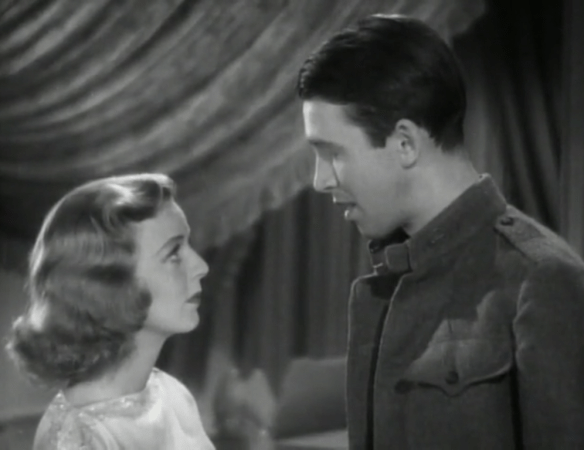
Back then James was a dashing soldier, unmarried, and still looking to finish up business overseas. It was on one such evening back in 17 where he met a buoyant young woman (Margaret Sullavan in her stellar debut) on a dance floor.

She is the picture of youth and her voice has yet to reach depths of only a few years later Regardless, precocious Mary Lane comes out of the woodwork to confess her love for him from afar after well nigh 2 years!

He takes it good-naturedly enough, altogether flattered anyone might look at him in this manner, and it leads to something — a dance and then whatever might come next. If the cynical would term it a one-night-stand, then it’s a little bit of paradise and Mary holds onto the evening.

In her mind, it’s the first of many, if not for the fateful news that the 309th is engaged to be shipped overseas. This is the event her whole life seems to hinge on up to this point; one evening was an entire lifetime. It just goes to show how the same event can take on differing degrees of resonance for two people.

It happens so quickly as to totally catch the audience off guard. James is off to fight a patriotic war and Mary is going up to New York as to not besmirch her family with her ignominy; she is with child.

Shopworn Angel would capture much the same jingoistic “Over There” milieu a few years down the road and yet that time around, not only would Margaret Sullavan be the veteran opposite a still callow Jimmy Stewart, the Production Codes would exert themselves more rigorously.

In terms of solely content, there’s little doubt Only Yesterday is armed with the uncompromising brazenness of the Pre-Code era. This includes a broad-minded perception of a woman’s place in an evolving society. It makes for a fascinating bit of observation, especially considering how Classical Hollywood would eventually settle into a status quo — a cult of domesticity tailored to the mid-20th century.

However, in Only Yesterday, we get Aunt Julia (Billie Burke), a progressive woman who has a life involving such independent-minded things as bob hairstyles and full-time employment. Aside from The Good Witch, Burke often played ditzy oddballs in numerous comedies where she wears on the viewer. Here there’s something resolute and distinctly likable about her because she does beat to a different drum.

The words leaving her lips are both an encouragement to her rejected niece even as they color how she sees the world in the 1930s. She has effectively worked to “kick the bottom out of the bucket called the old double standard” and she fervently believes “Today a woman can face life as honestly as a man can.”

Aunt Julia also helps to temper the situation swirling around Mary helping ease her mind. As a word of comfort, she says, “It’s no longer a tragedy, it isn’t even good melodrama, it’s just something that happened.” Meanwhile, Burke’s jovial suitor (Reginald Denny) seems like a playful generally affectionate chap. This portion is one of the film’s most carefree as a result.

Armistice eventually comes and with it parades of victory. We know what must happen now: a reunion. There don’t seem to be many close-ups throughout the film, but Sullavan gets a few of the most crucial ones when she’s reunited with her man only to realize he doesn’t remember her, having found someone else to love (Benita Hume). It’s a devastating bit of exposition and her face says it all.

If Gold Diggers of 1933 details a forgotten man, she’s a forgotten woman, although she’s not about to wait around to be noticed — she has a son to look after. It shows the depth of her character.

Mary shares a bit of the sacrificial devotion of Stella Dallas or the tragic unrequited point of view a la Letter from an Unknown Woman, maintaining a thin line of communication with her former love through a string of telegrams.

What’s astounding is even in her youthfulness — at only 24 years of age — Sullavan’s more than able to carry the weight of the performance, not only a vivacious ingenue but a mother who’s forced to weather the weight of the world alone. Like Stanwyck a few years later, they prove themselves wise far beyond their years. What a way to enter Hollywood.

Finally, it happens and The New Year brings her face to face with the man she once knew. Boles feels more and more of a cad over time, whether he was meaning to be or not. He has a steady demeanor, a serenity in his favor, but after being so ignorant of one woman, he manages to rebuttal his wife as well, all in a very civilized manner, mind you.

Even as Billie Burke represents something else, there’s still a prevailing sense that women can be cast aside for the sake of a story. Sullavan, on her part, exudes a quiet regality even unto death. What Mary has, however, is a legacy in the life of her child, and in him, like with any life, there is still some hope for the future.

From a historical perspective, there’s a lot to be learned. Even back then a young lad would rather go to the pictures to see Chaplin than read a book, and all the women want to look like Greta Garbo — one of the most sought-after glamour girls of the 30s. Some things never change.

It’s rather sobering to read Margaret Sullavan’s son Jimmy Jr. was played in real life by Jimmy Butler, who was affected by WWII like many were affected by the previous war — killed in action in France at the age of 23. It grounds Only Yesterday in real tragedy.

3.5/5 Stars

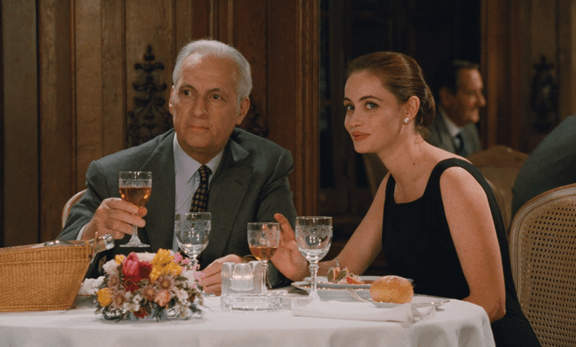
Nelly and Monsieur Arnaud (1995): The Opposite of Loneliness

nelly and monsieur arnaud.png

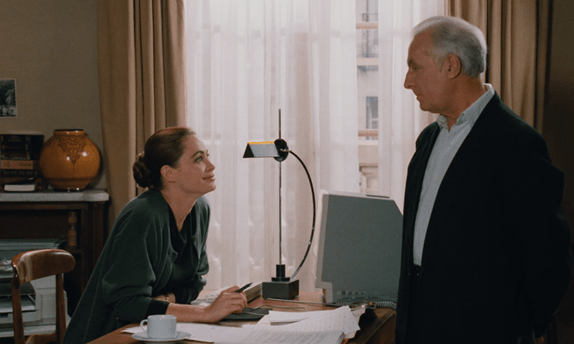
Claude Sautet’s Nelly and Monsieur Arnaud positions itself as a certain type of film. There are no thrills about it. We come to notice the normal rhythms of shot-reverse-shot along the 180-degree line. This comes because the movie is so invested in conversation. Unlike his earlier Max and The Junkmen, there is no crime or bank robbery to spice up the narrative. It relies solely on the presence of its two titular stars.

You could go two ways with this. Either you find Emmanuelle Beart’s face deeply enigmatic or it’s empty, all but emotionless as she goes through the paces of life. Because it’s true her performance is defined by her expressions or lack thereof. Her pursed lips, unflinching doe-eyes, the self-assured posture.

Likewise, you could say it’s either crisp or bland in both content and manner. Each verdict is subjective, even preferential, and thus I am open to giving Beart and the picture the benefit of the doubt.

Opposite her is Michel Serrault playing a distinguished, older gentleman who has seen more of life yet bears his own share of hangups. The common denominator is not just loneliness in a foreign land like a Lost in Translation; I think it goes beyond that to a want of day-to-day companionship, even as a form of convenience for both parties.

Because one has to admit although we’ve seen these types of movies play out, it’s still an unlikely friendship, platonic though it maybe. They receive a reintroduction at a cafe through a mutual friend. We know they come from two different stations in life. He with his divorced wife and grown kids. She with a failing marriage to a couch potato of a husband.

Fortuitously, Sautet’s “drama” does not stoop to illicit levels in order to be novel. This would waste the premise. Instead, it readily courts digressions that more than suit the amicable characters and the subdued world they’ve been born out of.

Monsieur Arnaud offers to sign her a blank check, no strings attached, and he genuinely means it. She agrees to help him with his memoirs. Perhaps she’s partially repaying a debt yet there’s also a desire to be altruistic. She sees a bit of a need and also deeply admires what he represents. Computers scare him; “They have memory without memories” as he says.

Nelly comes to know the judge-turned-businessman through the dictations of his autobiography. Moment by moment, he waxes poetic or reminiscences about his wife. He notes how “one day he became a monster” and they divorced; he must have been in an acute stage of his normal misogyny at that time. It’s terrifying to note the utter banality of the admission.

Meanwhile, behind them, his vast study full of volumes and texts is deconstructed after he gives the okay. It’s as if he’s cleaning up his life; all those material possessions he has don’t serve much of a purpose anymore.

nelly and monsieur arnaud 2

These are our main players, but around them are a plethora of supporting characters, in fact, more than one might expect in a story like this. We meet Monsieur’s daughter on one occasion and get acclimated to the family life of their mutual acquaintance Jacqueline, who proved instrumental in introducing them. Nelly meets someone — Arnaud’s publisher — who very confidently asks her out to dinner. She accepts. Her own spouse is seeing another woman, and they all seem very civil about the arrangement.

Certainly, Nelly and Monsieur Arnaud fails to cater to Hollywood expectations, and, therefore, it succeeds by capably taking on its own alternative outcomes. Because we don’t feel privy to their lives. At first, it seems there’s no chemistry or at least nothing that endears them. The mundane building blocks that make up their interactions are precisely that. It’s relatively easy to lose interest and still, somehow it grabs hold of me just enough to leave an impression.

I’m not an adequate judge to discern whether this is solely a blatant generalization, but many of the most remembered actresses and actors on the European landscape in the last 25 years seem to play as the antithesis of the Hollywood elite. Yes, they share beauty and charisma, but they approach characters and acting in a different manner altogether.

It’s not full of hyper-action, histrionics, or emotional outpourings all the better for telegraphing a performance. Their work becomes focused instead around muted, toned-down reactionary micro-actions where aloof and often subtler approaches to scenes take precedence.

There is one individual scene in Nelly and Monsieur Arnaud where they do blow their tops in what feels highly uncharacteristic of both of them. It appears to be a turning point in their relationship. The beginning of the end, if you will. As she gets up from the computer and rushes out of the room toward the door, she turns back briefly. Her face is almost sheepish. He looks on rather glumly (wishing he could revoke the words that came out of his mouth, no doubt) as she says she can’t come the following day. “The day after?” she asks tentatively. He nods as she exits.

It’s so minimal, but to me, it articulates the essence of this film. We get this nugget of drama and normally we are told this is what we are building towards; this is what we are meant to be drawn to when, in reality, it’s the final act of mitigation that feels the most human. Because we are not usually hot and cold people. Our emotions are a continually fluctuating gradient of everything we think and say and express on a given day. The scene’s simplicity captures this rather well.

I had also briefly forgotten what Sautet’s earlier film was blessed with. The house party near the end reminds us. His earlier picture had color and joy. Although it can get overshadowed by all that is dour and melancholic, these moments prove integral. Music, and dancing, instances where people feel alive even for a minute. It gives them a momentary lightness of being to counteract any negativity. This only makes relationships more complex.

Nelly’s boyfriend is not content in maintaining the status quo like she is; he wants to move in together. The other option is the door and since she’s not ready for further commitment, she exits the restaurant dejectedly with one last furtive glance. Of course, she goes to Monsieur Arnaud, and he offers up his empty home. It’s slightly uncomfortable in the subsequent interlude as he watches her sleep peaceably. We edge into cringe-worthy territory…

Yet again we are reminded how much he cares about others opening up to him. He wants to be wanted by others so far that he’ll give them checks and bend over backward, even being “blackmailed” by an eccentric former work associate. Is it a sense of chivalry left over from earlier generations? Perhaps. It’s also a symptom of late-onset loneliness.

The perfect capstone is a visit from his wife; her partner has recently died and now they are both alone. Although they are not completely patched up as a couple, they do agree on a spur of the moment excursion to see the world and the grandkids, gravitating toward each other under the circumstances. Again, it’s not romance, but it exemplifies how people need other people. Regardless, it catches not only Nelly but the audience off guard with the inherent abruptness of it all.

Those seeking out some obvious closure between our title characters will not find it because it proves to be a felicitous anti-Hollywood ending. Not because it’s a total downer but for the very fact there is no illusion of finality. The undetermined states of life are slightly unwonted and yet at the very same time, it fits Nelly and Monsieur Arnaud to a tee. I have only had a brief acquaintance with Claude Sautet to date. However, from the little I know of him, it seems like a fine picture for him to end his career on. It’s not for everyone but then again, what movie ever really is?

3.5/5 Stars

Adua and Her Friends (1960): Starring Simone Signoret

adua and her friends 3.png

It’s movies like Adua and Her Friends from director Antonio Pietrangeli that remind me of the elemental joys of watching movies you’ve never heard of before. It’s a humbling experience to acknowledge how much of cinema there still is to explore and how names like his sometimes arbitrarily get past over.

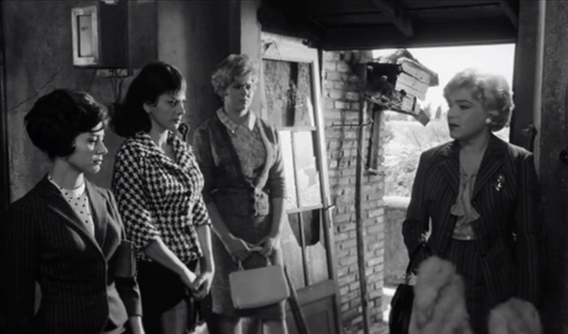
Because the only reason I ever made my way to the picture was on the merits of the cast alone and taking stock of the names, it is quite the epic ensemble. Simone Signoret anchors with her typically self-assured beauty. Sandra Milo is frisky and if not for her brunette locks, certainly a dumb blonde archetype. Then, Emanuelle Riva, stretching her own range, is angsty and cross with the world that women such as they are subjected to. The three actors are a trio of standouts along with one very special guest to be mentioned later.

Our opening image is a telling one with peppy jazz playing against the brick buildings and cobblestone streets. These exterior shots give us some sense of the adjacent world: the caverns of a local brothel. We learn they have been shut down by the Merlin Law (1958) and must find some new way to subsist.

With no real prospects, four of the women set out to make their own future. They buy up a run-down property partially secluded from town, to turn it into a restaurant, strictly on the level. This is no Risky Business. I could see them remaking this film generations later only for it to lose all of its flavor and charm in translation.

Because they hit every single roadblock imaginable along the way. The nightmares of going into business with starkly different personalities chafing against one another. Managing to get off the ground with the exorbitant amount of startup costs thanks to a deal with the devil. Having your soft open for a handful of customers only to run out of ingredients and any amount of things to feed them. You name it and they have the issue.

But the impediments don’t feel obvious nor the humor madcap and over the top. It finds a happy medium in a perceptive often nuanced equilibrium fluctuating between hardship and laughter. The jazz and sunny countryside neutralize any hint of a dramatic outbreak and though the picture is a tad long, it does allow a certain width and breath to cycle through all sorts of scenes.

Thus, the buildup of the restaurant from a fledgling even flimsy enterprise into a bustling, highly lucrative undertaking, is all the more believable. We see it happening and get to relish the process. This is the movie at its most delightful. It’s not as purely comedic, but even for the briefest of moments, you cannot help but recall Playtime’s own bungled restaurant opening. The difference for these women is their very livelihoods are more obviously at stake.

It plays best as scenarios and momentary interactions. The Father from the local convent drops in, trading conversation and well wishes for the secondhand scraps to serve as slop for his pig. The first customers start trickling in, enticed by the “restaurant” sign over the arch, which leads to an all but empty pavilion lined with tables.

adua and her friends 4.png

Each woman has a man in their life, whether physically present or generally absent. Milly hooks the nicest beau of the bunch, smitten with both her and her cooking. Marilina courts the most demons and tries to steady her tumultuous personal life by bringing her young son to live with them. His upbringing causes some squabbles, which ultimately culminate in his baptism.

It’s a poignant moment reflecting the women entering a realm of religious piety. It’s not so much that they have been radically changed, but the way they are perceived and how they make their living gives them a new lease on life. The goodness and inherent decency in them are given a chance to shine through. One is quickly reminded they are not defined by the men who drift in and out around them. The cornerstone of the entire film is their female camaraderie — the affection they hold onto — even when they bicker amongst themselves.

All the villains in the picture are of the opposite sex, and it makes sense given the cultural framework and their past profession. They’ve been relegated to a specific caste of society and in their efforts to break free, they meet the hegemonic forces that be. The most blatantly obvious antagonist is the peremptory Doctor Ercoli (Claudio Gora), who bankrolls them and requests 1 million lire a month for his recompense. When he actually inspects their premises, it reflects just how pitiless he is and how powerless they remain. It still feels like they are owned.

The rest of the louts are more like abject scoundrels and losers. Lolita’s purported beau has all but run off with their money and when he does show his ugly face again, he has the gall to try and pump her for more, spinning tall tales of going on the road again where he’s a big name.

adua and her friends 1.png

Their love is not lasting nor their promises secure. Of course, Marcello is charismatic as a car salesman; he always seems to be in all his pictures. There is something pathetically despondent about him at times, but it only serves to mask his swings in infidelity.

Signoret’s moment of ultimate realization is a bitter turning point. She recognizes who he really is and leaves him to his own devices. In the moment, she’s deeply hurt and yet she has an unassailable resiliency to take every beating with poise. Not that she’s unemotional, but she will not be totally trampled by the world around her even as she is wounded.

They reach their lowest point, completely destitute and scandalized, despite everything they did striving to make an honest living for themselves. Instead, they get their pictures plastered all across the pages of the red hot Il Tempo.

Their final act of rebelling is a cathartic one as they go out on their own terms. However, there’s more. Even at its most abysmally low, Signoret soaked head to toe in the rain, jeered by the ladies on the streets, she still maintains her composure.

She’s fallen far but like another French icon, Jeanne Moreau, she captures the screen and even if she’s been toppled, there’s no way to totally crush her. If nothing else, she commands our undivided attention and makes Adua and her Friends worthy of its title. They are a force to be reckoned with no matter what the tabloids might read.

4/5 Stars

Le Beau Serge (1959): The New Wave Goes Provincial

Screenshot 2019-12-12 at 81146 PM.png

Claude Chabrol was looking to shoot his first film in Paris but for budgetary reasons, he decided to set his first picture in the village of Sardent where his mother grew up. Le Beau Serge could not occur in any other place.

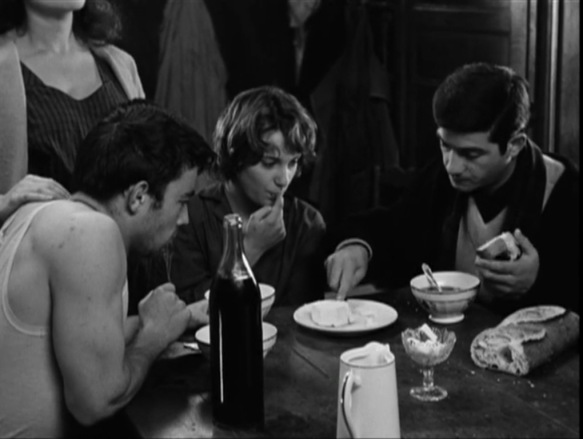
True, the opening shots are universal. Francois (Jean-Claude Brialy) riding the bus into town, there to be met by his relations, or actually someone who turns out to be a childhood friend, the amicable baker Michel (Michel Creuze). He’s seems made for a sleepy, humble town such as this — content with the life he has around him.

That this might be the beginning of the New Wave in the rural countryside is a curious conclusion. Because it’s true Chabrol was one of the boys at Cahiers du Cinema, soon followed up the more well-remembered works of Truffaut and Godard.

However, it’s also a timeless tale you might see out of any year if you were to pick it out of a hat. Because coming from a small town or returning to a place you haven’t seen in some time are touchstones many of us resonate with. I’ve never dug very much into Claude Chabrol’s filmography aside from a couple stray diversions like Les Biches, but it’s some comfort starting at the beginning.

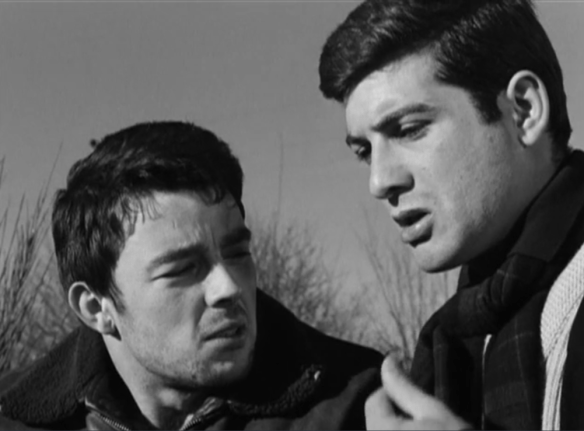
The title gives us some minor inclination. Even as Francois and then Michel are introduced initially, we know Serge (Gerard Blain) is a person of great interest, and it’s true he represents something elemental to the story. He is plagued by demons Michel will never know. When we first get a glimpse of him, he’s quite royally soused, and it catches Francois off guard. He knows him from a different time and is worried about his boyhood chum.

What becomes evident are the themes of duality due to the character foils Chabrol posits. The one point of criticism is how the picture gets carried away with the mood music as if in his youth the director’s not brave enough to be still; he still needs some pulse going through the story. Although perhaps we must temper this because although cinematically you can witness some of the same verve of Truffaut — the type of energy that would come to define the Nouvelle Vague — this movie is generally quite reserved.

Still, it does have these latent vigours of youth on its side ready to be tapped into. There are brief moments where Blain gives off the angst and bellicose of James Dean even as Brialy plays his prim and proper counterpart, Francois, who has returned to his childhood town to reclaim his health. He’s sickly and the country air is meant to do him good. In fact, it seems like every 10 or 20 minutes someone is inquiring yet again about his well-being.

But he’s also the last person Serge wants to see in his ignominy. He’s married out of guilt, a drunk, and an utter nobody. Instead of Jim Stark’s desks, he takes a slug at granite walls, driven by this same reckless, at times feeble, animal magnetism.

Screenshot 2019-12-14 at 93527 PM

It’s curious to note Chabrol takes on religion more in the bent of Eric Rohmer even as Francois makes a visitation of the local priest (Claude Cerval) and begins an ongoing dialogue on the state of the local community.

They are themes replayed in the likes of Winter Light and Calvary where the man of the cloth bemoans the fact the adolescent generation, who are still around, no longer believe in anything — even themselves, as Francois interjects. It’s yet another lens to put on not only Serge but possibly Francois and then Marie (Bernadette Lafont).

She’s the town’s harlot, slinking around with a new boyfriend on any given Sunday and reconnecting with Francois on his return. But she too is humanized by the peripheral presence of her alcoholic old man Gomaoud.

Meanwhile, Serge totters through the cemetery spouting off garbled exposition except, this isn’t what immediately stands out; there’s something engaging about the whole scenario. Chabrol does well throughout the entire film to utilize the real, honest contours of the entire town in a seamless manner, and it’s in a moment like this where it really comes to bear. The same cemetery plays into a confrontation between Francois and Glomoud when he accosts the old man for his behavior.

The personal comes to a head at the local dance hall — the most humble of spaces plucked out of a simpler age. Francois and Serge end up fighting over a girl at a party with Serge expressing the violence we always knew him capable of. It almost feels like he has left his friend for dead, whether or not that’s entirely the case.

This might have been the end, with Francois leaving on the same bus dejected, going back to the city, never to see his pal again. Yet he refuses to leave for some inexplicable reason. Soon their world is ensconced in a layer of snow, making for a gorgeous final act. It’s nature’s way of suggesting — and Chabrol’s too — maybe our sins can be wiped away or at the very least forgotten.

Francois is paid a visit by the local priest entreating him to leave for the sake of his health. But he’s resolved to stay — to be an example — and hopefully help his old friend find his way somehow. It’s the idealism shining through again, believing he can help, that he can be an answer and a savior in some sense.

Once more we must attribute these feelings to the bull-headedness and the pride of youth. It can be both a blessing and a curse. It’s what makes Serge resent his friend, and it’s why his friend thinks Serge still needs him. His act of charitability involves extending a hand of support to Serge’s stoic and increasingly pregnant wife Yvonne (Michele Mertiz). Francois can’t be Serge’s ultimate savior and maybe a newborn child cannot right his life, but in a human sense, it’s still a sign of hope just like new-fallen snow.

By the time Le Beau Serge is over, it’s elementary enough to realize why it’s been overshadowed by the freneticism of Breathless or even the exuberance of 400 Blows and Jules et Jim. In its own way, it’s a fine entry onto the cinematic stage for Chabrol. While it offers youth, it also supplies a deep, even surprising, thoughtfulness.

4/5 Stars

When a Women Ascends The Stairs (1960): A Prescient Portrait of Japan

When_a_Woman_Ascends_the_Stairs

A version of this review was first published in Film Inquiry

If director Mikio Naruse’s Floating Clouds is a film about making peace with the war years, then When a Woman Who Ascends The Stairs is a far more forward-thinking endeavor. In fact, I would say it’s a near-prescient portrait of where Japan has ventured now over 60 years onward.

One lady comments you can still see the old Tokyo but it’s obvious — even the classy scoring and the generally sleek compositions suggest as much — modern society is upon us in full force.

It’s the 1960s built on the bedrock of a post-war economy. In a highly fashionable area like Ginza — renowned even today for its shopping and glamour — the western influence is undeniable. Most of the film doesn’t take place on the main streets, however, but in the back alcoves in the lines of bars hidden away. Even here the American influence is felt with many of the bar names deriving from English.

What’s presented is a different type of life, even as it presents its own fashionable conception of the world.  Mama-san (Hideko Takamine), as she is known by all, is one of the women living in this world. She is a kind of hostess. If it’s a euphemism or not, I can’t entirely say.

Still, her entire existence can be summed up by one early shot. The daunting stairs winding up in front of her toward her work. In a practical sense, they lead up to the bar she frequents every evening dutifully, but Naruse’s shot comes to represent something far more.

I’m not sure if we could call it the stairs toward the glass ceiling exactly, but it is true she enters a new world when she steps into work every day. She must fortify herself. She has an untenable veneer built up over the years.

It braces her to be the perfect hostess to all, balancing her customers’ entreaties and come-ons with the utmost ease and floating from each conversation with impeccable tact. Meanwhile, behind the scenes, she works with her longtime manager and bill collector (Tatsuya Nakadai) trying to eke by paying off the creditors they must rent from.

It’s never a sustainable life. Trying to keep customers happy while getting by on only the smallest of margins. Even a regular, named Minaboe, has started frequenting another place. His absence hurts her business. Thankfully, there is other clientele to work on and so she does her best to keep them happy while never quite acquiescing to their wishes. For 5 years in this tawdry business, she’s kept strong in this regard.

Because this is a film all about sex really, though we never see it outright. And if it is about sex, then it’s only as a commodity, a tool, a bargaining chip to be used. Despite being a story about women giving companionship to men on their business trips and away from their wives, for the longest time, no notion of actual love is developed. This should not catch us by surprise.

It is business first. Mama-san is expected to supply small talk and the girls that work under her flirt with the patrons over drinks. But as Keiko later admits, when she returns to her humbler roots, it’s all a created fabrication. They wear kimonos, buy perfume, and pay for taxis and apartments they can barely afford, way above their paygrade just so they can maintain the fantasy for their obliging audience. Meanwhile, there’s another side, a lot more disheartening and downright heartbreaking.

It’s the undercurrent of Tokyo if you wander into the red district or happen to step outside the confines of the beautifully cultivated exterior. It’s not a lie — all the things in front — but there is so much more to contend with. Love hotels, geishas, and hordes of hostesses to go with them. What do they beget? Among many things suicide, loneliness, and helplessness.

If there is any other film I found myself cycling back to it was actually Imitation of Life, directed by the master of luscious American melodrama Douglas Sirk. It also was about a strong single woman trying to make her way in a world all but dominated by men. If it was true in America, it was even more so in an albeit modernized Japan.

Hideko Takamine faces much of the same struggles as Lana Turner in the movie from a year prior when it comes to her own dreams — in this case, gathering enough funds to open her own bar. The only way to get ahead seems to be settling and giving in to the constant implicit or explicit demands of men. Because they hold the power. Society has certain set expectations. So they must play the game or live a life like hamsters on a wheel, in a constantly spinning wheel of survival.

Turner’s life is equally complicated by her relationship or lack thereof with her daughter (Sandra Dee). But in a manner indicative of Japanese culture, Reiko must deal with a nagging mother and a timid brother who are constantly dependent on her for money. It’s the tug and war between familial duty and what she aspires to.

It starts being a film about love once Mama-san finally relents and opens herself up to be hurt. She’s finally human and loves, and the scenes that evolve out of this development are the film’s most devastating. What makes them even more impactful is how they just keep building off one another, scene after scene. There is no relief in this barrage of pain, rejection, and heartbreak that our heroine is taxed with.

There was a certain continuity created between Hideko Takamine and Masayuki Mori thanks to their work together in Floating Clouds and yet the relationships go still further. She’s proposed to and berated and lied to and loved. And yet at the end of the day, she must put a cap on her emotions and saunter up those same solitary steps and put on the genteel facade expected of her. The final action, the smile on the face, and then the token salutation, a last touch of irony.

Even with its touches of humor, in an expression or a line of dialogue, it’s nowhere close to the campy, technicolor crescendo Sirk cooked up for Imitation of Life. But as Sirk was capable of dissecting American life, I would wager Naruse is equally perceptive and adept when it comes to Japan.

Satire and sarcasm infused in drama do not function in the same manner in Japan. In its place, Naruse commits irrevocably to his story and consequently provides another moving examination of his culture. It has a lot to say about a Japan that still seems to exist to this very day in ever-evolving forms.  Loneliness, suicide, and patriarchal ways are not just specters out of the past; they are alive and well to this day.

My last thought is only this. Setsuko Hara was the first Japanese actress I truly recognized across a body of the work; she was a luminary personality, and Hideko Takamine might be right below her, proving herself to be incomparable in her own right.

The performance she gives her yet again is so potent with the range and verisimilitude to all but carry the picture. She’s spellbinding, beautiful, and simultaneously breaks our hearts with the depth of her vulnerability. I won’t be forgetting it any time soon. Because in one go she effectively represents an entire subset of human beings and imbues them with unmistakable pathos.

4.5/5 Stars

Hell to Eternity (1960): The Story of Guy Gabaldon

Helltoetpos.jpgAs someone of Japanese-American heritage, it’s become a personal preoccupation of mine to search out films that in some way represent the lives of my grandparents and their generation. This means the rich Issei and Nisei communities of Los Angeles, the subsequent internment camps, and even the famed 442nd Infantry Battalion.

Obviously, Hollywood has always had a complicated history with minorities, mirroring broader historical context. Thus, the opening images of Hell to Eternity feel like a bit of a surreal pipe dream — something I’ve looked for a long time and finally discovered. You almost have to pinch yourself into believing the industry actually made this movie.

A young punk (Richard Eyer) and his friend (George Matsui) stare down a trio of thugs who look ready for a fight. Its fitting proof Phil Karlson’s bloody knuckles aesthetic can enter the schoolyard as the two battling adolescence are pulled apart by their physical education instructor (George Shibata)

Japanese-Americans and their culture play a rich and integral part in this biography of celebrated war hero Guy Gabaldon. No, he was not one of them, but he might as well be. Coming from a broken home, his only place to turn is the Une family who gladly welcomes him into their home.

In some small regard, these scenes play out quaintly if not altogether conventional. Guy begins to pick up Japanese quickly and even teaches his benevolent “mama-san” a few terms by pointing to objects around the house. Despite, the stilted acting and out-and-out authenticity aside, the images themselves are powerful. And some background is in order on multiple accounts.

We have George Shibata who was the first Japanese-American graduate out of West Point. Then, Tsuru Aoki was one of the premier stars of the Silent Era even before Sessue Hayakawa. But the connections run deeper still because due to their Hollywood roots and the anti-miscegenation laws at the time, Aoki and Hayakawa wedded and remained married until her death in 1961.

The slightly older George is played by an extremely youthful George Takai. Meanwhile, there’s further Japanese-American representation in Papa-san, Bob Okazaki, and the likes of Reiko Sato and Miiko Taka.

It should be noted the Unes are some sort of amalgam of the real-life Nakano family whose son Lane fought in the 442nd and later become a short-lived actor in the likes of Go For Broke! and Japanese War Bride (1953). All of these basic details are based on fact.

However, with this necessary context in tow, it’s about time to turn our attention to the man himself who held such a unique background in his own right. Because make no mistake, Guy Gabaldon is certainly worthy of the biopic treatment even if a picture like this can’t quite do the man justice. That’s fine.

Although what it develops into is an unwieldy drama and having Jeffrey Hunter portray Gulbadon is one of the most hilarious examples of overstated Hollywood casting.  It feels like having John Wayne play Audie Murphy. However, what Hunter lacks in similar likeness and physique, he more than makes up for by capturing the resiliency of his subject. He offers believable candor and the embodiment of American exceptionalism.

Allied Artists was a B movie mill and Hell for Eternity was their wealthiest, most expansive undertaking to date, with their number one moneymaker on assignment: industry workhorse Phil Karlson. In one sense, Karlson seems well-equipped for some elements and then woefully disadvantaged for others.

Hell to Eternity proves itself to be wildly uneven because without jumping the gun, the opening scenes are quietly revolutionary and truly unprecedented when you consider Hollywood’s track record. Then, there’s a shift as his family is unceremoniously shipped out to internment camps, and you have Guy rushing to every branch of the service only to be rebuffed at every turn. Still, his remarkable qualifications — namely his Japanese abilities — gain him an in-road.

We also have the introduction of his buddies. Despite getting off on the wrong foot, Sergeant Bill Hazen (David Janssen) proves himself to be an intense adversary and an even fiercer companion. As they foster mutual respect and camaraderie, it becomes evident he’s the type of buddy you want in your corner. And if he’s too intense, the swinging, snapping, undulating lady’s man, Junior (Vic Damone), more than brings the party.

It’s around this time where the film reimagines itself as what could easily be considered an entirely different movie. The midpoint in Hawaii has them left entirely to their own devices with one glorious night of freedom out on the town before they ship out. Not to be disappointed, they are treated to a titillating striptease show, courtesy of Sato, with the steamy hot jazz cutting through the night. The men cheer on the women with a rueful round of inebriated leering.

Where does this all end? How does this tie into Guy Gulbandon’s story; in short, it doesn’t. What does happen is the softening of the so-called “Iron Petticoat,” a woman journalist, who has gained notoriety for her prudish ways. It’s by far the most cringe-worthy sequence as Ms. Lincoln (Patricia Owens) lets her hair down, as it were.

What follows is a barrage of lingering shots over heels, tights, legs — you get the salacious idea — and from a distance, we can admit to it being fairly risque for the 1960s. It becomes amusement for their entire company. The woman’s impregnable defenses have finally been conquered. Whatever that means.

However, with a few abrupt cuts the whole meaning of these scenes is almost salvaged. Effectively, there is no interim. We get thrown directly into the campaign and their wild bender of an evening is only a distant memory as they cut their way across the shores toward the enemy embankments.

Even as Karlson isn’t able to make every crosscut of action fundamentally compelling, he’s far more in his element amid the volatility and constant barrage of bullets and bodies. What felt initially so quietly groundbreaking and devolved into needless exhibitionism, finally settles into his forte.

Here he can dig knee-deep into the nitty-gritty and give us something that packs a wallop. Hell to Eternity is a lot less sanitized than I would have surmised, especially given its era. However, there is no mincing when it comes to what we are privy to on the simulated battlefield. He capably mobilized thousands of extras from Okinawa for some of the most spectacular scenes where the large scale is matched with tumultuous elements of very intimate trauma.

And even as the skirmishes settle into a kind of chaotic equilibrium, Galbadon — using his Japanese skills — earns his moniker as the “Pied Piper of Taipei.” Using the talents he’s been gifted by his incredible upbringing, he does his best to coax the already cowed but testy enemy to surrender using their native tongue.

The one figurehead emblematic of the proud foe is portrayed by Sessue Hayakawa, emulating his similar role from Bridge on the River Kwai as a derisive Japanese officer. Once Galbadon can conquer him, he’s all but won the fight behind enemy lines. More than anything, I’m disappointed in the fact that we never circle back around to his adopted family nor the exploits of his brothers. Still, for more context, Go For Broke! plays as a decent companion piece about the 442nd.

So although it’s an imperfect and often befuddling vehicle, Guy Gulbadon was a hero more than worthy of a biopic. Regardless of any faults, Hell to Eternity is bristling with not only action but specific depictions of a historical time and place that often remain overshadowed in Hollywood to this day. It’s been one of my missions to discover more representations of Japanese-Americans in American cinema, and in this regard, Hell to Eternity is a stirring success. It can’t help but be groundbreaking even in spite of its unassuming nature. I look up at the screen and there’s a personal connection.

3.5/5 Stars