Running on Empty (1988): River Phoenix, Fire and Rain.

I know only very little about River Phoenix’s upbringing but somehow it’s easy for me to make the leap from his real-life existence to his family in this movie. Running on Empty has to do with an unconventional upbringing.

Danny Pope (that’s his real name) has grown up with his little brother and two parents Annie (Christine Lahti) and Arthur (Judd Hirsch), who have lived on the run from the feds since the early 70s. They were implicated in an anti-war protest at a napalm plant that left a janitor dead.

The Popes are a tight-night clan in spite of their unusual circumstances or because of them. Somehow in this environment of constant flux and fresh identities, they’ve managed to raise two boys who are loving and smart.

Danny enrolls in a new school and immediately distinguishes himself on the piano. He seems like an obscure prodigy because no one knows anything about him and his benevolent music instructor (Ed Crowley) gets little information on him. Still, he’s talented and generally considerate. He doesn’t play into the expected stereotypes of a malcontent.

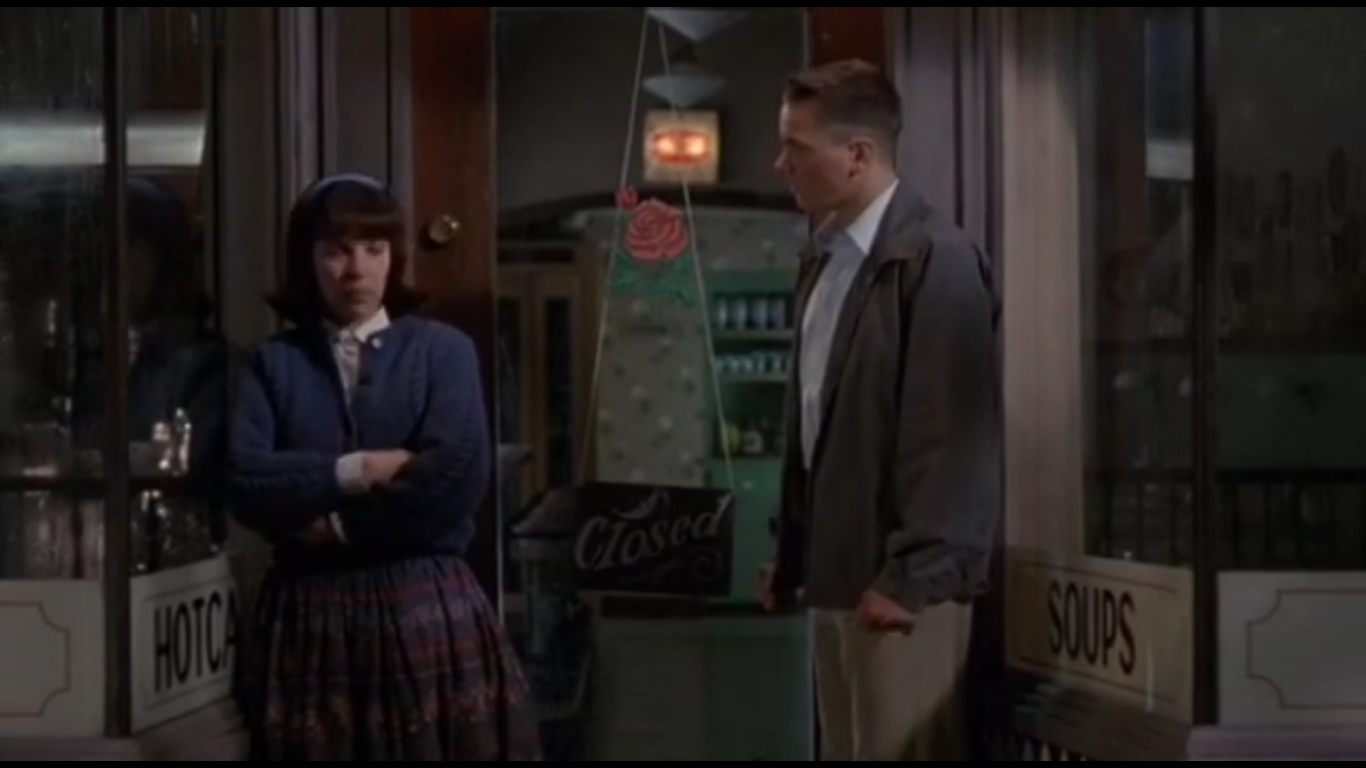
He also makes the acquaintance of the teacher’s daughter (Martha Plimpton) who has a much more jaundiced view of education and musical appreciation. She’s used to a more typical lifestyle and yet she’s drawn to the new boy, not out of an act of rebellion against an overbearing father or anything like that. Danny is genuinely decent and kind. She immediately likes him, and they spend time together. She wants to get to know his family too and so she does.

I was a bit disappointed Jackson Browne’s tune “Running on Empty” has no place in the movie, but they may have done themselves one better with James Taylor’s “Fire and Rain.” Their celebration of Anne’s birthday turns into a dance party in the dining room; there’s something spontaneous and joyous about it.

It encapsulates the best aspects of the movie where we’re suspended in these moments of relational goodness. To be a part of the scene feels organic and the characters become all the more real in front of our eyes. We enjoy their company.

Martha Plimpton has a James Dean Rebel Without a Cause poster in her bedroom and somehow Phoenix carries some of the same ethos. There’s the morbid similarity in that they both died young and yet more than that, it has to do with a palpable emotional investment in their roles. It’s more like music than it is blue-collar craftsmanship and their brand of sensitive masculinity feels off the charts.

Phoenix has an emotional maturity and precociousness that feels wise beyond his years and still wracked with inner demons. Here he must carry the burden of his parents’ life. It also fuels the budding romance that Phoenix and Plimpton were an item in real life.

Christine Lathi still feels mostly underappreciated as an actress. She’s a loving mother, a strong wife, and the scene where she has a teary reunion with her father after many years is lachrymose but never totally saccharine. They supply just the right amount of heartbreak and tenderness.

Judd Hirsch deserves his plaudits as well though if you’re like me you appreciate him for being the stabilizing force on Taxi. He plays the part so well that sometimes you forget he’s an actor’s actor.

I’m reminded of his rapport with Timothy Hutton in Ordinary People and his scenes with Lahti and Phoenix here. He always gives off this aura of street smarts. He’s tough and able to spar, but it’s never totally untethered from his unerring heart. He cares and somehow he’s able to make his audience feel his concern.

What I appreciated most is that Running on Empty never feels over-reliant on its political elements which are often relegated to the background in favor of far more sensitive developments of character. It would be so easy to succumb to drama. Instead, it chooses a more nuanced road as Danny starts to put down roots and gets encouraged to apply to Julliard. Suddenly, his lifelong anonymity is bumping up against his youthful dreams of a normal future.

Director Sidney Lumet was always a fine filmmaker and one of the most enduring because he was a workman and he knew how to rehearse, he was smart, and made compelling movies. Running on Empty is never one of the most high profile mentioned, but it leaves space and feels attuned to the family at its center and their relationships. This is why I go to the movies to be shown people’s humanity up on the screen and then be uplifted by it.

The movie hardly dwells on its ending. Perhaps we could have done with a bit more resolution, but it does itself proud with a refrain of James Taylor’s “Fire and Rain” pulled from an earlier scene. It’s as if the chorus of singing voices — the family all joyful and gay — is a concrete reminder that that bond will never be broken even as they move on.

There’s something satisfying about discretely reaching back and referring to the movie’s most poignant moment. Because it means so much and these are the kind of memories we carry with us wherever we go. Family is forever.

4/5 Stars

Pump Up The Volume (1990): A Gen X Jeremiad

Pump Up The Volume is a movie that tackles the existential malaise of the generation beyond After Hours and Something Wild. I’ve never been particularly good at charting the shifts in generational demographics, but the film is definitely an adolescent jeremiad for Gen Xers.

In truth, I only learned about the movie from a work colleague who is a generation older than me. The sense of upfront and personal alienation spoke to him as a high schooler and probably a whole generation of the discontented.

Although Allan Moyle’s movie doesn’t make the rounds too often, you can immediately sense its cult appeal and also a certain level of prescience in speaking to the teenager’s dilemma. I’m not sure if it’s merely a post-war phenomenon, but it’s certainly something Millennials, Gen Zers, and whoever else follows can certainly resonate with.

Harry Hardon (Christian Slater) is a local DJ who hits the airwaves at 10 pm sharp every evening cued by his theme song, Leonard Cohen’s “Everybody Knows,” and backed by a steady flow of alternative music, personal commentary, and raunchy gags. He’s garnered quite a devoted following.

Within the confines of the film, he builds a cult of personality as a nighttime provocateur, and it’s so easy for him to represent the profane bombastic nature of youth. His viewership cuts across high school cliques to encompass nerds, punkers, beautiful overachievers, and everyone in between. Because everyone of a certain age can identify.

As he puts it, parents, teachers, TV, Movies, and magazines tell you what to do, but you know what you have to do — your purpose is to get accepted, get a cute girlfriend, and think of something great to do the rest of your life.

For those crying out for an alternative, less conventional existence, it can feel like a suffocating road to the American Dream. It’s easy to feel lied to or at the very least feel like school and the world haven’t fully prepared you for the brunt of angst weighing on your mind.

Christian Slater is required to do a lot of the heavy lifting throughout the film, and it relies on his charisma because in many of his scenes, he’s just speaking to an audience out in the dark somewhere (both over the radio and in the movie theater). Somehow it works though DJing is only a small aspect of his life.

By day, he’s Mark Hunter a disenchanted teen. His father is on the school board, they’re in a great district, but he’s also the new kid on the block and doesn’t have any friends. He exists on the outskirts mostly unseen as a diffident disciple of Lenny Bruce stuck in his own thoughts and unable to socialize. By night, well…he comes alive.

Samantha Mathis almost feels like a bad girl version of Molly Ringwald, dark-haired, pretty, and spunky as Nora De Niro. She, like all the rest of her peers, is captivated by Harry because of what he represents to all of them. It becomes her mission to figure out who he is as she scrounges around school and sends letters to his P.O. Box as bait. Eventually, she learns the identity of their mild-mannered Clark Kent.

It does feel like Pump Up The Volume is on the cusp of a new decade while still channeling the remnants of ‘80s film culture. There’s a War Games-like wunderkind ingenuity where a single teenager seems capable of taking on all manner of adults, government organizations, and what have you even as he muddles his way through the usual adolescent romance and alienation.

It escalates following a classmate’s suicide and a broader probe within the highly-touted school as the principal looks to bring down an iron fist on any troublemakers and keep her pristine reputation. The only problem is that the masses are getting more and more unruly and brazen as they rebel against the school’s primary enforcer, Mr. Murdock.

Then, the FCC is on Mark’s trail prepared to shut down his clandestine operation. It’s not a game anymore. We’ve gone large-scale. If you’re like me, you’re always under the assumption he’s going to be caught; they’re going to nab him, and still, he always finds a way to outsmart them.

I couldn’t help likening Harry to a prophet of the airwaves, a Howard Beale for the angsty teenage population as he exhorts them to “Do something crazy!” But what I appreciate about the movie is how he eventually kicks his version of a nihilistic spiral.  Early on he opined that “Being young is sometimes less fun than being dead.” Then, he changes his mind. Hang in there he says. It can only get better.

He and Nora take his radio show on the road for one last evening of insurrection before signing off for good as the local teenage population’s cult hero. He becomes a legend in his own time and even if his frequency dies, there’s a nation of others to rise up and take his place.

I’m not sure what the contemporary implications of Pump Up The Volume were; it could have been negligible at best, but even though this movie is not always talked about, there’s a sense it spoke into the zeitgeist of the times.

It’s not a large production, it didn’t make a ton of box office, and it hardly has the enduring reputation of John Hughes’s most prominent works. Part of this might owe to its coarser even darker subject matter, though it’s rarely bandied about with the same frequency as Heathers. But this very same punk mentality wrapped up in the anxieties of the suffocating structures of high school, middle-class meritocracy offers a foreboding portrait of the future.

It still manages to be a movie of common ground, reassurance that we are not alone, and that the days ahead can get better. It’s not a movie about stewing in death and insecurities but acknowledging them and putting them to rest. In their place, we can have romance, friendship, and camaraderie.

I’m not for glorifying delinquency per se, but it is a movie, after all, and Slater makes it quite an intoxicating thrill. Especially when we don’t have to witness the aftermath or live with any consequences. Somehow, he can ride off as the hero we always wanted, knowing deep down inside maybe we have something inside ourselves that can still be expressed — it’s waiting to be expressed. Whatever your opinion, it’s fairly optimistic, and this is in its favor all these years later.

3.5/5 Stars

Bill Forsyth’s Films: Gregory’s Girl, Local Hero, Etc.

Bill Forsyth is a director who has flown under my radar, and yet only after a week’s time and a handful of films, he’s quietly become a new favorite. Now I heartily understand why he’s one of Scotland’s most beloved directors. Part of his appeal is because he wrote and directed his own projects, but it also comes down to how he imbues his films with a certain sensibility that’s thoroughly disarming.

That Sinking Feeling (1979)

That Sinking Feeling was his debut, a microbudget caper about a pack of eccentric Glasgow youth who alight on a plan to make a buck stealing sinks. It follows the beats of a heist while straining them through a very specific experience.

What Forsyth brings out of his youthful troupe of actors are the lovely idiosyncrasies his films are all utterly replete with. It’s the kind of humor that feels honest in its truth and the good nature behind it. Many of the faces that show up throughout would crop up in some of his later works as well.

Comfort and Joy (1984)

For some, Comfort and Joy might be a new Christmas tradition. It’s a low-key movie finding its footing by focusing on a disc jockey (Bill Patterson) who’s a kind of local celebrity thanks to his good humor, jingles, and the fact he’s in people’s homes just about every day.

There’s a curious streak to the movie as Dicky becomes a kind of mediator between two rival families in the local ice cream racket. I’m not sure where these premonitions come from, but the way Dicky gets caught up in the late-night escapades in the feud between ice cream vendors, I couldn’t help but think of the milieu of After Hours. It’s probably because the situation escalates into this quirky absurdity with a touch of doom.

It has a few fanciful dreams and feels like it could be a sick nightmare. Still, Forsyth never allows any of this to totality derail the prevailing good nature of his characters.

Housekeeping (1987)

In 1987, he alighted on another journey, writing and directing an adaptation of Marilynn Robinson’s Housekeeping. Although it was his first American production, it also brought him together again with his fellow countryman, producer David Putnam.

It’s a film rather reminiscent of Jonathan Demme’s Swing Shift and it’s not simply due to the inclusion of Christina Lathi. It’s the way Forsyth hones in on a story of keenly observed moments and distinct characters rather than a fierce adherence to form and structure. Yet again, there’s a clear-eyed authenticity to it that feels far from being fabricated. It maintains this ethos, and time and time again succumbs to these quietly profound moments that are all too easy to disregard.

I’d like to take the rest of my time to highlight Forsyth’s two most noteworthy films because they all but embody my newfound appreciation for the director.

Gregory’s Girl (1980)

The opening tag immediately feels like the opening moment in any number of cringe coming-of-age films. A group of prepubescent peeping toms gape at a beautiful woman hidden behind glass. Gregory’s Girl looks destined to join the trashy, smutty cadre of ’80s locker room movies. And yet around every turn as I kept expecting the worst, here is a film that constantly surprised and left the dorkiest, most curious, and strangely poignant impressions.

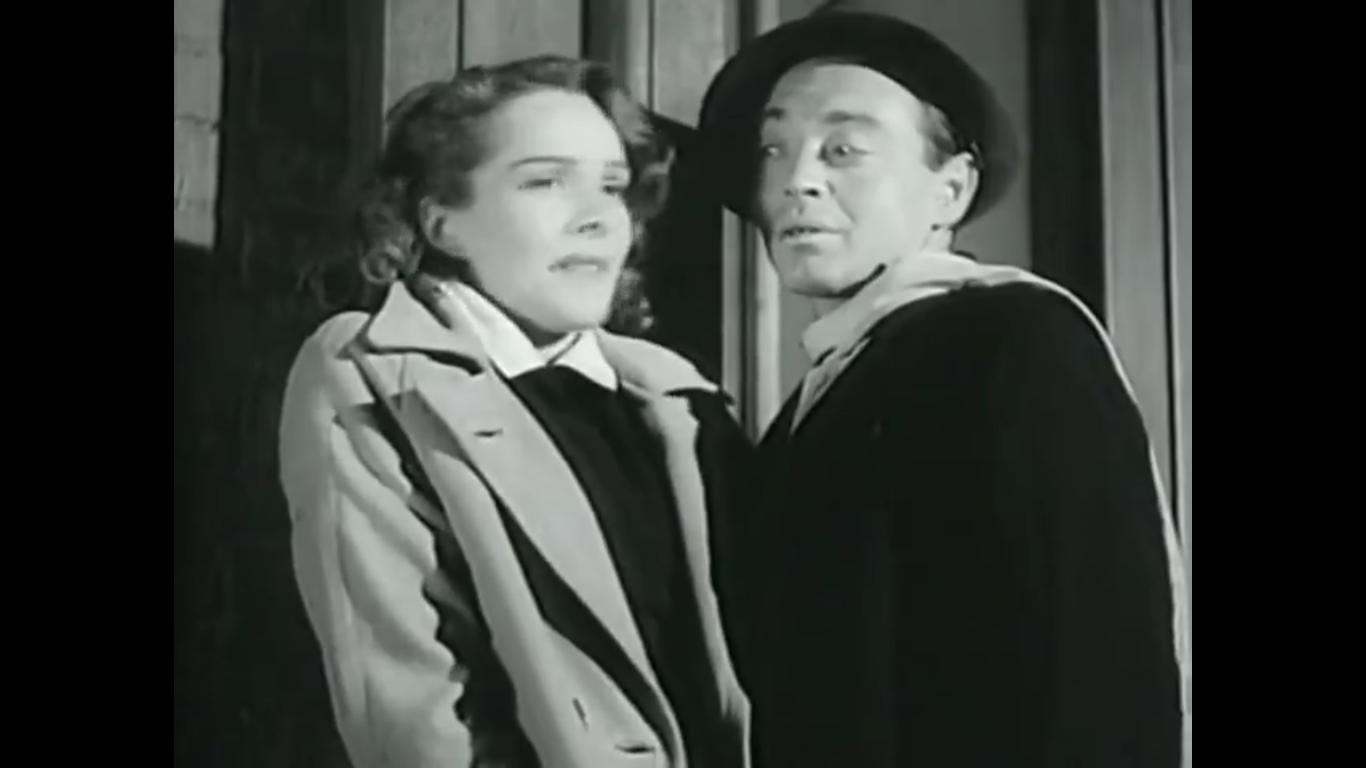
Gregory (John Gordon Sinclair) is one of those iconic coming-of-age protagonists, meaning he’s a spindly dork with the most atrocious head of hair imaginable, and we’re already talking about the ’80s. Still, in a word that could easily be harsh and unfeeling, he makes it genial and a tad innocent.

He doesn’t have a killer instinct out on the football pitch. He loses his coveted striker spot only to bump his best friend, another loser named Andy, out of goal. They hardly seem to mind. Because they’ve made way for the school’s latest talent: the athletic blonde Dorothy (Dee Hepburn).

Again, this brings with it all sorts of potential problems. The male population is quick to rally around her — cheering her on ardently — though it could be a lot worse. It suggests girls can excel in many facets. However, it does run the danger of turning her into a regressive object where the girl is a trophy to be won.

On more than one occasion, it bends away from the expected gauntlet of crude jokes giving us something lighter, more agreeable. It comes with how it conceives of a very particular version of adolescence: small-town Scotland outside the urban decay of the big city. It feels quieter and more hopeful, even if the world itself and the time in life is incredibly transient.

Gregory’s Girl is nothing like what I expected. It was far better. Yes, it’s a slight film, but this plays to its strengths because it gives us these characters and these moments — observations we can appreciate — and then we get to leave them with a wealth of affection. It’s easy to see my estimation of this one rising after future viewings. Even as I ruminate on the title Gregory’s Girl, it has new meaning, and it makes me smile. It’s a pleasure to have expectations subverted and then exceeded.

4/5 Stars

Local Hero (1983)

Local Hero is bolstered by a simple premise being subverted. A colossal American oil company looks to gobble up land in and around an idyllic Scottish village. However, there’s no malevolent corruption and their eccentric benefactor, Mr. Happer (Burt Lancaster), would much rather chart the stars than deal with any amount of oil refineries.

Likewise, it’s never a story of the little guys trying to hold out against progress. The locals are delirious about the money coming their way. Instead, we come to appreciate what this kind of life has to offer as does our stand-in Mac (Peter Riegert).

It hearkens back to an era — the days that made my parents fall in love with the U.K. –where there were still pockets of the world seemingly untouched by modernity and true western influence. The Texas businessman and his Scottish sidekick (Peter Capaldi), pay a visit to the small town and set up shop in the B&B. The local pub is where the whole town pools their funds to make change for an intercontinental phone call.

At first they look rather out of place: two suits walking across the beaches with their briefcases. But then we get a passing sense of who they are as people. They are romantics even friends of passing rabbits. We come to like them. The same might be said of the town and why not? Wow, is the countryside breathtaking. I miss it so.

This is never a movie about board rooms or business, but the bits of business happening in a community. There are all sorts of people, and the quaint elements prove utterly charming.

What a lovely connection between Star Wars and Local Hero to have Wedge Antilles be the town’s main accountant and hotelkeeper prepared to cut a deal with the man from America. Though any amount of haggling or conflict never materializes and they quickly become best buds.

If there was any conflict, it all but evaporates and what is left is warm humor and the forming of lasting relationships. There are the cultural differences, the manifold eccentricities, but there’s also the congeniality. It’s part of what makes this unassuming movie such a pleasure.  Local Hero is gentle cinema, and it’s exactly what we need.

4/5 Stars

Orson Welles: Mr. Arkadin (1955) and Compulsion (1959)

Mr. Arkadin (also known as Confidential Report) has the abundance of canted angles and striking visual flourishes one usually attributes to the films of Orson Welles. It also boasts his ever more disorienting sense of space and shot-reverse-shot even as the international cast, financing, and locales outside the prying eyes of Hollywood map his labyrinthian journey to continue making movies.

His entry into this particular story is a small-time smuggler, Guy Van Stratten. There’s something abrasive and unplaceable about Robert Arden. It’s rather like when non-English-speaking filmmakers will cast an American, and it sounds tone-deaf in a picture that otherwise feels normal. Regardless, he receives a tip-off from a dying man, and it sends him in search of something…

Arkadin, an aristocratic Russian, as played by Welles, is really another version of Harry Lime from The Third Man with everyone talking about him and wanting to meet him as he remains just out of reach and hidden behind a mask at a masquerade party.

Stratten has ambitions to get in with the daughter of the enigmatic Arkadin. Welles casts his wife Paola Mori to play his carefree young daughter (albeit dubbed). In the end, the gruff answer-seeker winds up globetrotting after Arkadin, hired by the man himself to see if he can dig up any dirt on him. It feels like the ultimate act of paranoia if in fact a double-cross isn’t in order.

While his accomplice Mily (Patricia Medina) is out on her own, he crosses paths with the likes of Michael Redgrave, an eccentric pawnbroker providing some leads, and then Akim Tamiroff who is also somehow implicated in a web of conspiracy.

Plot notwithstanding, Mr. Arkadin feels increasingly emblematic of what Welles’s cinema became after his earlier successes. He was scrounging around for funding, cobbling together films all across Europe with a cadre of international talent, and increasingly drastic creative choices.

It’s evident in a picture like The Other Side of the Wind generations later, which historically took years to be completed long after Welles’s death. It does feel like every subsequent picture after Kane continued to be a monumental struggle, and it’s some small marvel that each one got made for any number of reasons. Add Mr. Arkadin to the list.

It’s not explicitly Shakespearian, but it has a certain gravitas blended with the cheap smuttiness of noir street corners and pulp novels. We are treated to a Wellesian Christmas party. The focal point is a rather perturbing visual carousel full of jocund gaiety and lurking menace capped off by a band playing “Silent Night.”

Ask me to say exactly what we’ve watched with all the various plot details, and I don’t dare try. But it bears the markers of Welles, full of flourishes and at one time both mystifying and inexorable. It’s easy to criticize the flaws, but Orson Welles hardly makes mediocre pictures. There’s always a gloriously messy vision behind them. It’s the same with Mr. Arkadin.

3.5/5 Stars

Compulsion (1959)

I never thought about it much until his passing but there’s something about Dean Stockwell in his young adult years and even his later roles that’s reminiscent of James Dean. He’s not emotive in the same way as the method actors; he’s a button-upped clean-cut version with his own neuroses.

They have some facial similarities, true, but it comes down to something more difficult to pin down when it comes to actors, whether eccentricities or the bits of business that draw in your gaze so you can’t help but watch them at work. With Stockwell, it’s something he was able to draw upon later in his career when he had a reemergence and a renaissance; acting seemed fun again.

In 1959, James Dean was gone for a few years already and Stockwell was still closer to the beginning of his career than the end. He plays one two young men who have read too much about Nietzsche’s superman believing themselves to be above the law.

Bradford Gilman is his counterpart a disingenuous sociopath who knows how to throw his charisma and influence around. Both Arthur and Judd are different than normal college students, but Arthur knows how to play the game. Then, when they’re alone in each other’s company he’s able to dominate the other boy as they play out their sick fantasies.

In one moment, stirred by his accomplice Judd takes a girl to observe some birds — it happens to be near where a boy was killed — the bird calls in the distance play against the increasingly uncomfortable conversation. He plans to force himself on her, and though he tries he cannot bring himself to go through with it. There’s a sliver of decency still left inside of him.

Soon enough he and Artie are brought in for questioning by E.G. Marshall, a calm and collected beacon of authority. I’ve never seen The Defenders, but I could see him carrying it off with a level of pragmatic stability. Artie’s the one who walks in the room and tries to flip all the power dynamics. He pointedly stays standing as Marshall questions him sitting down. He’s confident enough not to be thrown off his game though he implicates them soon enough. They must vie for their lives in the courtroom.

Jonathan Wilk shows up sooner or later. Orson Welles hardly needs a great deal of time to put his mark on the picture. His haggard magnetism holds its own against anyone as he takes in this most harrowing case defending two privileged boys who were unquestionably implicated in murder.

The ensuing case comes with a myriad of perplexing caveats. Judd was coerced into trying to attack the girl, Ruth Evans. She later takes the stand in his defense. Martin Milner is an up-and-coming newshound who at one time was classmates with the boys and soon desires to watch them hang. His feelings toward Ruth are very protective.

Wilk is a bit of a moral cypher: He’s atheist who has the KKK showing up on his lawn blazing a cross as an act of intimidation. He also flips the case on its head with a rather unorthodox and risky decision.

He looks to appeal to the so-called Christian community of the court reminding them that cruelty breeds cruelty, and charity and love are what they have devoted their lives to. When he admits to a lifetime of doubt and questioning, it doesn’t necessarily mean he’s reached any final conclusions. It makes me appreciate him more for his moral transparency

Given the fact Welles was probably playing his version of Williams Jennings Bryant, a man who was also featured in Inherit The Wind portrayed by Spencer Tracy, it’s hard not to connect the two pictures. Their subject matter is very different and yet they both dwell on these ideas of religious beliefs and how narrow-minded societies can use them to stubbornly maintain their agendas. However, they can also be exploited.

For this reason, Compulsion is a fairly perplexing courtroom drama for the 1950s; between the performances of Stockwell and others it offers up something persistently interesting.

3.5/5 Stars

The Clay Pigeon (1949) and The Japanese-American Experience

The Clay Pigeon is a film that I have spent several years trying to track down, and I’ve finally been able to see it. From the outside, it feels like fairly run-of-the-mill post-war noir fare. It’s directed by an up-and-coming workhorse in Richard Fleischer and stars real-life couple Barbara Hale and Bill Williams.

It’s one of those amnesia plots steeped in the residual post-traumatic stress of WWII reminiscent of Somewhere in The Night, Act of Violence or even a later entry like Time Limit. It’s this kind of narrative device that injects instant ambiguity into our story since G.I. Jim Fletcher (Williams) doesn’t know why he is currently in a hospital, and he seems to be implicated in some far more dubious crimes. Richard Quine also turns up, and he still has a couple years to go before his prolific career behind the camera.

Williams feels like a bit of an innocuous leading man without the gravelly charisma of a Van Heflin though he works in a pinch. Barbara Hale is a fond friend from Perry Mason so it’s easy enough to take her even if she transforms fairly quickly from victimized hostage to loyal female companion.

Because during the war her deceased husband was compatriots with Williams and Quine in a notorious Japanese prisoner of war camp. This clouded mystery of how their buddy was snitched on drives the movie with dubious implications in their own backyard.

Screenwriter Carl Foreman (known for High Noon) spins a swift tale that incorporates some real-life history that’s too farfetched to be fiction. It came out of an incident where a former POW walked into a department store only to see the unmistakable face of his former tormentor, a notorious prison guard nicknamed “The Meatball.” What a nightmare scenario.

Tomoya Kawaita was an American-born Japanese, going to Japan for university, but he got stuck overseas as the war heated up and ultimately became a notorious prison guard who would speak to his captors in English. After the war, he returned to States to attend USC. He was ultimately tried for treason and eventually got deported, spending the remainder of his days in Japan living in obscurity.

We usually think of the idyllic serenity of returning home from war albeit with growing pains. Warzones and  home are mutually exclusive spaces. But here these scenes collide. The movie ties all of these details into a widespread conspiracy with broader implications and still it pales in comparison to the facts.

Richard Loo becomes “The Weasel” and the fateful encounter happens at a Chinese restaurant called “The White Lotus.” It’s possible that the movie conflates the Japanese and Chinese cultures, but regardless, it’s rather striking to even have this space acknowledged at all.

Loo purportedly relished the opportunity to put the Japanese in such a bad light, and he was often called upon to play such demented roles for WWII propaganda. The Clay Pigeon was no different in how it called on his wartime persona. It’s a bit of a holdover of the earlier sentiments.

However, there is one obvious difference. The movie does actually provide some nuance or at least an alternate depiction of the Japanese. This is the other reason I’ve searched so earnestly for this otherwise unassuming movie.

During a chase where Fletcher’s trying to flee his pursuers and clear his name with the Naval authorities, he rushes into an open door seeking asylum. The woman (Marya Marco) calmly doing her laundry looks him over and allows him to hide as she answers the door.

Once the danger passes, they share another moment. It’s an interaction that the tiny film, barely over an hour long, didn’t require, but whether it was screenwriter Carl Foreman or someone else, he takes time to honor this lady and her people. You see she has a young son, but also her husband was a Nisei who died during the war. His commendation and photo are displayed proudly for all to see.

When Fletcher sees it, it changes his whole demeanor because the 442nd carries a certain cachet. They paid for it with their lives and through their bravery. That’s something that anyone fighting in the armed forces can accept. It’s a badge of honor.

The movie rumbles to its inevitable conclusion, and it’s a nice bit of meta narrative to watch Hale and Williams embrace right outside the doors with all the loose ends wrapped up neat and tidy and our hero vindicated.

But for me, I already got what I came for with this one solitary interaction as an emblematic remembrance memorialized for all time. In the face of so much discrimination and wartime paranoia, the Japanese-Americans proved themselves to be fearless, fiercely loyal, and just as profoundly American as anyone else.

3/5 Stars

La Otra (1946): Dolores Del Rio and Her Doppelganger

Recently some coworkers were waxing about what they would do if they won the power ball. How they would spend the money, where they would go, and also the drawbacks that come in the wake of what seems like a purely golden opportunity.

I’ve never much thought about it, but I do admit for those who are trapped in life (or at least with active imaginations), it’s easy to make the mental leap. I couldn’t get these conversations out of my head while watching Roberto Gavaldón’s La Otra.

It is a movie about a manicurist. Her work is menial and she takes no joy in it, doting over cosseted businessmen with lecherous intentions. It’s a way to survive though her prospects feel like a dead-end apart from her burgeoning romance with an earnest policeman. All throughout the workday before she runs off to spend an evening with her man (José Baviera), the garish lights above her workspace blare with the National lottery: 5 million! Almost as if to taunt her.

La Otra is built out of a premise not unfamiliar to noir. If you read production notes, it sounds like the picture was potentially slated for an English-language release with Bette Davis, though it was deemed too similar to one of her other recent projects. She would end up remaking it a generation later as Dead Ringers.

Because La Otra actually opens with a funeral. María Méndez rushes onto the scene late, and public perception is one of contempt. How improper of her to show up late to a funeral while her twin sister, Magdalena mourns the death of her husband. Although the widow is masked by her veil, we learn soon enough, Dolores Del Rio stars in both roles. Hence, La Otra.

The doppelganger is not a new phenomenon used in all sorts of mistaken identity comedies and certainly in melodrama. Here it feels like it serves a utility to the story, but there’s also something else. The movie plays with the dichotomy and preconceived notions between Mary, the Madonna, and Mary Magdalene, a sinful woman. The movie casts Del Rio in both of these rolls, and they continually shift and evolve over this muddied canvas of morality.

Tension (1949) with Richard Basehart worked the doppelganger angle thanks to hard contact lenses and Del Rio pulls it off by wearing glasses to play her manicurist self. Still, these are only the visual features. It does not consider personality changes.

Meanwhile, we realize in the wake of her husband’s death, Magdalena has come into a great sum of money. She chides her sister while she walks into her lavish closet, “You haven’t learned to face the world with the same weapons it uses.” Namely, cunning, cynicism, hypocrisy…crime.

Soon enough, María does learn what it takes to get ahead in noir, although she must also live with the consequences. Passages of the film feel quite literally like a silent movie, and then with dialogue the scenes come alive played against the otherworldly whirring modulations of the theremin.

La Otra hits its stride with its first twist cut against the chaotic pinata-infused celebration in the city square. María has the opportunity to take over her sister’s life and commandeers it using all the aforementioned weapons at her disposal. Going so far as to scald herself so her signature won’t be disputed.

Still, she is trapped in a life she was not expecting. Because her rash decision only considered the upside — not the tragedy hanging over her head. Instantly, she gains wealth and repute, leaving her life of destitution behind, but she also must give up her man lest she implicate herself in the new life she takes up in its stead.

But also a dashing suitor (Víctor Junco) slinks back into her life — a mysterious man from her sister’s own shrouded past. She’s more implicated than even she realized, and the film is imbued with this sense of Catholic penance. We watched men like James Cagney be sent to the electric chair for their sins, and this woman is resigned to her own fate…

What’s fascinating to me is how this film could have been made in Hollywood — with Bette Davis no less. However, it was made in Mexico and as a result Dolores Del Rio was given unadulterated star treatment. The way she’s dressed, lit, and given full reign over the movie, augments her regality but also her abilities as a screen personality. She owns the movie both in its moments of drama and pathos.

And although it was shot below the border in Mexico City with many actors we aren’t aware of, it functions like a stunning system in parallel with Hollywood. There’s a technical prowess and a commitment to classical storytelling. There’s gorgeous light and shadow, a commitment to the semiotic nature of visual narrative, and also a daring sense of invention.

It feels alive and emotive like all the greatest classic melodramas. Analogous endings could be cropped out of other movies, but as a dutiful policeman, now disaffected in his duties, wanders off into the night, the woman stares back at him through the bars confining her. Her face settles in such a way, first, we see the luminous contours of her eyes before she drops down and they are enveloped in an abyss of shadow.

These are the kind of moments that not necessary for telling a story, and yet somehow it feels elegant and imperative because this final image articulates so much of the journey of this movie and so much of the duality in many of these great melodramas of old. I never tire of them, and it’s always a pleasure to find a new addition to the canon regardless of where it originates from.

4/5 Stars

Peter Lorre: Stranger on The Third Floor, Mask of Dimitrios, The Verdict

Stranger on The Third Floor (1940)

Although it’s not a highly touted picture, Stranger on The Third Floor feels like an important enough footnote to aficionados of film noir because it embodies a few of the earliest definable features of the movement. It’s not an entirely new concept per se, but it feels like it’s reaching a new market taking the influences of European Émigré cinema to the American public.

The influence of German Expressionism on ensuing generations cannot be underappreciated, and there’s this very practical suffusing of these techniques into Hollywood because many of these writers and technicians were physically transplanted to the west coast thanks to the scourge of Hitler. He unwittingly injected American cinema with some of its foremost talents.

Although he was an immigrant from Italy, Nicholas Musuraca would soon prove himself to be one of the foremost figures in noir cinematography thanks to his run at RKO Studios, which hardly had the budget and personnel to pull off the lavish A-list productions of MGM and other bigger studios. This necessitated a different niche and an ongoing visual ingenuity.

It becomes evident early on in the film thanks to severe shadows and a patchwork of light and dark. The story itself is incredibly contrived but the movie is saturated in voiceover and fatalistic dread thanks to a man (John McGuire) being sent up for murder.

The tenets of what would become noir are plainly evident. Still, there’s something organic about it. This is not premeditated; it simply happened with the confluence of talents and a bit of happenstance.

It’s fitting that while The Maltese Falcon feels like the most high profile distillation of noir as an American breed, Stranger on The Third Floor uses two of its primary culprits. By this I’m referring first to Peter Lorre.  He’s called upon to do an import of his psychotic killer in M complete with his gaunt hand crawling up an apartment door frame. He’s hardly as slimy and therefore as conflicted and interesting as Joel Cairo; it’s his slinking foreignness that conjures up menace in the eye of the viewer.

However, there’s also Elisha Cook Jr. who plays one of his more reticent types a bit different than his blustering henchman Wilmer. However, they would both become integral figures to the movement even if it were only for their association with that individual film.

Although the movie’s a quickie, it still finds time for mini flashbacks as the inevitable noose of noir gets tied ever tighter around our hapless hero’s neck. The finest moments are when he’s overtaken by the nightmare of his conscience with men in bowlers chomping cigars start to cross examine him, and he falls apart inside his own head. As such, it’s probably more intriguing for its place in film history than as an undisputed piece of art.

3/5 Stars

The Mask of Dimitrios (1944)

The Mask of Dimitrios feels like an old world adventure story centered around a phantom figure who becomes the picture’s version of a MacGuffin. Zachary Scott turns up mostly in people’s recollections as a precursor to Harry Lime, the man everyone wants to find.

Although the movies could hardly be made today, there’s something about Warner Bros. and it’s aesthetic and stable of actors that was made for transporting western audiences all over map. The movie literally globetrots around the world.

It’s a pleasure to have Peter Lorre offered a bigger piece of the film’s pie at this point in his Hollywood career.  He’s allowed to be a far more genial and charismatic figure, a writer of detective fiction and a seeker of this great mystery because he has time for such whims and frivolities if only they pique his interest.

Then, Sidney Greenstreet turns up ominously both a friend and a foe. They form a tenuous alliance after the fat man all but ransacks the other man’s room. Greenstreet and Lorre feel like unlikely cinematic bedfellows as it were, and yet they feel inextricably linked for all posterity. They feel a bit like the Laurel & Hardy duo of Warner Bros. crime pictures based on physical characteristics and also their palpable rapport.

Here there’s no Bogart in the limelight and Scott, while a headliner, is mostly the enigmatic engine behind the picture so they are allowed to anchor the story. Thus, what makes the movie are the same cloak and dagger elements that make a romp out of The Maltese Falcon where characters have motives and unseemly sides, but it feels more like unadulterated fun rather than totally depressing drama. This is a testament mostly to our two worthy protagonists.

The Verdict (1946)

The Verdict feels totally indicative of the evolution of Don Siegel’s career, a road paved with many well-remembered films, and it all began right here. We’re met with a foggy London frequented by Sidney Greenstreet with every constable and upstanding gentlemen bidding him good evening. It’s a long way from Dirty Harry although the picture is equally indebted to the criminal justice system.

This comes in part because Greenstreet made a lapse in judgment by sending an innocent man to the gallows. Instead of feeling altogether remorseful, he’s seems more intent in proving the incompetence of his supercilious successor.

It feels like a chatty picture once Peter Lorre and the rest get involved, drinking and quibbling about politics and social reform. There’s a rather vindictive pretense as the two men despise one another.

Lorre, now with a bigger billing, is allowed a broader portrayal of gravitas and jocularity. He’s the picture’s most welcomed source of inspiration. He’s found casually wondering in on murder scenes and eavesdropping in closets as it seems he has nothing better to do. What’s more, he makes it look like a grand old time as everyone else is hustled and harried going through the paces of the drama.

Because there is a murder, a murder queued off by the raging score before we’re even aware that anything has happened. The newly enlisted police chief at Scotland Yard is called to solve the mystery right quick. He proceeds to question his suspects, distrusting everyone, and keeping them all under surveillance, including a nosy housekeeper and a spirited night hall singer.

The whip pans over the faces when the verdict is made feels like a dose of Don Siegel, and the kind of visual octane he would give his movies for generations to come. Although there’s a danger with all the Victorian exteriors, the picture might easily feel stuffy. However, there’s enough noir and a surprising amount of wit sprinkled throughout to give the film a shelf life.

It somehow manages to play on both Greenstreet and Lorre’s reputation as shifty villains by first casting them as our protagonists and then making us second guess their motives again and again. It’s a perplexing picture with a dose of mystery and some twists. The fact that it’s ludicrous seems beside the point because it’s the wild ride of the experience offering the most impact.

3.5/5 Stars

Crashout (1955): William Bendix and Arthur Kennedy in a Jailbreak Noir

If you wanted to string together a noir cast with the quintessential mélange of rogues who never quite made it to bona fide A-lister status, Crashout more than fits the bill. It’s a different kind of mission movie for a different kind of mission and a different brand of protagonist. They’re all prison convicts.

William Bendix and Arthur Kennedy both have fine pedigree. It’s a bit unfair to Kennedy because the Academy loved him — offering him 5 Oscar nominations — just never enough to ever bequeath him any hardware. Somehow, this snub alone makes him right at home in this company.

For their parts, William Talman, Marshall Thompson, Gene Evans, and Luther Adler are the kind of actors who eat these kinds of crime pictures for breakfast, and it starts with their faces. None of them are classic Hollywood handsome — even Thompson is a bit severe — but they’re invariably interesting to look at.

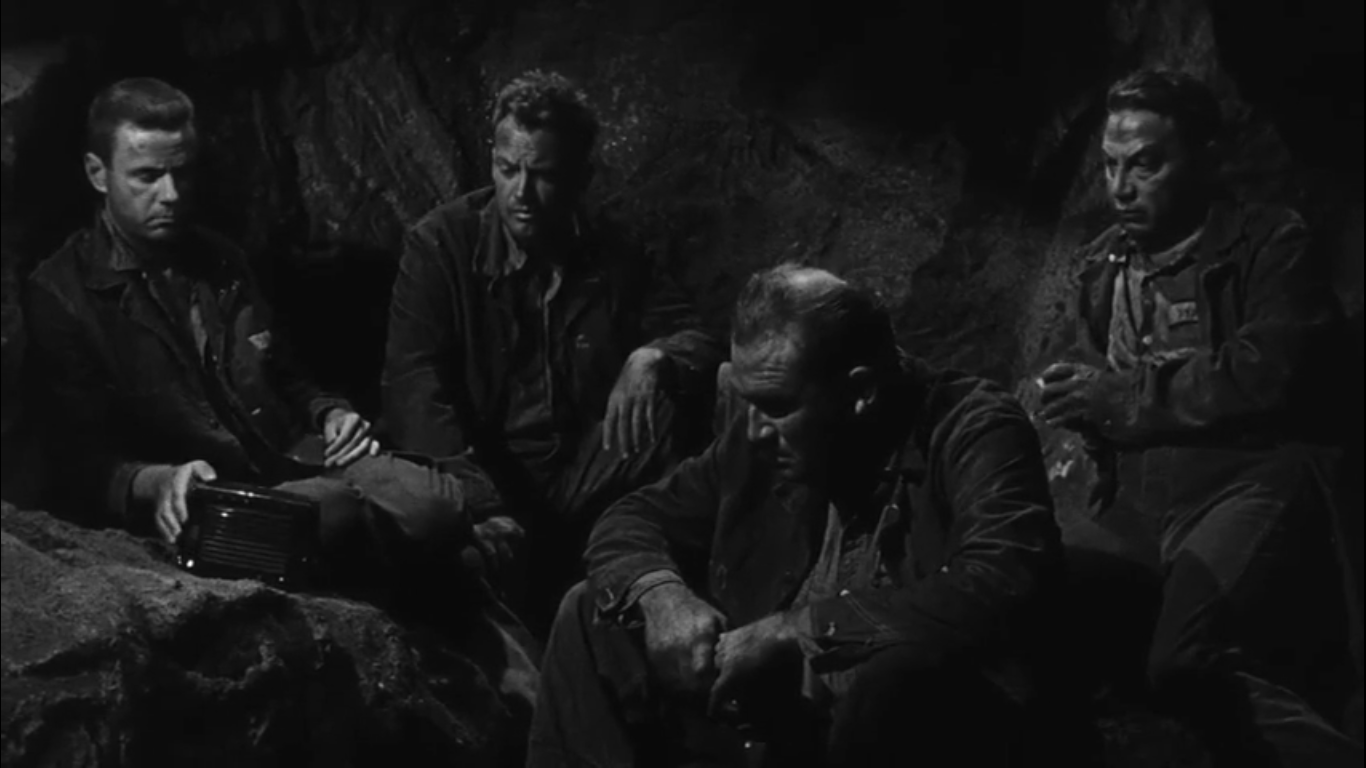
Cinematographer Russell Metty is more than well equipped to help instill the film’s grungy, sweat-caked aesthetic. We feel like we’re knee deep in all of their stink and squalor.  The crooked preacher among them, sent up for murder (Talman), baptizes a wounded man (Bendix) in the swampy hideaway they’ve staked out while waiting through the hysteria of the prison’s search parties.

It’s hard to know where the picture can go if they’re forced to bide their time for 3 days. Fortunately, the cast carry the picture as they rub up against each other only unified in their pursuit of self-preservation. Ultimately, they form a pact to retrieve Bendix’s dough, an alliance that’s easy enough to doubt the legitimacy of. Still, they don’t have much choice. They need money to live.

Much of the movie going forward is made by these standalone interactions with the general populous because they provide an added layer of humanity and tension to overlay the ongoing search for the fugitives.

Take for instance, when they call in a roadside visit from a rural doctor who gets pressganged into their little posse to service their injured member before being unceremoniously disposed of. Later, they roll into a dinner lodge like Bogart in Petrified Forest ready to terrorize some folks for clothes and sustenance.

There’s an exquisitely executed overhead shot encapsulating the dramatic tension of the scene when a pair of cops unwittingly pay a visit. They don’t know how close they are to their prey…

Between forcing themselves on a man’s wife and steamrolling a man in a car, there’s a level of ruthlessness that might be unanticipated for the era and yet for the initiated it’s not too surprising between genre markers like Dial 1119, The Hitch-Hiker, and Riot in Cell Block 11. Although Bendix had the earliest association with the genre with Alan Ladd in the 40s, his castmates were more than familiar themselves.

However, there are other more sensitive moments too. Thompson is befriended by a young woman on the train (Gloria Talbott). She’s just recently left her music conservatory, and she’s forthcoming and kind. They share her sandwiches and cups of water to go with the conversation. There is a sense we need this scene to diffuse the film momentarily.  Although even this brief hint of relief must be quickly stamped out. It cannot survive in such a picture.

There’s also the addition of Beverly Michaels. She’s featured in a far more angelic role especially if you’ve been conditioned by her eponymous turn in Wicked Woman. She’s not pleased to have her home desecrated by wanted criminals. However, Kennedy is the one man who reasons with her. Because he didn’t murder anyone and he has personality, they build a kind of rapport. Kennedy has his own moments where he feels warm and affectionate, hardly a hardened criminal. It’s like a prelude to his own destruction.

Two of the convicts almost maul each other to death in the living room, but this isn’t what does it. In fact, Gene Evans meets his demise in a manner in which took my breath away. Yet again we’re reminded it’s not a squeamish picture.

Crashout’s snow-powered finale isn’t quite the par de excellence of On Dangerous Ground or Nightfall (1957), but the persistent frankness of the material is something I still can’t quite shake. We often conflate the 1950s with a kind of Leave it to Beaver mentality (whatever that means), and yet watching something like Crashout is to come to terms with something about as unsentimental as they come. The 1950s aren’t always as innocuous as we’re often led to believe. Sometimes the decade seems more than capable of bludgeoning us over the head with a crowbar. Consider this a recommendation.

4/5 Stars

The Well (1951): A Noir about Racial Tension and Resolute Hope

The film opens when a little black girl named Carolyn tumbles into a well buried beneath some weeds. There’s a melodramatic handling of the material, but already we see something rather uncommon with the period noir. Normally black characters live on the periphery of film noir if they exist at all.

Here Martha (Maidie Norman) and Ralph Crawford (Ernest Anderson) reach out to the local Sheriff Ben Kellogg (Richard Rober) when they learn their 5-year-old daughter has gone missing. They become the emotional center of this local drama with greater implications. As an aside, it’s a pleasure to see Ernest Anderson once again.

Those who recall him in This is Our Life (1942) will remember him to be a performer of tremendous intelligence and dignity. It’s only a shame the impediments of prejudice meant he never had a more sterling career. This film acts as a small recompense.

Upon closer inspection, The Well has shades of some other movies like Captive City or Phenix City Story where there is an adherence to faux realism as we kick around the beat meeting people, and getting to know the world they call home.

It’s fascinating to witness how this inciting incident — the disappearance of little Carolyn — sets the story in motion with Russell Rouse and Leo C. Popkin slowly turning the screw. Because it’s true there’s something rather insidious about this movie causing it to wheedle its way into our psyches.

It feels more relevant and more compelling than many of the old procedurals because of the subject of the case. It’s not just about a crime, but it’s complicated and made more tenuous with this added layer of racial tension, a very real issue even today.

Being a lifelong MASH aficionado, there’s something pleasing about Harry Morgan playing a central role as mining engineer Claude Packard. It’s quickly corroborated that he may have been the last person to see the girl; he’s a stranger from out of town, and curiously enough, he bought her a flower before sending her on her way.

It doesn’t take a genius to put all the pieces together and the racial element along with circumstantial evidence quickly brings the out-of-towner under the observation of the police.

The rumors quickly make the rounds throughout the neighborhood. In one brief vignette, a group of black students sits at a library conversing about race prejudice and a white man accused of a crime against a black child. It’s easy to forgive the blatant quality of this scene because it feels entirely unique for the era. I’ve never seen a moment like this before. But it’s not just a matter of the film feeling ahead of its time. After all, a lot can happen in 70 years, and values can change, though many things like racism feel deeply entrenched.

Still, there’s a complexity to the film that feels quite groundbreaking with something to speak to our current moment. Rather like Sam Fuller’s The Crimson Kimono, it’s a film about race, but it takes a somewhat nuanced approach.

The dramatic situation is obvious. Here there’s a white man being held for a crime against a black girl. The added wrinkle is that he didn’t actually commit a crime, but that doesn’t impact how the execution of justice is perceived by all bystanders on both sides of the racial line. It’s so easy to buy the message, “You can get away with murder if you’re the right color” because we’ve seen it play out so many countless times.

It’s also true Claude’s uncle is the highly influential businessman, Sam Packard (Barry Kelley) who runs a local construction company. He’s prepared to pay bail for his relation regardless of guilt or innocence. He doesn’t seem to care what the man did even as Claude vehemently pleads his innocence. If you’ve ever seen Kelly in another picture, he slides so easily into this role accentuated by his corpulent build and a pair of beady eyes.

From the outside looking in it’s so easy to view this as a miscarriage of justice where the authorities are steamrolled and wealth and privilege are able to get a white man out of anything. We’ve seen this before too.

At this point, retribution is all but expected, and it escalates with each successive confrontation between the divisive factions of blacks and whites. Once a tipping point is reached it’s like a never-ending feedback loop descending into chaos and quickly stoking the fires of unrest.

It strikes me how the mob is always going after the individuals in an almost faceless fashion. And both sides do it. There’s never a familiarity. It’s always swift and unfamiliar. But this kind of violence and hatred only breeds in anonymity where others are dehumanized and not dealt with as other human beings. It makes it easier to disassociate and perpetrate acts of malice.

It’s easy to gather the rest of the film is paved with this kind of violence. A full-blown riot is set to blow up the town and overwhelm any semblance of law and order. A movie like this also shows how the borders around language were so contrived. So many words were banned from motion pictures and yet the N-word flies so easily. It always catches me off guard, especially if we’re used to the normally manicured veneer of Classic Hollywood.

There are so many moments I can’t forget, but most of them are small observations. Take for instance, once when a white officer has a black kid up against the wall; he’s battered and bleeding, and he’s one of the perpetrators.

It turns out he was brawling with five white kids who the officer didn’t find a need to bring in. He gets a look from his superior and proceeds to get reassigned to phone duty so another officer can take this battered boy to the hospital. It’s a moment like this encapsulating something damning about law enforcement and the wheels of justice.

Part of me was expecting the film to detonate. With everything we witness, it’s all but inevitable. I’m hesitant to admit it, but I almost wanted it to. Instead, we get something else that’s closer to what we need. It feels like a near-timeless denouement because I need it as much today as audiences did back in 1951.

It shows people trying to help each other and trying to patch things up and figure things out. This is the hard work of reconciliation that’s not glamorous or easily cobbled together in a few solitary moments. And The Well’s also not a cloying feel-good balm to make all the bleeding hearts feel their work is done. It can’t patch over all the lingering wounds and racial tension. Not even time has done that.

Still, even as I mentioned Kelley is so easily identified and cast as a villain, the film uses this to say something more. He’s no saint, but he’s also a human being.

Billy Wilder was apparently interested in bringing the story to the screen in some form. I can see the parallels between Wilder’s Ace in The Hole/Big Carnival and this movie. However, whereas Wilder’s penchant is always toward portraying opportunistic cynicism, here we see something vying for the communal good.

Because of course, someone finally stumbles across Carolyn and that well. The movie switches directions as quickly as it starts. The whole town including mean old Mr. Packard and the accused Claude rally together their resources to rescue that little girl because there’s a chance she’s still alive and that’s all they require to act on.

That little girl becomes so crucial to this story representing so much more than her individual little frame. Forgive me, but I couldn’t help thinking about how George Floyd came to represent something else entirely in June of 2020.

I won’t try to come up with comparisons. All I know is that this movie deeply affected me, and I hope and pray that we might live in a world reflected in the rescue of that little girl. Because it says so much. If that little girl is alive now, over 70 years later (either in the film’s world or ours), I would hope she might stand as a beacon of what can be done.

What would it say about our towns if we were willing to go the extra mile to save the lost, the least of these, and the people who look different than us? It would suggest each of us has innumerable worth regardless of our skin color. It’s part of what makes us unique and individual.

These are not faceless beings lost in the masses but people known and loved. And what if it was not lip service or political PR, but actually lived out in our every day because it was the right thing to do. This feels like the movie I needed right now.

4.5/5 Stars

Note: I originally wrote this review in November 2021

Shield For Murder (1954): Edmond O’Brien Gone Bad

In a movie like 711 Ocean Drive, Edmond O’Brien proved himself capable of being a cad over the course of his performance. With Shield for Murder, there’s no buildup or pretense. He establishes himself as a stone-cold killer right from the outset before we even get a peek at the credits. It’s a tough, uncompromising introduction and to his credit, he sells out to make his role of Barney Nolan one of his most memorable.

Having seen a decent number of his performances, I consider this a compliment because more often than not, he turned in spirited even gamely performances. Whether starring in B-grade features or supporting in A-listers, he had a knack of bringing something enviable to his parts — something you don’t soon forget.

In Shield for Murder, he’s a veteran cop with 16 years on the payroll. One of his colleagues (John Agar) is the first to the crime scene, and he gives Barney the benefit of the doubt because he owes the man his life. In truth, he idolizes him, and for very good reason. Barney’s the man who picked him off the street as a boy and straightened him out. You can’t just overwrite that history in a matter of minutes.

For the time being Barney is in the clear. After all, he’s on the side of law and order. At the police precinct, Emile Meyer brings a level-headed, no-nonsense stability to the role of the police chief. An in-office journalist provides a worm’s eye view of life inside the station’s walls. Being a veteran on the beat, he holds a jaundiced eye and remains skeptical of the crooked cop when everyone else believes in his integrity.

If noirish pictures require corruption and duplicitous activity in the shadow hours, then there also seems to be a prerequisite for female counterparts. The way the camera lingers over a scantily-clad Marla English looking herself over in the mirror almost feels indecent. It’s like another leering face.

What it does do so effectively is create a kind of instant juxtaposition. Because Patty Winters is the picture of innocence. English who was only 19 at the time, has such a warm face and this moment suggests a hint of insecurity more than any amount of vanity.

When we find out that she’s Barney’s girl, suddenly, their attraction fits together, and we can understand how they gravitate toward one another. They both hold something that the other does not. Even as her jealous beau orders her to give up her spot as a cigarette girl, he whisks her away to a model home.

Barney shows it to her proudly. It’s pre-furnished and the kitchen is full of all the latest appliances for modern living. They go to the master bedroom. It’s almost scandalous again, but they are so genuine and happy. This is the very evocation of the 1950s American Dream in suburbia. While he’s not rich, he’s a proud man. The money he acquires and buries on the premises are so he can take care of her. Never mind how he got it.

And yet that’s just it. If the pre-credits are like a violent sock to the gut, providing a first impression of this man, then all the humanizing events that follow cannot totally redeem his character. Surely there is a sliver of good in him. He hasn’t always been this way, but there’s also a sense it cannot make up for his sins.

First, it’s the bookmaker he shoots in the back. Then, it’s the deaf and mute witness left for dead on the stairs. These moments punctuate the story, and they act as staves between Barney and his friends. He’s driven away from them — holding secrets from them out of necessity.

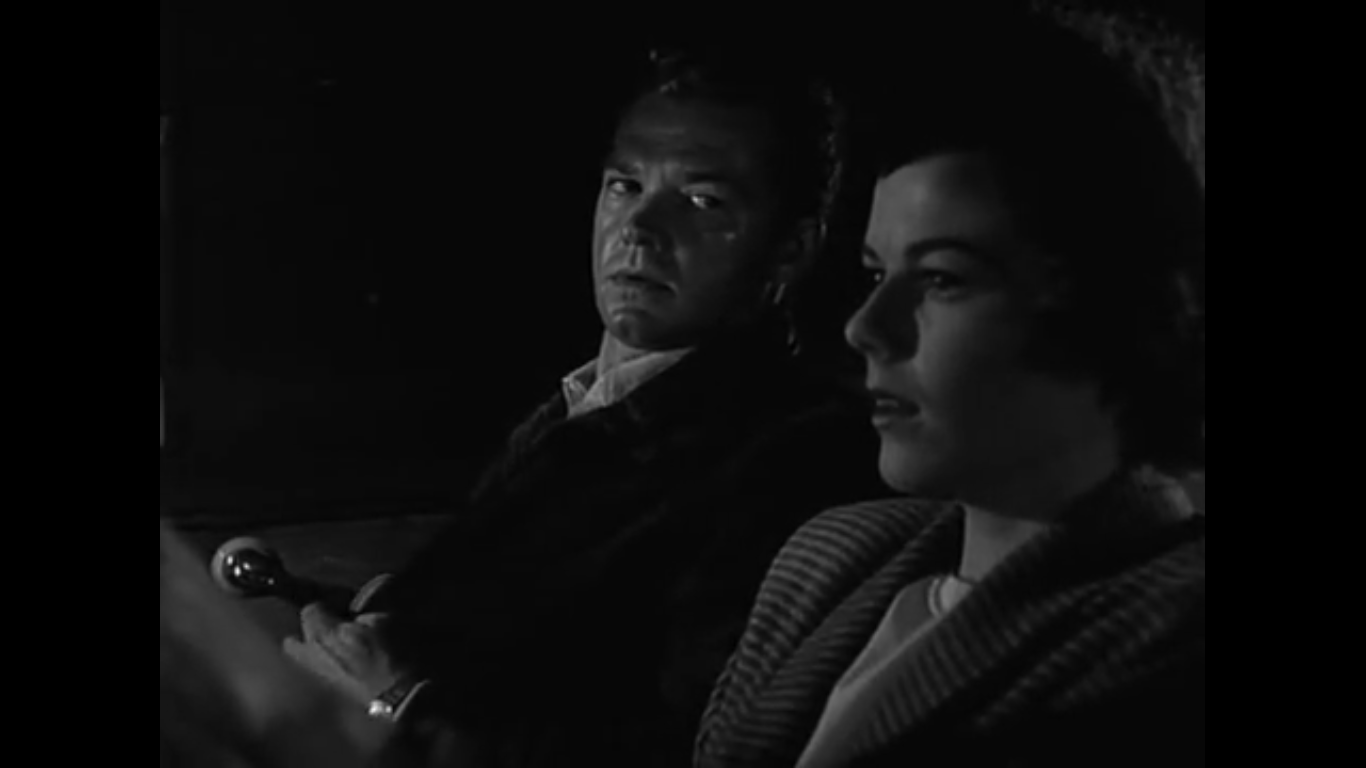
In one memorable extended scene that feels a bit like an aside, Barney sits at the bar downing drinks. There’s a platinum blonde sitting nearby, who doesn’t speak for a moment. Carolyn Jones plays the woman, and she’s an effective foil for Patty — an alternative for the moment. They share a Spaghetti dinner, except Barney isn’t hungry. Instead, he pummels the two tails a local kingpin has set loose on him and leaves the family joint in a shambles.

The final act can only go one direction, and it’s the road of devastation. He becomes a wanted man on the run from his own colleagues, and the man leading the investigation is his best friend; no matter how uncomfortable the current situation , it cannot be any other way. It’s too late. Out of desperation and fear Barney wants to take Patty away. She doesn’t recognize the gravity of the situation. She becomes emotionally traumatized as he flees the scene.

Everything choice going forward only buys him more time. He dons his old policeman duds as a disguise. He seeks refuge with Richard Deacon, who’s hardly the criminal type. He’s busy poring over his academic textbooks as the desperate cop looks to broker a trip out of the country.

I’m pleased to say the finale actually works a bit better than the crescendo of 711 Ocean Drive, if only for the fact it localizes the action and makes it more accessible to all of us. We are able to understand the threat of the gunfight in such an intimate and ordinary setting. He has it out with a gunman at the Union Heights indoor swimming pool in a sea of shrieking bystanders.

But he must make it to his money at all costs. These final solitary moments we have with him totally crush any idealistic notions of the great American dream in post-war society. It blasts a hole right through the entire thing.

While Shield for Murder is blunt in its symbolism, there’s something rather poetic, even fitting, in how it chooses to wrap up the tragic trajectory of a cop who’s gone sour. He’s the good man — formerly a straight arrow — who watched his dream crumble around him. We see it firsthand. It’s brought on by his own aberrant desires.

However, thanks to O’Brien, it has everything you expect, nay demand, in a gritty crime picture totally immersed in murder and corruption. When the end titles come, they feel earned like the movie has delivered on the fatalism we want. There’s little that pretty or polished about it, and in the annals of noir that’s more than a good thing.

The star makes it more than worth the price of admission (especially in the 1950s). There’s probably not a sweatier protagonist, and in a noir film that plays like yet another compliment. He makes us feel his anxiety as well as his deceitfulness.

3.5/5 Stars