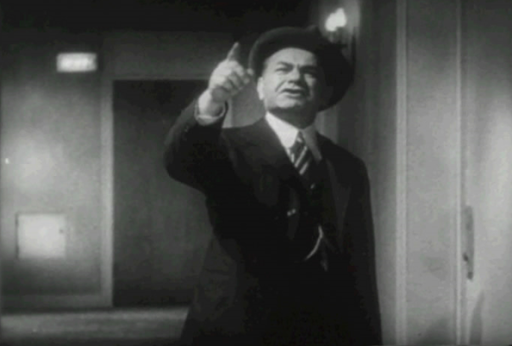
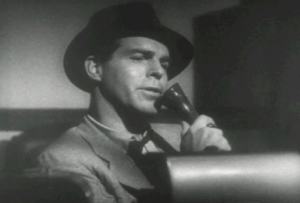
Selma (2014)

Selma_posterMartin Luther King’s legacy will always be the “I Have a Dream” Speech. It’s a crowning moment in history with iconic images and soaring rhetoric. But Doctor King was far more than that. He was a minister, a social activist, and a champion of equality, justice, and peace. Selma is the film his story deserves, taking a magnifying glass to the events surrounding the 1965 march from Selma to Montgomery, Alabama which led President Lyndon B. Johnson to pass the Voting Rights Act of 1965.

So much had already happened. We had Rosa Parks, Sit-ins, Freedom Riders, Malcolm X, the march on Washington, the assassination of President Kennedy and of course the Civil Rights Act of 1964. In the upcoming years, there would be the further escalation of the war in Vietnam, riots in Watts, The Black Panther Party and the assassinations of both Robert Kennedy and Dr. King in 1968. The social unrest was far from over, just like it is not over now. That’s part of what makes Selma so poignant because it is certainly a necessary historical reminder and its relevance remains evident today.

Honestly, the film at times felt rough around the edges and not always the most aesthetically pleasing. For lack of a better word, it felt choppy. That was only a personal observation and not something to get too hung up on though. After all, at its core, Selma is about the characters and the moment of history they were living in. There were some spectacular performances starting with Englishman David Oyelowo as Doctor King himself. He exudes the quiet strength and displays the deliberate but powerful voice that made King the champion of all that was good and right. He is not a perfect man or perfect husband, but he was a man of God who remained true to his convictions and his friends and family.

Ever since I did some reading up on him, LBJ has always been a fascinating character to me, because he was the ultimate politician who was able to accomplish so much and yet he will always have a tarnished legacy due to Vietnam. He is played impeccably by Tom Wilkinson with the imposing figure, southern drawl, and strong will all there. LBJ is at odds with King on occasion and in him you can see a man with a job that no person would desire, trying to make political decisions that no one would want to. Somehow, through it all, the Voting Rights Act was still passed. Then, of course, you have other players like the living legend and present congressman John Lewis as well as Southern Governor and primary villain George Wallace, who seemingly turned his life around in his later years.

Even down to the smallest roles, Selma has power. We begin to see depictions of real-life individuals who lived in a world of fear and disempowerment. Where southern whites ruled with their racist ways and blacks looked for a much-needed answer to the death and suffering. Doctor King was able to lead the movement and yet he had help from friends and the common man as well — black and white. It is interesting how many of the figures who ultimately answered King’s stirring call to action were often pastors, priests, and other clergymen. It’s as if they realized that this was not just a race issue, it was a moral issue, an issue of justice, and ultimately a personal conviction. How could they live hypocritical lives of the status quo while so much was left to be healed in the South? We could ask the same questions of our society now.

The film interestingly enough led many songs to float through my head. There’s Sam Cooke’s “A Change is Gonna Come.” Bob Dylan’s “Only a Pawn in Their Game.” Dion’s “Abraham, Martin, John” and Barry Maguire’s “Eve of Destruction” to name a few fitting tunes.  For that matter, even the award winning anthem “Glory” could have been played during the film and that would have made sense. And yet Selma finds its sound in more traditional tunes that lend a true authenticity to the story that is surprisingly effective.

To say that Selma really resonated is a given. The images of force and brutality, bitter prejudice, billy clubs, and tear gas are still disturbing. They should be and they should never fail to outrage us. But I think there were several times where I was really struck with the weight of all of this. The first being when King kneeled down to pray and all the masses joined him. Such a display was so visceral and moving. Also, the archive footage showing the final march was a cheering reminder that equality and change by peaceful means are possible. Dr. Martin Luther King sadly did not make it to the Promise Land, but he led the United States and his people ever closer. For that, we all owe him an incredible debt of gratitude and for that very reason, we must never forget Selma.

4.5/5 Stars

Birdman (2014)

Birdman_posterIn the opening shot, a man is in his tidy-whities levitating in midair. This is one of those films that can never be figured out completely or never fully dissected in its entirety. It’s a meta film on a whole lot of levels. You could say that Michael Keaton is playing a version of himself named Riggan Thomson. He used to be a superstar in the popular superhero series Birdman. That ended back in 1992. Now he’s old and washed up attempting to revive himself in an adaptation of a Raymond Carver play. Robert Downey Jr. is the guy with the type of box office draw that he used to have.  He is constantly fighting his own inner demons that play like the voice of the Birdman in his head. The character he used to be is so closely tied to his identity that Riggan has trouble getting away from it.

The film follows the loss of one of their lead actors to an accident, and there is a rush to find someone else before their first preview showing. They want Michael Fassbender or Jeremy Renner and yet they do get lucky in Mike Shiner (Edward Shiner). However, much like Norton in real life, Shiner proves to be a handful, but also a star performer who the public love. Riggan needs him and his best friend and lawyer Jake (Zach Galifianakis) pleads with him to say with Shiner. All the previews are a disaster: Mike breaks character over some gin and he tries to have sex with actress and former lover Lesley (Naomi Watts) on stage. To add insult to injury, Riggans locks himself out of the theater and thus begins his frantic pilgrimage through Time Square in only his underwear.

birdman1Riggans wrote, directed, and acts in this play to overcompensate for all his failures. He even refinances his house to cover the cost. He’s spent. His daughter and former drug addict Sam (Emma Stone) is his assistant, and although they don’t see eye to eye, they try to be real with each other. She too is a screw-up, but she sees in him someone who confuses love for adoration. He worries about relevancy, fading away, and he is scared to death that he might not matter. In as many words, she tells him to join the club because every member of humanity has these same fears nearly every day of their existence. He is no different.

Following the final preview, critic Tabitha Dickinson says she will tear his play apart because he is one of those Hollywood celebrities masquerading as an actor. After a rough evening, the Birdman comes back to haunt him before the big opening.

Then, opening night comes and Riggan seems strangely aloof on a night with so much riding on it. He does the unthinkable when in his final scene he uses a real gun and points and fires it at himself. The crowds are as surprised as the viewer before bursting into thunderous applause. Riggan has unwittingly become a sensation on Twitter and on the theater circuit.

The story ends in the hospital with Riggan reconciling himself with his daughter Sam. It looks like it could take a fatal turn because the specter of Birdman still remains, and yet along with Sam we get to see something extraordinary, and at the same time ridiculous, happen. They don’t call him Birdman for nothing.

Birdman has received a great deal of notice for its cinematography that was spliced together to look like one continuous shot. At first, it feels a bit gimmicky watching the camera self-consciously spiral around the actors, but it slowly becomes the routine. It feels like a Goodfellas tracking shot on steroids, and it certainly hearkens back to Hitchcock’s Rope as we often find ourselves following characters from behind down hallways or going from interiors to exteriors. It’s certainly a different perspective of the world.birdman3There are moments that it looked like Edward Norton or Emma Stone might steal the show, but by the end, it is still evident that this is Michael Keaton’s film. This is a story about his struggle. This is his version of Sunset Boulevard that he must overcome. It also has an overarching blend of magic and realism that makes it hard to parse through what the true reality is. But by the end that is far from necessary, because this is a meta experience that is layered and inverted in such a way that makes it fascinating. We think we have our feet on the ground, firmly planted, but we never do, and we are never allowed to.

At times it feels rather like we are in Manet’s painting Bar at the Folies Bergere. It becomes difficult to tell if we are in the audience are simply part of the film. We lose ourselves in the metaness that acts as the thin dividing line between what is real and what is fictitious. There is a cinematic magic in that just as there is a kind of supernatural energy in Riggan Thomson himself.

However, he does not get wholly lost in that, because he is a messed-up human being like the rest of us. No matter how mystical he is, there still is an unmistakable resonance to his story. Thomson would be happy to know that he is relevant just like we are all relevant in some way, shape, or form. It’s all subjective. It just depends on who you ask or what critic says what. In reality, it doesn’t really matter a whole lot.

Honestly, it failed to hit me until afterward,  Birdman is a humorous film where the humor often gets forgotten behind the more philosophical and human aspects. There’s nothing quite like it. It takes its cues from Sunset Boulevard, Jean-Luc Godard, Dr. Strangelove, Batman and undoubtedly so much more, but it is distinctively the creation of Alejandro Gonzalez Inarritu.

4.5/5 Stars

Whiplash (2014)

2b478-whiplash_posterIf ever there was the Devil’s incarnate, it isn’t Terrence Fletcher (J.K. Simmons), he’s probably meaner and harder to nail down. In the world of musicians, there is no school more prestigious than Shaffer Conservatory in New York and that’s where young drumming prodigy Andrew Neiman (Miles Teller) finds himself learning the ropes. Like most of the people there, music is his life and it’s what drives him. His dream is to be the next Buddy Rich. Most people don’t know who that is, but he does and that’s enough.

Nieman thinks he’s made the big time when he gets made the alternative drummer in the orchestra of conductor Terrence Fletcher, a man who seems strict, but still highly passionate about music. Andrew looks to prove himself and let his talent shine through.

He has no idea what he’s getting himself into. He watches with surprise as Fletcher tosses a member of his band out for being out of tune in a rehearsal of Whiplash. Except it was the other guy, but Fletcher feels it’s just as well since the guy didn’t know he wasn’t out of tune. Obviously, he was not a true musician.

Thus, Andrew gets a taste of this sadistic treatment all in the name of art and music. He gets a chair hurled at him. He gets repeatedly slapped for being off tempo. It becomes clear all too soon that Fletcher is a merciless two-faced monster who does everything in his power to improve HIS band at all costs. He never ceases berating, belittling, cursing like a sailor, name-calling, and inducing physical harm. He doesn’t care as long as it leads to results improving overall performance.

About this time Andrew awkwardly asks out the cute girl at the movie theater, and they share an awkward date at a 2nd rate pizza joint. It’s a cute beginning with some real promise. As far as family goes, his dad is a loving man, but Andrew has some real familial conflict with his relatives. They see his aspirations as small potatoes, and he, likewise, sees them as nobodies who are full of themselves. It’s mutual distaste.

Andrew’s education continues on an intense path when, by a fluke, he becomes core drummer. Fletcher also calls Andrew out saying he needs to practice harder, and it becomes a game of survival of the fittest. Kill or be killed. Dog eat dog. Fletcher has no sympathy or emotional attachment. All that matters is fielding the best band he can. He works his three drummers to the point of pure exhaustion, hands bleeding, drenched in sweat before Andrew finally gets the tempo right just to his liking.

He has his chance once more, but on the day of the big Jazz competition, Andrew runs into some roadblocks and since he is hardly capable of playing, Fletcher gives Andrew the boot. The enraged drummer tackles him to the floor. Days later he is expelled from Shaffer while a lawyer is also digging around about Fletcher’s conduct. Andrew reluctantly agrees to blow the whistle on him and he has to go from there.

By this point, the question must be asked. Who is truly insane here? Yes, Fletcher is a nightmare and a tyrant of epic proportions. But what drives someone to do what Andrew does? He drums until his fingers are so ripped up they bleed through bandages. He breaks up with his girlfriend Nicole, all in the name of progress in his career. Perhaps craziest of all, he continues to follow Fletcher until his expulsion. It got to the point that he was losing all touch with reality because drumming was everything. Completely blinded by obsession, spiraling further and further into the abyss that was consuming him.

In many ways, those two were made for each other, and one day they meet on the outside. Andrew no longer a student and Fletcher now fired from his position. Now they just want to play music for the sake of music. Fletcher needs a drummer for a jazz festival he is competing in and Andrew obliges because he cannot stay away from it forever. Of course, his nemesis pulls one last dirty trick, but it was out of this scheme that Andrew realizes himself as a true musical artist letting his hands lead him on an emotional Odyssey of snares and cymbals. For one instant he has Fletcher’s approval and the euphoria of the beats rushes over him. This is all he ever wanted.

Whiplash is a film that is squirm-inducing. Utterly painful and terrifying to watch, thanks in part to the performances of J.K. Simmons and Miles Teller. Teller is inherently likable and that’s what made his turn in the Spectacular Now (2013) so gratifying. His character Andrew is on the complete opposite side of the spectrum, however. He’s utterly friendless and singly-minded, geared towards one thing and one thing only. Teller proved that he could play this role, and it is purposely left ambiguous what happens next. He lost his girlfriend and he got expelled, but what are we supposed to feel for him? Pity, sadness or disapproval?

J.K. Simmons was just WOW… Director Damien Chazelle did a remarkable job and likewise the editing of Whiplash exquisitely fit the theme of drumming. It is completely on form with its frenetic fury to its merciless cutting. It will not give us a break or let us relax as an audience, underlying the generally insane tempo of this film. The name “Whiplash” from Hank Levy’s composition was perfect. Melodious but completely unnerving.

4.5/5 Stars

The Umbrellas of Cherbourg (1964)

umbrellas1 It is hard to remember a time when I was so devastatingly sad due to a film, and it does not leave a deep hurt but a more wistful despondency that is far more real. However, that’s enough misery for the time being. Directed by Jacques Demy and starring an exquisitely young Catherine Deneuve, this cinematic opera is a moving musical piece that looks to be conventional and turns out to be quite the opposite. 

The story begins in November of 1957 with a young mechanic named Guy (Nino Castelnuovo) who is deeply in love with the beautiful 16-year-old Genevieve (Deneuve). Guy cares a great deal for his godmother Elise who has a caregiver to look after her. Genevieve helps out her mother in running a small umbrellas shop in Cherbourg which allows them to scrape by. They must sell some family heirlooms to a kindly jeweler who is smitten with Genevieve. However, Genevieve and Guy have plans of marriage until Guy learns suddenly that he has been drafted for the war in Algeria. They spend their last hours together, and she vows to wait for his return. 

umbrellas7In the following months, it becomes evident that Genevieve is pregnant, but her mother tells her that Guy has probably forgotten her already. The jeweler, Roland Cassard (Marc Michel), professes his love for Genevieve and agrees to adopt her unborn child. Thus, partially on the urging of her mother Genevieve accepts his proposal and they are soon married leaving Cherbourg for good. 

Finally, Guy returns from the war and things have changed. He now has a limp and is fed up with his old work at the garage. Furthermore, the Umbrellas shop is sold and Genevieve is wed and gone. Adding insult to injury his godmother soon passes away. With no one else to turn to, he looks to the caretaker Madeleine, and he realizes her love for him. They get married and he turns his life around with her help. 

The years pass, and now during Christmas of 1963, a car pulls into Guy’s new gas station. After many years, the two former lovers come face to face once more. Now they have marriages and children, and their interactions are painfully aloof. They have moved on with their lives and they have moved on from their passionate romance. 

umbrellas13True, their lives have become sensible, but in this opera that Demy has constructed, this conclusion is sad and bittersweet. And yet if this were the only painful moment that would be one thing, but there are so many that touch the heart and move the viewer. When Guy goes off to the army and takes off on the train we can feel the great weight of anguish. More often than not, you can read the sadness on the face of these characters which complement the beautiful ballads they utter. In other words, it’s one thing to recount the plot and quite another to watch the events unfold.

I have to say that I had never seen a film that played out entirely through song, and even in the opening sequence, Demy consciously melds the diverse forms of film and opera. Umbrellas has the vibrancy and color of movies and takes the dramatic story line and songs of opera, to create a unique piece of musical artistry complete with acts and all. Its colors are bright and vibrant–utterly distinct in their composition. Everything from the bikes to the umbrellas and even back alleyways are beautiful. Although there are many magnificent melodies, rather surprisingly there is not one specific song that stands out (Well, maybe the theme), but instead, it plays rather like one continuous song with different sections and overtures that complement while not overshadowing each other.

umbrellas4Demy’s earlier film Lola also gives an interesting insight into the character of Roland Cassard who once again becomes acquainted with a mother and her daughter in a shop. This time around he has accomplished his dream of traveling the world as a diamond merchant, however, Lola is still heavy on his heart. Another thing that is remarkable about the film is the weather which in many ways plays as another character. The varying degrees of rain and snow dictate the mood and shift with the changing seasons. There’s no doubt that Jacques Demy and his collaborator Michel Legrand created something special here that elevates the musical to a heartfelt tragedy of romance. That’s something many men would not be brave enough to do. 

4.5/5 Stars

Catch me if You Can (2002)

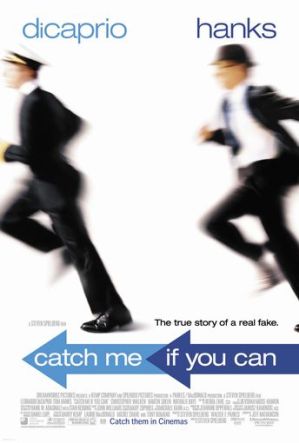
Catch_Me_If_You_CanDirected by Steve Spielberg and starring Leonardo DiCapprio, Tom Hanks and Christopher Walken, the film chronicles the exploits of Frank Abagnale. As a boy int he 1960s he grew up with an American father and French mother but after they get a divorce Frank flees home for good. As his money runs out Frank begins to pull confidence scams and he goes so far as impersonating a Pan-Am airline pilot.

He slowly moves across the country and cashes forged checks adding up to millions of dollars. Soon the FBI catches wind of him and agent Carl Hanratty (Tom Hanks) begins to track Frank. By now Frank has masqueraded as a doctor and a lawyer while also finding time to get married. Hanratty starts to close in again and this time Frank heads to Europe where he uses more of his forged checks.

Frank has a run-in with the French authorities but Carl got him out of it only to have Frank escape once more into the U.S. This time he is caught for good and given a 12 year sentence despite his youth. But thanks to Carl, Frank is offered a job with the FBI to lend his talents to check fraud. And from that point on Frank’s life was relatively normal.

I really enjoyed this story line, DiCaprio is good, the soundtrack is great (Come Fly with Me!) and the title sequence is unique. All in all this is an entertaining cat and mouse game that is well worth the time.

4/5 Stars

To Sir, With Love (1967)

To-sir-with-loveStarring Sidney Poitier and set in London, the plot follows a former architect from British Guiana who becomes a teacher at a high school in a tough area. Early on Mark Thackeray faces a rebellious group of teenagers who dislike education and challenge authority whenever possible. He resolves to keep his temper and yet one day their actions are too vulgar for him and he loses it.

After that he develops a new strategy to treat them as adults and he teaches them practical skills they will need in the real world. He changes how they act and takes them on field trips so that even the most combative one Denham is won over. However, after an incident during gym class which he must diffuse, Thackeray loses the respect of much of the class. His mood changes slightly after receiving another job offer.

Later on in the gym class he is supervising he boxes with Denham. In the ensuing moments he wins Denham and then everyone else over once more. With the year finally over, Thackeray is invited to the year end dance where he is given a gift and serenaded with song (To Sir, With Love by Lulu)! Too choked up to speak he retreats to his office. After a chance encounter he resolves to continue teaching and rips up the other offer.

Besides a good theme in “To Sir, With Love,” Sidney Potier gives a great performance that makes this film both powerful and touching. If you want a small look into Swinging London this is one to watch. Although I am tempted to find fault in this film I find myself focusing on the positives and I will leave it at that.

4/5 Stars

The Petrified Forest (1936)

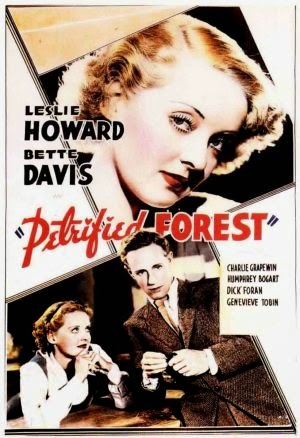
The Petrified Forest (1936)If I dare say this film begins as a rather dull budding love story between a philosophical drifting author (Leslie Howard) and a inquisitive young server (Bette Davis) at a roadside gas station in Arizona. It looks like it’s not to be as he is intent on moving on but then comes murderer Duke Mantee (Humphrey Bogart) with his thugs and things heat up a little bit. His arrival brings up some interesting points of contention and Leslie gains some new found conviction. But that’s not the half of it.

This film comes from the stage with Bogart reprising his star making role as a gangster. It is often talky and sometimes stagnant but the supporting characters and Bogart have enough personality to at least make it passable and a tad interesting. I was never a great fan of Davis, but I have to admit at least she does not look scary in this one. She’s still young and on the rise when this film came out. Leslie Howard is enjoyable with his pleasant delivery but Bogart really lights it up. His glowering face and growling voice are hard to clear from your mind. That’s for sure.

The film also has immense commentary on the survival of the fittest, women, the mythical Old West and fascist ideology that are a sign of the times.

3.5/5 Stars

Review: Double Indemnity (1944)

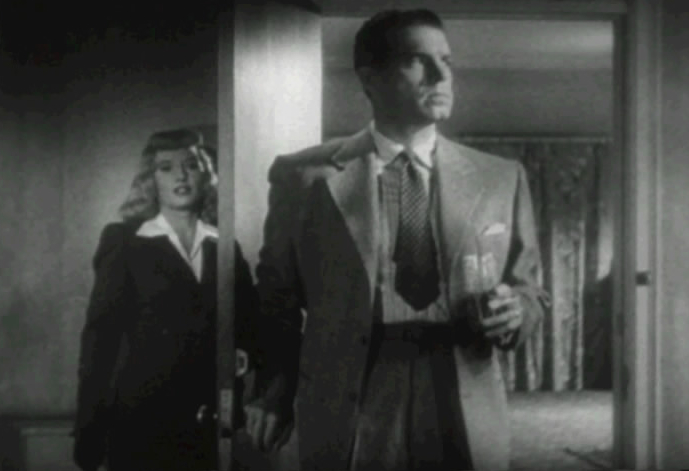
Double_indemnity_screenshot_8It was a hot afternoon, and I can still remember the smell of honeysuckle all along that street. How could I have known murder can sometimes smell like honeysuckle?” – Walter Neff

I can’t say this enough. Double Indemnity is so deliciously enticing each and every time I see it. Maybe it’s the A-grade script from Billy Wilder and crime novelist Raymond Chandler with its noir cynicism and memorable phraseology. Maybe it’s the shadowy, low-key interiors or L.A. exteriors. The monotonous beating score of Miklos Rozsa, mourning impending doom. Maybe it’s the plain, laconic way of Walter Neff or his bloodhound buddy Keyes. Is it the innocent Lola who gives the film morality? Or the artificial wig and the silky smooth purring of Phyllis Dietrichson?

In fact, I named many, if not all, of the many facets of this film, because I want to attempt to acknowledge all of them before I forget. But the reality is I love Double Indemnity at its most basic level as a piece of prime American cinema. Yes, it is film-noir and yes, it came from a European director, but it is very much a product of 1940s sentiment as the war years waned.

The story is pulled right from some pulp fiction sleaze by James M. Cain and cemented itself as a noir classic in its own right with all the trappings that are called for.

It opens with the beginnings of Rozsa’s score reverberating in our ears and it very rarely lets up. A car blazes wildly down the street and winds up in front of an insurance agency. Out stumbles our protagonist Walter Neff (Fred MacMurray) and for the rest of the film, he relates the recent happenings over the Dictaphone of his colleague Barton Keyes (Edward G. Robinson). It goes something like this:

During his first visit to the home of a Mr. Dietrichson, he instead has his first encounter with the man’s sensual wife, and his heart goes pitter-patter from then on. His motivation is no longer insurance. Now he just wants the chance to see her more. He gets his chance to advise her on a plan, and it all seems playful enough until she insinuates that she wants to knock off her ol’ hubby. At least that’s how Neff reads it. However, he cannot get her out of his head as he has fallen into her web. There’s no turning back.

They think of everything and Neff has everything figured out to a tee. As he suggests, it’s like having the perfect odds on the roulette wheel, you just need an accomplice to spin and Phyllis is just that person. From then it’s just straight down the line. They corroborate on all the details at local Jerry’s Market, Walter sets up his alibi, and he does the devilish deed as Phyllis stares with cool satisfaction at the road ahead.

They set it all up like an accident as the last touch, because as Neff knows all too well if it looks like Mr. Dietrichson was killed from riding a train the Double Indemnity clause of the insurance will mean double the payoff due to how unlikely the occurrence is.

 Double Indemnity (1944) - UpdatedHis only fear is the inquisitive nose of Keyes and the “little man” inside the claims investigator’s stomach, who warns him of the first sign of anything fishy. He gets close to the truth but not quite there. Neff is too close for him to see it. However, as things begin to heat up Phyllis and Neff must separate.

As Neff tries to console Lola Dietrichson over the death of her father, he quickly finds out what the naive girl has to say about her step-mother. It puts a little light on the subject, and Neff realizes what he’s been taken for. He wants to remedy things while he can, patching Lola up with her boyfriend, and going to confront Phyllis one last time.

It’s the perfect set-up. Darkened rooms with curtains drawn. Phyllis reclined in an armchair with evil intentions on her mind. In walks Walter and they have it out. Shots are fired, literally. Phyllis will never let up with her ploys until Walter gives her a little help for the final time. I’m sure the Hays Codes loved this one. I certainly did.
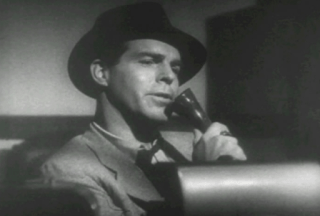
Back in the office Keyes finally overhears the end of Walter’s “confession” as his friend bleeds to death. In one last touching moment, Keyes returns the favor and lights the cigarette like Walter has been obliging to do the entire film.

Walter: “Know why you couldn’t figure this one, Keyes? I’ll tell ya. ‘Cause the guy you were looking for was too close. Right across the desk from ya.”
Keyes: “Closer than that, Walter.”
Walter: “I love you too”

Billy Wilder traded longtime partner Charles Brackett for Raymond Chandler, and despite a rocky partnership, they ended up with one of the greatest scripts, chock full of memorable bits of dialogue. You know you have an impressive cast when Edward G. Robinson is your third lead and each character is playing against type. It’s great casting, in a quintessential American drama solidified by great cinematography and storytelling.

It doesn’t get much better than this and it certainly does not need to. You know Double Indemnity is good when I’ve seen it multiple times and each time the bullets still keep me on the edge of my seat. Thank you, Billy Wilder, for teaching us murder sometimes smells like honeysuckle. That’s absolutely beautiful.

Phyllis: “No, I never loved you, Walter, not you or anybody else. I’m rotten to the heart. I used you just as you said. That’s all you ever meant to me. Until a minute ago, when I couldn’t fire that second shot. I never thought that could happen to me.”
Walter: “Sorry, baby, I’m not buying”
Phyllis: “I’m not asking you to buy. Just hold me close.
Walter: “Good-bye baby.”

5/5 Stars

Lilies of the Field (1963)

Original_movie_poster_for_the_film_Lilies_of_the_FieldStarring Sidney Poitier, the film opens with a black construction worker who has an overheated car in the middle of a desert. He spots at the residence of some European nuns to get water. Homer is intent on making a quick pit stop but the mother superior has other ideas. She sees him as a gift from God so that their Chapel might be built. He reluctantly decides to stick around for a little while to help them out and teach them some English. The stubborn Mother Superior wants everything her way and Homer ends up leaving them. Although he realizes he will not get paid, Homer’s ambition to be an architect leads him to eventually start the Chapel for the nuns. He takes on a part-time job and starts the undertaking while the nuns request materials. Soon the locals want to help but Homer is adamant that he do everything. Eventually, they do join in and more materials come. Progress picks up and Homer becomes the foreman. The building is finally put up and yet the proud Mother will not thank Homer. That night she is finally tricked into thanking him and Homer leads them in a spiritual one last time before driving off into the night. This film is a battle of sorts between two strong-willed people. In the end, it brings a great deal of good.

4/5 Stars

Written on the Wind (1956)

WrittenOnTheWind2Here is a film that wholly personifies an over the top melodrama or soap opera. Douglas Sirk’s film is full of complicated romances, tense relationships, drunkenness, and murder. Yet when the two stars drive away through the gates of the Hadley Estate everything is resolved (at least to a degree).

It seems that Sirk undoubtedly knew how over the top his story is and he reinforces it with his blatantly loud colors, dramatic music, flashy cars, gaudy interiors, and so on. He embraces a style that seems stereo-typically 1950s Hollywood and he makes it work.

Ironically Rock Hudson gives a good performance and Lauren Bacall is okay but the real drama flows from Robert Stack and especially Dorothy Malone. They are the black sheep of the Hadley family and by the end of the film they definitely deserve the moniker. Except there is more to them then that. Kyle is a tragic figure to be sure and despite her sex-crazed ways there still is a bit of sympathy for Marylee.

I cannot wait to see more Sirk because he seems quintessentially 1950s.

4.5/5 Stars