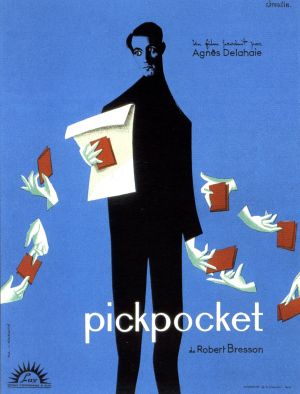
Pickpocket (1959)

6593f-pickpocketposterThis French film directed by Robert Bresson, begins with voice-over narration of a man recalling his past. Michel is a nondescript person who was down on his luck. Then, one day he ineptly tried his hand at pick pocketing and was caught. He got off and over time he sharpened his skills and teamed up with two other men. They successfully bring in a great deal and it becomes Michel’s livelihood. At the same time Michel’s mother is becoming ill and he meets a young neighbor named Jeanne. Michel’s best friend is falling for this girl while Michel himself is continually tempted to steal. This leads to a little trouble from a police inspector and yet he stays out of jail.

However, after further discussion with the chief and Jeanne, Michel leaves Paris. He returns later still impoverished, to find Jeanne with a child but unmarried. He resolves to support her and yet after trying to work, he reverts back to his past vice. This time his guard is down and he winds up in jail. Jeanne comes to visit him a great deal and through this devotion he realizes they both are in love with each other.

This film has simple but intriguing topic. Sometimes the pick pocketing scenes are shown almost as a choreographed dance which is done so fluidly. Overall Pickpocket has a striking resemblance to Doestoevsky’s Crime and Punishment but it reflects the wonderful simplicity of Robert Bresson’s realistic style. Is it just me or does Marika Green look like Natalie Portman in black and white. I certainly think so.

4.5/5 Stars

Good Night, And Good Luck (2005)

63e88-goodnight_posterThe film takes place amidst the Red Scare and it chronicles the team behind the CBS show See It Now, with the reporting of Edward R. Murrow. He along with his co-producer Fred Friendly are willing to question the actions of Senator Joseph McCarthy. However, they walk a fin line that could easily lead to controversy and the destruction of their careers. Eventually they do witness McCarthy as he begins to loser popularity, but they have no time to celebrate because they have their own set of problems with the network. Murrow closes a speech by saying television has potential if used correctly. As always he ends with “Good Night, and Good Luck.” This film had a pretty good cast, sleek black and white cinematography, and archival footage was used well throughout. It was nothing overly spectacular but it was good.

4/5 Stars

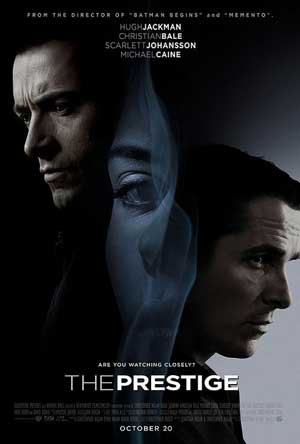
The Prestige (2006)

87836-prestige_posterStarring Christian Bale, Hugh Jackman, Scarlett Johannson, and Michael Caine with director Christopher Nolan, this film is about two magicians who ultimately become rivals. After the death of Robert Angiers’ wife, he blames Alfred Borden and thus begins their quest to become the greatest magicians the world has ever seen. Along the way Borden finds a wife and has a daughter, while Angiers tries to discover Borden’s secrets various ways. Both men will stop at nothing to succeed even if it means sabotage, wounding, or even traveling to Colorado in Angiers’ case. With Borden in jail for murder of his rival, it appears as if Angiers has won. However, in the end all is not as it seems and it is revealed to the audience. Once again Nolan uses non linear storytelling to develop this intriguing mystery. I was not much of an authority on magic but now I know you have the pledge, the turn, and of course the prestige.
 
4/5 Stars

Three Colors: Blue (1993)

b0ad4-threecolorsblue“Now I only have one thing left to do: Nothing. I don’t want any belongings, any memories. No friends, no love. Those are all traps.”

I once thought that Before Sunrise was the type of movie that I would want to make. Three Colors: Blue is another concept that I have often envisioned without even knowing it. In fact, I had seen The Descendants, a film with a somewhat similar story arc told from a different perspective. Except whereas Clooney’s film is full of blatant drama and intense familial moments in Hawaii, Blue is far more nuanced.

The Descendants might be a more gripping drama, but Blue has the sort of complex depiction that seems to more closely mirror reality. The grieving process involves isolation, solemness, and at times few words. The easiest way to grieve is not to feel, not to fully embrace the pain. Sometimes that is the simplest if not the healthiest way to deal with it for Julie. It’s a real world approach to the scenario, and it’s no less painful to watch — perhaps even more so.

Julie’s husband Patrice de Courcy was a famous composer who was commissioned to arrange a grand piece to be performed at concerts for the Unification of Europe. It is a great honor and we quickly learn that Patrice is quite a big deal. However, after a car accident, Patrice and his 5-year-old daughter perish in the crash and only Julie gets away alive. It is a stark, unsentimental picture, and it succeeds in changing Julie’s life forever.

After being released from the hospital she soon sells all her possessions and moves out of her family apartment to take up residence somewhere far removed from any acquaintances, including a man named Olivier who is in love with her. She has a new home and begins to sever ties to her old life. The unfinished work of her husband (and her) is trashed and that’s the end of that. In her new Parisian home, she has a rodent problem and becomes the hesitant confidant of a local exotic dancer. Furthermore, she rejects the necklace that a young man pulled out of the wreckage. Her times of solitude are spent swimming laps alone in the local pool, submerged and half-covered in shadow. Grandiose symphonies reverberate through her mind haunting her. In such moments, Kieslowski will often black out the screen in the middle of the scene, effectively interrupting the action for a few seconds before bringing us back.

Words are few and far between for Julie and when she does speak it is often brief and reserved. We are, therefore, forced to observe her without the aid of dialogue. She is certainly detached but there is a provocative side to her. Something is mystifying about her soft features, dark eyes, and short hair. She is a wonderful woman of mystery and beauty because the reality of it is, we do not know a whole lot about her. We must discover more bit by bit and she does not readily disclose information.

It is when pictures of her life literally flash before her eyes on a TV screen that the story takes its next turn. Julie learns soon enough that her husband had a mistress that he was with for a few years. In the hands of Hollywood, this would be high drama. In the hands of Kieslowski, it is far from it. Julie is still the same aloof individual she always was and even a confrontation with the mistress does not change that. She is civil and generous through it all.

Finally, she returns to her husband’s composition which she learns Olivier has started to rewrite. They agree that he will make his own work and Julie must accept it for what it is. Faces from the film float across the screen and a still solemn Julie lets out a few silent tears. The anti-tragedy is complete, a subdued, intriguing piece of cinema. Not for those with short attention spans but, I am interested to see Red and White. Kieslowski intrigues me with his thought provoking films somehow reminiscent of the likes of Bergman or Bunuel.

4.5/5 Stars

Star Trek: Into Darkness (2013)

afa29-startrekintodarknessEvery film franchise needs an installment where the stakes get higher and the outlook gets a lot bleaker, dropping lower into the darkness. Star Wars has Empire Strikes Back, The Hunger Games has Catching Fire and the new Star Trek series has this film. The opening gambit exhibits all the problems that normally arise with the enterprise crew. Kirk acts rashly not following protocol, Spock is far too logical for his own good and the native population sees far more than they should. All in a day’s work except their exploits get Kirk relieved of his command and Spock transferred. It’s not a good situation by any means.

Then out of the woodwork comes John Harrison a former Star Fleet weapons expert who has gone rogue and induced a man to blow up a seemingly insignificance archives building, but its all a ploy to get at the command. The aftermath leaves Kirk’s mentor dead and Kirk himself reinstated bent on revenge. The Enterprise heads after Harrison who fled to Kronos, part of the airspace of the dreaded Klingon. In a heated confrontation the unstoppable fugitive mows down the Klingons and allows himself to be taken in, but obviously something is not right.
Now Admiral Marcus is on their tale bent on finishing off Harrison and doing it by any means necessary even going so far as shooting down the Enterprise. The balance of right and wrong is completely off kilter by now. Once again Kirk chooses to ally with Harrison to take down Marcus, a risky proposition to be sure. Little does he know who Harrison actually is and what his mission entails. Ultimately Kirk is left with a few options with a ship without little power and a crew that are sitting ducks. In a fitting role reversal, he does the only logical thing he can and Spock takes over the bridge using Kirkian-like tactics. But the mission is far from over with danger still afoot. It takes a little ingenuity from all hands on deck including Spock, Uhura and Dr. McCoy. They cannot be expected to stop there however because their true mission is to go where no man has gone before. Gear up for another 5 years in space or possibly 5 years until the next movie.
I must admit I am not a true Trekkie but I did appreciate a few of the nods in this film including the appearance of Leonard Nimoy and the resurfacing of Khan. Now I really want to go back and see the classic Wrath of Khan too. However, I found this film to have nice pacing some good about-faces and a generally good story line. There are times when I get sick of the drama and picture perfect special effects but Star Trek Into Darkness is undoubtedly good blockbuster fodder. For Trekkies, it certainly is worth it and the cast is endearing. I must say I miss Deforrest Kelly especially, though. Bones is just too overdramatic in this film for his own good. But what do I know? Since villains are always so important Benedict Cumberbatch did a wonderful job raising the stakes by playing the audience beautifully. Well done.
4/5 Stars

The Kid with a Bike (2011)

fe148-kidwithabikeTo say this is an affecting film would be an understatement, because if you want, to be honest, it is truly heart wrenching and painful to watch. From the beginning moments, this film brought to mind a modern-day hybrid of The 400 Blows with a bit of The Bicycle Thief mixed in. However, comparisons are always unfair, because this film will never be either of those and that is fine.

Cyril (Thomas Doret) is a young red-headed boy whose most prize possession is his bicycle. Now his mother is non-existent (either dead or gone) and his father might as well be. The boy lives at a foster home, but he is an unruly occupant who is prone to flee. The reason being is that Cyril clings to the hope that his father will come and get him or that his father will call him soon. It never happens.
On one such escape attempt, Cyril clings to a lady hairdresser (Cecile de France)  as his caretakers pry him away. Soon she comes to see him and brings his prized bike which had been stolen. Next, she graciously agrees to take him for the weekends after he asks her. However, he is far from a perfect child, often detached, prone to disobey, and can even be violent at times. Things get worse when Cyril goes with Samantha to talk to his father. It’s a happy moment for Cyril until his father reluctantly tells him to his face that he will not take him back. He had initially asked Samantha to do it showing his lack of a spine and self-respect. You cannot much blame Cyril, but he gets worse before he gets better. He spends time with a local thug who ingratiates himself to Cyril with bike repairs, Assassins Creed, and soda. The motive being he needs a new accomplice to take part in a small-time robbery. The worst part is Cyril does it after Samantha specifically tells him not to hang out with the guy.
Without getting into all the gory details Cyril runs into more problems, Samantha gives up her boyfriend, and there are more repercussions for his actions. However, unlike The 400 Blows, this film ends on perhaps a more positive, although altogether odd, note. We can only hope that Cyril and Samantha gel even more because they deserve to be happy, but that is a story for another film. Or maybe it is better not knowing.
I had yet to see anything from the Dardenne Brothers, but I can see why their type of film-making is so popular. It’s “European film” at its best with simple storylines, realistic and humble camerawork that is brought to life by complex characters. There is a lot of raw emotion and character traits that must be parsed through. Motives and actions must always be questioned since we cannot understand everything. We just know they happen. That is a beautiful thing I suppose because these characters are not often two dimensional and that is a service to the audience. These are the type of films people deserve to watch whether they know it or not. If all we see are summer blockbusters and Oscar contenders we would be missing out on a whole different niche of film entirely. Give it a chance and just maybe you’ll like it.
4.5/5 Stars

Serpico (1973)

acd89-serp2“Come on Frank. Let’s face it. Who can trust a cop who don’t take money?”

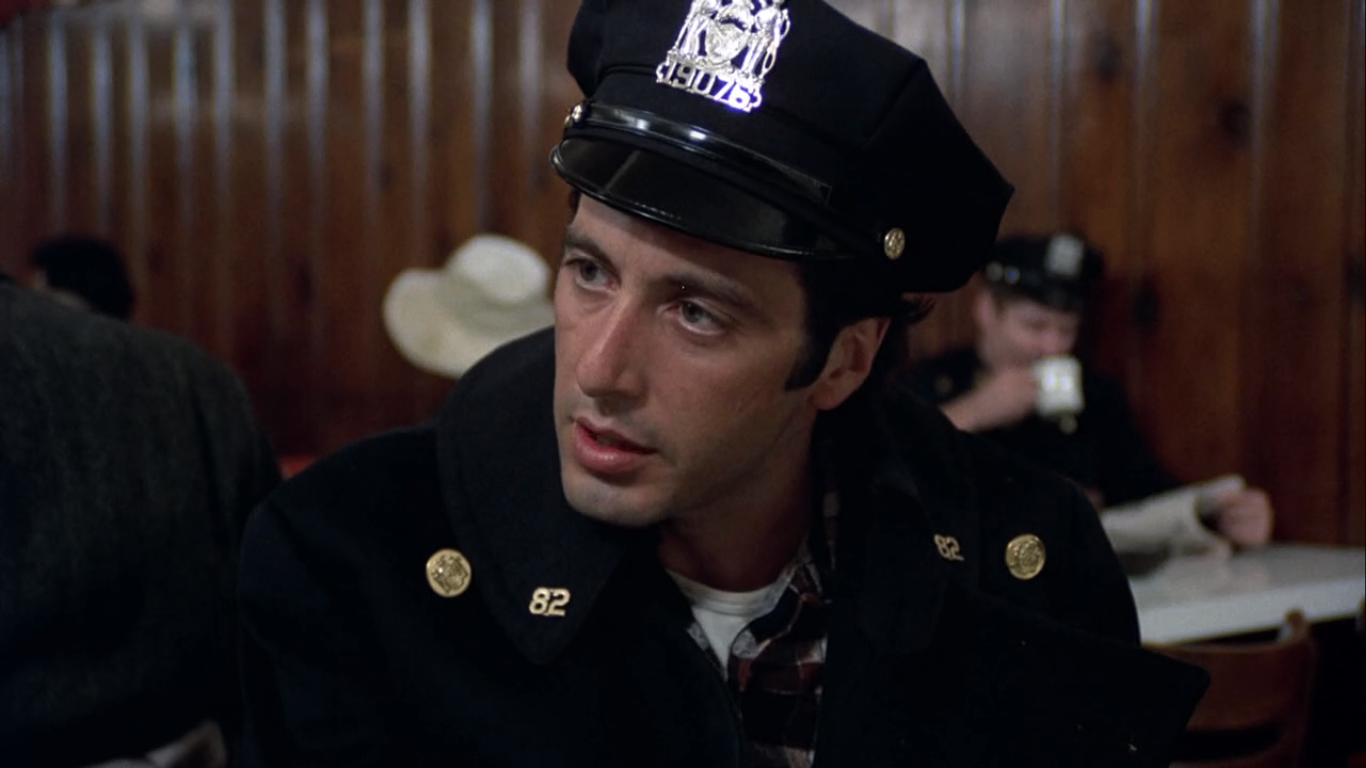
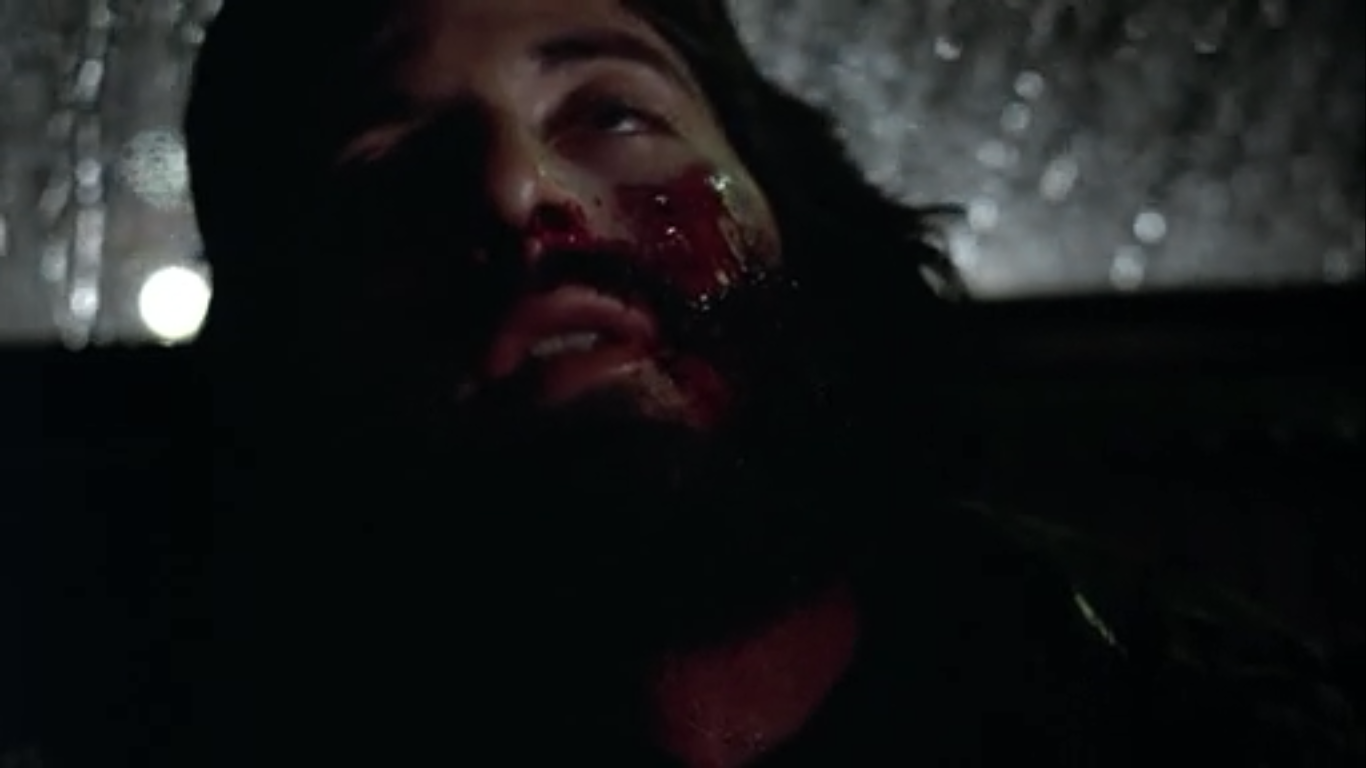
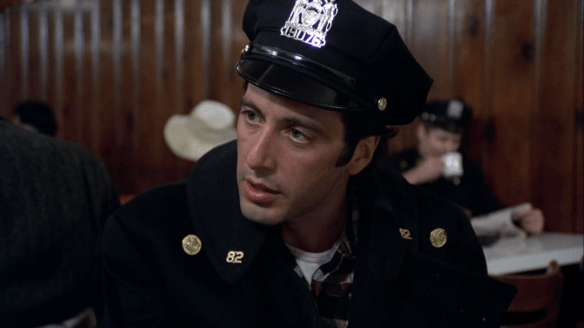
This is the state of affairs in the police department that green police academy grad Frank Serpico (Al Pacino) finds himself thrown into. At first, he is unaware of it all as he moves up the ranks as a young uniformed cop. In fact, he looks exactly like a post-war Michael Corleone at this point. His new role seems like an honorable life of camaraderie, duty, and public service. The corrupt is obvious and distinct from the good. Soon his brash, forthright style creates waves, but it soon becomes apparent that he is not one to care about hurting egos.
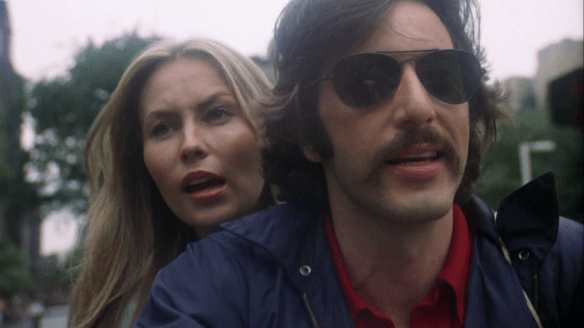
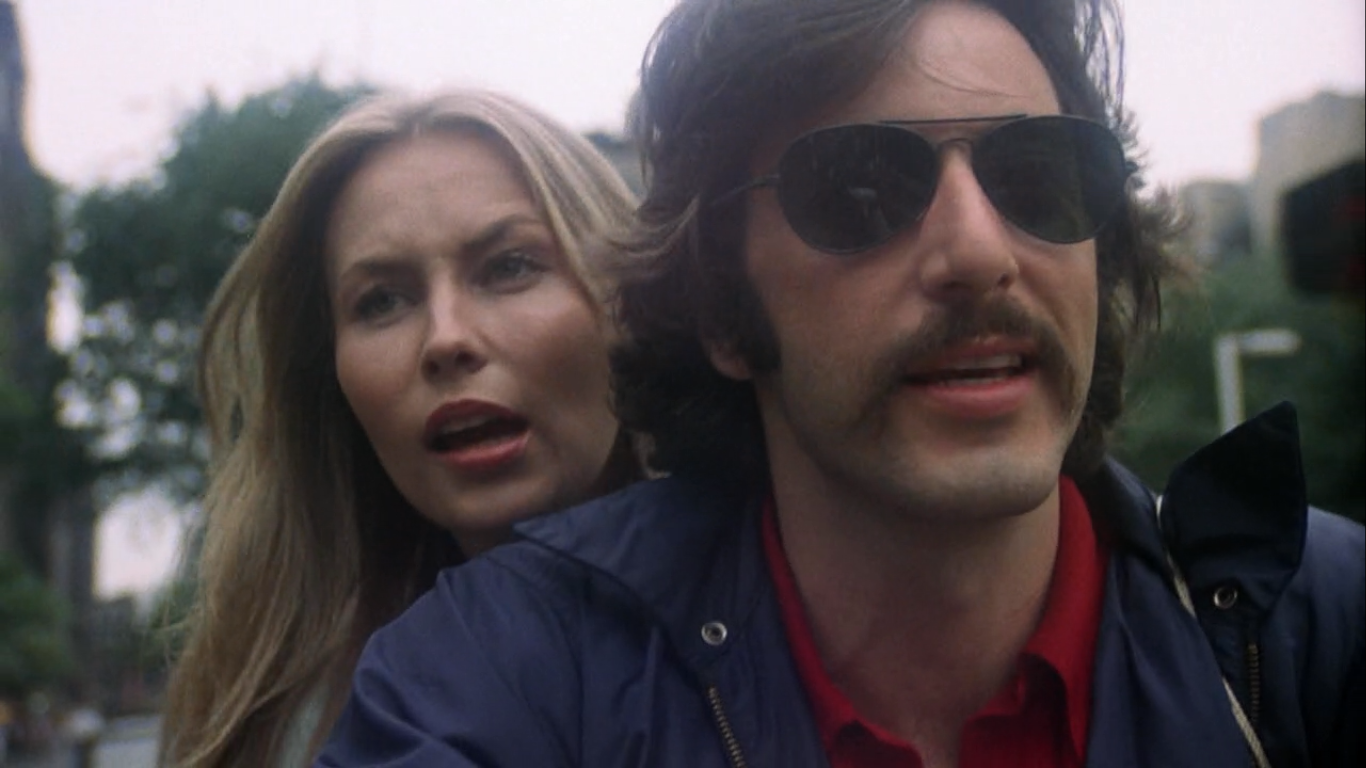
39dd2-serp2b3He moves on with his career working in plainclothes and getting a new apartment followed by a new dog. His appearance begins to change as well as he starts wearing a thick bushy beard and wearing hippy garb. It suits him fine in his work and outside he meets a pretty girl named Leslie Lane, but it’s not meant to be.

Serpico corroborates with colleague Bob Blair (Tony Roberts) trying to figure out how to bring attention to the bribes he has 60789-serp2b4been offered. But honest help is hard to find especially from someone who makes it stick. The higher ups care more about the reputation of the department over corruption, making progress difficult to come by. He continually bounces around from division to division and nobody seems to want him, or trust him for that matter. There are only a few honest Joes around and they are few and far between. Serpico gets transferred this time to the “upright” 7th division and begins seeing his next door neighbor named Laurie. Too soon he learns that one of his acquaintances is instrumental in the extortion that takes place department-wide. By now Frank is feared, hated, and despised because he will not take money under any circumstances. It takes its toll to be all alone in the force, and he lashes out at Laurie who leaves him for good. Now he truly is alone.

He becomes increasingly combative and paranoid as he gets ready to testify before the grand jury. Another case of bribes comes out and when Serpico and his upright partner try and report it nothing is done. As a last resort, Frank goes to The New York Times and they blow the cover right off. He soon receives an ominous death threat and gets shot when trying to bust someone.
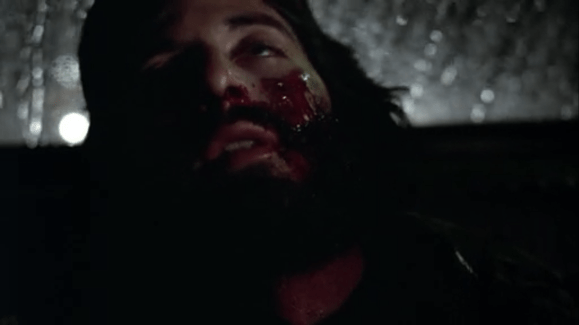
He lays in the hospital recuperating asking for his guards to be relieved and watching the hate mail pile up. His badge is returned to him, but he rejects it in disgust, soon resigning from the police and waiting for a slow boat to Switzerland. That’s as far from New York as he could get.

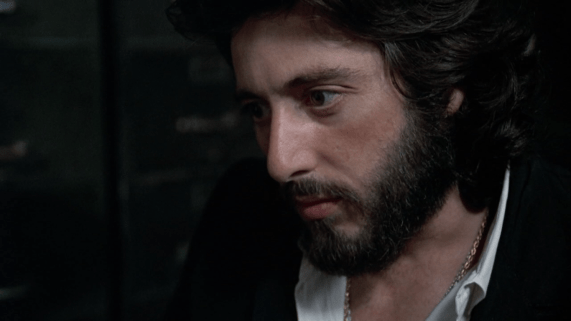
It seems like there are so very many close-ups of Frank Serpico, and thus, over the course of the film we get the opportunity to truly study his face, or rather the face of Pacino as he embodies this character. His cold, aloof eyes, his facial hair that goes under several transformations, but that is only the outward appearance. It is his inner transformation that is most important because that is where his conscience lies, to guide him each and everyday on the beat.

My New York geography leaves something to be desired but that’s not the problem of native New Yorker Sidney Lumet. This is a story that takes place in New York, made for New York, and fit perfectly with its director. It seems like he knew the streets of the New York like the back of his hand, really creating an authentic atmosphere for this police biopic. It has a touch of The French Connection and yet it is a far more personal look at the life of Serpico himself.

This is also extraordinary because the story of Serpico was so fresh, still only a year or two old at most. Furthermore, the film has the same disillusioning and depressing tone of other dramas that came out of the 1970s. Back in the 1950s films like 12 Angry Men (Lumet’s debut) still had an air of idealism. That had mostly dissipated in the New Hollywood period, because the good guys aren’t black and white. Serpico is not the greatest guy around, but the one thing he has going for him is that he is not crooked and that’s saying a lot in the corrupt world he exists in. This is his story told with all the blemishes, personal troubles, and drama that went with it. The greatest service to him is that his story got told and hopefully truthfully enough.

4.5/5 Stars

Glengarry Glen Ross (1992)

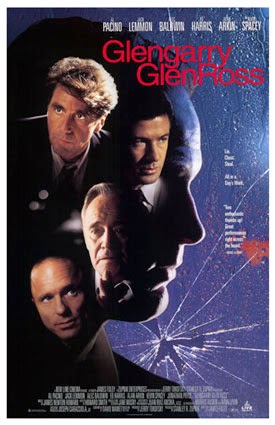
fa822-glengarrymovieIt’s a film about a despicable world which promotes despicable people and despicable behavior. That’s the world of the real estate salesmen in Glengarry Glen Ross. Here are men who use any mode necessary to close deals as they say. They finagle, lie, cheat and even steal because those are just tricks of the trade. Those who get the good leads are able to close more deals and make more bank. Those who get the leftovers struggle to swing something out of nothing. Shelley “The Machine” Levene (Jack Lemmon) is one of those struggling after many years of success in the business or racket, whichever you prefer. He has a lovely personality, rather like a hissing snake trying to seduce you before going in for the kill. On the flip side, he can be a real jerk and he is unscrupulous as all get out.

But that’s enough on Shelley. The office is run by rigid John Williamson (Kevin Spacey) who just follows his orders and does not budge an inch. Then there is Ricky Roma (Al Pacino), the top closer who is especially cynical but also a great admirer of Shelley’s skill. Dave Moss (Ed Harris) is a man with a big mouth and fiery temper not ready to sit by while other men outperform him. Finally, there’s George Aaronow (Alan Arkin) a man who humors Moss and is also fed up with his situation.

The wheels start turning when the Big Whigs send in a man named Blake (Alec Baldwin) to motivate the salesmen. It’s the survival of the fittest after all and they know what it takes to sell real estate so he encourages them to go and do likewise. His main tactics include berating, insults, and threats against their careers (They either get a car, a set of knives or the boot). Verbal attacks are sometimes more pernicious than physical beatings and that’s the truth here. They never relent even after Blake leaves because that’s the type of choice words that this environment fosters. One minute a salesman uses a polished voice to coerce a client then turns right around to bad mouth a colleague.

Moss on his part tries to pull Aaronow into his plan to steal the good leads from Williamson’s office. A desperate Levene tries to get better leads from an unrelenting Williamson as the veteran man struggles to convince clients and deal with his ill daughter. Roma, on his part, is at top form playing his client (Jonathan Pryce) and getting him to stay with a deal until it gets messed up. In the process we see all the pettiness, desperateness and corruption unleashed. The burglary goes down and it does not necessarily involve who you would think. Maybe it does. That’s not the point, though. The point is these men will do anything given the position they are in, but it’s not that simple because each one has their complexities. For instance, Levene and Roma are on very good terms and Moss and Aaronow seem very buddy, buddy. But ultimately it seems they look out for number one and that takes its toll on any human being.

The film is a biting drama brought to us through a fiery and sometimes brutal script from David Mamet, based on his play. Furthermore, the story is aided by an all-star cast of big names. Each one plays an equally despicable character. I knew Pacino, Spacey, Harris, and Arkin were up to the task because I had seen them before in tough or villainous roles. However, to his credit Jack Lemmon shows his versatility here since I absolutely despised him for once. That’s no easy task and he proved it to be possible. This film may be a black comedy, but there really should not be much to laugh at.

3.5/5 Stars

Cinema Paradiso (1988)

58390-cinemaparadisoTo the casual viewer, Cinema Paradiso can seem like a plodding film, but this pacing is almost necessary since it reflects the passing of the years for one individual. It has been 30 years since Toto left his hometown as a young man never to return. Now he gets a call from the mother he never talks to, with the message that Alfredo has passed away.

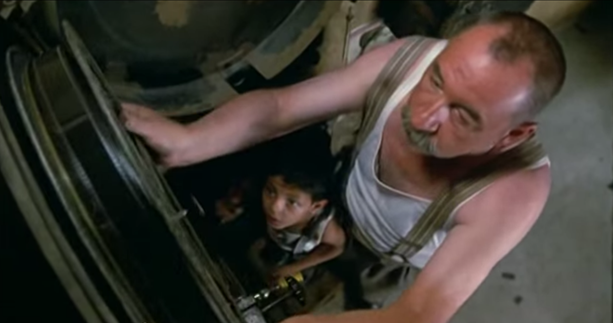
The memories become coming back from when he was a young boy in the post-war years. He had a knack for getting into trouble, falling asleep as an altar boy, and getting scolded by his mother. She was especially displeased with his obsession with the movies played at the local theater called Cinema Paradiso. It is there where Toto has his first encounters with the great legends of film, but also perhaps more importantly, the projectionist Alfredo. Initially, the middle-aged man finds the boy a nuisance but slowly a close bond forms between the two. Alfredo teaches little Toto the tricks of the trade and the movie hall flourishes with packed houses all the time. You see, it was the age when movies were a family affair, and the whole town showed up to be entertained. They were the perfect escape from disillusioned post-war years. However, there still is a local priest who censors all kissing in film because after all, that’s highly objectionable. Very racy indeed.

One such night a near fatal accident occurs when the projector overheats then burns the film setting the whole projection room ablaze. Toto barely pulls out Alfredo alive and he is permanently left without sight. From that day on his young prodigy takes over the job but never forgets his mentor and friend. The boy is soon turning into a man and it means young love and a stint in the army, and still Alfredo is around for him. He is always ready to give a bit of homespun wisdom from a movie or do a simple favor. However, finally on the advice of his old friend Toto left town and never returned in order to make something of his life. 

Now he finally returns to pay his respects and the old has passed away. Some familiar faces still inhabit the town but the Cinema Paradiso is about to be demolished and the end of an era has arrived. The days of cinema halls are waning as videos and the like grow bigger. As a gift to his friend Alfredo left Toto (now Salvatore Di Vita) one last reel of film containing a montage of big screen kisses. It is less a lesson in Italian and American classics and more of a lesson in life. Our relationships matter. More on that later. 

 Cinema Paradiso made me crave watching films with a big audience because that is something modern moviegoers often do not experience. Movies were initially meant for the masses (ie. Sullivan’s Travels) and they were meant to be enjoyed in community with one another. That’s part of their magic I suppose. 

This is also a highly sentimental, highly nostalgic look at film, but as I alluded to before, it is less about film and more about the people. I tried to recognize actors and films while I saw bits and pieces of old black and white footage, but then I realized it was arbitrary because the audience members are what really mattered. As Alfredo points out in one of his last chats with Toto, “Life isn’t like in the movies. Life…is much harder.” However, the reward of living life is great despite the risk involved, and so it is necessary to leave the movie theater, television, or your laptop behind at times. Life and the relationships that fill it are the most paramount of all and although nostalgia is wonderful there is something to be said for living in the present. That is some of what Cinema Paradiso teaches us and it is a message to take to heart.

4.5/5 Stars

City of God (2002)

6e6f8-cityofgod1The slash of a sharpened knife grabs our attention and from that point on there is no turning away from City of God. The story is fed to us by Rocket, a character we initially know very little about except he will help us make sense of all that follows. The setting of the story is the slums of Brazil during the 60s and 70s. People are poor, crime is rampant, and adolescents wave guns around like they were toys.

Rocket’s older brother Goose was a part of The Tender Trio along with teenagers Shaggy and Clipper. They have a lucrative revenue stream robbing businesses and gasoline trucks and they share the profits with the people of the town in return for protection. Then a little twerp named Li’l Dice convinces them to rob a hotel and the job pays off big. But soon after begin the police raids and the trio is split up for good. Clipper joins the church, Shaggy is shot by the cops, and Li’l Dice knocks off Rocket’s brother. From that point, the drug trade slowly grew, and ultimately was left in the hands of a young thug named Carrot.

Now it’s the 1970s and Rocket cultivates a love for photography while hanging out with his hippie friends. Meanwhile, Li’l Dice now known as Li’l Z has taken over the drug trade and pushed almost everyone out except Carrot. He is obsessed with being the boss and ironically under his rule, the City of God remains in relative peace. Z’s childhood friend Benny is a relaxed guy who keeps his buddy at bay and earns the admiration of everyone even Rocket.

But the “good times” must come to an end as Benny decides to skip out on the slums with his girlfriend because he does not want the life of a drug lord anymore. At a giant bash tragedy strikes, and Li’l Z is looking for blood. His target is Knockout Ned and the man’s girlfriend. After a night of turmoil, Li’l Z is never at peace again, because there is now a man with a personal vendetta bent on making him pay.

Carrot uses this new ally to his advantage and thus begins the drug war to end all drug wars. Carrot and Ned vs. Li’l Z. Both sides bring anyone and everyone into the fray and load up on guns, guns, ammunition, and more guns. It’s at this time that Rocket’s dreams become realized. He gets a job as a lowly paper boy and ultimately snags some photos of Z and his thugs making it big with the local paper. Soon his photography is in high demand and he’s even on Li’l Z’s good side.

Thus begins the beginning of the end as the rival forces meet in one last skirmish. In the aftermath Ned is shot by a vengeful boy, Li’l Z is jailed then shot, and Carrot is fodder for the papers. The little Runts now plan to run the streets and Rocket becomes famous for his photography. The film holds onto one last secret until the end before it is revealed. As we guessed this film is based on a real story and his name is not Rocket but Wilson Rodrigues.

City of God is an ironic name for such a godless place and likewise, I haven’t felt so squeamish in a film recently and perhaps ever. There is so much violence and crime in this film but we do not seem to get numb to it. It feels like we become more aware of the reality and the vicious cycle that continues its cyclical path. These young thugs are products of their environment and so how they end up is truly saddening. Even such a despicable, sadistic man such as Li’l Z knows what friendship is (ie. Benny), but ultimately even Benny cannot help him. That’s what makes the success of Rocket so extraordinary. In many ways, he is the perfect narrator, first because he survived, but also because he has a view into everything from varying angles and different perspectives.

As far as the film goes, the non-linear story line and multiple points of view made for an engaging story. This piece of storytelling keeps us begging for more crumbs as we attempt to connect the pieces as they are fed to us. Maybe it is a bit of morbid curiosity that keeps us interested or a desire to know if justice is dealt. The quick editing can be disconcerting at times and the often bobbing camera can sometimes get annoying but it fits the style of the whole film. It is part On the Waterfront, part The Godfather, but set in Brazil and a whole lot grittier. City of God reflects the hierarchy of the drug trade that permeates all areas of life and governs an entire community. Rocket was one of the lucky ones.

4.5/5 Stars