Broadcast News (1987)

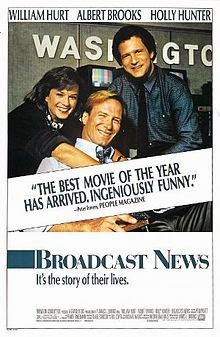
4392b-broadcast_newsI didn’t laugh at James L. Brook’s Broadcast News like I would your typical comedy (This is no Anchorman). However, I did find myself chuckling, in spite of myself, because these characters are humans and as humans, they are screw ups, petty people, and have errors in judgment. The humor comes in the everyday occurrences of working with a news station. There is constant chaos paired with egos butting heads and somehow the news still  gets reported.

At such a news station there are three seemingly everyday people who form a triangle of sorts. First off there is Tom Grunick (William Hurt), a handsome anchorman who is often sincere but lacking in the smarts and experience of others. Then, you have Aaron Altman (Albert Brooks), an experienced reporter with a gift for writing and a dream to be an anchorman as well. Finally, caught between the two fellows is manic producer Jane Craig (Holly Hunter) who excels in her career.
Aaron is a longtime friend and partner of Jane who secretly loves her. Tom comes into the picture as the inexperienced one, and it looks like he won’t be going anywhere. However, he gets his chance with a special report and thanks to Jane he hits it out of the park. It so exhilarating and all of a sudden he feels a lot closer too. That’s what Broadcast News does to these people. It makes them feel that much closer and it begins to make it difficult to filter their feelings. That’s how Jane finds herself caught between two men who both seem to love her.
It takes a major layoff to shake up the status quo and it reveals a bit more of the pettiness that exists within the industry (reflected some by Jack Nicholson’s evening anchor). Aaron quits his job, Tom gets promoted to a post in London, and Jane gets the position of her old boss who receives the boot. Aaron is jealous of Tom and his goodbye to Jane is a rather sour one. Jane, on the other hand, has some choice words for Tom when she finds out how he manipulated one of his news reports. That’s the way life is. It might be set up like a perfect love triangle initially, but then no one seems to win in the end.

We come back to the three individuals a few years down the road and they have all moved on with their careers and their personal lives. Not everything is patched up and they hardly have much in common anymore, but they can still talk and continue living their lives as before.

This film did not strike me as laugh out loud funny or remarkably spellbinding, but it was a truthful look at life at a news station. That in itself is a compliment to the film even if it is not altogether extraordinary because it seems genuine. I will certainly always be a fan of two of Brook’s other creations for the small screen, The Mary Tyler Moore Show and Taxi. He has a great breadth of work to be proud of.
3.5/5 Stars

Searching for Bobby Fischer (1993)

19491-searchingfor2Josh Waitzkin (Max Pomeranc) seems like your average little boy with a bowl cut and an affinity for Legos and sports. However, soon his parents discover that he has a special gift for chess and his father (Joe Mantegna) especially wishes to cultivate his skills. He finds Josh a teacher named Bruce Pandolfini (Ben Kingsley), a former chess champion himself who looks to discipline the boy’s playing so he can be the next Bobby Fischer. He eggs Josh on with the promise of a grand master certificate once he earns enough points, and so Josh listens to his instruction. His dad enters him in tournaments that Josh wins easily and rapidly moves up the ranks, but as always happens the game is no longer fun and the father gets more intent on his son excelling on the highest stage. The trophies stack up, but Josh is missing a lot of school as well as his friends.

On the urging of Bruce, Josh is no longer allowed to play with the men in the park because they play undisciplined. Stepping back for a moment, there is the realization that this is a seven-year-old boy and yet this really happened, and it happens very often. Parents push their kids so much so because they wish for them to succeed, and they want to give them what they never had.The film deals with this circumstance sensibly with Josh’s mom acting as the voice of reason. His father is not a bad man by any means, and it is during one scene in the rain after Josh loses again that we see that. Josh sits on the curb in silence as his dad talks to him and the boy genuinely asks, “Why are you standing so far away from me?” It’s at this moment that Mr. Waitzkin realizes that he has blown things out of proportion and embraces his boy telling him that everything is okay.

Eventually, Josh goes back to playing with his buddy Vinnie (Laurence Fishburne Jr.) in the park and takes some fishing trips with his dad. Despite the initial cautions of Pandolfini, Josh goes into the biggest tournament against his greatest competition without stressing over chess. He just uses all the knowledge he has accrued and plays a beautiful game. Over the course of the game, he deviates from Fischer, winning on his own terms, the way that he wants. He may have been searching for Bobby Fischer, but ultimately he found himself instead and Josh is better for it.

The film is framed with the voice-over of Josh as he recounts the exploits of Fischer which then is juxtaposed with his own story. When the film came out back in 1993, Josh was still playing in his early teens and Bobby Fischer had come out of solitude to finally beat his old rival Boris Spassky. Both were master chess players, but with two very different stories.

This is certainly a feel good story, but it has wonderfully nuanced characters that make it a step above other such films. Max Pomeranc is wonderfully innocent and unassuming with his big doe eyes and a slight lisp. Kingsley and Fishburne on their part give two worthy performances as his two starkly different mentors with dueling strategies. It is, however, Joe Mantegna and Joan Allen who have the most important roles as Josh parents because their hopes and struggles are universal for all parents. We can empathize with them and the life they want for their son. It’s then the film becomes about far more than chess. It’s about family, friends, and being true to yourself.

4/5 Stars

Review: Blade Runner (1982) – Final Cut

edd47-bladerunner1“Too bad she won’t live but then again who does?”

It’s the year 2019 in Los Angeles but this is a far cry from the world we are used to as you will soon see. Blade Runner is a hybrid neo-noir, dystopian, and sci-fi film. The Tyrell Corporation has successfully created humanoids called replicants that are near perfect copies of humans except at one point some went rogue and special policemen called Blade Runners were called in. Their services are still required to get rid of a few remnants

Unlike your typical Noir, the film is not in black and white but it still is faded, dank, and dreary. It’s a world-weary L.A. that doesn’t see the light of day anymore. The sterile environment is filled with unnaturally bluish light, old technology, and spaceships coupled with neon lights. The 1980s aesthetic actually adds to the atmosphere which fills all the more dilapidated and old by modern standards. It is weirdly sci-fi while also being time worn. On the ground, it has the appearance of a Chinatown where it is perpetually raining. There is a melding of cultures, time, and place. The ultimate melting pot.

This is the strangely foreign earth that four replicants escape to. One of the fugitives soon blows away a Blade Runner and thus, the best man for the job is brought in: Rick Deckard (Harrison Ford). Finding 4 so called “Skin jobs” is like finding needles in the proverbial haystack. But Deckard has the experience.

Initially, he pays a visit to replicant mastermind Dr. Elden Tyrell and does a test on the woman Rachael (who appears to be a replicant but without any knowledge of it). Deckard proves his skill to Tyrell and heads off on his investigation. Meanwhile, two of the replicants Roy Batty and Leon interrogate a replicant eye manufacturer (James Hong) who points them to one J. F. Sebastian. Another replicant Pris pays a visit to the hapless man named Sebastian and he invites her into his home.

Deckard’s search leads him to snake scales and his first target. He gets to Zhora by putting on an act as a dweeby member from the American Federation of Variety Artists (reminiscent of Bogart in The Big Sleep). She has none of his pitiful guise but he soon pops her. One down. But Leon sees what happens and is ready to make Deckard pay for his deeds. Luckily the Blade Runner gets some much-needed help. Two down. Two to go.

The leader of the replicants, Roy Batty goes with Sebastian to the lair of Tyrell. Batty meets his maker literally and they trade some choice words. In a strangely horrifying instance, he gives his father a kiss before proceeding to cave his head in. A modern reincarnation of Frankenstein and his creature. Except Batty cannot take his life yet.

Deckard finds his third replicant and barely notches his third kill. Now it’s only Roy and Rick left to duel it out. What ensues is a game of cat and mouse where a frantic Deckard is playfully stalked by a seemingly deranged Batty. At times both men seem inhuman (I thought you were supposed to be good. Aren’t you the “good” man?), but it is ultimately Batty who remains the unfeeling one. That’s what makes his quiet death all that surprising. Deckard is left looking on bewildered as Batty’s dripping head hangs limp. Four down.

Deckard returns one last time for Rachael. He has fallen for a replicant, but he could care less. Then again, she might not be the only one left. If Gaff’s origami unicorn and Deckard’s dream mean anything at all. The identity of Deckard is one of the many ambiguities that is left for the audience to mull over. That is the beauty of Blade Runner because, with the many different versions, there are various interpretations that can be made. You be the judge of which one is correct. I still say they should have kept the name “Do Androids Dream of Electric Sheep,” but then again what do I know? Blade Runner will continue to befuddle me as well as others and that’s probably a good thing. If all movie mysteries were solved and tied up nicely with a big bow they would all but lose their allure. Not so with this one.

4.5/5 Stars

A Raisin in the Sun (1961)

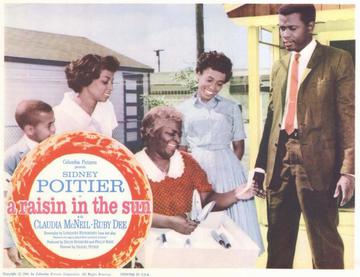
d69d4-raisin_in_the_sun_1961_poster_horizontal_bStarring Sidney Poitier and adapted from a stage play, the film chronicles the lives of an African American family residing in Chicago. The whole family including the matriarch, her unsatisfied son, his wife, his son, and his sister wait excitedly for an insurance check for $10,000. The mother receives the money and resolves to use it in order to buy a nice home for her family in a white community. She then gives the rest to her son who has big plans for it. However, he loses it all leaving the family bitter and worried. In the end Walter does show his integrity and despite the bad situation, the family remains close. A great deal of this film is about the conflict of ideas and interests of the different individuals. It is also memorable since the cast is almost all African American. Poitier is good but it seems the mother steals the show.
 
4/5 Stars
 

Review: Forrest Gump (1994)

950b6-forrestgump1If you want to start out on the broadest level possible, the film is a lesson in 20th century American History. It charts the turbulent course of mankind including assassinations, counter-culture, Vietnam, Anti-War Rallies, The Cold War, Watergate and much much more. The substantial soundtrack dials back the clock to fully immerse the audience in that time and place.

It is the dream movie for pop culture fanatics and history aficionados. That’s why I enjoy it. However, much like the feather that flutters in the breeze drifting this way and that, Forrest Gump is a character who floats through history as it is made. It begins with his leg braces which give inspiration to the Elvis phenomenon. Ultimately, he plays football for Alabama, sees the school desegregated, and becomes an All-American who meets JFK.

Soon it’s off to Vietnam, followed by a Medal of Honor, and a trip back home thanks to a million dollar wound. Forrest gets a taste of the nation’s capital and soon becomes an accomplished ping pong player, makes it big in the shrimping business, and heads home back to Alabama once more after buying Apple stock. All these moments are absorbing to be sure, but that alone would make the film just okay as a historical drama.

Tom Hanks‘ Forrest Gump is the important piece in the entire equation because of the people that gravitate towards him. Forrest himself only has an IQ of 75, but he is so unlike many of the characters we are used to. Not because he is “simple” so to speak, because he is far from it. Perhaps it’s the fact that he is wholly genuine, loyal, and innocent. That’s almost unheard of these days. He seems to stand at complete odds with the history that is happening all around. Sometimes it looks very different from his eyes or he is completely oblivious to what is happening.

However, in some ways, he seems to have things figured out better than most. He loves those close to him, does what he loves, and never loses his positive spirit. His observations on life might be plain, but they are nonetheless powerful to those around him. To Hank’s credit, he infuses the character with a slow-witted charm and gives him a deep southern drawl. He’s Forrest, Forrest Gump. That’s all he needs to be.

Sally Field has a relatively short screen appearance, which is still extremely important because Forrest’s mother is the one who helps guide his whole outlook on life. She encourages him to make the best of what God has given him and to realize he is no different than other “normal” people. Her love, cultivation, and homespun knowledge is what seemingly allows Forrest to lead a full life, though pithy sayings only go so far, at some point you just have to live.

Jenny (Robin Wright) is another character who is perhaps a greater drifter than Forrest himself. She is constantly trying to find her way through the turbulent times while Forrest’s feet always seem firmly planted on the ground (Rather ironic since he is always running). She is a prodigal and always prone to return to Forrest who always welcomes her back with open arms no matter the circumstances. It might be a stint in a nightclub, living the hippie life, joining the Black Panther Party, or being with other men. Forrest is forever loyal and protective of her. She cannot always handle having him in her life, and she wishes to find her own way. He is always there for her, though, even up to the point of taking care of a son.

Bubba and Lieutenant Dan are Forrest’s best good friends and both men are greatly impacted by Vietnam. Bubba dies and Lt. Dan loses his legs (not to mention his self-respect). Forrest is fiercely loyal to both comrades, starting up Bubba Gumps Shrimping in honor of his late friend and giving work to Lt. Dan when he needs it most. He is a friend for the ages and he takes the title seriously.

Calling Forrest Gump just a historical drama or even sentimental tripe might be partially accurate and yet it cohesively adds up to more than its parts. 20 years have gone by, true, and some of the luster may have gone away, but certainly not all of it.  Though it might be far from perfect, it is a story that is worth any shortcomings, because it has heart and a fantastical telling of American history that is still worth watching.

4.5/5 Stars


Forty Guns (1957)

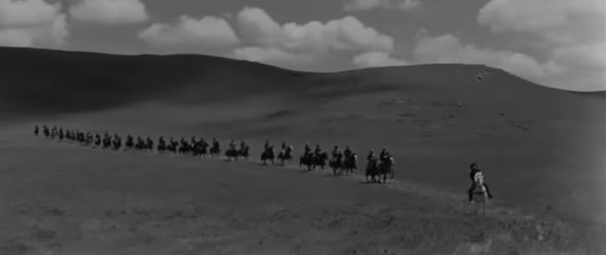
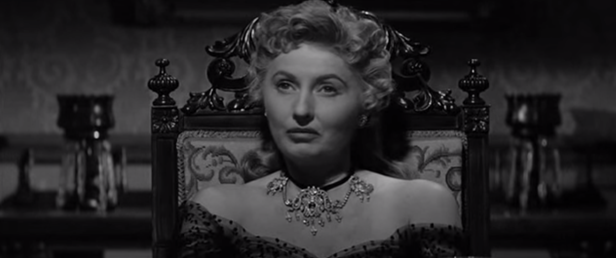
6fb70-fortyguns1Samuel Fuller has got an eye for style, cinematic scope, and at times, subversive mayhem. It’s no coincidence that Forty Guns was shot in Cinemascope, and it is one of the enjoyments of watching this film, which constantly bounces back and forth between long shots and close-ups. To start things off, Barbara Stanwyck is Jessica Drummond, the “High Ridin’ Woman with a Whip,” and she is the heiress of a self-made frontier empire.

It helps to tote forty guns around with her, but she is not as unethical as she would appear at first glance. On the other side are the Bonnell brothers, former gunslinger Griff (Barry Sullivan), number two man Wes (Gene Barry) and then the baby Chico. After they arrive in town, on behalf of the Attorney General, the nearsighted sheriff (Hank Worden) is gunned down by a drunken troublemaker who just happens to be Drummond’s kid brother. Then his buddies proceed to trash the town all in the name of good fun.

Soon Griff straightens Brockie out and Jessica comes into town to retrieve him. Next, Griff comes with a warrant to Jessica’s ranch and in a memorable scene, literally made for Cinemascope, the warrant gets passed down the table. Jessica wants no trouble but soon a crooked sheriff named Logan (Dean Jagger) want to finish off Griff. It doesn’t go so well and he gets more and more jealous of Jessica’s increasing love for the oldest Bonnell brother.

Ultimately, Brockie ends up in the clink, but he uses his sister as a shield in an attempt to escape. For once Griff loses his cool and sprays him with bullets and that’s not all. For good measure, Fuller has Griff ride solemnly off in his buckboard only to have Jessica scamper after him. The power dynamic see-sawing once again.

Yet again, Fuller never seems to do anything conventionally or demure. His film has a reformed gunfighter who calls his former profession that of a freak. The leading female character dominates most everyone else and has a ballad written about her. There are tornadoes that envelop the screen. Then, only Fuller would have the audacity to kill someone during their wedding ceremony, and he does it without skipping a beat.

Among other things, it is a film about guns, brothers and sisters, and love. Griff packs a gun on him. Jessica always has guns behind her. Griff has a younger brother who has much to learn. Jessica’s brother will never learn. That being said, the inventive visuals, typical brutality, and the memorable casting of Stanwyck were all in a day’s work for Samuel Fuller.

4/5 Stars

A Letter from an Unknown Woman (1948)

8cc43-letter_from_an_unknown_woman_posterThe place is Austria. The time around 1900. This tearful romance is framed by a lovely plot device in the form of a circular narrative. As the title suggests a woman writes a letter to the man who she has always loved. As she relates their story, he slowly pieces it all together.
Lisa was a shy and timid girl. She becomes acquainted with dashing piano prodigy Stefan Brand (Louis Jourdan) from afar as he has moved in next door to her mother’s home. She is a quiet observer of all he does, sharing in each one of his musical triumphs and seeing his friends (mostly women). Lisa even goes so far as to attend dancing school, so that she might learn good manners to impress him someday. Most of all his playing enchants her each and every evening as she silently listens to his gifted hands.
Thursdays were rug beating day and on one such day, she got her chance. She met Stefan’s kindly mute servant and secretly enters the shrine of her love for one blissful moment. However, things quickly change as Lisa’s widowed mother has a beau who wants them to come and live in Linz. So they move away from the oblivious Brand, but the wistful Lisa takes one last visit to her old home.
Soon she is introduced to the stately Liet. Leopold and as time passes he graciously asks for her hand. Taken aback, Lisa balks and mentions another in Vienna who her parents do not know of (and who does not know her). No one understands the reason why, only she does, and she is not one to tell. Lisa, however, moves forward and begins to model dresses for rich clientele. Finally, as a grown woman she has her first true face-to-face encounter with the man whom she worships.

Thus, begins their enchanted time together. He does not quite understand the gravity of the situation, but she is content in just being with him. That is enough. No explanations need to be made. Their evenings are spent eating lobster, walking through the streets, taking a train ride all over the world, and munching on caramel apples. Top it off with a passionate embrace followed by a kiss and the fairy tale ending seems to be imminent. But as we already suspected, it is not that easy, and a train rapidly takes him out of her life.

As time passes, she has a son who is Stefan’s boy, but she resolves not to tell him and raise him by herself. For a while, it is a struggle, but she gets remarried and she seems happy enough with a comfortable lifestyle, a gentlemanly husband, and a cute son. Stefan Brand is now a washed up has-been who used to have a wealth of talent 10 years ago. At the opera, he happens to cross paths with Lisa, a strangely familiar figure, and she realizes that she must go to him. She is absolutely ecstatic to be reunited with her first love, but all too soon it becomes evident he cannot remember her. He is fascinated by her the same way he was 10 years ago, but he has forgotten. Unrequited love hurts too much and a broken marriage is already upon her. As her son before her, Lisa’s life is taken by Typhus and all that is left of her is this letter for Stefan.
 
All that’s left for him to do is hit his head in despair. He let her slip through his fingers, if only he had known. If only his servant had not been mute, because he knew who the girl was. Brand has new resolve, however, and instead of running away he faces an unpleasant fate with honor. 
Joan Fontaine is as sweetly demure as ever, and she fits this role so beautifully with her narration being a wonderful guiding hand to the film’s story. Her character slowly grows and matures in front of us, and yet one thing remains unchanged, her love of Stefan Brand. In some ways, the label of a “woman’s picture” has a negative connotation, but really all it refers to is a film that takes the point of view of a woman, or it focuses specifically on women. These stories crafted by men during the 40s and 50s were meant to be weepy tales for women audiences. Looking back now, however, they can resonant with all audiences and in this case some of that is due to the direction of Max Ophuls. 
Ophuls camera is hardly ever stagnant, following Joan Fontaine as she moves, with gracefully smooth sweeps and tracking shots. Give him a staircase and it becomes almost a playground for him to move about as he sees fit. What we are left with is an elegant look, because the movement does not take away from the elegance but actually accentuates it. No one could accuse the camera of being hurky-jerky, and it makes the impact of the stationary camera that more potent.
At an approximately 86 minute running time, A Letter from an Unknown Woman is a marvel because it is laced with character development, romance, and drama that builds steadily and reaches a teary crescendo.
 
4.5/5 Stars

Amazing Grace (2006)

e09ee-amazinggraceposterBased on the life of Christian activist and British parliament member William Wilberforce, Amazing Grace is a very important and powerful film. Wilberforce is a unique and remarkably extraordinary man, to say the least.

The story opens as a dreadfully sick Wilberforce (Ioan Gruffud) takes a holiday at the home of some close friends. They introduce him to his future wife Barbara Spooner (Romola Garai), however, to begin with, they resist any romantic involvement and remain friends. He relates his story to her about how he became an Evangelical Christian while also a popular member of the British Parliament.

He had considered leaving politics for theological studies, however, he is persuaded by friends, including William Pitt (Benedict Cumberbatch), to continue in parliament. He is asked to tackle the highly unpopular issue of slavery, and after a visit to his aging mentor John Newton (Albert Finney), Wilberforce’ fervor increases. Due to his own regrets about formerly being a slave trader, Newton is hounded by guilt and urges Wilberforce to end the trade.

Soon William Pitt becomes prime minister, and Wilberforce gets ready to bring a bill outlawing slavery to the house. He gets some unexpected support, but his popularity dwindles, and he is strongly opposed by a coalition with a large stake in the trade. His bill is ultimately beaten outright, but William continues the cause for numerous years still to no avail.

Now back in the present, Wilberforce is sickly and dejected, but Barbara encourages him to push on. They get married soon after and the fight continues without much progress. However, finally William devises a clever plan to cripple the slave trade, and he gains some new allies. His colleague and friend Pitt is slowly dying, but he supports Wilberforce. After many years of tireless struggle, a bill is passed in parliament that effectively ends the slave trade in 1807.

Wilberforce is one of those often unsung heroes who truly did something amazing. Pun intended. With the release of Lincoln more recently, there are definite connections that could be made between the films. Like Lincoln, Wilberforce worked for more than political clout, because he knew what was good and right, and so he fought for those principles. That is the sign of a truly great man just like Abraham Lincoln. Much like Wilberforce himself, this film is less heralded than Lincoln, but I would wager that it is no less important as a historical drama.

4/5 Stars

Review: Sunset Boulevard (1950)

f5016-sunset_blvd_title

“Yes, this is Sunset Boulevard, Los Angeles, California. It’s about five o’clock in the morning. That’s the Homicide Squad – complete with detectives and newspapermen. A murder has been reported from one of those great big houses in the ten thousand block. You’ll read about it in the late editions, I’m sure. You’ll get it over your radio and see it on television because an old-time star is involved – one of the biggest. But before you hear it all distorted and blown out of proportion, before those Hollywood columnists get their hands on it, maybe you’d like to hear the facts, the whole truth.”

So begins one of the most caustic dramas ever constructed in Hollywood, or about Hollywood, and it was gifted to us by screenwriter-director extraordinaire Billy Wilder. His previous hard-edged film noir Double Indemnity had its own cynical narrator with a memorable voice-over of his own. However, Walter Neff was only on the verge of dying. When we hear the voice of Joe Gillis he is already speaking from the grave. It is a fantastic angle in which to look at this seemingly perfect Hollywood construction, and Gillis never ceases to tell his story until we wind up at the pool as the story comes to a close.

For now, we learn that six months back Joe (William Holden)  is a writer who is having difficulties being published, and some men want to repossess his car. Desperate, he pays a visit to a friend at Paramount named Mandrake to pitch an idea, but the script is of little merit according to a pretty young script reader. That’s a dead end so Joe leaves, but the men are waiting for him and he zooms away. A flat tire leads him to drive away into an empty garage connected to a dilapidated old mansion on Sunset Boulevard. 

There he is mistakenly introduced to drama queen Norma Desmond (Gloria Swanson) who used to be big on the silent screen, back in the day. Now all she has is money, fan letters, and old memories to rehash, while her butler Max (Erich von Stroheim) watches over her. The theatrical actress believes her big comeback is soon at hand, and when she learns Joe is a writer, she takes an interest. He needs the money so he takes a look at the rough script meant to be a vehicle for her. A small commitment turns into a life-consuming undertaking. Desmond constantly hovers and dotes over Joe, going so far as having his things moved into her home and buying him new clothes and trinkets. He reluctantly accepts the first class treatment, not minding the cushy lifestyle. But to Norma, it’s more. 

He is her closest companion. Her love. Joe cannot bear to tell her that she is washed up and that there will never be anything between them. He ditches her intimate New Years party for a more friendly affair where he crosses path with his old bud Artie (Jack Webb) and his girl, the previously critical script girl Betty Schaeffer (Nancy Olson). She takes an interest in a few of his past ideas, but he does not, and after getting shocking news from Max he is pulled back to his lavish prison.

Eventually, Norma is prepared to drop off her script with her former collaborator the great Cecil B. DeMille. However, it becomes all too clear that her story will amount to nothing, but her friend cannot bear to break her heart. She is sent off again with the strong conviction that her day is coming. Makeover’s, diets, and facials follow in preparation. Joe is indifferent to it all and secretly begins working at nights with Betty on a new screenplay. 

Desmond finds the script and jealousy takes over, causing her to call Betty to ruin the romance that is rapidly budding there. Joe hears it all and angrily tells the disbelieving Betty to come see his set-up on Sunset Boulevard. He acts as if he likes the life, and Betty leaves broken-hearted. Soon after, a fed-up Joe packs his bags to head back to Ohio. Thus, begins the systematic breakdown that we had expected for so long. Norma Desmond completely falls apart and does the one thing she knows to hold on. 

Back in the present the crowds and journalists have turned out to see the has-been movie star who is stark raving mad, and one last time Norma does not disappoint. She glides seamlessly down the stairs with a serenely ethereal look on her face before preparing for her closeup. So ends the career of one Norma Desmond and the life of Joe Gillis. We can only hope that Betty got together again with Artie, otherwise this would remain one of the bleakest tales of all time.

However, that is part of the power of this film. It is strangely dark and ominous. Franz Waxman’s score is fit for a Gothic melodrama and Desmond’s mansion is a creaky old foreboding castle that hardly sees the light of day. Max is a solemn figure who we learn brought Norma stardom, married her, got divorced, and then could not live without her. Joe Gillis gets caught in a cycle he cannot get out of, and in the middle of the whole mess is Desmond herself. She is so preoccupied with herself, so obsessed with her own former glory, and yet she is a lonely, insecure aging actress. In many ways, she is Citizen Kane’s female counterpoint. A person with so much money, prestige, and power who slowly drifts away into oblivion without anyone caring except ravenous journalists. Much in the same way, although Norma is so petty and vain in so many ways, I cannot help but feel sympathy for her sorry existence. She is an utterly pitiful person in the end. No one deserves her fate.

In this way, Sunset Boulevard seems to critique Hollywood, a place that makes stars like Norma Desmond and spits them back out just as easily. It is not easily figured out or understood it just does at is pleases. For instance, Billy Wilder became an immigrant writer and director of great repute. Cecil B. Demille was a longtime respected director. Erich von Stroheim had early success with silent films then had to turn to acting. Gloria Swanson was a silent star then struggled in the 1930s. William Holden broke out in the 30s, hit his peak in the 1950s and continued to act into the 70s. Nancy Olson went on to make a few classic Disney movies and Jack Webb, of course, went on to create the TV Show Dragnet. Each Hollywood career starkly different from the others. 

 There is also such an authenticity in this film so much so that sometimes the line between fiction and reality is blurred. First, Wilder cast Gloria Swanson to play former silent star Norma Desmond in the film, so it seems like she is playing herself (Complete with old promotional photos and silent footage). He also had appearances by both von Stroheim and Demille, who had each directed Swanson in her silent days. Some of Desmond’s bridge friends include other real silent stars including Anna Q. Nilsson, H.B. Warner, and the legendary Buster Keaton (His career had also crumbled). Even gossip columnist Hedda Hopper gets into the mix to tell the tragic story of Desmond, and it all works. 

So whether you watch Sunset Boulevard for the Hollywood angle, or as a film-noir, or a love story, or a tragic drama, the beauty of it, is that it functions as all of those things simultaneously. Gloria Swanson is absolutely loopy, William Holden is as cynical as ever with his smoked-out gravelly voice. Von Stroheim is haunting as the faithful Max, and Nancy Olson is the one young friendly face in juxtaposition with Swanson. Billy Wilder’s script with Charles Brackett is inspired a multitude of times, but instead of telling you I will give you a taste: 

“There once was a time in this business when I had the eyes of the whole world! But that wasn’t good enough for them, oh no! They had to have the ears of the whole world too. So they opened their big mouths and out came talk. Talk! TALK!”

That’s Norma Desmond in a nutshell for you. That’s Sunset Blvd.

5/5 Stars

Review: The Pride of the Yankees (1942)

b9d42-prideofthe3Before superheroes headlined any Marvel or DC blockbuster, it was real life heroes that audiences wanted to see. No pastime was quite as popular as baseball and in that era Lou Gehrig was one of the titans along with Babe Ruth and the rest of the Yankees. You see this film is less of a biography (It certainly is not completely accurate), and more of a visual eulogy to a contemporary hero. The prologue explains as much:

“This is the story of a hero of the peaceful paths of everyday life. It is the story of a gentle young man who, in the full flower of his great fame, was a lesson in simplicity and modesty to the youth of America. He faced death with that same valor and fortitude that has been displayed by thousands of young Americans on the far-flung fields of battle. He left behind him a memory of courage and devotion that will ever be an inspiration to all men. This is the story of Lou Gehrig” ~ Damon Runyon

As a modern viewer, I am just happy I can recognize baseball names like Miller Huggins, Joe McCarthy, Bill Dickey, Tony Lazzeri, and of course, Babe Ruth. When audiences went out to see this film starring Gary Cooper and Teresa Wright back in the day, they were practically living it. World War II had already heated up and one of the great American heroes had died the previous year. Lou Gehrig was all those things in the prologue and more making it hard to get it all into a film.
Like any other superhero, he has an origin story beginning with his childhood in Manhattan, living with his poor German immigrant parents. His domineering mother convinces him to go to Columbia for engineering, but he soon ends up in the big leagues because of his tremendous skill with a bat. He is often a shy and even awkward young man, but he loves his parents and he can sure play ball. It’s that last point that gains him a lot of respect after a less than graceful start as “Tanglefoot.”
He soon becomes a lethal one-two punch with Babe Ruth, after initially being dismissed as the rookie and a boob. Journalist Sam Blake (Walter Brennan) has a major influence in Gehrig’s life and never loses faith in the young man’s abilities. He also does Lou a favor by introducing him to an attractive young Chicago socialite named Eleanor Twitchell (Teresa Wright), who finds Gehrig quite ridiculous at first. Soon, however, a budding romance begins with the often reserved Gehrig falling for the vibrant and vivacious young Eleanor. He gets engaged, married, hits two home runs for a little boy, and wins a world series. A lot of his other exploits are laid out for us too and the trophies and accolades start stacking up. All of this happens during the happy times when Gehrig is on top of the world, first with Murder Row and then The Bronx Bombers.
But all fairy tales must come to an end, and Lou Gehrig’s is especially tragic. He plays an, at that time, unheard of 2,000 consecutive games, but he also falls into a rapid decline. Eleanor looks on helplessly as her husband begins to deteriorate in front of her eyes, and the fans know something is not right. Gehrig gets examined and learns he has ALS, but very little is known about it. Much less can be done to treat it.
His final appearance at Yankee Stadium came on Lou Gehrig Day in 1939. That day he gave his “Luckiest Man Speech,” and he walked off the field for good. Gary Cooper delivers the partially revised dialogue with a calm and clear delivery that seems to truly epitomize Gehrig. Although he is playing the man, it is almost as if he is giving a eulogy.
That’s a fitting ending because we do not need to see the suffering or the death. What we remember is the wonderfully full life he led. Perhaps this film had more cultural relevance back in 1942, but I would argue that it is still a stirring, heart-wrenching film. You have a small heart if you cannot find a place in it for this one.
Although he was not too good at baseball, in the other sequences Cooper seems like the perfect man to embody Gehrig. He is distinctly American, strong, quiet and he also has a pleasant charm with a comical streak in him. The look on his face when he realizes his weakness tears the heart. Teresa Wright had many fine performances early on in her career, but I will step out on a limb and say that this is probably the best one. She has so much spirit and at the same time, she is funny with a noticeable tenderness. She is the perfect wife and a wonderful actress to embody Eleanor Gehrig.
In a society that places so much interest in make-believe superheroes, I don’t mind taking some time to acknowledge a real one. We were the lucky ones Lou, thanks. Let anyone and everyone who does the Ice Bucket Challenge know who you are. You deserve to be remembered. Always.
4.5/5 Stars