Amazing Grace (2006)

e09ee-amazinggraceposterBased on the life of Christian activist and British parliament member William Wilberforce, Amazing Grace is a very important and powerful film. Wilberforce is a unique and remarkably extraordinary man, to say the least.

The story opens as a dreadfully sick Wilberforce (Ioan Gruffud) takes a holiday at the home of some close friends. They introduce him to his future wife Barbara Spooner (Romola Garai), however, to begin with, they resist any romantic involvement and remain friends. He relates his story to her about how he became an Evangelical Christian while also a popular member of the British Parliament.

He had considered leaving politics for theological studies, however, he is persuaded by friends, including William Pitt (Benedict Cumberbatch), to continue in parliament. He is asked to tackle the highly unpopular issue of slavery, and after a visit to his aging mentor John Newton (Albert Finney), Wilberforce’ fervor increases. Due to his own regrets about formerly being a slave trader, Newton is hounded by guilt and urges Wilberforce to end the trade.

Soon William Pitt becomes prime minister, and Wilberforce gets ready to bring a bill outlawing slavery to the house. He gets some unexpected support, but his popularity dwindles, and he is strongly opposed by a coalition with a large stake in the trade. His bill is ultimately beaten outright, but William continues the cause for numerous years still to no avail.

Now back in the present, Wilberforce is sickly and dejected, but Barbara encourages him to push on. They get married soon after and the fight continues without much progress. However, finally William devises a clever plan to cripple the slave trade, and he gains some new allies. His colleague and friend Pitt is slowly dying, but he supports Wilberforce. After many years of tireless struggle, a bill is passed in parliament that effectively ends the slave trade in 1807.

Wilberforce is one of those often unsung heroes who truly did something amazing. Pun intended. With the release of Lincoln more recently, there are definite connections that could be made between the films. Like Lincoln, Wilberforce worked for more than political clout, because he knew what was good and right, and so he fought for those principles. That is the sign of a truly great man just like Abraham Lincoln. Much like Wilberforce himself, this film is less heralded than Lincoln, but I would wager that it is no less important as a historical drama.

4/5 Stars

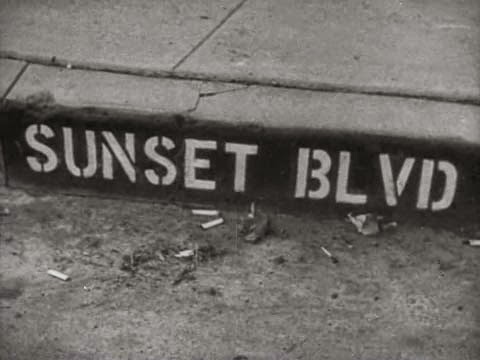
Review: Sunset Boulevard (1950)

f5016-sunset_blvd_title

“Yes, this is Sunset Boulevard, Los Angeles, California. It’s about five o’clock in the morning. That’s the Homicide Squad – complete with detectives and newspapermen. A murder has been reported from one of those great big houses in the ten thousand block. You’ll read about it in the late editions, I’m sure. You’ll get it over your radio and see it on television because an old-time star is involved – one of the biggest. But before you hear it all distorted and blown out of proportion, before those Hollywood columnists get their hands on it, maybe you’d like to hear the facts, the whole truth.”

So begins one of the most caustic dramas ever constructed in Hollywood, or about Hollywood, and it was gifted to us by screenwriter-director extraordinaire Billy Wilder. His previous hard-edged film noir Double Indemnity had its own cynical narrator with a memorable voice-over of his own. However, Walter Neff was only on the verge of dying. When we hear the voice of Joe Gillis he is already speaking from the grave. It is a fantastic angle in which to look at this seemingly perfect Hollywood construction, and Gillis never ceases to tell his story until we wind up at the pool as the story comes to a close.

For now, we learn that six months back Joe (William Holden)  is a writer who is having difficulties being published, and some men want to repossess his car. Desperate, he pays a visit to a friend at Paramount named Mandrake to pitch an idea, but the script is of little merit according to a pretty young script reader. That’s a dead end so Joe leaves, but the men are waiting for him and he zooms away. A flat tire leads him to drive away into an empty garage connected to a dilapidated old mansion on Sunset Boulevard. 

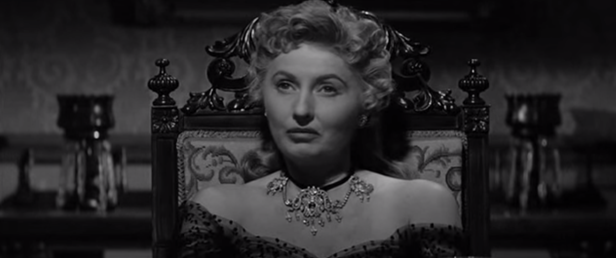
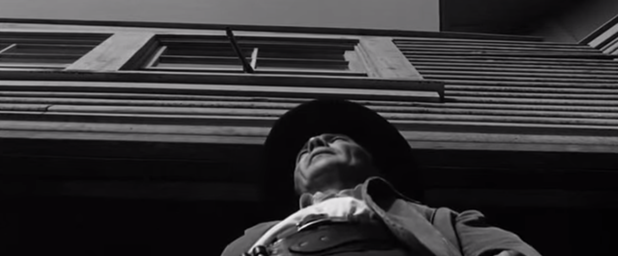
There he is mistakenly introduced to drama queen Norma Desmond (Gloria Swanson) who used to be big on the silent screen, back in the day. Now all she has is money, fan letters, and old memories to rehash, while her butler Max (Erich von Stroheim) watches over her. The theatrical actress believes her big comeback is soon at hand, and when she learns Joe is a writer, she takes an interest. He needs the money so he takes a look at the rough script meant to be a vehicle for her. A small commitment turns into a life-consuming undertaking. Desmond constantly hovers and dotes over Joe, going so far as having his things moved into her home and buying him new clothes and trinkets. He reluctantly accepts the first class treatment, not minding the cushy lifestyle. But to Norma, it’s more. 

He is her closest companion. Her love. Joe cannot bear to tell her that she is washed up and that there will never be anything between them. He ditches her intimate New Years party for a more friendly affair where he crosses path with his old bud Artie (Jack Webb) and his girl, the previously critical script girl Betty Schaeffer (Nancy Olson). She takes an interest in a few of his past ideas, but he does not, and after getting shocking news from Max he is pulled back to his lavish prison.

Eventually, Norma is prepared to drop off her script with her former collaborator the great Cecil B. DeMille. However, it becomes all too clear that her story will amount to nothing, but her friend cannot bear to break her heart. She is sent off again with the strong conviction that her day is coming. Makeover’s, diets, and facials follow in preparation. Joe is indifferent to it all and secretly begins working at nights with Betty on a new screenplay. 

Desmond finds the script and jealousy takes over, causing her to call Betty to ruin the romance that is rapidly budding there. Joe hears it all and angrily tells the disbelieving Betty to come see his set-up on Sunset Boulevard. He acts as if he likes the life, and Betty leaves broken-hearted. Soon after, a fed-up Joe packs his bags to head back to Ohio. Thus, begins the systematic breakdown that we had expected for so long. Norma Desmond completely falls apart and does the one thing she knows to hold on. 

Back in the present the crowds and journalists have turned out to see the has-been movie star who is stark raving mad, and one last time Norma does not disappoint. She glides seamlessly down the stairs with a serenely ethereal look on her face before preparing for her closeup. So ends the career of one Norma Desmond and the life of Joe Gillis. We can only hope that Betty got together again with Artie, otherwise this would remain one of the bleakest tales of all time.

However, that is part of the power of this film. It is strangely dark and ominous. Franz Waxman’s score is fit for a Gothic melodrama and Desmond’s mansion is a creaky old foreboding castle that hardly sees the light of day. Max is a solemn figure who we learn brought Norma stardom, married her, got divorced, and then could not live without her. Joe Gillis gets caught in a cycle he cannot get out of, and in the middle of the whole mess is Desmond herself. She is so preoccupied with herself, so obsessed with her own former glory, and yet she is a lonely, insecure aging actress. In many ways, she is Citizen Kane’s female counterpoint. A person with so much money, prestige, and power who slowly drifts away into oblivion without anyone caring except ravenous journalists. Much in the same way, although Norma is so petty and vain in so many ways, I cannot help but feel sympathy for her sorry existence. She is an utterly pitiful person in the end. No one deserves her fate.

In this way, Sunset Boulevard seems to critique Hollywood, a place that makes stars like Norma Desmond and spits them back out just as easily. It is not easily figured out or understood it just does at is pleases. For instance, Billy Wilder became an immigrant writer and director of great repute. Cecil B. Demille was a longtime respected director. Erich von Stroheim had early success with silent films then had to turn to acting. Gloria Swanson was a silent star then struggled in the 1930s. William Holden broke out in the 30s, hit his peak in the 1950s and continued to act into the 70s. Nancy Olson went on to make a few classic Disney movies and Jack Webb, of course, went on to create the TV Show Dragnet. Each Hollywood career starkly different from the others. 

 There is also such an authenticity in this film so much so that sometimes the line between fiction and reality is blurred. First, Wilder cast Gloria Swanson to play former silent star Norma Desmond in the film, so it seems like she is playing herself (Complete with old promotional photos and silent footage). He also had appearances by both von Stroheim and Demille, who had each directed Swanson in her silent days. Some of Desmond’s bridge friends include other real silent stars including Anna Q. Nilsson, H.B. Warner, and the legendary Buster Keaton (His career had also crumbled). Even gossip columnist Hedda Hopper gets into the mix to tell the tragic story of Desmond, and it all works. 

So whether you watch Sunset Boulevard for the Hollywood angle, or as a film-noir, or a love story, or a tragic drama, the beauty of it, is that it functions as all of those things simultaneously. Gloria Swanson is absolutely loopy, William Holden is as cynical as ever with his smoked-out gravelly voice. Von Stroheim is haunting as the faithful Max, and Nancy Olson is the one young friendly face in juxtaposition with Swanson. Billy Wilder’s script with Charles Brackett is inspired a multitude of times, but instead of telling you I will give you a taste: 

“There once was a time in this business when I had the eyes of the whole world! But that wasn’t good enough for them, oh no! They had to have the ears of the whole world too. So they opened their big mouths and out came talk. Talk! TALK!”

That’s Norma Desmond in a nutshell for you. That’s Sunset Blvd.

5/5 Stars

Review: The Pride of the Yankees (1942)

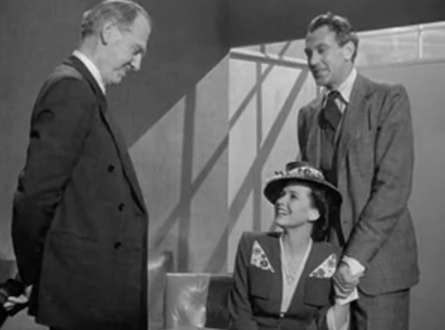
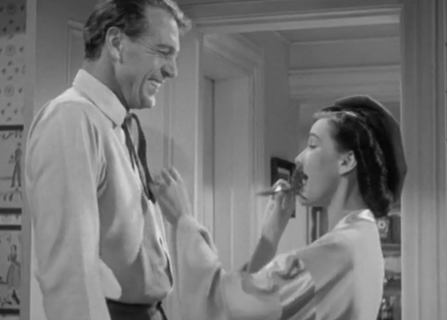
b9d42-prideofthe3Before superheroes headlined any Marvel or DC blockbuster, it was real life heroes that audiences wanted to see. No pastime was quite as popular as baseball and in that era Lou Gehrig was one of the titans along with Babe Ruth and the rest of the Yankees. You see this film is less of a biography (It certainly is not completely accurate), and more of a visual eulogy to a contemporary hero. The prologue explains as much:

“This is the story of a hero of the peaceful paths of everyday life. It is the story of a gentle young man who, in the full flower of his great fame, was a lesson in simplicity and modesty to the youth of America. He faced death with that same valor and fortitude that has been displayed by thousands of young Americans on the far-flung fields of battle. He left behind him a memory of courage and devotion that will ever be an inspiration to all men. This is the story of Lou Gehrig” ~ Damon Runyon

As a modern viewer, I am just happy I can recognize baseball names like Miller Huggins, Joe McCarthy, Bill Dickey, Tony Lazzeri, and of course, Babe Ruth. When audiences went out to see this film starring Gary Cooper and Teresa Wright back in the day, they were practically living it. World War II had already heated up and one of the great American heroes had died the previous year. Lou Gehrig was all those things in the prologue and more making it hard to get it all into a film.
Like any other superhero, he has an origin story beginning with his childhood in Manhattan, living with his poor German immigrant parents. His domineering mother convinces him to go to Columbia for engineering, but he soon ends up in the big leagues because of his tremendous skill with a bat. He is often a shy and even awkward young man, but he loves his parents and he can sure play ball. It’s that last point that gains him a lot of respect after a less than graceful start as “Tanglefoot.”
He soon becomes a lethal one-two punch with Babe Ruth, after initially being dismissed as the rookie and a boob. Journalist Sam Blake (Walter Brennan) has a major influence in Gehrig’s life and never loses faith in the young man’s abilities. He also does Lou a favor by introducing him to an attractive young Chicago socialite named Eleanor Twitchell (Teresa Wright), who finds Gehrig quite ridiculous at first. Soon, however, a budding romance begins with the often reserved Gehrig falling for the vibrant and vivacious young Eleanor. He gets engaged, married, hits two home runs for a little boy, and wins a world series. A lot of his other exploits are laid out for us too and the trophies and accolades start stacking up. All of this happens during the happy times when Gehrig is on top of the world, first with Murder Row and then The Bronx Bombers.
But all fairy tales must come to an end, and Lou Gehrig’s is especially tragic. He plays an, at that time, unheard of 2,000 consecutive games, but he also falls into a rapid decline. Eleanor looks on helplessly as her husband begins to deteriorate in front of her eyes, and the fans know something is not right. Gehrig gets examined and learns he has ALS, but very little is known about it. Much less can be done to treat it.
His final appearance at Yankee Stadium came on Lou Gehrig Day in 1939. That day he gave his “Luckiest Man Speech,” and he walked off the field for good. Gary Cooper delivers the partially revised dialogue with a calm and clear delivery that seems to truly epitomize Gehrig. Although he is playing the man, it is almost as if he is giving a eulogy.
That’s a fitting ending because we do not need to see the suffering or the death. What we remember is the wonderfully full life he led. Perhaps this film had more cultural relevance back in 1942, but I would argue that it is still a stirring, heart-wrenching film. You have a small heart if you cannot find a place in it for this one.
Although he was not too good at baseball, in the other sequences Cooper seems like the perfect man to embody Gehrig. He is distinctly American, strong, quiet and he also has a pleasant charm with a comical streak in him. The look on his face when he realizes his weakness tears the heart. Teresa Wright had many fine performances early on in her career, but I will step out on a limb and say that this is probably the best one. She has so much spirit and at the same time, she is funny with a noticeable tenderness. She is the perfect wife and a wonderful actress to embody Eleanor Gehrig.
In a society that places so much interest in make-believe superheroes, I don’t mind taking some time to acknowledge a real one. We were the lucky ones Lou, thanks. Let anyone and everyone who does the Ice Bucket Challenge know who you are. You deserve to be remembered. Always.
4.5/5 Stars

The Stranger (1946)

f6c39-the_stranger_filmIn a whirlwind, the film goes from a moody foreign locale to a quaint American town called Harper, but it never ceases to be a gripping film noir. Considered Orson Welles‘ weakest project thus far, The Stranger is still thoroughly enjoyable thanks to the performances of Edward G. Robinson, Loretta Young and Welles himself. Much like Shadow of a Doubt, this film shows that noir thrillers can still take place in middle America, and they can be pulse-pounders all the same. Also, an evil man can easily exist in a mundane environment and still be evil.

The reason we end up in Harper of all towns has to do with an “escaped” Nazi war criminal. He was allowed to escape and investigator Mr. Wilson (Robinson) follows him. It’s an idyllic little town and one of its most respected members is professor Charles Rankin (Welles), who is soon to be wed to pretty Mary Longstreet (Young). Little does she know that he is former Nazi war criminal Franz Kindler, and he is the man the escaped Konrad Meinike is looking for. Mr. Wilson is very interested in his whereabouts too.

Meinike soon disappears but not before deterring Wilson. However, not one to shy away from his duty, Wilson soon ingratiates himself with the local people, especially the newly married Mary and her kindly family. He is eager to learn more about the professor and at first, the gentleman seems above reproach, but something lurks underneath his calm exterior. Soon the beloved family dog Red is killed, an increasingly manic Rankin confesses his predicament to his wife and conveniently leaves out a few facts. Now constantly paranoid, Mary’s life is in far more peril than she realizes, and Wilson takes all the precautions he can. The clanging of the newly refurbished clock becomes a point of major contention, and it also serves as the perfect locale for a final climatic showdown (Put aside the absurdity and just watch it).

The whole town turns out for the show and finally after getting conked on the head and nearly killed during the case, Mr. Wilson finally has time to relax. Welles is not quite as memorable as Harry Lime here but still a sophisticated villain of sorts.  Likewise, Barton Keyes is a bit more memorable but Edward G. Robinson still brings his personality, iconic voice, and memorable mug to the table. Loretta Young has a radiant face and eyes like always. In other words, they do what they do. It works in making The Stranger a worthwhile thriller with the expected melodramatic music and shadowy facades of a film-noir. This is undoubtedly an oversimplification, but  then again, Orson Welles needs no introduction, and he certainly does not need me to vouch for creative genius.

4/5 Stars

Talk of the Town (1942)

0db8e-the_talk_of_the_townThis comedy-drama begins with a rather stark montage chronicling how the unfortunately named Leopold Gilg (Cary Grant) was accused of arson, murder, and finally imprisoned by one owner of a mill named Holmes. After escaping from prison and an imminent conviction, in a torrential downpour, the hampered Gilg seeks asylum in a nearby house. It just happens to belong to Miss Nora Shelley a local teacher in Lochester and an acquaintance of Gilg. She reluctantly allows the injured fugitive to hold up in her attic, but then her new tenant arrives a day early, the distinguished professor Lightcap (Ronald Colman).

After Gilg finally reveals himself to Lightcap as the gardener Joseph, what forms is an interesting triangle with the two men on the sides and Ms. Shelley in the middle. Both men take a liking to each other despite their difference in opinion on justice. Lightcap is much the academic and he goes by the book. “Joseph” on the other hand has a more practical approach.

It does not matter much until the professor finally learns Joseph’s true identity and now he feels it is his duty to report Gilg no matter his affinity for him. But after Gilg gets away once again, the professor is finally coaxed to look into the case that he has been so reluctant to involve himself in. Both men make concessions out of respect for the other. The professor involves himself, buys some borscht, and cuts his beard, while Gilg turns himself in. It almost drives Ms. Shelley up the wall with grief. You see she loves both of them.

In his final search, Lightcap finds something very interesting indeed. The town mob bursts into the courtroom as Gilg stands trial again, but the professor shows up with a surprise of his own. He ends up as the next Court Justice, a very happy man and Ms. Shelley and Gilg are very happy for him. They don’t have much to complain about either.

George Steven’s film has a bit of a contrived plot much like The More the Merrier. Things certainly feel set up, but that’s okay because the cast is so wonderful it makes the set-piece work. Jean Arthur is in top form when she is exasperated and sneaking about making little white lies as people file in and out of her home. Gilg seemed like a rather odd role for Grant, but he pulled it off with his usual charm and charisma. Someone else might have made Lightcap unbearably stuffy, but Colman’s portrayal is always tolerable and very often charming. This had a lot more drama than I was expecting, but it was not short on the comedy either. My only complaint is that it ran a tad long, but it just meant more screen time for the leads. That’s not so bad. They were The Talk of the Town after all.

4/5 Stars

Review: The Killing (1956)

e4855-thekilling1Stanley Kubrick is one of the most acclaimed directors of all time, and The Killing is his first great film. The main focus of the action takes place at a racetrack, but a great deal of the story occurs in other places before and after the job is pulled.  Recently released Johnny (Sterling Hayden) is the mastermind behind an intricately planned job. It’s a whole complex jigsaw puzzle involving a few “Average Joes” and a couple professionals. When you put it together it all adds up to the perfect heist.

Marvin is a friend of Johnny’s and a fatherly figure who is backing the deal. George (Elisha Cook Jr.) is the paranoid window teller banking on the job so he can hold onto his shallow wife. Randy is the policeman who is set to pick up the plunder. Then, Mike is the bartender who is supposed to help with the distraction. Johnny lines up the brawn, Maurice, to start a fight at the race track with Mike. He gets a sharpshooter named Nikki to bump off a horse and it’s all set. All their plans revolve around the Seventh Race, and they have it planned out to the minute. The beauty of The Killing is that it all but works like clockwork. The horse is shot, the brawl does its job, the vault is cleaned out, and the money gets picked up. Only a few small problems crop up.

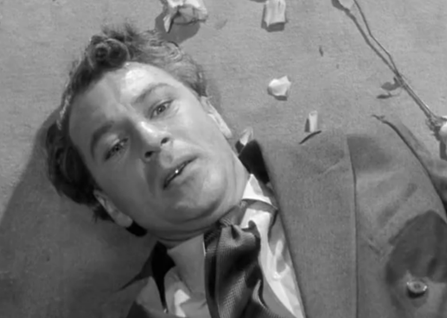
After the job is done is another matter, as the perfect timetable begins to break down. In a matter of seconds, things blow up thanks to George’s backstabbing wife (Marie Windsor). Soon the carnage is strewn all over the floor. Johnny holds onto the money as previously decided since things go awry, and he makes the getaway. His girl (Colleen Gray) is waiting at the airport and it looks to be smooth sailing from here on out.

Thanks to a yippy dog and a precarious perch, the money-laden suitcase takes a tumble and the contents fly off. All too soon it’s raining money, and there’s nothing Johnny can do about it. He leaves the terminal with Fay, but with no taxi to be had, he gets nabbed and there is no chance to escape. After everything lining up so perfectly for him, in a cruel turn everything that could go wrong did. He was not going to be so lucky.

The title of this film always struck me as ambiguous, whether it meant the amount of money being taken or the deaths that take place I’m not sure. However, I do know that The Killing is tautly constructed. The non-linear and sometimes overlapping narrative is held together by the narrator. He seems fit for a newsreel, but he complements the straightforward procedure of the film with timestamps included.

Because of the lead performance of Sterling Hayden and the main plot element of a heist, this film can sometimes be confused with John Huston’s The Asphalt Jungle (1950). However, I enjoy this storyline more because the heist is not the issue. It is the aftermath and all the subsequent problems occurring so rapidly.

It is a wonderful unraveling thriller and although we do not see Johnny arrested, he might as well be because there are two men with pistols drawn walking right towards him. The Killing was not a big payoff for Hayden’s character, but it certainly is for the audience.

4.5/5 Stars


Review: On The Waterfront (1954)

8542a-on_the_waterfront_poster“They always said I was a bum, well I ain’t a bum Edie.” That is what washed up prizefighter Terry Malloy (Marlon Brando) must try and prove to himself and others for the entirety of this crime-drama. On the Waterfront is ultimately his story of conscience and redemption that we watch unfold. It’s not pretty, but you’ll soon see for yourself.

Living on the waterfront is a tough existence. The mob decides who works and who won’t. Longshoremen are expected to be D & D (Deaf and Dumb) or else they have something coming. That’s how big shot Johnny Friendly (Lee J. Cobb) and his boys can run the entire area. They utilize fear and money to keep the working masses at bay. No matter what police or the crime commission might try to do, they have no hold on the waterfront. It’s a jungle out there and if you want to survive you look out for number one, don’t ask questions, and live another day.That is Terry Malloy’s philosophy and it suits him just fine. His brother Charley is Friendly’sright-handd man and he’s made a good life for himself thanks to his brains. Terry is more brawn than brain, and he does what his brother says. One night he blows the horn on a young man named Joey because he called out Johnny Friendly. That same evening Joey is knocked off, literally. Terry tries to justify it. He only thought they were going to “lean on him” a bit. With that incident begins Terry’s inner battle.

The moral compass of the film is supplied by two people. Edie Doyle (Eva Marie Saint) returns to her town from school with her beloved brother Joey now dead. She cannot understand why no one else will speak out about it or do anything to carry his cause. It is ultimately Father Barry (Karl Malden) who does just that realizing that his parish is the waterfront. He must fight against the injustice of the mob and hope others will join him. It’s a tall order. At the first meeting he holds in the church, a window gets busted, and thugs wait outside for people to beat up on. Terry was sent by Johnny to check it out and it is there that he meets Edie. He is immediately taken by her, and she warms to him. She sees him differently than the others without knowing what role he had in her brother’s death. The Father and Edie encourage Terry to testify at the crime commission after another man is killed in an “accident.”

Friendly can’t have a canary and its Charley’s job to straighten out his brother. That’s when they take their fateful car ride. Terry spill his guts (I coulda had class. I coulda been a contender. I coulda been somebody, instead of a bum, which is what I am, let’s face it. It was you, Charley.) and Charley responds the only way he knows how. He saves his little brother who he has always looked out for and pays the price.

Now Terry has his reason to testify and soon enough he goes before the crime commission to call out John Friendly. He has broken the waterfront code and gone canary. All respect for him is gone and Friendly wants his hide, but Edie is overjoyed in him. Finally, Terry has left the shackles on the waterfront and freed his conscience. He confronts the big man himself and is beaten to a pulp. But as Father Barry says he may have lost the battle, but he won the war.

Before getting to Brando, I must acknowledge the other players for their stellar performances. Eva Marie Saint is just that, a saint, and she gives a heartfelt performance as Edie. It is her love and care that leads Terry to turn himself around because she sees a little piece of humanity left in him. Karl Malden has perhaps one of his finest roles as the Father who represents a man of the faith remarkably. He is no joke, and he does not cave to hypocrisy. His waterfront sermon is one of the most powerful moments:

“You want to know what’s wrong with our waterfront? It’s the love of a lousy buck. It’s making the love of the lousy buck – the cushy job – more important than the love of man! It’s forgettin’ that every fellow down here is your brother in Christ!”

However, Rod Steiger’s poignant scene with Brando in the car is similarly extraordinary, because he realizes where he has failed. He does not need the words. He just stays silent, and we see it on his face. He is the one who pays for the mistakes, though, and he is far from a bum. Then, of course, there is Marlon Brando himself. He is often hailed one of the greatest actors of all time, but he usually played corrupt undesirables or rebels. Terry Malloy is perhaps his best role, and he is the good guy for once. He must struggle to do what is right by him, and he must struggle to prove himself to others. Brando plays him with some much genuineness, heart, and vulnerability at times. He is far more than the brusque meat head we take him for initially.

Elia Kazan was a champion of hard- edged dramas especially in the 1950s and he never succeeded more so than with this film. The black and white cinematography with perpetual fog drifting in fits the dire mood nicely and Leonard Bernstein’s score further compliments the drama. This is a fine example of Classic Hollywood cinema which was praised back then and lauded now. Our fake blood may have gotten better, but otherwise, it’s hard to top this film.

5/5 Stars

Review: 12 Angry Men (1957)

ebd81-12angrymen1With a title like 12 Angry Men you might come away with the false idea that all the characters in this film are the same, emotionally and otherwise. That is far from the truth. The reason a film like this stands up even today is because the fellows who sit down around that table are everymen that each and every one of us can relate to in some way. Yes, they are all male and all white, but they reflect little bits of us and our own humanity.

But getting down to the specifics, what is 12 Angry Men really and truly about? If you want to break it down, all it boils down to is 12 men gathering in a room to talk out a murder case. It sounds pretty dull and it had the potential to be so. In fact, calling it a courtroom drama is partially a misnomer because we hardly spend five minutes there before the jury is deliberating. We see the members of the jury, hear the final statement of the judge, and get a last look at the young defendant.

What comes next is the beginning of the decision-making process and seeing as it looks like an open and shut case, an initial vote is called for. If everyone agrees, this boy will be sent to the electric chair for killing his father. The vote is taken and it is 11 to 1 with one man holding out. Juror Number 8 (Henry Fonda), an architect, cannot bring himself to send the boy off without talking some more and so, begrudgingly, they do talk.

That is where the true heart of this film comes out, through the discussion and back and forth of the characters. They get around to evidence like the switchblade which the boy supposedly dropped. There were two witnesses: One being an old man living downstairs and the other a middle-aged woman who lived across the train tracks. Then, there is the business about the boy’s flimsy alibi about going to the movies. All are hotly debated and quarreled over.

It just happens to be the hottest day of the year and about an hour in it starts pouring cats and dogs. Tempers reach their apex, feelings are hurt, and major prejudices are revealed. The beauty of this film is not simply the sentiment that the jury switches its decision. The beauty truly comes from this wonderfully colorful ensemble of actors under the direction of Sidney Lumet in a confined space. But before mentioning the direction it is important to acknowledge the players because they are the heart and soul of this story.

Juror # 1: (Martin Balsam) He is the foreman who moderates, and he tries to keep the discussion civil with a relatively calm demeanor. All we know about him is that he is an assistant coach for a high school football team.

Juror # 2: (John Fielder) He is one of the younger members of the jury and a quiet individual with a timid voice. He is a banker.

Juror # 3 (Lee J. Cobb) The main driving force of conflict, he holds out when everyone else switches their vote. He is a businessman who also has familial issues with his son that come into play.

Juror # 4 (E.G. Marshall) A rational and measured broker, he holds that the boy is guilty until some facts are laid out that make him think otherwise.

Juror # 5 (Jack Klugman) A meek man and Baltimore baseball fan who also has a fiery side as well. It comes out that he grew up in the slums when he was a kid.

Juror # 6 (Edward Binns) A straightforward and kindly painter who is respectful in his conduct.

Juror # 7 (Jack Warner) The jokester of the group who makes his living selling Marmalade. He is looking forward to a Yankees baseball game and tries to push the proceedings forward as fast as possible.

Juror # 9 (Joseph Sweeney) The eldest member of the jury and the first to side with Juror # 8. He has a fighting spirit and also some thoughtful observations on the case.

Juror # 10 (Ed Begley) A loud-mouthed older man with a penchant for insults and unsavory remarks about foreigners.

Juror # 11 (George Voskovec) He is a watchmaker and the foreigner in the group. However, he is obviously quite intelligent and passionate about American democracy. He takes seriously the duty that comes with being a juror.

Juror # 12 (Robert Webber) Lastly comes the wisecracking man in advertising who tries to lighten up the conversation. He is the major flip flopper in the group.

A mention now must be made of Sidney Lumet’s direction, because for his first film he was extremely bold to film it essentially in one room. He does it so wonderfully, however, because the confined space only heightens the drama thanks to his progressive change in camera angles. They start above eye level and slowly get lower as the drama increases. He is very rarely stagnant either, having the camera on the move or cutting to different characters. A great example of this is the tracking shot as the jurors enter the room. We are introduced to almost every character in such a fluid, natural way that sets up the story nicely.

There is so much else that could be said about Fonda’s performance and individual actors who I admire, but I will leave this discussion by saying that this is one of the greatest ensembles I have ever seen brought together. The intensity they created makes me want to get up right now and serve on a jury. Too bad I already served my jury duty this year!

5/5 Stars

Once Upon a Time in the West (1968)

27ccb-once_upon_a_time_in_the_westStarring Charles Bronson, Henry Fonda, Claudia Cardinale, and Jason Robards with director Sergio Leone, this is another memorable Italian western. The film follows a recently widowed beauty (Cardinale), the villainous killer who is after her (Fonda), a anti-hero bandit (Robards), and of course the man with a harmonica who is looking for revenge (Bronson). The gunman Frank commits murders, turns on his employer the railroad tycoon, and forces the widow to auction off her land. However, “Harmonica” comes to her aid and then he is confronted by Frank several times since he wants to know the man’s purpose. After a flashback we know what “Harmonica” wants and another gunfight ensues. The ending is bittersweet but the town’s future looks bright thanks to the railroad and the radiant widow. The long opening sequence sets the tone nicely for this visually beautiful film. It moves at its own pace and it has a good score and great characters including an evil Henry Fonda!

5/5 Stars

Wait Until Dark (1967) – Updated

a752e-waituntildark1This is very much a contrived plot line but it certainly is an interesting set piece surrounding a defenseless blind woman targeted because of a heroin-filled doll which fell into her husband’s possession. It sounds like a pretty ludicrous set up but Audrey Hepburn is so believable and at times pitiful that she makes the film works thanks to her performance. Alan Arkin plays an over the top terror of a man bent on getting the doll back and he procures the help of two men to play parts in his elaborate charade. He is the near perfect opposition to torture the angelic Hepburn.

Through the entire story Susy’s blindness is being manipulated and she is constantly in a vulnerable state that is extremely uncomfortable for the audience. She is fed lies and entrusts men who she should not, but she cannot know any better. Thus, we soon forget how ridiculous this whole affair is and get caught up instead in our own fears and anxieties for Susy. From that point on we are hooked and there is no turning back until nighttime comes. Susy is cut off from the world with darkness approaching and that’s when the real nail-biting begins. But that’s for you to see for yourself. I would not deprive you of that pleasure.

The cast is rounded out by Richard Crenna, Emfram Zimbalist Jr. and Jack Weston who all are decent but their roles are relatively cookie cutter. The little girl Gloria is a spunky character but  the real attraction as I said before is Hepburn. The score by Henry Mancini gives the film a thrilling feel rather like a Columbo special. If there ever was a thriller this is certainly one of them! Just Wait Until Dark, you’ll see.

4/5 Stars