 Our introduction to The Mortal Storm feels rather flat. Bright and bland in more ways than one as we become accustomed to our main storyline. Professor Viktor Roth (Frank Morgan) is held in high regard all throughout the community as a prominent lecturer at the local university and beloved by his colleagues and family. The year is 1933 and the Bavarian Alps are still a merry and gay place to live. That’s our understanding early on as the Professor celebrates his 60th birthday with much fanfare and receives a commemorative memento from his class.
In some ways, Frank Borzage’s picture shares a striking resemblance to All Quiet on the Western Front another film that makes its German roots blatantly obvious and yet it wears its incongruities like the ubiquitous use of the English language with ease. And as all the characters accept it, we do too as we begin to sink into the story. But crucial to this story is that they are not as accepting of other things. It feels a little like paradise. Life is good and people are happy. But we expect that at some point the time bomb will go off and it does. Adolf Hitler is elected Chancellor and just like that people begin to change. It’s a collective revolution — a youth movement of sorts.
Pastor, pacifist, and thinker Dietrich Bonhoeffer tore apart the Fuhrer concept straight away in a talk he gave in 1933, long before many of the later horrors during the Nazi reign of terror. But much as this film portrays, such an ideology only leads to destruction — a necessity to harm your brother. Bonhoeffer stated the following which feels surprisingly pertinent to this narrative:
“This Leader, deriving from the concentrated will of the people, now appears as longingly awaited by the people, the one who is to fulfill their capabilities and their potentialities. Thus the originally matter-of-fact idea of political authority has become the political, messianic concept of the Leader as we know it today. Into it there also streams all the religious thought of its adherents. Where the spirit of the people is a divine, metaphysical factor, the Leader who embodies this spirit has religious functions, and is the proper sense the messiah. With his appearance the fulfillment of the last hope has dawned. With the kingdom which he must bring with him the eternal kingdom has already drawn near…
“If he understands his function in any other way than as it is rooted in fact, if he does not continually tell his followers quite clearly of the limited nature of his task and of their own responsibility, if he allows himself to surrender to the wishes of his followers, who would always make him their idol—then the image of the Leader will pass over into the image of the mis-leader, and he will be acting in a criminal way not only towards those he leads, but also towards himself…”
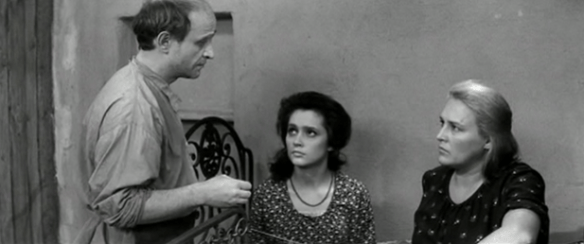
And so it happens in this film. We see it around the professor’s dinner table first. Formerly, a forum for high-minded debate, it’s quickly become a battleground of ideology. Roth’s step-sons and most notably his daughter’s fiancee Fritz Marberg (Robert Young) have all been caught up in the rhetoric and promises of Herr Hitler. All other forms of thought and free thinking have been discarded, these new ideals burrowing into their minds, dictating their actions, and ultimately poisoning their lives and the lives of all those around them. I never thought it was possible to despise Robert Young but when his mind is polluted by an ideology as rancorous as Nazism it’s far from difficult.
We don’t see Jimmy Stewart until quite a ways into the film and he disappears from sight for some time following an escape to Austria from the Nazi clutches, but he’s still our hero imbued with that same iconic everymanness. He is the man to continue the open-minded, compassionate forms of thinking that Professor Roth exemplifies and subsequently get torn asunder.
Margaret Sullivan and Stewart yet again make a compelling pair following Lubitsch’s Shop Around the Corner. She is the good little German girl Freya who actually proves to have a backbone and he is the humble farm boy who stands by his ideals like Stewart always did. They are caught up in a love story amidst a world that seemingly lacks any shred of romantic passion.
Undoubtedly the Production Codes forbade from mentioning Jews in the story — the non-Aryans like Professor Roth, but that makes this film even more haunting, the fact that the people without a voice are not even acknowledged. They are silenced and remain silent.
With its overt portrayal of the Nazis as menacing thugs and brainwashed ideology machines, The Mortal Storm is startling. For years and years most all of us have read, heard, and seen a great deal on the Nazis that we have unknowingly compiled but this film brings many of those common factors to the fore. It’s obvious that people saw them then. They knew them then. They weren’t blind. Thus, it makes us beg the question what were other Europeans and Americans actually thinking? Because although The Mortal Storm might be the exception rather than the norm, there had to be a general consciousness about the Nazis.
Because the film hardly sugarcoats anything nor does it mince words. It’s surprisingly blunt and utterly bleak in its portrayal even with a bit of a bittersweet Hollywood ending. What’s left is a lingering impact that’s terribly affecting. Only at that point do we realize the total transformation the film world has gone through. Those opening moments of The Mortal Storm are so vital as it is only in the waning interludes where we truly comprehend how far things have fallen into hell.
It’s a stunning piece of work and this is not simply the ethereal love story I was expecting. It is a thoroughly gripping indictment of the Nazi menace and far more candid than I would have ever imagined. The Mortal Storm suggests perhaps most audaciously that there were people who waded against the pervasive current of the time. They let their lives be dictated by good will, decency, and personal relationships rather than any churning force of a single political ideology.
The final quotation pulled from the moving work of Minnie Louise Haskins “God Knows” ends like so:
“I said to a man who stood at the gate, give me a light that I may tread safely into the unknown. And he replied, go out into the darkness and put your hand into the hand of God. That shall be to you better than a light and safer than a known way.”
4.5/5 Stars
 In his noted Crisis of Confidence Speech, incumbent president Jimmy Carter urged America that they were at a turning point in history: The path that leads to fragmentation and self-interest, down that road lies a mistaken idea of freedom. It is a certain route to failure.
 “There live not three good men unhanged in England. And one of them is fat and grows old.”
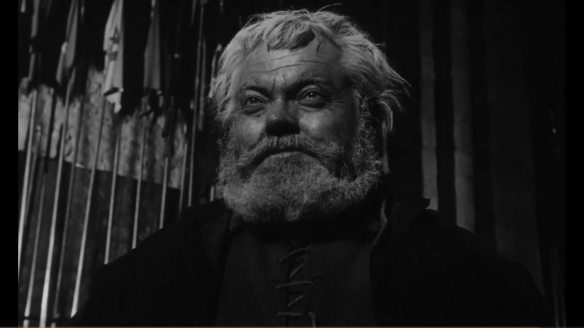 The triangle with Prince Hal (Keith Baxter) vying for the affection of his father King Henry IV (John Gielgud), while simultaneously holding onto his relationship with Falstaff is an integral element of what this film is digging around at. But there’s so much more there for eager eyes.
 And it’s only one high point. Aside from Welles’s towering performance, Jeanne Moreau stands out in her integral role as Doll Tearsheet, the aged knight’s bipolar lover who clings to him faithfully. The cast is rounded out by other notable individuals like John Gielgud, Margaret Rutherford, and Fernando Rey.
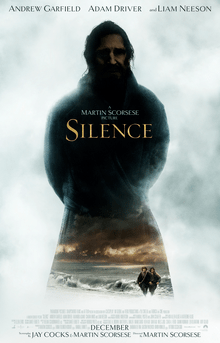 If we can take Martin Scorsese’s varied film career as a reflection of the human experience, then his completion of his long-awaited passion project Silence is not all that surprising. He’s crafted numerous classics, countless cultural touchstones, some spiritual, some historical, and some incredibly honest. But at this point in his career it seems like he has nothing left to prove to us as his audience and maybe at this point in life, if nothing else, we could do well to try and learn from someone like him. Because given the climate with funding and the like, Scorsese could not have made such a film just for other people or money or acclaim. He must have made it, at least partially, for himself.
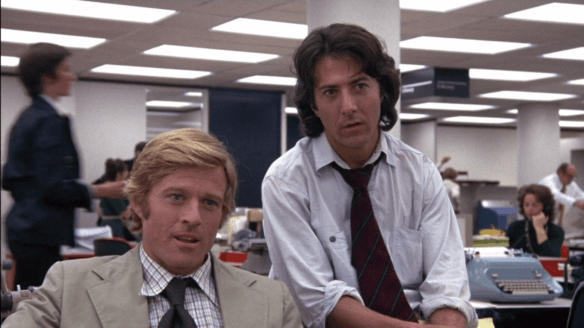 You couldn’t hope to come up with a better story than this. Pure movie fodder if there ever was and the most astounding thing is that it was essentially fact — spawned from a William Goldman script tirelessly culled from testimonials and the eponymous source material. All the President’s Men opens at the Watergate Hotel, where the most cataclysmic scandal of all time begins to split at the seams.
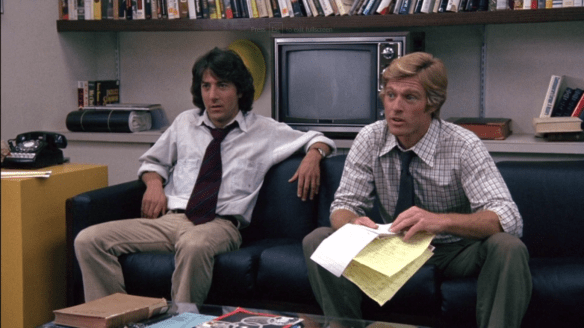 But it only takes a few breakthroughs to make the story stick. The first comes from a reticent bookkeeper (Jane Alexander) and like so many others she’s conflicted, but she’s finally willing to divulge a few valuable pieces of information. And as cryptic as everything is, Woodward and Bernstein use their investigative chops to pick up the pieces.
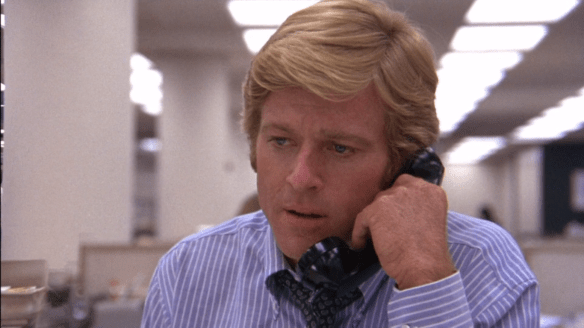 Gordon Willis’s work behind the camera adds a great amount of depth to crucial scenes most notably when Woodward enters his fateful phone conversation with Kenneth H. Dahlberg. All he’s doing is talking on the telephone, but in a shot rather like an inverse of his famed Godfather opening, Willis uses one long zoom shot — slow and methodical — to highlight the build-up of the sequence. It’s hardly noticeable, but it only helps to heighten the impact.
 “If you’ve ever wondered where your dreams come from, look around, this is where they’re made.” – Ben Kingsley as George Melies
 Aside from the inspector, the station is full of a wide array of charming individuals who generally exhibit temperaments far more personable. However, the local toy shop owner (Ben Kingsley) is rather an odd fellow, who keeps to himself, but Hugo is wrong to cross him. He’s not a bad man, but he makes the boy work for all the things he has purloined.
 Hugo is a beautifully magical melding of the old with the new –- the mechanical and the visceral. Extravagant colors make Scorsese’s canvas pop. It works together like clockwork.
 Andrzej Wajda’s Man of Marble holds a meta quality that still somehow feels radically different than Godard or Truffaut’s turns in Contempt and Day for Night. It attempts to channel a younger point of view — that of an ambitious student — with an overtly political agenda. Agnieszka is an independent, fiery individual intent on making her thesis the way she sees fit. She’s prepared to go digging around in uncharted territory or at least in territory that has been off limits for a long time. That understandably unnerves her adviser and still, she forges on.
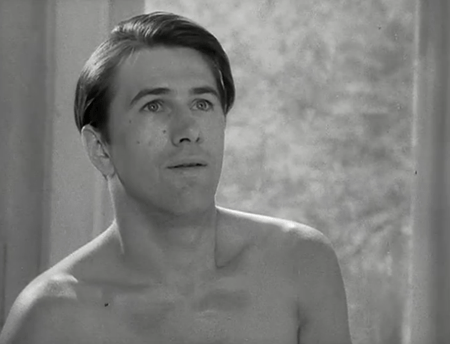 Everywhere she goes Agnieszka drags along her crew who utilize handheld cameras and wide-angle lenses, at her behest, just like American films. It becomes obvious that Birkut was hardly a political figure, instead contenting himself by using his hands to lay breaks and lay them well. He takes pleasure in his work with a big sloppy grin almost always plastered on his face. It was people like him who made Nowa Huta into the great city of industry that it was, and he became an emblem of that. The party monumentalized him and he became the man of marble to be lauded by all.
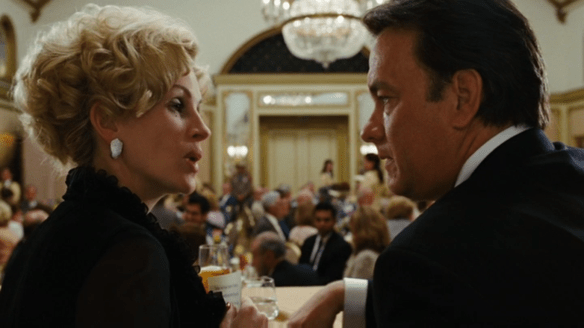 With Aaron Sorkin’s script as a road map, Charlie Wilson is a character that Mike Nichols can truly have fun with. You can easily see him getting an undue amount of delight in this man who was able to do such a momentous thing while simultaneously walking on the wild side. It had to be a good story to warrant the director’s cinematic swan song.
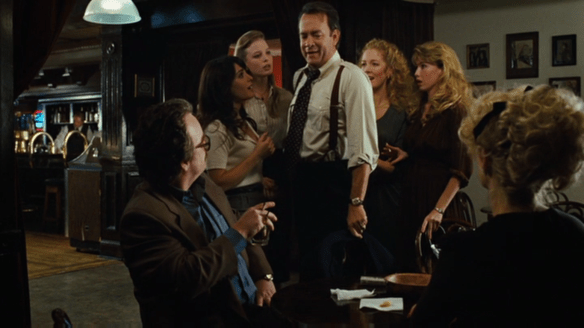 In the opening moments, it becomes obvious that Charlie Wilson is not so much an easily corruptible representative as he is a sexed-up man who enjoys charming female company. He’s “Good Time Charlie” for good reason. He surrounds himself with pretty young things, doesn’t mind playing around a bit, and even has a cocaine charge hanging over him after a potentially objectionable night in Vegas. In fact, the attorney looking into his case is, interestingly enough, one Rudy Giuliani.