My Night at Maud’s (1969)

nightatmaud's1I love the forum that is created in international cinema where all things can be debated and discussed without fear of what the audience will say. Hollywood caters to the audience and that more often than not means that thrills are given greater weight than substance. Eric Rohmer worked at Cahiers du Cinema alongside French New Wave visionaries like Jean-Luc Godard and Francois Truffaut, but he joined the game a little later than his colleagues with a different style. Rohmer took his pseudonym from director Erich von Stroheim and British novelist Sax Rohmer. He was a highly educated man and that comes out in his films.

My Night at Maud’s comes from the perspective of a man, who we have a sneaking suspicion might be a lot like Rohmer.  Jean-Louis (Jean-Louis Trintignant) is a reserved, highly religious, intelligent man. He attends mass on Sunday, bumps into an old school chum on the street, and willfully enters a discussion on all sorts of philosophical topics.

Whereas Godard interest himself in the lowly gangsters, the streetwalkers, or the lovers on the run, Rohmer’s character are in a completely different stratosphere. They are a higher slice of society, and it shows in what they spend there time philosophizing about. In fact, there’s a lot of discussion stemming from Pascal’s wager on whether or not it is beneficial to believe in God. Although he can be a bit of a clown, Vidal is also a philosophy professor and ready and willing to delve into such topics. He holds hypotheses on the meaning of life, and he’s considered where hope comes from. These are intelligent beings and deep thinkers, and by transference, they lead us to think. They drop by on Vidal’s friend Maud (Francoise Fabian), who is a divorcee, irreligious, and most certainly a free thinker. She’s also beautiful, and she likens there little late night convo to the salons of old as they gather around her bed to raise their conjectures.

nightatmaud's4I feel like I have known people like Jean-Louis, and I cannot help but like them. He’s a fairly resilient Christian, but not a perfect example mind you, and yet he feels far from a hypocrite. With his new dialogue partners, he speaks of his past love affairs and how they can exist with his religious convictions. Maud rather matter-of-factly labels him a “shame-faced Christian” and a “shame-faced Don Juan,” because he’s not fully committed or acknowledging of either. And yet she generally likes him a lot. He likes her company too and so they can continue talking in a genial manner. She pokes fun and ribs but never attacks. And she openly brings up numerous different ideas about Christianity. There are things that feel very human, but not very Christian to her. Maud asks if Christians are judged by their deeds? She assumes there is a bookkeeping aspect of Christianity where good deeds are weighted versus sin. Several times the rather obscure term of Jansenism is thrown around a bit in reference to the theology of Dutchman Cornelius Jansen. It surely is difficult to keep up we these folks at times, but it’s well worth it.

Maud has her own preconceived notions about religion, while Jean-Louis has some delusions about romance. He thinks he’ll meet a pretty blonde Catholic gal and fall in love. It sounds utterly preposterous and yet then he meets Francoise (Marie-Christine Barrault) after his night at Maud’s. She’s the perfect embodiment of everything he’s ever dreamed of in a romantic partner. They seem like a good pair, although she is still in school, they are intellectual equals with similar personal convictions.

nightatmaud's5Sure enough, 5 years down the line they are married with a young son. Jean-Louis has not seen Maud for many years now, but quite by chance they bump into each other on the beach. Both pick up where they left off as if no time has passed because it’s so easy for them to converse. Francoise is noticeably uncomfortable around Maud, but nothing more is said about it. Jean-Louis moves on and plays contentedly with his family on the beach. Maud heads back up the hill as cordial as ever. This is an ending that is made powerful in its subtleties above all else because Jean-Louis and the audience realize something about Francoise. Yet there is no need to voice those conclusions because all that matters to him is that he is happy.  It toes a soft line between romance and drama, instead resorting to a beautiful exchange of ideas. Noticeably, in Rohmer’s film, there is no score so the dialogue is elevated to the level of music. It fills the void using deep, introspective and personal forms of verbal expression.

4/5 Stars

Sabrina (1954) – A Lovely Fairy Tale

sabrina1Sabrina, Sabrina where have you been all my life?  ~ William Holden as David Larabee
I never understood that incessantly observable trope that permeates all forms of media where the blonde is far superior to the brunette. Aside from being highly superficial, it’s simply not the case. If anything, Audrey Hepburn is the blatant exception to that rule. She turns any such presumption on its head because simply put, she is absolutely stunning. There’s a reason why she is one of the most photographed and iconic figures of all time. Her style is different than a Marilyn Monroe, a Sophia Loren or an Elizabeth Taylor because it exudes a certain demure quality. She’s glamorous in spite of a certain unassuming humility. And she’s what makes Sabrina work because she embodies Sabrina Fairchild.

The film begins with a bit of narration that feels like it’s setting up a modern fairy tale, and it really is. Sabrina recounts the life of a young girl who lives above the garages where her father is a chauffeur. He faithfully serves the well-to-do Larabee family,  and he’s content in his life. But his daughter is hardly so lucky. From an early age, she has carried a girlish crush on the younger Larabee brother David (William Holden), a womanizing, ogling playboy who seems like the unattainable dream for young Sabrina. He sees her as a child, and she worships the ground he treads on. Nor can she stand any of his female companions. Ironically, none of his conquests are good enough for him, in her estimation. But unrequited love, even young love, is a bitter pill to swallow and Sabrina hardly takes it well. The ode to Maurice Chevalier’s “Isn’t It Romantic” is the ultimate irony at this point in our storyline.

Then comes the fateful day that her father sends her off to learn the skills to become a world-class French chef like her late mother. Sabrina is unhappy in her work, cracking eggs, making souffles, and so on. But over time, David is less of a weight on her heart. She still thinks of him, but she also begins to grow into her life and truly flourish.

She left a girl and she comes back as Audrey Hepburn, immaculately radiant in a wardrobe crafted by her lifelong designer Hubert de Givenchy. David and the audience cannot help but marvel at this vision standing at the train station with her prized pooch, who by no small coincidence is also named David.

When all the pieces fall into place, the love-struck man is bowled away to find out that this is young Sabrina, the girl he never gave a second thought to. He’s ready to wine and dine her, to present her with the fantasy romance that she has always wanted and only he can offer. The dreams she always wished for in her youth are coming true before her very eyes.

But it’s David’s stuffy brother Linus (Humphrey Bogart) who steps in at this point, stage right. He’s the respectable and pragmatic one. He runs the family company and oversees their business. His latest project is a merger which will prove mutually beneficial but to help proceedings along he’s looking to marry off David to the daughter of his prospective business partner.

Sabrina stands in the way of his plans and as a proper businessman, he deals accordingly. David is holed up with injuries sustained sitting on champagne glasses, so Linus swoops in. He doesn’t seem like the wining and dining type, but he does it all in the name of sending Sabrina off to Paris again. He wants to get rid of her to salvage his merger, but he too falls under her spell. That sweetly serene personality matched with those pair of doe eyes melt any man’s heart. Still, duty calls and he admits to Ms. Fairchild just how much of a cad he has been. But now he’s a cad who truly has feelings for her. There’s no denying it. David sees it. The audience sees it. Now only Linus must acknowledge it himself. However, now we have a love triangle with time running out, and that’s when drastic action is necessary. After all, you cannot let a girl like Sabrina Fairchild, aka Audrey Hepburn, slip through your fingers.

In truth, Sabrina is easily overshadowed by Hepburn’s shining entrance in Roman Holiday and not as well remembered as her iconic personas in Breakfast at Tiffany’s or say My Fair Lady, but it is hardly a lesser film. It brings together some of the best talents you could hope for from one of the most preeminent of Hollywood directors.

Certainly, you can make a very strong case that the casting of the male leads was questionable. Bill Holden fits the playboy role well enough, but Bogart was perhaps not quite stuffy enough and far too old to be playing Hepburn’s love interest. In fact, the part was initially to go to Cary Grant. However, we got Bogey, and he’s worth a watch whatever the film and so it is with Sabrina, allowing him to reveal a little bit of his softer side. Furthermore, Billy Wilder will always and forever be the master of weaving stories together. His skill as a scriptwriter extends perfectly into his self-assured direction that gives us a thoroughly delightful comedy. Romance wins out over any dose of cynicism, and it all fits together nicely–a lovely fairy tale.

4/5 Stars

Journey to Italy (1954)

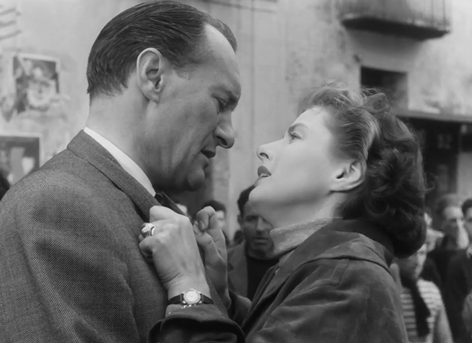
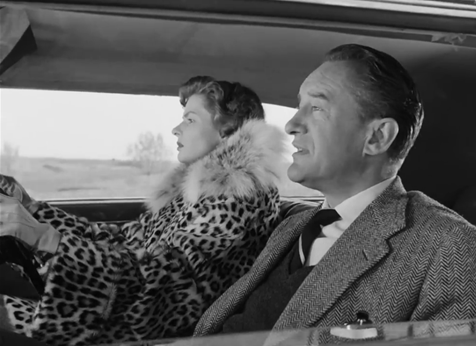
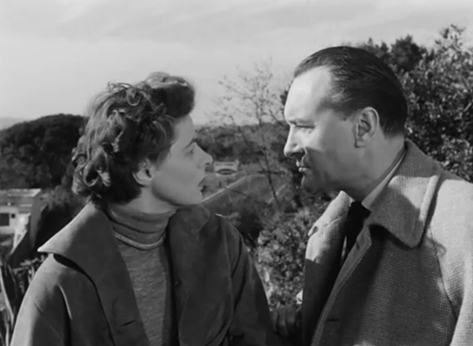
journeytoitaly1Journey to Italy is the splintering of a relationship where the slivers of bitterness begin to wedge themselves under the skin. It’s like slow, painful, nagging torture. Roberto Rossellini’s noted romance film feels like the antithesis of Roman Holiday. It avoids the other film’s bustling streets for more secluded getaways. It leaves behind fairytale romance and fun, for the bitter onset of marriage and middle-age. It seems hardly exciting, mostly driving and sitting, drinking and eating. Rather droll to say the least. And yet this in itself is juxtaposed with lively impassioned tunes and historic pieces of architecture and sculpture snuggled up against the Italian countryside. Because it is a goldmine of culture whether you look at Pompey or the remnants of the Greeks and Romans. There is a glorious history here and yet it makes for a rather meandering backdrop for our two stars Ingrid Bergman and George Sanders. Again, Bergman especially was a big name (and at the time Rosselini’s lover) and though usually a supporting player Sanders was usually held in high regard. They feel like the exact inverses of Gregory Peck and Audrey Hepburn, in a way that’s rather intriguing.

journeytoitaly2Yet again, as an audience, we do feel like tourists taking in the sights, but this time we’re riding along with a couple who don’t know what to do when they’re alone together. They don’t know what one is to say or how one is to act, because, in all honesty, they haven’t tried too hard. We don’t get much of their backstory, but they are certainly well-off because he takes his work seriously and it shows. But he hasn’t taken his marriage all that seriously and that shows too. His wife is more like his partner in this business endeavor they have going. She keeps up appearances, and he can offer her a lot in return, but hardly love.

It struck me that is a film about a faltering relationship and here is a couple that seems to be apart as much as they are together.They think that the best thing they can do is stay away from each other because no damage can be done that way. There’s jealousy, pettiness, biting sarcasm, all ready and waiting to be unleashed. Alex fosters a liking for a young Italian girl, and although Katherine doesn’t know all the details, she suspects as much from him. To combat Sander’s snide tone that can cut to the quick, Bergman counters with a thick layer of sulking.

journeytoitaly3Thus, I’m not sure about the denouement of this film. Will they stay together or get the divorce that they both seem to have come to terms with? It seems like they might possibly make things work, or is that just the work of the romantic Italian countryside around them? Because no passionate embrace can alleviate and completely overshadow their myriad of problems. They are unable to communicate on a meaningful level, and they treat each other rather poorly more often than not.

In fact, this film is an interesting study, but there is a lack of investment in these characters. After all, it’s only a quick snapshot that gives us a feel for a relationship. I’m probably partial to the similar feeling Before Midnight (2013) because we are already given two films beforehand to truly grow invested in the characters and their story. But there’s no doubt that Rosselini’s film with Bergman and Sanders is well worth the journey.

4/5 Stars

Sunflower (1970)


sunflower

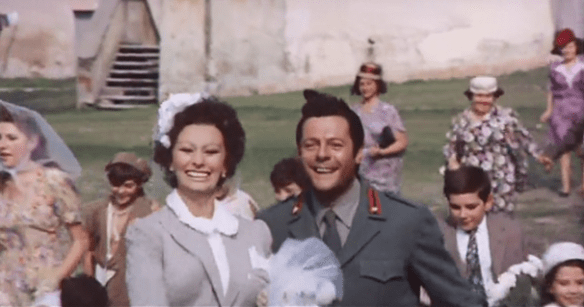
Vittorio De Sica is at the forefront of Europe’s most accessible filmmakers of the 20th century and that’s because the stories he crafts are heartfelt, moving, and also enter comical territory with ease. Sunflower pairs him once again with two of Italy’s Titans Sophia Loren and Marcello Mastroianni, and as you would expect the film starts off full of passion, playfulness, and a little pasta. It’s the dawn of WWII and the frisky pair is in love, deciding to get a quick marriage so they might get a 12 day leave before Antonio has to ship out.

In a sense, this is a kind of war film, because Anto gets sent off to the Russian Front and we get a glimpse of the harsh realities there. We are treated to some newsreel style war footage all the while veiled with a billowing red flag. Sunflower is not a film about the politics of the war per se, but rather the effect that war has on people and their relationships.  It can heighten passion, tear people apart, and change lives for good.

When the news comes home that the war is over, there is a flood of relief and then everyone including Giovanna (Sophia Loren) frantically begins the search for their kith and kin. Worried mothers and wives bring their long-cherished photos into train stations clinging to the hope that just one person passing by will be able to give them some fragment of hope. That’s what Giovanni gets and it’s not much, but a jaded soldier who suffered alongside Anto tells her the last time they were together, he was freezing to death in the snow. Her first reaction is to berate him, but he’s too tired to care by now. So she prepares for the journey to Russia to find the whereabouts of her long-lost love. She will not take no for an answer, but what she finds is more painful than even she could expect. It’s a different type of scar, a different type of hurt that no one could foresee.

sunflower1In some respects, Sunflower feels like a precursor to Life is Beautiful (1997), because both films are full of hopefulness, but they both exist as heart-wrenching stories. They deliver the same moving swells of emotion, but for different reasons. Sunflower ends up feeling a little like Umbrellas of Cherbourg in its tragedy. But the title seems to suggest, maybe, just maybe, like the old adage says, out of the ashes beauty can still rise. All the pain and suffering are only the fertilizer for flowers to spring up from the desolated earth. A memorial of what has happened, but also a harbinger for the future.

This is truly an international film because although it’s in Italian, it was partially shot in Russia (a first for the USSR) and features Russian performer Lyudmila Savelyeva in a prominent role. But the lovely score comes courtesy of America’s own Henry Mancini, rounding out this film perfectly. It’s another pleasant surprise from Vittorio De Sica.

4/5 Stars

The Blue Angel (1930)

blueangel1The Blue Angel is the name of a nightclub and it turns out to be a very fateful nightclub indeed. It just takes us a while to figure out why. Although Josef Von Sternberg’s film is known, rightly so, for making a star out of Marlene Dietrich — in the first of their 6 collaborations — this early German sound film is nevertheless about the decline and fall of Emil Janning’s character. Immanuel Rath begins as a professor at the local college, and although his pupils are unruly, he commands the utmost respect. He sees it as his prerogative, and he is quick to bring order and discipline to these young lads. But boys will be boys and they become corrupted by the beautiful cabaret singer Lola-Lola (Marlene Dietrich). One evening the professor drops into the seedy joint to look out for some of his troublemakers and talk with the proprietor. Of course, he unwittingly ends up meeting the gorgeous girl backstage and returns the following evening with a seemingly very flimsy excuse.

Ironically, his boys are not the only one who take a liking to her. The once restrained and reserved man of learning begins to change. He becomes a man obsessed and infatuated beyond the point of logic. But what does he care? He enjoys being in Lola’s company and the idea of a marriage proposal makes complete sense in the reverie that he is swimming in. So they do get married. The professor leaves all the common sense behind and goes on the road traveling with his wife and their promoter.

blueangel2But by this point, he is a sorry figure, so pitiful and bedraggled in every way. He reluctantly parades himself in front of audiences as a clown just to make some money for him and his wife. It is, of course, inevitable that he return back to his old stomping ground, and it does eventually happen. He reluctantly goes onstage and it is difficult to watch this final chapter. Lola is no longer his. He’s completely ruined. Completely destroyed. Oh how far the man has fallen, as he winds up keeled over on top of his former desk in the gymnasium.

I think I enjoyed Emil Janning’s in The Last Laugh more and yet to its credit The Blue Angel does not cop out in the end. It has a tragic trajectory that in some ways feels like a precursor to such noir as Scarlet Street and Nightmare Alley. It’s understandable how Dietrich became a star because stars have the capability of drawing your attention. Janning’s gives a wonderful performance certainly, but the allure of Dietrich is too much to discount. She steals the show just like she steals the Professor’s heart. We’re just “Falling in Love Again and we Can’t Help It.”

4/5 Stars

Notting Hill (1999)

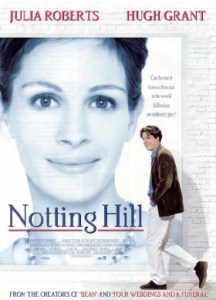
NottingHillRobertsGrantThere is a scene in the film where a group of friends is sitting around the dinner table in the Notting Hill district of London, and they are having a friendly after dinner competition to decide whose life is the most hopeless. The winner gets the last delectable piece of fudge. One person sitting at the table is seemingly out of place. Actress Anna Scott (Julia Roberts). Her face is plastered on double-decker buses all down the squares. She made $ 15 million on her last film, circa 1999. You would think she’s got it made. But this woman takes her turn and shares about her own brokenness. She’s had surgeries to maintain her beauty. The tabloids rake her life over the coals, and when she gets old, she will only be remembered as the shell of someone who used to be famous.
It’s a haunting, honest look at what it means to be a celebrity superstar, and it is for this reason that Notting Hill works as a charming, at times witty, and altogether unlikely romantic comedy. It’s this simple suggestion that two people, from two entirely different spheres of life, can be together, because of the simple urge of every human for companionship, closeness, and someone to know they exist.

The two individuals, in this case, are Anna who I’ve already mentioned and Will Thacker (Hugh Grant). He’s a nobody just like you and me. He owns a corner travel bookstore, very cleverly named The Travel Book Co. He’s gotten his heart broken seriously twice and his roommate is the oddest crackpot you could ever have the misfortune of living with. That is his average, everyday life, in the neighborhood of Notting Hall.

That’s what makes a visit by an inconspicuous Anna Scott to his bookstore all the more extraordinary, while still allowing for the suspension of disbelief. Everything follows sequentially as it should. He runs into her with a cup of coffee and offers his flat as a place to freshen up. The first kiss comes quite by accident. Days later he winds up in a press conference once again face to face with this great star. But she surprises him by being his date to a small dinner for his sister’s birthday. A nighttime jaunt is accented with all the romance you could ever expect.

It’s too perfect and what follows are two obligatory strikes in their fantasy relationship. Will learns about Anna’s big shot boyfriend (Alec Baldwin) who is back in town. He’s caught off guard by it. Months go by as he tries to forget her, but she shows up on his doorstep looking for that person to talk to once more. When the tabloids show up, she is peeved, directing all her anger at Will, perhaps a little unfairly. And that looks to be the end of it all.

Months roll on again like pages in a travel log and here Anna is again in his shop, like the first time they met.  There’s an earnestness in her request to rekindle a relationship that makes us ache for Roberts. Like any frightened, often wounded, ordinary man, Will turns her down. It’s the logical decision. After all, he doesn’t want to get hurt again. Strike three. Except… his friends rally with him to catch her before it’s too late, because what’s the fun of rationality?

They go racing like a daft crew from Top Gear, “Gimme Some Lovin'” thumping in rhythm with Will’s beating heart. He gets to the Savoy Hotel just in time for her final press conference. A la Roman Holiday he professes his love incognito, and they wind up with it all. Red carpets, quiet afternoons in the park, and most importantly each other.

Notting Hall had me hooked simply with its images of England, a place that is near and dear to my own heart. It’s also a wonderful backdrop for romance, and this story from Richard Curtis finds it’s perfect duo in Julia Roberts and Hugh Grant. He is handsome certainly, but that is overshadowed by his decent, every man quality which attracts Anna to him. He’s the man who willingly defends her honor in a restaurant, not because it’s easy, but it’s simply the right thing to do. Meanwhile, Roberts perhaps is playing a version of herself, as an actress, but she gives the character the necessary insecurities, eliciting more sympathy than I would have thought possible for someone coming out of Hollywood. Yes, Notting Hall might be a few minutes too long, but getting to walk down Portobello Road just might be worth it.

3.5/5 Stars

Still Mine (2012)

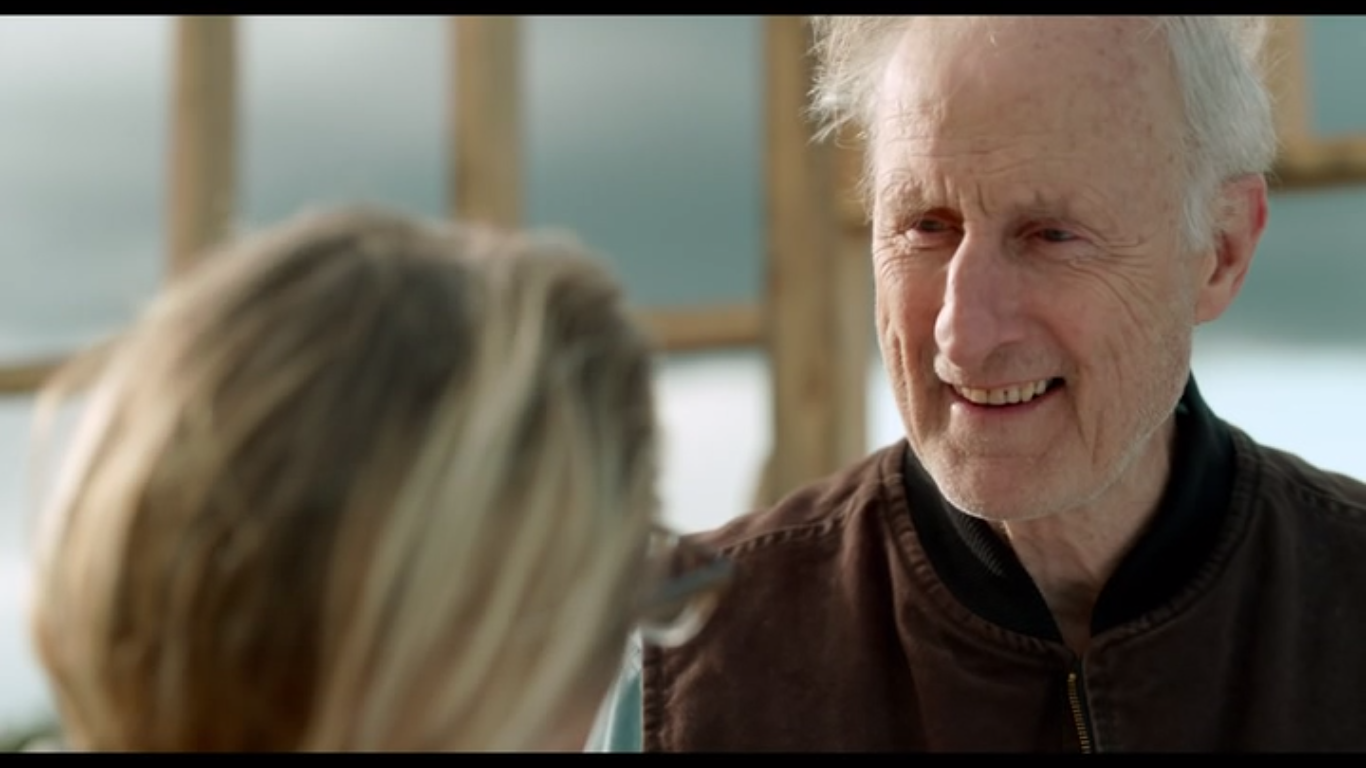
stillmine1This is not a powerhouse film, but it’s bolstered by a powerhouse performance from James Cromwell. His career has always been one worth watching. He’s been prolific for many years now in films like Babe, L.A. Confidential, The Queen, The Artist, and so on. And yet he’s never been a star, simply a wonderful character actor making each film he appears in all the more interesting. He has an imposing frame, often a quiet persona, and a relatable quality.

Still Mine is certainly a romance film, but it’s about one man almost as much as it’s about a couple. Craig Morrison (Cromwell) is well into his 80s now and he is still living in a farmhouse with his wife of 60s years. Her health and memory are quickly deteriorating and he, along with all his children, knows it. He resolves to build her a newer, smaller farmhouse that will be easier to manage.

We like him as an individual because he still has ties to the old world and the way it used to be. He doesn’t beat around the bush, and he gets fed up with the impracticality of modern-day bureaucracy. He’s proud and independent. His idol was Babe Ruth, and he has a great passion for lumber because he father was a shipbuilder long ago.

That’s why when his new project hits roadblock after roadblock in the form of building code violations, he’s peeved and annoyed. But he tries to push through, going past them, because that’s his way. His main opposition is building inspector Mr. Daigle, who although he might be a sour apple and a stickler for rules, is by no means a villain.

stillmine2So in a sense, this story is twofold. We get to see the ties that bind two people together even after so many years of marriage. They are so closely knit. They can have their tiffs, they can get frustrated, but ultimately there is an almost insurmountable amount of faith and affection that holds them together. It makes the mundane beautiful and yet at times, it becomes difficult to watch because Craig knows that his other half is slowly losing her edge, and yet he still loves her so deeply. He gets angry with her, but he has an extraordinary capacity to love her still.

But also this film is interesting because we get to watch the resolve of a man on another front. He wants to keep busy. Despite his advanced years, he wants to do this on his own. It’s the principle of the thing, and he sticks with his convictions no matter what children, neighbors, or members of the bureaucracy say. Although Cromwell still feels fairly young and spry, I didn’t mind him playing a man quite a bit older than himself. Also, the ending including Mumford’s “After the Storm,” was a rather surprising inclusion, but not a bad thing. It adds a contemplative tone to this film’s resolution.

3.5/5 Stars

Pillow Talk (1959)

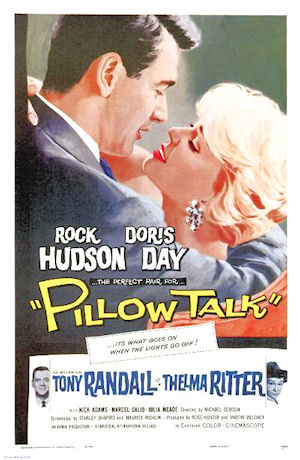
Pillowtalk_posterIt’s the original Rock Hudson Doris Day Rom-Com, with the seemingly perpetual split screen, to match the party line that constantly weaves its way through the story. It’s technicolor, it has an infectious title track, and it’s absurd wackiness somehow adds up to a boy-gets-girl happy ending.


The imposing and dashing Hudson plays songwriter and major playboy Brad Allen, before masquerading as tenderhearted Texan Rex Stetson. But how does he get there? What causes him to play such a ludicrous part? It comes in the form of Jan Morrow, our peppy platinum-haired interior decorator who has had just about enough of her party-line partner, the estimable Mr. Allen.

Her often swanked housekeeper Alma (Thelma Ritter) doesn’t mind eavesdropping and swooning along with all the other impressionable women he romances over the telephone. Jan, on the other, thinks it’s sickening behavior for a man. She would never allow herself to be taken in by such a cad.

Of course, there’s more to the story since one of Jan’s clients, the neurotic millionaire Johnathan Forbes (Tony Randall), is madly in love with her. There’s another wrinkle though, that’s far more important. He knows Allen from his college days. When Brad gets his first view of Jan, she’s an absolute knockout and he wants to win her over, but she hates his guts, at least over the phone. Enter a sweetly sincere Texan and she is swept off her feet surreptitiously.

Brad manages the charade for some time, but for the comedy to work, it must all come crumbling down. In this case, as expected, Ms. Morrow and Mr. Forbes figure things out at almost the same precise moment. It looks like Brad is sunk for good. There’s no hope for such a louse. But then again, if Pillow Talk ended there, it’s audience would be left muttering despairingly and crying inconsolably. The exclamation point comes when Hudson pulls his bride-to-be out of her bed and forcibly carries her through the streets of New York. It sets the stage for some quips perfectly at home in a quaint bedroom comedy plucked out of the 1950s.

Day and Hudson were stupendously popular with the populous and this film would begin their string of pictures together. Although they never reached the excellence, or more aptly, the above-averageness of Pillow Talk, they have remained relatively popular even to this day. Ms. Day was always a fan favorite and rightly so with her impeccably powerful voice, raucous comedic performances, and self-assured charm. And she’s still with us bless her heart! It will undoubtedly be antiquated and overly saccharine to many, but if you have a soft spot for either  Rock or Doris, then enjoy it without reservations. It’s a rather entertaining guilty pleasure.

3.5/5 Stars

Brad: Look, I don’t know what’s bothering you, but don’t take your bedroom problems out on me.

Jan: I have no bedroom problems. There’s nothing in my bedroom that bothers me.

Brad: Oh-h-h-h. That’s too bad.

Punch-Drunk Love (2002)

punchdrunk1When Paul Thomas Anderson said he was making a comedy with Adam Sandler, people undoubtedly scoffed at him. I know I would have if I had known about this film back then. However, he proved that you should never question him as a director. Much like a Kubrick or a few other auteurs, I’m not necessarily the biggest fan of Anderson, but you have to admit his films are interesting and very much their own entity.

Punch-Drunk Love is a comedy certainly, but not in your typical sense. It’s a romance, but it’s not quite like any romance I’ve ever seen. Thanks to the bolstering performance of Adam Sandler, it’s whimsical and odd. He plays Barry, a rather passive and antisocial type, who seems constantly quelled by the dominating personalities of his many sisters.

He’s obsessed with buying up pudding for a chance at frequent flyer miles, he picks up a harmonium tossed on the road-side, and most of all he’s lonely, but he’s not comfortable going on dates. His sister tries to set him up with a nice friend of hers who happens to be British (Emily Watson). Barry rejects an offer to go out to breakfast with them and out of loneliness calls a phone sex line. Out of stupidity, he hands over his credit card info, and the rest becomes a big scam that he can’t escape.

Thus, his work phone at the office is ringing off the hook from a girl trying to steal his money. His sister is continually trying to set him up, and Barry seems to live in his own little weird world at times, overflowing with his own personal odd ticks and quirks. He also has an anger problem, meaning he’s bad news if you give him a hammer.

punchdrunk2At times the film is thoroughly unsettling and nervously, uncomfortably funny, thanks in part to Sandler, but also the pervasively weird sound design that utilizes the harmonium. At his core, Barry is a lonely and confused man, aren’t we all, and it reveals a depth to Sandler that many probably have not seen before. It helps that the sweet Emma Watson makes us believe he is likable and in truth, he is somewhat endearing in how he can get lost in an apartment building or always wears the same blue suit. He even follows her to Hawaii for the sake of love. But don’t get any wrong ideas. This is nowhere near the realm of 50 First Dates.

3.5/5 Stars

Royal Wedding (1951)

royalwedding1The Wedding of Queen Elizabeth and Prince Phillip was a once in a lifetime experience. They’re still together to this day and yet when they got married she was not even queen yet. It’s hard to believe. It’s only fitting that a momentous occasion like that would get a film, and Stanley Donen‘s musical is a bouncy little dance fest that uses the wedding as its backdrop, hence the title.

The story follows the brother-sister dance team extraordinaire of Tom (Fred Astaire) and Ellen Bowden (Jane Powell), who after a smashing opening weekend of their show Every Night on Sunday, get a call to perform in London in the wake of the big occasion. So they get aboard the first ocean liner available and head abroad. Tom is more interested in work than love, and Ellen leaves behind a string of beaus behind, but none of them meant much to her. She finds a budding romance with Lord Brindale (Peter Lawford), and it looks like it might actually amount to something. Quite by chance, Tom finds out a woman he meets on the street happens to be part of their production, the dancer Anne Ashmond (none other than Winston Churchill’s daughter Sarah). So of course, we have these two budding romances forming as the show gets into high gear and siblings must balance their obligations with love. It’s not always easy or without heartache, but it ends up just as glorious as the Royal Wedding.

Fred Astaire is an ageless wonder looking as spry as he ever did, and his individual numbers are probably the film’s best. His coat rack dance in the gym seemingly pays homage to his friend Gene Kelly and shows his brilliance at breathing life and vitality into inanimate objects. They become his partners in the dance. His inspiration for expression.

royalwedding2Furthermore, his dance on the ceiling looks as remarkable now and feels just as magical as it probably was back then. It’s a marvel because we look for any sign of a trick, but everything looks so fluid. Thus, it’s so easy to quickly forget the technical aspect and simply be blown away by the inventiveness of Astaire.

Jane Powell is a wonderfully bright young beauty and a lovely co-star for Astaire in both song and dance. It was refreshing not to have them playing romantic leads opposite one another and the brother-sister dynamic fittingly mirrored Astaire’s own longtime real-life partnership with his sister Adele. All in all, it’s a light and elegant bit of fun that’s an exuberant delight. It does what it sets out to do and that’s about all you can ask for.

3.5/5 Stars