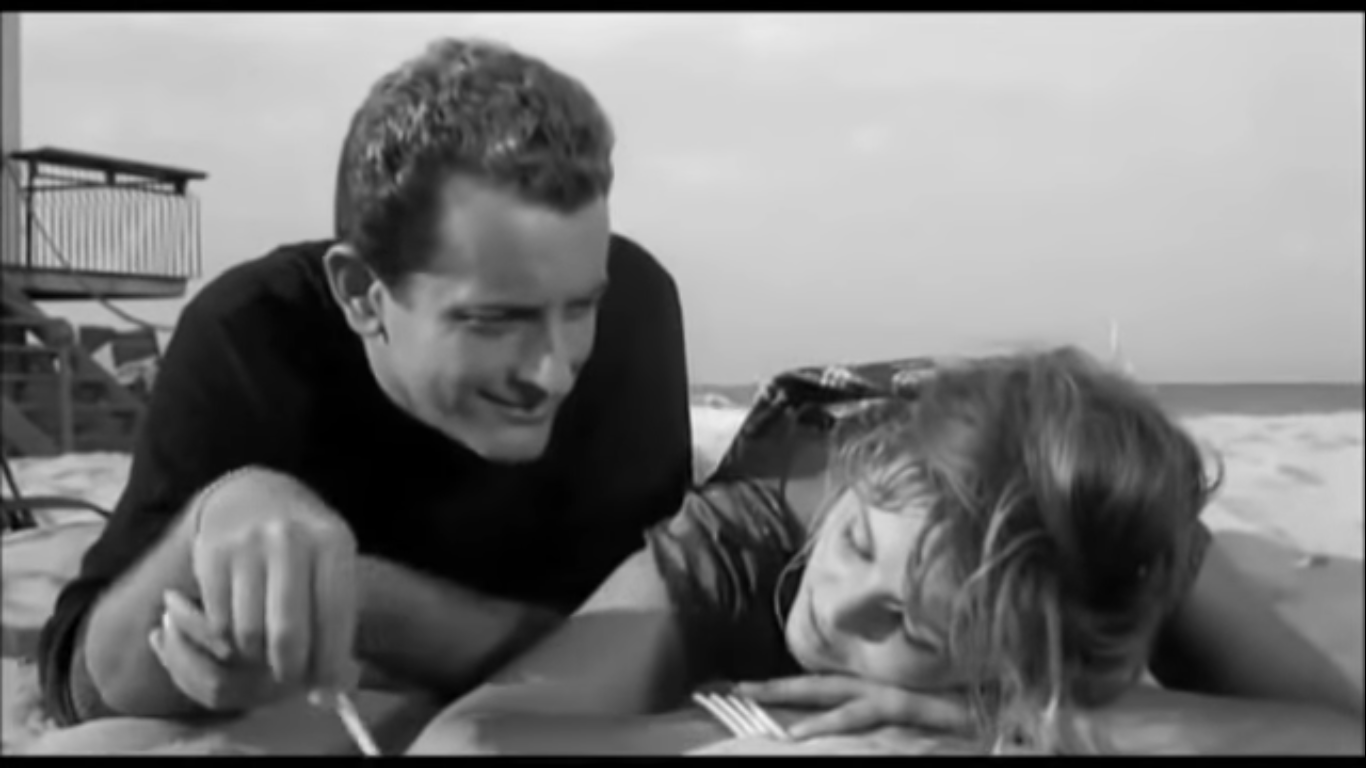
Angel (1937): A Mature Lubitsch Love Triangle

For those familiar with Trouble in Paradise, Angel has a  sublime outside-the-window tracking shot in its own right to bring us flush into the world of Parisian soirees. Thusly, we become acquainted with Russian Grand Duchess Anna (Laura Hope Crews), who facilitates meetings between men and women. 

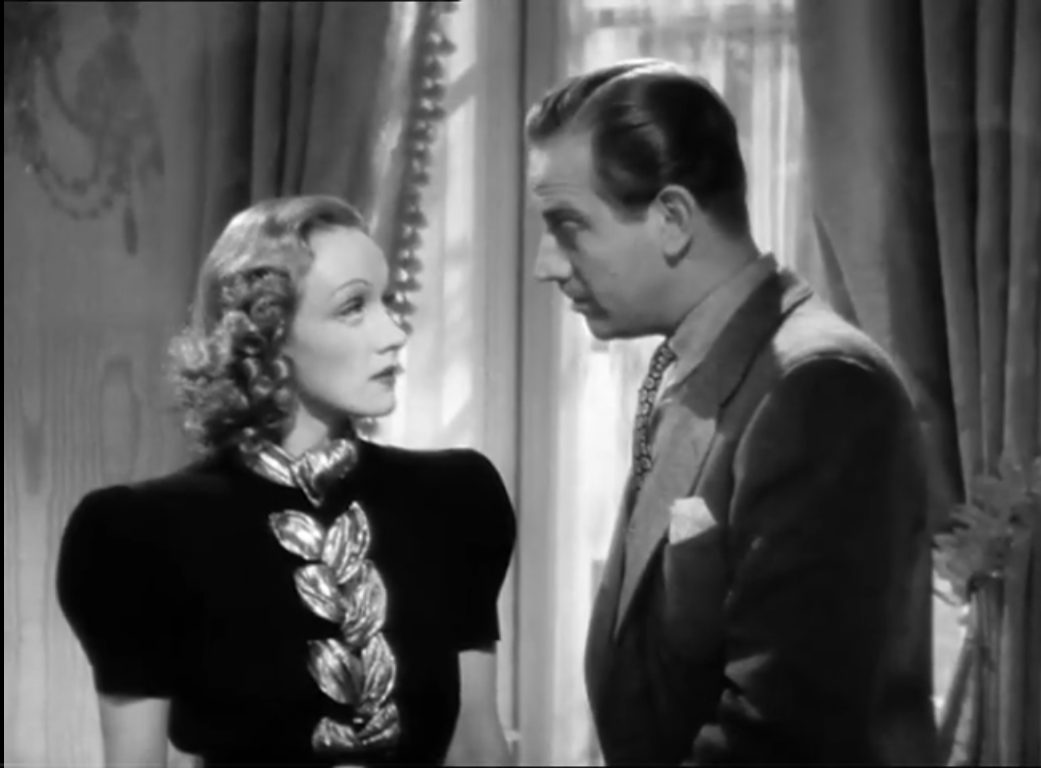
It’s possible to barely catch the subtext here. What’s apparent is by the sheer serendipity of cinema Marlene Dietrich and Melvyn Douglas wind up in a drawing-room together. Dietrich feels particularly laid back. Normally, she’s beautifully aloof; here it’s a bit different because she’s not looking to maintain an aura at all. It makes her all the more genial.

Joseph Von Sternberg always cast and projected Dietrich as a screen goddess. Working with Lubitsch, Dietrich feels like a far more relatable human being albeit a beautiful, refined one. She doesn’t totally overwhelm with her sensuality remaining mostly reserved. 

Tony Halton (Douglas) is in town for the day and is looking for a time. She offers up the Mona Lisa, the Eiffel Tower (that big steel thing sticking up in the air), and Notre Dame. No offense to “The City of Light,” but none of them pique his interest. The lady in front of his eyes is far more incandescent. She’s a bona fide angel.  

It’s true there’s something fresh and appealing about their interaction. They don’t know one another’s names nor does she bother to correct the mistaken identity, and it doesn’t matter. In fact, it even augments what they have because they are so fascinated by one another. It means a dinner invitation and spending the night together. This could be the movie right there. 

Then, Sir Frederick Barker (Herbert Marshall) is shown aboard a screeching steam engine 20 minutes into the picture. We almost forgot about him, and we take a total about-face toward events that remain interrelated. Before we ever meet the man, we learn he must be a gentleman of some renown because he’s all over the papers. 

He is served faithfully by his fastidious manservant (Edward Everett Horton), Graham, who has the ear of a very powerful man. He’s seen his fair share of diplomatic affairs: dinners, white ties, and tailcoats. They make him quick to judge the merits of international diplomats. Because his master is one of the finest, single-handedly standing up to 21 countries in The League of Nations (not including the U.S.). 

Barker returns home late one evening to be reunited with his wife Maria (Dietrich). It’s obvious they have affection for one another — they care deeply about their marriage — but before she fell for another man, there was already a third party in their relationship: his work. 

To grasp at obvious metaphors, there’s a tinge of Casablanca married with a kind of Melvyn Douglas Ninotchka romance and the stuffy propriety of Cluny Brown. Take, for instance, the mélange of servants headlined exquisitely by Horton and Ernest Cossart.

In perfect Lubitschian fashion, a dinner is viewed from the kitchen’s point of view as they perceptively observe two of their dinner guests are out of sorts. They didn’t touch their food. They weren’t hungry. Although it’s never said outright, Lubitsch allows us to put two and two together. One can only surmise it’s due to lovesickness. 

Because there is only one way this movie can get more complicated and more painful. The men must meet. However, far from being antagonistic, they are old friends meeting on a whim. Once upon a time, they shared a French girl all the way back during the war years when they were both still young. Whether they know it or not, they also share another girl: Angel. They have no idea the beehive that’s been kicked. Lubitsch only gives that to us. We are resigned to watching the outcomes. 

The hourglass structure of the movie means we must end where we began. We know time is running out. We are back in Paris, back with the Duchess, and she performs her narrative duties a bit like a maestro. Unwittingly or not, she has all the main players stashed away in different drawing rooms. It’s inevitable that they find each other. The situation calls for it. There is no other possible resolution. 

In the olden days, you have a sense this film would have been lithe and effervescent as only Lubtisch could offer up. Standing before us are all his penchants for drawing rooms, the affluent classes, and their servants. 

But what sets Angel apart is the tone and the profound solemnity Lubitsch often brings to the proceedings. The melancholy of the central love triangle is unmistakable even in the final minutes of the film. In this case, it’s difficult to totally dismiss the extravagance. Still, we’ve come to understand these people, both their passions and their nobility. Because Lubitsch’s films somehow compel me the most when they grab hold of such feelings, where the emotions cut far deeper than the surface ironies. 

As far as Dietrich’s concerned, it might be one of her greatest performances. In the place of ostentatious allure, there stands a quiet dignity comfortable with silence. The whole movie is made in such a mode where these interludes develop the longing. In a quiet encapsulation, husband and wife walk out of the giant estate both together and apart. Their marriage still standing but on the verge of dissolution.  It’s not so much a paradox as it is an indication of the tenuous nature of their lives moving forward.

3.5/5 Stars
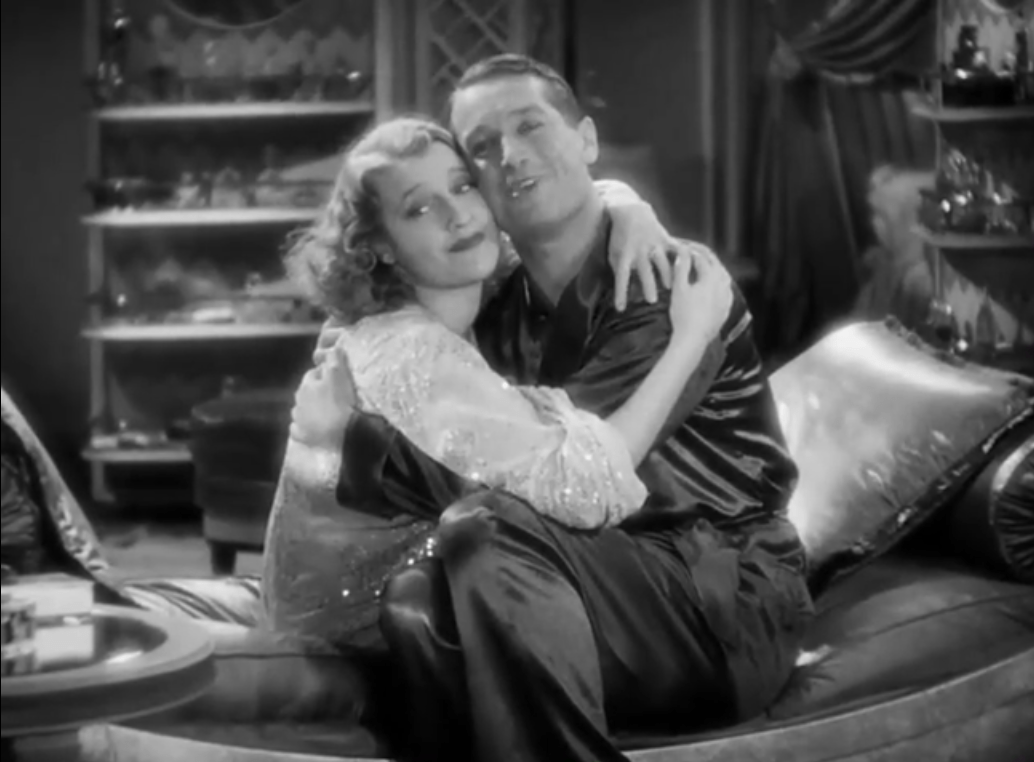
One Hour With You (1931): Jeanette MacDonald and Maurice Chevalier

one hour with you

Ah, Spring in Paris! The local gendarmerie is intent on cleaning up the parks of couples canoodling. Among them are Andre Bertier (Maurice Chevalier) and his gal pal Colette (Jeanette MacDonald). But it’s perfectly decent. As they sing, later in bed together, “what a little thing like a wedding ring can do.”

Samson Raphaelson avails himself, having a fine time turning a phrase in all sorts of situations — in a police station or romantic tete-a-tete — it really doesn’t matter, and it serves Lubitsch’s standard suavity wrapped up in the sing-song operetta quite well.

Chevalier offers up his winking monologue to the camera and all the folks sitting out in the audience, providing a theatrical aside borrowed most obviously from the stage. His prevailing charms do not cater to everyone nor does his style of balladeering, but there’s no denying he carved out a niche for himself in the 20s and 30s as one of the most romantic swoons of his generation. Whether that had more to do with his coveted Europeanness or something else…

This story is built out of a taxi ride. Andre happens to hop into the cab with a person of the opposite sex named Mitzi (Genevieve Tobin). The possibilities are endless. It’s the fact that they totally dissect the situation, insinuate and flutter their eyes at one another, taking a banal scenario, and instantly giving it romantic tension. In fact, just about every scene informs a world full of sensual suggestions and connotations.

He abruptly ditches the taxi on the verge of a kiss and infidelity, though the damage is already done. No one will ever believe them to be perfectly innocent, and they’ve conveniently created a comic drama for themselves out of nothing. It almost blows up between them, and they are as good as guilty.

This would all mean nothing, if not for the subsequent scene. Colette is reunited with her best friend: Mitzi! They share all the usual chatter, fawning over wardrobes and shared memories. Imagine the devoted husband’s shock when the woman in the taxi and his wife’s best pal are one and the same! We have a real story on our hands and Lubitsch knows precisely how to work it.

Take another scene where Mitzi feigns illness to get the doctor alone with her. Mitzi’s own husband (Roland Young) walks in on a doctor’s visit. It’s all perfectly innocent (as it always is). They trade pleasantries. One’s a doctor, the other a professor — ancient history. It’s an emphatic punchline hanging in the air.

There’s also a glamorous party put on by the Bertiers. All their friends will be there sitting at a table together in a very public environment. A round of name card roulette takes place between husband and wife with diabolical consequences — romantic speaking of course. Colette is trying to protect her man from the wrong woman even as she rebuffs the blundering advances of a madly infatuated socialite (Charlie Ruggles).

Genevieve Tobin remains out on the prowl for Chevalier. It doesn’t much matter what she’s does; it’s how she does it. This is the secret of most of the characters in this movie. It’s the power of inference.

When she musses up his bowtie, he doesn’t know how to remedy the situation (because he can’t tie a bowtie). Going back inside is tantamount to social suicide — people will talk — but if he follows the beguiling harpy into the garden, who knows what fate will befall him. He’s a prisoner on his own veranda! This is the movie’s persistent predicament in a nutshell.

However, there must be a caveat in any discussion of One Our With You. His name is George Cukor, and he was actually the original director of the picture, although he eventually relinquished his duties to Lubitsch.

With complicated productions such as this one, considering where one director begins and the other ends is always an intriguing conundrum. Take, for example, something like Come and Get It from a few years later, directed by Howard Hawks and William Wyler at different points. One doesn’t often confuse their filmographies but shot to shot it’s not exactly easy to ascertain the difference aside from some intuitive observations.

There are moments of cloying cattiness, particularly between the female characters and at the grand party that we might find down the road in a picture like The Women, but we never quite broach that territory completely. Because ultimately, it’s the overarching sensibilities and the shepherding of the comedy by Lubitsch leaving their mark. It certainly makes for another fine exemplar of his work during the period.

My main qualm is the squandering of its supporting cast. Between the likes of Tobin, Ruggles, and Roland, there are some real personalities, and opposite our stars, they do yeoman’s work in a handful of scenes. However, it does feel like they drop off and disappear rather conveniently. Their arcs never coil up in a sufficient manner — in a way we can appreciate — and they probably deserve a few more minutes of satisfying resolution.

However, Lubitsch is not concerned with a more raucous screwball crescendo. Thus, the ending just about wins it for me, partially because for once MacDonald is in on the gag, and it doesn’t feel like the Chevalier show. They’re in this kissing comedy together, beginning to end, singing to their little hearts’ content. If you like it, you like it…anywhere.

3.5/5 Stars

Our Daily Bread (1934) in The Age of FDR

Screenshot 2020-08-15 at 8.11.51 AM

The title, of course, comes from the Lord’s Prayer evoking images of contrite men and women thankful for the bounties they’re provided on God’s green earth. Director King Vidor took an immediate interest in the project because it was a timely piece in the age of FDR’s public work programs about individual humans looking for ways to eke out an honest living.

Our Daily Bread is based on one such project with a host of men utilizing some vacant, barren land for sustenance. There is a sense the topic was too down to earth for a big studio — at least in the midst of the depression — so Vidor took on the expenses himself because he felt strongly enough about the material.

It’s a  story of hope burgeoning out of the pits of the depression. This is the key. We are used to stories of degradation and hardship in the throes of the 1930s because this was human reality. But King Vidor promotes a story that while acknowledging the headlines, hones in on a nugget of encouragement — a reminder of the indefatigable flame of the human spirit.

John and Mary Sims (Tom Keene and Karen Morley) are like so many other folks, they’re falling behind on rent, work is scarce, and they barely survive by hocking their possessions.

It might be easy to forget that the names of our two protagonists in this picture are plucked out of The Crowd — King Vidor’s magnum opus about the American way of life. The fact that two new actors don the roles feels mostly inconsequential because they are only symbols of the human experience — stand-ins for us all — and thus anyone who is genuine and honest is fit to play them. Surely we can relate.

It’s true Tom Keene and Karen Morley are not altogether well-remembered today. They aren’t electric talents, but she is wholesome (consider this interview), and he is exuberant bursting with new ideas. They set up camp in the dilapidated home on the fallow ground armed with their eagerness. By itself, it seems foolhardy.

However, John is soon joined by a passerby — a Swedish farmer (John Qualen) who knows how to raise crops and more men soon follow from all sorts of trades and backgrounds. They too want a second chance and an opportunity to prove their usefulness.

Although a stirring speech about John Smith and the Mayflower doesn’t play as compelling now, nevertheless, their de facto leader urges them to help themselves by helping others, and they need no further encouragement.

In the ensuing days, the able-bodied men hitch plows up to every conceivable contraption imaginable as they get to work. They become a bustling colony of industry made up of idyllic shanty houses. Best of all, they’re in it together.

As they gain traction, the movie is pregnant with these heart-rendering vignettes leaping to mind one after another. Upon the first sign of a harvest, they celebrate with hands raised aloft and knees bowed as the preacher among them thanks the good Lord for this bounty.

Then, the most formidable and brusque member of the commune — a wanted criminal, nevertheless is beholden to a higher form of justice, sticking out for his fellow man. He goes so far as to turn himself in so the reward money can be used to stock up on much-needed provisions until the first crop can be harvested. He’s yet another noble man who has the good of the whole in mind.

If it’s not apparent already, Our Daily Bread blends its religious sentiment with deeply socialist themes. It was, after all, the age of FDR’s New Deal sentiment effectively retrofitting how American society operated and was perceived. Still, Vidor utilizes an ongoing visual methodology Eisenstein might have appreciated. By 1950, a film as blatant as Our Daily Bread would have probably been excised from the cultural conversation.

However, although the socialist proclivities are quite apparent, for me, it’s never a political film, nor does it bludgeon us over the head with the ideology completely. It’s very much an exercise in promoting this same dogma of the group over a single individual.

Because the story starts out with a couple — we can relate with them and appreciate them — but even as they pool together into this cooperative community, they only become two elements in a broader social amoeba. This hardly seems like an accident, especially as the narrative progresses.

If there are seasons of rejoicing and dance, then there must also be tribulation. Such is life. Tom’s indomitable vision is ultimately soured by drought and the temptation of another woman.

When Barbara Peppers shows up in the rain — we’re wary of her — what purpose could she possibly serve? With her batting eyes and saucy come-on attitude, she becomes a new love interest. And the cinema archetypes suggest Mary in all her devotedness doesn’t stand a chance. Surely, Vidor and his audience have seen Sunrise. I for one took a deepening relish in Peppers part due to her later credit as Doris Ziffel in Green Acres. She’s well nigh unrecognizable as a slender teenager, but if nothing else, it feels like an unknowing if uncanny parallel.

Vidor’s greatest triumph comes in the finale. The men band together to create irrigation to salvage their perishing corn crop before it’s too late. We have this heave-ho as rows of men pickaxe their way in unison, lumbering along to remove all the boulders from their path. They’re like a machine of manpower.

If the Grapes of Wrath is about the unstoppable tractors rolling over the land and taking it over, then these moments feel like a counterargument of frenetic human industry and solidarity. It’s not that there’s a lack of reliance on tools and the like. It only works when the humans who are behind them — living and breathing — are working together and building up a head of steam.

As they forge onward with their work night and day — everyone doing their part and investing wholeheartedly in this group utility — you see the message once more in stark relief. They are cheered onto the finish line by the women and children — their crops in sight and the goal on hand.

What an earnest climax it is! Swelling with angel song, everyone jumping with joy, doing black flips in the muddied ground. And as we watch them wading around in the mud, we know it is a signifier of life and a renewed future.

Here Our Daily Bread ceases to be a mere articulation or mimesis of the struggle to cow the depression. It’s a full-fledged metaphor for the enduring fortitude of the American spirit. Whether or not it’s a myth, King Vidor makes us want to believe in it all the more fervently. Likewise, the swelling angel songs might be too much for some — if you don’t believe in Providence. For these folks, Providence goes hand in hand with hard work.  And that flow of living water, notwithstanding the spiritual undertones, represents their daily bread.

4/5 Stars

The Stranger’s Return (1933): Lionel Barrymore and His Granddaughter

Strangersreturn

Establishing shots often get a bad name for their bland or token quality, but it’s true when done well, they can set the tone and create an instant impression on the audience. King Vidor’s The Stranger’s Return instantly accentuates this rural milieu. It feels like a stable and equestrian existence, a supremely serene safe haven.

As the movie progresses, we are privy to marvelous pictorials feeling akin to Jean Renoir or John Ford. There is a bit of that pastoral sense of space where the landscapes feel untarnished and beautiful down to their very compositions. Regardless, the land is nothing if not punctuated by human beings meant to till the soil and cultivate it.

Inside a farmhouse, we meet a family of grown-ups sitting around the breakfast table with their patriarch. Beulah Bondi is among them, and they aren’t mean-spirited folks by any means, but they’re generally dutiful and reserved.

I am reminded of the moral tale in the Book of Virtues from my childhood where the adult children care for their dying mother and the chest under her table — just waiting to swoop in and get their due. They can only imagine what treasures she will bequeath them upon her death. It’s the same unspoken undercurrent in this film because Grandpa Storr isn’t oblivious. He knows what’s going on. The difference is, that he’s not ready to go down without a fight.

Lionel Barrymore is bearded like you’ve rarely seen him before. He plays Storr as an ornery man of the old world — giving his healthy cereal to the chickens and proceeding to cook himself up some steak and eggs. He grumbles about how he would rather do something he likes for a few minutes than have to live a hundred years hogtied. We understand him and appreciate his convictions in minutes.

He’s rich with recollections of the Civil War and his childhood exploits on the farm he still maintains. There’s this curmudgeonly bluster about him that is the perfect façade for an obvious heart of gold. As he’s advanced in years, he’s aided by his trusty cowhand Simon who’s known to take a nip of the corn liquor but also remains steadfast when it comes to working Grandpa’s land. The elder Storr also keeps up a good-natured feud with this closest neighbor (Franchot Tone). He’s built himself quite a life of contentment.

The entire movie develops out of the momentous return of his granddaughter — just recently divorced and living back east — who’s prepared to pay her grandfather a visit and go back to basics. Louise (Miriam Hopkins) becomes quite the talking point in the household seeing as she doesn’t live with her husband. That just isn’t done. Of course, Grandpa operates outside of the typical small-minded hypocrisy. He’s radically individual-minded and stubbornly prodigal himself.

Barrymore and Miriam Hopkins cultivate what feels like an instant rapport. Consider the moment where they sit outside on the hanging bench together — their conversation so easy and amicable. She might come off a bit like the prodigal daughter, but if this is true, then he’s more than generous in spirit to be the father figure who welcomes her back to her roots.

Together they strike up a fine friendship with Guy Crane (Tone) and his sympathetic wife Nettie, who both live just down the road. Crane’s the old story of a charming young man who went off to college and then wound up marrying his childhood sweetheart and returning to farm life.

It happens rather organically but Guy and Louise strike up an instant chemistry — at first, it’s good-natured and innocent. It comes to a head at a local dance where they spend plenty of time in each other’s arms and people will talk. One, because Louise is a divorcee and totally alluring, and, two, because Guy dances divinely and is spoken for. If the relationship between grandfather and granddaughter is the crux of the storyline, Tone and Hopkins do much to augment the film. He’s deeply charismatic and there’s always a wry twinkle of mischief in her eyes bringing them together gaily.

There’s nothing dismissive in the simple observation that Louise doesn’t seem like the churchgoing type, but it’s a delight when Grandpa is concerned. After all, as a faithful parishioner, he hasn’t missed a Sunday in years. It gives him peace being there.

The preacher gives his fitting message on 1 Corinthians (Therefore let him who thinks he stands take heed lest he falls). Far from being an implicit indictment of Louise and Guy, it seems to be aimed all the more at any snooty-nosed hypocrite who feels affirmed in their own preening self-righteousness. Grandpa is hardly one of their ilk even as he nods off perfectly at ease.

In the tradition of communal farm life, the Storrs put on a huge spread in exchange for local labor. The bountiful feast the women whip together makes the eyes bulge in its sheer extravagance. Hopkins does her duty gallantly by going out to the pump for water and passing around the plates and coffee, turning the heads of all the farmhands as she goes about her work. Grandpa couldn’t be prouder of his kin.

In what look to be his waning hours, Grandpa’s mind gets overtaken by fanciful delusions about the Civil War, and his children look to cart him off away from the farm for his own good. Could it signal the end of Grandpa or is it a ruse to divvy up the goats from the sheep? Metaphorically speaking, he knows the ones who love him will take care of his sheep. That person is Louise.

The Stranger’s Return lingers over an illicit theme as the two lovers have their affections grow deeper by the hour. It’s such an obvious outcome, and yet the story never succumbs to anything. This is never its intent. Instead, it finds meaning and sincerity dancing sensitively around all of this. In the end, it slates itself as an archetypal tale of a city girl destined for the farm and the farm boy who chose the city as an act of preservation.

What sets the movie apart is this amiable quality — how it is blessed with both humor and integrity of character. People don’t want to hurt one another because they’ve forged relationships cutting deeper than convenient altruism. As someone familiar with two worlds, it makes me hold a deeper affection for rural and urban lifestyles. They both have pros and cons, but what makes them impactful are the people you forge bonds with.

4/5 Stars

Safe in Hell (1931): Greater Than Pre-Code Expectations

safe in hell

“Have a little faith will yuh? There’s a great big plan that we don’t get. But the fella that’s made the plan knows what it’s all about.”

Safe in Hell leans into its title as fire literally crackles behind the opening credits.  The story’s origins begin on the back alcoves of New Orleans at the Claybridge Apartments. For those familiar with the reference, Dorothy Mackail’s Gilda Karlson feels like she just might be a Baby Face prototype.

She is a woman strong and independent. She’s seen the seedy side of the street — knows what it means to survive in a man’s world — and she’s done precisely that. Even as the camera admires her slinking form, she sits propped up seductively in her room, speaking into the receiver of the old-fashioned telephone. This says everything that needs to be known about her character. At least at face value.

Mackail is not a remembered talent at least not to the extent of a Barbara Stanwyck or a tragic case like Jean Harlow, but she fits the bill here. If her eyes aren’t exactly sultry they are disaffected by the rotten world she’s grown accustomed to. Cynicism breeds everywhere like rats. It’s become a part of her life.

One of those rats is a man named Piet (Ralf Harolde). He’s supposed to be a picture of the average All-American working man. But he’s a philanderer formerly involved with Gilda while he was married and simultaneously getting the girl fired from her desk job. Now she works out of her hotel room, and he’s back for more.

But she lashes out. Wellman zooms in on her face for dramatics before she races down the stairs to make a frantic getaway. The place goes up in flames another inferno-inspired allusion.  Now she’s wanted guilty or not.

However, we get the benefit of witnessing another facet of Gilda’s personality. She has a hardened shell meant to protect her from the onslaught of a callous world. With her real man, the sailor named Carl (Donald Cook) there’s a skittishness even a sensitivity cloaked about her like the shawl he’s bought for her on his many travels. The way she says his name casual and smooth with a soft-hearted affection.

She deeply loves him and doesn’t want to hurt him by divulging how low she’s sunk. He doesn’t know what she’s been subjected to. It’s another stellar visualization as they stare right at the camera simulating a mirror, but it builds this instantaneous connection with the audience. It’s arresting and difficult to forget moments after. But there is no time to linger.

Carl almost feels Pollyannaish with an overt belief in Providence, but this undoubtedly is part of what makes him attractive to Gilda. He still maintains his optimism. Also, he does provide her a lifeline. With his connections he helps her flee the county as a stowaway, their destination is an island off in the Caribbean where fugitives cannot face extradition.

Far from fire and brimstone, it’s a man-made death trap. Nevertheless, it’s a haven run afoul with murderers and thieves — the lowest of the low from every segment of society.  The isle is ruled rather nonchalantly by the resident despot Mr. Bruno (Morgan Wallace) and it’s swarming with lusty-eyed suitors starved for a little female company.  There are slimy worms in the water and lounging in the hotel lobbies.

safe in hell mirror

They aren’t frequented by many white women and as Carl leaves her nervously in a local hotel, there’s an uneasy feeling, he’s leaving her to the wolves. They lounge in the downstairs chewing the fat, chewing on nuts, sinking down in their chairs, and kicking back in an odd community ritual. They wait for even a glimpse of her and she keeps them waiting — at arm’s length as much as possible — rebuffing each and every advance.

In the rogue gallery, the hotel clerk Leonie (Nina Mae McKinney) and the hotel bellman (Clarence Muse) stand out not just due to the strength of their characters in such a seedy milieu; they feel like genuine people rather than the stereotypical submissive blacks often propagated by Holywood with their ignorance and minstrel dialect. There’s none of that here and as a result, they feel positively modern placed opposite some of their brethren even decades later even as they become two of Gilda’s most sympathetic allies.

It’s when the wolves start circling we remember that when she wants to be, she feels like the female equivalent of James Cagney. Why should he have all the fun slapping and shoving faces in and dousing with water? It proves a universal pastime in Pre-Code cinema and Mackail gets in on the action with a plucky relish.

In fact, the movie is a battle for her propriety in some thematic sense. Carl and she pronounce their wedding vows in the only church on the island, ending with a fitting line out of the Lord’s Prayer, “Lead us not into temptation but deliver from evil.” This is the seat of her entire existence laid bare.

She resolves to remain steadfast and chaste for her sailor until he returns, but you can only play so much solitaire. She finally blows off steam with the boys who gladly oblige though she cuts it short of any monkey business. That doesn’t mean temptation or, closer still, her lingering demons don’t come back to haunt her. It’s a deja vu moment if there ever was one complete with another murder. And if we have learned anything, we know each act must come with a consequence. It’s all the more certain on an island of miscreants.

The ending of Safe and Hell precedes One Way Passage in its emotional heft conjured up in a moment of dramatic irony — all the unspoken feelings imbued through a kiss and an embrace meant to last a lifetime. Once again Carl heads off again on another voyage even as Gilda marches off to her own foregone conclusion.

The picture isn’t everything its title suggests; it’s actually more, and it gives its heroine the benefit of the doubt with multifaceted contours highlighting the fragmented, complicating factors of life.

What a delightful find it is and not for any amount of happiness or goodwill it supplies, but quite the opposite. It feels skeezy and despicable at times, but there’s also a surprising amount of virtue bursting forth. It meets our Pre-Code expectations and still somehow supersedes them to give us something even ampler — all packaged into 73 swift minutes of entertainment.

4/5 Stars

Other Men’s Women (1931): Moving Pictures are Alive

mary astor grant withers

There’s an underlying sense that The Other Men’s Women was a primitive picture and yet it has a plucky energy as if it doesn’t know any better. Warner Bros. was at the cutting edge of talking pictures and Vitaphone wasn’t exactly old hat. The medium was still in its relatively latent stages.

Given this backdrop, William Wellman seems to take to the amount of freedom he has with a maximum amount of relish. The camera already feels slightly more versatile. With the shackles gone and a new amount of mobility, he moves his camera all over the place conducting dialogue scenes in any manner of places we would normally take for granted.

But he also slices the conventional 180-degree line to smithereens. It’s off-putting given our filmgoing sensibilities, and yet there’s something equally raw and frenetic about it that gives it a very appealing flavor. His camera is atop trains or out in the garden by the sweet peas. Moving pictures are alive!

Part of this may have been out of necessity because in 1931 alone Wild Bill churned out 6 movies for Warner Bros! That’s an insane amount of output. But this same rapid-fire outpouring of movies included the likes of Public Enemy, Night Nurse, and Safe in Hell, just for starters.

If we were to scour this movie for a conventional throughline, it would start with our protagonist, a cheeky railroad hand (Grant Withers), bright-eyed and generally contented with the life he leads. His best friend in the engine room is Jack (Regis Toomey), and they have an inseparable camaraderie together. In what world is Toomey lifted out of the periphery and promoted to a primary role? Here he is as living proof.

He brings his good friend home to his wife Lily (Mary Astor). She’s playful and warm. There’s a lovely affability filling up the spaces and planted in the gardens with the flowers. Their next-door neighbor is a kindly man with a peg leg, and they have built for themselves a fine slice of tranquility. It’s innocent until it’s not. In the kitchen Withers and Astor alone. And they don’t realize it until it’s too late.

They look and they kiss — almost on accident it seems — but they love each other. It’s irrevocable. There’s no taking it back, and it pains them both. If this is the film’s menage a trois, it’s the most devastating of outcomes. They never meant to hurt anyone. But then nobody ever does.

The two friends wind up slugging it out on their locomotive overturning their friendship and livelihood in one fell swoop. A stake is forever driven between them. But there’s more. Jack’s life is beset with personal tragedy. Bill is ridden with the ensuing guilt. He never wants to see either of them ever again. It’s too much to take, looking them in the face — especially knowing he can never have Lily.

Whereas the amended title looks to capitalize on the more scandalous element, the original title: The Steel Highway might fit the picture equally well. These are before the days of Le Bete Humaine or Human Desire, but there’s something elemental about a man and the railroad. Like the western, there’s a mythos attached — a historical shorthand — evoking something of expansion and progress.

As such it flits back and forth between its two spheres. That of the man’s working world out on the rails where life feels itinerant. There’s a danger but also a freedom and a mystique about it. The home life is sweet and domestic until it’s not.

The picture also boasts some of the best rain sequences I remember in recent memory. They are worth mentioning in how they augment Wellman’s film in its latter stages. It becomes expressionistic not merely through the illusions of light and dark, smoke and shadow, but the sheets of raindrops showering down. It adds yet another contour, another layer of emotional atmosphere to this film’s final act.

Jack sloshes around in the downpour helplessly as Bill hurtles toward his resolved conclusion. The climax is fated and fittingly catastrophic. Then, days later, he’s back in the old haunts, sitting at the same cafe pit stop, with a different waitress behind the counter, only to cross paths with an old friend…They share a smile, a few words. Does it really matter for us to have this? I don’t think so. It’s spelled out on their eyes.

Then, Jack does something unexpected. He hops back on his train and begins sprinting over the top. Where is he going? He’s got to get to the engine room — to bring it to a halt. We never see it, but we know he’s staying put. My thoughts linger on Wellman again with his camera perched in such a place where he captures his hero sprinting off into the distance. Yes, movies are alive thanks to people like him.

What a curious wrinkle it is to have James Cagney and Joan Blondell off-center with supporting assignments. That very same year they would be spotted together as leads but such is the studio system they could pull duties in a 70-minute railroad thriller like this. Cagney showing off his dancing and that swell-guy charisma of his. Blondell’s got that spark and spunk in spades. They’re equally delightful, and this isn’t even their movie. They provide yet another reason to enjoy the fundamental pleasures of Other Men’s Women.

3.5/5 Stars

Girl with a Suitcase (1961): Claudia Cardinale Shines

Screenshot 2020-07-12 at 1.19.51 PM

It’s a slippery slope when you begin to consider the attractiveness of women in films because the conversation can get needlessly superficial. All I will say about Claudia Cardinale is that God was very good to her. But beyond her immaculate beauty, the joyous discovery of Girl with a Suitcase is unearthing a character underneath.

No, she is not playing herself, but in the figure of Aida is someone we can readily empathize with. We meet her and she’s riding in a fancy convertible with a suave young, smart-aleck named Marcello Fainardi (Corrado Pani). We watch them, and they make a handsome pair, but all the while it’s a matter of deciphering the nature of their relationship.

When he ditches her suitcase and flees back to his family mansion inhabited by his younger brother and protective aunt, it becomes all too clear. She’s been duped and he led her on, boasting about some business connection of his. It was all a ruse.

As our dramatic scenario becomes more clear, A Girl with a Suitcase suggests a premise not too far removed from Milos Forman’s Loves of a Blonde, both about women who seem to be victims, whether it’s of love or, more broadly, society on the whole.

Forman plays up the comedy to make his story into something, more and the same might be said of Valerio Zurlini’s earlier film. Marcello all but disappears from his movie, and it becomes framed as one of those coming-of-age stories through the eyes of a young impressionable boy. In this case, the eyes belong to Marcello’s younger brother Lorenzo (Jacques Perrin).

He vows to cover for his sibling, although he doesn’t realize the extent of it until Aida shows up on their steps, armed with her suitcase, looking for someone. Instantly he’s conflicted between his initial agreement and the pity he feels for this woman.

In one passing moment, he asks his tutor, a local priest, whether we are responsible for what our relatives do. His mathematics teacher ironically seems generally incapable when it comes to answering questions of morality. In an effort to extend the man some grace, maybe he believes a boy’s problems are never as big as they seem. It takes some perspective, and perhaps he’s right.

However, he also misinterprets the thoughts that occupy his youthful pupil’s mind. There’s an importance and a candor behind his inquiries. You can see the gears turning in his mind because he is a creature of compassion. Youth often knows no other way.

Soon he becomes Aida’s benefactor and confidante. He provides her a loan, invites her to take a bath in their mansion. What’s comforting is how there are no ulterior motives between them and so they relax and come to appreciate one another as equals and as friends.

2020-07-12 at 1.12.31 PM

She in turn tells him of her unofficial fiancee. Sometimes she loves him madly. Sometimes she wants to strangle him for his ego and selfishness. She’s a singer he’s a musician, but he holds antiquated views about a woman’s place; he wants to clip her wings. She says “In art, couples don’t work,” She bemoans the men in her life. One robs me, another dumps me. Only Lorenzo extends her common decency.

I’m no musical savant but the soundtrack is a fine extension of the world with this almost tinny harpsichord quality we often associate with 18th-century drawing rooms. It’s cultured and yet set against the conversations still manages to be intimate.

She becomes more and more loquacious as he eagerly listens to everything she has to say. In the kitchen, they eat eggs and she finishes up the dishes, regaling him with her travails with a troupe of dancers. They frequented the cruddiest hotels on their circuit with nights full of conversations about hopes and dreams, careers, and future husbands. These are the most intimate of things and Lorenzo is let in. They feel a connection.

If there is anything like drama in the movie it’s generally subtle. Aida takes advantage of a big shot and dances with him at the hotel. Lorenzo watches jealous and angry with her for being so phony. Then, her boyfriend returns and it stings a bit more.

Lorenzo’s never had so many conflicted feelings welling up inside of him and so he tells Aida a white lie that might wind up hurting her. There’s a lovely moment on the steps of some museum. She is waiting in good faith. Instead, the father shows up to question her and get to the bottom of what is going on between them. Lorenzo is disconsolate. He came home drunk. Won’t study. He lies.

What can it be but something more than friendship tearing him apart? The movie does well to highlight what an ambiguous task it is to begin making sense of relational boundaries. In one sense it makes sense we do have marriage and dating to try and make sense of romance and feelings. To help us understand our emotions in a manageable context. Still, when you’re in love (and even when you get older), it is such a bewitching force.

How do we describe it? Yes, there is love between them. Is it romantic? Possibly. But there is a level of concern there proving far more genuine than we are normally used to seeing. Because youth often takes people as they are and sees the best in them when others are either dismissive or manipulative. While this is a beautiful thing, it can also lead to heartbreak. Sometimes it happens by accident.

For a good portion of the movie we almost forget about Lorenzo following Aida to the beach as she returns to her lover and then quickly finds a new one. They’re dancing in the cafe and then lounging on the beach together. She’s both obliging but not quite ready to give herself over to him. Then, Lorenzo returns and for the first time in his life, he’s prepared to make a stand to win her.

Screenshot 2020-07-12 at 2.52.19 PM

In everything from The Leopard to The Pink Panther or even Once Upon a Time in the West, Cardinale feels more like a dressing — one element of an ensemble. She does quite well and leaves a lasting impression, but in Girl With a Suitcase, she shines all the brighter.

There’s none of the money or pretentiousness that comes with bigger productions. Granted, there’s nothing wrong with any of the aforementioned movies. I like each one of them, but here it’s different. It’s intimate and alive in its characterizations in ways those other films were never meant to be. That was not their function.

Those were always about Marcello’s story or Alain Delon’s story, Burt Lancaster’s or David Niven’s stories. This is mostly hers. By the time it’s done, we know full well she’s not just a pretty face, but a lovely personality with a beating heart.

To my knowledge, it’s the finest showcase of Claudia Cardinale’s individual talents, and she deserves to be remembered in her own right: As a supernal, full-bodied beauty, yes, but also a tender, joyous personality. She is more than a pretty face. With that beating heart come fears and desires bubbling up through her character. And she’s beautiful inside just as she is broken. They are not mutually exclusive. In fact, they might even be interconnected.

Lorenzo learns this truth even as he grapples with his own affections and desires. Because the ending of the movie is reasonably dismal. If you’ll pardon the liberty, I’m reminded of a phrase: Foxes have holes, birds have nests, but the girl with the suitcase has no place to lay her head. In her case, it might be partially self-inflicted though not all her own doing. The society around her exacerbates her struggles.

I’m not sure if I know an Aida personally, but I can imagine her. A woman who is used or taken advantage of, who wanders or has no one who truly wants them or loves them, so they keep on looking, keep on searching, and continue getting hurt. It’s a downbeat cycle — totally futile — and yet in the youth of Lorenzo is still a resilient hope and a prevailing decency. This is what we must cling to for the future. Otherwise, there is no possible response other than despair.

4/5 Stars

The Shop Around The Corner (1940): A Christmas Love Story

The_Shop_Around_the_Corner_trailer

The Shop Around The Corner samples a Hollywood-style Hungary that nevertheless establishes it as a much humbler, quieter picture than seasoned Lubitsch aficionados might be accustomed to. It’s subsequently one of his best efforts for this very reason. There’s an intimacy to it, recalling his own upbringing working in his father’s tailor shop based out of Berlin, during his youth.

Initially, it feels like curious casting — James Stewart playing a Hungarian is absurd and he makes no attempt at an accent — and yet Lubitsch had the foresight to understand his appeal. He lacks all the suavity and urbanity normally associated with the director’s creations. In fact, for an American audience beginning to grow used to Stewart’s own steadily rising star, they connected with his disposition since it was very much the antithesis of stereotypical Hollywood or the highbrow of 1930s Lubitsch pictures. But it is the tone that matters most.

Because, again, this is not Hungary in the flesh — it is out of the mind of Lubitsch, a creation of nostalgia, warmth, and sentimentality — and on its streets, Stewart is more than at home. He fits the spirit of what The Shop Around The Corner cordially represents.

It is not a place right in front of us but just out of reach in the near-beyond of our memories and our imaginations. It represents our hopes and high ideals, even the sentiments of hope wrapped up in the Christmas season. Stewart as a figure — a token — is somehow able to stand in for so many things.

But there is more to it. Stewart delivers something a bit more substantial than his “aww shucks” persona, which was continually teased out leading up to the days of Mr. Smtih Goes to Washington. There’s also a stern assertiveness present, ready to come out; it just needs a spark, some point of instigation.

Enter Margaret Sullavan, his perfect counterpart and sparring partner. Her breathy delivery is quiet and understated, while still somehow implying this spunky resilience residing inside her character. This is what Sullivan brings to the part herself, earning a reputation as a demanding and “difficult” performer who sent shivers down the spines of major studio magnates, knowing full-well what she wanted. As a result, she found initial success though she’s mostly forgotten today.

Accordingly, her Klara Novak turns out to be a crackerjack saleswoman, at first pleading for a job, then proving Mr. Kralik’s rebuttals wrong by turning right around and earning employment. This sets the stage for their prevailing antagonism from which a love story must bloom. 

But that comes a bit later. The movie opens with all the staff of Matuschek and Co. congregating outside before the workday commences waiting for the front door to be opened by their employer.

Frank Morgan is Mr. Mathuchek, a blustering and a demanding fellow who can never quite make up his mind about the shop’s inventory. For that, he trusts his most faithful and pragmatic right-hand man Kralik (James Stewart), who has been the company’s longest-serving employee. If there are any decisions to be made, he’s the man to make them.

Felix Bressart is a fine family man and friend who always has a habit of fleeing the scene when the boss is requesting personal opinions. What he provides is quiet stability and an encouraging ear to Kralik.

Among the other current employees is the brownnoser with fine threads Vadas and the precocious errand boy Pepi (William Tracy) who does everything in his power to get ahead. With their communal workspace, a number of things come to pass. The relationship between Kralik and Ms. Novak continues turbulently as she manages to sell one of their useless purchases to an unsuspecting customer — a cigarette box that plays “Ochi Chernye.”

Simultaneously, Mr. Kralik is maintaining letter correspondence with an unknown paramour who engages his intellect on ideas of art, culture, and literature. One is reminded how The Shop Around The Corner extrapolates the axiom of not judging a book by its cover. Closely related is the fallacy of getting caught up in books such that you fail to see and comprehend the reality playing out right in front of your nose.

You read Anna Karenina, Madame Bovary, Dostoevsky, only to realize the people living and breathing right beside you are not only more than what’s meets the eye — they are simultaneously writing their own stories. We can’t always mold them to fit the narratives we know. Both Ms. Novak and Mr. Kralik seem to know these issues intimately without realizing it.

Because this is a Lubitsch picture, irony comes into play quite early; although it’s difficult to know if Stewart or the audience come up with the answers first. Maybe it hits us at the same time. If you don’t already know what it is, I’m not licensed to say. Allow it to happen to you.

Meanwhile, for some unseen reason, Mr. Matuschek grows cold and distant — going so far as relieving Kralik of his post in an uncharacteristic move. It’s the film at one of its lowest points. This was the fountain of all Kralik’s joy until he is so unceremoniously plucked from his position. Because we realize this job is his life, these people his extended family. Even Ms. Novak feels sorry that they must say goodbye, though patching things together might be altogether too little too late.

Sampson Raphaelson’s story kindly reconciles this conflict as Kralik and Mr. Mathuschak smooth out the situation. What still remains is the meeting with his mysterious correspondent. The Christmas season is upon the shop, and they work tirelessly to have the biggest sales in Christmas Eve history. They succeed. It’s punctuated by holiday bonuses for everyone, a soft powdering of snow, and genial celebrations all around — even for lonely Mr. Matchuchek.

This could be the end, but of course, we cannot forget the main reason Lubitsch has cast his eye on this inauspicious shop. Among many other things, it’s to unpack themes of love. The lights are low in the backroom, and Kralik is trying to get the words out, playing up the piece of jewelry he bought for his unseen beau.

Ms. Novak tries to accept her own fate with fortitude as her former rival tramples over her dreams with a reality check. Their words meet midsentence as she recites the recitations from her own dream suitor:

“True love is to be two, and yet one.”

“A man and a woman blended as angels.”Heaven itself.” That’s Victor Hugo. He stole that.”

“I thought I was the inspiration for all those beautiful thoughts. Now I find he was just copying words out of a book. He probably didn’t mean a single one of them.”

“I’m sorry you feel this way about it.”

She’s been led to believe he’s a balding, chubby fellow playing at a great romantic. As it turns out, he’s lanky and bowlegged, but not without his charms; he meant every single word. He says to her, “Take your key and open the post office box and take me out of my envelope and kiss me.” His proclamation of love stops her cold as the recognition comes over her face. She follows suit soon enough, and there you have it…

No more fanfare is necessary. We have the cathartic moment as a romantic tree-topper that Stewart and Sullavan more than earn. Even right here, it’s the same old Lubitsch with an unequivocal knack for finding the most satisfying conclusion, whether in drawing room comedy or backroom romance.

4.5/5 Stars

Note: I wrote this in conjunction with a series of reviews on the films of Margaret Sullavan released earlier this year.

Marnie (1964): An Inflection Point in Hitchcock’s Career

marnie red

“You don’t love me. You just think I’m some kind of animal you trapped.”

Forgive me if you disagree, but Marnie has wrapped around it the full confidence of Alfred Hitchcock with all his trick and thematic ideas. Its use of visuals to cue the action. The intensity of both color and the swirling score of Bernard Hermann (indeed, his final with Hitch), creating this almost obsessive fever dream.

Tippie Hedren returns as an icy, calculated blonde more like Vertigo than The Birds, and it feels like with the talents at his disposal and his harnessing of all the studio system has to offer, he’s able to make it sing like a finely wrought orchestra. While not his best film, it stands proud and tall next to his most identifiable works.

If we are to tinker with the auteur theory, we must also acknowledge cinematographer Robert Burks, who had worked on over a dozen Hitchcock pictures. This would be his last. Then, editor George Tomasini, who had a stellar run with “The Master of Suspense” in his own right, would die in 1964. One could see how you could easily situate Marnie as the end of one of the most fertile periods of filmmaking and also the most terrifying.

These words are chosen purposefully. Because Marnie is not another man on the run thriller or even a game of romantic cat-and-mouse like To Catch a Thief. It fits into the lineage of the Vertigos and Psychos where it feels like Hitchcock is dipping into perturbing territory, partially because it feels self-reflexive, and it deals in the potentially grotesque and unseemly sides of humanity.

Marnie opens on a bag. The back of a woman walking to a train station. We don’t see a face before we cut to a man who bemoans a bank robbery. His secretary ran off with some of his funds.

Eventually, we learn this woman is prone to such behavior. She’s taken many such jobs and undoubtedly committed many such infractions under different aliases. However, her true name is Marnie and like a dutiful daughter, she turns up on her invalid mother’s doorstep to check in on her, give her gifts, and try to earn more of her affection.

Because it becomes immediately apparent this woman has attachment and mother issues; she’s an independent woman yes, who is also independent of men, but she hangs onto her mother’s love. Even covets after it and clings to it jealously when maternal affections are directed towards a neighbor’s little girl. And then, she leaves as quickly as she arrives.

marnie connery and hedren

Her cycle begins again when she’s up for a new job at Rutland & Co. The exchange during her interview would be banal if not for a certain undercurrent, the dissonance at the core of the entire picture. They’ve done business with her former employer, but she has no way of knowing that.

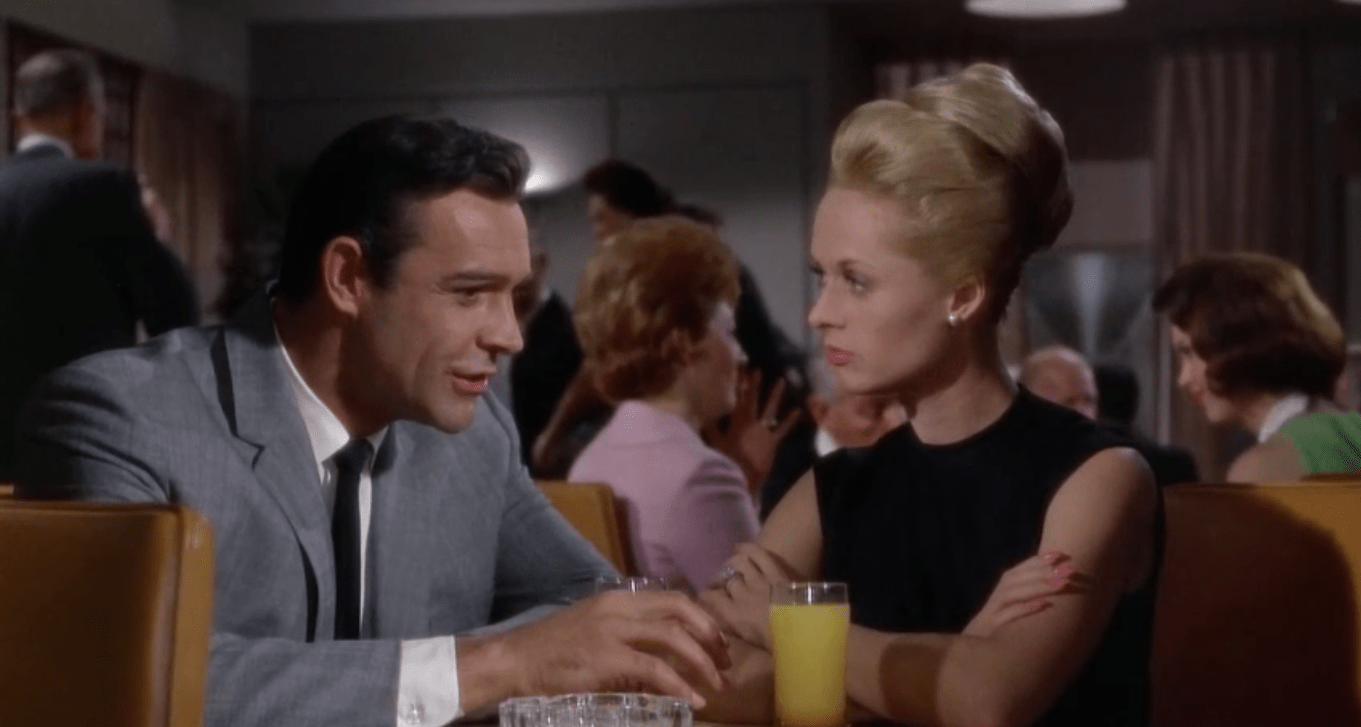
The one man who knows her secret is there too. His name is Mark Rutland (Sean Connery). He looks on rather bemusedly as she explains her backstory to her interviewer. Something about a deceased husband and leaving Pittsburgh behind for more demanding, interesting work. As Rutland watches her, it serves a kind of dual-purpose, giving rise to our conflict while also highlighting this kind of queasy sexism in the workplace. Where women are hired as objects and often viewed as such.

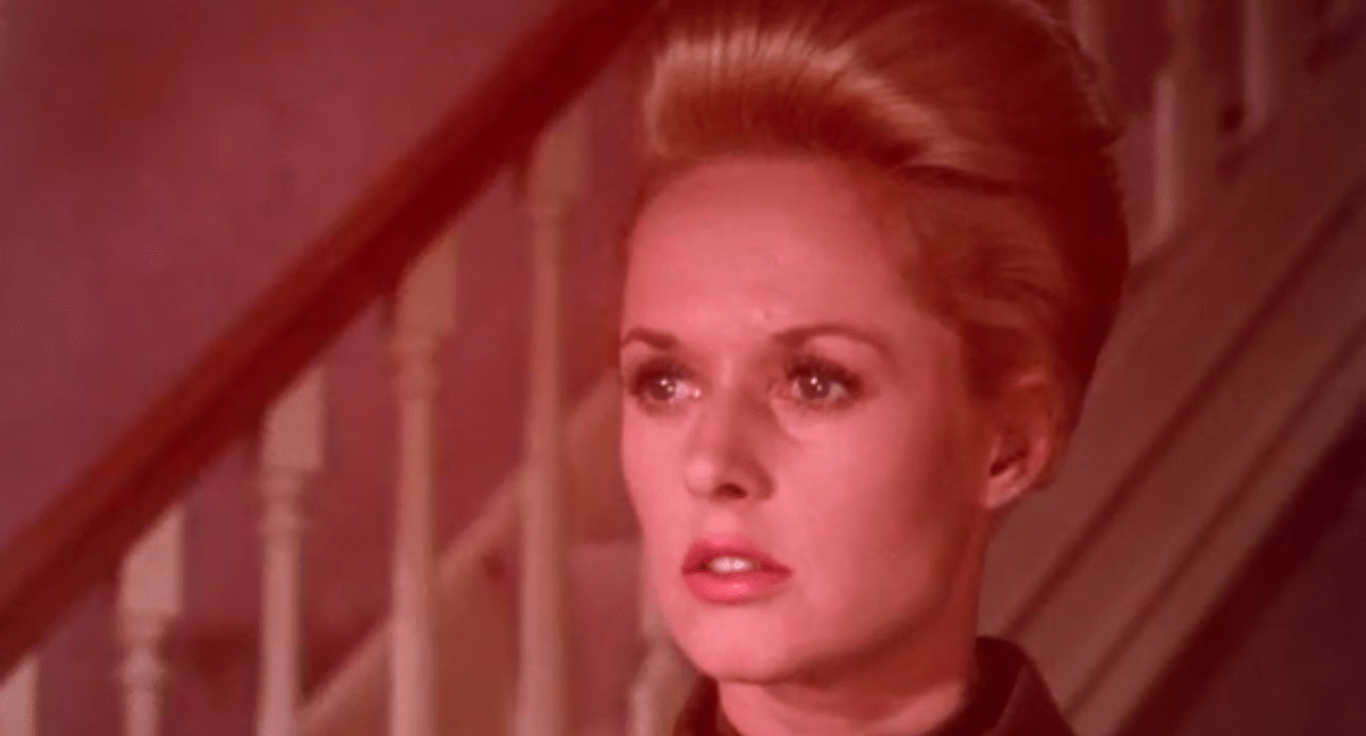
He knows and still hires her out of curiosity — is that the case? However, there’s something more — a kind of kleptomania — and Hitchcock funnels the entire movie through Marnie’s private obsessions. So as a secretary drones on about some HR forms, we are busy watching the office manager pull out his key and unlock the safe. We vicariously take on the obsessions of Marnie — caught in the same vortex thanks to Hitchcock’s camera — a camera that enters a fevered frenzy whenever she sees the color red. It’s akin to Jimmy Stewart’s Vertigo in how it totally usurps the picture in an instant.

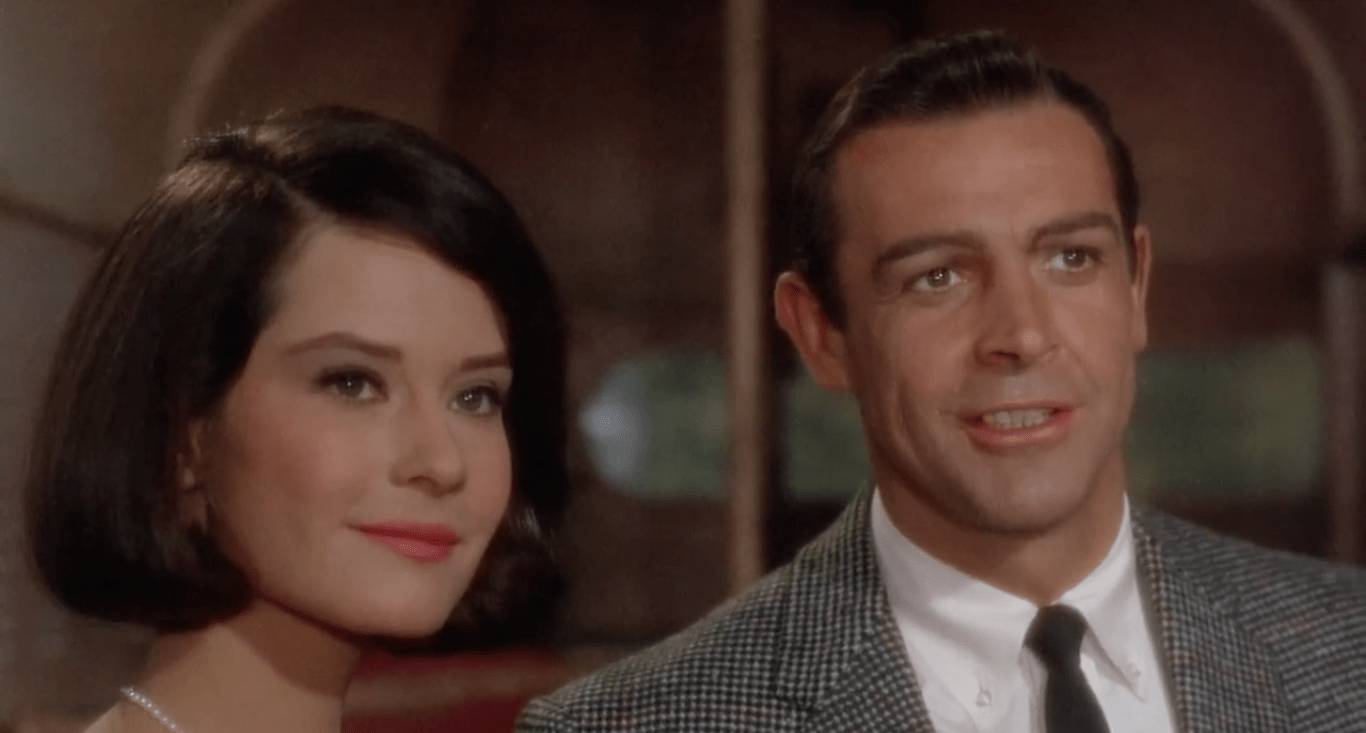
On a very different note, it’s always a pleasure to see Mariette Hartley, a personal favorite in TV reruns, and assuredly in Ride The High Country. But it is Diane Baker who might be the unsung hero of the movie and Hitchcock, if anything, sets her up as an integral figure to cement the film’s core drama. She is Marnie’s foil and ready to protect Mark even as she’s intent on winning him over.

But the relationship between Rutland and Ms. Edgar continues to vacillate, exemplified by very pointed snatches of dialogue. Take for instance, Rutland’s training in Zoological science or as he puts it “instinctual behavior.” He likens predators out on the Sahara to “the criminal class of the animal world,” and he’s as fascinated by Marnie as he is passionate about her.

They go to the races and then to see his father’s stables maintaining these implicit themes of husbandry and animalistic desires raging through Marnie’s core. She cannot help these impulses.

It’s true the film boasts some phenomenal wide shots: The first I’m thinking of is inside the stable before cutting to a close-up to the passionate embrace of our romantic leads. The second is an exercise in irony. Marnie is in the midst of her first burgle of the company safe. She snuck out of a bathroom stall after hours. Just around the partition, the night cleaning lady goes about her duties. To each her own.

For several minutes it is a silent movie. No music. I don’t think Hedren makes a sound. Because of course, Hitchcock is milking the moment only to magnify it seconds later. It reminds us how marvelous he was at punctuating the drama, lest his filmmaking ever be mistaken for realism.

Marnie continues in its duplicity as Rutland first accuses his employee of her theft and then comes right back around with the proposal of marriage. It drudges up the unseemly realities of sexual harassment and powerlessness as Marnie cries out about how she can’t bear to be handled by men. She doesn’t want to get married. It’s degrading. Even animal.

“You say no thanks to one of them and then bingo, you’re a candidate for the funny farm.” It breaks my heart even as I feel implicated in the issues. No, I wasn’t born then, but the indiscretions against women have not totally been expunged at least while men still have lust in their hearts. Hitch is part of the problem. I am part of the problem by any sin of omission or even passivity.

Before there was a mystery plot to hang its hat on in Vertigo or the money propelling Psycho. With Marnie, it hardly feels as if there’s a pretense to the often demented predilections of humanity. Husband and wife are “playing doctor” and free association with Marnie feeling as if she’s continually being needled by her spouse’s callous analysis. Is this love or torture?

diane baker and sean connery marnie

We mentioned Diane Baker before and it’s worth acknowledging her again. She is slightly impetuous and a bit impish — ready to go to war for her man. Hitchcock even gives her a line to mirror Norman Bates from Psycho as she offers observation on Marnie (A girl’s best friend is her mother). But she also eavesdrops because it’s this that allows her to know the film’s main secret and look to bring it to the surface.

The next sequence opens with that unmistakable Hitchcock high angle, at the party. It’s Notorious rehashed and yet instead of a key in the hand, it is the front door because through it will come a very important person: Someone who can implicate Marnie and unravel the stasis Mark has willingly corroborated for her. They must find a way to get out of this, to come to a mutual agreement, or else Marnie is sunk.

I must admit, this and the sense of suspense anticipated by the climax, are of the most intriguing since the psychology the final flashback relies upon feels too convenient. Maybe Hitchcock does not really care about any of this. It is a bit like Spellbound, but now it feels even more antiquated, whereas the moments leading up to the reveal of the trauma are contorted and alive, horrifying and convicting all at once.

Others could do it better, but I would be remiss not to mention the storyline of Hedren and Hitchcock, who harassed her all through the shoot. It’s an unsettling reminder of how he would control women and beyond that, how toxic masculinity has fueled our society and industries like Hollywood. It reveals the underlining brokenness in many of us that come out compulsively. It’s almost like we do what we do not want to do or we give ourselves over to them entirely. And what a nightmare that is.

Psychology cannot completely dispel our fears nor does it warrant a society and social spheres where men take advantage of women and where women feel fearful and scandalized. Forget his films. Hitchcock himself is emblematic of problematic fissures in society. That’s a great deal of what makes his film’s so disconcerting.

However, just as he tanked Tippi Hedren’s career, Hitchcock would never quite be the same. Not because of this mind you, unless there was some force of karma working against him I’m unaware of. Instead, the industry was changing and also the structures around him that he had to work with.

Torn Curtain and Topaz are passable films with glimpses of his cinematic eye, but they never amount to the same kind of intoxicating, bewitching drama we would see during his high point during the 1950s and early 60s. Of course, Frenzy was what some called a return to form, but it was, again, back in his native England so it’s obviously laced with a different flavor. His final film was in 1976 — Family Plot — and if it wasn’t evident already the industry had changed.

By then, he was a revered master but more of a relic than an up-and-coming auteur. No, Marnie feels like an inflection point as if it’s catching his very particular genius in a moment in time. It’s also a startling caveat to the career of one of the most lauded directors Hollywood has ever known. We cannot fully speak about one without reflecting on the other.

3.5/5 Stars

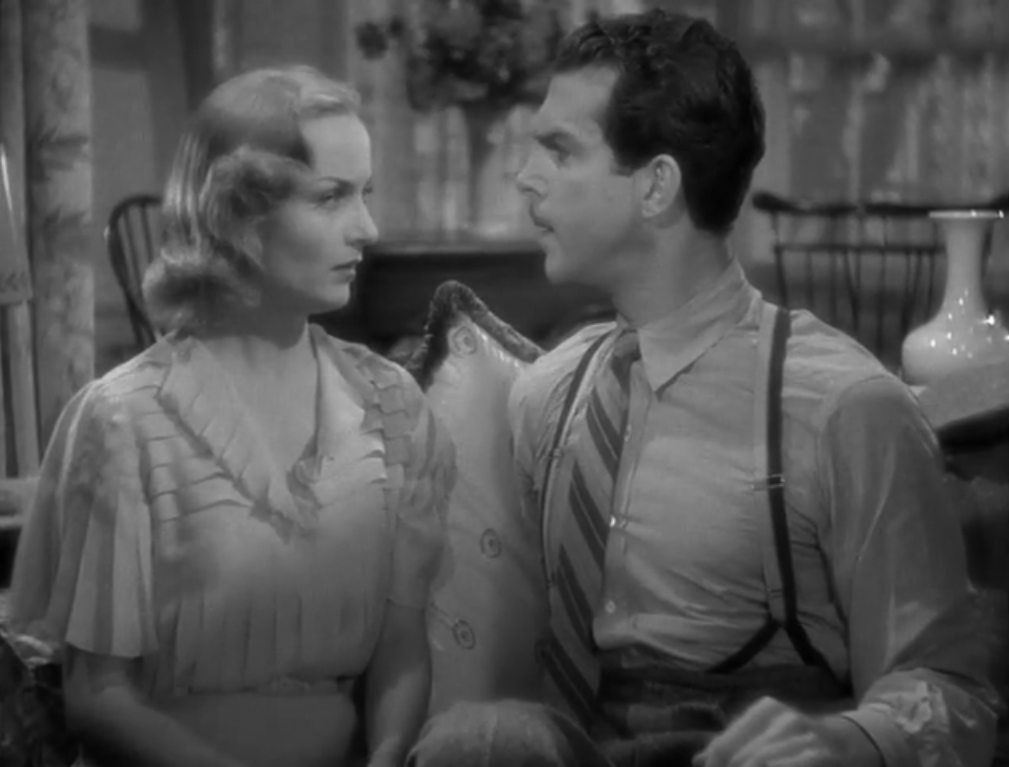
True Confession (1937) Carole Lombard, Fibber Extraordinaire

true confession

“Must we submit to this three-ringed circus in the guise of drama?” – Porter Hall

Carole Lombard is a comedienne of unequivocal talents. My guess is that it lies in that extra special dial she had. Yes, she was a Hollywood glamour girl and stylist of the 1930s — married to the King of Hollywood himself — but she also was totally at ease being absurdly silly. She would become frenzied and unhinged in a manner that feels rather groundbreaking for her generation. She was a very special performer.

True Confession deserves to be acknowledged as a truly satisfying screwball for how it uses Lombard’s talents. Because, you see, her Helen Bartlett is a woman plagued by tall tales. Her fibs take on outrageous proportions. She’s the girl who cries wolf. Quite literally, tongue in cheek. We see it in full effect early on where she tells a string of increasingly wacky fibs to keep a man from impounding her typewriter.

However, the movie wouldn’t stand up if not for her husband. Ken Bartlett (Fred MacMurray) is tirelessly honest which, in the lawyering racket, isn’t always the most lucrative. He won’t represent anyone who’s guilty and that includes the referral of their local butcher who swiped some hams.

But he has that aching desire to exert his manhood and be the sole breadwinner of the house. He wouldn’t dream of having his wife work. No, she spends her days plinking away at the typewriter trying to finish her latest story. She’s got the personality but perhaps not the prose to be a successful writer.

So she conspires with her best friend Daisy (Una Merkel) over what she might do. Her plan is to take a job as a secretary. What of it that she’s never done shorthand or that her husband will have a fit? These are small potatoes and so she takes the job. Unfortunately, sleazy Mr. Krayler is a serial philanderer and as she skips and back peddles to avoid his advances, Helen realizes she has to get out of the secretarial racket.

This might very well be the end of it. But True Confession is forever altered by what happens next. Depending on the outcome it would end up a mystery drama. Thankfully for us, it remains a comedy.

Because she returns to the office to pick up a forgotten handbag only to find the dead weight of Krayler sprawled on the carpet. Soon the police are on the scene — their bald, hoodwinked leader (Edgar Kennedy) suspects her instantly. After all, she has motive. Soon they’ve drummed up a whole story supposin’ how she fled the crime scene.

But we know she is innocent so if the wheels of justice are actually just, there shouldn’t be a problem. A happy ending is easy enough to foresee. Instead, proceedings get strung out. Helen ends in prison suspected of murder and there’s an ensuing trial in front of a judge. Her husband is going to defend her.

Here’s the real screwball wrinkle. Wait for it. She decides to plead guilty. It’s the biggest lie she’s ever told, but if it pays off, then her hubby will be the talk of the town in the courts with a fledgling career to boot. She wants to give him his biggest stage to prove his acumen even if she has to risk perjury to do it. If it doesn’t work, well, the movie never really makes us consider the alternative.

We’ve alluded to the majority of the players, but one would be remiss not to mention two more. Porter Hall is one of the mainstays of Classic Hollywood entertainment and here he turns in a fine performance as a bellicose prosecutor on the prowl.

Then, who can forget John Barrymore hitting the eccentric heights of his career (and also the skids)? Because “The Great Profile” and titan of the great acting family, was now more of a caricature.

As Charley Jasper, he’s giggling maniacally with his ready collection of balloons, his hair rather unkempt, like a mad professor in the courtroom. Why is he here anyway? Why does the story need him? It seems quite thin. I would never dare spoil this little untouched secret.

Instead, the floorshow takes center stage. Mr. and Mrs. Barlett reenact events for the courtroom crowd in a highly irregular manner, but there is something giddy and glib watching Lombard and Macmurray break into playacting in the middle of the trial. It won’t let us forget for a moment this is a comedy, and it stays true to its roots.

I have to admit there’s an unsettling irony in the comedy’s main conceit: a white woman fighting to plead not guilty for a murder that everyone assumes she committed (though she hasn’t). Of course, there’s a historical precedent in antiquity for a woman’s testimony would not be taken.

Even watching something recently like Just Mercy, a different kind of courtroom drama in tone and content, it’s a reminder of how many people, whether black or marginalized in some way, find themselves in much the same predicament, and in their cases, there’s rarely a screwball plotline to conveniently spring them out of their misfortunes.

Social critiques aside, True Confessions is an underrated screwball gem, and it does itself a service thanks to Lombard and Kennedy, Merkel, and Barrymore. However, in our current context, as we seek a renewed sense of justice in the civil space, it must also give us pause.

3.5/5 Stars

Notes: This post was originally written in June 2020