
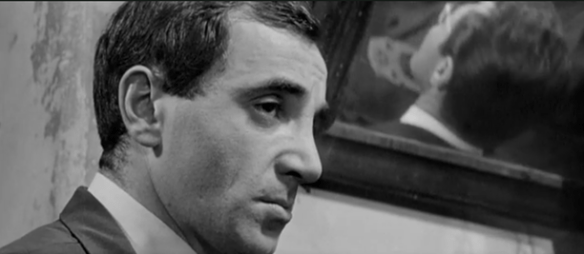
Shoot The Piano Player begins thrillingly with a car chase. The man being pursued flees down a street corner, his assailants disappear into the night, and he subsequently bounces off a streetlight like an idiot. The man who brings him back up on his feet proceeds to regale him with stories about how he met his wife before walking off, never to be seen again.
In fact, none of these characters are our main protagonists but it perfectly encapsulates the glories of Francois Truffaut’s stroke of genius in this early emblematic film of the New Wave. It’s a petty crime story with a comical streak. The two tough guys aren’t tough guys at all but with their hats and pipes they look like a pair of Monsieur Hulot doppelgangers or something. That is until they pull out a gun. But even then, they’re hardly thugs.
Listed out as simple plot summary, it has certain flourishes fit for a Hitchcock thriller. A man on the run. Lurking criminals, kidnapping, murder, romance, humor, but there’s no doubt, even with this being only his second feature, that this is very much Truffaut.
It’s all a wonderful front for Truffaut’s own explorations. And the bottom line is not simply homage to film-noir and the Master of Suspense but more broadly all his fascinations of men, women, love, and everything that intrigues him about putting a mirror up to humanity–cinema itself. However, as the director long suggested, he preferred film to reality because he could orchestrate it, make it to his liking, with touches of humor and tragedy.
This pseudo-storyline starts with Charlie who placidly knocks out honky tonk for the public’s enjoyment. It’s hard to know if he’s content or simply biding his time. The latter seems more likely. Except when his big brother Chico busts into the joint with a couple of hoods on his tail, in some small way it brings everything rushing back on Charlie.
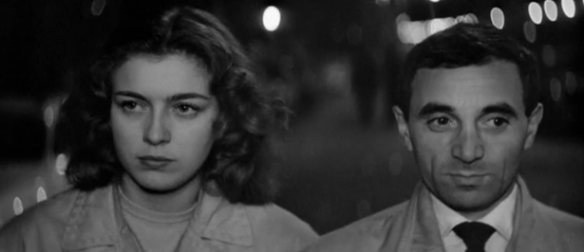
It’s not much but the ensuing events have him wrapped up in his own bit of intrigue as he navigates his romantic inclinations and every other thing that is thrown his way. A Hollywood reference point would certainly be Out of the Past and similarly sinks back into a flashback. But here it is used in a way that’s completely jarring, hardly convenient for those seeking comprehension. And Truffaut’s character utilizes voiceover as well but this is not the laconic, cynical speak of film-noir, instead the nervous inner monologue of a timid piano player.
His sometime bedmate and the housekeeper for his kid brother is Clarisse. Meanwhile, the waitress at his work Lena has his heart going pitter patter, not quite a Hitchcock blonde but a woman who is willing to get involved with his drama. But there was also another important woman in Charlie’s life: His wife.
It’s from these three women in their relationships with Charlie and all the other male characters that some very blatant realities become evident. There’s a conscious separation of the woman into parts whether it is her heart or her body. In one sense, the aforementioned women are strong characters. Meanwhile, the men are all fairly passive, their main outlets include objectifying, ogling, even ridiculing their female counterparts.
At least Charlie’s candid about it but he’s still part of the problem. In many ways, in looking at the women as the tragic figures often used by men as a cinematic object, Truffaut could very easily be wrestling with his own issues of love and romance. What does that actually mean? What causes people to marry? What causes them to love and fall out of love, break up and come back together or even commit themselves to death?
All that can be found within this film although it is obviously veiled by scenes masquerading as crime and comedy. The crowning joke of them all is really a kind of tragedy. Amid the strangest turn of events, Charlie or Edouard (as we now know he is called) is resigned to play behind his piano once more.
The final moments at the snowcapped cabin are madcap and still almost surreal with some stunning sequences captured vividly by iconic New Wave cinematographer Raoul Coutard. In breaking so cleanly with his initial effort of The 400 Blows, Truffaut simultaneously positioned himself as a very special filmmaker. He’s beholden to drama, comedy, crime, and romance, but most of all, he’s beholden to the magic of the silver screen.
4.5/5 Stars
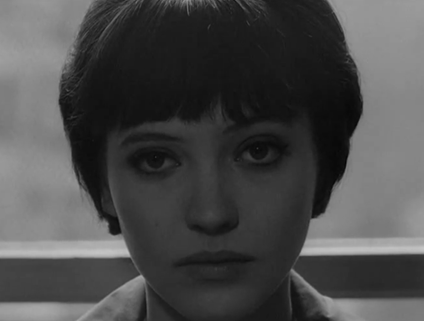 The opening credits of Vivre sa Vie commence with the opening note “dedicated to B-movies” and indeed many of Jean-Luc Godard’s best films could make the same claim. They’re smalltime stories about little people living rather pathetic lives if you wish to be brutally honest. This isn’t Hollywood.
 There’s a moment in Kelly Fremon Craig’s The Edge of Seventeen where Nadine (Hailee Steinfeld) suffers the ultimate humiliation third wheeling with her older brother Darian (Blake Jenner) and her (former) best friend Krista (Haley Lu Richardson). Needless to say, the evening is less than stellar but it gets worse after Nadine feels like she’s been totally betrayed. She’s been hating her brother recently and her best friend is dead to her now. The fact that she sets up an ultimatum doesn’t make things any better.
 It’s a joy to watch Agnes Varda dance. Or, more precisely, it’s a joy to watch her camera dance. Because that’s exactly what it does. Her film opens in color, catching our attention, vibrant and alive as the credits roll and a young woman (Corinne Marchand) gets her fortune read by an old lady. She’s worried about her fate. We can gather that much and this is her way of coping. Superstition and tarot cards but she’s trying and the results are not quite to her fancy.
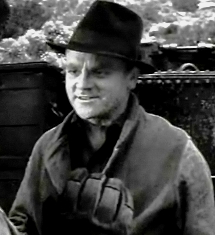 White Heat burns like hot coals even today as the epitome of incendiary cinema. It’s a gangster picture from master Warner Bros. craftsman Raoul Walsh that’s volatile and intriguing, highlighted by the always fiery James Cagney as a crazed man-child with a mom complex.
 In his opening introduction, Kumail (
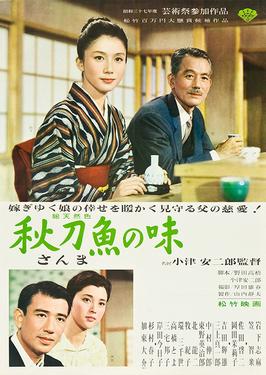 There’s something overwhelmingly soothing about Ozu, simultaneously slowing my pulse and calming my nerves. Yes, An Autumn Afternoon stands as his final film. Yes, he would sadly pass away the following year. But there’s a comfort to watching his films unfold — even his last one. The drama is everyday and somehow disarming and pleasant. We often take for granted that Ozu was not planning to end here. This was not supposed to be his last film. It just happened that way.
 Whaddya hear, whaddya say ~ Jimmy Cagney as Rocky Sullivan
 John Garfield was never the most dashing of leading men but nevertheless, he was always thoroughly compelling as ambitious working class stiffs during the 1940s. He had a straightforward tenacity about him like he had to fight his way to the top. At the same time likable and destined for trouble right out of the gates. You can cheer for him and still rue the decisions that he makes. That’s what makes his foray as boxing champ Charlie Davis all the more believable. His aspirations are of a very real nature and they give his character a genuine makeup.
 Father hear my prayer. Forgive him as you have forgiven all your children who have sinned. Don’t turn your face from him. Bring him, at last, to rest in your peace which he could never have found here. ~ Ida Lupino as Mary Malden
