

I remember the first time seeing E.T. and enjoying it immensely, though it never floored me. I felt the same thing this time around for no particularly justifiable reason. Good but, in my estimation, not great, whatever that means because those terms are equally murky. Still, the fact that there had been little change in some ways made me feel uneasy. What was I not seeing?
But then thinking about it more I latched on to this idea that made me appreciate E.T. far more than I had before. Like an epiphany, it came to me what this film really is. It’s a childlike fantasy full of personal notes from a director who just happens to be Steven Spielberg. That’s not much of a discovery, but the implications are great.
The story of young Elliott (Henry Thomas) and his chance encounter and befriending of E.T. is rather like a boy and his dog story. Except both characters are going through almost parallel situations and Spielberg takes it to the literal extreme. They actually feel each other in a sense. They are perfectly empathetic towards one another. With E.T. the motives are most obvious. His ultimate goal is to “phone home” so that he might be reunited with those that he calls family. For Elliott, it’s also about home. His home life is a bit fragmented with a father who is vaguely mentioned to be in Mexico (although that’s probably not the case) and siblings who quarrel like siblings usually do.
However, it also struck me how this family really does care about each other. Little Gerty –a beyond memorable Drew Barrymore–is the quintessential 5-year-old sister. First frightened of, then intrigued by and finally faithfully devoted to E.T. And the older brother Michael teases his siblings as has always been the case since the beginning of time but he too invests himself in this adventure. Certainly, it’s out of charity towards this visitor from outer space but it’s undoubtedly also an extension of the affection he has for his little brother.
It’s also peculiar that almost all the secondary characters are very ill-defined and the antagonistic forces attempting to impede E.T. and Elliott are even vaguer. At first, this felt wrong in some regards– a potential sign of poor storytelling. But once more I was brought back to the unmistakable idea that this film really is a boyhood dreamscape. This is Elliott’s story and if it’s Elliott’s story, it’s even more so Spielberg’s own meditation on adolescence and his own childhood. The narrative is even said to have been inspired by his own imaginary friend as a child and his own dealings with a split household. And there’s also a hint of the Wizard of Oz here. There’s no place like home.
Thus, what becomes undeniably important is this dynamic relationship between this boy and his newfound friend who just happens to be from outer space. It’s quite simple. It’s childlike really. And that is and forever will be the beauty and allure that comes from this film. Families can watch it. Kids can marvel at it. Parents can soak it up. Because just as it is about a family–dysfunctional as they may be in their suburban life–it is also for families.
There’s the sheer mayhem of the shrimpy kid grabbing a kiss from the pretty girl in class as hordes of frogs hop by. The iconic magic of Elliott and his friends soaring through the sky on their bicycles, John Williams’ score dancing majestically in the background again and again. Even the fact that this extra-terrestrial goes from death to life is strikingly analogous to the archetypal biblical narrative that permeates our culture. It’s all spectacularly remarkable but rather than be skeptical we acknowledge it with almost wide-eyed wonderment, accepting it, accepting these people that we meet. And watching E.T. ascend back into the atmosphere with true awe.
I find it fascinating that only a few years earlier Spielberg was inspired to put Francois Truffaut in Close Encounters. In E.T. I see his closest approximation of the French director’s own thematic elements. To put it in terms of homage. E.T. is Spielberg’s version of 400 Blows, granted featuring space aliens, Star Wars, cultural references and so on, but they’re not all that different. They really are about the same core issues. It takes until after 400 Blows for Antoine Doinel to find love and intimate relationship with his wife. For Elliot, it comes with family, his brother and sister, and mother, and of course, with E.T. This is what has a lasting impact on Elliott and I could guess, with Steven Spielberg as well. But the audience gets to be a part of it too, an equally important piece in this trinity.
4.5/5 Stars
 “He will be your true Christian: ready to turn the other cheek, ready to be crucified rather than crucify” ~ Minister of The Interior
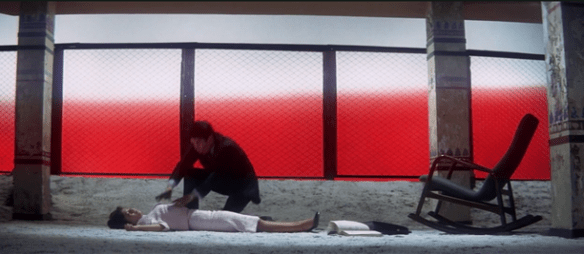
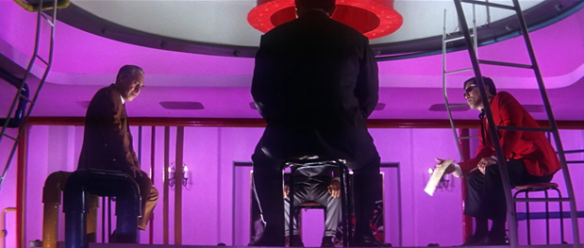
 Despite being dated and marred by the imprint of imperialism, this initial entry of the well-remembered Tarzan serial of the 1930s and 4os, based on the works of Edgar Rice Boroughs, is a surprisingly gripping pre-code tale of perilous adventure.
 Furthermore, Johnny Weissmuller is not even the first Tarzan (purportedly the sixth incarnation) but he outshines all his predecessors who have been lost to history. It helped that he remains one of the most iconic Olympians and American swimmers of the 20th century, winning 5 Gold Medals. And he shows his prowess not only swinging from the treetops but in his true element, gliding through the water.
 “There live not three good men unhanged in England. And one of them is fat and grows old.”
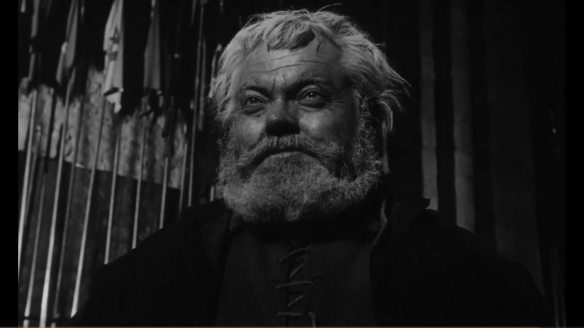 The triangle with Prince Hal (Keith Baxter) vying for the affection of his father King Henry IV (John Gielgud), while simultaneously holding onto his relationship with Falstaff is an integral element of what this film is digging around at. But there’s so much more there for eager eyes.
 And it’s only one high point. Aside from Welles’s towering performance, Jeanne Moreau stands out in her integral role as Doll Tearsheet, the aged knight’s bipolar lover who clings to him faithfully. The cast is rounded out by other notable individuals like John Gielgud, Margaret Rutherford, and Fernando Rey.
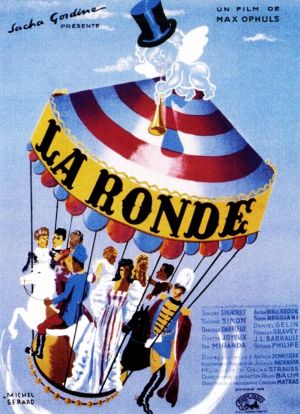 If you know anything about director Max Ophuls you might realize his preoccupation with the cycling of time and storyline, even in visual terms. He initiates La Ronde with a lengthy opening shot that, of course, involves stairs (one of his trademarks), and the introduction of our narrative by a man who sees the world “in the round.” He brings our story to its proceedings, introducing us to the Vienna of 1900. It’s the age of the waltz and love is in the air — making its rounds. It’s meta in nature and a bit pretentious but do we mind this jaunt? Hardly.
 The original title in Italian is Ladri di biclette and I’ve seen it translated different ways namely Bicycle Thieves or The Bicycle Thief. Personally, the latter seems more powerful because it develops the ambiguity of the film right in the title. It’s only until later when all the implications truly sink in.
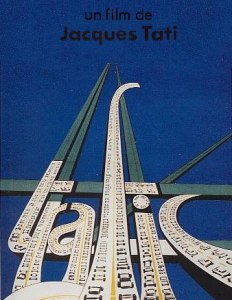 Watching films with French treasure Mr. Hulot (Jacques Tati) is a wonderful experience because, in some respects, it feels like he brings out the child in me. And if history is any indication — I’m not the only one — others feel this sensation too.
 “You can’t just do anything at all and then say ‘forgive me!’ You haven’t changed a bit.” ~ Colette
 Antoine Doinel is a character who thinks only in the cinematic and it is true that he often functions in a bit of a faux-reality. He seems normal but never quite is. He seems charismatic but we are never won over by him completely. Still, we watch the unfoldings of his story rather attentively.
 4 Star Films