
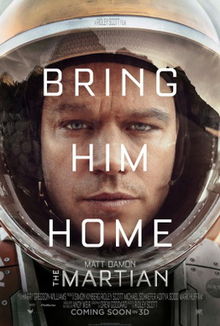
 The Martian is not the film you first expect. It’s a space thriller. It has tense moments assuredly, but it also has an astute sense of humor that pulses through the film as its lifeblood. It makes Ridley Scott’s latest endeavor, based on the novel by Andy Weir, all the more palatable because it lends a fresh face to space exploration.
I’m not sure if I quite buy Matt Damon as a scientifically savvy astronaut and world-class botanist, but he makes it go down easy with a mix of resourcefulness and charm. Despite the casting of Matt Damon and Jessica Chastain, it soon becomes obvious that this is no Interstellar and that’s a good thing. Both films fly high on their own merit and both work due to their unique human component.
Our narrative opens on the metallic surface of mars where the crew of Ares III is going through their normal daily regimen as part of their expedition for NASA. As with any film of this nature, there must be a malfunction and a subsequent wrench in the plans. Initially, everything is secure enough, but a wind storm hits with a vengeance. In an instant team member Mark Watney (Damon) is pummeled by debris that sends him flying. His mission commander Lewis (Chastain) makes a last-ditch effort to search for him, but she must reluctantly call for an evacuation of her crew. They somberly begin their journey back to earth as NASA head Teddy Sanders (Jeff Daniels) prepares to feed the news to the press.
Little do they know what is going on back on the red planet. Watney is alive and resolves to stay that way by taking stock of his resources, maintaining a video log, and beginning the arduous process of growing potatoes on Mars. It’s all part of a bigger picture, though, because he knows Ares will be returning on another mission. His time increments are denoted as Sols and he knows he has to stretch out his resources for well over 500 Sols if he’s ever to get back home. It’s going to be close.
Once they get over the initial shock, NASA’s mission control, led by Sanders and mission director Vincent Kapoor (Chiwetel Ejiofor), look to do all they can to get to Watney in time. There are tough decisions ahead of them as they figure out when to notify Watney’s colleagues about his status, while also building up communication with the isolated astronaut so they can devise the best plan to reach him. All cylinders are powered up with the best and the brightest in NASA attempting to devise the most efficient solution, but everything comes down to some crucial tactical moves.
Watney on his part, maintains his good humor, grows sick of the ship’s vast catalog of disco tunes, and continues to cultivate his food stock, while also doing some creative problem-solving in order to prepare to rendezvous with the next mission. But time in this scenario is an evil bedfellow, and following the destruction of Watney’s cash crop and the annihilation of a NASA rocket carrying provisions, it looks like dire straits ahead. That’s when it comes down to a brainiac of an astrodynamicist (Donald Glover) and the crew of the Aries led by Commander Lewis to salvage the rescue operation.
By now it seems almost second nature for Ridley Scott to direct films in space and once again he looks perfectly at home in the vast expanses of the Milky Way. The trick, like any respected director, he brings the story down to earth. Back to the people who make up the story. And truthfully, the casting is ceaselessly interesting and Matt Damon might just be the most unsurprising pick of all. But going down the line we have the likes of Jeff Daniels, Kristen Wiig, and Donald Glover. They each hold varying degrees of importance at different junctures in the narrative, but each one of them comes from a comic background. Thus, it becomes an interesting change in environment, because we get to see them function in a different type of capacity altogether. Otherwise, the film has a fun disco-filled, David Bowie-accented, ABBA-infused soundtrack that feels perfectly at odds with outer space.
The Martian goes out with a wonderfully fitting denouement giving a nod to all its cast members, continuing the ongoing exploration of space, and leaving us with some quintessential O’Jays. Who would have thought a film such as this would have ended with “Love Train” and “I Will Survive” back to back? It’s pretty fantastic. Mars is cool too.
4/5 Stars
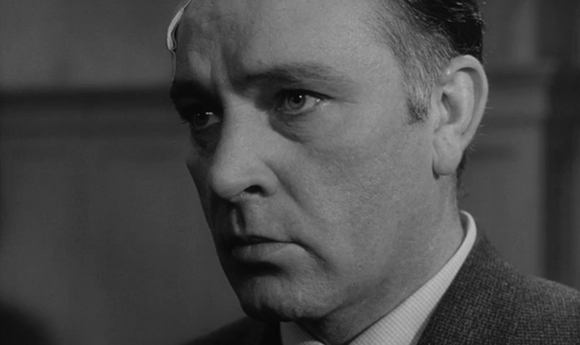 Adapted from the John le Carré novel, this is a black & white spy thriller that personifies cold war paranoia in ways that Bond never could. Richard Burton is an operative working in Berlin before being demoted to a librarian job. It looks like our narrative is heading in a direction hardly fit for a spy film. Its intentions are not so obvious at first, and it keeps its audience working for the rest of the film.
 We are brought into the world of Lew Harper with a cold open full of character. There he is.
  “If you’ve ever wondered where your dreams come from, look around, this is where they’re made.” – Ben Kingsley as George Melies
 Aside from the inspector, the station is full of a wide array of charming individuals who generally exhibit temperaments far more personable. However, the local toy shop owner (Ben Kingsley) is rather an odd fellow, who keeps to himself, but Hugo is wrong to cross him. He’s not a bad man, but he makes the boy work for all the things he has purloined.
 Hugo is a beautifully magical melding of the old with the new –- the mechanical and the visceral. Extravagant colors make Scorsese’s canvas pop. It works together like clockwork.
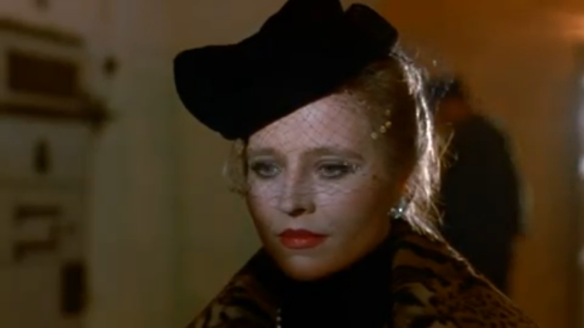 The Marriage of Maria Braun opens with a bang and a thud, literally, as bombs rain down on Germany in the waning hours of WWII. It’s perhaps the most chaotic wedding ceremony ever put to celluloid. And the story ends in an equally theatrical fashion.
 It’s hardly Charles Dickens, but still, Hard Times is a real tooth and claw street brawler. We have Charles Bronson as our token taciturn drifter, tough and down on his luck during the Depression. James Coburn is Speed, a fast-talking promoter looking for a quick buck. Walter Hill’s film may not be pretty to look at, but boy is it a lot of fun! Everyone’s favorite supporting scene stealer Strother Martin makes an appearance as a sometime doctor who dropped out of med school. These three men are at the center of an evolving partnership that comes into being on the streets of New Orleans, that hopping town of jazz, juke joints, and bare-knuckle boxing. The latter is the most important for the men aforementioned because, with Speed as his manager and Poe as his ringside doc, Chaney looks to rule the ocean front with his grit and tenacity.
 Andrzej Wajda’s Man of Marble holds a meta quality that still somehow feels radically different than Godard or Truffaut’s turns in Contempt and Day for Night. It attempts to channel a younger point of view — that of an ambitious student — with an overtly political agenda. Agnieszka is an independent, fiery individual intent on making her thesis the way she sees fit. She’s prepared to go digging around in uncharted territory or at least in territory that has been off limits for a long time. That understandably unnerves her adviser and still, she forges on.
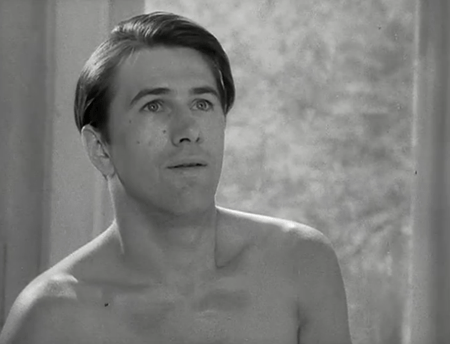 Everywhere she goes Agnieszka drags along her crew who utilize handheld cameras and wide-angle lenses, at her behest, just like American films. It becomes obvious that Birkut was hardly a political figure, instead contenting himself by using his hands to lay breaks and lay them well. He takes pleasure in his work with a big sloppy grin almost always plastered on his face. It was people like him who made Nowa Huta into the great city of industry that it was, and he became an emblem of that. The party monumentalized him and he became the man of marble to be lauded by all.
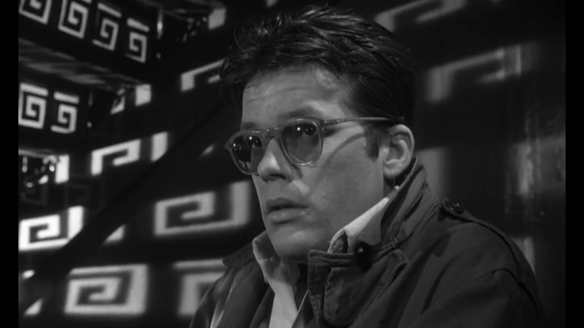 We’re used to getting our hands dirty in the thick of World War II, whether it is in the European theater or the Pacific, but very rarely do we consider the consequences that come in the wake of such an earth-shattering event. Things do not end just like that. There must be periods of rebuilding and rehabilitation. There is unrest and upheaval as the world continues to groan in response.
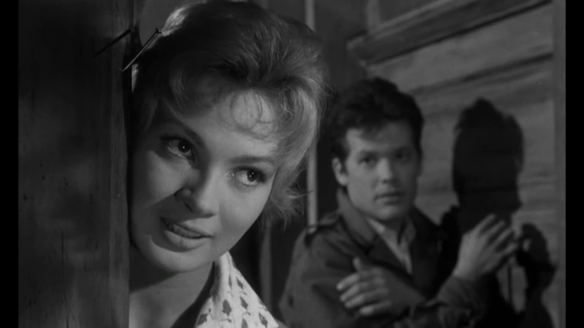 There are love scenes that are quiet, subdued, and truly intimate. In fact, it feels rather like Hiroshima Mon Amour where the camera lingers so closely on two figures in such close proximity. There does not have to be great movement or dramatic interludes because having two people next to each other should be enough. The historical context in itself seems to be enough. For that film, it meant Japan post-1945. For this one, it’s Poland after the clouds of war have lifted.
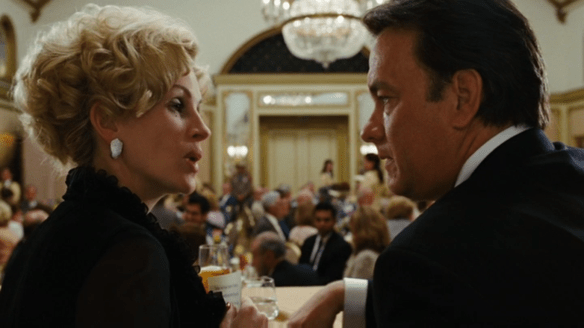 With Aaron Sorkin’s script as a road map, Charlie Wilson is a character that Mike Nichols can truly have fun with. You can easily see him getting an undue amount of delight in this man who was able to do such a momentous thing while simultaneously walking on the wild side. It had to be a good story to warrant the director’s cinematic swan song.
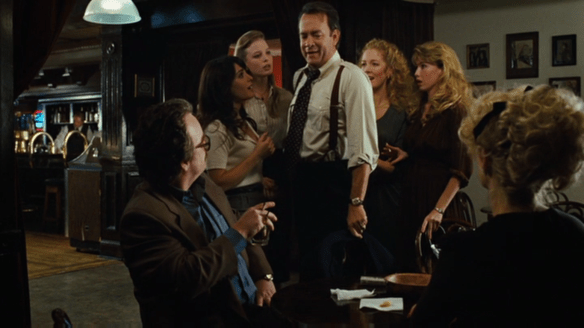 In the opening moments, it becomes obvious that Charlie Wilson is not so much an easily corruptible representative as he is a sexed-up man who enjoys charming female company. He’s “Good Time Charlie” for good reason. He surrounds himself with pretty young things, doesn’t mind playing around a bit, and even has a cocaine charge hanging over him after a potentially objectionable night in Vegas. In fact, the attorney looking into his case is, interestingly enough, one Rudy Giuliani.
 Peter Lorre has a face that will forever live in cinematic infamy, and it started with M. In truth, Fritz Lang’s drama involving a serial killer feels fresh and engaging even after all these years, maybe because humanity hasn’t changed all that much. We still murder, we still kill, we still seek justice, we still give into our base desires, and there’s not a perfect person among of us. Each one of us has our faults — our own personal downfalls.
 4 Star Films