Columbus (2017)

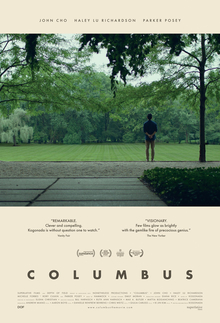
ColumbusPosterI wrote an article quite a few years back where I considered what it would be like if and when an Asian made the leap toward a true leading role in Hollywood. The performers I put up for consideration were John Cho and Ken Jeong. Back then I thought they deserved a platform to go beyond the Star Trek and The Hangover franchises.

While Columbus was not exactly the picture I was considering at the time, it’s more than I could have hoped for. I finally got my wish in this moving character study looking for pulchritude in the midst of life’s incessant turbulence. It’s an unassuming even meandering story. A version of it could exist in real life and that’s a glimmer of the allure.

The narrative plants us in Columbus, Indiana (not Ohio), a Mecca of modernist architecture, and not much else. A Korean-American translator named Jin (Cho) comes back home from Korea to call on his estranged father who is currently bedridden in a coma. It’s difficult to discern what is more tragic: That he is dying or that his son could care less.

Then there’s Casey (Haley Lu Richardson) a young college-aged woman who has foregone the typical trajectory of a person her age with her intelligence to stay behind with her mom, a recovering addict with a serial poor choice in men. While her mother tries to keep a menial job, Casey all but cares for her, spending her days working at the local library and the nights preparing their meals.

The proposed dynamic is obvious but nevertheless satiating when it comes to fruition. Where two people who seem so diametrically opposed in their life stage and social circles somehow form an immense bond in a world so often hampered by superficial, surface-level interaction.

In this facet alone, John Cho, a man waiting so long for such a time as this, has confirmed what many of us have long known. He deserves to anchor a film and Columbus proves he is more than up to the task. While relative newcomer Richardson (Edge of Seventeen) provides him a fascinating talking partner and friend who deals in terms that are simultaneously candid and profound.

Especially in the film’s opening moments, there is a brazenness to Kogonada’s staging and often stationary camera, because it creates this so perfectly symmetrical, oftentimes cavernous space. It’s the height of art and overtly so. In such moments where a color pops in a composition so obviously or he dares to linger on an immaculately staged frame, I see the touches of Ozu. Whether this was done consciously or not is hardly up for contention. It’s too close to be mere coincidence.

The framing of shots. How doorways are used as an entry point for seeing an entire sequence. The fearlessness in using what other people would deem establishing shots to tell a story through the building of an environment in front of us.

It strikes me that often shot length corresponds with the confidence a filmmaker seems to put in their work. Because if you constantly splice and dice every second or two there’s no precision necessary. It will go all but unnoticed on the cutting room floor but to be brave enough to put a sequence up to scrutiny for seconds on end — sometimes even achingly so — it’s something that has become a forgotten practice.

Where it’s alright to linger and watch faces and to catch the nuances of reactions rather than a constant barrage of over-articulated actions and histrionics. Sure, we have a few of those moments here that feel like they are the rhythms of a film drama trying too hard to be a version of reality. The character Jin even remarking in one needlessly self-reflexive moment, “This isn’t a movie.”

Whereas Lost in Translation was built around a city full of energy and cultural clout in Tokyo, with its bright lights and cutting-edge society, where there’s so much to do and a lot of stimuli, Columbus is the antithesis of this.

In fact, an issue might be that it tries to derive so many of its conclusions not through actions but the mining of personal struggles and familial strife. Those are vital areas and yet in the same sense, it’s when the film tries to unwind this exposition we feel like we are, indeed, watching a movie. Still, when it intentionally digs into conversation and moments and feelings, it’s done with tact and an undisputed transparency that’s refreshing even in its heightened realism.

Each character has their alternative foils casting a light into their lives. Certainly, they have each other and they have their parents, who have no doubt made them who they are, while also influencing the direction of their lives. But when we look at Jin there’s Eleanor (Parker Posey), his father’s assistant, and though she’s married now, Jin’s long harbored feelings for her since they first met.

Meanwhile, Casey’s coworker (Rory Culkin) is her continuous companion in the vast hall of the library they work at. He is a doctoral student serving as both a friend and someone to assist her in considering her future endeavors. But there’s no doubting he likes her even as she casually dodges his well-meaning advances.

But Columbus is also bathed in a Midwest malaise. Those terms I put together rather tentatively. In fact maybe like Lost in Translation before it, this is less about the location and more about the people who find their paths crossing. I think this might be it.

Richardson appeals to us because there’s something so chill about her. She ambles through life like one of those people who doesn’t take things too seriously, at least on the surface, because you can easily imagine if she didn’t manage to go with the flow her hardships might tear her apart limb by limb. In fact, they almost do.

But I think I only recall one character who ever had the same sense of wonderment and affection for something like the architecture in Columbus. It came in another artistically-minded and entrancing movie, Museum Hours, where the bright-eyed security guard watches over the art in his stead with the same degree of relish. He loves being surrounded by such sights.

Yes, she says most people could care less about these relics, and yet that’s not everyone. She rattles off facts like a seasoned tour guide but that’s not what does it for her. It’s the memories elicited from certain places. It’s the feelings. The undeniable monuments of magnificence found in her humble corner of the world.

There’s a mood wafting over the film’s canvas that can either be interpreted as melancholy or serenity. Because beautiful things often manage to raise our spirits while also burrowing into our distinct places of hurt. That’s how we manage to cope and ultimately come to terms with them.

So Columbus is a picture coming like a whisper, looking austere and aloof, but rip away the walls, the exteriors of some phenomenal architectural marvels, and you will come to find a beating heart that is well worth its weight. No doubt this picture will be glossed over by many. But that makes its discovery all the sweeter.

4/5 Stars

Review: Gilda (1946)

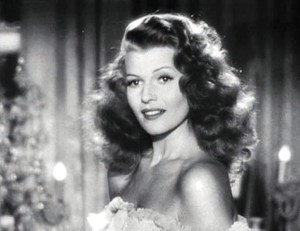
Gilda_trailer_hayworth1If you’re worried about Johnny Farrell, don’t be. I hate him~Gilda
And he hates you. That’s very apparent. But hate can be a very exciting emotion. Very exciting. Haven’t you noticed that?…There’s a heat in it that one can feel. Didn’t you feel it tonight? ~Ballin

Gilda became synonymous with Rita Hayworth and for good reason. She was the embodiment of so many of the things found desirable by many men from a certain age. Frisky. Sultry. Beguiling. Teasing men, leading them on, and leaving them. Hating them as much as she loves them. That’s where the passion derives from — very volatile beginnings.

It’s true that Hayworth’s playfully ravishing seductress was forever immortalized in Shawshank Redemption and really in the mind’s eye of anyone who ever has seen her singing “Put the Blame on Mame” even once. She’s also, consequently, the epitome of the deadly lineage of femme fatales at times both tragic and destructive, alluring and lively. It’s difficult not to get drawn in like a moth to the flame.

But underlying such a performance is something a little more disheartening as this is only a cinematic depiction. It is not reality and yet it brings to mind a paraphrased quote that I will attribute to Hayworth, perhaps recalling her turbulent union with Orson Welles or maybe all the men who found their way into her life. “They go to bed with Gilda and wake up with me.”

The implications, of course, are far-reaching suggesting just how much this fawned over female ideal was a pure fabrication. It’s not real. Rita Hayworth could never measure up to that fantasy nor should she have to. Because while Gilda’s tantalizing as a cinematic siren, in real life she could never exist. Her passions impinge on her entire existence where she sees hatred, lust, and love all in synonymous terms. She hates Johnny and she loves him. She doesn’t want him and she does for those very reasons.

While not to downplay the negative impact the role may have had for Hayworth’s personal life, there’s no doubt of its cultural clout even today and it helps make this film-noir directed by Charles Vidor a high water mark of the dark genre for the very reasons mentioned before. Jo Eisinger’s script is also a strikingly perverse number as it begins to draw up the relationships between Gilda and her men.

Because it doesn’t end with her. Gilda needs others to play with and she’s given the perfect counterparts in Johnny Farrell (Glenn Ford) a man who willfully counters anything she offers up in the areas of sexual tension, embittered ridicule, or psychological warfare. It’s like they enjoy to torture each other — they enjoy to be able to make each other reel and fume. It’s all part of the twisted game they play of love and hate. He seethes with a vindictive coiled anger just waiting to be unleashed and he lets it go time after time. Sometimes upon provocation and other times out of sheer malice.

It all finds roots in a past we can only presume about and it’s true that all three of our leads are shrouded in some mystery when we’re introduced to them. First, Johnny Farrell a smart aleck gambler who gets himself a job as the right-hand crony for Ballin Mundson (George Macready) a man who is far more than a simple casino magnate. His business dealings run a little broader and more clandestine than he initially lets on.

Farrell’s a quick learner and ambitious so he moves up the ranks and soon he’s got the most prized position by Ballin’s side as his closest confidante and most importantly of all he’s there to watch over the other man’s wife — his favorite treasure to flaunt — the one and only Gilda.

It’s in that unspoken past that Gilda and Johnny learned to disdain each other and it stokes the flames of their relationship. It’s brutality mixed with sensuality which is at one time disconcerting but at the same time hard to pull away from. Again, moths to the flame.  It’s so wickedly twisted with rage and passion and all those human emotions that make us despise one another one moment only to make us no be able to live without each other in the next.

At a certain point, there’s no longer any sense in trying to draw up sides whether it’s feeling sorry for Gilda or empathetic toward Farrell and the thoroughly uncomfortable position he has been placed in as keeper of the bosses wife. Both of them have the makeup of true noir protagonists.

Otherwise, Rudolph Mate’s gorgeous imagery is absolutely fantastic and is certainly worthy of simply being marveled at on multiple occasions for its delicious compositions and use of shadow. Hayworth is rendered even more beguiling and Macready becomes an even more perplexing figure masked in darkness. Meanwhile, the Carnival celebrations are cast as stunning spectacle and over the top extravagance that’s also rudely disrupted by murder.

One could take it as a metaphor suggesting that the post-war era had commenced with a flourish but that cannot completely get rid of the sour taste left over from the war. A veil of darkness still remains.  Along similar lines, there’s a bit of Casablanca’s tension running through this film, and its atmosphere, while not quite on par with its predecessor, still rings with a lot of character.

The roulette wheels are in fine form and the establishment is full of its own rogue gallery of humorous and foreboding figures alike. The always lovable Uncle Pio provides a dose of good humor but there are also treacherous Germans, numerous rich boy toys, and a surprisingly civil government agent who all make a habit of frequenting the most popular casino in Buenos Aires.

It might be true what Johnny says about gambling and women not mixing but then again with the lens of film-noir they prove to be a high octane combination, representing vice and sensuality, two of its most readily available commodities.

4.5/5 Stars

Plunder Road (1957)

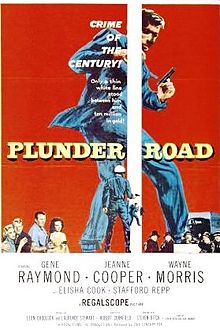
220px-Plunder_Road_posterThe rain is pouring down. A group of men sits in silence in truck cabs their heads full of all sorts of thoughts. Two more sit in the rear hoping the explosives sitting in their stead don’t decide to go Kablooie over the next bump. Nary a word is spoken, the entire sequence playing out in silence except for the inner monologues of each man.

But surprisingly enough all goes as clockwork with this heist as they gear up for a train carrying a U.S. Mint gold shipment. They divert the track. Get their men in place and board the vehicle to subdue all aboard. That’s done quick and efficiently and they continue doing their work that same way. They use one of the truck’s crane to hoist their plunder into the waiting beds of their getaway vehicles. No one sees it go down and no one will know anything about their job until they’re well on their way.

Of course, that’s only the first leg as the five accomplices break off. Now the spoil is split between the three trucks one loaded with furniture, another with “chemicals” and so on. So even though the events have all been done before, the execution of Plunder Road makes its version interesting in its own right.

The one lone driver steadies himself by chewing gum like there’s no tomorrow but that doesn’t help him to get past a police checkpoint after some radio static gives him away. He’s one casualty.

The only name of repute in the film that I knew was Elisha Cook Jr. now quite along in years and he’s playing a con man with the gift of nervous gab in the second vehicle. He tries to get buddy-buddy with his mate and we actually do learn some small trifles about them. It’s not much but it’s the kind of stuff that begins to make them into human beings.  They both have sons. One had his wife die while he was in the clink. The other never married. Their journey takes them to a rural gas station out of necessity and there we have the second casualty a neighborly old gas station clerk.

By this time the story has progressed to the third vehicle and they’re really sweating it now no thanks to special correspondent John Oliver from Salt Lake City who practically lives on the radio airwaves to provide the latest up to date news flashes. They weather routine police questioning and bide their time at the usual rest stops on their way to their final destination — a foundry near LA.

It’s an odd place to go but they do their best to conceal their prize in order to make their final getaway way far away from any nosy policemen. Though there plan doesn’t work completely. Still they manage. They pick up a girl who has their passports waiting for them and it looks like smooth sailing. But film-noir was born in an era that was hard-pressed to allow crime to pay and it’s a single moment of cruel fate that leads the heist off the tracks for good. Like Detour or The Killing and other such classics when fate rears its ugly head, things are never allowed to work out. That’s the accepted convention.

Plunder Road is so close to letting at least a few of its perpetrators get away but then it snatches their gold away from them. Compact heist films don’t come much better than this and this one benefits from a heightened sense of unsentimental realism.

3.5/5 Stars

No Way Out (1987)

No_Way_Out_(1987_film)_posterIn the 1970s political paranoia involved issues in the realm of Watergate. Government conspiracy and that type of thing perfectly embodied by some of Alan Pakula’s best films. But it’s important to realize in order to better understand this particular thriller, the 1980s were a decade fraught with fears of Soviet infiltration compromising our national security. The Cold War was still a part of the public consciousness even after being a part of life for such a long time already. So No Way Out has a bit of Pakula’s apprehension in government and maybe even a bit of the showmanship of Psycho with some truly jarring twists.

The conflict is surprisingly close and even if it involves the vast bureaucracy of the Pentagon and various other arms of government, Roger Donalson’s film only takes great interest in maybe three or four characters really.

From early on its evident that Kevin Costner is our everyman and the person who we will be investing our time in for the rest of the film. It’s a star-making performance to add to a string of classics including the Untouchables, Bull Durham, Field of Dreams, and Dances with Wolves.

The always capable Gene Hackman takes on the role of Secretary of Defense and his ultra-loyal right-hand man Will Patton goes to great lengths to protect his superior. They are key to the storyline as is Lt. Commander Tom Farrell’s girl Susan Atwell (Sean Young) who also moonlights as the Secretary’s mistress. Her character is lively and a crucial player but over time it becomes evident that above all else she’s used to serve the plot and ratchet up the tension.

Already you can begin to see the complications and their ensuing implications. But that is only the beginning of No Way Out because in its latter half it drops off the deep end with a seismic shift that shakes up everything we knew before about this world.

It’s in these moments that I had the sneaking suspicion that I’d seen this before somewhere and it’s easy to see the striking resemblance to the 1940s noir The Big Clock. On further examination, the two stories do share some of the same plot points from Kenneth Fearing’s novel but this is certainly a re-imagining meant for the 1980s transposed to a politically charged arena.

Once more we have the authorities looking for a phantom man but the said man seems to be the only one who knows he is innocent. Off such a foundation No Way Out builds a pulse-pounding narrative that at times feels utterly absurd but it also tapped into the fears of that age and even this one that our highest modes of government are being undermined by our enemies. The Big Clock boasted a more idiosyncratic and colorful script but No Way Out certainly works well as a highly underrated thriller.

My initial assumption would have been that Hackman would have played a bigger role and potentially had a shot of pulling the spotlight away from Costner but our lead remains our lead to the very end, dashing in a uniform and incredibly fearless when it comes to defying authority.

If nothing else it leads to a vacuous car chase that ends up on foot in a Subway station. Hackman and Fernando Rey did a better job of it in The French Connection but that does not take away an ounce of the enjoyment. Because whether you’re ultimately a fan of them or not, No Way Out does have some monumental twists that will either leave you scratching your heads incredulously or cause you to fly off the handle in indignance.  If you crave a good old-fashioned political thriller 80s-style No Way Out is worth it.

3.5/5 Stars

Jane Eyre (1943)

Jane-Eyre-1943-1Are you always drawn to the loveless and unfriended? ~ Edward Rochester

When it’s deserved. ~ Jane Eyre

I can still recall visiting the Bronte Parsonage, marveling at the fact that these sisters were able to have such a lasting impact on the world of literature — a world so often dominated by men at that time — and I simultaneously rued the fact that I had yet to crack open any of their works. Now several years down the road, I still have not opened up Wuthering Heights or Jane Eyre by Emily and Charlotte Bronte and so I can only come into this 20th-century adaptation with certain expectations.

I realize that no film can wholly represent every page of a novel — especially of great length — because in a practical sense it’s simply not theatrically possible. But my hope is that at the very least this version of Jane Eyre maintains the essence of the source material and if nothing else I can revel in the fact that it is a thoroughly engrossing film from director Robert Stevenson.

It feels like some sort of intriguing marriage between Orson Welles’ Mercury Theatre and the recent craze of gothic fiction adaptations — the most noted of course being Hitchcock’s Rebecca only a few years prior — that by some strange happenstance had input from Aldous Huxley. Here we have the ever timid beauty Joan Fontaine starring once more, this time opposite Welles. But the story starts at a much earlier point in the life of Jane Eyre.

Her life is a desolate and horrible affair as we soon find out, due in part to a caustic culture that uses their religion to ostracize others instead of bringing them into the fold of society.

In fact, most of those who hold a Christian belief system are puritanical and more problematic still, hard-hearted. Ironically, there’s no room for grace in the Christian faith that they practice. Foremost among this crowd is Mr. Brocklehurst (Henry Daniel) who runs the Lowood Institution for Girls.

It’s in this very issue revealed early on where the film finds much of its substance. Because thematically all throughout the narrative the audience is forced to grapple with various characters who are subjugated to the fringes of society and for various reasons are labeled as outcasts.

This is how Jane is seen first by her unfeeling aunt (Agnes Moorehead), then by the narrow-minded reverend. They seem absolutely incapable of compassion sitting atop their high horses of proclaimed humility and charity. In reality, they have very little of either to offer. A few do show her kindness including Dr. Rivers (John Sutton) and the cook Bessie (Sarah Allgood) but such behavior is the exception and not the norm.

Still, Jane the very person who has been relegated to a wretched and lesser state is for that very reason ready and willing to reach out to those around her who are treated likewise. The very fact that she has been marginalized allows her to see it in others and be compelled to move toward them when others move away.  She cares deeply for the outsider.

The most galvanizing experience involves her closest friend as a young girl (played by a child who still is very unmistakably Elizabeth Taylor). Then as she grows up and chooses to move away from the oppression of her surrogate home, it is the role of a governess in a gothic manor that once more allows her the opportunity to extend her graces to others. First in the form of the precocious ballerina extraordinaire (Margaret O’Brien) and then the brusque but obviously tortured man of the house (Orson Welles).

She sees in him something that runs deeper than the surface. He’s far from a bad man. In fact, she grows to love and cherish him because she sees the good that dwells in his conflicted soul. Burdened as he is with guilt and a past that still haunts him to the present moment. The film exhibits a bit of a love triangle as Rochester invites many guests to his estate among them the well-to-do Blanche Ingram (Hillary Brooke).

But the film pulling from its source material goes a step further still.  It digs into the dark recesses, involving itself with the less than pleasant realities, namely an unseen person who hangs over the storyline like a specter. In those very designs, whether they are simply employing the rhythms of Bronte’s book or not, there’s another evident parallel there with the 1940 adaptation of du Maurier’s Rebecca.

Gothic tones matched with an impending sense of foreboding with the demure Fontaine similarly relating the action through voiceover even reading verbatim off the page as if from a diary. And once again it works. While there is no Mrs. Danvers, Welles has the same Shakespearian gravitas of an Olivier that accentuates the very modesty of many of Fontaine’s performances. Their exchanges reflect the sensibilities of the time but furthermore help draw up the very differences of their characters. However, as much as that juxtaposition would seem to draw them apart it even more passionately brings them together.

Some might find this rendition of Jane Eyre too stark, too much of a studio production, even too abrupt, but with Welles and Fontaine opposite each other, it’s a frequently enjoyable gothic romance. As much as gothic romances can possibly be enjoyable.

4/5 Stars

Song of the Sea (2014)

Song_of_the_Sea_(2014_film)_posterIn an animation market saturated by the likes of Disney, Pixar, and Dreamworks, those that have become some of the foremost names of the latest wave of animation, we sometimes forget that there are other voices as well. Song of the Sea is one of those alternative stories that is ripe for discovery.

Tomm Moore’s creation is so rich and vibrant, steeped in mythology and Irish folk tales. In some strange way, there’s a very cursory resemblance to some of Hayao Miyazaki’s worlds — the way that this story is similarly immersed in the culture in wonderful ways as well as fantasy elements entrenched in the culture (ie. Selkies), yet it still manages to remain universal, grounded in the everyday relationships of a family that pertain to all of us.

It becomes this grandiose mixture of the depressed and even decrepit streets of Ireland, wind-tossed waves, and hardened rocks. But against that very austere environment is something so luminous, magical, and life-giving. It gives the story an immense character both pictorially and thematically that runs through its entire narrative with every frame reflecting a certain essence of Irish culture, history, and even topography.

We watch with a degree of awe as young Ben is brought up to look at the world with the same wonderment in his Irish heritage. His father (voiced by Brendan Gleeson) is the local lighthouse keeper and his mother raises him up in a loving spirit. But with the birth of his younger sister and the loss of his mother, Ben’s life is different. He’s faced with loss just as his father is but he’s also faced with a promise he must keep. To love and protect his little sister Saoirse — to be her guardian — as his mother entreated him to.

Of course, the story devolves into a tale of annoyance and jealousy as Ben grows a little bit older and slowly becomes peeved with his sister’s ways. She still doesn’t talk and seemingly beats by a slightly different drum. He quickly loses sight of the value in her — only seeing the nuisance that dwells there.

But if anything, Song of the Sea is a story of discovery or even rediscovery if you will. Like Narnia or any such fantasy tale, it asks its main protagonist and the audience as well to grab hold of their child-like sensibilities and lose everything that causes them to grumble on a daily basis. That is the road that Ben is taken on. First, his goals are simple. He’s sent away from the family home he’s lived at forever and so his main objective is to escape grandma’s house in the city and get back to his dad and his dog, the massive, huggable, lovable sheepdog Cu.

However, Song of the Sea’s stakes heighten so much more because he comes to realize, begrudgingly at first, how special his little sister is and as his mother entrusted him so long ago, he must protect her. It’s a struggle but to the end, he honors that promise and it reflects the maturity that comes over him. It makes the film’s conclusion especially meaningful because we have seen the full progression and know truly what is at stake. That’s the sign of quality storytelling that will meet both kids and adults and leave them changed for the better.

In truth, my own name is Irish Gaelic and though I don’t speak a lick and the closest I’ve ever gotten geographically is Scotland (not quite close enough), there’s still a fascination I have with the very spirit of the place embodied so perfectly by this film.

The folk songs are elegantly mellifluous and even in all the chaos, all the darkness, great light can still be revealed. That is the hope of this film and even as families are fragmented and split apart. They can be mended and healed. Even if all the pain and hurt does not evaporate, the fact that we can hold family close, share the laughter as well as the tears together, that is often enough. Because it teaches us to care about others — to leave our petty, selfish endeavors behind to love others well.

4/5 Stars

Bye Bye Birdie (1963)

bye bye birdie 1.png

Bye Bye Birdie has sunshiny singalong written all over it even before we know the premise. The fact that it’s about the frenzy following the draft notice of a beloved hunky teenage heartthrob Conrad Birdie (a knowing amalgamation of Conway Twitty and Elvis) doesn’t help its case much. It can be rather annoying for the complete and utter squareness of every successive moment. That is true.

But on the whole, that overwhelming peppiness bowls you over with its sheer gaiety and the fervor of teenybopper spirit. So yes, at times it’s nearly suffocating and still intoxicating due to that same excessively sweet 1960s optimism.

Birdie’s unfortunate fate creates the spectacle. In its wake is left a war zone of swooning girls who go absolutely gaga after a particularly spectacular performance. But that’s just the beginning. To set the stage we must look first to a biochemist turned composer named Albert Peterson (Dick Van Dyke) who after 6 years of fruitless toil is looking to leave the business.

But his gal, the chipper Rosie DeLeon (Janet Leigh), hanging onto the hope that he will one day propose marriage, brings a brilliant idea before America’s greatest variety show icon Ed Sullivan himself. Her idea: To have the beloved Birdie kiss an All-American girl as a symbolic gesture of his goodwill towards his booming fan base. Ed, of course, eats it up, and her Albert will pen the song to be heard by millions across the country that fateful Sunday night.

bye bye birdie 2.png

All that’s left is to find the girl and by the most coincidental circumstances the lucky tween winds up being Ohio’s own Kim McAfee (Ann-Margret). Her best boy Hugo (Bobby Rydell) has just “pinned her” and she sits chatting away on the telephone but it’s peanuts compared to the meteor that strikes her household that evening. Soon the whole student body and her family get carried away in the excitement promising them eternal bliss and stardom on the biggest stage imaginable.

The adolescent masses continue going baddie — namely those of the feminine persuasion — while the boys hate Birdie’s guts for stealing away their dates. In the end, Kim and her family, Albert and Rosie are on the brink of getting pushed off of Sullivan. It all seems for naught until some quick thinking gets them the outcome they were long hoping for. The Russian Ballet gets truncated to put it lightly.

What matters is that everyone gets a happy ending. Each person winds up with their respective significant other and just as it opened, Bye Bye Birdie goes out with Ann-Margret belting out the title chorus with a charisma that conquered many a young heart.

What the screen adaptation does well is act as a fitting forerunner for another cultural explosion that would occur on Ed Sullivan’s Show only a year later. In fact, Birdiemania looks strangely familiar and perfectly personifies the older generations befuddlement with their crazy kids. Paul Lynde is the perfectly idiosyncratic father figure to reflect the changing times.

Meanwhile, Janet Leigh seems to relish an opportunity to tap into one of her more ditzy personalities as Rosie DeLeon. While new to film, the beloved Dick Van Dyke struts his physical comedy and provides a charming performance of “Put on a Happy Face.”

Director George Sidney comes in with an innate understanding that musicals are a communal event and just as importantly with the realization that he had a star on his hands in Ann-Margret. If this story was on the stage, Van Dyke and Leigh would have been the stars and they did indeed have top billing. Still, with the purposeful framing device he chose and the many close-ups and set ups he picked Sidney made this Ann-Margret’s picture no question. She obliges by lighting up the screen with that unparalleled mixture of perky sensuality and early 60s innocence.

It’s all so cute and fluffy and sweetly sincere it’s almost difficult to sense the satire sitting there. But I would like to think that it’s purposefully here from the cameos of Ed Sullivan and John Daly to every other spastic characterization. My only hangup is that instead of Elvis Presley himself we got Jesse Pearson. No offense whatsoever, but he’s not exactly the King and besides having Elvis in the picture would have only accentuated the irony of the whole ordeal. Still, fans can still find solace in the fact that there’s Viva Las Vegas.

3.5/5 Stars

Viva Las Vegas (1964)

Viva_Las_Vegas_1964_PosterPreviously, whenever I thought of Elvis and films, my first inclination was to think musical and then secondly because, by some form of osmosis the culture had taught me this, Elvis went with Ann-Margret. In truth, they were astoundingly only ever in this one picture together but what a picture for them to be in. It left an indelible impact on both stars as much as it did their audience.

Sure, it’s at times utterly laughable, light, and saccharine with gaudy color schemes that make Las Vegas the flashiest spectacle known to man (which it might actually conceivably be), but there’s something still so winsome about it.

The story is one of those contrived Hollywood love stories that we know the rhythms of before they have begun.  Boy meets girl. Boy becomes infatuated with girl. Girl keeps him at arm’s length. Girl begins to fall for him. Girl gets turned off because of some trivial misunderstanding. In the end, girl gets boy or vice versa. Whichever you prefer because either way it still proves a formulaic picture.

But gosh darn it, Viva Las Vegas has a vibrant energy that probably makes every man, woman, and child wish they could go back to that era, especially all those rock ‘n rollers and beboppers who grew up with Elvis for breakfast, lunch, and dinner.

There’s no doubt that he had a magnetic charisma that went beyond a voice or a look but the very way he shimmies, snaps, and shakes his way into the heart of every gal. However, the real vivacity of the picture comes from the same kinetic friskiness that seems to charge through Ann-Margret as well. Because in most any given equation Elvis Presley is bar none going to be your dominating force commanding the screen as the indisputable Elvis the Pelvis, the King of Rock and Roll. But put him up against Ann-Margret and they tease and prod each other this way and that — the perfect romantic counterpoints.

It’s as if they both have a sense of the game that they are playing — the back and forth — the one-upmanship and playful toying that gives the story a hint of sensuality while still maintaining that squeaky clean sensibility allowing a picture like this to remain more charming than most films we are introduced to today.

And when it’s all said and done, aside from the title track which will undoubtedly be most familiar and exhilarating for audience members in its numerous refrains, there are quite a few truly dynamic sequences that go beyond tedious asides in a musical love story.

They reflect how Hollywood seemed to understand the collective power that musicals could have. Director George Sidney is not necessarily a noted name of great repute but if you look down the list of his directing catalog you see many a diverting musical (ie. Annie Get Your Gun, Kiss Me Kate, Bye Bye Birdie, and a whole slew of others).

With Viva Las Vegas it’s easy to acknowledge that he has a knack for the spectacle that remains light and amusing to the end including the notable Ray Charles tune “What’d I Say” played out on a giant roulette wheel, our leads making eyes at each other, surrounded by a crowd of fellow shimmy and shakers. But also the hip swinging, finger-snapping crowd pleaser “C’mon Everybody” that puts our stars on full display. They even end up making the smaller trifles like “The Lady Loves Me” and “If You Think I Don’t Need You” more than a complete drag.

To top it all off, far from being corny, the final Grand Prix sequence is actually quite marvelous as the cars speed through the desert past Hoover Dam and we see Lucky win out against his good-natured rival. The film truly does benefit from the on location shooting only topped by the breezy chemistry of its leads. More than The Rat Pack or Bond, this film gives me at least an iota of desire to visit Las Vegas. Although that might simply be the fact that Elvis and Ann-Margret, in particular, imbue the lifestyle with so much verve. Anyways there are no qualms in proclaiming, Viva Las Vegas!

3.5/5 Stars

Clouds of Sils Maria (2014)

Clouds_of_Sils_Maria_film_posterIt’s my prerogative to respect films that dare to leave me questioning their ambitions and their outcomes. Clouds of Sils Maria is such a film. At times it gets so caught up in its own meta-narrative perhaps too much so.

Still, this is a story about a middle-aged actress (Juliette Binoche) called upon to return to the script that made her famous but this time in the much more unglamorous role. Her stardom is such that she can pick and choose her work still but that doesn’t make growing older and life in general any easier. She must navigate press junkets, paparazzi, divorce proceedings, and on top of it all the death of a good friend — the man who helped make her famous.

The person keeping Maria sane through every bit of drama and every tiresome ordeal is her personal assistant Valentine (Kristen Stewart). She is also the one who cajoles her client to take the role. My gut further suggests that there are the inklings of All About Eve echoed in Olivier Assayas story between a mature actress and a rising star who is a prima donna scandal maker of the social media age (played by Chloe Grace Moretz).

But still that dynamic proves to be less fruitul and ultimately less interesting than the relationship that is examined between Maria and Valentine. It is their scenes together that are tirelessly engaging because their interactions run the gamut of emotions. How do you begin to define them?

The dividing line between this play that they are bouncing off each other and their actual lives at times feel perilously close as they jump in and out. Somehow in some unknowable way, it seems to reflect real truths about their relationship.

The meta moments are innumerable including those that suggest Binoche’s earlier film Rendez-vous, Chloe Grace Moretz forays into superhero blockbusters, even a passing coincidental remark Stewart makes about a film featuring werewolves. There’s a Harrison Ford film directed by Sydney Pollack (a lah Sabrina) maybe lightly poking fun at how Juliette Binoche and Julia Ormond could easily be confused.

But if nothing else these feel like only slight nods if not pastiche that do not necessarily aid the aspirations of the film. They mean very little. The far more fascinating suggestion is just how closely the characters of Maria and Valentine read to the figures in the script while they practice the lines in the mountains. But it’s not just that. It’s how their conversation organically reveals bits and pieces of their personal philosophies.

So to clarify it’s not reality intersecting with fiction but the fiction within the fiction that creates a greater depth that complicates matters. That’s what makes the film at times beautiful and perplexing. The fact that Valentine evaporates is tantamount to Michelangelo Antioni losing his main character in L’Avventura. Likewise, Valentine disappears into the clouds never to be seen again and that’s far more interesting than any amount of commentary that could have been crammed into the storyline about Stewart’s actual career.

And in truth, this has to be without question the greatest performance of Stewart’s career thus far because there’s something streetwise, nuanced, and clever about her. There’s a strange sense through her wardrobe and demeanor that this is part of Stewart that we are actually seeing, although I’m not sure how true that is. It feels the very essence of “un-acting” if we can coin that phrase.

Binoche, of course, has a lauded spot as one of the eminent stars of European cinema for very good reason with a career that has been held in regard for well nigh 30 years. Somehow she feels like oil and water mixed with the likes of Stewart and Moretz, products of Hollywood blockbusters, but that’s what makes this film an interesting marriage of backgrounds.

Far from being conflicting, the pairing of Binoche and Stewart is ripe with interesting qualities because their differences make the interactions pop. They can be so diametrically opposed. Their age, backgrounds, and at the very core how they view these central characters of Sigrid and Helena in the film within the film. Yet at the same time, they’re so closely tied together and interconnected — their relationship of a star with her personal assistant that proves to be even closer still to that between friends and confidantes.

When Stewart disappears from the story much of what was interesting vanished from the picture but then again because she vanished it made the picture’s denouement more interesting.

By the end, as an audience, it feels as if we have little stake in the trajectory of Maria’s career. It’s hard to care too much about her at this point because she’s been a star, she is a star and she probably still will be one unless her own temperamental nature gets in the way. It doesn’t leave us with the same empathy that comes with All About Eve because our heroine still has a career fully intact.

Clouds of Sils Maria’s immaculate classical music played over elegant tracking shots, matched by soft fade outs between sequences is pleasant if not a tad pretentious. But its ambitions thematically, by the time the curtain falls, feel noticeably more nuanced than its predecessor. It leaves us with something mystifying to ruminate over and that is nearly enough if not wholly satisfying.

4/5 Stars

The Kennel Murder Case (1933)

The-kennel-murder-case-1933It’s happened in some well-documented cases that the same actor has played two characters that feel nominally similar and based on this cursory level of comparison the general public has been forever befuddled. You could cite some notable examples being Bogart playing Sam Spade and Phillip Marlowe the archetypal pulp private eye heroes of Dashiell Hammett and Raymond Chandler.

Even the fact that Fess Parker played Davy Crockett for Disney and then Daniel Boone on the small screen undoubtedly still has the less historically inclined folks to question if there is any difference between the two men.

A still earlier example would be William Powell who was famed as Nick Charles in The Thin Man Series pairing him with Myrna Loy but about that time he also did pretty well for himself as the eponymous Philo Vance in a handful of mystery serials. In truth, this installment would be his last time performing the role but he slid rather seamlessly into The Thin Man series that arguably allowed him more freedom for comedy.

Other actors took on the mantle as well including Basil Rathbone, Warren William, Paul Lukas, and even Alan Curtis. But it was The Kennel Murder Case directed by one of Warner Bros. top craftsman Michael Curtiz that remains the hallmark of this Pre-Code franchise.

Although Raymond Chandler called Philo Vance, “the most asinine character in detective fiction,” much of that quality was toned down in the feature adaptations and after all, with a charmer such as William Powell, how could he not be at least a bit compelling?

In this particular storyline, there’s initially no case at all only Vance missing out on the big prize at a prestigious dog show. But on his way to Italy riding an ocean liner for a much-needed vacation, he catches wind of the death of one of his kennel acquaintances Mr. Archer Coe. Although the authorities including the straight-laced District Attorney Markham (Robert McWade) and the lovable police detective Heath (Eugene Palette) assume it is suicide, Vance comes in on the proceedings with a hunch of his own.

It has murder written all over it but the circumstances are most peculiar and the extensive array of suspects makes it no small matter to pinpoint the culprit. But that’s the fun of the chase as our perceptive detective looks to derive the correct conclusion and the audience along with him (without much success I might add, at least in my case).

It’s very easily to surmise that nowadays we are so culturally well-versed in crime, mysteries, and whodunits that this film’s script feels clunky at times because the characters say all the things and hit all the marks that we might expect. It’s a rite of passage to have the police constantly dismiss our hero’s deductions as it is to hear the shots ring out in the house or the various suspects nervously fib and cover up for this reason and that person.

However, to its credit, the resolution gets so lost among the various characters with numerous motives and the like that when the killer is revealed it still provides a certain amount of satisfaction. So in some sense, you could say that The Kennel Murder is a successful mystery because it does hit all the marks.

Yes, a no-nonsense Powell isn’t quite as fun as a snarky slightly tipsy Powell, although he still makes for an enjoyable lead. But supporting spots for the always jovial Eugene Palette and noir icon Mary Astor add a dash of character across the rank and file of the cast. Meanwhile, James Lee plays a rather fascinating character for the time, a Chinese cook who nevertheless attended Columbia and is highly educated in Chinese porcelain.

And there is undoubtedly an efficiency to The Kennel Murder Case such that a great deal is able to unfold and be resolved without feeling tedious or overlong aided by Curtiz’s direction and plenty of screen wipes. It proves to be just about the right length to make the payoff worthwhile and the story’s mystery generally engaging. More character development is always a plus but with a whodunit that’s usually not your main concern.

3.5/5 Stars