The Searchers (1956)

d4eb3-the_searchersOne of John Wayne and John Ford’s best westerns respectively, The Searchers follows an ex-Confederate soldier (Wayne) as he looks for his niece Debbie, who was taken by Indians when they killed her parents. Now Wayne and a young man played by Jefferey Hunter must look for her and bring Debbie home. With an almost obsessive desire, Wayne’s character Ethan Edwards vows to find her. Along the way, the old vet and young man have conflicting personalities that get in the way. Even when they finally find her, she has become more Indian than white, and Edwards seems bent on killing her much to Hunter’s horror. In the end, the gruff but courageous searcher shows his true colors.

A great western, and simply a wonderful film, The Searchers has a lot to offer with great action, Monument Valley scenery, and of course John Wayne. The supporting cast is good as well, including Vera Miles, Natalie Wood, Ward Bond, John Qualen, Hank Worden, and Ken Curtis.

There are some pivotal scenes in this film that I think really get to the core of what it is about, and Ford constructs a multitude of scenes which are simply a joy to observe as they unfold. One turning point has to be when the two Searchers look over a few white girls that the cavalry recovered from the Comanche. One of the girls gives off a childish screech, which causes Ethan to turn around, and Ford’s camera closes in on his scowling face half covered by shadow. Here is a proud man who would not surrender during the end of the Civil War. Here is a man full of prejudice and vengeance. Here is a man who shows glimpses of kindness, and here is a man who knows pain. It is complicated because he heads out after Debbie seemingly in an act of love. But soon it seems that it has become his vendetta, and Ethan has simply become bent on revenge. It takes his final confrontation with Debbie to reveal the true depth of his character.

Undoubtedly this is one of the preeminent American westerns, but I think you could also call it a social commentary on racial prejudice. Furthermore, The Searchers influence ranges from the plight of Luke Skywalker in Star Wars to the music of Buddy Holly (“That’ll be the Day”). I think fittingly enough the film ends with Wayne framed in the doorway, walking off into the distance. After all, he is a searcher, and you cannot expect a man like that to stay put.

5/5 Stars

The Leopard (1963)

Directed by Luchino Visconti and starring a stellar cast including Burt Lancaster, Alain Delon, and Claudia Cardinale, this Italian film revolves around a Prince and Patriarch during a period of social change in Italy in the 1860s. 

His Excellency the Prince of Salina (Lancaster) is a highly respected noble, who lives with his family on a large estate in Sicily. In his own life, the Prince is annoyed with his marriage and perturbed about the company his nephew Tancredi (Delon) is keeping. However, a revolution led by a man named Garibaldi means great change for the nation and finally following the lead of his nephew, who joins the rebel redshirts, the Prince sides with the new way and supports the plebiscites that are set up. His nephew falls for the beautiful daughter (Cardinale) of an aristocrat, and despite the fact that his own daughter has an eye on Tancredi, Don Fabrizo fully supports the marriage knowing it is good for the family. Because of his title and the respect he has garnered, the Prince is offered a position as a senator in the new government. But he courteously turns it down feeling he is too old and too attached to the old ways. Tancredi and Angelica are to be engaged and they are presented together at an extravagant ball. Over the course of the evening, Don Fabrizo has time to talk, dance with the young beauty Angelica, and reflect on his own life. As the lavish evening begins to dwindle the Leopard walks off to clear his head. 

In some respects, I saw this as an Italian equivalent to Gone with the Wind, and I could see some precursors to The Godfather here because the Italians portrayed are very religious and chivalrous people who can also be ruthless. However, I think it is fair to say that The Leopard is its own film entirely, and it should be taken as such. Tancredi and Angelica are no Rhett and Scarlett and the Prince is not the Godfather. They are their own unique characters. In my personal opinion, I would recommend the Italian version because that is the way the director meant it to be seen and Lancaster’s normal voice seems out of place in the film. Some may say that this detracts from his performance, but I think his presence and acting ability show through even if he is dubbed.

4.5/5 Stars

Le Cercle Rouge (1970)

LecerclerougeDirected by Jean-Pierre Melville and starring a cast including Alain Delon and Yves Montand, this crime film hearkens back to heist films such as The Asphalt Jungle, back in the 1950s.

In a cold open, two storylines are introduced. One man, Vogel, is in custody and is handcuffed to a policeman as they board a train. At the same time, a man named Corey is let out of prison, on good behavior, and he is tipped off on a possible heist job. In both cases, we have little background information to go on. Then, Corey pops in unexpectedly on an old mob boss and forcibly “borrows” some money from the man, who has also stolen his girl. He buys a new car and throws off a couple of thugs who were sent after him. As the morning dawns, the captive on the train makes a daring escape and flees into the nearby forest. Soon roadblocks are set and the manhunt begins. He desperately gets into an open car trunk to hide, ironically it is the same car of the man, who was recently released.

However, he was noticed and Corey tells him to get out of his hiding place.  Vogel is tense but his cool and collected acquaintance helps him sneak through a checkpoint noting that Paris is his best chance of escape. Corey is chased down once again by Rico’s henchmen, but Vogel sneaks out and comes to his aid. They head to Paris and find a sharpshooter to case the jewelry store and help them with their plan. The police detective is still searching for his quarry, and he tries to enlist the help of a crooked club owner. Meanwhile, the plans are made, and the heist is pulled off with great precision and efficiency. They get away with the jewels smoothly enough. However, the marksman settles to take no part of the plunder, and their initial buyer falls through. Relatively quickly there is a new person interested, so Corey takes the goods to him. Only too late Vogel comes to warn him, and just like that, they must flee the premises with police all around.

Much like Le Samourai, this film gives off an extremely cool vibe, and it makes it all the more enjoyable to watch. Alain Delon is such a smooth operator, and whether it is the way he dresses, talks, smokes, or pulls off the heist, it cannot be easily dismissed. However, the other main players give serious and nuanced performances of their own, which cannot be overlooked. Melville makes all of his scenes so interesting, through the setup and the fashion in which his characters go through the world of the film. His characters act in the mode of behavior that they believe is correct and most are rather taciturn and guarded. I cannot decide if I like Le Samourai or Le Cercle Rouge better, but it must be said they are in a special class of crime films.

4.5/5 Stars

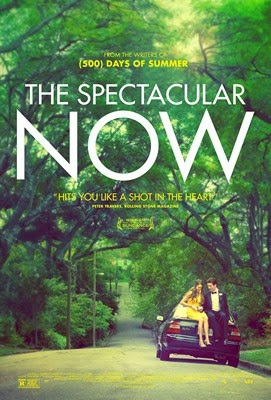
The Spectacular Now (2013)

1ae0b-the_spectacular_now_filmFeaturing two rising stars in Miles Teller (Rabbit Hole) and Shailene Woodley (The Descendants), this film nicely melds a rough exterior with a heartfelt core to great effect.
Sutter (Teller) is a guy who parties hard, drinks incessantly, and has a long-term relationship with a beautiful girl named Cassidy (Brie Larson). He is the self-proclaimed life of the party and people like him, but no one takes him too seriously. At home, he lives with his mom, has no idea where his dad is, and hardly ever talks with his older sister. School, much less Geometry, is of little importance to him.
Matters take a turn for the worse when he and his girlfriend have a fight. He drives home plastered one night, only to wake up the next morning on a front lawn with a girl standing over him. And that is how he meets the quiet, studious, Aimee Finicky (Woodley). They strike up a friendship instantly as he helps her with a paper route, and she soon begins helping him with math. Although he convinces himself that he is doing it just because she is nice, he genuinely begins to like her. He invites her to a party and there their relationship deepens. It comes out that she is planning to stand up to her mom so she can go to university in Philadelphia. She wants Sutter to ask his mom about his estranged father. Together the two of them go to visit his dad, and Sutter is devastated to find out the truth about his father, which he never wanted to believe. On the drive home, half intoxicated by alcohol, half by his anguish, Sutter rejects Aimee’s love and tells her to leave, with dire consequences.

High school winds down and so does Sutter’s job. The night Aimee leaves for Philadelphia, however, he gets inebriated in a bar not wanting to hurt her anymore. He returns home in a stupor and confronts his mom, but he breaks down believing that he is exactly like his father. Despite all the annoyance that had been there before, she comforts him and proves Sutter otherwise.
Finally, Sutter is able to realize that his limitation is himself because even though he might veil his fears with jokes and alcohol, he has always been afraid. He takes another trip in his car, this time to Philadelphia to see Aimee again. The film ends on the steps of the university as their gazes meet and Aimee is just about to react. Who knows how it ends, but much like “Say Anything…” we can believe what we want. Needless to say, though he wasted so many of the previous “Nows,” Sutter seems destined to make the best of his tomorrow. 
This film is engrossing because although we have seen the story before no doubt, it is made fresh by the leads. A lot of people know someone like Sutter Keely. He is a person who is rough around the edges because of family, divorce, and alcohol. He often makes the stupidest of decisions. But there is still something about him that is likable and it creates empathy. Aimee on her part could be a real individual as well. She can be shy, but she is sweet and beautiful in her own unique way. However, because they are messy and have faults, it makes these two all the more believable. Neither of them can be labeled as a one-dimensional cliché because they have a genuine human quality. As Aimee would say they are not just defined by one thing, there’s more to them than that.

Some of the best moments in the film have to be when the two leads are talking with each other. It seems so real, even commonplace, the way they go through conversations. It is wonderful to watch. First, it begins awkwardly, builds into a friendship, and finally, evolves into a full-fledged relationship. These chats that they share not only cause them to grow closer, but it causes the audience to grow closer to them. I will admit I was in shock during the climax of the film, and I also dreaded the times Sutter drove home obviously drunk. That shows an actual attachment to the characters, something that is not always present in this type of film or any film for that matter. 
For a split instant I was disappointed that the film ended where it did, but then I quickly realized that’s how it had to be and it is better for it. Already I cannot wait for more from Miles Teller and Shailene Woodley especially. She is one of the most promising actresses of today along with Jennifer Lawrence. 
 
4.5/5 Stars

My Neighbor Totoro (1988)

7eaa5-my_neighbor_totoro_-_tonari_no_totoro_movie_posterFrom the famed Japanese animator Hayao Miyazaki, this enchanting film is about two little girls and their very unusual neighbor Totoro.

The film opens with Satsuki and her little sister Mei arriving at a new home out in the country with their father. They are two energetic and rambunctious girls, who are excited by this new adventure. Their father is a kindly man, who spends a great deal of time with them when he is not working. Several other characters play a part including the elderly lady Nanny, the young boy Kanta, and of course the girls’ mother who is in the hospital. First, the girls chase dust creatures through their supposedly “haunted house.” Then, one day Mei follows a strange furry little creature under their house and then into the depths of the woods nearby.  She takes a tumble and all of a sudden she finds herself in the dwelling of a big fluffy Totoro spirit and falls asleep on its belly. When she tries to show Totoro to Satsuki and her father she cannot find him.

However, one evening as they wait for their father’s bus, Totoro comes to the stop, and this time Satsuki is introduced to the spirit who leaves them with a gift. After they spend another magical night with Totoro a few days later, the girls learn to their dismay that their mother is not coming home as planned. An annoyed Mei decides to take some corn to the hospital many miles away. Her disappearance causes a panic in the town, especially with Satsuki. She searches tirelessly for her little sister until her feet are sore. Her only other option is to plead with her neighbor Totoro to help her. Thanks to Totoro Mei and Satsuki are reunited and they see to their delight that their mother is in high spirits at the hospital.

This is certainly a film for children, but it would be unfortunate to call this a childish film. I must take a brief moment to praise the animation led by Miyazaki too. Every single image could almost be a painting they are so beautiful.  In my limited knowledge of anime, it is far above anything I have seen before. It was great to see this film in the original Japanese because it seemed more authentic, but what really struck me was the realistic nature of these young girls. Perhaps they speak a foreign language (to me) but their moods are universal. They can be extremely loud, they pout, share moments of laughter, and they love their parents.

Furthermore, this story does not need some major conflict to drive the plot. Their father is a loving open-minded man who does not even briefly doubt their adventures. I was even thinking that the obvious turn of events was that their mother would die and yet that is not the case. What this film really has is a wonderful innocence which can be appreciated by all ages. Instead of creating some major pathos we are simply able to enjoy this magical friendship between this remarkably cute fluffy spirit Totoro and these two girls. I certainly cannot wait for more from Studio Ghibli and I’m sorry that such an artist is retiring soon.

 
4.5/5 Stars

Review: Casablanca (1942)

It was over 70 years ago that Casablanca hit the silver screen for the first time. All the main players are dead and gone now. The Golden Age of Hollywood, where pictures were being churned out with factory-like efficiency, has given way to a modern era of blockbusters. To borrow a quote from the movie, it doesn’t seem that one little film would “amount to a hill of beans” in our present world. Still, somehow Casablanca is beloved to this day, despite the numerous other films that have undoubtedly entered the black hole of film oblivion. It seemingly will not die and for good reason.

Considered one of the greatest films of all time, this well-loved classic deserves to be here. It is the hallmark of Humphrey Bogart and Ingrid Bergman’s careers. It also has one of the greatest scripts of all time, and it has achieved legendary status over the years. Many consider it purely the best film ever made and in all honesty, I would never try to refute that.

The film opens quickly and we are immersed in a world that is at the height of the Nazi terror, and many people are fleeing Europe by way of Casablanca. It is a treacherous place full of pickpockets, corrupt authorities, refugees, and naive tourists as well. Two German couriers have been murdered and some invaluable letters of transit have been stolen. That’s when we are first introduced to Rick’s Café Americain and its cynical proprietor Rick Blaine (Bogart).

A shady fellow named Ugarte (Peter Lorre) comes to Rick with the letters and asks Blaine to keep them for him. However, later that night Ugarte is taken into custody, and things begin to get even more complicated. Wanted resistance leader Victor Laszlo (Paul Henreid) is now in Casablanca, however, a Major Strasser has arrived from Germany to take him in. To top it off, Laszlo’s wife Ilsa (Bergman) was Blaine’s old flame in Paris and, needless to say, it didn’t end well.

Laszlo desperately needs the letters of transit to escape, and he inquires about them. Soon he is led to Blaine, but as Rick often admits he sticks his neck out for nobody. Knowing all too well that he is in danger, Laszlo still shows his defiance against his enemies by leading the people in a round of “La Marseillaise” and as a result, Rick’s is shut down.

All the memories of Paris begin flooding back, and then Ilsa confronts Rick in order to get the letters. This is possibly the most critical point in the film because this tense altercation ultimately renews the relationship between Rick and Ilsa. Rick asks her to trust him, and he begins to take things into his own hands. The results of his actions created one of the great romantic and cinematic moments in the history of film. The whole film leading up to this point hints at it, but Rick truly is a sentimentalist at heart. He can live with the notion that they will always have Paris and that leads him to commit a selfless act of love.

This film holds such a tremendous presence in movie history, and upon seeing the movie it makes complete sense what all the hype is about. What more could you want than Bogey, Bergman, Casablanca, and some of the greatest quotes ever uttered? Do not forget the corrupt, but nevertheless lovable French Captain Louis (Claude Rains), who delivers some terribly witty lines. Honestly, he may be my favorite character in the whole film, and that’s saying a lot!  Then, of course, there is the immortal tune of “As Time Goes By,” sung by Dooley Wilson which will forever be ingrained in film lore.

However, you also gain an appreciation for the other interesting characters of Casablanca, some comical, some sympathetic, and others despicable. We have a rogue gallery of everybody under the sun from Peter Lorre, Sidney Greenstreet, German soldiers, various guests, and all the staff at Rick’s Place. This movie has conflict and the uncertainty of war in practically every scene because at the time World War II was in full force. There are a broken romance and a forlorn hero who shows his courage in the end. As an audience, we come to realize the transformation of Rick into a truly great man. Ilsa on her part has the most radiant face I have ever seen.

It is wonderful that Casablanca succeeds as entertainment despite the fact that it is not modern. In fact, part of its charm is the black-and-white cinematography that helps make Rick’s Café so atmospheric. It effectively makes each interior shot moodi34 and every romantic scene even more striking. I am very doubtful that they would ever be able to pull this film off in color. It just wouldn’t work.

You do not need explosions and violence either, only great characters and a story with both drama and humor to reel the audience in. Up until the final moments of the movie you are captivated the entire time. Then, fittingly, you are left with the two men walking off into the night with the words, “Louis, I think this is the beginning of a beautiful friendship.”

In fact, with this film, my thoughts always go back to the script. Lines like “Here’s looking at you kid,” “We’ll always have Paris,” and “Round up the usual suspects” are so rampant that you cannot possibly remember them all, and I doubt there will ever be another film that is so immersed in American cultural lexicon. Still, many of my favorite lines in the film are those that get overshadowed by the more famous ones. That is the sign of an amazing film that never grows old. Even those who have not seen this classic film like to think they have, because the influence of Casablanca reaches everywhere. I guess I’m rather an idealist myself, so I would like to think that even if 70 more years pass, we’ll always have Casablanca.

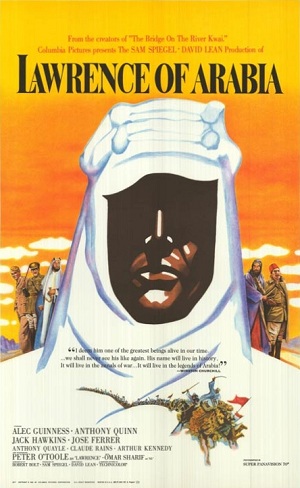
Lawrence of Arabia (1962)


A film of truly epic proportions, in length, scenery, and brilliance, Lawrence of Arabia is essential cinema. Peter O’Toole delivers a stellar performance as T.E. Lawrence, a British soldier during World War I. The movie begins with his death from a motorcycle crash, which gives an early glimpse of the character.

Then, a flashback goes to his time in Arabia where his task was to unite the Arab tribes, and lead them in rebellion against the enemy so the British might win. Against the better judgment of his commanding officer, a Mr. Dryden of the Arab Bureau suggests Lawrence be sent to assess the possibility of an Arab revolt against the Turks. Lawrence heads with his guide to pay a visit to Prince Faisal. However, his guide is shot by another man and Lawrence resolves to make the journey alone. Their paths cross again in the camp of Faisal. There Lawrence interests the Prince because his ideas are far different from his commanding officer.

Showcasing his audaciousness Lawrence suggests a bold attack on Acaba which would allow the British to bring in supplies. He leads a group of men across the brutal desert knowing that this will be less expected. Sheriff Ali (Omar Sharif) doubts it will work and disapproves that Lawrence takes two young outcasts as his servants. It is later during the journey that Lawrence truly wins over the other men, including Ali, because he is relentless, even going back for a lost straggler. With some luck, Lawrence is able to gain the help of Auda Abu Tayi, but it is not without tension. Ultimately, his forces are able to take out the Turks, and Lawrence heads back to Cairo to relay his progress. However, on the way back he must struggle with the loss of a servant and the guilt of executing a man.

Lawrence is sent back to Arabia and there he leads his forces in guerrilla operations against the Turkish railroads. His exploits are documented by an American newsman, and by this point, he has become a mythical hero among his followers. However, after going to scout a town the seemingly invincible Lawrence is ultimately flogged and tortured, leaving him a broken shell of a man. He insists on leaving Arabia but his new commander, General Allenby orders him back for one final push towards Damascus.

This final mission sees a change in Lawrence, who has hired killers and missionaries to help him in his siege. Against the better judgment of Sherif Ali, Lawrence leads a massacre of Turks as they move onward. He takes Damascus, but his fragmented counsel of Arabs are unable to unite, and the city is given back to the English. Major Lawrence is promoted once more to Colonel, and then gets shipped home because his services are no longer necessary.

This is one of those films you want to see on the big screen because the scenery and cinematography is just that impressive by itself. David Lean had a skill at making epics, and this is perhaps his masterpiece. The desert is often stark and desolate, and yet striking in the same instance. The expanse of space that is viewed in a single shot is often mind-blowing. A human being on the horizon is hardly a speck, and the ever-present camels are hardly any more substantial. To complement these grand images is an equally magnificent score by Maurice Jarre, complete with overture and all. The cast must be mentioned too with such supporting stars as Omar Sharif, Anthony Quinn, Alec Guinness, Claude Rains, Jack Hawkins, and Anthony Quayle.

Then, of course, there is the man who played Lawrence. As portrayed so wonderfully by Peter O’Toole, Lawrence is an intelligent and, at times, arrogant man, who can be odd, distant, audacious, and also unscrupulous. That being said, he was an extraordinary man who was a mover and a leader of men. A very unique, at times controversial, and long unheralded man, who contributed to the war effort in a far different way.  In many ways, he was an adopted brother to the Arabs, and their country was also his. He was “Lawrence of Arabia.”

5/5 Stars

Mr. Smith Goes to Washington (1939)

84a24-mrsmithgoestowashingtonposterAs both a political drama and feel good movie, this film cemented James Stewart as an acting powerhouse. Furthermore, despite its age, it acts as a timeless reminder of the evils of political machines. It makes us root for the underdog, and it is distinctively American. Here is a cast and a story that seemingly could never be equaled, but what this film really had going for it was an idealistic outlook. I can, myself, often be a cynical person, and still Mr. Smith never fails to make me acknowledge the numerous attributes that make our country great, whether it is through montage, monuments, music, and of course Jefferson Smith himself. 

In one of his best performances, Jimmy Stewart is an idealistic, naive boy’s troop leader named Jefferson Smith. The starry-eyed Smith trusts that our nation is founded on some very noble principles that should be fought for tirelessly in government and in society. Above all, he is a likable fellow, who earnestly believes in the merits of this country, and he is beloved by boys all across the state. Now, this all sounds fine and dandy, but it would never have come across on the screen if it had not been for Stewart. He emanates this awkward and innocent energy that puts life into the idealistic creation of Jefferson Smith. 

When the film opens, everything is in turmoil when a senator suddenly dies and a replacement is needed fast. Believing Smith will be a pawn, a powerful man named Taylor (Ed Arnold) gets Smith a seat in the nation’s Senate. There he joins the respected Senator and old family acquaintance, Joe Paine (Claude Rains), who is also a cog in Taylor’s machine. However, although he is out of place in Washington, the patriotic Smith does his best to be worthy of his position. He realizes that the press will not give him a break, and the other Senators do not take him seriously.

So, on the urging of Paine, he decides to come up with a bill for a boys camp back in his home state. He requires the help of the world-weary secretary Saunders (Jean Arthur) to get his bill done. Initially, she is disgusted by his naivete, but as she grows to know him, she realizes he is only going to get himself hurt. His action to propose a bill soon find him face to face with the political machine that elected him. Taylor also has stakes on the piece of land where the boy’s camp would be, and he wants it for a dam. 

Smith finds himself being accused of using his position for his personal gain, and pretty soon he is before a committee with false evidence piling up against him. With all odds and seemingly everyone else against him as well, Smith makes one last monumental effort. Thanks to the help and guidance of Saunders, Smith fights to plead his case through a filibuster.

Fatigued by many hours of giving impassioned speeches and reciting the Constitution, Smith finally collapses, but not before effectively succeeding at his task. I doubt this would ever happen in real life, but in the film, it is fantastic watching the Senate break out into complete and utter mayhem. Ultimately, a young man with “a little bit of plain, ordinary, everyday kindness and a little looking out for the other fella,” was able to win. True, it may be overly sentimental, but it is a wonderful piece of sentiment all the same.

Frank Capra was wonderful at these type of cheering tales and his stars were in top form. There is an absolutely wonderful supporting cast here including Claude Rains, Edward Arnold, Eugene Pallette Thomas Mitchell, Charles Lane, Harry Carey, William Demarest, Beulah Bondi, and numerous other familiar faces I don’t even know the names of. That’s the beauty of the studio system I guess. It may have the same director, same leading man, and some of the same general themes, but Mr. Smith Goes to Washington covers completely different territory from Capra’s later classic It’s a Wonderful Life. Mr. Smith should be seen as a unique, and very much American film.


5/5 Stars

High Noon (1952)

14bd7-high_noon_posterThis may not be the greatest film of all time, but it is certainly one of the greatest westerns gifted to us so generously by Fred Zinnemann. It tells a very simple story, yet it is, in fact, so powerful simply, because of the hero it depicts. In its time it also served as a condemning allegory of the finger pointing going on in Hollywood.
*May Contain Spoilers

The film tells the story of Marshall Will Kane, who is willing to face his foes even when no one else will help him. Gary Cooper plays the newlywed lawman, who must flee town or face the killer coming on the noon train. He resolves to do just that, despite the pleas of his loving wife (Grace Kelly). The sheriff scrambles against the clock to get help. However, no one is brave enough to face the enemy with him. Even with the odds against him, he faces them in a showdown. Cooper is outgunned, but not outmatched — heroically prevailing.

This film is so powerful, because it is full of human emotions, and it feels so real since the events unfold almost in real time. The somber ballad, sung by Tex Ritter, also helps to create the mood right from the opening credits. In fact, I must admit that multiple times I have found myself humming or crooning the words, but then again I suppose it makes sense since the song is woven into the very fabric of the film.

The score by Dimitri Tiomkin utilizes the tune throughout to complement the images of the town. In that respect, “Do Not Forsake Me, Oh My Darlin'” is not just a song, but an important piece of this story. It is easy to forget the supporting players since Cooper often steals the show. Nevertheless, there’s Lloyd Bridges, Grace Kelly, Katy Jurado, Thomas Mitchell, Lon Chaney Jr.,  Harry Morgan, and even a young Lee  Van Cleef. Many have pasts with Kane that we cannot expect to fully know. All we can understand is the here and now that causes a person to weigh their options, and either follow or go against their conscience. Kane and then his bride both did what they thought was right even when others would not follow suit.

It struck me how simple the story is, and yet on the other side, it is a complex allegory that critiques humanity. Will Kane is a man, who helped make the town what it is, but when trouble comes and the odds are bad no one is willing to help him. Besides the obvious positives like a good story and a heroic protagonist, this film stands out because it feels so human. Here we are as an audience watching the events unfold almost minute for minute. Then we see the various town folk and their fear of getting involved, and to make matters worse a lot of them are Kane’s very good friends. It makes us question what we would have done in their position. Because some of them were obviously good people, who were scared to be involved. Of course, during this time McCarthyism was prevalent and it is suggested that this film alluded to that. However, whatever you think it is still unquestionable that High Noon is a powerful film, a love story, and at its simplest a classic western.

5/5 Stars


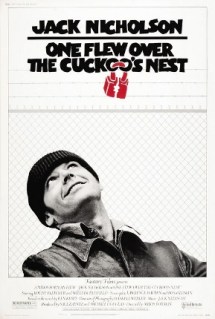
One Flew Over the Cuckoo’s Nest (1975)

This is a powerful film from the 70s that has such an intriguing conflict between Jack Nicholson and Louise Fletcher. There have been many chilling villains in the annals of cinema, but Nurse Ratched was arguably the coldest and yet understated of them all. She makes this a true battle for supremacy. Nicholson is supported very nicely by the rest of the cast who he helps to rile up.

*May Contain Spoilers

Originally adapted from the novel by Ken Kesey, the film tells the story of a criminal interned in a mental hospital, because he thinks it will be “life on easy street” with a bunch of crazies. Jack Nicholson plays this Randle McMurphy, who goes in ready to live easy and challenge authority whenever he can.

Meanwhile, the doctors observe him seeing if Randle really belongs. As he grows accustomed to the institution, he becomes the instigator of the other patients. Whether they are playing cards, talking with the group, taking medication, getting their exercise, or taking a fishing trip, he always looks to get his way and have the other patients rally around him. However, he must deal with Nurse Ratched, a cold and iron-fisted woman, who keeps everyone at bay believing it is for their own personal well-being.

In fact, she chooses not to send McMurphy away because he is their problem and Ratched is ready to deal with him in the way she sees fit. Not even McMurphy seems able to prevail over Ratched and her tactics in the end. He starts a riot in the ward after they are not allowed to watch the World Series, and as the final straw, he holds a wild Christmas party with girls and alcohol. He plans to get away in the aftermath with his new-found friend “Chief,” only to wake up in the morning to a very displeased Ratched. Her pressure causes one unstable young man to commit suicide, and with the opportunity to escape right in front of him, an enraged McMurphy strangles the nurse, only to be subdued. Things quiet down and the patients revert back to their old ways with “Mac” nowhere to be seen.

One night he is returned and in a Deja Vu moment, the Chief goes to talk to Randle, only to see a blank look on his face. Ratched’s methods have seemingly won. However, Chief is able to use Randle’s plan to escape and keep the hope alive. Nicholson was backed by a stellar cast including Louise Fletcher, Danny Devito, Christopher Lloyd, Brad Dourif, Will Sampson, Sydney Lassick, and William Redfield.

Although this film is rougher around the edges, it reminds me of the earlier dramatic classic 12 Angry Men, because both films have wonderful casts that are able to create such tension through their collaborative performances. Much like Henry Fonda, Nicholson is the undisputed star, but all the other players make this movie truly extraordinary. Early on there are some definite comedic moments, but the film begins to get darker as the story progresses, and Ratched gets more and more strict.

Furthermore, this film is shot in a realistic almost bleak documentary-like style that really adds to the film. It is almost difficult to watch the scene where Randle chokes Ratched because it is up-in-your-face and graphic. Despite, the fact that the ending is depressing, there is still a hint of hope. It is one of the things that makes One Flew Over the Cuckoo’s Nest so riveting. Much like many of the patients that inhabit the facility,  the mood constantly swings like a pendulum from humorous, to calm, to bleakness, and finally hopefulness.

5/5 Stars