

Time Limit sounds like it should be the title of a syndicated TV program or at least a game show in the heyday of family entertainment. It is not. The themes are heavy, and there’s a weight behind the picture that means something. And in spite of the clunky title, it bears testament to the main players both behind and in front of the camera.
Like his acting compatriot, Marlon Brando, Karl Malden only ever directed one full feature-length picture. Here it is before us, and you can see his sensibilities in it if only because it does stand for something. There is a purpose to it.
Although we never even see the inside of the courtroom, it still reminded me nominally of Man in The Middle with Robert Mitchum solely due to the scale. They both seem to rely on performance and actors who are up to the task.
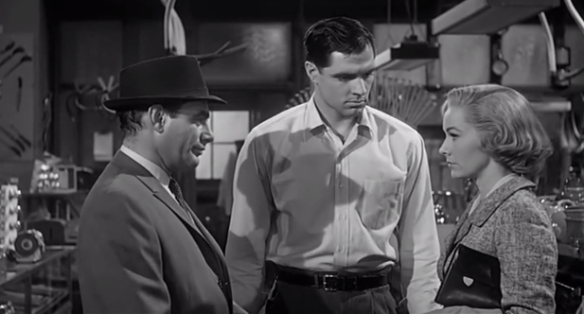
Time Limit hones in on an investigation into a potential court-martial of a major who looks to have caved to Communist ideology and committed acts of treason against his men and his country in a North Korean POW camp.
Richard Widmark, as the producer and one of the primary architects, is the anchor of the movie as the primary officer — a clear-minded Colonel — called upon to compile the details of the case.
But it is really Richard Basehart with the most complicated, ever-shifting role. It’s easy to sleep on him because of his stint in Europe, and he was never intent on being a movie star. And yet over a serpentine career, he left a trail of memorable noir (He Walked by Night, Tension), arthouse classics (La Strada), and mostly forgotten dramas like Reign of Terror or Fourteen Hours.
Because Time Limit functions mostly as a character piece albeit laced with flashbacks and ratcheted with tension. The ensemble itself is made up of a handful of others. General Connors is the Colonel’s immediate superior, and he’s pushing for a quick court-martial. He doesn’t want the boys to suffer through any more trauma. Although he’s not a totally unlikeable fellow, he does have a very concrete way of thinking. It’s abrasive, to say the least.
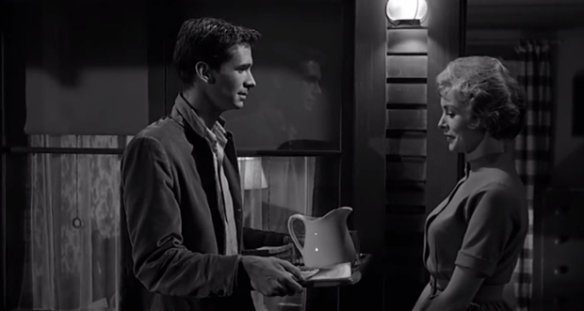
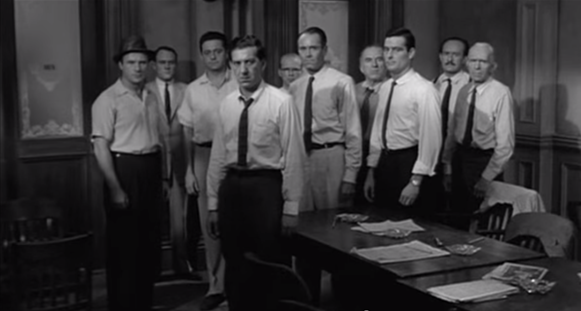
If you’ve read me before, you know I have a soft spot for Martin Basalm, and it started with movies like 12 Angry Men and Psycho and steadily built over time. He’s just so versatile while never losing his personal DNA as a performer.
Time Limit finds him on the more irksome spectrum as a busybody rat fink, who always has a way of divulging information to interested parties, much to Widmark’s displeasure. But for every tattletale by Sergeant Baker, there’s a supreme act of loyalty by the faithful and whipsmart corporal Jean Evans (Dolores Michaels). If we were to codify the movie purely between good and bad, she is one of the movie’s unsung heroes.
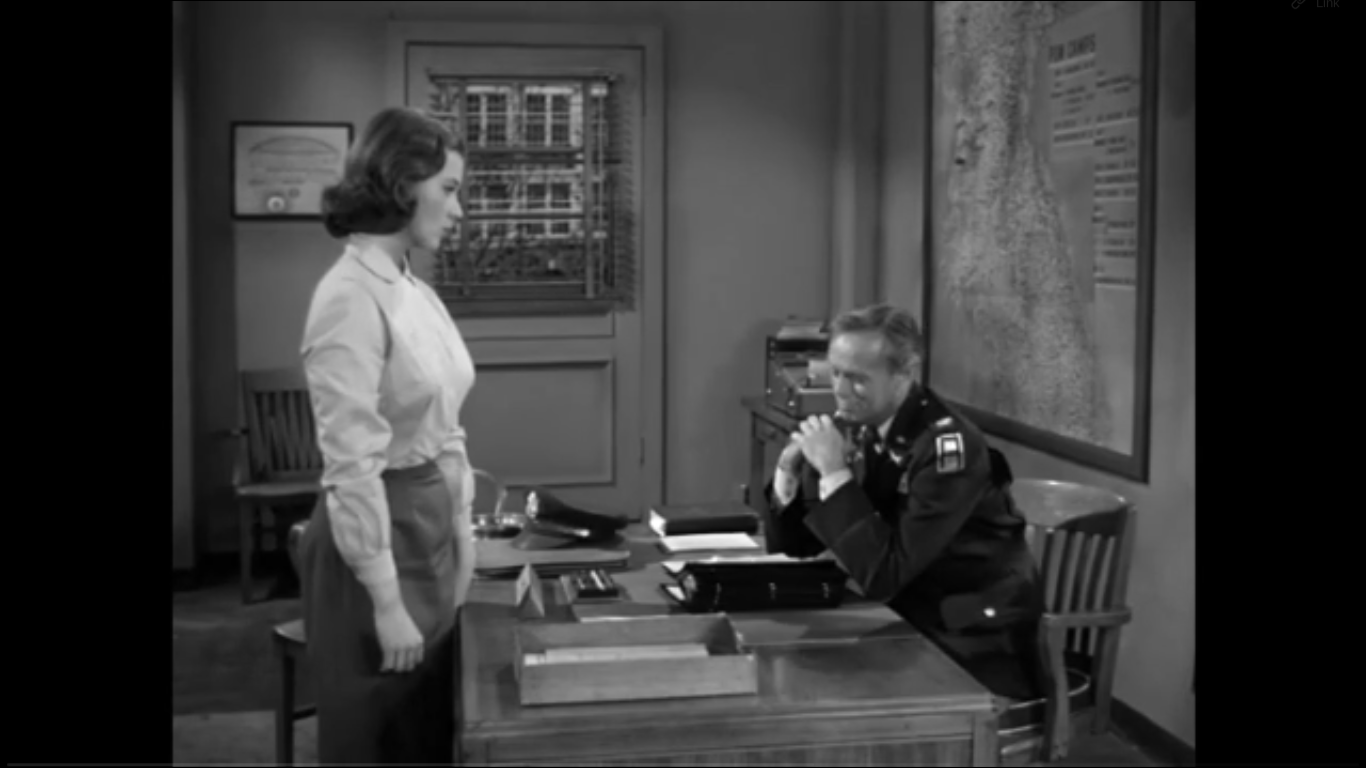
But they must also have witnesses — people with first-hand knowledge of the case — both personal and otherwise. An almost unrecognizable Rip Torn is a clean-cut, fresh-faced member of the unit who was there in the POW camp when the Major turned. Mrs. Cargil (June Lockhart) has a much different point of view because she still can’t believe the debilitating change that has come over her husband. It’s not like him. Something else is going on under the surface.
The score rages too much for my liking, but for what it is Time Limit plays quite well. The General starts breathing down Edwards’ neck — with personal interest invested — his son was one of those killed in the camp. It certainly cannot be discounted. Then, there are these very particular repetitions in the many testimonies (describing factors like acute dysentery). Something does not add up because everything lines up almost too perfectly.
More than anything, it does feel like Malden makes his actors look good. I’m thinking of a particular scene where Widmark is absent. Balsam leads Basehart into the office to wait but then prepares to ambush him and give him a piece of his mind. Michaels makes sure she is present to moderate, but first Balsam leans over his superior in his chair. Then, the close-ups cut back and forth between him and Ms. Evans as they have at it.
The tension in the sequence is palpable because the scene is blocked and covered in such a way that we feel the entire essence of what is going on. The visuals not only augment the performances but also the emotions underlying the sequence.
Winston Churchill is cited as saying, “In wartime, truth is so precious that she should always be attended by a bodyguard of lies. Widmark turns these words on their head because he says, “Truth can be more rotten, more vicious, and destructive than any lie.” Within the context of this move, he’s right.
Like Act of Violence, it becomes a film of making sense of a clouded past under circumstances the offenders are not proud of. The General invokes an unbreakable code for all his men — even his son — a code that must be adhered to with unswerving resolve. It’s a graceless proposition that no one can stand up to. Because for the hundreds of days men are heroes, there’s always going to be a few where they falter.
The question remains how do we canonize others? Is it at their most cowardly and despicable or at their very best? For those paying attention, the irony in the General’s final convictions should not be lost on us, “The Code is our Bible, and I thank God for it.”
If you’ll allow me one final digression, a book that’s pierced me to the core is Silence by Shusaku Endo. It is about Catholic priests, not soldiers, but they face a similar conundrum: the desire to attain some sort of martyrdom. However, what if someone is forced to face the ultimate ignominy instead? Each must struggle and make peace with a world that will openly disdain them, and that is a tough pill to take for any person.
3.5/5 Stars
 The opening images of Seven Days in May could have easily been pulled out of the headlines. A silent protest continues outside the White House gates with hosts of signs decrying the incumbent president or at the very least the state of his America. We don’t quite know his egregious act although it’s made evident soon enough.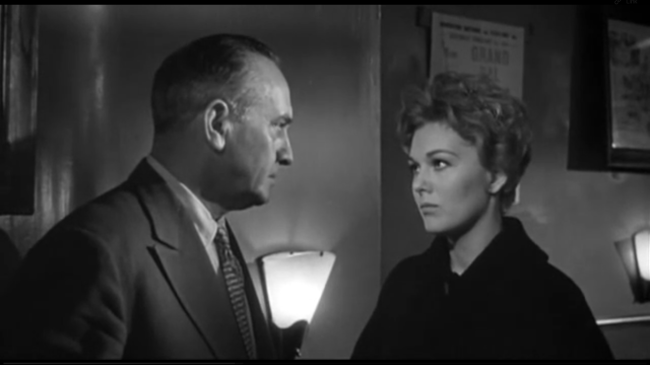

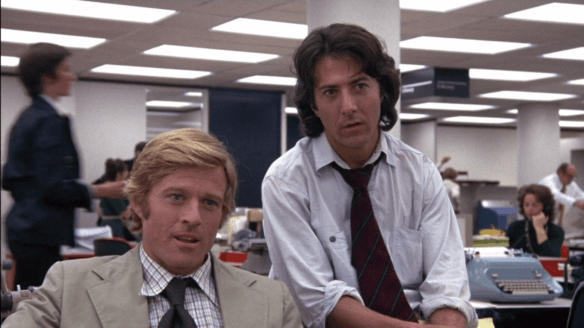 You couldn’t hope to come up with a better story than this. Pure movie fodder if there ever was and the most astounding thing is that it was essentially fact — spawned from a William Goldman script tirelessly culled from testimonials and the eponymous source material. All the President’s Men opens at the Watergate Hotel, where the most cataclysmic scandal of all time begins to split at the seams.
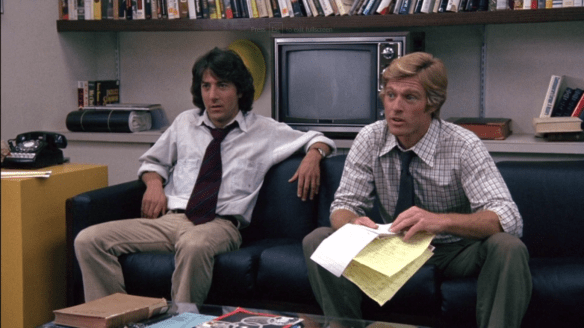 But it only takes a few breakthroughs to make the story stick. The first comes from a reticent bookkeeper (Jane Alexander) and like so many others she’s conflicted, but she’s finally willing to divulge a few valuable pieces of information. And as cryptic as everything is, Woodward and Bernstein use their investigative chops to pick up the pieces.
 Gordon Willis’s work behind the camera adds a great amount of depth to crucial scenes most notably when Woodward enters his fateful phone conversation with Kenneth H. Dahlberg. All he’s doing is talking on the telephone, but in a shot rather like an inverse of his famed Godfather opening, Willis uses one long zoom shot — slow and methodical — to highlight the build-up of the sequence. It’s hardly noticeable, but it only helps to heighten the impact.
 It’s the bane of my literary existence, but I must admit that I have never read Joseph Heller’s seminal novel Catch-22. Please refrain from berating me right now, perhaps deservedly so, because at least I have acknowledged my ignorance. True, I can only take Mike Nichol’s adaptation at face value, but given this film, that still seems worthwhile. I’m not condoning my own failures, but this satirical anti-war film does have two feet to stand on.
 The Chaplain (Anthony Perkins) doesn’t feel like a man of the cloth at all, but a nervously subservient trying to carry out his duties. An agitated laundry officer (Bob Newhart) gets arbitrarily promoted to Squadron Commander, and he ducks out whenever duty calls. Finally, the Chief Surgeon (Jack Gilford) has no power to get Yossarian sent home because as he explains, Yossarian “would be crazy to fly more missions and sane if he didn’t, but if he was sane he’d have to fly them. If he flew them he was crazy and didn’t have to; but if he didn’t, he was sane and had to.” This is the mind-bending logic at the core of Catch-22, and it continues to manifest itself over and over again until it is simply too much. It’s a vicious cycle you can never beat.
 But the tonal shift of Catch-22 is important to note because while it can remain absurdly funny for some time, there is a point of no return. Yossarian constantly relives the moments he watched his young comrade die, and Nately (Art Garfunkel) ends up being killed by his own side. It’s a haunting turn and by the second half, the film is almost hollow. But we are left with one giant aerial shot that quickly pulls away from a flailing Yossarian as he tries to feebly escape this insanity in a flimsy lifeboat headed for Sweden. It’s the final exclamation point in this farcical tale.




 4 Star Films