
 Saying that Phil Karlson has a penchant for gritty crime dramas is a gross understatement. And yet here again is one of those real tough-guy numbers he was known for, where all you have to do is follow the trail of cigarette smoke and every punch is palpable–coming right off the screen and practically walloping you across the face.
Like all heist films, there must be a point of inception, however, Kansas City Confidential finds its story after the crime has been committed and the perpetrators have split up without a hitch. The man who takes the heat, their fall guy and the unsuspecting stooge is Joe Rolfe (John Payne who is adept at playing such roles) a nobody truck driver and a convict once upon a time.
It seems like the perfect crime as the three hired hands all wore masks and had no connection to each other, except for the stocky and demonstrative Mr. Big, the mastermind behind the whole operation and the one calling the shots. He sends each man off with enough money to tide themselves over until he contacts them to reconvene for their big payoff. Whether or not he will actually cough up the 300,000 clams he owes each of them is quite another story.
Still, each man heads his own way and Joe is getting grilled by the cops day after day in the hopes that he will crack. Finally, he is released, but with no prospects and no job, he sits in a bar stewing in his anger. The story takes it’s next big turn when he follows a lead down to Mexico to tail one of the hoods in on the job Peter Harris (Jack Elam). And although Joe is going in blind, he soon catches wind of the impending rendezvous in Barados and decides he’ll just show up as well, to get to the bottom of the entire mess.
It’s there where he first crosses paths with two other leering hoods, the beady-eyed Tony Romano (Lee Van Cleef) and the silently brooding Boyd Kane (Neville Brand). However, while keeping tabs on these cronies, he keeps company with a budding lawyer Helen Foster (Coleen Gray), who has come to call upon her protective father, the former policeman Tim Foster. If this set up isn’t plain enough already, it certainly becomes increasingly interesting as the gears continue to turn towards the story’s inevitable climax.
Most certainly Kansas City Confidential boasts jarring close-ups, low budget facades and perpetually sweaty faces that accentuate its unsentimental noirish qualities. However, Coleen Gray acts as a more enlightened noir heroine, who does not grovel for her man or weep incessantly at the thought of danger. Instead, she’s training to be a lawyer, and rational but still unequivocally kind. Despite not having a proper meet cute, the chemistry between Gray and Payne still works surprisingly well.
What makes the film inherently more interesting is how the crime is embroiled with family issues. Because, as an audience, we know Mr. Big’s identity: a corrupted cop who got a bum steer and now is going to reap the benefits of setting up some real losers. Still, that doesn’t excuse what he did and Joe got dealt a similarly sorry hand. The fact that Foster’s daughter is involved sheds him in a more humane light and in the same instance makes Joe a more likable figure. In many ways, she brings out the best qualities of both these characters. It’s the darker recesses that lurk behind their characters. Those are made more evident by the likes of Lee Van Cleef, Jack Elam and Neville Brand, a real rogues gallery of baddies if there ever was one.
4/5 Stars
 “Things are only as meaningful as the meaning that we allow them to have.” ~ Beverly
 The fact that Miracle on 34th Street and this film came out the same year seems to suggest that there was something special in the air of New York City that year. It was a magical place, specifically during the Christmas season with Santa Claus going on trial and winning, while tramps helped reform millionaires. Admittedly, It Happened on Fifth Avenue is one of those films that could easily come under fire for its implausible plot, its unabashed sentiment, and any number of other things.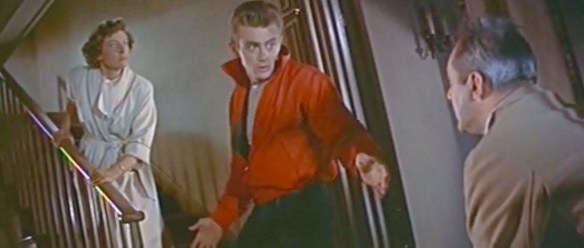
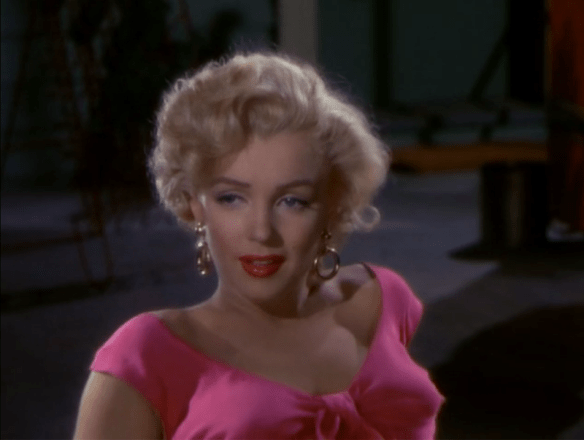 Rainbows, the soft misting of waterfalls, and honeymooning couples going through the tunnel of love. It hardly feels threatening at all, but that’s what makes film-noir so delicious. As the film style most reflective of the human condition, it proves that the dark proclivities and jealousies of the human heart can crop of anywhere–even a gorgeous tourist trap like Niagara Falls.
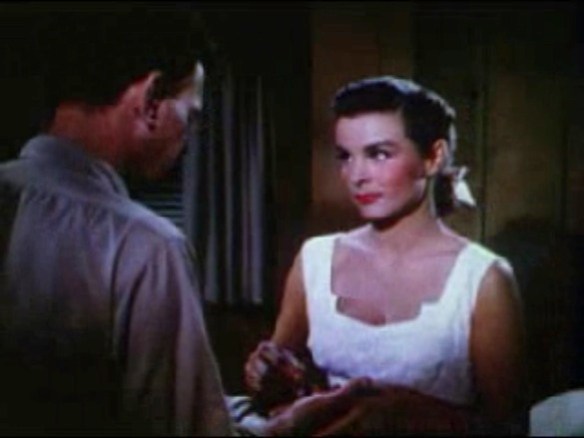 Without a question, Jean Peters becomes our favorite character as Polly, and it was an eye-opening for me personally to see her in a role so vastly different than Pickup on South Street. I had pigeon-holed her, rather erroneously as such a character, but Niagara shows a more tempered side to her persona that felt more representative of her as an actress. Max Showalter plays her husband, the genial and oblivious Ray Cutler, who takes his lovely wife on a long overdue honeymoon, only to have it totally ravaged thanks to the Loomises.
 I find that many of the best Christmas movies aren’t really about Christmas at all — at least not in the conventional sense that we’re so used to. Not trees or presents or lights or even holiday sentiment although those might all be there.
 “Heathens are not always low just as Christians are not always high.” – Gregory Peck as Father Chilsum
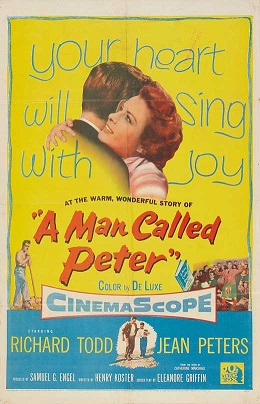 The film’s tagline reads, “Your heart will sing with joy” and that about sums up A Man Called Peter.
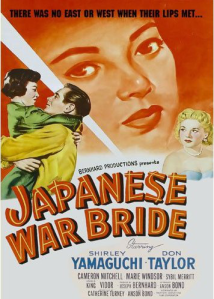 Much like Sam Fuller’s Crimson Kimono (1959), Japanese War Bride’s title carries certain negative stereotypes, however, its central romance similarly feels groundbreaking, allowing it to exceed expectations.
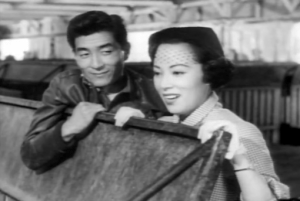 Jim looks to build up a happy life with her as he looks to take some of his father’s land to keep a home of his own and raise crops. Tae begins to acclimate to her new life and gains the respect of the Taylor family while making a few friends including the kindly Hasagawa siblings (Lane Nakano and May Takasugi) who work at a factory nearby. The icing on the cake is when Tae announces she’s pregnant and Jim could not be more ecstatic.
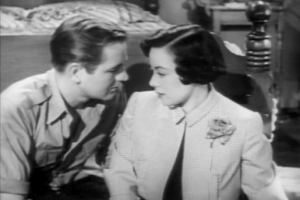 Japanese War Bride is continuously fascinating for the presence of Japanese within its frames. First, we have a rather groundbreaking and relatively unheard of interracial romance between the always personable average everyman Don Taylor and stunning newcomer Shirley Yamaguchi. Their scenes are tender and hold a great deal of emotional impact. It’s the kind of drama that has the power to make us mentally distraught but also imbue us with joy.
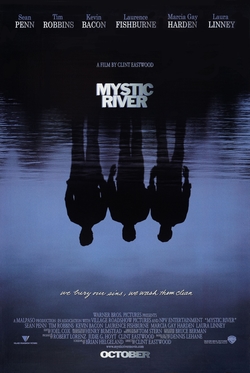 When you enter into the world of a film you often expect it to be perfect in your own minds-eye, following your own rationale to a logical conclusion. In that sense, Mystic River is invariably imperfect in how it ties up all its loose ends, but then again, what film really can bear that weight — and it’s all subjective anyhow. Instead, Clint Eastwood’s Boston-set drama builds off a story about three young boys and evolves into an engaging police procedural intertwining the lives and events of these three individuals. But it all starts with a game of street hockey.
 4 Star Films