The Search (1948)

The_Search_posterAny knowledge of director Fred Zinnemann only aids in informing The Search. Formerly living in a Jewish family in Austria, he would immigrate to the bright lights of Hollywood in the 1930s only to have both his parents killed in the Holocaust. So if you think he had no stake in this picture you would be gravely mistaken.

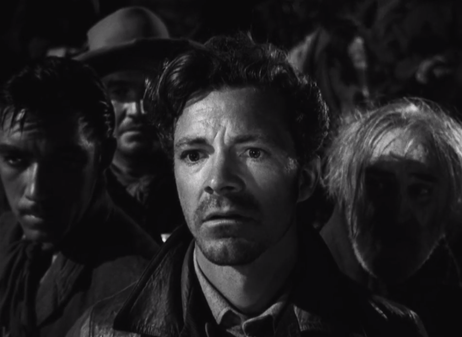
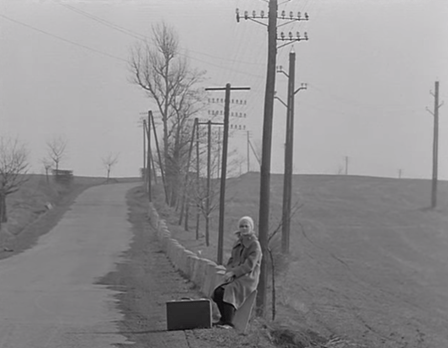
Like Carol Reed’s Third Man of the following year, Fred Zinnemann’s film does an impeccable job in its opening moments placing us in a landscape that feels all but tangible. Improved by true post-war locales, The Search gives audiences a fairly frank depiction of the trauma and destruction left in the wake of such an all-encompassing wave of carnage like WWII.

At least in this area alone, there is no sense that this is a facade or something fake and done up to look real. There’s little of that. Not least among the casualties are children displaced from all different nations and backgrounds. Subsisting without families through much of the war.

Now, with the clouds dissipating there is work to be done. It’s the task of understaffed personnel to begin sorting through all the pieces to try and get everyone back where they need to be. It seems an insurmountable job but they get on as best as they can.

Mrs. Murray is one of the workers we get to know, a woman with both a sense of pragmatic industry but also an underlying warmth. She knows if her job is done well, there will be many children given far better lives. She does everything in her power toward those ends.

Carrying a few points of reference from Aline MacMahon’s early career, it truly is a joy to watch her fall into this role which is a stark departure from the likes of One Way Passage (1932) or Gold Diggers of 1933 (1933). Certainly, it’s less flashy but no less meaningful. She makes it count.

The pure ambiguities created by language barriers is made palpable and for American viewers, there is a narrator but little in the way of interpretation. So much of what goes on is either left unsaid or must be taken with a grain of salt. That’s compounded by the fact the reticent children are afraid men in uniforms might be SS troopers or any word they let slip will be subsequently used to send them away to a concentration camp.

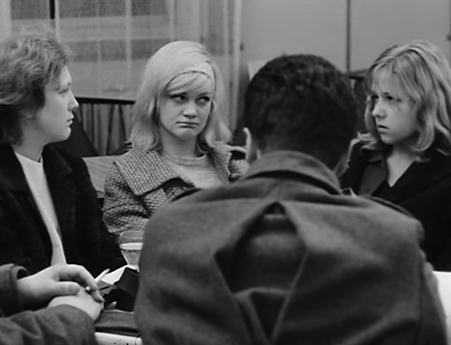
While it’s near impossible to take on two viewpoints at once, at any rate, we begin to understand not only Mrs. Murray’s predicament but also the well-founded fears of these displaced youths. That’s what leads one group of children, crammed into an ambulance marked with an ominous red cross, to scatter at the first opportunity. One includes a pale-faced boy named Karel who has remained all but silent during his initial questioning and yet his will to survive is insurmountable. Still, one needs food to survive and he doesn’t have any.

This problem is what prompts the initial meeting of the two figures who we might consider our heroes. It actually happens 40 minutes in and it nearly doesn’t amount to anything at all. Sitting in his jeep, lazily kicked back, eating a sandwich, is an army engineer named Steve (Montgomery Clift) who is soon being shipped back home.

He sees a small body pop up behind some rubble obviously eyeing his lunch. The boy’s afraid to take a handout and so the soldier puts his jeep in gear to drive off but thinking better of it, he turns around and tosses the boy his sandwich. Here we have the genesis of their curious relationship, at first tenuous, because Karel has learned to fear other people and their lack of formal communication lines makes mutual understanding even more difficult.

Though not as intense as his most revered parts, Monty Clift provides a genuine charm to the role, an all but effortless job at character building. Young Ivan Jandl knew no English going into the shoot but this same undoctored quality makes the opening sequences all the more imperative. He and Clift build a rapport that’s right there in front of us.

Initially, Karel lashes out thinking he is being held prisoner again. Steve tries to get him to understand his newfound freedom and when that is established, next comes the acquisition of language which the bright boy picks up quickly. One could say that The Search is at its finest when the pair is stuck in a space together. I’m not sure about others but I resonate with these scenes. The moments where a language barrier necessitates some form of universal understanding. Words have no meaning. Like in Film itself, actions can be far more universal than any amount of exquisite dialogue. For example, chocolate tastes “good.” Alcohol smells “bad.”

Together the soldier and the boy form a bond to the point Karel follows him around like a lost puppy. He doesn’t want to be abandoned. Not again. Of course, we know Steve must ship out soon… Meanwhile, Mrs. Murray enlists the help of a concentration camp survivor (Jarmila Novotná) who is looking determinedly for her son — the dramatic irony all but apparent, if it wasn’t already.

As Steve begins to teach “Jim” English lessons, he and his buddy Jerry (Wendell Corey) try and get some news on the boy’s origins. And all they have to go on is the telling tattoo on his forearm. It’s the arrival of family from stateside that sets something off. A switch goes on inside of Jim’s brain and he realizes he needs to find his “mother” because he comes to understand what that word means and that his is missing.

The Search endangers itself with a melodramatic turn of events and to a degree, they do come. Speaking for myself, I was a most agreeable recipient if that’s what it was. With the trills of angelic voices and a final maternal embrace — the conclusion the entire film has been charted for — some emotional manipulation might be on hand. However, in a period of rebuilding, though the past must not be forgotten, nevertheless, there is a deep abiding need for hope.  I would like to think that The Search is a film acknowledging precisely that and offering some solace.

Out of all the bombed out buildings, emaciated children racked with trauma, and horrors upon horrors, there is still something that can and must be clung to. When we are lost and alone, we can be found and returned to the place where we belong. There is no need to wander aimlessly because we have a home. Whether or not you believe this picture to be a purveyor of authenticity, Zinnemann has provided a revelatory parable of genuine sensitivity. I for one admire its aspirations greatly even if they might be imperfect. Such a time calls for this kind of hope.

4.5/5 Stars

Leave No Trace (2018)

Leave_No_Trace.pngLeave No Trace instantly reminded me of two distinct reference points. The first relates to a man named Richard Proenneke who lived in the Alaskan wilderness for 30 years building his own cabin and raising his own food in a life of tranquil solitude.

Then, the other comes from a book I read when I was a kid called My Side of a Mountain, written by Jean Craighead George, following a young man who literally goes out into a forest, builds himself a home hewn out of a tree, and subsists off the land. The common themes running through these narratives are already quite obvious.

If you’re like me, especially in this technology-saturated world of ours, sometimes it seems like we’re pretty helpless and ever plugged into our devices. But some of us look at such stories and see a sense of romanticism. It seems like a nice idea — like a picnic or going camping — out communing with nature. Except it only goes so far. We love to read about it and live vicariously through others but we stop short of getting involved ourselves.

The pair existing in Leave No Trace is actually up to the challenge of living this life on the move, out in an Oregon nature reserve, surviving off the land, and in so many ways remaining self-sufficient. They are far closer than many of us can probably ever comprehend. Because everything they do has near life and death consequences. You don’t live as they do without getting close and forming a bond. There is no other way to exist aside from constant symbiosis.

The father, Will (Ben Foster), a former member of the military, has passed down so many practical skills to his daughter, training her up to survive out in the wild. It’s like an extreme version of homeschooling. Tom’s (Thomasin Mackenzie) social skills are lacking but if you stacked her up against anyone her age she’s probably more resourceful and capable than any of them. Because her brain has not been programmed by technology nor is it awash in a world of a vacuous glut of constant stimuli. Their total immersion in nature is refreshing as is their independence and very stripped down lifestyle.

But this journey is particularly worthwhile because it is still set in our world and so these two very unique individuals are forced to brush up against society and the norms in place. Technically, they are trespassing and so in a way they take on the mantle of fugitives constantly on the run as nomads dodging the authorities. You can only hide and break camp and get away so long. Even for people as attuned and regimented as them, there’s always a slip-up.

Now there are good folks in the world — social workers and then common, ordinary people who try and give them a leg up. There are ways to get Tom and her dad back into society without completing severing their ties with the naturalism that is most comfortable for them.

It is a story about a relationship, a very close-knit relationship between a father and daughter. But it becomes a story of maturation as well. Tom realizes her dad is hardwired a certain way. Whether it is restless feet, the demons of post-traumatic stress, or some unnamed specter, he’s constantly dodging, or simply discontent with modern society. He is never capable of settling down.

Meanwhile, she is willing to make allowances and sculpts each place they find together into a new home. Still, it never feels like she’s selling out completely. True, she’s enamored with a new bicycle and mentions in passing how having a phone would make it easier to communicate and yet the core aspects of her character do not waver. Tom still maintains her immense inquisitiveness and affection for all flora and fauna in the great outdoors. She loves dogs, makes friends over rabbits and honeybees. These are the places she is truly in her element.

However, she is also a willing participant, ready to enmesh herself in an ecosystem of people. She gets comfortable around the relationships she makes and yearns to set roots down somewhere. The great revelation comes when she realizes her father can never be that. Instead of always following his lead, she becomes more and more of her own person, making her own decisions. It has nothing to do with a split or not loving him anymore. This is about being mature enough to let other people go and being okay with the realization.

Read only as words on the page, Leave No Trace could be chock full of high drama but it wins its victories through the subtility of its leads and the more nuanced touches to fill in around the naturalism and bevy of sojourning survival tactics. Debra Granik directs the movie with an eye attuned to relationships and while generally unadorned, the movie is full of wonderment in the world’s natural beauty.

It exhibits the lush greenery quintessential to the rainy, fresh imagery that the Oregon coast conjures up. There is arguably no better film that I’ve seen to capture this environ in all its verdant glory. While a completely different sort of film, I could not but for a moment recall one of the greenest films to ever be on the silver screen, The Quiet Man. Because whether romantic or familial there’s no question the milieu of a film is so crucial in fashioning how we perceive a cinematic experience. Like its predecessor, Leave No Trace is a roaring success channeled through tranquil trails of its own creation. Sometimes those trails must break off and lead toward different destinations. Being content in moving on is key.

4/5 Stars

The Chase (1966)

the chase 2.png

Of all the reasons to watch this movie, I felt compelled to as a roundabout reevaluation of Robert Redford’s career as he just recently said The Old Man and The Gun would be his last film. He more recently still, admitted he never should have said he was retiring but for all intent and purposes, he’s winding down, focusing his energies on other endeavors.

The Chase is situated at the beginning of his career and although he’s not quite the star, Redford has an integral part to play. Bubba is a local boy who breaks out of prison. Due to his dashing good looks, they don’t immediately place him as a runaway criminal type but if Paul Newman could do it, I gather Redford could do it too.

If we had to pick one central conceit this would be it, except, on the whole, The Chase proves a meandering epic, purely hit or miss, especially given such a promising cast. It’s as bloated with talent as it is convoluted by so many character arcs, each coming at us from all over the place with varying degrees of interest and importance.

The local sheriff, named Calder (Marlon Brando), lives an honest life with his loving wife (Angie Dickinson). There is talk around town that the lawman is in the coat pocket of prominent banker Val Rogers (E.G. Marshall). Though the accusations seem dubious based on Calder’s simple integrity. However, if it is true,  he wouldn’t be the only one intent on getting on the big man’s good side.

Soon it’s Saturday night and the whole town seems to be having a party. The most coveted one is thrown by Rogers and sure enough, among his guests are the Calders. Though they hardly fit into the upper echelon, they have an open invitation because Val is intent on staying on the incumbent lawman’s good side for what he might be able to do for him.

Meanwhile, an agitated bank employee (Robert Duvall) and his coquettish wife (Janice Rule) put on a shindig for the “normal folks” who never seem to get an invitation from Rogers. The means might be humbler but they similarly get a little tipsy while play fighting, dancing, and openly flirting with anything with a pulse and a pickup line.

Two of the most accomplished adulterers and partakers in sordid gossip-worthy fodder are Emily and Damon, who are quite openly lovey-dovey, given they are both married to other people. It’s telling that the status quo is getting drunk and carousing with other’s spouses.  We hardly bat an eye because the whole town is rampant with this kind of conduct.

Despite being the lead and raking in a hefty fee, Brando spends most of the film moseying around town making house calls or patrolling the streets. In fact, initially, it feels like the most mundane and understated performance from Mr. Brando I can recall. That is until the final act where for once his hand is forced and he has to struggle for his own survival and any semblance of small-town law and order.

The only other moment where he enters such terrain again is in the final moments on the steps of the sheriff’s office; this time to deliver retribution. Because this is a film where everything seems to go awry. If the hothouse dramas of the 50s were a dying breed, The Chase might be the closest thing to a reanimation of the genre, albeit with younger, newer blood.

However, amidst this southern operatic melodrama, helmed by Arthur Penn, The Chase still comes off somewhat dated, maybe due to its evocation of earlier works. It’s as if the picture is trying to push an agenda of social importance for a new decade but simultaneously lacks a compelling framework to work within. The point is made quite clear that African-Americans and Mexican migrant workers are second-class citizens and subsequently mostly forgotten in this story. But there are few interesting conclusions on this front.

Otherwise, for the first half, there’s nothing organic or terribly alive in terms of authenticity. Because while Brando gives a fine turn, admittedly easy to overlook, most everyone else is carried away by the drama. They have nothing to give us that feels truly genuine and the story freely escalates by upping the temperature in the ongoing search for Bubba.

Finally, Redford and Jane Fonda get together, an escaped convict reunited with his long lost wife. Maybe they didn’t know it at the time but it would be the beginning of a meaningful screen partnership which has been forged over 50 years. But before long, even this brief, potentially intimate moment is interrupted by first one party, then two, and before long the whole town has turned their moment into the latest county-wide social event.

The junkyard is the finest attraction as it promises to give them the most wanted fugitive for miles around and they’ve come to be a part of the show. Soon folks are yelling exuberantly, lobbing firecrackers into the heaps of old automobiles as car horns honk in this symphony of tumult. But if this is where the climax begins it actually ends on the steps of the jailhouse in a scene that evokes if not JFK’s assassination then certainly Jack Ruby’s actions the following day. The clouds of misery linger over the frames but that’s not our biggest regret.

I think, no fault of its own, The Chase boasts almost more talent than it knows what to do with. So many actors come together at so many different crossroads of their careers. Of course, Brando is front and center. He and Robert Duvall still had The Godfather and many other classics ahead of them. Redford and Fonda were both young talents. E.G. Marshall had an illustrious career on stage and screen while Miriam Hopkins was in her twilight years in a small role. Angie Dickinson was pretty much in her prime. Even Arthur Penn had pictures with more socially incisive commentary and interesting themes including the cinema-shattering Bonnie and Clyde released the following year.

The bottom line is that in each individual case it’s easy to think of at least a handful of films each of these actors was involved in which were more enthralling than this one. It’s hard to hold a candle to that type of competition and against it, The Chase looks fairly mediocre. True, it’s a rather unfair fulcrum to measure a movie by but in this case, it’s very hard not to. Taking these unfair biases into account, it has something to offer the viewer even if it’s not quite as satiating as one would like.

3/5 Stars

Norma Rae (1979)

Norma_rae_ver2.jpgIf you had any trouble possibly liking Sally Field before — consequently, one of the sweetest actresses ever to cross the screen — then there’s little gripe to be had with her any longer. Norma Rae really does feel like a gift for her. Both as a story to be a part of and a character to portray since both speak to us intuitively as an audience. 

Marty Ritt offers a story that is as close a representation of his work as you might find — a narrative that’s not flashy but more importantly and yet still meaningful and chock full of human characters and conflicts. However, it’s not just sharing those elements for the sake of it. There is a rational impetus behind it all, setting out to shine a light on social grievances in order to enact some form of change. 

Again, he gets a script from husband and wife powerhouse Harriet Frank Jr. and Irving Ravetch who fortuitously helped define his career with stories such as The Long Hot Summer (1958),  Hud (1963), Hombre (1967), and this feature.

Its authentic inspiration stems from real life textile champion Crystal Lee Sutton, a worker in Roanoke Rapids, North Carolina. She spearheaded the unionization of her textile mill in an industry that has long held out against any regulation partially due to bullheaded leadership and ignorant lay workers who didn’t know any other life. There’s the arc in a nutshell. 

 Because Norma Rae (Field) is one of those people and she’s lived within a community of the very same folks all her life. Her father struggles to keep up with the strict regimen, her mother is losing her hearing systematically, and Webster has a couple young kids though she’s never officially married. As they might say, when she was a young woman, she knew a couple of men in the Biblical sense. 

Part of what makes her so likable is the trait of a genuine straight-shooter with the alacrity to do what she sees fit. When Reuben Warshowsky (Ron Leibman) sets up shop in town long-term, to try and get support for a union, most of the locals are wary of the outsider. Norma Rae asks him almost innocently, “Are you a Jew?” He responds in the affirmative and she responds that she’s never met one before. 

Though Reuben is a congenial fellow, he’s the definition of a fish-out-of-water, bred on New York society with a quality education, Dylan Thomas, and an attorney girlfriend waiting for him who his mother loves.

Ron Leibman does a fine job in the role because he doesn’t just play it charismatic and likable through every beat. He manages to skirt this fine line where there are genuine flashes of malice where we question Reuben as a person. Is he simply taking advantage of people or forcing others into a vision of what he thinks will be good for them? He even acts like a grade-A jerk and a bit of an instigator when he’s feeling up to it. 

Thus, Norma Rae grounds him as someone who does have a full stake in this fight, in this community, and this story. This is her job, her family, her reputation all put out in the open — all on the line and she’s willing to go for it. That takes true gumption and a fighting spirit few individuals can muster. Boy has she got it. She’s also capable of the southern cajoling that made men like LBJ such effective movers and shakers. 

However, the film constantly plays with this tension within her. Because she’s not a rich person by any means. When she’s given a promotion to a spot checker, her hourly rate goes up incrementally and she subsequently loses the respect of all her colleagues as someone who has gone to the enemy. The relationships mean more to her than the pay just as a better future has greater precedence over sacrificing her time and pouring heart and soul into Reuben’s cause.

Norma Rae also has a pulse of the ultimate good which is admirable. She goes to the local church — an all-white establishment — posing two questions to the reverend she has known all her life. First, asking if he would call her a Christian? He smiles and nods, with a lapse or two, yes.

But then, more pointedly, she asks if he would call himself a Christian? He’s still so caught up in the idiotic dogma that blacks and whites cannot mix. And yet for Norma Rae, the bottom line is there ought to be justice — and the church, if it’s really going to practice what it preaches, must be involved in this same dialogue.

It’s not always the words spoken but the images seen that leave a lasting impact. A funeral sequence in the rain. No words just a hearse being lowered into the ground inch by inch. The point is made better than any eulogy by man There’s Norma Rae transcribing an anti-union message on toilet paper to pass on to Reuben or the heart-to-heart she has with her kids to head-off any of the scurrilous slander they might pick up. There’s her furious struggle as two policemen try and drag her to a police car. 

Likewise, Field standing up with a cardboard cutout simply scribbled with the block letters “UNION.” She slowly circles around, resolutely, again and again. People notice her, stop for a moment of consideration and then all turn off their machines in a simultaneous act of solidarity and defiance. 

This particular sequence goes on for several minutes and the sequence is allowed to unwind wordlessly as we slowly hear the din grow progressively dimmer. It could have easily been cut down to its bare essentials and yet in this way the full brunt of the impact has been made apparent as we are forced to contemplate the full gravity. It’s an everyday action that takes on monumental dramatic importance. 

The same could be said when the ballots are read in consideration of the new union. It’s back and forth. The tension again is palpable but it’s the jubilation on the faces that captures me. In every one of these instances, Ritt gives the immaculate illusion he lets it happen. No tricks. No extra flourishes. Just all right there for us to be a part of. He’s at his best with human stories of fully realized people working through things of seemingly genuine importance. That is Norma Rae to a tee. 

4/5 Stars

Sounder (1972): A Family and Their Dog

sounder 1.png

In adolescence, you are inundated with stories about dogs. The Red Fern Grows, Shiloh, Homeward Bound, Ginger Pie, Marmaduke, Lassie, Rin Tin Tin, Air Bud, Snoopy, and Old Yeller. And that’s just the tip of the iceberg, off the top of my head. Sounder belongs to the same storied tradition based on humanity’s infatuation with canines which is certainly well-founded.

Except some will be surprised to find that this Depression-era tale brought to us by Martin Ritt is hardly about a dog at all. True, we are met with the eponymous hound dog right off the bat. What greets our ears is the bouncy staccato harmonica-twanging behind the visuals of a frantic tear through the underbrush that goes with the territory of a coon hunt. It’s an instantly recognizable image to introduce our characters.

Not just Sounder but a boy named Henry Lee and his father, the jovial but hardpressed Nathan. The year is 1933 and we’re in Lousiana in the midst of the Depression. With society sectioned off as it is, as a black family, the Lee’s have been forced to scuttle through by sharecropping for a white farmer. It’s the fate faced many African-American families of the day.

They’re perpetually in debt, have trouble keeping food on the table, and live with the most meager means possible. All in all, with two parents, Nathan and his wife Rebecca (Cicely Tyson in a fiercely unvarnished performance), there are also three kids, and of course, Sounder.  Writer Lonne Elder III takes this atmosphere, the environment, and the family living within it and builds the framework of a story with great care and concern for their everyday reality. The plights and the joy that they still manage to have.

Taj Mahal, while also providing the film’s music, does a fair number in front of the camera as well as the energetic neighbor named Ike who drifts in and out of the story as he pleases. There are baseball games where Nathan Lee comes out the hero striking out his last opponent with runners in scoring position. From the local church, you can hear Gospel spirituals like “Old Time Religion” ringing out with fervor.

But in the same community, there’s a segregated schoolhouse and Nathan gets jailed and sent away for a year of hard labor for what seems like a trivial infraction. White men, including the local sheriff and the shopkeeper, will hardly budge an inch for a black man. That’s what seems so pernicious. Sometimes it’s not even outright violence but it’s this inability to change or have any amount of grace or understanding. There is no clemency to be had based on this rigid narrowmindedness.

When you begin watching more movies sometimes you fail to acknowledge those that are unpretentious and good-natured — the kind of stories that are meant for the whole family and wholly uplifting to the soul. Sounder is one of those movies. Surely there was a social hierarchy in place of oppression and de facto segregation. And yet around the nucleus of the family, there is a decency that pervades the picture and ultimately lifts it up. While it doesn’t completely eradicate ill-will, it does push it to the fringes of the frame.

Family reunions have never been so poignant — considering the moment where Nathan finally comes home after innumerable trials and his family has toiled and sweated day after day to hold onto their land. What they have in that instant is a small slice of heaven. It’s written over every face as the space between them rapidly fades away and they meet in an embrace that brings their world back together as it was meant to be.

But Sounder also manages to be a tale of empowerment for one lad in particular, young Henry Lee. The movie places people in his life who are willing to give him a leg up. There’s old Mrs. Boatright who is one of the few whites who will take any kind of stand — even a slight one — and she blesses him with things like The Three Musketeers.

It’s these people and books and knowledge that give a glimpse to a world of greater freedom and opportunity. An avenue to a life where people cannot keep you down no matter how hard they try because with ideas comes a power to think and to be your own person, set on improving yourself and the world as you go forward.

Yet another woman, a schoolteacher, takes an interest in Henry Lees improvement since she perceives the quiet wisdom that can be cultivated into something fully-realized. Her gift to him comes through education and elucidating him about figures like Harriet Tubman, Crispus Attucks, and W.E.B. Dubois — people who were shapers of history big and small — just as he has the opportunity to be.

Granted, it does feel as if the family’s pet is pushed to the periphery for much of the film, but in a way, it feels like a realistic depiction. He doesn’t need to be front and center. By their nature, if dogs are really man’s best friend, what makes them so meaningful has to do with their loyalty — they are always there — consistently reliable.

Because the life of an impoverished family like the Lees is the epitome of hardship. They need all the stability they can get. You will come to realize it is not really about a dog at all and certainly not one of those family-friendly films marketed as such because they feature some extraordinary, nearly superhuman animal.

No, Sounder is for the family because it takes care in documenting the realities of this particular family in a way that is thoroughly candid. It might still stand as faulty advertising but for the plethora of folks who are moved by the movie, they probably won’t be complaining when the credits roll. What we get is far better than a run-of-the-mill boy and his dog narrative. What I am reminded of is one subtle parallel. Sounder is winged by a shotgun when Nathan is taken away. He doesn’t come back for a long time. But when his wounds are healed, he returns good as new. There’s a startling resilience present in both the canine and the family.

4/5 Stars

Paris Blues (1961)

paris blues 1.png

I’m the first to admit I’m no jazz connoisseur but I dig it. In this age that we now live in of shuffling and song roulette — where the single has surged passed a cohesive album in terms of singular importance — there has been some small amount of education going on for me.

Awareness of some of the classics is starting to set in. There’s recognition of a few of the heavy hitters like Miles Davis, John Coltrane, Bill Evans, Dave Brubeck, Count Basie, and of course Duke Ellington. When we hear even the briefest interludes of “Take The A Train” we will grab a hold of it. Ellington provided the score for Paris Blues including some of his beloved classics and they couldn’t be more fitting.

Because Martin Ritt’s film is hot when it comes to jazz — you can feel it wafting through the air and giving an added layer of sensuality to the already romantic milieu of the Parisian streets. This is a propitious factor married with the fact the picture also takes its shoot right to the streets of Paris, even filling out the cast with a few native supporting players.

Less than a decade before, we had Roman Holiday (1953) and now we have something that might just do the same for France, except with an extra flavoring of brass and a rhythm section. The cast couldn’t be better with two of Ritt’s former students from their Actor’s Studio days, power couple Paul Newman and Joanne Woodward. Equally compelling is another legendary leading man in Sidney Poitier and Diahann Carroll as beautiful and sophisticated as ever. I admire them all.

paris blues 2.png

However, in translating the source material to the silver screen, you could easily say the story lost most of its clout. Harold Flender’s original novel was about two interracial romances between two vacationing Americans and two expatriate jazz musicians working in Paris. However, this was Hollywood in 1961. Although the script teases the original storyline when Ram Bowen (Newman) comes onto Connie Lampson (Carroll) on an inbound train, it was not meant to be — quickly brushed off for more conventional demarcations.

Believing the public was still not ready for such portrayals, the studio got cold feet and smoothed things out by making sure everyone ended up with their “kind.” It’s Lillian Corning (Woodward) who gets starstruck with the trombone player and her friend eventually softens to the handsome saxophonist Eddie Cook (Poitier).

Acknowledging this grievance, the only thing that makes me mildly okay with the change is that the husband and wife duo of Newman and Woodward get paired opposite each other so we see real-life romance partially channeled into the movie. While the four leads look great together and there’s indubitable chemistry, somehow it still feels like something is missing.

paris blues 3.png

Louis Armstrong leading a parade of brass into the jazz club is a shining moment full of uninhibited synergy that fills up the underground space in the most joyous of fashions. As he always does, Wild Man Moore brings down the house. But the real issue is the lack of pizzazz outside these performances.

The story meanders without creating enough interludes ripe with meaning. They’re either cutesy momentary snapshots of lovebirds in Paris or understated pieces of human drama. Not by any means bad but what the picture might have used were some sustained sequences of action in places where it floundered. Most vividly I can recall the Vespa ride through the streets or even the party which is raided by the local police which helped make Roman Holiday a landmark.

There is nothing so memorable here. Instead, some characters leave on the train they arrived on and others stay behind. Musical aspirations and romance are continuously being weighed. Whether we care that deeply about any of it is up for debate.

Worst of all, these issues are only exasperated by the fact that the story no longer has one of Martin Ritt’s finest attributes, a theme of social importance. Because in a Pre-Civil Rights age, Paris Blues could have been a much more moving statement; instead, it’s a middling love story.

Poitier gets one conversation with Carroll where he candidly vocalizes that in Paris he’s a man or he’s a musician. To borrow someone else’s words, “he’s judged not by the color of his skin but by the content of his character” and even more so by his artistry. It spawns a minor spat but the opportunity to make a statement — a statement without the utterance of words even — was lost before it even began. Perhaps the wasted potential hurts more than anything. Like the musicians at its core, Paris Blues is ultimately a lightweight.

3/5 Stars

No Down Payment (1957)

No_Down_Payment_-_poster.jpg

When a film seems to materialize in front of you coming out of nowhere and subsequently moves you, it seems worthy to try and champion it to others who might also be pleasantly surprised. But first, I believe an acknowledgment of director Martin Ritt is in order because I’m not sure how much adulation he usually gets amid the myriad of prominent Hollywood workhorses out there.

Though he first started out in the theater and then television during The Red Scare years, Ritt ultimately transitioned to movies with a body of work full of variety that has all but stood the test of time on numerous accounts. Highlights include a six-film collaboration with Paul Newman including the likes of The Long, Hot Summer (1958), Paris Blues (1961), Hud (1963, and Hombre (1967). Other noteworthy successes many will know are The Spy Who Came in From The Cold (1965), Sounder (1972), and Norma Rae (1979).

He is most definitely an adherent to progressive, socially conscious filmmaking that, while never flashy in formalistic aspects, is nevertheless, chock full of depth for its commitment to humanist storytelling. It’s meant to ring true and touch on subjects that pertain to real people and the world-at-large captured through a lens of stark realism. To his credit, Ritt would never claim the title “Auteur” because he himself spent time as an actor and understood how collaborative such an art form is.

That brings us to the picture at hand, No Down Payment, which while being one of his earlier directorial efforts for film, already has his sensibilities in place. There’s nothing flashy about the picture per se but it readily digs into issues that feel uncommon and cutting edge for the very fact that we rarely see them portrayed in the 1950s. This film provides a very special opportunity and I was more than happy to oblige.

To put it succinctly, our story takes place in the residential neighborhood of Sunrise Hills. What we get is a disillusioning portrait of 1950s suburbia specifically in Los Angeles, that beacon of post-war middle-class living, observing the overlapping existence of four couples.

I enjoy how everything seems to be underlined by party chatter, Cowboys and Indians on the television, and groovy rockability — all integral parts of the ubiquitous soundtrack of the suburbs. But there’s also a veneer with two layers. The outward-facing street view with white picket fences and barbeques with the neighbors and then what’s actually going on, either when the doors are closed or when you can’t contain it anymore and rancor slowly asserts itself. Underneath we also soon realize that everybody is afraid of something.

A young couple just moving in is brought into the fold of the community. The husband (Jefferey Hunter) works as an up-and-coming electrical engineer while his pretty wife (Patricia Owens) urges him to get in a more lucrative field like sales so they can grow their social status.

If your image of Tony Randall is a nice guy or a hypochondriac, try on a philandering day drunk car salesman for size. Jerry Flagg constantly has his wife Isabelle (Sheree North) exasperated because he’s always strapped for cash and never dependable, with aspirations that keep him constantly flocking to the next big idea. Of course, he’s never able to see any of them to fruition.

Arguably, the least done up of any of the husbands is Troy (Cameron Mitchell), a war hero and Tennessee native who currently works as a car mechanic but soon hopes to be brought on as the local police chief. In fact, he’s banking on it. His wife, Leola Boone (Joanne Woodward) is intent on it as well since he’s promised they can have a child once he has greater job stability. She’s tried to bury painful memories of the baby she was once forced to give away. They too are plagued by marital bickering and late night alcohol consumption.

Last of all is Herman Kreitzer (prolific TV actor Pat Hingle) and his wife Betty (Barbara Rush). While she takes the children to church on Sunday, he stays at home and washes his car out on the street. Otherwise, there’s little discord in the house as he’s a loving husband and father who runs an appliance store and is a member of the local homeowner’s board.

Ritt’s picture, with yet another script fronted by Philip Yordan and actually written by Ben Maddow, has innumerable topics of interest. However, two that were the most intriguing to me had to do with the Kreitzers. Because it just so happens that Herman’s best employee, a man named Iko (Japanese-American though played by Aki Aleong), requested help in getting his family a home in a predominantly white neighborhood. As is, he currently has a taxing commute to work every day.

And though Herman is a good man, he’s hesitant to get involved knowing full well that housing developments have long been run by de facto laws of segregation. L.A. was like any other area where African-Americans were in places like Watts and Japanese-Americans were concentrated in Little Tokyo and even Boyle Heights for a time. That’s just the way it was. You stayed with your kind.

People wouldn’t like it one bit. Off the top of his head, he knows Troy, who fought in the Pacific, wouldn’t be too keen on a “Japanese” living in the neighborhood. So Herman ultimately brings the conversation to his church-going wife who voices similar apprehension (“Do you think you’re ready to have a Japanese as a neighbor?”). It’s this conversation over the kitchen table that causes him to reconsider. Because you see we already know he’s not a churchgoer and part of the reason we can guess has to do with the hypocrisy that is often so easy to find fault with.

That brings us back to Iko and his family. As Herman sees it, what good is a church if it doesn’t lend a helping hand to someone who needs it. How can you say you’re a “Good Christian” and not do anything to help these people? The issue is hardly resolved then and there but it’s a start. At least, in this case, we get the hint of closure in the end. Other threads aren’t nearly as sanguine.

It’s fitting that we return to an establishing shot of that perfect piece of the suburbs and all our main players are at church the following Sunday. Except for one, it means a long drive in a taxi cab to who knows where. While the others will make a go of trying to preserve their dreams, this lonely individual’s exodus is a reminder of how quickly our aspirations can crumble.

4/5 Stars

Footlight Parade (1933)

footlight parade 1.png

Though it still came out in the middle of The Depression, there is a sense that Footlight Parade does not confront the contemporary issues head-on and maybe that causes it to lose some potential power. Because, in a sense, it’s a period piece even if that period is only a few years prior when talking pictures were taking the world by storm. Of course, many audiences will be far more acquainted with Singin’ in the Rain (1952), which arguably did much the same and even a better job in its homage than this effort.

Likewise, a bigger bankroll for the movies at Warner Bros. meant they got longer, which wasn’t necessarily all that advantageous. As far as stories go, this one is pretty much on par with its predecessors (42nd Street and Gold Diggers of 1933) though, rather surprisingly, the cast doesn’t run as deep.

Now we have James Cagney, of course, and what makes Footlight Parade deserving of a special side note is the fact that it would serve as the Warner Bros. gangsters first chance to hoof on screen. Because he wanted to prove that he was more than a thug and boy was he ever, even if the picture never really stretches him. Above all, he’s Jimmy Cagney, through and through.

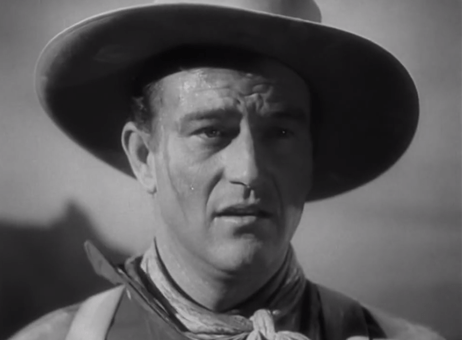
John Wayne makes a picture-within-a-picture cameo in The Telegraph Trail which is shown to Chester as a demonstration of the imminent reality. Silent pictures are totally on the way out and this new attraction will grab audiences away from the stage. With the changing industry goes Chester’s livelihood. His galling wife isn’t too understanding calling for a divorce rather than wait around for him to be completely destitute.

However, Cagney’s able to capitalize on his newest doozie of an idea that comes to him after a mundane visit to his local drugstore. He translates it to talking pictures. He pitches it to his two boob bosses and they bite on his vision to develop live “prologues” that can then be showcased in movie theaters all around, making them lots of money. It’s a good idea but their closest rival Gladstone has already jumped on the wagon. It’s no small coincidence that Chester’s longtime assistant jumps ship and conveniently leaves behind another parasite to swipe ideas.

The one person who stands by him through everything is his loyal and lovestruck secretary Nan Prescott (Joan Blondell), who nevertheless uses her acumen and street smarts to keep the utter insanity of his current work life tolerable. With the wolves primed to devour him, she’s just as feisty, out to protect his interests (and hers as well).

In the end, Chester smells a rat and puts the studio on lockdown as they race against the clock to churn out the three numbers they need to showcase to their potential backer, Mr. Apolinaris, who, despite ongoing indigestion, is a generally agreeable audience.

footlight parade 2.png

Ruby Keeler is hidden behind a pair of specks to play up unwarranted stereotypes in a generally uninteresting role. Meanwhile, Dick Powell and his huffy patron have little to do. You understand why Powell wanted a different career trajectory because there’s nothing to stretch him.

His patron’s bubble-headed brother, played by Hugh Herbert calls to mind later types paraded in front of the screen by Billy Gilbert. He relies on her sway, otherwise, he wouldn’t be able to hold onto his position as the resident content watchdog who constantly badgers Chester only to get the brush. Frank McHugh cultivates his gray hairs exasperated as the dance choreographer continually bombarded by incoming stressors on the eve of the big performances. He’s teetering dangerously on the verge of a nervous breakdown.

When the first line of an audition is, “show me your legs” and obviously it’s only for the gals, it just rubs the wrong way. There’s also an inherent sense that there needed to be more dancing and less plot, as much as I would follow James Cagney to the moon and back, figuratively speaking. Even “Honeymoon Hotel’s” repetitive cadence gets tedious and it feels more cutesy than a prime showing of Berkeley’s usual visual inventiveness. It’s the same issue I had with earlier numbers like “Pettin’ in the Park.”

However, the subsequent waterfall number gets us back to his element, by some unimaginable feat, we end up at a lavish pool gilded with finery. In an instant synchronized swimming was born (or at least promoted) and for some inexplicable reason, those overhead shots capturing the unified motion and shapes of the swimmers still blow my mind even today like a huge crowd creating shapes at a football game. What we receive is sensory overload of gestalt principles executed beyond what could possibly be imagined in terms of meticulous intricacy.

With “Shanghai Lil” Cagney gets in an excuse for a choreographed brawl which he handles ably and we do see him dance. It’s difficult to put into words completely but it seems a very sturdy approach with his feet working hard while his torso remains all but inert. It’s like there’s business on top and a party going on down below which gives him a fairly unique mechanic on the floor, resurrected from his earlier days in vaudeville.

What comes last is an ending meant to rival Gold Diggers fo 1933, still impressive but not nearly as meaningful. The “Shanghai Lil” trades out the stirring nationalism and triumph of the human spirit to cater to a number about a Chinese streetwalker played by Ruby Keeler in yellow face. Even with a turn toward the patriotic, it just can’t quite compete. But as always, it’s hard not to simply fall back on Cagney and praise him for guiding the picture with that surehanded tenacity of his that sees us through to the end.

4/5 Stars

Gold Diggers of 1933 (1933)

gold diggers of 1933.png

With the opening number “We’re In The Money,” this musical sticks it to The Great Depression and gives their audience a respite from the poverty waiting outside the theater doors. The tone is set as Ginger Rogers, surrounded by rows of scantily clad coin-covered women, sings out one of the song’s lines in Pig Latin. It’s one in a million.

Like its predecessor, the smash hit 42nd Street (1933), this is yet another hybrid of backstage drama and semi-extravagant production numbers. An incoming rapid-fire line of close-ups featuring Joan Blondell, Aline MacMahon, and Ginger Rogers all giving the camera a mouthful is a delightful portent of all that it to come from this bevy of talent. The sass meter goes through the roof.

But we never forget that it’s the Depression, though it would be an unnecessary reminder for audiences already living through the reality. As Carol quips when she hears the timeliness of their newest project, “We won’t have to rehearse that.” Because they’ve been living through it along with everyone else.

It means that they share a measly flat together. Get by from swiping milk bottles from the upstairs neighbors and fighting over clothes to make at least one of them look presentable for the prospect of an audition. There’s a lightness to it all as much as there is a camaraderie. They’re all in it together and that allows the picture to work. Otherwise, it would be too depressing. There needs to be that assurance and resolve driving our characters. They never get too low.

Ruby Keeler has time to fall for Dick Powell yet again, this time by simply sticking her head out the window to swoon over his piano ballads. Of course, things hit the pits when they find out that despite a swell idea, their backer and potential savior Barry (Ned Sparks), still is broke and so his visions of a showstopping triumph are all for naught. The insouciant joking of Powell has everyone a little hurt until he actually comes through in shelling out $15,000 just like that. He was never more serious.

So there we have it. Another stage production is in the works. Everything is coming together dandily but in a role reversal of 42nd Street, it is Powell’s Brad who is called upon to fill a void in the production when he’s needed most.

gold diggers of 1933 2.png

The original juvenile lead is not able to make the cut due to lumbago and so despite his continuous rejection of the part, he finally folds realizing so many folks are counting on him. We’ve already said it and we’ll say it again. The show must go on!

Their first number, “Pettin’ in the Park” is a near-surreal exhibition in sauciness utilizing a midget dressed as a baby, a studio orchestrated rainstorm, and women donning metal garb to foil their male suitors. Weird but it’s an unequivocal smash.

So big in fact that news gets out. Brad’s family hears he’s been moonlighting in the theater and is appalled. Because you see, he comes from a well-to-do family. Such a line of work would never do. Cavorting with chorus girls and acting is out of the question. He returns home but to no avail as his older brother Lawrence (Warren William) and the family’s lawyer Fanueal H. Peabody (Guy Kibbee) agree to come out to put an end to Brad’s career — not to mention his romance. After all, showgirls are reputed to be parasites, chiselers, gold diggers…

They get far more than they bargained for when a bit of mistaken identity causes them to get whirled away by the streetwise sauciness of Carol and Trixie who have these rich boys pegged and know exactly how to capitalize. It’s like taking candy from two stuffy, overgrown babies.

Beyond being Fred Astaire’s supremely talented collaborator on taps, it’s easy to rate Ginger Rogers as a first-rate comedienne even in this earlier juncture of her career. However, it’s Aline MacMahon with the juiciest part and the greatest showing which ultimately upstages Rogers and gives the picture its greatest buoyancy of sing-songy opportunism.

gold diggers of 1933 3.png

Joan Blondell does herself proud in her own right romancing Warren William. For the first time, I actually feel sympathetic toward the poor fellow. He’s got no defenses. Peabody is simply putty in the hands of a woman — especially someone as delightfully conniving as Trixie. But remember it’s all for a good cause as Brad and Polly are able to stay together and that’s just the beginning…

It’s almost a misnomer to call Gold Diggers of 1933 a musical outright. The way that Warner Bros. ran things, there were two units one for the romantic drama led by Mervyn LeRoy and then another headed by Berkeley for the choreography of his decadent visions. So what we have is the quintessential Depression-era drama filled in with some song & dance routines. It could be completely disjointed in its execution. But on both fronts there or moments of undoubted noteworthiness. It begins with a cast that does oh so much and the baton constantly gets passed between players who readily play their part one after another.

Then, the rest is pure Berkeley first taking his dreams and turning them into a reality. “In The Shadows” in an exquisite gift to the audience showcasing swirling hula hoop dresses with showgirls gracefully flitting this way and that. Then the lights go out leaving behind the contours of violins dressed with fluorescent light,s which make for another entrancing dance of shape and light. Here we have art where the result is so much more than a mere sum of its parts.

Once again it makes the pretense of a stage performance but right away Berkeley throws off those shackles and lets his camera fly to whatever vantage point it wants proving itself essentially unencumbered and subsequently reworking how musicals could and would be staged.

gold diggers 4.png

But in truth, it’s a back-to-back show stopper and Berkeley sees the film to its crescendo by completely changing his tune with the help of composer and lyricist duo Harry Warren and Al Dubin. They all come through to deliver what can only be considered a timely eulogy to the universal figure alluded to in its title.

“The Forgotten Man” is emblematic of this entire picture and Gold Diggers of 1933 is very much an offering of thanks to the everyday American. The men who stand in breadlines scrimping over cigarettes. The men who fought in the Great War. The women who maintained the diligence and rectitude with which the country could battle poverty. The same people who line up to go see movies every day.

In the end, the movie pulls off this startling balancing act — a tightrope walk of comedy, tragedy, and above all pathos. Gold Diggers is the real deal and I cannot begrudge anyone who would deem it the pinnacle of the Hollywood dream factory sent to reach those in the throes of desperate times. Granted, some might question the merits of fantastical escapism but this effort looks to be more than a diversion — moving beyond that to be a hardy rallying cry of hope.

4.5/5 Stars

42nd Street (1933)

42nd street

“Sawyer, you’re going out a youngster but you’ve got to come back a star!” – Warner Baxter to Ruby Keeler

42nd Street essentially feels like hallowed ground even today because it single-handedly gave an entire generation of films plentiful ammunition for tropes while jumpstarting Warner Bros.’s cottage industry of musicals. These included Footlight Parade, Dames, and a whole slew of Gold Digger movies among many others. Not to mention many heirs apparent from Stage Door (1937) to Cabaret (1972).

There are several angles from which to approach this film. One of them has to do with Julian Marsh (Warner Baxter), an acclaimed theater director who is nevertheless broke thanks to The Crash and warned by his doctor that the undue stress of such a rigorous career is taking a toll on his health. He knows the clock is ticking for him and he deems that this will be his last Broadway show and it will his best even if it kills him. It probably will.

Meanwhile, the shining star of the forthcoming production Pretty Lady is one Dorothy Brock (Bebe Daniels) who keeps the picture’s lascivious financial backer (Guy Kibbee) onboard while never letting him get too familiar with her. Because you see, she has a secret romance going on the side with a young man (George Brent) who used to work with her in vaudeville. Now he’s jobless.

With all his reputation and finances dependent on the show’s success, Mr. Marsh quickly turns into a berating taskmaster, first, in casting calls and then through the grueling rehearsal regimen.

Three girls who manage to finagle their way into the show through some insider influence are Lorraine (Una Merkel), Anytime Annie (Ginger Rogers) and the wholesome newcomer Peggy Sawyer (Ruby Keeler). She knows next to nothing about the tooth and nail competition and so the two old pros gladly take her under their wing.

It just happens that she finds a romantic interest in the baby-faced crooner Billy Lawler (Dick Powell) as they both have parts to play. Meanwhile, the higher-ups catch wind of Dorothy’s male friend Pat (Brent) and he soon is paid a meeting with an influencer — someone to rough him up a bit and keep him from gumming up the show. To a degree, it works as he heads off to Philadelphia and Marsh continues to drive his stock company mercilessly. He doesn’t just want it good, he wants absolute perfection, and despite his greatest efforts, he’ll never be completely satisfied.

42nd street 2.png

The first number we’re acquainted with is “Getting to Be a Habit with Me” and with it soon comes the opening strains of Busby Berkeley’s kaleidoscope choreography — a mere taster of all the fine abstractions to come. But there must be a quarrel to further ignite the already bumpy proceedings. It starts when Dorothy gives it to the biggest sucker Abner Dillon (Kibbee) who is about as insufferable as they come, a buffoon as only Kibbee can play.

But the same night, in the process of blowing off steam, Dorothy is stricken with a fracture the day before her big debut. Things couldn’t be any worse with the pompous buffoon threatening to pull out his funding and Marsh is sunk without his leading lady. However, if you’ve seen any of the movies that this musical inspired, you already are well acquainted with the fact that “The show must go on!”

That same timorous yet sprightly chorus girl, Peggy has her chance at the big stage. Marsh drives her mercilessly through song, dance, and dialogue. Never praises her and essentially tells her that the entire weight of the hopes and dreams of all the cast is on her shoulders. Her quivering shoulders must carry the brunt of the production. That’s a terrible amount of pressure to place on one human being but the true miracle is that, of course, the new starlet manages brilliantly. The crowds want to love her and when she’s through with them they do.

In the latter half of 42nd Street, the dramatic elements give way to the actual musical numbers. “Shuffle Off to Buffalo” is a fine introduction full of romance and cheeky innuendo, spearheaded by Merkel and Rogers consorting in a compartment, chomping away on fruit. The camera is on the move as well, scanning across the train facade between faces hidden behind curtains and the shoes that ultimately get left out for the porter.

42nd street 1.png

Then, Dick Powell takes the lead in “Young and Healthy” opposite a nameless platinum blonde (Toby Wing in a memorable bit role) which is elevated by more novel shot selections. Namely, the fact that the bench our two performers are romancing on promptly sinks into the floor with them now sprawled out together. We get a signature Berkeley pirouette right after that which still never ceases to amaze me, followed by a tracking shot through a tunnel of legs. It succeeds in being far more cinematic than stagebound and that’s the key.

“42nd Street” is the tip-toppest number of them all by breaking away from any confinement with the sheer scale and mass of humanity that it puts forth. Only a few camera setups in and one realizes we are no longer a theater audience, unless we transition from sitting in the balcony to the ground level, and finally end up in the rafters looking down on the entertainment with the most impeccable of overhead views.

The final extravaganza is great fun to behold with a plethora of dancers performing in what feels like all but perfect cadence, constructing a cutout city of their own by turning around in unison. Then, they pull away and the camera gives us this wonderfully curious illusion that we are looking up the full length of the Empire State building, our two beaming starlets popping up at the top of the towering heights. The asbestos curtain drops and they have all but sealed the success of their show and the film.

While the musical ends on a rather inconclusive note, it in no way neutralizes the effervescent numbers and performances that bloom out of an otherwise theatrical backstage drama. 42nd Street is still important to us because it is the origin of so many musical traditions but it subsequently still manages to enrapture with even a few feats of artistic ingenuity. It deserves its place among the seminal musicals even if its staying power is moot.

4/5 Stars