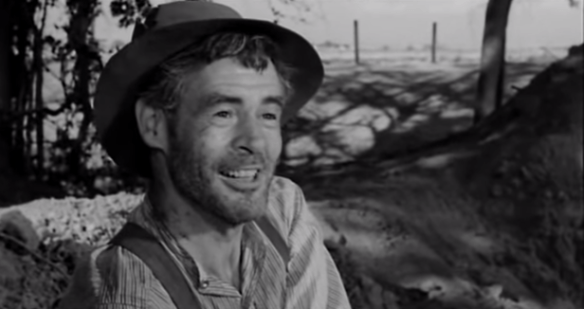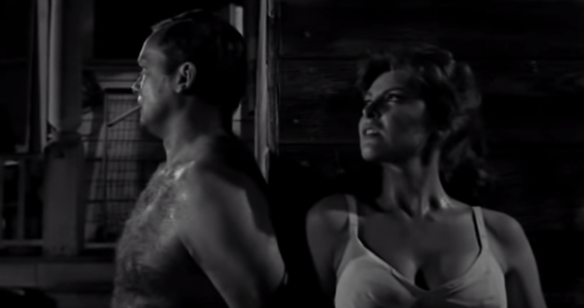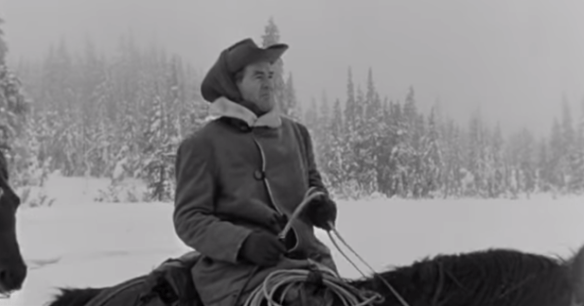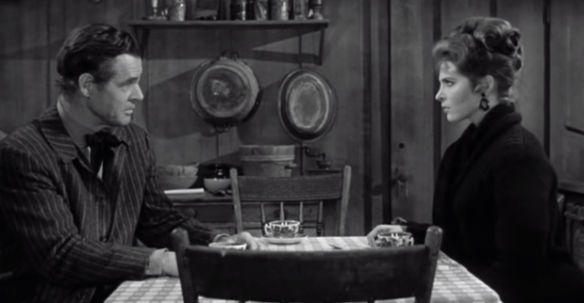
Born to Be Bad (1950)

“When you came here that first day, I fell flat on my face over your suitcase. I never really got up.” – Joan Leslie as Donna

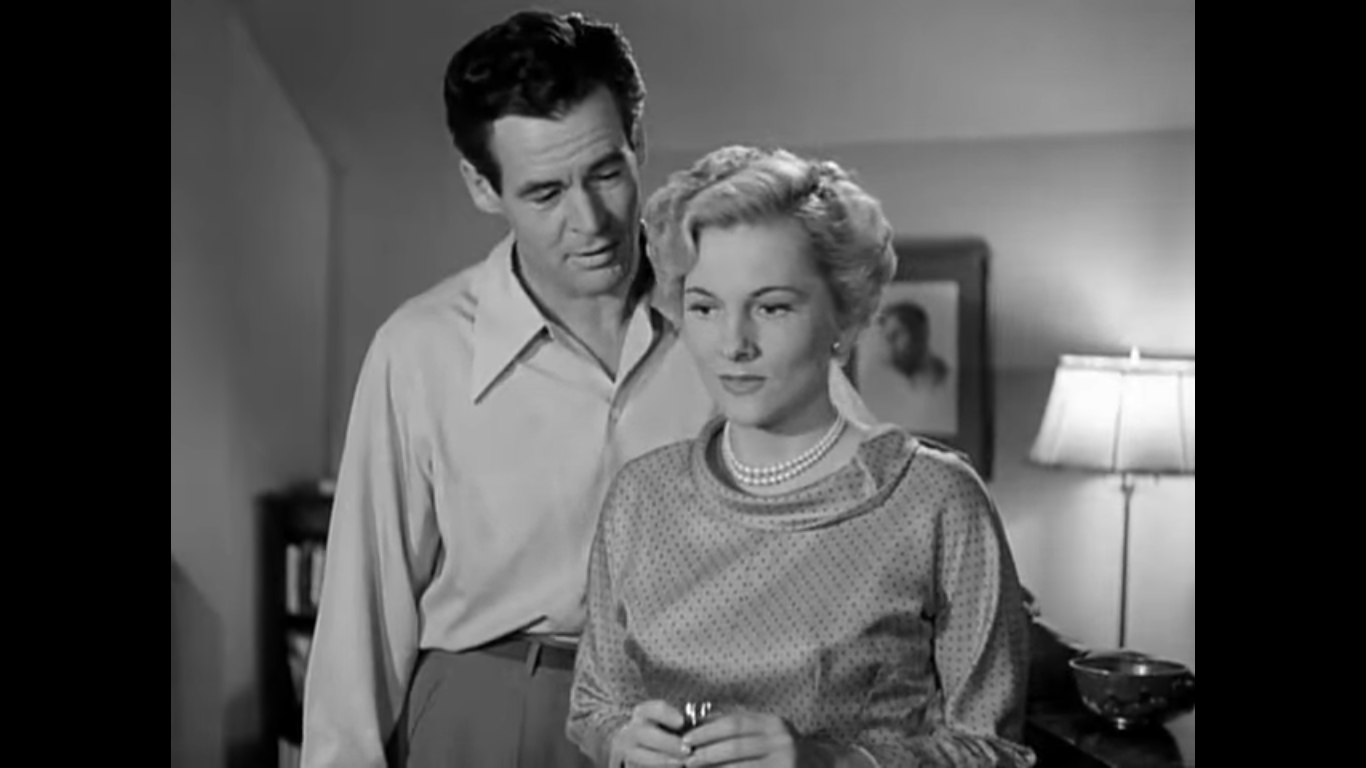
Born to Be Bad is not high-grade stuff. Its trashy exploitive title says as much, but it’s also worthwhile for exactly these reasons. Nicholas Ray would make a name for himself in Technicolor — not black and white — capturing a bevy of emotive performances from the likes of James Mason and James Dean. But it’s easy to forget some of his earlier films are equally stirring. Bogart in In a Lonely Place or Robert Ryan in On Dangerous Ground.

There’s something lighter, more convivial about the performances in Born to Be Bad, but straight down the line, it offers up a thoroughly intriguing cast. It has to do with how they can play off one another and couple up with various character dynamics forming between them.

We have a disorientating beginning because we don’t see Joan Fontaine, but someone who turns out to be Joan Leslie. She’s older now, mature, assured, and still more ebullient than I ever remembered her before in the early Warner Bros. days.

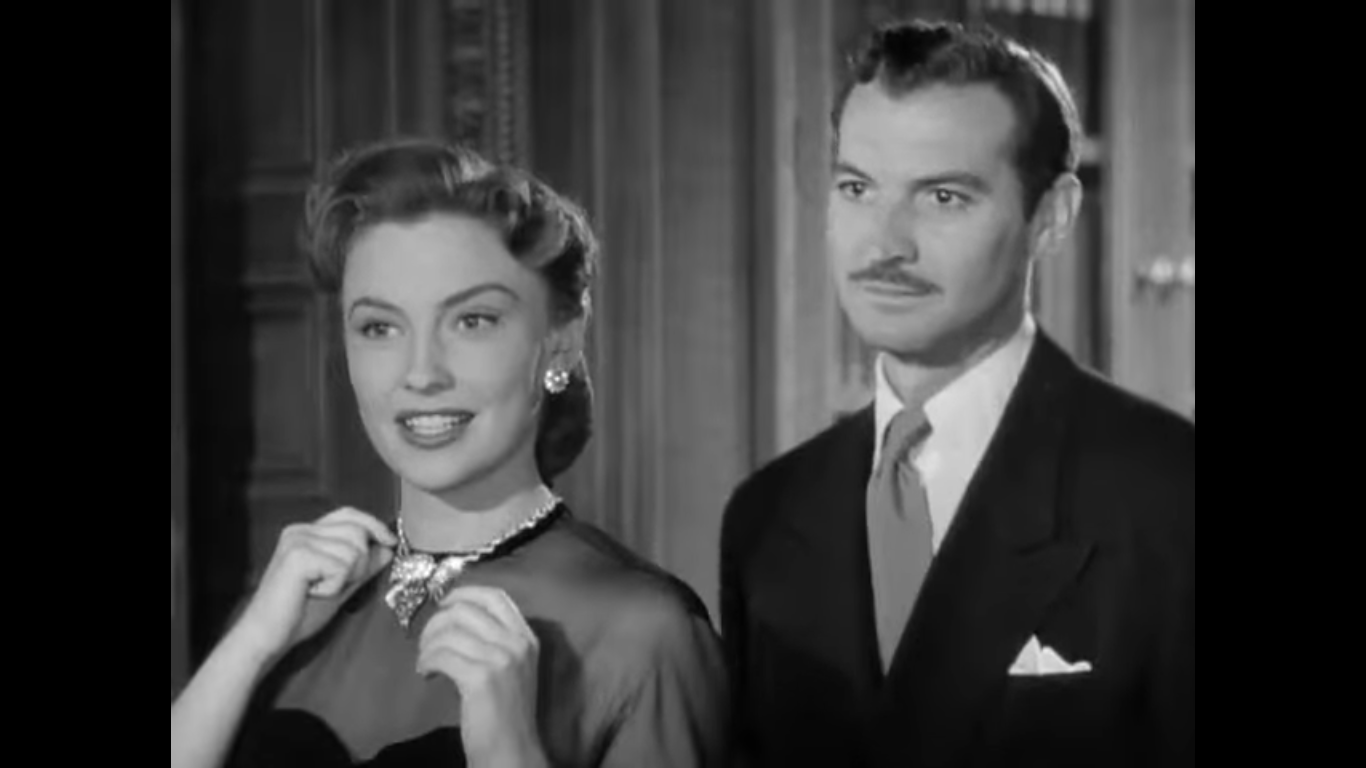
Within the context of the picture, she has reason to be. She’s deliriously happy, about to marry the love of her life, a rich moneybags (Zachary Scott), and yet she still finds time for a job and other wisecracking male companions. One’s a painter (Mel Ferrer), the other a purported novelist (Robert Ryan). There’s a happy-go-lucky familiarity to it all. We almost forget what the movie is meant to be about.

Then, Joan Leslie trips over a suitcase, her hair tossed violently askew, and she looks up to see the soft features of none other than Joan Fontaine perched on a couch. The unassuming beauty is her usual diffident self. However, this iteration of her screen image holds a manipulative underbelly.

As Cristabel ingratiates herself into Donna’s good graces and initiates designs on her man, it’s almost easy enough to dismiss her actions as first. She wheedles her way bit by bit until it’s more and more evident her ingenue from Rebecca or Suspicion has gone sour and self-serving.

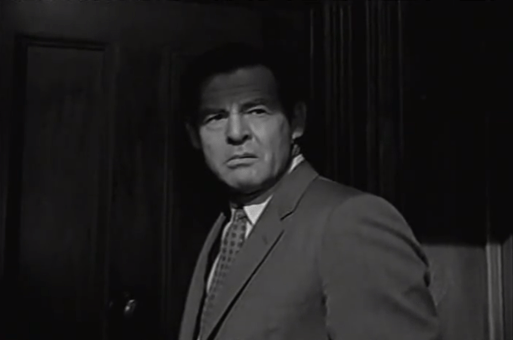
Even when he’s partially a victim, Zachary Scott manages to give off a smarmy veneer. Robert Ryan has his own curious introduction, berating Cristabel when she’s on the phone, but it’s not a party line. He’s in the house and she wanders into the kitchen to see the stranger raiding the icebox. At first, she’s indignant. Then she starts to fall for his blunt charms.

Ryan would join forces again with Ray in On Dangerous Ground, and he seems like the kind of actor the director can use well. There’s a raw incisiveness to him that can function durably without sacrificing certain levels of emotional honesty. Because he has an unsparing frankness about him that one can either appreciate or become royally turned off by. Very rarely does Ryan elicit an apathetic response.

Fontaine does her part beautifully — her eyes constantly flittering around. In one particular conversation between Scott and Ferrer, she casually listens as she takes in the scene around her, just happy to be in such a place. She manages to be so helpful and so helpless getting everything she wants as a result.

Donna’s preparing to storm off to London, her relationship with Curtis torn asunder. Her pointed remarks to her rival have a delightful sting: “Somebody should have told the birds and the bees about you.” I don’t know what to make of it, but there’s something in Joan Leslie’s eyes when she’s been slighted that’s reminiscent of Marsha Hunt — a glint that Fontaine never owned. Leslie provides her a fine foil as we continue to explore a variation on the All About Eve dynamic.

Two exemplary shots of juxtaposition happen in adjacent scenes with Fontaine’s sparkling features framed on the chest of her man as she reposes there and, of course, there are two of them. She’s so good at flitting back and forth between two men. They both speak to her in different ways or rather, they both offer something unique that she can benefit from.

The jilted lovers, Leslie and Ryan, fall in together as friends and business associates if not romantic partners because there is something more in the works. Cristabel finally gets caught in her lies, though Born To Be Bad has a fairly lightweight ending. No one gets tragically wounded and everyone seems to laugh it off or get their wrist slapped. It’s not noir, nor is it effectively weighty, but it’s an intermittent pleasure to watch if you’re fond of the players. It more than lives up to its title.

3.5/5 Stars

Berlin Express (1948)

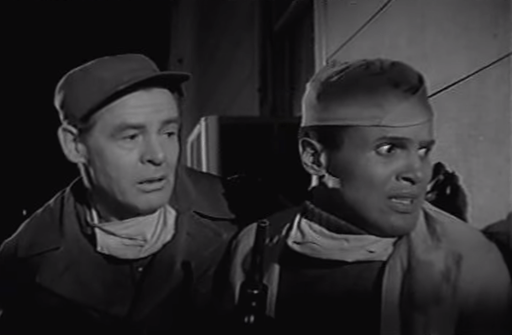
Added to the landscape of The Third Man, Germany Year Zero, and A Foreign Affair, Berlin Express is a fascinating portrait in the rubble-film genre. These are the pictures on the cutting edge of filmic history, shooting on-location in the post-war world that was still licking its wounds and putting the pieces back together across France, Germany, and really any other place that was directly affected.

Although we see the IG Farben Building — famously Eisenhower’s command post after the end of the war — it’s the bombed-out world surrounding it that proves the most telling. Even as the newsreel narration feels overbearing after a certain point (it doesn’t have the wry verve of Carol Reed), we’re getting to see elements of the world as it was at that precise moment. Jacques Tourneur is at his best with evocative canvasses to work against, and the post-war landscape certainly fits the bill.

It is a different take on The Third Man milieu. You get the seedy, grungy impoverished nature of the world, tramping around the train station where men fall to the ground for a dropped cigarette while peddling any miserable trinket they possibly can.

But the drama also considers the zones of the newly divided Germany by calling up characters of each rank and nationality. They are all very overtly represented and implicated in this story.

It commences with a train loaded with passengers of all different nationalities who make for a convenient focal point for our story because they come to represent the Allies looking to consolidate power and pave the way for the Cold War in a decaying imperialistic society.

One can’t help but think of archetypal train tales like Christie’s Murder on The Orient Express or Hitchcock’s The Lady Vanishes. However, the movie shares more in common with The Narrow Margin than some may realize. Even Charles McGraw, who would play the protagonist in the later Richard Fleischer B picture fills a part in this one.

Here he’s helping to smuggle a very crucial German leader (Paul Lukas) across the country to help the reunification efforts. The remnants of the Nazis would love to get their hands on him or do away with him for good. They are the film’s primary evil — lurking in the negative space — until they are finally forced to show their hand.

Merle Oberon calls on the sense of camaraderie from each Allied faction to help her find the missing doctor because it’s true that despite the best-laid plans, betrayal is imminent. He is far from safe. They group off to search in all the local back alleys and hellholes.

At this point, Robert Ryan seizes his chance because he’s taken an immediate shining to the French girl Lucienne (not to be confused with the film’s cinematographer Lucien Ballard). It’s amazing to acknowledge approximately 49 minutes into the picture Oberon and Ryan finally get together in what feels like a more traditional Hollywood dynamic with the headliner stars linked romantically. Until this point, however, it’s very much (and very purposefully) a picture by committee.

Ryan for his part is fairly straight-laced and likable, Oberon is principled, and the other blokes add their own touches of good humor or contrarian perspectives. It never feels like a consistent drama and there are whole patches of dialogue broadcasting its intentions too readily. Of course, this has been the cardinal sin of screenwriting since the dawn of time. Closely connected to the storytelling commandment passed down from Billy Wilder: Thou shalt not bore.

But when Tourneur is able to take moments and work them out through dynamic visual means, we get something wholly worthwhile. Even as it’s not always superb storytelling, watching Robert Ryan punch it out in a vat of beer in an abandoned brewery, cloaked in the shadows of noir, is the movie at its very best.

Close behind is when a wounded clown incognito totters onto the stage to uproarious laughter only to topple right on top of the camera as the investigating military police are left to pick up the pieces.

In such moments, it doesn’t matter where it happens or what it means so much as how it is executed for our benefit. We feel the impact. Or later on the train, with a traitor in their ranks, a violent act is perpetrated and implausibly reflected out a train window. Whether it makes total sense, the core of the action is relayed to the audience in such an ingenious fashion.

Then, the movie wraps up with more wry, slightly disdainful commentary about the bombed-out ruins of Berlin as if it’s a sightseeing tour. It runs in tandem with many of the more staged moments promoting a lasting message of goodwill. Alas, it was not to be.

So while the film can never get out of the shadow of propaganda or cast off its noble intentions, for viewers interested in something more timeless, Berlin Express has a handful of genuinely gripping moments belying any bouts of heavy-handedness. It’s relatively easy to latch onto the good and tolerate the rest.

3.5/5 Stars

Hour of The Gun (1967): James Garner and Jason Robards

The story is as old as the mythology of the West. You cannot avoid tales of Tombstone, Arizona on October 26, 1881 and the famed Gunfight at The O.K. Corral. John Ford covered the events most famously in My Darling Clementine headlined by Henry Fonda, Victor Mature, and Walter Brennan in the title roles.

A generation later, Burt Lancaster and Kirk Douglas teamed up to do their version. And the lineage runs a lot wider and deeper than this. It leaves one to wonder how many ways you can retell the same story with the same central characters.

Director John Sturges answers the question almost immediately by doing away with the one scene that this whole mythology effectively hinges on. The movie opens with the gunfight at the O.K. Corral, which feels more like a glorified street fight, done in seconds, with Clanton standing by and unharmed by the events at hand. Whether it plays more to the timber of actual history or not, it sets a precedent and recontextualizes everything we must relearn about these legendary figures of the West.

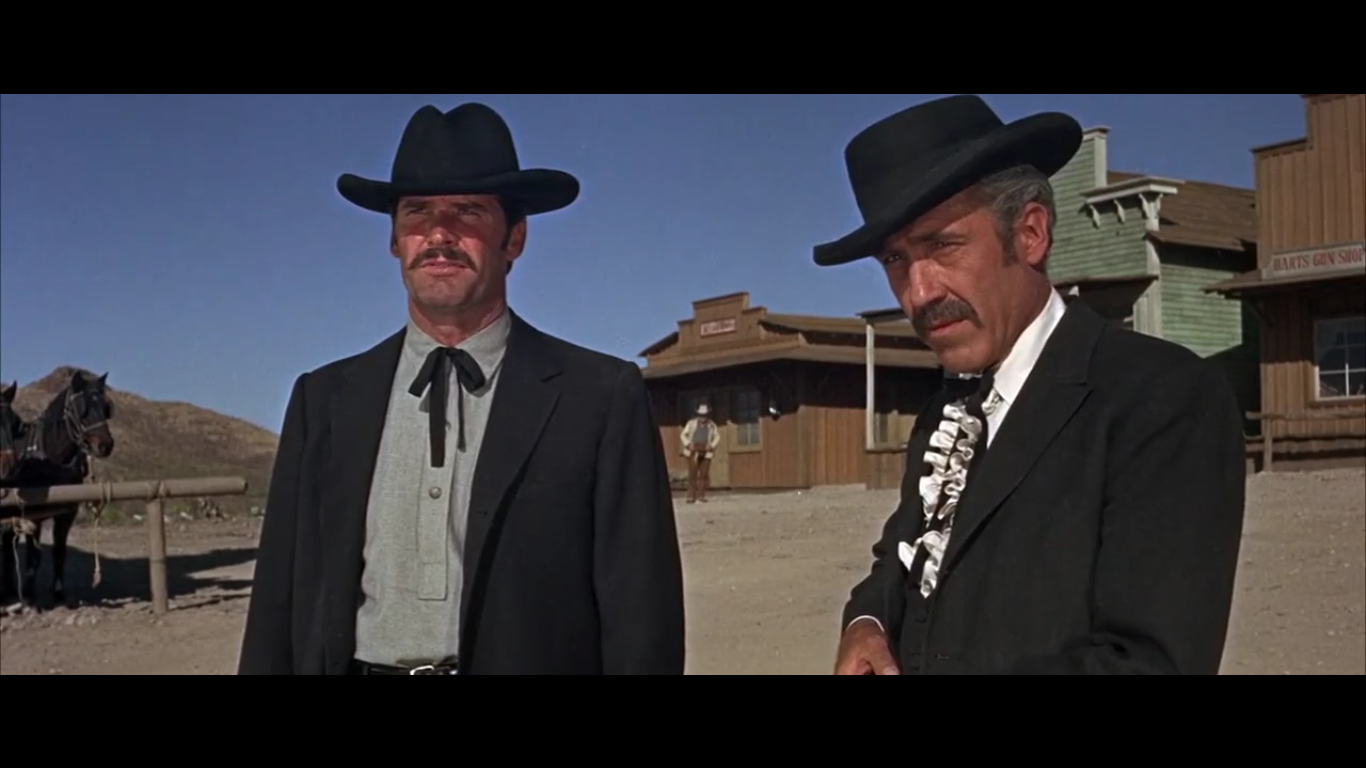
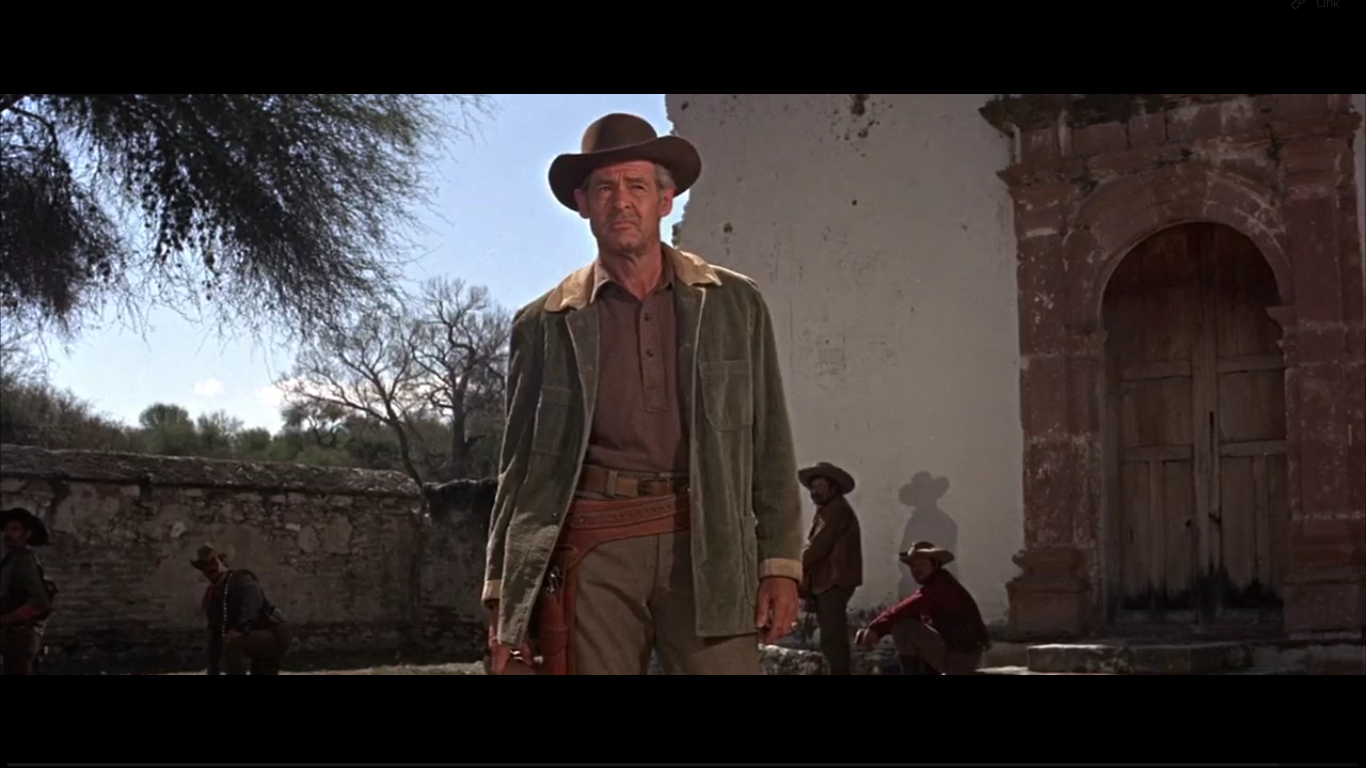
The men who play them are more than up to the task because of what they bring to the characterizations. Their names should be familiar. James Garner. Jason Robards. Robert Ryan. They are featured prominently in the title credits like figures on the marquee.

There might be some questions of where the movie might possibly go from here because it quickly disposes of its most “climactic moment,” underwhelming or not. Still, there manages to be a story built off the foundations of this inciting incident.

It becomes part courtroom drama momentarily, then it’s a town-wide conspiracy against the Earp brothers, and it finally turns deadly when they are ambushed with shotguns in the dead of night. The bloody gunfights and surreptitious ambushes are quickly deliberated over in the very same courtroom. There’s a kind of legal impasse.

Ryan always managed to be a fine villain, and it’s no different here. He plays Clanton as a shrewd businessman with most of the town on his payroll including sheriffs, public prosecutors, and a bevy of wanted gunmen (including a young Jon Voight). Though he never pulls the trigger himself, he has many minions in his pocket prepared to do his bidding. It’s a lot more convenient since he has the money to spend.

Hour of the Gun also feels like a western straddling two generations. Garner and Robards represent it well. Garner’s Maverick and to some extent his Local Sheriff put a different spin on the western genre as a kind of anti-western star, at least compared to the James Arness or Chuck Connors archetypes.

And Jason Robards, who only a year later would find his way into Sergio Leone’s epic spaghetti opera Once Upon a Time in The West, is equally adept in such an environment. He can be rugged and tough but not without a kind of wry sense of humor and intuition. We like them both for who they are. First, as performers and then as two of the West’s most prominent figures: Wyatt Earp and Doc Holliday respectively.

Lucien Ballard was a Hollywood veteran with saddlebags full of movie credits including many entries shooting his wife and leading lady Merle Oberon. Jerry Goldsmith takes on scoring duties with work that observes the purview of the West while reminding us of his crucial role in future New Hollywood and blockbuster hits.

It’s curious how the movie hews closer to history, and it looks to dispel myth and tell a version of the tale that feels more like a procedural. In some ways, it is a more modern expression of the western, though John Sturges is not in the Eastwood, Peckinpah, or even Leone school.

He was actually the very same man who helmed The Gunfight at The O.K. Corral with Lancaster and Douglas. But this is hardly a reworking in the way Howard Hawks remade Rio Bravo multiple times. Rather it feels like Sturges is intent on telling the tale with different terms more to his liking.

Initially, it builds off the legacy of The Magnificent Seven and The Great Escape where there’s something honest and sure about its telling, but it’s not gun shy. There’s still a sense of violence and ambiguity in other ways. Because hypocrisy exists in a world where as long as men have warrants and badges or they are fighting wars, killing is legalized. In all other contexts, it’s not permissible.

It becomes so easy to bend the rules either in service of good and often in the service of evil. Hour of The Gun ultimately is quick to distance itself from the comfortable morality of earlier westerns. This too is a bridge to its future brethren in the genre.

Doc is the man who ultimately assembles the troops; it’s a sequence we know well and somehow Sturges’s best films always captured this brand of male camaraderie — the kind of scenes that little boys of a certain generation aspired to. Getting together with their friends to fight the baddies. There’s still a sense of good fun and the kind of innocent naivete the western used to breed. Though it never amounts to anything.

It all comes down to Wyatt Earp and his personal vendettas. Garner shows a ferocity and a simmering rage that’s rare in him or at least he hides it well often through down-home charm or a coward’s prerogative. Here he’s driven by a sense of justice for the deaths of his brothers. He’s not squeamish when it comes to searching it out either.

The ending could not be a further departure from its predecessors. It feels like the dilapidated, windswept ruins and facades in pictures like Vera Cruz or Butch Cassidy and The Sundance Kid where the classic western modality goes to die in some sense.

Wyatt finally completes his search for Clayton and comes face-to-face with the man who was so very hard to find. Doc and some bandits stand by testily as Earp flips his badge to his friend, signaling this is a personal action not enacted under the letter of the law.

It’s a quick, unsentimental climax, but it stays true to the opening depiction of the O.K. Corral. I would not hasten to say it’s realistic as much as it gives a more murky and unembellished version of the story. Still, whether he meant to or not, Sturges effectively revises one of the most quoted American myths adding yet another complicating footnote to how we come to understand it. All other things considered, from the imagery to this commitment to a raw account of history, Garner and Robards are still the ones who make the picture.

3.5/5 Stars

The Tall Men (1955)

We open in Montana 1866 with the Allison brothers (Clark Gable and Cameron Mitchell), two former Confederate soldiers, leaving behind the “heartbreak memory of Gettysburg” for the promise of wealth in California. But first they must traverse frostbitten exteriors.

It’s no picnic as they join forces with Robert Ryan and face a treacherous trail overtaken by blizzard conditions. It chills your bones just watching them wade through the snow, fighting against the icy landscape.

When Jane Russel gets into the picture, the story and the dialogue start to pick up. She always had a way with words — and meeting in a snowstorm has a way of bringing folks together — she’s quickly trading repartee with first Gable and then Mitchell. Ryan just sits by and lets them have at it.

Gable and Russell end up in a cabin together out of the cold. It’s not quite the “Walls of Jericho,” but as Gable cooks up some meat over the fire, and she warms her feet on his back with a few playful kicks, the moment becomes the highlight of the picture thus far. We understand and appreciate the human connection unfolding before us going beyond dialogue or plot points even the nature outside. It’s about two people connecting with one another in a movie but also as individual performers.

In fact, I liked it all very much until I realized I was being imposed upon by a story and a plot. The characters are forced apart and spend the night pouting in their separate corners. It feels like a cheap rom-com ploy in a movie that might have been about something far more gripping and substantive. Instead, it becomes a feeble excuse to inject some amount of tension into the picture.

Sadly, it’s never able to reignite the same alluring lightheartedness of their opening introduction. They’re too busy trying to be distraught with one another to make time for much fun. In this way, Raoul Walsh is not Howard Hawks.

Ryan is frankly subdued if fairly determined with what he wants, be it cattle driving, making money, or charming the women he keeps company with. In his own quiet, self-assured way, he’s out for status and remains the envy of every other man. He can never be mistaken for a villain or even a real rival for Gable. They never play it that way. Even when his hot-headed brother, played by Mitchell gets belligerent, Gable’s quick to defuse the situation.

There’s also little push or purpose to the ensuing cattle drive as it is more of a conduit for the romantic tension, and it hardly seems to be enough to carry the weight of such a lengthy picture. Jane Russell is given ample opportunity to sing, bathe herself, and remove her stockings for the camera. Whatever the contemporary audience might have clamored for, it’s a sorry use for her talents and adds very little to the film.

They do indeed run tall in this movie. What the title fails to mention is how each man is pretty old, past the prime of a cowboy, and so we’re asked to let it slide. It’s almost laughable that Cameron Mitchell is meant to be a youthful hothead. Instead, it feels like he’s caught in a state of arrested development. It could be worse.

So while there’s a desire to see the mythos of the West played out in front of us on a grandiose scale, the movie never quite manages the whole package. Walsh is a consummate professional, and he makes the images as grand and as resplendent as he knows how with all the resources availed him. And yet the narrative itself — the sinew that makes up the story — never hits a lasting resonance. One exception might be a thrilling standoff with some Kansas extortionists.

Alas, there isn’t very much more to appreciate on the journey. It does feel like a sizeable waste of talent even as the film itself has vistas well worth our time.  It is a pity because I couldn’t think of a better way to draw up a western than enlisting the help of Clark Gable, Jane Russell, and Robert Ryan at the height (or even the trough) of their powers. Surely they were deserving of a bit more consideration.

3/5 Stars

Bad Day at Black Rock (1955): Spencer Tracy and Small-Town Bigotry

Review: Bad Day at Black Rock: Japanese-Americans and Small-Town Bigotry

In its theatrical cut, Bad Day at Black Rock opens furiously, charging forward with the momentum of a freight train as the credits roll and Andre Previn’s score thrashes in the film’s most manic moment.

From thenceforward, its greatest strength is restraint. The whole town cowers around watching the train arrive with a mysterious one-arm man named Macreedy aboard. If the mysterious out-of-towner isn’t enough, it might also be the fact they haven’t had a visitor for well-nigh four years. This is big news but they aren’t looking to be neighborly. The local observation from the train conductor is telling:

“Man, they look woebegone and far away.”

“I’ll only be here 24 hours.”

“In a place like this, that can be a lifetime.”

The opening minutes not only set up our character but this impeccable environment for accentuating the underlying unfriendliness. The wide-open spaces of Lone Pine, CA are as much about the vast planes created between people as it merely breathtaking landscape. Because it’s gloriously austere, and it’s completely evident we really are off the beaten track.

Spencer Tracy might seem an odd choice, given the traits of his character; he seems too old and overweight to be a recently discharged veteran of WWII, especially since the year is 1945. And he’s hardly a western hero or an action star in the commonly accepted sense. A film like this would normally call for a hybrid between Joel McCrea, Gary Cooper, or Clint Eastwood.

It borrows from westerns and noir, but I hesitate to label it as either. Because it has near revisionist outcomes and a palette more akin to large-scale epics than B-level entertainment. There’s really nothing else I can think of with such a fascinating and simultaneously confounding pedigree.

Macreedy is intent on visiting Adobe Flat, but he seems like a genial fellow. It’s everyone else who loiter around menacingly. They’re either outright brusque like, the local hotel clerk, or pushy folks who ask him straightforward-like what he wants around their town.

bad day at black rock 2.png

In certain terms, Black Rock is the epitome of rural America — with a sinister twist. It’s smaller than small. Everyone knows the business of everyone else. But these folks are about as tight-lipped and inhospitable as anyone ever in the history of humanity when it comes to outsiders. What’s more, they have little reason to be unless they have something to hide. Of course, they must be covering some secret, but we don’t know quite what it is. There we have our movie.

The beauty of the story is how it plays close to the vest on both accounts. Because Macreedy seems to be in no hurry to broadcast his news all around. Simply the fact he has come to town at all seems like enough. He finally does let his business come out talking to the local sheriff (Dean Jagger), another very gracious fellow in line with all the others. Macreedy is there to see a man named Komoko. The name is a tip-off for some. He is Japanese and we are sitting on the tail-end of WWII.

It recalls the quote always attributed to Hitchcock: “The thrill is not in the bang but the anticipation of it.” John Sturges, while known for action films, does such a measured job of stretching out of the tension of this picture. It gets to this unbearable high deserving some sort of release.
bad day at black rock 5

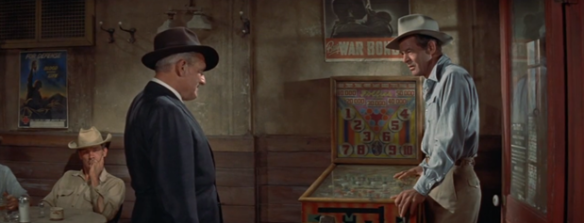
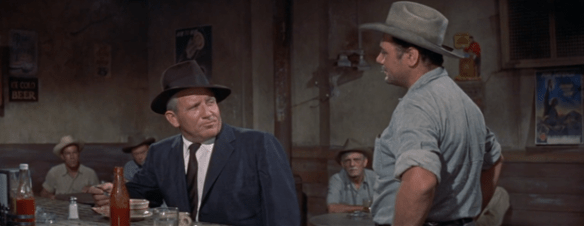
One could say it happens in the diner. Spencer Tracy is working on a bowl of chili, only to get needled by Ernest Borgnine. First it’s a squabble over a chair, then it’s a bottle of ketchup being poured into a bowl of chili. It’s a maddening scene of belittling, but Spencer Tracy takes everything in stride with the finest brand of mild amusement. Everything slides off his back. The following interchange is representative:

“You’re a yellow-belly Jap lover, am I right or wrong?” – Coley Tremble
“You’re not only wrong, you’re wrong at the top of your voice.” – Macreedy

Robert Ryan and Lee Marvin are lounging around to watch the show. Up until this point Macreedy has kept his cool and one might say he walks out as calmly as he came in, but he also exerts himself like he has yet to do. It’s a cathartic moment and as an audience, it gives us an unalienable belief in our hero. We wanted to believe he could hold his own implacably and he can. But the forces against him are nevertheless stifling.

We get the final piece of vital information. Macreedy came to town because of Joe Komoko, who died in Italy saving the life of his brother-in-arms. Forever in his debt, he thought the least he could do was pass on a medal and his condolences. It’s gratifying to have it spelled out, but the bottom line is still the same. Tracy is all but trapped without any outside assistance.

His only chance is some inside help — someone who is willing to do something right for a change, instead of turning a blind eye. The closest he finds is in the local doctor/undertaker (Walter Brennan) who gives his best half-hearted attempt to help the stranger.

Meanwhile, the town’s poor excuse for a sheriff (Dean Jagger), who spends his days nursing the bottle and his nights sleeping in his own jail cell, finally feels compelled to take a stand. His behavior strips him of his badge. The final reluctant players are the tight-lipped hotel clerk and his young sister (Anne Francis), who both aid Macreedy begrudgingly. In a town like this, each action seems nearly monumental. One questions if it is enough.

I challenge anyone to stack the movie up against most any cast of the 1950s, especially because this is not some grandiose epic. This film clocks in at a mere 81 minutes of film, but it has more than enough to go around. Robert Ryan, in particular, is a crucial piece. He always gets these roles as militant bigots and in one sense you feel bad for him and in the other, he’s so convincing at it you can understand why.

His blatant malevolence briefly hidden under a thin exterior is the perfect foil for Tracy to bounce off of. Because they share conversation civilly enough, but it all draws out how diametrically opposed they are. Macreedy got it in Italy. Smith tried enlisting straight after Pearl Harbor but wasn’t accepted.

We come to understand his view of humanity is cut-and-dry. Komoko was a lousy Jap farmer. Pearl Harbor and Corregidor. They’re all the same. There’s no such thing as a loyal Japanese-American. Its this type of rhetoric we must immediately be wary of. For it is pernicious.

At his first chance, Macreedy decides he should get out of town since he’s hit a dead-en, attempting to notify the state police on his way out. He bumps into another bystander, the squeamish telegraph officer Hastings, who excuses himself by saying, “I’m just a good neighbor.”

Of course, as Macreedy suspects, his definition only stretches to those who share his skin tone. He is yet another problem character. Because he has no guts and if I indict him then I am indicting myself as well. There is no place for wishy-washiness with such issues.
bad day at black rock 4

Bad Day at Black Rock, personally, is an important film for me because, like Daisy Kenyon or The Steel Helmet, it stands as a record of Japanese-Americans place in a polarized society. There was injustice done, and it’s not something we should try and forget. The acknowledgment alone is a victory and yet another important record in the annals of visual history.

However, getting beyond, this thriller is ultimately about a hero who is doing his best to honor another man — of course, he happens to be Japanese-American — but most importantly he is given the dignity and the respect of a human being. Because there is no greater love than a man laying down his life for his friends. Even if we never see Motoko, or his deceased son in person, their presence over the film is still felt, and it’s meaningful for me. The implications are that he matters as not merely an innocent citizen but a sacrificial hero for the sake of our country.

It manages to be universal. Because Black Rock could be the stand-in for any such towns. In this particular instance, it’s about a Japanese man. But in other stories, he could be any marginalized individual. The hateful frenzy of The Red Scare is too fresh to disregard any type of allegory in that context.

This type of bigotry and incensed racial (or political) hatred is not a thing of the past. It disadvantages many types of people by conveniently terming them “other” from the accepted subset of society.

What always fascinates me in history and in the stories we excavate is finding the people who faced this abhorrent reality and willingly pushed against it. Still, others initially accept it with apathy. It’s the path of least resistance. However, even they are forced to make a stand, lest they continually bury their conscience and grow miserable.

Bad Day at Bad Rock is about precisely these types of people, and it takes all sorts. So the beauty of it is that we can enjoy its utter intensity and the mystery at its core. It keeps its secrets close and only divulges them at opportune moments. The dialogue too is sparse and measured.

But seething under the surface is a commentary framed by a none too flattering portrait of America. It stands as a testament to fear leading to hate and hate leading to violence. There’s this sense of full-blown conspiracy and holding onto each other’s secrets because we’re all implicated.

If we are to break the chain, it’s imperative to band together in opposition and bring all those dirty secrets into the light. The greatest gift Spencer Tracy gives to this picture is not brawn but the unwavering sense of integrity — in his acting and in that iconic face of his. In a world of shady two-timers, his candor is something we can trust.

4/5 Stars

God’s Little Acre (1958)

God's little acre 1.png

If there was an atypical even offbeat Anthony Mann picture, then God’s Little Acre would probably fit the bill. Based on the wildly popular and vehemently decried Depression-era work of the same name by Erskine Caldwell, it essentially serves as a second outing for much of the cast and crew involved with a picture from the year prior, Men in War (1957).

We have Mann reteamed with his favorite, Robert Ryan, and young Aldo Ray. Then, most prominently, we have cinematographer Ernest Haller and composer Elmer Bernstein returning. Even Phillip Yordan once more fronts for blacklisted Ben Maddow. And yet the actual results are oil and water.

The opening notes of a folksy title ballad sound off, seemingly more at home in a live-action Disney classic than a mainstream drama such as this. In truth, it’s an outmoded brand of melodrama. We just cannot hope to look at the pedigree the same way with its southern gothic and a hint of hillbilly.

That’s right. It’s part Jed Clampett, the other section Tennessee Williams, edgy and sweaty as any 50s film at its height. But what leaves an impression is not only the raciness for the day but the unadulterated playfulness. This is real Georgia down-home entertainment and it benefits from these qualities.

Ty Ty Walden (Ryan) is a slightly scatterbrained matriarch, who resolutely believes that his daddy left behind gold on their property. He’s hellbent on getting him a piece of the wealth and he’s pursued his aspirations by leaving his family acreage dotted with holes.

God's little acre 3.png

He’s dragged his two sons into it too (Jack Lord and Vic Morrow), who are both a bit neurotic in their own right. The jealous Buck is constantly at the throat of his ravishing bride Griselda (Tina Louise in a sweltering debut) believing she still has the hots for their brother-in-law Will Thompson (Aldo Ray), a man married to the eldest Walden gal (Helen Westcott). He’s not altogether wrong but he’s not helping the situation any either. Then there’s Shaw. He just repeats everything his older brother says. They’re not the sharpest tools in the shed. They take after their father.

Meanwhile, their youngest sister, the bodacious southern belle Darlin’ Jill, is quite the looker herself. Buddy Hackett is just about the same as we remember him in all his pictures. That voice. That blubbering. That rotund lovable girth. His character, the aptly named Pluto, comes looking to court Darlin’ Jill who strings him alone as is expected.

Otherwise, the cast also features a criminally underused Rex Ingram as a farmhand and Michael Landon in a thoroughly unique role as an albino. Though only a minor player, he proves a crucial component of the plot since Ty Ty is convinced that albinos have an impeccable radar for gold and he pressgangs the boy to use his remarkable abilities. The beauty is that no one seems to outrightly question such a notion. They just move along like normal. In the meantime, Darlin’ Jill has fun tantalizing her rotund suitor and making eyes at the intriguingly pale Dave Dawson.

The latter half of the story follows lusty looks and passionate clenches as forbidden love is rekindled between Will and Griselda. It seems like just about everyone is being pawed over by everybody else. Tremors are going through the household with Ty Ty putting it upon himself to bring his family together and keep them on amicable terms. It’s not such an easy task with so much dysfunction at hand.

Will’s wife is beside herself as her man gets drunk and has some vague notion of turning the power at the old plant on so work can commence again for all the impoverished locals. But Ty Ty’s also in a scrape for cash and relationships have only deteriorated into fiery hell between Buck and Will — a woman still caught between them.

What are the main takeaways from the picture? It’s a rather incredulous piece that’s provocative and dull and maladjusted all at the same time. Ryan once more shows his capability at ably anchoring an entire film. However, all I could think of was the fact that if God’s Little Acre had been a bit more conventional and garnered a few more accolades for hard-hitting drama, we might be remembering Tina Louise as a cinematic sex symbol instead of a “Movie Star” from Gilligan’s Island. Maybe some movies get buried serendipitously.

3/5 Stars


Men in War (1957)

men in war 1.png

“Tell me the story of the foot soldier and I’ll tell you the story of all wars.”

The date might seem arbitrary but we are told that this story takes place over the course of one day: Sept 6, 1950. Robert Ryan might as well be the stand-in for a Bill Mauldin G.I. as he leads a battalion cut off and deep in enemy territory. He’s got the 5 o’clock shadow and most other prerequisites. There’s a sense that he’s just trying to live through the day and keep his men alive for as long as possible — hopefully to see their way back home or at least to their brethren on the other side of the next hill.

But in order to get there, they must survive a line of snipers, a hailstorm of enemy artillery, and terrain laced with mines. If I had never seen The Steel Helmet (1951), Men in War would easily become one of the most crucial war movies for me. Because it dares to tell a narrative of war that rings fiercely resonant not simply because of cynicism or even pure authenticity. It has to do with a story stripped down to its bare essentials. Men in War is just that. It comes down to the semantics of what you think that actually means. But for the average soldier, it’s a moment by moment struggle to survive. It’s not about heroics at all. Instead, it entails methodical and level-headed action in the face of constant stressors verging on the absurd.

Though Hollywood might have suggested otherwise on various occasions, war was never about the glut of combat. It’s always lean and mean — proving to be disillusioning even to the victors and far more so to those who must stand defeated or draw a truce.

The best way I can find to describe this particular experience is through the influence of negative space. Because Mann’s film, in showing us less manages to evoke the exact inverse, suggesting what is not shown to be as vitally important as what is left in the frame. Far from lowering the tension, it only succeeds in making it all the more unnerving. There’s an ongoing sense of isolation and the enemy is left all but unseen.

Then, in a single moment, we realize they’re as afraid of us as we are of them. Actually, the adversary is only shown on a couple of brief occasions, most visibly with a surrendering Korean Soldier (played by Bonanza support Victor Sen Yung).

Aldo Ray is a soldier at his most cynical and insubordinate. The only thing more exasperating about him for Ryan is the fact that in most cases he’s right and more important still, he’s too ornery to be knocked off. But it’s almost odd how fiercely loyal he is the catatonic colonel (Robert Keith) who made it away from the lines with him.

James Edwards offers another obvious link to Fuller’s Korean War picture while serving up his usual foray in minor though intelligent portrayals of African-American soldiers. Men in War is devastating in how unsentimental and unsensational it is. The scenes with machine guns, flamethrowers, bazooka, and grenades feel palpably real. These are not infallible killing machines. Just men who are doing their best to stay alive and fight another day. Again, it’s about mere survival.

Here we have Mann’s earlier explorations in noir more fully externalized with a sense of psychological torment made visible in an environment of continuous unease. The action is taken outdoors while maintaining what we might call even an intimate interaction with its characters if it weren’t so harrowing. It’s likewise an extension of the director’s Western landscapes, though the palette is muted, it consequently plays a crucial role in shaping the drama as Mann usually takes particular care with his atmosphere.

Phillip Yordan’s involvement, whether the true author or only a frontman, might be slightly up for debate but what’s not is the fact that the script keeps the action clean and unfettered by strains of patriotism or similar endeavors. Elmer Bernstein, best remembered for his western scores of resplendent glory, nevertheless, delivers a piece with the right amount of understatement to compliment such a picture as this.

Again, Men in War is unassuming, even unspectacular, but that’s what makes it all the more deserving of discovery. By going against the grain with a few similarly formidable titles, it gave us a far more mystifying portrait of The Korean War. Because reconciling with that conflict is far from a straightforward task — as it is with most any war.

3.5/5 Stars

The Naked Spur (1953)

the naked spur 1.png

James Stewart carries over his persona from Bend of the River (1952) to continually redefine his career in the post-war years. He is a man under a different name who nevertheless is seething with the same raw fury.

In this regard, there are numerous parallel themes in this subsequent collaboration between Stewart and director Anthony Mann culling the recesses of one man’s mind to showcase his unswerving resentment. There’s not an ounce of amiability in the performance which is almost unheard of.

It winds up being a bit of an open-air paradox with gorgeous Colorado visuals which are nevertheless infused with the tension of a near suffocating chamber piece. Because it proves that such an incongruity is possible. Freedom of movement does not necessarily prohibit continually duress of another nature.

The cast is compact but a mighty group of talent with five individuals that you cannot help but remember. Stewart is the leader in all regards as Howard Kemp who has been tracking Ben Vandergroat for some time now since the other man murdered a Marshall in Kansas.

Millard Mitchell is the crusty prospector, the first man that Kemp runs into, and they form an uneasy partnership with Jesse Tate believing the other man to be a Marshall. It’s true that Kemp is always barking orders at everyone. It continues when a Union soldier helps them scale a rock face and close in on Kemp’s target.

Ralph Meeker always gives the impression that he’s ogling and that distinctive voice that would serve him well as Mike Hammer instantly labels him as a tough customer. His tattered military record suggests something else. He’s not exactly to be trusted as a soldier recently discharged for being “morally unstable,” whatever that means.

Janet Leigh despite her undeniable beauty does well to drop her ingenue image and play a tougher, earthier role as the doting girlfriend of the wanted Marshall-killer. But in her you see much the same conflict as all the other characters. Something is driving them to continue down the road they are traveling. It’s simply a matter of deciphering just what it is.

Arguably most important of all is chortling Robert Ryan as Vandergroat egging Stewart on with continuous catcalls of “Howie” as he commences the mind games that comprise most of the meat of the story. He dispels any misconceptions the other two might have about Kemp. He’s no Marshall and he’s hardly doing this out of the kindness of his heart. There’s a $5,000 reward for the wanted man.

Whether he read his Bible or not, Ben knows enough about human nature and the reality that a house divided against itself cannot stand and he’s looking for any way to pit his captors against each other. Chatting them up constantly and using his girl to try and soften up the other two while scheming here and dropping little remarks there to wheedle under Howard’s skin.

It’s a long stretch of country ahead. Final destination: Abilene, Kansas. He knows as well as they do that a lot can happen in that length of territory. He’s aiming to get himself out from under a hanging tree and so he’s mighty keen to chip away at them as much as possible.

Though he’s very much an instigator, there’s little question that Vandergroat gets some unsolicited help. Anderson’s shady past with a Native American princess means he’s soon caught up in a skirmish with a pack of warriors bent on some form of justice. While initially keeping their noses clean of the whole squabble, there’s finally no recourse but for Kemp and the prospector to get involved. Howard winds up with lead lodged in his leg and he’s hobbling feebly for the rest of the trip.

One must note that the American Indians are utilized solely for their agency to the story. They are not human as our leads are human and that is a shame. Because aside from that major oversight, The Naked Spur is a splendid Western that takes a scenario deeply-rooted in the tradition and yet uses it to more closely still examine the human psyche. Most specifically we see in each character the things that drive them and how men can so easily be weaponized against one another.

Tate immediately gets a renewed hankering for gold when Vandergroat lets him in on a little secret. He happens to be sitting on a gold mine. But only he knows where it is. Then of course, the soldier has a thing for the ladies and is looking to earn some money as much as the next fellow. For Howard, it’s his unbending sense of revenge that he must complete at all costs.

He’s practically dying, plagued by cold sweats and hallucinations but there’s a doggedly resilient quality about him. Proposing cave shoot-outs and fording rivers relentlessly. In a textbook Mann shot of brutality, his anti-hero is getting choked to death rolling around in the dirt only to live to fight another day. That is the ongoing motif that Stewart never allows us to forget for a minute up until the film’s pinnacle.

While not as heralded as a Ford and Wayne type partnership one could argue that Stewart and Mann was a no less important or formative collaboration. The Naked Spur and a slew of other pictures stand as cogent proof.

4/5 Stars

Day of the Outlaw (1959)

day of the outlaw 1.png

Filmed in Central Oregon on the eve of winter, Day of The Outlaw displays gorgeously fluffy photography as the snow covers the ground. With the leading part anchored by Robert Ryan, I could not but help recall his portrayal in Nicholas Ray’s On Dangerous Ground (1951), another project that made liberal use of immaculate winter exteriors. Likewise, that was only the backdrop for a tough and unfeeling world.

In this particular instance, Andre De Toth’s picture has grudges burning deep under the surface making relationships generally contentious. The story is as old as the western itself. At least its central themes make themselves known straight away. The conflict is between homesteaders and cattle ranchers embodied by two men. The aptly named town of Bitters, Wyoming has recently seen more folks settling down there. One of them named Hal Crane is intent on putting up barbed wire fencing to measure off the land for his new homestead for he and his wife.

As always, there are two sides to every field and the epically named Blaise Starrett (Ryan) is vehemently against the wire being put up because it will keep his cattle from roaming free across the land. He hasn’t minced words about what he’ll do if Crane tries it. He’s equally bitter, and he has some right to be because the way he sees it, he was one of the men who tamed the land with blood, sweat, and tears. The farmers are the ones who settled down in his shadow and now look to shoulder their way into what he has made.

However, what makes the story even more embittering is the fact that Blaise once had a thing for the other man’s wife, Helen (Tina Louise). We witness them as they meet in the general store. And at first, they give off nothing away. All that’s there is seemingly a mutual distaste. But they sit down to a nice neighborly cup of coffee alone and something else becomes evident.

She starts the conversation and makes a cold observation, “You want another man’s wife but the man has to be dead before you take her.” It’s obviously a twisted David & Bathsheba triangle. It’s about to come to its boiling point when the two men look to have it out in the local bar. Finally, a moment of violent catharsis is at hand as a lone bottle rolls down the bar to an inevitable end.

day of the outlaw 2.png

But in a bit of serendipitous (or not so serendipitous timing) they’re bloodbath gets postponed by the entrance of a band of renegades who have just ridden into town fleeing the Cavalry for some unnamed crimes. Time to put all that we assumed the film to be about on hold and do an about-face.

Their fearless leader, a former Union officer Jack Bruhn (Burl Ives) is a surprisingly honorable man who vows to the people of Bitters that no harm will come to their women. He also forebays his men ffrom drinking, commanding the proprietor to get them some grub and lock away his liquor. Ives had a key role in the William Wyler western epic from the year prior The Big Country (1958). His performance here is fascinating for its nuance.

Jack Lambert is the quintessential baddy in my book right up there with Lee Van Cleef and he shows up in fine form here joined by a crew of other sneering malcontents just waiting to go crazy. You can see the pressure rising yet again. However, the fact that much of the film is confined to interiors makes the moments that we break out into the open that much more impactful and the imagery is equally rewarding.

One particular highlight is a fist fight in the muddy slush where Blaise puts up a good struggle but ultimately gets wailed on as an example to everyone else. Simultaneously the women folk fear for their well-being trying to make a break for it and a little boy is taken as a hostage. Another sequence involves a whirling dance hall gathering of forced fun. Bruhn’s men get riled up with the ladies but as their leader sees it, this is a safety valve to blow off steam, far better than more sordid alternatives.

Everyone knows this cannot go on forever and so Starrett agrees to lead them in their escape — a heroic act to remove the men from the town he helped civilize. The final ascent into the mountains to traverse a tortuous path through to the other side proves treacherous on multiple accounts.  While the ending might be yet another slow burn, it does the picture justice even if a fuller, happier ending would have been appreciated by contemporary audiences. We are given enough.

The picture successfully suggests that Tina Louise is far more than Ginger in Gilligan’s Island. She certainly leaves an impression. At first, I didn’t realize David Nelson was even in the picture. Besides, his brother was the true matinee idol and yet to watch him in this oater you see the tender-hearted candor in the older Nelson. Perhaps his father was trying to make both of his sons into western heroes in Rio Bravo (1959) and Day of the Outlaw respectively. Though this outing hardly gets as much respect, it’s nearly as entertaining.

Phillip Yordan’s work on the script does a fine job of creating numerous points of contention that get placed right on top of each other, tweaking the expectations of the audience nicely. What looks like a straightforward feud over a woman soon becomes far more volatile as old enemies must join forces to protect their town against the invaders. And yet the invaders are led by a man who has a sense of conscience. So the ticking time bombs are set off with his cronies hemming and hawing, private resentment still lingering under the surface, and a gunshot wound sustained by Bruhl threatening to put him out of commission permanently.

Day of the Outlaw is a genuinely satiating effort from De Toth that brims with brooding energy supplied by the perennial outsider Robert Ryan and aided by gorgeous snowscapes and a script brought to life by an engaging ensemble. If there is any one thing that hampers the picture, it could probably be chocked down to budget restraints. The production ran out of money in the end and so De Toth wrapped up filming prematurely.

That’s what makes it even more phenomenal the movie boasts undisputed quality as a truly unheralded western classic. Just as my estimation of Robert Ryan rises after every subsequent performance displaying his at times tortured and dogged resolve, I have a newfound respect for Tina Louise and their director. This would be Andre De Toth’s final time helming a western and there’s little doubt he went out with a winner.

4/5 Stars

Odds Against Tomorrow (1959)

odds against tomorrow 2.png

The unofficial timeline for classic film noir is approximately given as 1941-1958 but of course, there are notable outliers including Stranger on The 3rd Floor (1940) at the front end and this film, Odds Against Tomorrow, bringing up the rear. Pictures with what can easily be categorized as noir sensibilities whether visually, psychologically, or otherwise certainly were released outside of these arbitrary parameters. However, that’s part of the fun because this “genre” is so fluid and malleable; there’s no technical cutoff or subjective standards.

Director Robert Wise is generally remembered for his later works like West Side Story (1961) and The Sound of Music (1965) but every man has a Hollywood origin story. He cut his teeth editing Citizen Kane (1941) no less and began making gritty crime dramas in the late 40s. Two of the most commendable would be Born to Kill (1947) and The Set-Up (1949), the latter featuring Robert Ryan, now a crucial player again a decade later in the last of Wise’s outings in the same noir world.

We get our first glimpse of Earl Slater (Robert Ryan) walking on West Side Street in New York City and those shots assist in establishing the locale that we will be making our home in. Slater is on his way to a business arrangement with David Burke (Ed Begley).

They both have their reasons for joining forces. Burke was formerly a policeman who spent years faithfully serving on the force but when he wouldn’t get involved in a criminal investigation it all but sunk his career. Earl’s a less desirable character with a messy past as an ex-con and none too hidden racist tendencies.

He was the bigot with antisemitism in Crossfire (1947) so it’s a cinch that Ryan could play the narrow-minded white man in this picture too. We get an inclination when he playfully picks up the little African-American girl on his way to a meeting but it comes into full relief once he and the third member of their party, Ingram, are actually in a room together.

What makes the characterization so fascinating is though it’s so easy to envision Ryan in such roles because he plays each with such convincing enmity, he was a real-life crusader for Civil Rights and numerous other progressive causes. This is by no means his actual stance; far from it. Yet he makes us believe.

Though predominantly remembered as a singing star and for his presence in musicals, this was a self-selected part for Harry Belafonte (through his HarBel production company) that substantiates itself as arguably the most rewarding part of his career. He is Johnny Ingram a nightclub crooner who also plays a mean xylophone. But his greatest vice is that he’s a compulsive and extremely unsuccessful gambler — a bankroll of over $7,000 he’s supposed to dish out to a local mobster is residual proof.

Ed Begley, in a particularly charming role, acts as the calming force assuaging egos and keeping his team from completely tearing each other apart. Because he appreciates their talents and keeps them focused most of all on the payday that awaits them, $50,000 they could all use desperately.

Obviously, Ingram has his debts but also a daughter and an estranged wife to look after. Slater is rather unhappily married to a woman (Shelley Winters) who is supporting him for now. But he’s also fairly amicable with his neighbor down the hall (Gloria Grahame).

odds against tomorrow 1.png

Although the bigotry angle is no doubt important it’s not necessarily the focal point of the picture. Foremost of all, Odds Against Tomorrow is a showcase of style and atmospherics. There’s a seedy urban realism that aids in fashioning a tale of claustrophobic impending doom merely supplemented by the racial undertones. Wise achieves a certain look widely due to his on-location shoot but also infrared film stock which gives a very specific monochromatic quality to the exterior shots. Backed by jazzy scoring courtesy of John Lewis and we have a complete package standing toe to toe with Wise’s grittiest efforts.

Whereas most heist pictures take the route of letting the job occur and slowly unravel with mishaps that lead to extended agitation, this picture takes a slightly different approach. We get a line on the characters — their significant others and their problems — so their decisions make more sense. We know why they feel compelled to go through with what looks like “easy money.” However, the actual undertaking torques the picture’s ending into a fever pitch.

Because the title, of course, refers to gambling and the outcomes prove to be pretty bleak. Though the racial element began in the periphery it can’t help but reveal its ugliness in the film’s fatalistic finale. I won’t say the story comes off perfectly but if one is willing to feel it out and become immersed in the atmosphere, it generally succeeds by reveling in its environment.

3.5/5 Stars