

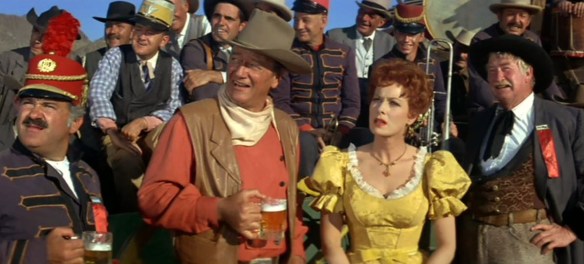
Apparently the name McLintock doesn’t come with the letter T. At least that’s the sense you get when the townsfolk send a salutation to the estimable cattle baron G.W. McLintock (John Wayne). Those who do pronounce that T are either out of towners, educated people, or probably the folks GW doesn’t like much. It’s true that the film is a western reworking of Taming of the Shrew so it’s very much a comedy. For all intent and purposes, it acts as a slapstick farce highlighted by a particularly raucous town-wide fist fight followed by a bungled hanging that just happens to commence right above a mudhole. The results speak for themselves.
But with the influence of its iconic star John Wayne, McLintock is also a fairly obvious commentary from one of Hollywood’s staunch conservatives. Still, the film never acts as a typical Western is supposed to. In some ways, McLintock is a very modern representation of the West where you have the most amiable sheriff in the world, hardly anyone ever pulls out a gun, and numerous folks have college educations. Except in so many ways, this film can be critiqued for being outdated by today’s standards. There are “Indians,” belligerent Chinamen, and feisty women. GW has mutual respect and good relationships with many of these people but some of the usual sensibilities are still visible.
If the auteur theory can pertain to an actor than this film has Wayne’s handprints all over it. This isn’t a Ford film or a Hawks film or a Hathaway film starring John Wayne. This film is John Wayne’s, even more so than usual.
His son Michael helped produce, he enlisted the son of his old buddy Victor McLaigen to direct, his own son Patrick got a prominent position as a plucky young cattle hand, and so on. He fills the ranks with numerous veteran performers beginning with his greatest female costar Maureen O’Hara as his estranged wife who comes back to town threatening to divorce him and whisk his daughter away to the high society back east.
His trusty right hand Drago is played by Chill Wills while Strother Martin, Hank Worden, and even Edgar Buchannan take supporting turns. Perhaps the most unusual appearances are the presence of the radiant young Stefanie Powers as his daughter and yes, Jerry Van Dyke as a dorky college boy. A special guest spot was found for Yvonne De Carlo as a favor due to the fact that her husband had recently been injured on another film production.
But there’s also a pointed jab at Hubert Humphries in the form of the spineless, insensitive governor Cuthbert H. Humphrey, proving that even Wayne’s politics are channeled into the picture.
The final climax is played for laughs and it does provoke uneasy laughter, at least by today’s standards. It’s hard not to feel strange watching Maureen O’Hara running through town in her undergarments as G.W. pursues her and the town follows behind in hot pursuit. It’s full of pratfalls and slapstick moments that are indeed funny but at what cost?
For some reason, despite the light tone up to this point, it feels cringeworthy when Wayne knuckles down and gives his long-absent wife a shellacking right in front of everyone. Of course, by the end of the film they are together again and I wanted to be happy but this was not The Quiet Man (1952). It felt like Maureen O’Hara had conceded and lost. She returns to the cult of domesticity with her husband which isn’t inherently a bad thing but she hardly feels like a full partner in their complementary relationship.
By this point, although she had the upper hand the entire movie, digging in her spurs, she’s put in her place. In the end, she and GW get to live the life he wants. Because as he notes, “all the gold in the United States Treasury, all the harps in heaven, can’t equal what happens between a man and a woman with all that growing together.”
It’s true that using the word petulant to describe McLintock just doesn’t work. His daughter tries it and he laughs it off and I’m sure if any critic wrote as much Wayne would have done the same or cuffed him one maybe. There were invariably many people who didn’t much like John Wayne but it’s hard not to respect him–even in a comedy.
3.5/5 Stars
 Initially, I Remember Mama comes off underwhelmingly. It’s overlong, there’s little conflict, and some of the things the story spends time teasing out seem odd and inconsequential at best. Still, within that framework is a narrative that manages to be rewarding for its utter sincerity in depicting the life of one family–a family that feels foreign in some ways and oh so relatable in many others.
 Upon being thrown headlong into Christopher Nolan’s immersive wartime drama Dunkirk, it becomes obvious that it is hardly a narrative film like any of the director’s previous efforts because it has a singular objective set out.
 Before the exoticism of Casablanca, Algiers, or even Road to Morroco, there was Josef Von Sternberg’s just plain Morocco but it’s hardly a run-of-the-mill romance. Far from it.
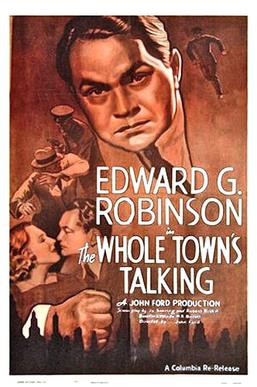 Comic mayhem was always supercharged in the films of the 1930s because the buzz is palpable, the actors are always endowed with certain oddities, and the corkscrew plotlines run rampant with absurdities of their own. Penned by a pair of titans in Jo Swerling and Robert Riskin, The Whole Town’s Talking opens with an inciting incident that’s a true comedic conundrum.
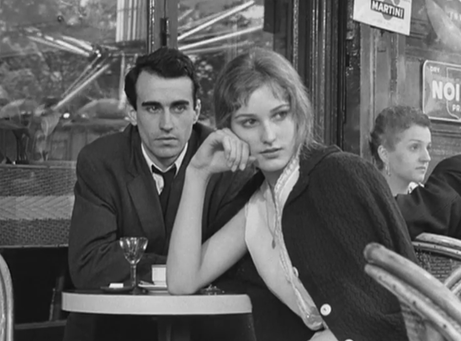 Pickpocket is an intricately staged, truly intimate character study from the inimitable Robert Bresson solidifying itself as one of his greatest works. As was his practice, Bresson took Martin LaSalle, a non-actor to be his leading protagonist.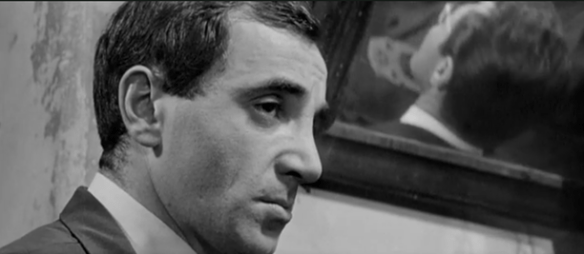
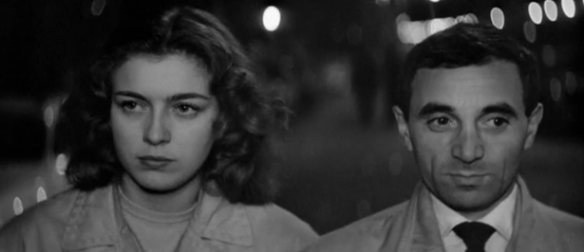
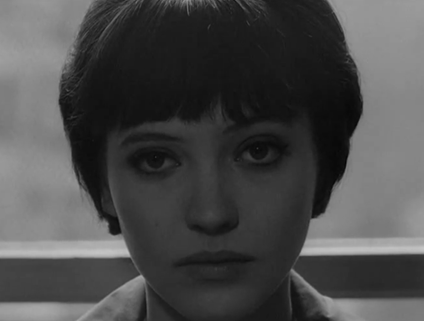 The opening credits of Vivre sa Vie commence with the opening note “dedicated to B-movies” and indeed many of Jean-Luc Godard’s best films could make the same claim. They’re smalltime stories about little people living rather pathetic lives if you wish to be brutally honest. This isn’t Hollywood.
 There’s a moment in Kelly Fremon Craig’s The Edge of Seventeen where Nadine (Hailee Steinfeld) suffers the ultimate humiliation third wheeling with her older brother Darian (Blake Jenner) and her (former) best friend Krista (Haley Lu Richardson). Needless to say, the evening is less than stellar but it gets worse after Nadine feels like she’s been totally betrayed. She’s been hating her brother recently and her best friend is dead to her now. The fact that she sets up an ultimatum doesn’t make things any better.
 It’s a joy to watch Agnes Varda dance. Or, more precisely, it’s a joy to watch her camera dance. Because that’s exactly what it does. Her film opens in color, catching our attention, vibrant and alive as the credits roll and a young woman (Corinne Marchand) gets her fortune read by an old lady. She’s worried about her fate. We can gather that much and this is her way of coping. Superstition and tarot cards but she’s trying and the results are not quite to her fancy.
 4 Star Films