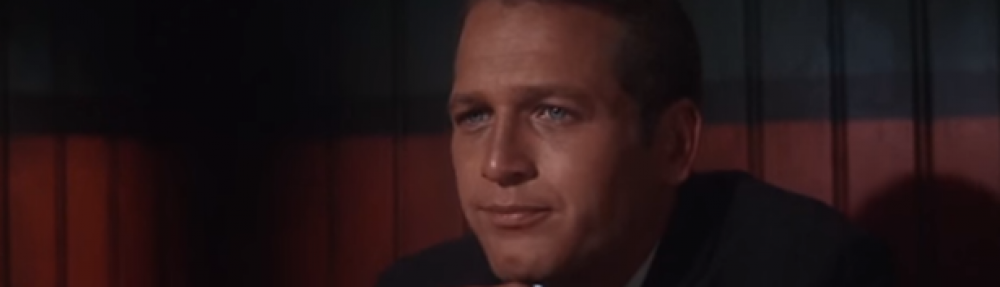

 As a young boy, no hero was greater in my mind’s eye than Robin Hood and only Star Wars held a more honored spot in my childhood imagination. Because, to this day, Robin of Locksley remains the quintessential hero of mythical lore. Part historical truth mostly canonized myth and that’s the beauty of him. We can believe in him — see how he was in so many ways real but in the same instance larger than life.
To his credit, Erroll Flynn does a surprisingly phenomenal job in portraying the legendary outlaw in Lincoln green with a bit of British (Australian…) cheekiness, as well as bravado and charm. In fact, the film is full of so many wonderful elements from its engaging action sequences full of timeless spectacle and a plethora of characters who come right off the pages of the greatest Robin Hood narratives. Will Scarlett, Much the Miller, Friar Tuck and of course Little John still hold a great deal of esteem in my heart. While there are no men more villainous and corrupted than the likes of Prince John (Claude Rains), The Sheriff of Nottingham (Melville Cooper) and Guy of Gisbourne (Basil Rathbone).
Meanwhile, Michael Curtiz took the reigns of the film and makes it a lively swashbuckler that revels in a sense of good fun and that starts with Flynn’s performance radiating out from there. While this early use of three-strip Technicolor only serves to add yet another layer of elegance and vibrancy to the film’s look. It truly was made for color and every shade of Lincoln green and every bit of medieval opulence proves to be a feather in the film’s cap. It looks absolutely stunning and the same goes for young Olivia De Havilland as Maid Marian.
 From what I know from Robin Hood folklore, specifically Howard Pyle’s seminal edition, the film is surprisingly true to many of the origin stories and tales that have long since proliferated. As an audience, we become privy to the first meetings of Robin and the formidable Little John (Alan Hale) who lays him out in the local stream after a bout with quarterstaffs. Then, in another instance, Robin provokes the portly Friar Tuck (Eugene Palette) who happens to be a master swordsman and a lover of good food and drink. Still, other vignettes include Robin’s successful masquerade as a lowly archer who wins the grand prize at the Sheriff of Nottingham’s Archery Tournament.
Of course, the most thrilling set pieces occur in Nottingham Castle, initially when Robin brazenly drops in on Prince John and his cronies bearing a deer over his shoulders. Admittedly I have Star Wars on the mind, but this sequence is rather reminiscent of Luke wandering into Jabba’s Palace.
Then, the climax comes later with the return of King Richard and Robin’s assault on the castle full of stellar swordplay and general chaos. The duel between Flynn and Basil Rathbone is especially thrilling and it holds up well even today because there is something so satisfying in watching them thrust and feint back and forth.
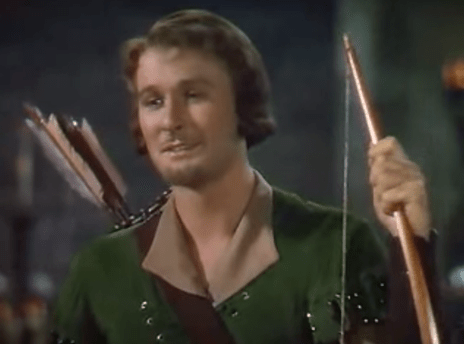 For me, the reason very few heroes surpass Robin Hood is based on his innumerable qualities. He’s a superior fighter with bow, sword or staff. He’s blessed with a wonderful wit and impressive leadership capabilities. He wins over the girl with his charm. He gets to live out in the forest with his best friends, eating great food. But most of all, he’s a rebel with a heart of gold, robbing the rich to feed the poor.
He’s an embodiment of all things that a little boy dreams of as a kid and in many ways, he’s a fairy tale, but the kind of fairy tale that a boy readily conjures up in his own imagination. The villains are formidable and the action is unmistakable, but it’s all in good fun. That’s why the Adventures of Robin Hood remains an enduring folk tale of the cinema. Its hero transcends a single medium. Because he lives in the heart of many a young lad long after the title credits have rolled.
5/5 Stars
 It’s a B-picture title to be sure but with Robert Siodmak and such an ensemble, this is an enticing noir all the same. The well-to-do Quincy family of small-town America are an odd bunch, still holding onto their surname with pride as they slowly drift further and further into obscurity within the walls of their old mansion.
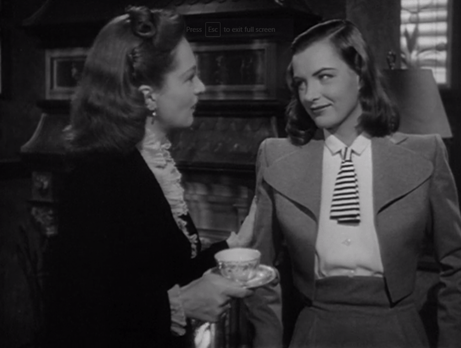 The dominating sister Letty, played by Geraldine Fitzgerald, is more aloof in her ways, veiling everything with a conviction that what she does, she does for the good of her brother. But it’s all really due to the fact that she cannot bear to let him go. In this way, she’s constantly controlling his life and undermining his happiness. She’s hardly your typical femme fatale, more cultured and refined than most, but there’s still something exacting about her.
 Children believe what we tell them. They have complete faith in us. They believe that a rose plucked from a garden can plunge a family into conflict. They believe that the hands of a human beast will smoke when he slays a victim, and that this will cause him shame when a young maiden takes up residence in his home. They believe a thousand other simple things. – Jean Cocteau
  For so many, there is a deep connection to Star Wars that started at an early age. As I have alluded to on numerous occasions, I am no different. And if I feel that way about even the prequels, it’s exponentially greater for the original trilogy, as I can imagine it is for legions of others. Thus, when I watch Rogue One I do not linger on its shortcomings, though they most certainly exist, instead, I’m fixated on that very same suspension of disbelief that overtakes me every time I enter that world, a long time ago in a galaxy far, far away.
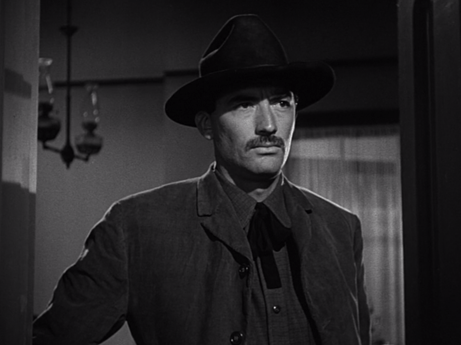 “Ringo don’t look so tough to me.”
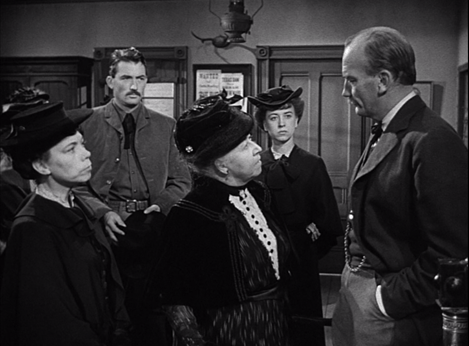 Of all men to understand Ringo, you would think that the local Marshall (Millard Mitchell) would be the last, but he happens to be an old friend of the gunman. They used to run in the same circles before Mark softened up. His life mellowed out, while Ringo’s reputation continued to build.
 The main reason Ringo stays in a town that doesn’t want him is all because of a girl (Helen Westcott). He waits and waits, biding his time, for any word from her, and finally, it comes. He gets his wish to see her and his son in private. These scenes behind closed doors are surprisingly intimate, casting the old gunman in an utterly different light.
 Saying that Phil Karlson has a penchant for gritty crime dramas is a gross understatement. And yet here again is one of those real tough-guy numbers he was known for, where all you have to do is follow the trail of cigarette smoke and every punch is palpable–coming right off the screen and practically walloping you across the face.
 “Things are only as meaningful as the meaning that we allow them to have.” ~ Beverly
 The fact that Miracle on 34th Street and this film came out the same year seems to suggest that there was something special in the air of New York City that year. It was a magical place, specifically during the Christmas season with Santa Claus going on trial and winning, while tramps helped reform millionaires. Admittedly, It Happened on Fifth Avenue is one of those films that could easily come under fire for its implausible plot, its unabashed sentiment, and any number of other things.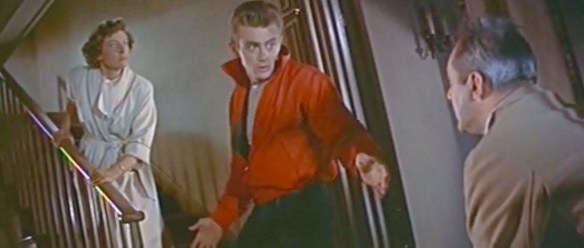
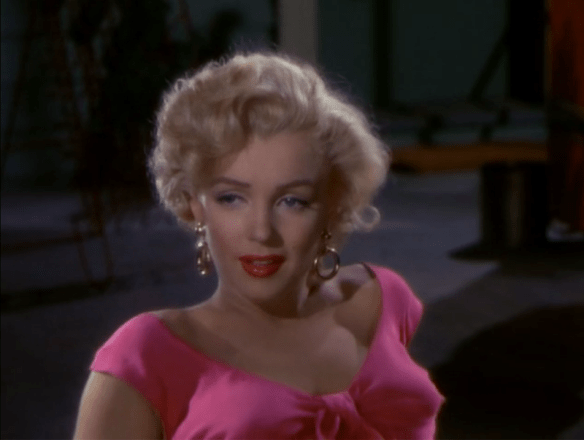 Rainbows, the soft misting of waterfalls, and honeymooning couples going through the tunnel of love. It hardly feels threatening at all, but that’s what makes film-noir so delicious. As the film style most reflective of the human condition, it proves that the dark proclivities and jealousies of the human heart can crop of anywhere–even a gorgeous tourist trap like Niagara Falls.
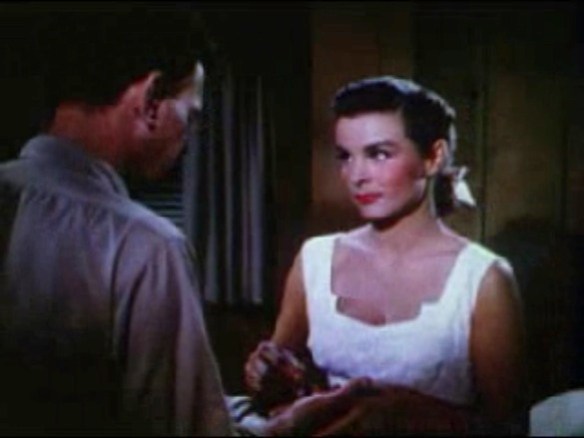 Without a question, Jean Peters becomes our favorite character as Polly, and it was an eye-opening for me personally to see her in a role so vastly different than Pickup on South Street. I had pigeon-holed her, rather erroneously as such a character, but Niagara shows a more tempered side to her persona that felt more representative of her as an actress. Max Showalter plays her husband, the genial and oblivious Ray Cutler, who takes his lovely wife on a long overdue honeymoon, only to have it totally ravaged thanks to the Loomises.
